
In this guide
The cheapest time to use electricity is overnight, when national demand is lowest and wholesale power is cheapest. A time of use tariff charges different rates depending on the time of day: cheaper when demand is low, usually overnight, and more expensive when demand is high in the early evening1. Economy 7, the oldest and most common version, gives seven hours of cheaper electricity overnight, usually between midnight and 7am, with the remaining hours charged at a higher on-peak rate2.
Moving consumption into that window is the whole point of load shifting. It does not reduce how much electricity a home uses; it changes when the home buys it. That distinction matters for energy independence, because a household that shifts load is still dependent on the grid and on a supplier, but it is buying at a price it can partly choose rather than at whatever the peak rate happens to be.
The size of the prize depends on the discount and on how much load can genuinely move. Guidance is blunt that a household must be able to move its electricity use to off-peak periods to benefit at all, and that savings are harder if most energy use falls in the evening peak of 4pm to 7pm1. Storage heaters, electric vehicle charging and large wet appliances are the loads big enough to matter.
Economy 7 and Economy 10: how off-peak tariffs work
Economy 7 and Economy 10 give seven or 10 hours of cheaper electricity, mostly overnight7. Economy 7 offers cheaper prices for seven hours during the night, with the cheaper rate usually running between midnight and 7am, though this varies across suppliers2. Economy 10 provides 10 set hours of cheaper off-peak electricity: three hours in the afternoon, two hours in the evening and five hours through the night3. During those off-peak hours the price of electricity could fall by up to half of the average rate8.
The structure is what makes these tariffs different from a standard single-rate supply. Economy 7 tariffs have two set energy price rates, an on-peak rate and an off-peak rate, with the cheaper off-peak rate applying for seven hours out of every 24, usually at night4. The day rate is correspondingly higher than a single-rate tariff would be, which is why the tariff only pays for households that can load the night window heavily.
That is the crux of the suitability question. Guidance suggests that using less than 30% of electricity during the cheaper night-time hours could mean paying less on a single-rate tariff9, and another source puts the threshold at needing to use at least 30% of electricity during those hours4. The two figures describe the same break-even from opposite directions, and both point to the same practical test: a household that runs most of its consumption in the evening, at the day rate, is worse off.
Storage heaters are the classic match, because they can be heated overnight and used to give off heat the following day6. Without a load of that kind, the arithmetic is harder. A household with an electric vehicle, a large hot water cylinder on a night immersion, or a home battery can still fill the window, but the case has to be made on actual consumption rather than on the tariff's headline discount.
Smart tariffs: half-hourly prices and the cheapest windows
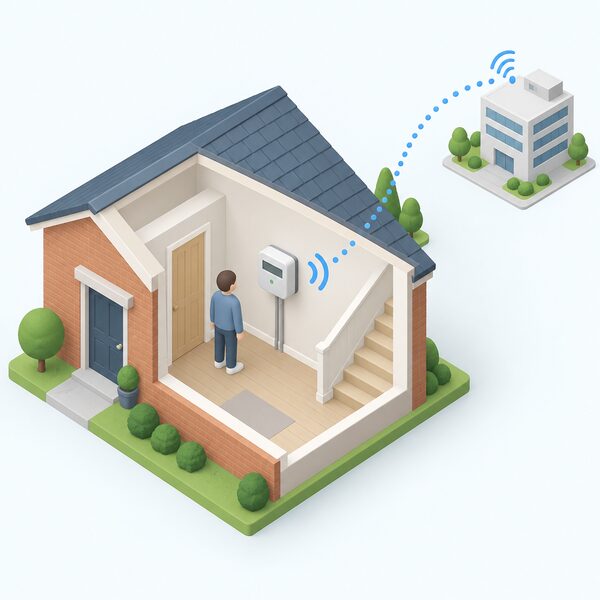
Smart time of use tariffs vary the cost of electricity based on the time of day it is used, charging at least two different rates for peak and off-peak hours5. The most dynamic versions go further: the price paid for electricity can change every half hour, reflecting real-time demand and supply1. Time of use tariffs use half-hourly smart meter readings to allow companies to charge lower rates when demand is lower and electricity is cheaper10.
The meter is not optional. A smart meter is needed to sign up to a time of use tariff, and it must be set up to provide automatic meter readings every 30 minutes so the provider can bill the right rate5. Access to time of use tariffs means cheaper rates during off-peak hours and incentives for energy usage on high-supply days11. Suppliers are required to offer smart meters to all households and small businesses by the end of 203012.
Because the price signal is finer, the household's own consumption pattern becomes the deciding factor. Some suppliers and comparison tools let a household upload its half-hourly data to estimate what it would pay on a smart tariff1, which is the only reliable way to judge a tariff whose rates move. A household that cannot move load into the cheap windows will simply pay the peak rate more often.
Storage heaters: built to charge on cheap night rates
Storage heaters work by storing heat generated by cheaper night-time electricity and releasing it during the day9. They are set to charge up at night, and most will only charge up at night, so the input setting can be left without danger of using expensive day-rate electricity9. They use Economy 7 or Economy 10 tariffs for cheaper energy at night3, and are often used with special energy tariffs that offer lower rates during off-peak times13.
The economics are specific. If a household does not have access to gas mains, storage heaters are cheaper to operate than a standard electric heater, though electricity is much more expensive per kWh than gas14. In winter, it can cost around £46 a month to run a 1.4kW storage heater, based on charging for seven hours overnight at off-peak rates8. Basic models cost as little as £150, with much more spent on higher-specification units14, while another source puts basic models at less than £400 and more advanced ones at upwards of £7008. Modern storage heaters can cost from around £400 each, and a household will usually need one per room15.
Two practical constraints shape the decision. Storage heaters are large and chunky, take up a considerable amount of room, and can leave a home very warm in the morning and struggling to stay warm in the evening14. They must be installed by a qualified electrician, and a registered electrician should replace them; larger models weigh more than 150kg and are hard-wired to a dedicated circuit8. An installer may ask for the heaters to be turned off for 24 hours or more before removal so the core can cool11.
Which appliances are worth shifting to off-peak hours
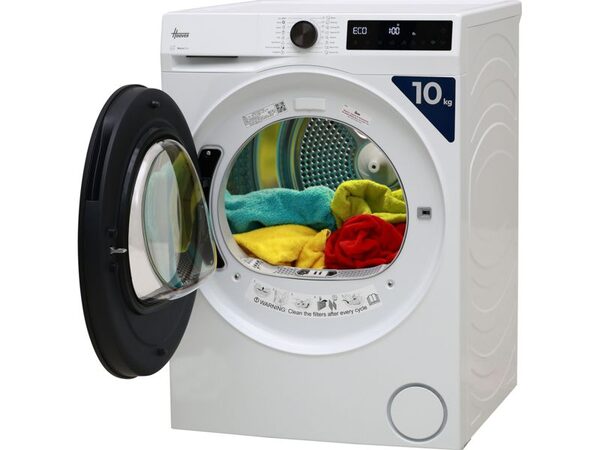
Only loads that are both large and movable are worth the effort. The running of appliances becomes cheaper during off-peak hours, which is the straightforward case for shifting them16, but the size of each load decides whether the saving is worth the disruption.
| Appliance | Typical energy use | Typical running cost | Source |
|---|---|---|---|
| Tumble dryer | 1.8 to 5 kWh per hour | 46p to £1.29 per one-hour cycle | 5 |
| Tumble dryer (vented or condenser) | 1,500 to 2,500W | £1.21 to £1.56 per cycle | 17 |
| Tumble dryer (family of four, weekly use) | 48 kWh per month | £12.82 per month on a standard variable tariff | 18 |
| Fridge freezer | 17.2 kWh per month | £5.39 per month on a standard variable tariff | 18 |
The tumble dryer is the clearest candidate among wet appliances, because it draws a heavy load for a predictable period and can be started on a timer. Running it on a lower heat setting could save energy compared with a high-heat setting17. A fridge freezer uses more energy across the month than a single dryer cycle, but it cannot be shifted at all: it runs continuously, so it takes whatever rate is in force when the compressor cycles.
The washing machine and dishwasher sit between the two. They are movable in principle, and a delay-start timer or a smart appliance can place them in the cheap window, but their cycles are shorter and their draw lower than a dryer's. Electric vehicle charging is the largest movable load in most homes, and smart charging will automatically shift charging to off-peak hours when electricity is cheaper19. A home battery does the same job differently: it stores cheap electricity when prices are low and releases it later, even during peak times1.
Energy smart appliances: automatic shifting, with your consent
An energy smart appliance is an appliance, such as an electric vehicle charging point or a heat pump, capable of increasing or reducing its electricity demand in response to signals received remotely from a third party20. A parallel definition describes it as an internet-connected appliance that can adjust its electricity usage automatically based on signals received remotely21. The latest electric thermal store boilers use smart technology to charge when electricity is cheapest15.
Consent is the governing rule. Energy smart appliances can be switched on or off remotely but only if the consumer gives consent, and legislation does not change that20. That means automated shifting is something a household opts into, not something a supplier can impose. The practical effect is that a household can hand over the timing decision for a specific appliance, usually a car charger or a heat pump, while keeping the ability to withdraw.
"Energy smart appliances can be switched on or off remotely but only if the consumer gives consent."
This is where load shifting stops being a manual habit and becomes a control system. A household that sets a timer is making the decision once; a household with an energy smart appliance is delegating it, cycle by cycle, to whatever signal the supplier or aggregator sends. The independence trade is real in both directions: less attention required, but the timing of a large load passes to a third party.
Where shifting use falls short
The limits are structural, not a matter of trying harder. Households with less ability to shift may end up paying more for their electricity22. People with children, shift workers, and households with medical devices may need to consume electricity at peak times22. A tariff that rewards flexibility therefore penalises households that cannot supply it, and the penalty falls on the day rate.
Safety advice cuts directly against the most obvious shifting tactic. Electrical Safety First advises consumers to avoid leaving appliances like washing machines, tumble dryers or dishwashers running unattended overnight where practically possible16. Official fire guidance goes further on charging: do not charge devices overnight when anyone is asleep or leave them on charge when the home is empty23. Electric blankets can be dangerous if left on overnight unless they have a safe all-night setting, and should never be used with a hot water bottle24.
There is also a market-history point about how durable these arrangements are. Domestic electricity supply saw transfers away from the incumbent in-area supplier running at 79% and then 74% across two twelve-month periods from August 1999 to June 200125. Households move between suppliers, and a load-shifting routine built around one supplier's cheap window has to be rebuilt if the tariff changes.
What the price cap means for off-peak rates
The Ofgem price cap limits what a supplier can charge for a unit of gas and electricity on a standard tariff. It rises 4% on 1 October 2026, taking a typical annual bill from £1,663 to £1,723 for the period to 31 December 2026, with electricity rising to 26.32p per kWh and gas to 7.97p per kWh6. The increase is driven mainly by higher wholesale gas prices26.
The cap sets a ceiling on the standard rate, not on the shape of a time of use tariff. Its relevance to load shifting is that it defines the alternative: a household that does not shift load pays something close to the capped unit rate at whatever time it uses power. The gap between that and an off-peak rate is the reward for shifting, and it widens or narrows with each cap announcement.
There is a separate mechanism worth knowing about for households with their own generation or storage. Where a household uses a behind-meter energy system, the price is capped, ensuring the consumer will never pay more than their daytime electricity price supplied from the grid28. That protects a household storing its own power from being charged above the grid day rate for it.
The brands and products sold in the UK
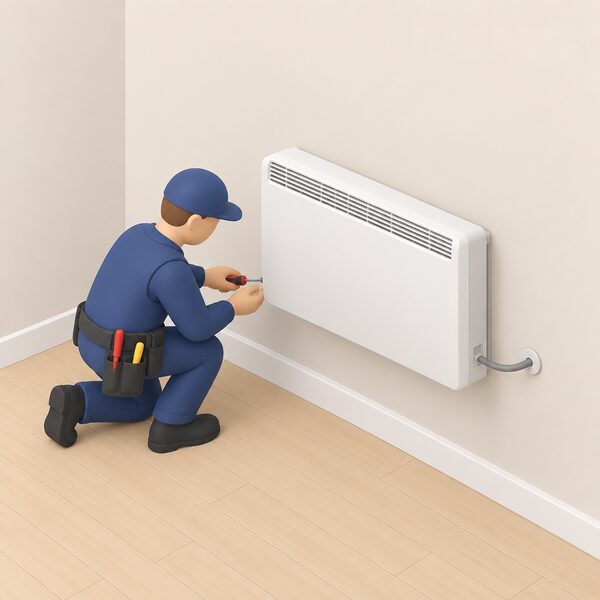
Storage heaters remain the main product category built specifically around cheap-rate windows, and the range sold in the UK splits by control sophistication rather than by brand. Basic models start at as little as £150, with higher-specification units costing considerably more14, and modern units from around £400 each15. Since 1 January 2018, all newly manufactured storage heaters must have certain features so that they comply with Lot 20 efficiency rules8.
The latest models use smart technology to charge when electricity is cheapest15, which moves them from a fixed overnight charge into the same automated-shifting category as energy smart appliances. High heat-retention models hold up to 45% of their heat even 24 hours after they were last charged15. Older units use input and output dials to control heat11, and the input dial on most models only draws power at night, so it cannot accidentally buy day-rate electricity9.
Installation is a specialist job rather than a retail purchase. Storage heaters must be installed by a qualified electrician8, and a registered electrician should replace them11. Labour for installing a replacement storage heater with existing wiring is usually from about £70, varying by location, and at least three quotes are recommended8. Because the units are heavy and hard-wired, the cost of a change is not just the appliance.
What this means for a household's energy independence
Load shifting buys a household control over price, not control over supply. The home remains connected to the grid and dependent on a supplier for the electricity itself, and on a meter and a tariff structure to get the cheap rate at all. What changes is that the household chooses when to buy, and can therefore reduce its exposure to the most expensive hours of the day.
The dependence that remains is specific. A smart meter is required for any flexible time of use tariff10, so the household depends on a working meter and on the supplier's half-hourly data. An energy smart appliance depends on remote signals and on consent that the household can withdraw20. A home battery reduces dependence on timing by storing cheap power for later use1, but it is a capital purchase rather than a tariff choice.
For a household weighing this up, the evidence points to three questions. How much consumption can genuinely move out of the 4pm to 7pm peak1? Is that share above the roughly 30% threshold that makes a two-rate tariff worthwhile9? And can the largest movable loads, a car charger, a storage heater or a dryer, be placed in the cheap window without leaving them running unattended overnight16? Where the answers line up, the tariff rewards the household. Where they do not, the day rate does the opposite.
Sources28 cited
- Should I switch to a time of use tariff, Energy Saving Trust, 2026-01-23
- What is Economy 7, Energy Helpline, 2026-09-20
- Getting the most from Economy 7, National Energy Action, 2026-09-10
- Time of use tariffs explained, Which?, 2026-04-23
- How much electricity am I using, Centre for Sustainable Energy, 2026-07
- Energy price cap to rise 4% to £1,723 on 1 October 2026, Uswitch, 2026-09-21
- How to switch energy supplier, Which?, 2026-05-15
- Storage heaters, Which?, 2026-06-01
- Night storage heaters, Centre for Sustainable Energy, 2025-10
- Gas meters and electricity meters: what you need to know, Which?, 2026-01-16
- Electric storage heaters, Energy Saving Trust, 2026-05-20
- A guide to smart meters, Age UK, 2030-12
- Electric heating, Energy Saving Trust, 2026-07-01
- Electric heaters vs storage heaters, Energy Helpline, 2026-09-20
- Electric central heating, Which?, 2025-09-22
- Comment on reports of off-peak energy pricing, Electrical Safety First, 2026-09-19
- Avoid using the dryer, Smart Energy GB, 2026-04-22
- Appliances: how much do yours cost to run, Confused.com, 2025-12-18
- Toyota to expand EV charging ecosystem across the UK, SMMT, 2025-12-04
- Energy smart appliances and load control, House of Commons Library, 2026-09-20
- Part 8 energy smart appliances and load control, House of Commons Library, 2023-09-26
- Demand-side flexibility and households, Parliamentary Office of Science and Technology, 2026-06-07
- Lithium-ion batteries, North Wales Fire and Rescue Service, 2026
- Stay warm at winter, Belfast City Council, 2026-09-20
- Review of domestic gas and electricity competition and supply price regulation, Ofgem, 2001-11
- The future of electric heating, Tepeo, 2026-10-01
- Switching electricity or gas supplier in Greater Belfast, Consumer Council for Northern Ireland, 2026-10-08
- Behind meter energy systems guidance, Welsh Government, 2026-06-29
 Demand Flexibility and the GridGetting paid to shift your electricity use away from peak times is now a real option for households with a smart meter.
 Controls and Time-of-Use TariffsCheaper electricity at night only saves money if your heating actually uses it then.
 Flexibility Payments for HomesCan you really get paid for using less electricity at peak times, and how much would a household actually earn?
 Meters and Time-of-Use TariffsDo you need a smart meter for a time-of-use tariff, and does it have to send readings every half an hour?
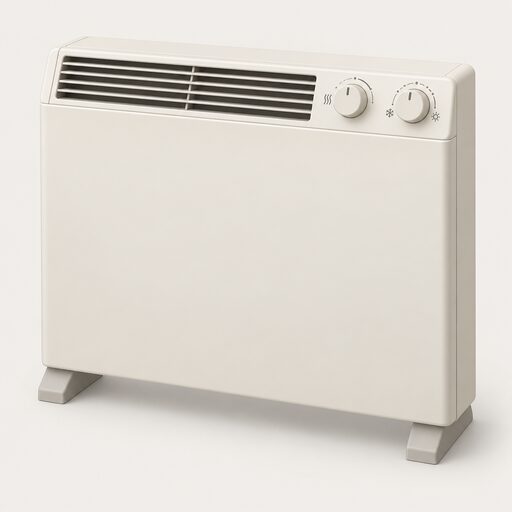 Storage Heater ControlsExplains manual input and output dials, automatic charge control and the smart charging used by modern high-retention heaters.
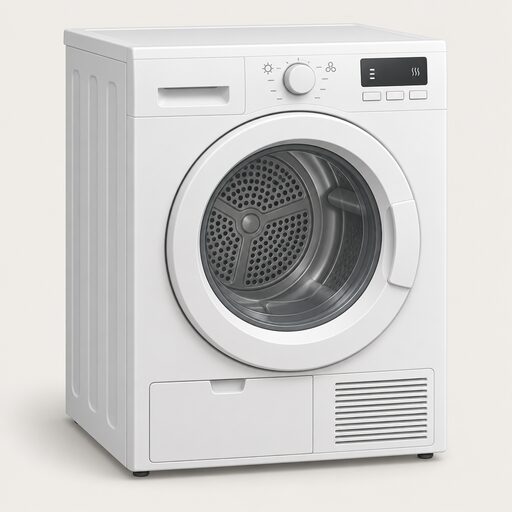 Reducing Your BillRanks household electricity and gas uses by share of the bill and sets out what each measure changes, from heating settings and insulation to appliance use and tariff choice.