In this guide
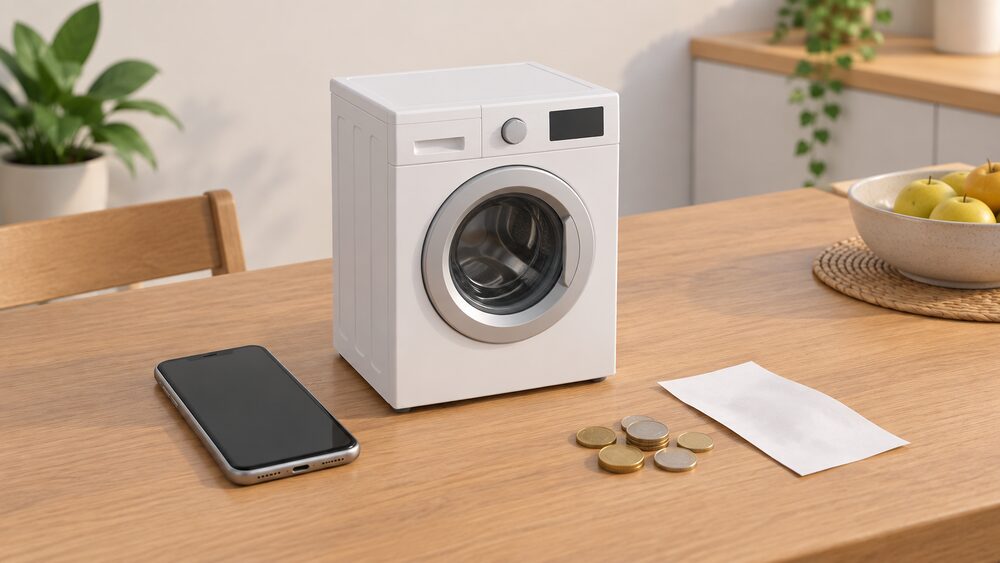
A free electricity tariff is not a tariff that costs nothing. It is an ordinary supply contract with a reward layered on top: electricity used inside a set window is charged at the normal unit rate and then credited back, or paid back as cash through an app. The windows are short, the credit is capped, and the underlying rates are what the household actually pays for the rest of the week.
The best-known version is ScottishPower's Power Saver, which gives eight one-hour slots of cheaper electricity across the week, with 50% slots available for 98 hours a week and 20% slots for 50 hours a week1. Uswitch runs a separate scheme, Power Hours, which pays up to £5 per booked slot through its app and is open to households whatever their supplier2. A third model, EDF's FreePhase, is a time-of-use tariff with Red, Amber and Green bands rather than a credit scheme.
The savings are real but modest at household scale. Ofgem's research puts annual savings from these products in a range of £0 to £3003. The value depends on how much consumption a household can actually move into the window, which is why the schemes reward loads that run by themselves: a washing machine, a dishwasher, an immersion heater, an EV charge.
What a free electricity tariff is and how the reward works
The mechanism is the same across the schemes. A household agrees to have its half-hourly consumption read, the supplier or scheme operator identifies the electricity used inside a nominated window, and that consumption is either credited back on the bill or paid as an app balance. The Demand Flexibility Service exists to "make it easier for homes and businesses to take part in the electricity market and be rewarded for shifting when they use electricity"6. The wider family of demand flexibility schemes works by "giving customers money back for each kWh of energy they save by reducing their usage for a set time period"7.
Two distinct reward models sit under that umbrella. The first pays for shifting: use more electricity inside a cheap or free window. The second pays for reducing: cut consumption during a peak event. Power Saver and Power Hours are shifting schemes. The Demand Flexibility Service is a reduction scheme, and it "rewards people for changing the times when they use the most electricity"8.
The reason suppliers offer either is that flexible consumption is worth something to the system. Innovative tariffs "make it cheaper for people to use electricity when there is less demand on the grid, or when the availability of renewable generation is high"9. Citizens Advice frames the same point as a consumer benefit: reform "can further improve affordability by allowing consumers to be properly rewarded for being flexible with electricity use"10. The Low Carbon Hub describes flexibility as the key to combating future energy price shocks11.
For a household, the independence question is narrow but real. A free-hours scheme does not reduce reliance on the grid, the supplier or the wholesale market. It changes when the household draws power, and pays a small amount for that flexibility. The dependence that remains is the same as on any supply contract: the standing charge, the unit rate outside the window, and the supplier's ability to change both.
The three schemes compared: Power Saver, Power Hours and FreePhase
The three products on offer in the UK market take different shapes, and the differences matter more than the headline discounts.
| Scheme | Operator | What it gives | Who can join | Cap |
|---|---|---|---|---|
| Power Saver | ScottishPower | 8 one-hour slots a week at 50% or 20% off | ScottishPower electricity customers with a communicating smart meter | Credit per slot, excluding VAT1 |
| Power Hours | Uswitch | Up to £5 per booked slot, paid through the app | Households whatever their supplier | £5.00 per 5-hour session2 |
| FreePhase | EDF | Time-of-use tariff with Red, Amber and Green bands | EDF customers on the product | Tariff rates, not a credit12 |
Power Saver is a supply-side discount: the household stays on its ScottishPower tariff and the bill is credited afterwards. Power Hours is a third-party reward: Uswitch Limited operates the scheme, and the money arrives in the app rather than on the energy bill5. FreePhase is neither, strictly speaking, a free-hours scheme nor a reward scheme. It is a time-of-use tariff, and time-of-use tariffs "charge you a higher price for any electricity used in this period" of peak demand12.
That distinction is the one households most often miss. A time-of-use tariff changes the price of every unit, all week. A free-hours scheme leaves the underlying tariff alone and adds a credit. The first changes what a household pays for everything; the second changes what it pays for eight hours.
The older comparison point is Economy 7 and Economy 10, which "give seven or 10 hours of cheaper electricity, mostly overnight"13. Those are restricted-meter tariffs rather than reward schemes, and they are covered separately in Economy 7 tariffs and Economy 10 and other restricted meter tariffs.
Power Saver: 50% or 20% discounts across 8 one-hour slots a week
Power Saver gives "8 one-hour slots of cheaper electricity at selected times throughout the whole week"1. The discount is not uniform. 50% slots are available for 98 hours per week, and 20% slots for 50 hours per week14. In other words, the deep-discount windows are the plentiful ones, and the household picks eight of them.
The selection is monthly. A customer chooses the eight one-hour slots up until the 25th of each month, and those slots then lock down and take effect from the 1st of the following month1. That is a genuine constraint: a household that wants its free hour moved to coincide with a new working pattern has to plan it a week ahead of the month boundary.
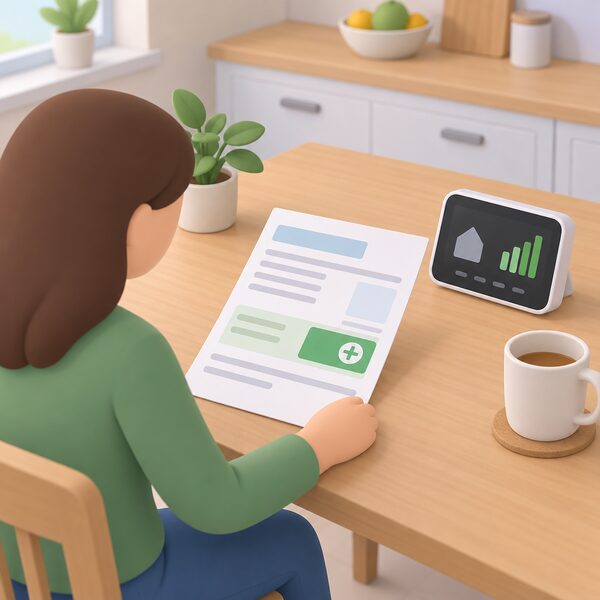
The credit mechanism is straightforward but worth stating precisely. Electricity used is charged at the normal unit rate, and the bill, or the meter for a prepayment customer, is credited afterwards. The credit is calculated depending on the rating of the chosen slots, excluding VAT, and appears as "Power Saver Credit" on the bill1. Because it is calculated excluding VAT, the amount a household sees is not the full VAT-inclusive value of the electricity used.
ScottishPower also runs Energy Insights, which is "available free of charge to ScottishPower smart meter customers who opt-in to half-hourly data reads", with the supplier reserving the right to charge for the product in future and excluding prepayment meter customers14. The half-hourly data consent is the same prerequisite that Power Saver needs, so the two sit together naturally.
What this does for independence is limited and specific. It rewards a household for having a communicating meter and for being willing to run loads at times the supplier prefers. It does not reduce the standing charge, does not change the unit rate outside the slots, and does not insulate the household from a price change. The ScottishPower Flexi tariff variable costs were updated for 1 July 2026, with further quarterly updates due on 1 October 2026 and quarterly thereafter, which is the kind of change a Power Saver customer's underlying rates are subject to.
Power Saver eligibility: ScottishPower supply, a communicating smart meter and half-hourly consent
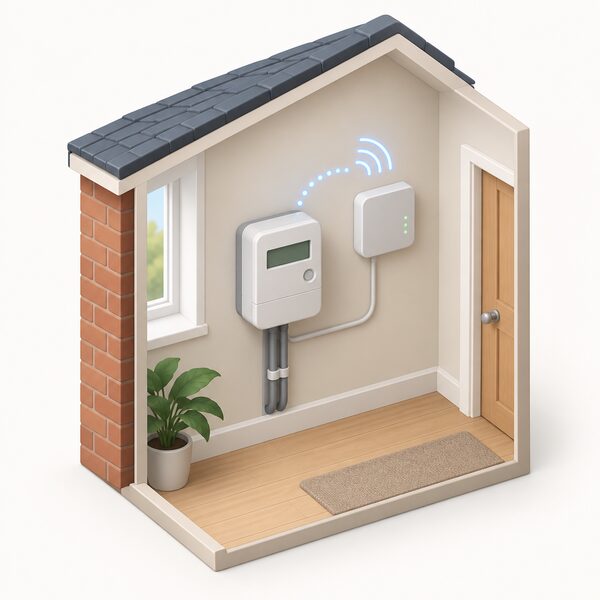
The conditions are cumulative. To be part of Power Saver events, a household "must be an electricity customer with an online account, a communicating smart meter and consent to sharing half-hourly readings"1. Miss any one and the scheme cannot calculate a credit, because it cannot see what was used inside the slot.
The smart meter requirement is the one that catches most people. Smart meters are optional, but "without one, you miss out on easier billing and innovative tariff options"15. Ofgem's guidance is blunter: not having one means "excluding yourself from cheaper tariffs which are only available if you have a smart meter"16. A smart meter can be obtained free from the supplier4, and the Smart DCC notes that some tariffs are only available to customers with smart meters, or if they agree to have one fitted17.
The consent element is separate from the meter itself. A smart meter can be installed and still not share half-hourly data if the household has not opted in. Energy Insights is explicit that it is available to customers "who opt-in to half-hourly data reads"14, and Power Saver requires the same consent1. A household that has declined half-hourly sharing, or that has a meter which has lost its wide area network connection, will not accrue credits.
Prepayment customers are excluded from Energy Insights14, and the Power Saver eligibility wording turns on having an online account, which is a further practical filter. The scheme is a ScottishPower product, so it is not available to households supplied by another company, whatever meter they have.
Power Hours: up to £5 per event through the Uswitch app, whatever your supplier
Power Hours is the scheme that does not require switching supplier. It is "an earning scheme operated by Uswitch Limited"5, and the reward is "up to £5 per booked slot" for electricity used during the chosen time2. The cap is strict: earnings accrued under the scheme are "strictly capped at a maximum value of £5.00 per 5-hour Session"5.
Redemption is limited to weekend off-peak windows, "either 7:00 AM to 12:00 PM or 12:00 PM to 5:00 PM on a Saturday or Sunday only", and members "may only redeem one (1) 5-hour Session per weekend"5. That is a narrower window than Power Saver's eight weekly hours, but it is open to any household with a smart meter, not just one supplier's customers.
The calculation has two fallbacks worth knowing. If the customer's plan is not listed in the app, "we'll use your supplier's SVT rates instead"2, and selecting "My plan isn't listed" defaults the account to the Standard Variable Tariff for that supplier for the purpose of costing the electricity used2. If there are not enough smart meter readings or plan data for the account, average earnings are used to calculate the reward2.
Uswitch has run several related campaigns alongside Power Hours. The 25 Hours of Free Electricity campaign credited members up to a maximum of £25 across the whole campaign, the Free Christmas Day Electricity 2025 offer credited up to £10 for electricity used between 8am and 4pm, and the Early May Bank Holiday Free Electricity 2026 offer credited up to £10 for the elected day5. These are time-limited campaigns rather than standing entitlements, and each carries its own cap.
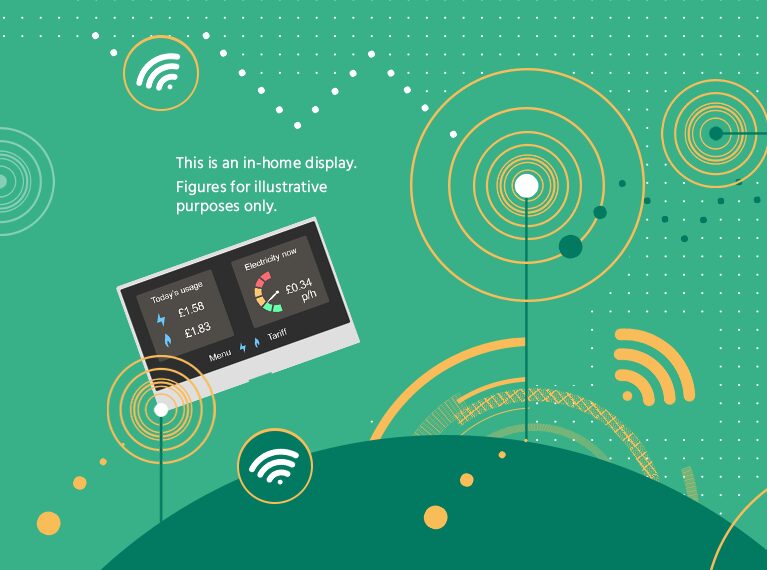
There is also a separate 10 Hours Electricity On Us scheme. The value is worked out from the user's highest consecutive 10 hours of electricity usage in the last 12 months of half-hourly data, priced at their actual tariff rate, or an Ofgem fallback of 24.67p/kWh where tariff data is unavailable, with the peak or day rate applied for two-rate tariffs19. The incentive is provided as earnings in the Uswitch App Earn Tab and is not displayed on, or does not alter, the energy supplier bill or the smart meter in-home display19.
That last point is the one to hold on to. Power Hours money is an app balance, not a bill credit. It does not reduce the amount the supplier collects by direct debit, and it does not appear on the meter.
FreePhase: a time-of-use tariff with Red, Amber and Green bands
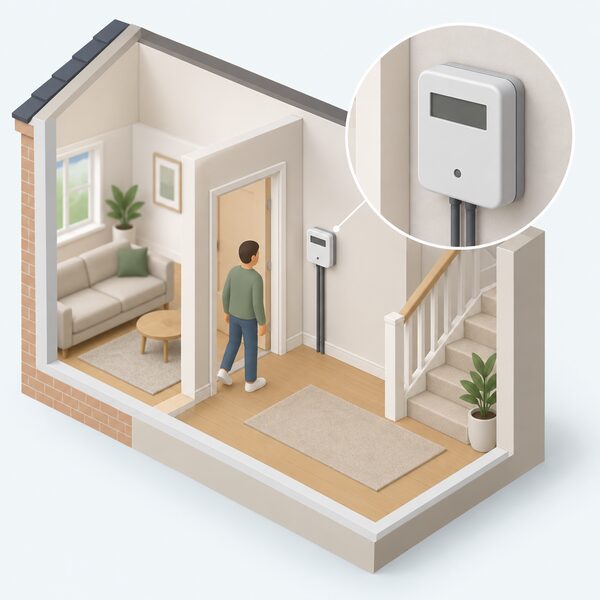
FreePhase is a different animal from the two reward schemes. It is a time-of-use tariff, and the defining feature of that category is that "a time of use tariff will charge you a higher price for any electricity used in this period" of peak demand12. The Red, Amber and Green bands are a way of signalling when electricity is expensive, moderate or cheap, and the free electricity moments sit inside the cheapest band.
The practical consequence is that a FreePhase household is exposed to peak pricing in a way a Power Saver household is not. On Power Saver, the underlying tariff is unchanged and the reward is additive. On FreePhase, every unit used at the wrong time costs more than it would on a flat tariff. The household has to shift load to avoid losing money, not merely to gain it.
Switching onto a product like this is administratively simple. "Switching to any energy tariff is simple, won't cause power outages and typically takes just a few days"20. The constraint is not the switch but the meter: a time-of-use tariff needs half-hourly settlement, which in practice means a smart meter.
EDF has also launched Flextras, a loyalty scheme rewarding flexible electricity use with free electricity hours, tastecard membership and referral credits through the EDF app, launched on 7 September 2026. Separately, EDF launched a Low Standing Charge Trial on FreePhase tariffs on 6 July 2026, a year-long trial giving eligible lower-energy users a £6.25 monthly discount per fuel on standing charges with no exit fees.
For households weighing a time-of-use product against a flat one, the relevant comparisons are set out in Time-of-use electricity tariffs explained and Shifting electricity use to cheap-rate periods.
How the credit appears on your bill, and the per-slot limit
The credit route differs by scheme, and the difference determines when a household actually sees the money.
Power Saver credits the bill or the meter. Electricity used is charged at the normal unit rate, and the bill, or the meter for a PAYG customer, is credited afterwards, with the amount calculated on the rating of the chosen slots, excluding VAT, and shown as "Power Saver Credit"1. A direct debit customer sees it as a line on the next statement. A prepayment customer sees it as a meter credit.
Power Hours pays into an app. The incentive is provided as earnings in the Uswitch App Earn Tab and does not appear on the supplier bill or the in-home display19. The household has to open the app to see it, and the money is separate from the energy account.
The per-slot limit is what stops these schemes from being transformative. Power Saver credits the electricity used inside a one-hour slot, and the value of that hour is bounded by what a household can run in it. The 50% rating applies to the electricity used in that hour, not to the household's whole consumption. Power Hours caps the whole five-hour session at £5.005, which is the ceiling on a weekend's reward regardless of how much is used.
The wider point is that these are credits against consumption, not payments for capacity. A household that uses nothing in the window earns nothing. A household that uses a great deal in the window still hits the cap.
Savings in practice: from £0 to a £300 maximum
The honest range is wide because the outcome depends almost entirely on the household. Ofgem's research into consumer tariff choices puts annual savings from these products at £0 to £3003. The bottom of that range is not a failure of the scheme; it is what happens when a household cannot move meaningful load into the window.
The upper end is achievable but requires the right appliances. A household that can run a washing machine, a dishwasher, a tumble dryer and an EV charge inside the free hours has far more to gain than one that can only shift a kettle. Ofgem's impact assessment found that "those who do not generally use electricity at peak times (4-7pm) could save over £200 a year by switching from the price cap" to a tariff that changes throughout the day21.
The Climate Change Committee's estimate is larger but covers a much bigger change: "a typical household could save around £1,200 a year today by combining an EV, a heat pump, solar panels and a time-of-use tariff"22. That figure is for a whole-home electrification package, not for a free-hours scheme on its own, and it should not be read as a saving attributable to Power Saver or Power Hours.
For context on what the household is saving against, the electricity price cap benchmark for the Southern region is £172.77 standing charge and £801.74 annual bill at 2,500 kWh single-rate, or £172.65 standing charge and £973.28 annual bill at 3,400 kWh multi-rate, for 1 July to 30 September 202623. The Midlands figures for the same period are £207.57 standing charge and £810.72 at 2,500 kWh, or £206.15 and £977.09 at 3,400 kWh23. A saving at the top of the £0 to £300 range is measured against numbers of that size.
The price cap applies to customers on a standard variable tariff paying by standard credit, direct debit, prepayment meter or Economy 7 meter24. A household on a free-hours scheme is usually on a fixed or time-of-use product rather than the cap, so the comparison is against its own tariff, not the cap.
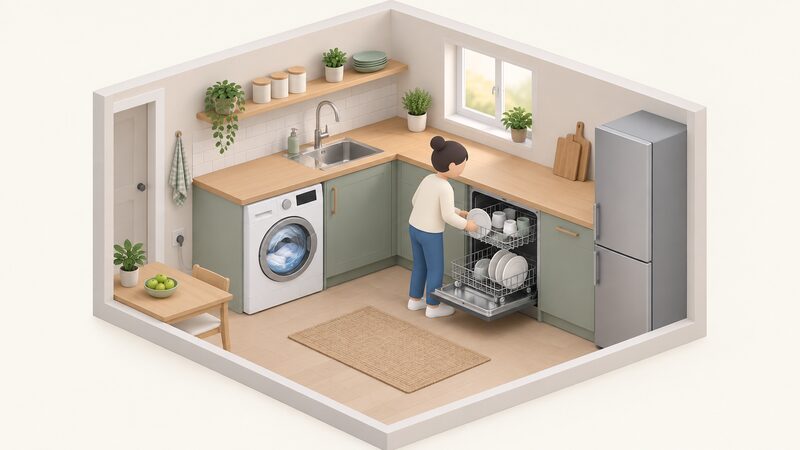
Smart meter, tariff and property rules that can cost you your reward
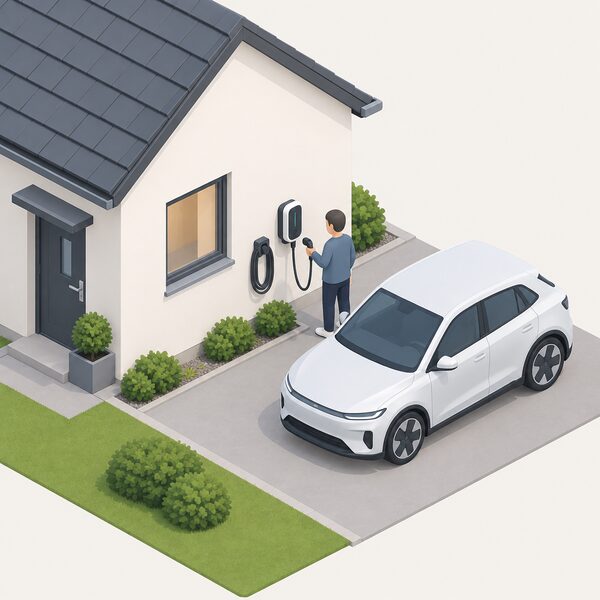
The rules that void a reward are mostly about the meter and the account, not about behaviour.
- No communicating smart meter. Power Saver requires a communicating smart meter and consent to half-hourly readings1. Without both, no credit can be calculated.
- No half-hourly consent. Energy Insights is available to customers who opt in to half-hourly data reads14, and Power Saver needs the same consent1.
- Prepayment meter. Energy Insights excludes prepayment meter customers14.
- No online account. Power Saver eligibility turns on having an online account1.
- A different supplier. Power Saver is a ScottishPower product1. Power Hours is open whatever the supplier2.
- Two schemes at once. A member must not sign up to an equivalent demand flexibility scheme with another provider, and NESO only lets users participate in one scheme at a time5.
- Equipment-linked tariffs. Some time-of-use tariffs are only available if certain equipment is installed, such as an EV charger or solar panels20.
The equipment point matters for households on ScottishPower's other products. EV Optimise, Solar Saver and Heat Pump Saver are equipment-linked tariffs, and the general rule is that "some are only available if you have certain equipment installed, such as an EV charger or solar panels"20. Power Saver is a separate scheme with its own conditions, so being on one of those tariffs does not by itself disqualify a household, but the meter and consent conditions still apply.
The smart meter itself is free. Ofgem's guidance is to "contact your supplier to get a smart meter for free"4. The Smart DCC notes that smart meters are optional, but that without one a household misses out on easier billing and innovative tariff options15, and that some tariffs are only available to customers with smart meters, or if they agree to have one fitted17. Ofgem's position is that a household without one is "excluding yourself from cheaper tariffs which are only available if you have a smart meter"16.
Signing up, tracking your savings and what happens when you move house
Signing up is a two-step process in every case: get the meter communicating and consenting, then enrol in the scheme. Power Saver enrolment runs through the ScottishPower online account1. Power Hours runs through the Uswitch app, and members have 30 days to connect the smart meter to the Uswitch account and sign up to Power Hours in the app after a qualifying action5.
Tracking is where the schemes diverge. Power Saver credits appear as a named line on the bill or meter1, so the household can see them without opening anything else. Power Hours earnings sit in the app Earn Tab and never touch the supplier bill or the in-home display19, so the only way to track them is to open the app.
Moving house is the point at which a reward scheme is most likely to be lost. If a household breaks its contract, it "automatically go[es] onto a standard variable tariff in your new home"26. A supplier "might let you keep the same contract and tariff at your new home without charging you a fee"26, but that is discretionary rather than a right. A household that moves and keeps the same supplier may be able to carry the tariff across; one that moves to a different supply area may not.
The meter at the new property is the practical question. A free-hours scheme needs a communicating smart meter with half-hourly consent. A new home may have an older meter, a smart meter that has lost its connection, or a prepayment meter, any of which would need to be resolved before a scheme could pay out. The general rules on moving supply are set out in What tariff am I on when I move into a new home? and Can I take my fixed energy tariff with me when I move home?.
For households thinking about the wider picture, the relationship between these schemes and self-sufficiency is covered in Tariffs and household energy independence, and the full range of tariff structures in UK energy tariffs: the full guide.
Sources26 cited
- Power Saver, ScottishPower, 2026
- Free Electricity: Power Hours, Uswitch, 2026
- Understanding consumers' energy tariff choices, Ofgem, 2025
- Smart meter cost, Smart Energy GB, 2026
- Power Hours terms, Uswitch, 2026
- Demand Flexibility Service, NESO, 2026
- Energy flexibility, Smart Energy GB, 2026
- Innovation in the tariff market, Citizens Advice, 2021
- Flexibility: the key to combating future energy price shocks, Low Carbon Hub, 2026
- How do smart meters save energy?, Smart DCC, 2026
- Response to government consultation on the review of electricity, Citizens Advice, 2024
- EV energy tariffs, Uswitch, 2025
- Time-of-use tariffs explained, Which?, 2026
- Avoid surprise bills, ScottishPower, 2026
- Smart meters, Welsh Government, 2026
- Do you have to have a smart meter by law?, Smart DCC, 2026
- How to switch energy supplier, Which?, 2026
- Get help with your smart meter, Ofgem, 2026
- 10 Hours Electricity On Us scheme terms, Uswitch, 2026
- Smart meter Guaranteed Standards of Performance, Ofgem, 2025
- Faster electrification would cut UK household bills, Climate Change Committee, 2026
- Getting smarter with energy, Centre for Sustainable Energy, 2026
- Benchmark maximum charges for the charge restriction period 13a, Ofgem, 2025
- The energy price cap, House of Commons Library, 2026
- Charge Restriction Period 15b cap tables, Ofgem, 2025
- Moving home: dealing with your energy supply, Citizens Advice, 2026
 Time-of-Use Tariffs ExplainedCan you pay less for electricity by using it at different times of day?
 Economy 7 TariffsEconomy 7 gives you seven hours of cheaper electricity at night, but the exact hours depend on where you live and who supplies you.
 Fixed-Rate Energy TariffsWhat a fixed energy tariff fixes and what it does not, the contract lengths sold in the UK, exit fees and the 49-day window, how fixed rates compare with the price cap, and what happens when the term ends.
 Dual Fuel TariffsExplains what a dual fuel tariff is, how discounts and single billing work, and where separate gas and electricity contracts remain available.
 The Full Tariffs GuideWhich energy tariff suits how you live, and will switching really save you money?
 Flexibility Payments for HomesCan you really get paid for using less electricity at peak times, and how much would a household actually earn?