
In this guide
A dual fuel tariff is a single contract with one supplier covering both gas and electricity, billed on one monthly or quarterly invoice1. It is the default arrangement for most UK homes with both fuels connected, and it is the arrangement most suppliers build their headline deals around. Pretty much all energy suppliers offer dual fuel tariffs, because they are cheaper and easier to manage for both the supplier and the household1.
The appeal is administrative as much as financial. One account, one bill, one meter reading submission, one point of contact when something goes wrong. Whether it is actually cheaper than holding two separate single fuel contracts is a different question, and the honest answer is that there is no guarantee a dual energy deal is cheaper than separate gas and electricity tariffs1. Suppliers tend to pass on some savings, and most offer a discount for dual fuel that makes the combined deal cheaper than separate gas-only and electricity-only tariffs, but the size of that advantage varies by supplier and by tariff2.
What follows sets out how the discount works, when dual fuel is the wrong fit, what the price cap and typical consumption values mean for the annual figure quoted at you, and what a household gives up by putting both fuels on one account.
A dual fuel tariff is one contract for both gas and electricity
The defining feature is contractual, not technical. A dual fuel tariff covers both gas and electricity use and bills both on one monthly or quarterly invoice1. The household holds one account number, one direct debit or payment arrangement, and one relationship with a supplier. Nothing about the meters changes: the gas meter and the electricity meter remain separate pieces of equipment, read separately, and the supplier simply aggregates both into a single statement.
That aggregation is what most households are buying. Two single fuel contracts mean two bills arriving on different dates, two sets of unit rates and standing charges to track, two renewal dates, and two separate conversations if a problem arises. A dual fuel account collapses that into one. The trade-off is that the household loses the ability to shop the gas and electricity halves of its supply independently, which matters if one supplier is strong on electricity and weak on gas, or vice versa.
Suppliers decide for themselves whether to offer a dual fuel product, and availability can differ from supplier to supplier, though most offer one6. Where a supplier does offer it, the household is not obliged to take it. A household already on two separate single fuel tariffs for gas and electricity can switch to a dual fuel one with no problem6. The reverse is also possible, though fewer suppliers make separate fuel contracts easy to hold, and some comparison services cannot yet show them: one comparison site notes it can currently only show dual fuel deals while it works on allowing customers to compare fuels from different suppliers individually2.
For a household thinking about energy independence, dual fuel is a convenience product rather than a sovereignty one. It reduces admin and consolidates a relationship, but it also concentrates dependence on a single supplier for both fuels. If that supplier fails, both supplies are exposed at once. Holding two contracts spreads that risk, at the cost of twice the paperwork.
What the dual fuel discount actually is
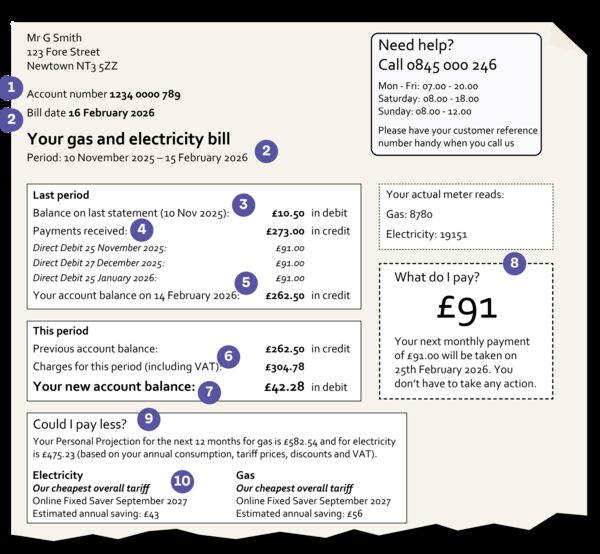
The phrase "dual fuel discount" suggests a single, visible reduction. In practice it has taken three forms over the years, and the historical record shows how small the headline figure has often been.
The most common form is a reduction in unit rates or standing charges applied because the supplier is billing both fuels. The second is a cash discount or credit applied to the account. The third, and the one that matters most for comparison, is a structural advantage: most suppliers offer a discount for dual fuel tariffs that makes them cheaper than separate gas-only and electricity-only tariffs2.
The size of the discount has historically been modest. Ofgem's 2012 review of the market found the average dual fuel discount for a typical direct debit and quarterly credit customer on a standard tariff with one of the major suppliers was 1%, worth £13, and for a typical direct debit customer on a standard tariff with a major supplier it was 0.7%, worth £93. A decade earlier, the figure was a yearly discount of £14.50 for dual fuel customers7. These are historical figures and should be read as such, but they establish the scale: the discount has rarely been the main reason a dual fuel deal wins or loses.
"Dual fuel discounts and online discounts will have to be presented in £/year, and they will have to have the same terms"
That 2013 rule matters for how discounts are now advertised. Presenting the discount in pounds per year, with consistent terms, makes it comparable across suppliers in a way a percentage never was. A household comparing two dual fuel deals can therefore see the discount stated as a cash figure rather than having to infer it from unit rates.
The discount is not the same as the tariff being cheap. A supplier can offer a large dual fuel discount on an expensive standard variable tariff and still cost more than a cheaper fixed deal elsewhere. The discount is one input into the comparison, not the comparison itself.
Is dual fuel cheaper than separate tariffs?
There is no guarantee that a dual energy deal is cheaper than separate gas and electricity tariffs1. That is the starting point, and it is worth stating plainly because the marketing around dual fuel often implies otherwise.
What can be said is that suppliers tend to pass on some savings, and that most suppliers offer a discount for dual fuel tariffs that makes them cheaper than separate gas-only and electricity-only tariffs2. The savings come from the supplier's side: one billing relationship, one set of administrative costs, one credit check. Some of that is passed back. The 2012 figures of £9 to £13 a year suggest how little of it reached the customer at that time3.
The comparison that matters more is between tariff types rather than between fuel arrangements. A standard variable dual fuel tariff will cost more than a fixed dual fuel tariff most of the time6. A household on a standard variable dual fuel deal is therefore likely to be paying more than one on a fixed dual fuel deal, regardless of whether either is cheaper than holding two single fuel contracts.
There is also a regulatory dimension. Ofgem's default tariff cap protects households on standard variable and default tariffs, which it refers to collectively as default tariffs9. That protection applies to the default arrangement a household falls onto, not to the choice between dual and separate fuel. A household on a fixed dual fuel deal is outside the cap; a household on a standard variable dual fuel deal is inside it.
For a household weighing independence, the practical point is that dual fuel concentrates both fuels with one supplier and one set of terms. The financial advantage is real but usually small, and it can be erased by a worse tariff type. The administrative advantage is larger and more reliable. A household that values simplicity over marginal savings will generally find dual fuel the better fit; one that wants to optimise each fuel separately will not.
Dual fuel, fixed or variable: which tariff type fits which home

There are three main types of tariffs: fixed rate, standard variable tariff, and multi-rate tariff10. Dual fuel is not a fourth type; it is a way of buying any of the three across both fuels.
A fixed rate dual fuel tariff locks the household into a plan for a set period at a fixed amount per unit of energy, usually 12 months1. The rate does not move with the wholesale market during the term, which gives certainty but also means the household does not benefit if wholesale prices fall. A variable rate dual fuel tariff changes depending on the wholesale, or industry, price of energy1, so the household absorbs both the upside and the downside of market movement.
Independent guidance from Wales recommends fixing for no longer than 12 months11. Ofgem's own consumer research tested three options: a 12 month fixed term, a 24 month fixed term, and a standard variable tariff12. The existence of a 24 month option in that research shows longer fixes are available, but the recommendation to keep fixes to 12 months reflects the risk of being locked into a rate that looks expensive if the market moves.
| Tariff type | Rate behaviour | Typical term | Cap protection |
|---|---|---|---|
| Fixed rate dual fuel | Fixed pence per kWh for the term1 | Usually 12 months1 | Not covered |
| Standard variable dual fuel | Moves with wholesale price1 | Open ended | Covered by default tariff cap9 |
| Multi-rate dual fuel | Varies by time of use | Varies | Depends on tariff |
The choice between them turns on how much certainty the household wants and how much it is willing to pay for it. A fixed deal bought when wholesale prices are high locks in that high price. A variable deal bought at the same moment leaves the household exposed if prices rise further but able to benefit if they fall. Neither is universally better, and the evidence does not support a single recommendation.
Eligibility: homes that cannot get dual fuel
Dual fuel requires two supply points. A home with only one fuel connected cannot hold a dual fuel tariff, however much it might want the single bill.
Single fuel tariffs are for people with either gas or electricity-only premises6. An all-electric home, whether a new build with no gas connection or a rural property off the gas grid, takes an electricity-only tariff. A gas-only property, which is rare but exists, takes a gas-only tariff. Neither can be combined into a dual fuel product because there is no second fuel to combine.
There is a further wrinkle in how single fuel deals are sold. Several suppliers offer green gas tariffs without requiring a household to sign up for electricity or dual fuel2, which means a household wanting renewable gas is not forced into a dual fuel arrangement to get it. That is a genuine option for a home that wants to keep its electricity supply separate.
For households in fuel poverty or on low incomes, the support landscape is separate from the tariff structure and varies by nation. In England, the Green Homes Grant scheme targets lower income households in or at risk of fuel poverty13. In Scotland, the Energy Efficient Scotland Area Based Scheme excludes second home and holiday let properties, so a property let out for part of the year is outside it14. Northern Ireland runs its own arrangements for homes heated by oil, with eligibility rules set separately from those in Great Britain. None of these schemes changes whether a dual fuel tariff is available to a household; they change what help a household can get alongside it, and most are aimed at the fabric of the home or the heating system rather than at the price per unit.
Bills, admin and smart meters: what owning a dual fuel tariff means day to day
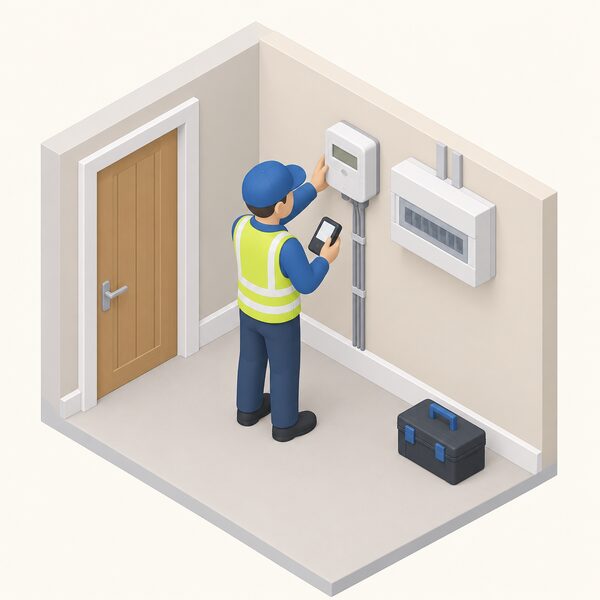
The day-to-day experience of a dual fuel account is mostly about billing and meter readings. One invoice covers both fuels, one payment leaves the account, and one set of readings is submitted. There is no downtime between an old contract ending and a new one beginning when switching, and no supplier visit is needed unless a smart meter is being installed1. The only paperwork is giving the old supplier an up-to-date meter reading so the final bill is accurate1.
A smart meter changes what the account can do rather than how it is billed. Smart meter households can access more flexible tariffs, including dual-rate tariffs15. That opens the door to time-of-use products that a traditional meter cannot support, and it means a dual fuel household with a smart meter can hold a dual fuel contract for the standard supply while also taking a time-of-use electricity product where the supplier offers one.
The savings from smart meters are concentrated in when energy is used rather than how much. Some innovative energy suppliers were able to offer tariffs, to consumers with smart meters, that could save up to two-thirds of the costs of charging electric vehicles if charging at certain times of day17. That is a specific case, not a general saving, but it shows the direction of travel: the value of a smart meter is in the tariffs it unlocks, not in the meter itself.
"Except by switching, you don't control the tariff your energy supplier sets, but you can change how much energy you use."
That line captures the limit of what any tariff arrangement, dual fuel or otherwise, gives a household. The supplier sets the tariff. The household chooses whether to switch and how much to use. A dual fuel account simplifies the switching decision by putting both fuels in one place, but it does not change who sets the price.
Exit fees and the 49-day switching window
Leaving a fixed term dual fuel tariff early means paying an exit fee for both types of energy1. That is the cost of the single contract: because both fuels are on one agreement, both are subject to the same exit terms.
The fee is not payable indefinitely. The exit fee is waived when the household enters the final 49 days of the contract2. That window is the point at which a household can begin arranging a new deal without penalty, and it is the practical trigger for shopping around. A household that waits until the contract has ended and rolled onto a standard variable tariff has missed the window and will typically be paying more.
The 49-day rule interacts with the switching process. Because there is no downtime between contracts and no supplier visit needed unless a smart meter is installed1, a switch arranged inside the window can complete without a gap in supply. The household gives the old supplier a final meter reading, and the new contract begins.
For a household thinking about independence, exit fees are the price of lock-in. A 12 month fixed dual fuel deal with exit fees on both fuels is a commitment to one supplier for both supplies for the term. That is a real constraint if the household wants to move one fuel to a different supplier, or if the supplier's service deteriorates. The 49-day window is the escape route, and it is worth diarising at the point of signing rather than discovering later.
Fixed tariffs: price protection of 12 to 24 months, with limits

A fixed rate dual fuel tariff usually runs for 12 months at a fixed amount per unit of energy1. Longer fixes exist, and Ofgem's consumer research tested a 24 month fixed term alongside a 12 month term and a standard variable tariff12. The choice between them is a choice about how long the household wants to be certain of its unit rate.
The limit of a fix is that it fixes the rate, not the bill. A household on a fixed dual fuel tariff still pays more if it uses more, because the standing charge and unit rate apply to whatever is consumed. The fix protects against price rises during the term; it does not protect against a cold winter or a change in how the home is used.
There is also a confidence problem in how households understand their own tariffs. Ofgem's research found considerably more consumers claiming to be on fixed tariffs (38%) than the official data suggests (11%)12. Among consumers who say they are on a fixed tariff for electricity, 55% report being very confident this is the case, while 38% say they are somewhat confident12. The gap between what households believe and what the data shows is wide enough that checking the actual contract, rather than relying on memory, is the only reliable way to know what a household is on.
For a household weighing a fix, the relevant questions are the length of the term, the exit fee, and whether the rate is competitive against the current cap. A fix bought at a rate above the cap is a bet that prices will rise; a fix bought below it is a hedge that has already paid off. Neither is a recommendation, and the evidence does not settle which is right for any particular household.
How the price cap and typical consumption values shape your bill
The annual figure quoted for a dual fuel tariff is not a cap on what a household pays. It is the cost of a typical household using a typical amount of energy, and the gap between that and any individual bill can be large.
The current price cap makes an energy bill for a dual fuel home with typical usage in Great Britain paying by direct debit around £1,758, for 1 January to 31 March 20264. Even for January to March 2026, the annual dual fuel energy bill for a typical home is over £500 more than in winter 2020-214. In Northern Ireland, the Energy Price Guarantee put the typical annual dual fuel bill at around £2,109 per year, against around £2,500 per year in Great Britain5.
The typical usage figure behind those numbers has changed. Previous price cap figures are based on 12,000 kWh of gas and 2,900 kWh of electricity a year18. A household using more than that will pay more than the quoted annual figure; one using less will pay less. The quoted figure is a comparison tool, not a prediction.
The cap itself is built from several components. The level of policy and network costs within the nil consumption level of the price cap is around £150 for a GB average dual fuel customer19. For the 1 April to 30 June 2025 period, the cap was £1,849 for a dual fuel, direct debit, typical customer on an annual basis20. At nil consumption, the default tariff cap for a multi-register metering arrangement in the Eastern region was £193.01 for electricity in the second consumption band, for 1 April to 30 June 202421. Debt-related costs made up 1% of typical dual fuel direct debit bills and 1% of typical dual fuel prepayment bills in cap period 11a, October to December 20239. A 1% additional risk allowance was worth around £9 per dual fuel customer in annualised terms in cap period eight22.
The price cap for a typical dual fuel household is given as around £1,758 in one official source and around £1,641 in another, and the two have not been reconciled4. The average annual dual fuel bill is given as £1,723 in one independent source and £1,663 in another, also unreconciled. Where a household is comparing deals, the figure that matters is the one on the supplier's own statement for that household's actual usage, not the headline typical figure.
Sources22 cited
- How to compare dual fuel tariffs, Confused.com, 2025-11-03
- Gas-only energy tariffs, Confused.com, 2026
- Which? response to Ofgem consultation, Ofgem, 2012-02-23
- Energy price cap explained, Welsh Government, 2026
- Energy Price Guarantee up until 30 June 2023, GOV.UK, 2026-09-17
- Dual fuel or single fuel tariffs: what suits your home, Energy Helpline, 2026-09-20
- Review of domestic gas and electricity competition and supply price regulation, Ofgem, 2001-11
- The Retail Market Review: final domestic proposals, Ofgem, 2013-03-27
- Additional debt-related costs allowance policy consultation, Ofgem, 2023-10-12
- Understand your electricity and gas bills, Ofgem, 2026
- Five top tips from Which? to cut your energy bills, Welsh Government, 2026-03-18
- Understanding consumers' energy tariff choices, Ofgem, 2025-07
- How do smart meters save energy?, Smart DCC, 2026
- The Feed-in Tariff, House of Commons Library, 2026-09-17
- Getting a smart meter, Ofgem, 2026
- Get help with your smart meter, Ofgem, 2026-09-17
- Energy bills support: an update, Public Accounts Committee, 2023-10-20
- Fuel poverty scenario modelling based on Ofgem energy price caps, Scottish Government, 2026-09-02
- Mandating lower or zero standing charge tariffs: technical working paper, Ofgem, 2025-09-24
- Summary of changes to energy price cap 1 July to 30 September 2025, Ofgem, 2025
- Default tariff cap level: 1 April 2024 to 30 June 2024, Ofgem, 2024
- Price cap: decision on possible wholesale cost adjustment, Ofgem, 2022-08-04
 Reading an Energy BillA line-by-line walk through a domestic gas and electricity bill: unit rate, standing charge, kWh consumption, meter readings, tariff name and balance, plus the 12-month back billing limit and the guaranteed standards payments that apply when a supplier or network operator gets it wrong.
 Exit Fees and Contract TermsExplains exit fees on fixed energy contracts, how they are charged per fuel, and the Ofgem switching window in which a supplier cannot apply them.
 Reducing Your BillRanks household electricity and gas uses by share of the bill and sets out what each measure changes, from heating settings and insulation to appliance use and tariff choice.
 The Full Tariffs GuideWhich energy tariff suits how you live, and will switching really save you money?
 Free Electricity and RewardsCovers tariffs and offers that give free or half-price electricity in set windows, including recurring weekly free hours, weekend offers and savings challenges.
 Energy Price CapThe price cap sets the most you pay for each unit of gas and electricity, plus the daily standing charge, but not your total bill.