
In this guide
A closed energy tariff is one that no longer accepts new customers, and a withdrawn one has been pulled from the market altogether. Neither means the household on it loses supply. When a supplier ceases trading, Ofgem appoints another supplier to provide the energy supply, a role called the Supplier of Last Resort, and the fixed rate contract you were on ends at the moment you are moved across1. You are placed on a standard variable tariff, with no early exit fee, and the new tariff is not guaranteed to be the same as the old one, so the bill can go up2.
The supply itself is never interrupted. If your energy supplier goes out of business because of financial problems, you will still have electricity and gas supplied to your home or business, and your energy supply will not be cut off1. The same holds for the switch itself: suppliers must switch your electricity or gas supply from your old supplier to your new supplier within five working days3.
What follows covers the mechanics of supplier failure, what happens to credit and debt, the mid-switch position when two suppliers fail, and the withdrawn and proposed tariff designs that households still search for by name, including white meter arrangements, standing charge trials and the schemes that were proposed but never implemented.
What happens when your supplier ceases trading
When an energy supplier ceases trading, Ofgem will appoint another supplier to provide their energy supply, a step taken to prevent a drop in service to customers5. The appointment is made through a bidding process, where energy companies bid to take on new customers1. Ofgem's stated top priority in choosing is to ensure that all customers continue to receive supplies of gas and electricity2.
The vetting is not a formality. A candidate supplier must show it has the ability to take on the new customers quickly and efficiently, and without significantly affecting its existing customers, and must be able to secure enough gas and electricity without significant cost2. Ofgem also reviews the failed supplier's customer profile, weighing the ability to issue bills without delay, call centre capability, and whether the supplier will voluntarily reimburse customers' credit balances2. If no supplier volunteers to accept the customers of a failed supplier, Ofgem will appoint the supplier it deems best suited2.
Scale changes the route. Bulb was too big to go into the Supplier of Last Resort system, so it was placed into special administration until its customer base was acquired by Octopus Energy the following year2. The process also has defined edges: it does not apply to Heat Networks or Green Deal6.
For a household, the practical effect is that the relationship with the supplier changes but the physical supply does not. What is lost is choice at the moment of failure: the new supplier is appointed, not selected by the customer. What remains is the ability to leave afterwards, which is covered below.
Your fixed tariff ends: what tariff you land on after a supplier failure

The fixed rate contract you were on ends at the time you are moved onto the Supplier of Last Resort, and you are placed on a standard variable tariff with no early exit fee2. That is the same destination a household reaches when a fixed deal simply runs its course: the supplier will automatically move you onto the standard variable tariff when the fixed deal has ended, and should remind you when the contract is about to end7.
The difference is the notice. In an ordinary end of contract, the reminder comes first and the household can shop around before the deal lapses. In a supplier failure, the move happens as part of the transfer, and the tariff you land on is not guaranteed to be the same as your old one, so your bill could go up2. The absence of exit fees is the compensating feature: nothing holds the household in place once the account is set up.
Standard variable tariffs are the protected default. People on this type of tariff are protected by the energy price cap8, and Ofgem's decision on the cap states that it seeks to protect default tariff customers, the objective set out in the Act9. That protection is a ceiling on unit rates and standing charges, not a guarantee that the bill will be lower than the deal that ended.
If your fixed tariff has already ended, you can still switch supplier or tariff7. Identification is straightforward: if your bill says your contract has an end date, you are on a fixed tariff7. A household that has been moved onto a standard variable tariff after a failure is in the same position as one whose deal has expired, free to move once the account is settled.
Credit balances, debts and discounts: what transfers and what does not
The split is clean and worth stating precisely, because it is the question households ask first.
- Credit transfers in substance. Your new supplier will honour any credit you had built up with your old supplier under Ofgem's SoLR rules2.
- Debt does not transfer. Your energy debt will not transfer to your new supplier, though you may still need to continue to pay it off to the old supplier, and the administrator will contact you2.
- Warm Home Discount continues. If you receive the Warm Home Discount, your new supplier should honour this too2.
- Short-term debt goes on the final bill. If you owe money to your old supplier and have been in debt to them for less than 28 days, any money you owe should be added to your final bill3.
The general switching rules reinforce the credit position. When you switch to a new supplier, your old supplier will refund any credit in your final bill, and you could get compensation if they do not10. That is the ordinary route; the SoLR rules carry the balance across rather than refunding it, because the supply is continuing rather than ending.
That gap matters for households with an unresolved complaint at the moment of failure. The Energy Ombudsman has said that when suppliers leave the market through this process, consumers with outstanding disputes lose out, because there is no obligation on the new supplier to fulfil the obligations11. Where a complaint to the new supplier is unresolved after eight weeks, the consumer can pursue dispute resolution through the Energy Ombudsman6.
Supply continuity: why your energy will not be cut off
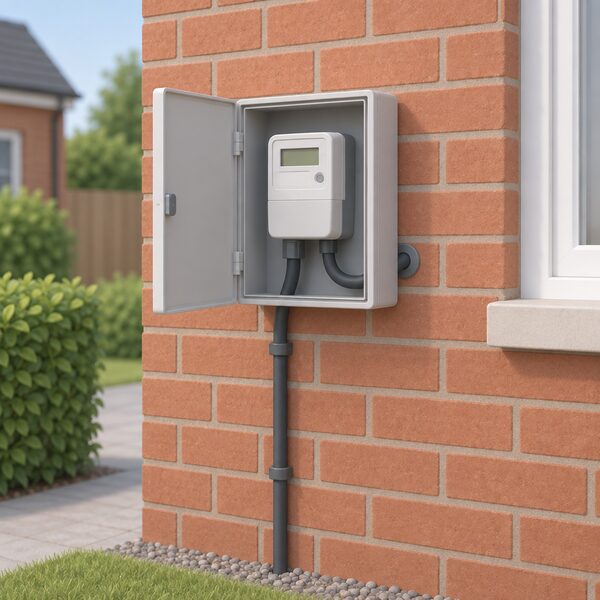
No, your energy will not be cut off at any point in the event your supplier goes out of business2. Ofgem states the same in its own guidance: if your energy supplier goes out of business because of financial problems, you will still have electricity and gas supplied to your home or business, and your energy supply will not be cut off1.
This is the single most important reassurance on the page, and it holds regardless of what happens to the commercial relationship. The supply is a physical service delivered over wires and pipes that the failed supplier does not own. What changes is who bills you for it.
Separately from supplier failure, there is a standing protection against disconnection for debt. All fuel suppliers, electricity and gas, follow a code of practice that means they will not cut off your supply if you agree a payment plan with them and then keep to it12. That protection is conditional on keeping to the agreed plan, and it applies to suppliers that are still trading.
"If your energy supplier goes out of business because of financial problems, you will still have electricity and gas supplied to your home or business. Your energy supply will not be cut off."
For energy independence, the picture is mixed. The household does not depend on any particular supplier for the physical supply, which is a genuine resilience. It does depend on the grid, on the appointed supplier for billing, and on the regulatory process to keep the account moving. A household with its own generation and storage reduces the first of those dependencies but not the billing relationship.
Mid-switch customers: which supplier you end up with when both fail
A household that was part way through a switch when both suppliers failed ends up with one of them, and which one depends on timing. If the switch had been completed, you would be transferred to the SoLR for the supplier you had decided to switch to. If it had not, you go to the SoLR for the supplier you were leaving2.
The rule is mechanical, and it means the household has no say in the outcome at that point. The practical consequence is that a switch in progress during a period of supplier instability can land the customer with either company's appointed successor, and the tariff that follows is a standard variable tariff in either case.
The scale of supplier exits is not trivial. As a consequence of the wholesale energy crisis, 27 suppliers exited the market during SY1213. That volume of exits is why the mid-switch question arises at all, and why the appointment process has to run at speed.

What to do first: meter readings and waiting before you switch again
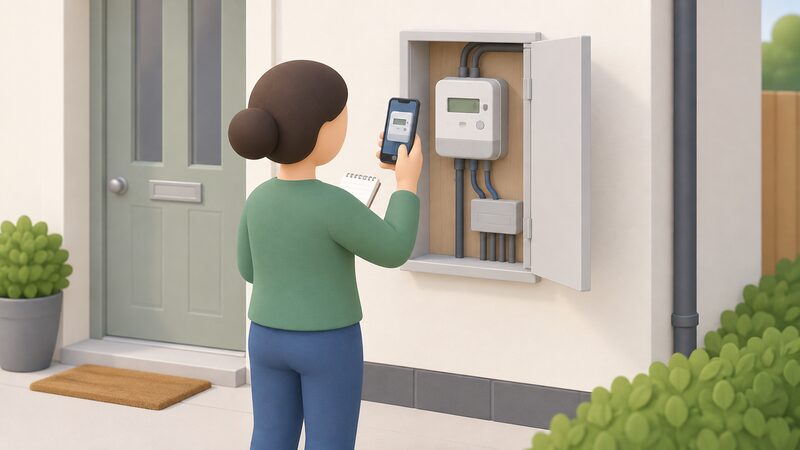
The first action is a meter reading. Independent guidance is specific: take meter readings as soon as you are aware that your supplier has ceased trading, as you will need these for your new account2. A record of the reading is what makes sure the account is billed correctly by the new supplier1.
The second is patience. There is no requirement to stay with a Supplier of Last Resort, but it is best to wait until your account is set up with the new supplier before switching again2. A switch started while the account transfer is still in progress can create a mismatch between the old and new records, and the meter reading is the evidence that resolves it.
If a smart meter is being installed as part of a change of arrangement, and you have separate suppliers for gas and electricity, you will need to book individual appointments with both, and it is recommended that you change your electricity meters first14.
Withdrawn and proposed tariff designs householders still ask about
Some tariff names that households search for were never products they could buy, or were closed to new applicants years ago. The distinction matters, because a household looking for a scheme that does not exist can waste time on it.
The Feed-in Tariff is the clearest example of a closed scheme. The FIT scheme is closed to new applications, and installations already accredited under the scheme will continue to receive payments15. Closure does not affect installations which are already accredited16. Accredited installations that meet their ongoing obligations receive tariff payments for both the amount of renewable electricity generated and the amount exported13. Households on it are on a legacy arrangement that no new applicant can join, which is a different situation from a tariff that was withdrawn before launch.
Consumer understanding of what they are on is imperfect, which is part of why these questions persist. Considerably more consumers claim to be on fixed tariffs, 41% for gas and 40% for electricity, than the official data suggests, at 11%17.
There are three main types of tariffs: fixed rate, standard variable tariff and multi-rate tariff8. Most of the withdrawn and proposed designs discussed below are variations on the multi-rate idea, or on the standing charge that sits alongside any of the three.
White meter tariffs: the two-meter arrangement and who it suits
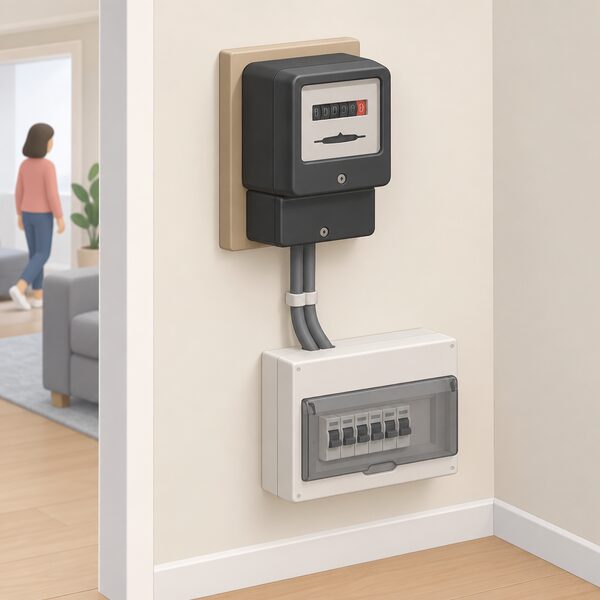
A white meter is a two-rate electricity arrangement, historically delivered through a separate meter and a timeswitch, giving a block of cheaper overnight units and a higher rate for the rest of the day. The illustrative time-of-use tariff used in government guidance provides 8 hours of electricity at the off-peak rate4. The exact hours vary by meter and region, so the times printed on the bill or set in the meter are the ones that apply.
The arrangement survives into the smart meter era. Smart meters can access more flexible tariffs, including dual-rate tariffs18. That means a household with a white meter arrangement is not stranded by the technology change; the two-rate structure can be carried onto a smart meter, and there are certain tariffs that are only available to smart meter customers, including some of the cheapest tariffs on the market20.
Who it suits is a matter of load shape rather than property type. A household that can run heavy electricity loads in the overnight block, such as storage heating, water heating or electric vehicle charging, gets more value from the cheap hours. A household whose demand is concentrated in the evening peak gets less. The tariff does not change the total energy used, only the price of the units in each period.
Standing charge trials and lower standing charge tariffs
The standing charge is the fixed daily amount that applies whatever the household uses, and it has become the subject of live regulatory work. Ofgem consulted on a requirement to offer lower standing charge tariffs, under the topic of energy pricing rules and the subtopic of standing charges, and that consultation is closed awaiting decision21. The proposal was to prescribe the tariffs for all payment types, and for consumers on both smart and traditional meters22.
A trial has run alongside the policy work. The objective of the split part standing charge tariff trial was to explore how domestic consumers respond to a tariff design that introduces a separate element to their standing charge that varies with their electricity usage during peak periods23. Participants in the trial will be able to reduce their daily standing charge if they use less energy at peak times23. The trial includes funding to cover under-recovery of standing charges during the trial period, ensuring financial protection for participants23.
In Wales, a pilot for lower standing charge tariffs will start this spring24. The Welsh government statement gives the timing but not the eligibility detail, so households in Wales should treat the start date as the firm point and the terms as still to be confirmed.
The direction of travel is towards tariffs where the fixed element is smaller and the variable element does more work. For a household, that shifts the balance between paying for being connected and paying for what is used, and it rewards load shifting more than the current structure does.
Tariff designs proposed but never implemented
Three names recur in searches despite never becoming products a household could sign up to.
The Affordable Energy Guarantee was a proposed design rather than a live tariff. No eligibility rules were implemented, and the scheme did not reach the market in a form households could join.
The Rising Block Tariff would have charged a higher unit rate as consumption rose through blocks. It was proposed and not implemented.
The Emergency Energy Tariff was likewise proposed and never implemented. What exists in its place is the standard variable tariff, which is protected by the energy price cap8. The Energy Price Guarantee, which did operate, applied to standard variable tariffs and set unit rates for them25.
Where the household's independence stands
The dependence that remains after a supplier failure is narrow but real. The household depends on the grid for physical supply, on the appointed supplier for billing, and on the regulatory process to move the account. It does not depend on the failed company for anything except the resolution of old debts and disputes, and the debt route runs through an administrator rather than the supplier.
What the household controls is limited. Except by switching, you do not control the tariff your energy supplier sets, though you can change how much energy you use26. That is the honest summary of the position on any closed or withdrawn tariff: the terms were set elsewhere, the exit is free, and the lever available is consumption and the choice of what comes next.
The wider tariff landscape is covered in the UK energy tariffs pillar, with the mechanics of contract endings in what happens when a fixed deal ends and the rules on leaving in exit fees and tariff contract terms. Households on a two-rate arrangement will find the detail in Economy 7 tariffs and Economy 10 and restricted meter tariffs, and those weighing a move to a supplier-controlled product should read smart charging tariffs.
Sources26 cited
- What happens if your energy supplier goes out of business, Ofgem, 2026
- Energy supplier out of business, Uswitch, 2026-05-29
- Switch your home energy supplier, Ofgem, 2026
- Warm Homes Plan technical annex, GOV.UK, 2026-09-17
- Energy Ombudsman FAQs, Energy Ombudsman, 2026-09-19
- Supplier of Last Resort information, Energy Ombudsman, 2026-09-20
- Your gas or electricity supplier has put up its prices, Citizens Advice, 2026-09-17
- Understand your electricity and gas bills, Ofgem, 2026
- Energy price cap operating cost and debt allowances decision, Ofgem, 2025-05
- How your electricity or gas bill is calculated, Ofgem, 2026
- Review of Ofgem call for evidence, Energy Ombudsman, 2025-02-28
- Overdue utility bills, Anglesey Council, 2026-09-17
- Feed-in Tariffs Annual Report Scheme Year 13, Ofgem, 2023-12
- How to get a smart meter, Smart DCC, 2026
- Guidance for FIT Generators V18, Ofgem, 2026-04-01
- Feed-in Tariffs scheme closure, Ofgem, 2026-09-17
- Understanding consumers' energy tariff choices, Ofgem, 2025-07
- Get help with your smart meter, Ofgem, 2026
- Get help with your smart meter, Ofgem, 2026-09-17
- Energy pricing and smart meter tariffs briefing, House of Commons Library, 2023-09-26
- Requirement to offer lower standing charge tariffs, Ofgem, 2025-09-24
- Requirement to offer lower standing charge tariffs consultation document, Ofgem, 2025-09-24
- Split standing charge tariff trial, Ofgem, 2025-06-20
- Debt and payment case studies, Energy Ombudsman, 2026-09-20
- Energy Price Guarantee regional rates, GOV.UK, 2022-10-07
- How do smart meters save energy, Smart DCC, 2026
 Closed Energy PoliciesIf a scheme you used has closed, do you still get paid?
 Fixed-Rate Energy TariffsWhat a fixed energy tariff fixes and what it does not, the contract lengths sold in the UK, exit fees and the 49-day window, how fixed rates compare with the price cap, and what happens when the term ends.
 Supplier Licensing and FailureWhat happens when your energy supplier goes bust?
 Green Energy TariffsDoes a green tariff really mean greener electricity comes into your home, or just that your supplier buys renewable certificates to match what you use?
 Financial Resilience RulesYour supplier going bust raises two questions: who takes over and what happens to your credit balance?
 Switching and Supplier MarketWhat is the Ofgem price cap and does it limit what you actually pay?