

In this guide
The Warm Home Discount is a statutory rebate on electricity bills, worth £150 per eligible household, delivered by energy suppliers rather than by the government directly. The scheme requires large domestic energy suppliers to provide an annual discount of £150 to eligible households, and it has been confirmed through to 2030-311. It is a fuel poverty reduction scheme, reducing the energy costs of low-income and vulnerable households across Great Britain since its inception in 20112.
The mechanics matter more than the headline. Suppliers with more than 1,000 domestic customers, plus other suppliers who elect to take part, offer the discount and recoup the costs from the energy bills of all their customers3. That means the £150 is not a grant from general taxation: it is a levy on all domestic gas and electricity customers, redistributed to those who qualify4. Around 6 million households now benefit from a £150 rebate off their winter energy bill1.
For a household, the discount is a modest but reliable reduction in the cost of running a home, and it arrives without an application for most people. What it does not do is reduce dependence on the grid or on a supplier. The rebate is applied to an electricity account by a company the household must remain a customer of, on a qualifying date set by regulations, and it disappears if the household moves outside the scheme's territory or loses the benefit that triggered it.
What the Warm Home Discount is and who pays for it
The Warm Home Discount requires suppliers to provide an electricity bill discount for certain customers7. It is not a benefit, not a payment to the household, and not administered by the Department for Work and Pensions. The Warm Home Discount scheme obligates participating suppliers to provide rebates to eligible low-income households2, and the money is applied to the electricity bill by the supplier. The money is not paid to you8.
The funding route is what distinguishes it from a welfare payment. The scheme is funded through a levy on all domestic gas and electricity customers4. Every household with a domestic electricity or gas account contributes, through the standing charge or the unit rate depending on the year, and the pooled money is paid out as rebates to those who qualify. The Warm Home Discount is a fuel poverty reduction scheme, reducing the energy costs of low-income and vulnerable households across Great Britain4.
Local authority guidance describes the same structure from the household end: Warm Homes Discount is provided by larger energy suppliers to support people who are in or at risk from being in fuel poverty, and it is paid by the supplier as a discount on the bill9. The scheme runs in annual scheme years4, so entitlement is assessed afresh each year against that year's qualifying date and that year's benefit rules.
For energy independence, the picture is mixed. The rebate lowers the cash cost of grid electricity but does nothing to reduce the volume drawn from the grid, and it depends entirely on a supplier's participation and a government's continuation of the regulations. A household that wants to cut its exposure to electricity prices needs generation or storage of its own; the Warm Home Discount only softens the bill. The wider relationship between suppliers and household self-sufficiency is covered in energy suppliers and energy independence.
How much the discount is worth: £150 off the electricity bill
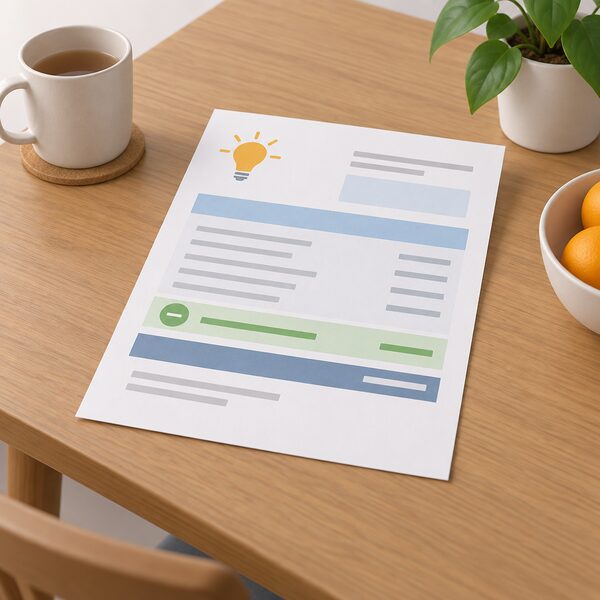
The rebate is £150 per household, one-off, off electricity bills1. The same figure appears across the official documents: the scheme primarily provides support through the provision of £150 energy bill rebates, funded through a levy on all domestic gas and electricity customers4, and the Warm Home Discount scheme requires large domestic energy suppliers to provide an annual discount of £150 to eligible households1. It is a one-off payment giving eligible older and low-income consumers £150 off their energy bill11.
The figure has not always been £150. Older documents give £140: the Warm Home Discount is a one-off £140 payment applied to eligible customers' electricity bills between October and April12, and eligible households receive a £140 discount on their electricity bills13. The £140 figures date from earlier scheme years and from a period when the discount was set at that level; the current published value is £1501. Where a household is reading an older leaflet or a council page that has not been updated, the £140 figure is the one likely to appear, and it is out of date.
The discount is applied to the electricity account, not the gas account, by default. The regulations allow delivery by crediting the customer's electricity account, crediting the gas account on request, tendering payment, or providing prepayment credit for electricity or gas14. In practice the default is electricity, and a household that wants the value against gas must ask.
"Your electricity supplier will apply the discount to your bill. The money is not paid to you."
The value is fixed nationally and does not vary by region, by fuel, by household size or by the size of the bill. A household in a large, poorly insulated home and a household in a small flat receive the same £150 if both qualify. That flat structure is one of the criticisms made of the scheme, because it does not track the cost of heating a particular property. The scheme's own purpose is to reduce energy costs for low-income and vulnerable households, not to equalise them.
Which suppliers take part: the obligation on large suppliers and voluntary participation by smaller firms
Participation is defined by a customer-number threshold rather than by brand. The Warm Home Discount (England and Wales) Regulations 2026 place obligations on electricity suppliers, described as compulsory scheme electricity suppliers, who have, or are part of a group of electricity or gas supply companies which together has, at least 1,000 domestic customers15. Energy suppliers with more than 1,000 domestic customers, plus other suppliers who elect to take part, offer the discount and recoup the costs from the energy bills of all their customers3.
Above that threshold, participation is compulsory. Below it, suppliers may choose. Some smaller suppliers that are not obligated under Warm Home Discount Scheme may choose to participate voluntarily4. Those that do take part on a narrower basis: these suppliers only contribute towards the core groups4. A voluntary participant is therefore not obliged to run a broader group, which matters in Scotland where the broader group is a distinct route.
The voluntary tier has always been small. Ofgem's 2018 vulnerability report recorded that some smaller suppliers, Our Power and Bristol Energy, also voluntarily participate in part of the scheme16, and a government press release from the same period stated there are currently 3 voluntary smaller suppliers17. Those named companies have since left the market, which illustrates the fragility of relying on a voluntary participant: the obligation survives a supplier's exit, but the voluntary participation does not.
There is also a duty on suppliers that leave. A supplier that participated in the preceding scheme year but not the current one must place a statement on its website that the supplier is not participating in the Warm Home Discount scheme, and notify former core group customers in writing, on or before the date one month after the scheme year starts18. That gives a household a route to check whether a supplier has quietly dropped out.
| Supplier type | Obligation | Groups covered |
|---|---|---|
| Large supplier (over 1,000 domestic customers) | Compulsory | Core group; broader group in Scotland; industry initiatives4 |
| Smaller supplier, voluntary | Optional | Core groups only4 |
| Supplier that has left the scheme | Must publish a non-participation statement and write to former core group customers18 | None |
The practical consequence for a household is that the list of participating suppliers is not the same as the list of suppliers. A small supplier may be cheaper on unit rate and still not offer the discount, and a household that qualifies on benefit grounds would then receive nothing. Checking participation before switching is the only way to know. The structure of the market, including which brands sit under which parent, is set out in who owns which energy supplier and challenger energy suppliers.
Core group and broader group: who qualifies and how eligibility is checked
Eligibility runs through two routes in England and Wales, and three in Scotland. In England and Wales, the core group and industry initiatives apply to the scheme4. In Scotland the core group, industry initiatives and broader group apply to the scheme4. The broader group is delivered by each scheme supplier in Scotland on an individual application basis4, which is why Scottish households may need to apply where English and Welsh households do not.
The core group itself has been split. For winter 2025/26, households are eligible for the rebate on their energy bill if the person named on the energy bill, or their partner, or a legal representative, met the criteria on the qualifying date19. Core Group 1 covers receipt of the Guarantee Credit element of Pension Credit20. Core Group 2 is determined by low-income criteria, meaning qualifying means-tested benefits, and eligible property types21.
The Core Group 2 qualifying benefits for winter 2025/26 are Housing Benefit, Income-related Employment and Support Allowance, Income-based Jobseeker's Allowance, Income Support, the Savings Credit element of Pension Credit, and Universal Credit19. The government has consulted on merging the current Core Group 1 and Core Group 2 into a single Core Group in England and Wales, retaining the expanded eligibility criteria from 2025/2619.
The checking process is largely invisible to the household. Through data matching, the majority of eligible households will receive their rebates automatically from their energy supplier2. The government matches benefit records against supplier customer data, and the supplier then applies the credit. A household must be a customer of a participating energy supplier on the qualifying date2, and must be a customer of an electricity supplier and be an account holder or named on an electricity bill2.
Where the match fails, the household falls out of the automatic process even though it may be eligible in principle. That is the most common reason for a missing payment, and it is why the absence of a letter is not proof of ineligibility. The route back in is through the supplier and, if necessary, the helpline.
How the discount is paid: automatic credit, vouchers for prepayment meters, and the payment window
The default delivery is a credit on the electricity account. The regulations permit crediting to the customer's electricity account, crediting the gas account on request, tendering payment, or providing prepayment credit for electricity or gas14. The scheme operates between October and April, with the discount applied to eligible customers' electricity bills between October and April12.
For households on prepayment meters, the value is delivered as credit rather than as a reduction in a bill that does not exist in the conventional sense. The Energy Bills Support Scheme, a different scheme with a similar delivery problem, used automatic deduction to bills for standard credit, payment card and direct debit customers, vouchers for traditional prepayment customers, and direct credit to smart prepayment meters22. The Warm Home Discount's own regulations allow prepayment credit for electricity or gas14, and the practical effect is the same: the money reaches the meter rather than the bank account.
The payment window is wide. Most pensioners receiving their discounts between now and January was the pattern described in an earlier scheme year23, and the statutory window runs to April. A household that has not received the credit by the end of the window has a genuine query, but a household that has not received it in October does not.
The delivery method matters for independence in a small way. A credit on an electricity account reduces the amount a household owes to a supplier, which is a reduction in dependence on that supplier's billing. It does not reduce the physical dependence on the grid, and it does not carry over as a portable asset if the household switches. The credit is consumed against consumption.
Where the scheme runs: England, Scotland and Wales, and the position in Northern Ireland
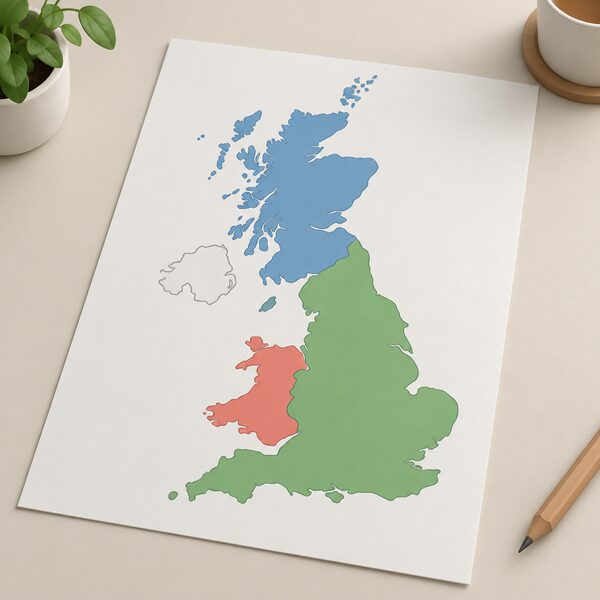
The scheme covers England, Scotland and Wales and will run until 31 March 20314. It does not extend to Northern Ireland. The Warm Home Discount scheme is not available in Northern Ireland20, and the Warm Home Discount Scheme does not run in Northern Ireland, however there is an Affordable Warmth Scheme available4.
The Scottish position differs in two ways. First, the broader group operates there, delivered by each scheme supplier on an individual application basis4. Second, the size of the Scottish scheme has been increased. The Warm Home Discount (Amendment) Regulations 2025 amend the Warm Home Discount (Scotland) Regulations 2022 to increase suppliers' non-core spending obligation by an amount commensurate to the expected increase in England and Wales5. A consultation had earlier proposed to proportionally increase the size of the scheme so more households on means-tested benefits can receive support through their energy supplier's scheme24.
The numbers before expansion give a sense of the split: the number of households receiving the discount rising from an estimated 3.4 million, around 3.1 million in England and around 300,000 in Scotland5. Scotland therefore carries roughly a tenth of the caseload despite the broader group being available only there.
| Nation | Scheme status | Distinctive feature |
|---|---|---|
| England | Runs | Core group and industry initiatives4 |
| Wales | Runs | Core group and industry initiatives4 |
| Scotland | Runs | Core group, industry initiatives and broader group, delivered on individual application4 |
| Northern Ireland | Does not run | Affordable Warmth Scheme instead4 |
For Northern Ireland households, the practical position is that no Warm Home Discount rebate is available from any supplier, because the scheme's territorial extent excludes it. The separate Northern Ireland market, its suppliers and its support schemes are covered in energy suppliers in Northern Ireland and Warm Home Discount in Northern Ireland.
Switching suppliers: when you keep the discount and when you lose it
Switching is straightforward in itself. If you pay a supplier directly for the electricity or gas you use at home, you can choose to switch to a different supplier or tariff at any time25. The complication is that the Warm Home Discount attaches to the account and the qualifying date, not to the person.
The qualifying date governs. A household must be a customer of a participating energy supplier on the qualifying date2. If the switch completes before that date, the new supplier is the one that assesses and pays. If the switch completes after it, the entitlement for that scheme year has already been determined against the old supplier's customer list, and the payment follows the account as it stood.
The risk is switching to a supplier that does not participate. A smaller supplier that is not obligated may choose to participate voluntarily, or may not participate at all4. A household that qualifies on benefit grounds and moves to a non-participating supplier loses the rebate for that year, and the loss can exceed the saving on the tariff. Checking participation before switching is the only reliable protection.
There is a second, slower change to how suppliers account for the scheme. The government will update how the supplier reconciliation process is conducted so that supplier obligations are settled against actual energy volumes supplied26. That is an administrative change to how suppliers' obligations are trued up, not a change to household entitlement, but it affects how suppliers manage the risk of customers moving in and out during a scheme year.
For households with prepayment debt, switching has separate constraints that sit outside the Warm Home Discount, covered in the Debt Assignment Protocol and switching supplier if you owe money. The general mechanics of changing supplier are set out in the energy switch guarantee.
What happens if your supplier stops trading
The scheme is designed so that the obligation survives the company. The government will update how the supplier reconciliation process is conducted so that supplier obligations are settled against actual energy volumes supplied27. Settling against volumes rather than against a supplier's own records means the obligation can be traced and reallocated when a supplier exits, rather than disappearing with it.
For a household, the practical sequence when a supplier fails is that supply continues, the account transfers to a new supplier appointed through the supplier of last resort process, and the Warm Home Discount entitlement for the year is handled as part of that transfer. The customer does not need to reapply for the rebate in most cases, because the entitlement was established by the qualifying date and the data match, not by the supplier's continued existence.
The wider consequences of a failure, including credit balances and the timing of a switch away from the appointed supplier, are covered in energy supplier failures, supplier of last resort and what happens if my energy supplier goes bust. The financial resilience rules that apply to suppliers before they fail are set out in energy supplier financial resilience rules.
What a household should not assume is that a failed supplier's promises survive. A voluntary participant that stops trading takes its voluntary participation with it, and the customers it served may find that the appointed supplier does not run a broader group. That is the structural weakness of a scheme built on company-level obligations: the statutory core is robust, the voluntary and discretionary edges are not.
The cost to all households: how the levy is recovered and what it adds to bills
The rebates are funded by everyone with a domestic energy account. The costs of the Warm Home Discount, £39 on the typical dual fuel bill, are recovered by suppliers through the standing charge, a fixed daily fee applied to all customers regardless of energy usage26. That was the position before reform. The government's position is that energy suppliers should recover Warm Home Discount costs from the unit rate for electricity and gas27, and the intention is to shift the recovery of Warm Home Discount costs from the standing charge to the unit rate from April 202628.
The cost per bill payer has risen with the scheme's expansion. Before the change, the cost of the levy was estimated at £22, and the net effect is £150 minus £22, which is £1285. After expansion, the cost to bill payers will rise from £15 to around £37 each5. The two figures describe different baselines and different years, and they are not directly comparable: one is a per-recipient net benefit calculation, the other a per-bill-payer cost after expansion.
There are also administrative costs. The cost is £20 million for suppliers and a further £15 million in costs from the Government's side5. The expansion of the Warm Home Discount will be offset by new efficiency savings across the energy system29, including Ofgem's confirmed decrease in the operating cost allowance of the price cap and savings from reducing consumer debt recouped via a levy on all bills29.
| Cost item | Figure | Basis |
|---|---|---|
| Cost on typical dual fuel bill | £39 | Recovered through the standing charge26 |
| Cost per bill payer after expansion | around £37, up from £15 | Per bill payer5 |
| Net benefit per recipient before expansion | £128 | £150 minus £22 levy5 |
| Supplier administrative cost | £20 million | Plus £15 million government cost5 |
The distributional effect is the point of contention. Every domestic customer pays something towards the levy, whether through a fixed daily charge or a unit rate, and only eligible households receive the £150. Moving recovery from the standing charge to the unit rate shifts the burden towards higher-consumption households and away from low-usage ones, which changes who pays rather than how much is collected in total. For a household considering its exposure to unavoidable costs, the levy is one of the fixed elements of a bill that no supplier choice removes.
How the scheme is changing: expansion, cost recovery reform and the scheme's future
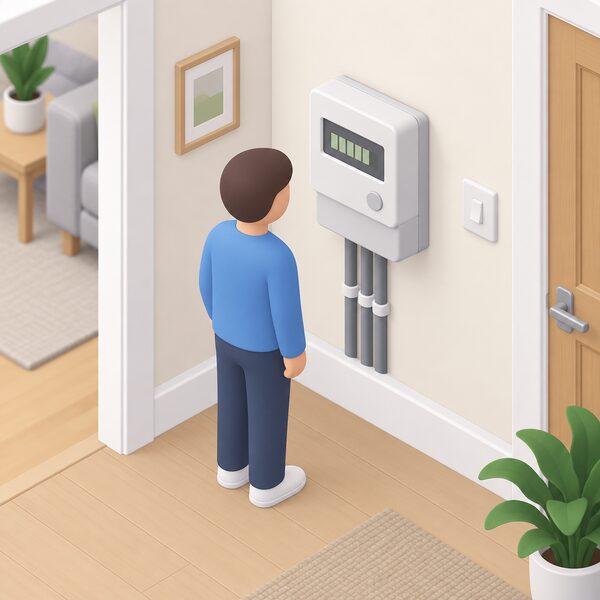
The scheme has been expanded and its funding base reformed. The Warm Home Discount scheme will be expanded to remove the high-cost-to-heat threshold in the current Warm Home Discount (England and Wales) Regulations 2022 for winter 2025/202629. Removing that threshold widened the core group, because eligibility no longer depends on the property's heating cost band.
The expansion was consulted on first. The consultation on expanding the Warm Home Discount Scheme opened at 9am on 20 February 202524. The government response confirmed the direction: merge the current Core Group 1 and Core Group 2 into a single Core Group in England and Wales, retaining the expanded eligibility criteria from 2025/2619. Scotland's non-core spending obligation was increased in step5.
The cost recovery reform is the other live change. The government's position is that energy suppliers should recover Warm Home Discount costs from the unit rate for electricity and gas27, with the shift from the standing charge taking effect from April 202628. The consultation on cost recovery set out the problem: the costs of the Warm Home Discount, £39 on the typical dual fuel bill, are recovered by suppliers through the standing charge, a fixed daily fee applied to all customers regardless of energy usage26.
The scheme's future beyond the current regulations is under review. The government will be consulting later in the year on the future of the scheme beyond the current regulations5. What is settled is the continuation: the Warm Home Discount has been confirmed through to 2030-3128, and the scheme covers England, Scotland and Wales and will run until 31 March 20314.
"The SI also amends the Warm Home Discount (Scotland) Regulations 2022 to increase suppliers' non-core spending obligation by an amount commensurate to the expected increase in England and Wales."
For a household, the changes point in one direction: a wider core group, a larger scheme, and a cost base moving from a fixed daily charge to consumption. The rebate remains £150 and remains a bill reduction rather than a payment. The dependence it leaves in place is the same as before: a supplier must participate, the household must be named on the account, the benefit must be in payment on a date set in regulations, and the whole structure rests on a levy that every other household pays.
Sources29 cited
- Warm Home Discount statistics 2025 to 2026, GOV.UK, 18 June 2026
- Warm Home Discount eligibility statement, England and Wales, 2026 to 2027, GOV.UK, 17 September 2026
- Warm Home Discount eligibility statement, England and Wales, 2026 to 2027 scheme year, GOV.UK, 26 February 2026
- Warm Home Discount, Ofgem, 17 September 2026
- Warm Home Discount (Amendment) Regulations 2025 debateRegulations2025), Hansard, 3 September 2025
- Warm Home Discount contacts, guidance and resources, Ofgem, 17 September 2026
- Warm Home Discount research briefing, House of Commons Library, 17 September 2026
- Warm Home Discount scheme: if you live in England and Wales, GOV.UK, 17 September 2026
- Warm Home Discount statistics 2025 to 2026, GOV.UK, 17 September 2026
- Heating your home, Carmarthenshire County Council, 4 April 2026
- Keeping your home warm in winter, Met Office, 20 September 2026
- Help with household costs, Isle of Anglesey County Council, 20 September 2026
- Scottish House Condition Survey 2021: fuel poverty, Scottish Government, 30 May 2023
- Warm Home Discount Regulations 2011, legislation.gov.uk, 31 March 2011
- Warm Home Discount (England and Wales) Regulations 2026, legislation.gov.uk, 27 March 2026
- Vulnerability report 2018, Ofgem, November 2018
- Households with smaller energy suppliers to benefit from £140 Warm Home Discount, GOV.UK, 15 June 2018
- Warm Home Discount (Miscellaneous Amendments) Regulations 2018, legislation.gov.uk, 25 July 2018
- Continuing the Warm Home Discount Scheme: government response, GOV.UK, 30 January 2026
- Warm Home Discount briefing, House of Commons Library, 26 February 2026
- Warm Home Discount eligibility statement, England and Wales, 2025 to 2026 scheme year, GOV.UK, 30 September 2025
- £400 energy bills discount to support households this winter, GOV.UK, 29 July 2022
- 1 million pensioners to benefit from £140 winter bill discount, GOV.UK, 14 October 2020
- Expanding the Warm Home Discount Scheme 2025 to 2026, GOV.UK, 20 February 2025
- Switch your home energy supplier, Ofgem, 2026
- Warm Home Discount cost recovery consultation, GOV.UK, 8 December 2025
- Warm Home Discount cost recovery: government response, GOV.UK, 2 April 2026
- DESNZ annual report and accounts 2025 to 2026, GOV.UK, 17 September 2026
- Millions more families to get £150 off energy bills this winter, GOV.UK, 19 June 2025
 Ways to Pay an Energy SupplierHow you pay for gas and electricity changes what you are charged, and by how much.
 Older People and Home EnergyOlder people often pay more to keep warm and can miss out on help they are entitled to.
 Disconnection and WarrantsCan your energy supplier force you onto prepayment or cut you off for debt?
 Prepayment Meters and DebtCan your energy supplier force you onto a prepayment meter because you owe them money?
 Prepayment MetersHow do you top up a prepayment meter for gas or electricity, and what happens when the credit runs out?
 Moving Home Energy AccountsMoving home means you get a new energy supplier whether you choose one or not, so who supplies your new place and what happens to your old account?