In this guide
Britain's household energy market is not two tiers but one licensing regime with many companies in it. Every company supplying gas or electricity to homes in Great Britain does so under a licence whose standard conditions are made in accordance with the Gas Act 1986 and the Electricity Act 1989, whether it has ten thousand customers or ten million1. The Big Six label refers to Centrica plc (parent company of British Gas), E.ON UK, Scottish and Southern Energy (SSE), RWE npower, EDF Energy and ScottishPower1. Everything outside that group, from large independents down to recent entrants, is what people mean by a challenger or small supplier. New licences are still being granted: Tesla Energy Ventures Limited was granted a licence authorising it to supply electricity to domestic and non-domestic consumers in Great Britain on 12 March 20262.
Size does not change the rules and it does not reliably predict service. The same price cap applies, reviewed by Ofgem every 3 months and covering around 28 million customers in Great Britain as of July 20243. The same eight week complaint deadline applies before the Energy Ombudsman can take a case. The same obligation to publish a Citizens Advice star rating applies. Where size has told is in resilience: the high gas price rise forced several energy suppliers out of the market, and most of those were smaller and newer firms5.
On satisfaction, the most recent official supplier level data, for July to August 2025, found Octopus Energy the only supplier with a significantly higher proportion of satisfied customers than the Great Britain average at 95% confidence, while EDF Energy, E.ON and E.ON Next, OVO Energy and Scottish Power all sat significantly below it6. That is evidence about named companies, not about size as such.
What counts as a small or challenger supplier
There is no statutory definition of a small domestic supplier. The market is instead described by contrast with the incumbents, and by thresholds that appear in individual schemes and rules rather than in the licence itself.
Two places give numbers. The Feed-in Tariff framework defines market share for a licensed electricity supplier as the amount of electricity supplied to customers in Great Britain less the exempt amount supplied to qualifying Energy Intensive Industries, expressed as a percentage of the total relevant electricity supplied by all licensed electricity suppliers in Great Britain11. That share calculation is what determines whether a supplier carries certain obligations, so the boundary between large and small is drawn differently in different schemes. Separately, the collective switching scheme run by Uswitch requires participating suppliers to have at least 100,000 domestic energy account numbers (meter points) on supply and to be able to supply domestic customers in Great Britain12. A supplier below 100,000 meter points is excluded from that scheme by design, which is one practical consequence of being small.
The word "small" also carries a separate, precise meaning on the complaints side, where it describes the customer rather than the supplier. The Energy Ombudsman treats a small business consumer as one with fewer than 50 employees or their full-time equivalent and an annual turnover of at most £6.5 million or a balance sheet total of £5.0 million, or alternatively annual consumption of not more than 200,000 kWh of electricity or not more than 500,000 kWh of gas8. A microbusiness employs fewer than ten employees or their full-time equivalent, with turnover or a balance sheet no greater than a set threshold13. Householders should not confuse these with a definition of a small supplier.
Corporate structure blurs the picture further. A single household brand often sits above several licences: E.ON's encompassing licences include E.ON Next Energy Limited, E.ON Energy Solutions Limited, E.ON UK plc and Npower Commercial Gas Limited, while British Gas Trading is its own licensed entity14. Some apparently independent names are white label brands selling on another company's licence.
Regulation applies at the same strength to every licensee
The licence is the mechanism. Standard licence conditions are made in accordance with the Gas Act 1986 and the Electricity Act 1989, and they bind every licensed supplier regardless of size1. A new entrant does not start on a lighter regime: Ofgem's grant to Tesla Energy Ventures Limited authorised supply to domestic and non-domestic consumers in Great Britain on the same footing as existing suppliers2.
Three features of that regime matter to a household weighing up a smaller name.
First, the deemed contract. The Gas Act 1986 provides that:
"Where a gas supplier supplies gas to a consumer otherwise than in pursuance of a contract, the supplier shall be deemed to have contracted with the consumer for the supply of gas as from the time ("the relevant time") when he began so to supply gas to the consumer."
That is why a household never falls outside a supply relationship, whoever the supplier is. It is explained further on deemed contract rates.
Second, government schemes are imposed on licensees collectively. Where the government designates a domestic electricity price reduction scheme, licensed electricity suppliers providing domestic supply in Great Britain must take all reasonable steps to become a party to the designated scheme as soon as is reasonably practicable16. Scheme legislation then sets eligibility: a scheme gas supplier, for instance, is one that supplied gas to Great Britain domestic customers on the 31st December preceding the start of the scheme year and was connected on that date to a licensed electricity supplier who is a scheme electricity supplier17.
Third, obligations under the Energy Company Obligation attach to obligated suppliers by name, and a household can contact any of the obligated energy suppliers to find out how they may be able to help, even if they are not that household's own provider18. Suppliers can also use their own energy debt data to identify and refer eligible households through local authority and supplier flex routes19. A smaller supplier that is not obligated simply will not be the route to those measures.
The price cap: what it covers and how often it changes
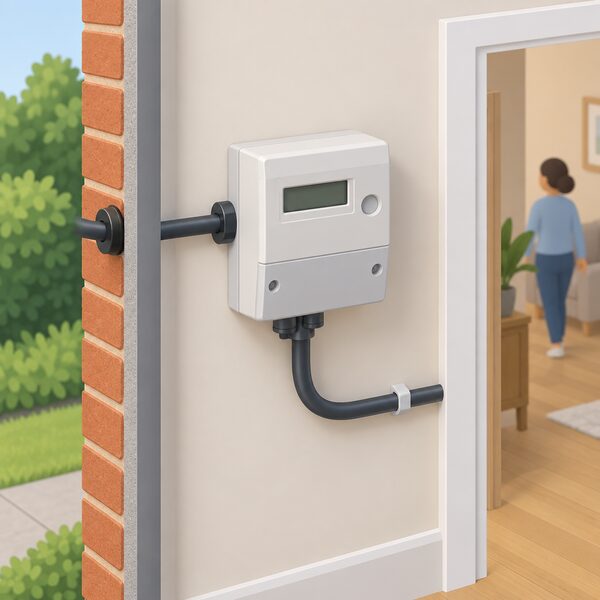
The default tariff cap sets maximum prices for a unit of energy and daily standing charges for customers in each energy supply region of Great Britain3. Ofgem states that "Every 3 months we review and set a level for how much an energy supplier can charge for each unit of energy and daily standing charge", and the regulator revises the cap each quarter4. As of July 2024 it protected around 28 million customers in Great Britain7.
Two points are commonly misread. The cap limits unit rates and standing charges, not the total bill: a household using more energy pays more. And it does not apply in Northern Ireland, which has its own market and its own tariff calendar, covered in Northern Ireland gas tariffs.
The cap's components are themselves subject to consultation, which is how allowances shift between quarters. Ofgem consulted on proposed changes to the Contracts for Difference cost allowance within the cap, with responses due by 10 September 202621. Separately, guidance for energy suppliers on domestic energy tariff reductions for 2026 was last updated on 2 July 202622.
| Feature | Position |
|---|---|
| Review interval | Every 3 months4 |
| What is capped | Unit price and daily standing charge, by supply region3 |
| Geographic scope | Each energy supply region of Great Britain3 |
| Customers covered | Around 28 million, July 20247 |
| Live consultation | Contracts for Difference cost allowance, responses by 10 September 202621 |
For an independence-minded household, the cap is a ceiling on the price of dependence, not a route out of it. It applies identically to a challenger and an incumbent, so it is not a reason to prefer either.
Customer service: what the published measures actually show
Ofgem publishes two indicators of customer satisfaction for seven energy supply groups: overall satisfaction with their supplier, and satisfaction with the customer service received from their supplier10. The supplier level findings for July to August 2025 named Octopus Energy as the only supplier significantly higher than the Great Britain average on overall satisfaction at 95% confidence, and named EDF Energy, E.ON and E.ON Next, OVO Energy and Scottish Power as significantly below it6.
Market-wide, the direction of travel in the same period was upward. There was a statistically significant decrease in the proportion of consumers reporting they were dissatisfied with customer service, 77% found it easy to contact their supplier, a new high, and 40% said they were very satisfied with their supplier's customer service6. The January 2025 survey had already recorded 75% finding it easy to contact their supplier, up from 70% in July 202410.
Complaints remain the weak point across the market. In January 2025, 6% of respondents reported making a complaint to their supplier, stable on the previous wave, while satisfaction with how the complaint was handled stood at 44%, a low figure10. That gap, between generally good contact experience and poor complaint outcomes, is the single most useful thing a household can take from the published data, and it is size-neutral.
Ofgem's separate review of how suppliers support customers in vulnerable situations placed a second group of suppliers, including E (Gas & Electricity), Ecotricity, Green Energy UK and Shell, in a category identified with moderate weaknesses, as of 22 November 202223. That is a dated finding and covers a specific aspect of conduct rather than service generally.
Research on how consumers perceive service found that 60% of consumers give their supplier a rating of between 4 and 5 stars24. A second figure of 87% is reported in the same period on a related measure; the two are inconsistent, and both are given here without a ruling on which applies. Ofgem has separately said it expects suppliers to demonstrate excellent customer service as part of their strategies for driving down consumer energy debt19.
Where to find and compare the scores
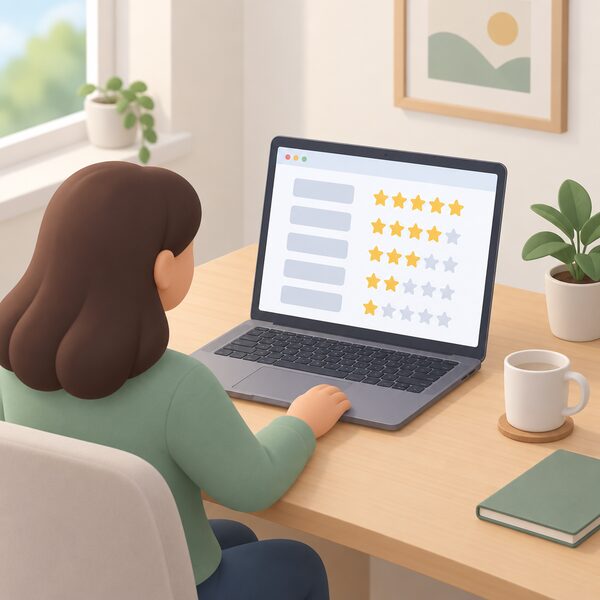
Suppliers cannot keep their rating quiet. Ofgem introduced licence requirements to compel suppliers to publish information on their Citizens Advice star rating performance, the metric used in the Citizens Advice customer performance measure25. That means the score should be findable on a supplier's own site as well as at Citizens Advice, which publishes updated customer service scores each quarter, with the next update due in September 2026.
Citizens Advice offers information and support on a range of topics, including struggling to pay bills, a problem with a supplier or supply, saving energy at home and getting a better energy deal, and its free consumer service covers people in England and Wales26. Consumers in Northern Ireland are served by the Consumer Council, which offers an energy price comparison tool covering electricity and gas tariffs for all suppliers there28. The differences between the bodies in each nation are set out in energy consumer bodies and in the Consumer Council for Northern Ireland.
| Where | Body | What it provides |
|---|---|---|
| England and Wales | Citizens Advice | Free consumer service; quarterly star ratings26 |
| Northern Ireland | Consumer Council | Price comparison tool for all NI suppliers28 |
| Great Britain | Ofgem | Supplier level satisfaction indicators for seven supply groups10 |
Switching to a smaller supplier: what the process turns on
Switching to a challenger works the same way as switching to an incumbent, because it is the same industry process. The practical checks are about the supplier's eligibility for the things a household may want from it.
- Confirm the company holds a domestic supply licence for the relevant nation. The licence grant to Tesla Energy Ventures Limited covers domestic and non-domestic consumers in Great Britain, which is the scope a household needs2.
- Check whether the brand is a licence in its own right or sits under a group. E.ON's group spans E.ON Next Energy Limited, E.ON Energy Solutions Limited, E.ON UK plc and Npower Commercial Gas Limited14.
- Check the published Citizens Advice star rating, which the supplier is obliged to publish25.
- Check whether the supplier is an obligated ECO supplier if efficiency measures matter, remembering that any obligated supplier can be approached, not only your own18.
- Note that collective switching schemes may exclude smaller names: Uswitch's scheme requires participants to hold at least 100,000 domestic meter points12.
Northern Ireland is a separate market with its own suppliers and its own comparison tool, described in energy suppliers in Northern Ireland. The protections that apply during a GB switch are covered in the Energy Switch Guarantee.
Tariff changes to watch, and the Northern Ireland calendar

Great Britain default tariffs move with the quarterly cap. Northern Ireland tariffs move on supplier-specific dates set outside the cap regime, and several fell in October 2026.
| Supplier and area | Change | Date |
|---|---|---|
| firmus energy, Ten Towns | Prices rise 8.9% | October 2026 |
| firmus energy, Greater Belfast | Prices rise 12.5% | October 2026 |
| SSE Airtricity, Greater Belfast | Tariff change scheduled | 1 October 2026 |
| SSE Airtricity, Gas to the West | Tariff change scheduled | 1 October 2026 |
| Ten Towns gas tariffs | Tariff changes scheduled | 1 October 2026 |
| Firmus Energy, Greater Belfast | Tariff change scheduled | 8 October 2026 |
The Consumer Council published a comparison of gas tariffs available in Greater Belfast dated 28 July 2026. Company pages for firmus energy and SSE Airtricity set out their supply areas; SSE Airtricity Energy Services NI Ltd also administers the Housing Association Efficient Electric scheme under the Northern Ireland Sustainable Energy Programme.
On the GB side, two dated items bear on what households will pay: Ofgem's consultation on the Contracts for Difference cost allowance within the cap, with responses due by 10 September 2026, and government guidance to suppliers on domestic energy tariff reductions for 2026, last updated 2 July 202621. The wider statistical picture is published in UK Energy in Brief 2026, last updated 3 August 2026; Energy Trends reported the fossil fuel share of generation by Major Power Producers down 5.5 percentage points in September to November 2025 against the same period a year earlier29.
Complaining about a small supplier
The route is identical whatever the supplier's size, and the eight week clock is the pivot.
The first thing to do is log a dispute with the supplier, following the complaints procedure whose details should be on the bill or the supplier's website30. Suppliers are the contact point for late, incorrect or missing bills, back billing, being overcharged, a faulty meter, poor customer service and refusing to refund credit from an account31. The supplier must try to fix reported problems within 8 weeks and resolve the complaint31.
If that fails, the Energy Ombudsman takes over. It is approved by Ofgem to deal with consumer complaints about energy bills, mis-selling, problems with energy supply and problems with switching supplier32. Its own statement of the escalation rule is plain:
"You must raise a complaint with your supplier in the first instance. If the issue isn't resolved after eight weeks, or you receive a deadlock letter"
Using the service is free at that point, and a dispute is registered by searching for the name of the energy supplier33. The same eight week rule applies to customers moved under supplier of last resort arrangements, where an unresolved complaint to the new supplier can go to the Ombudsman after eight weeks35, and to domestic or micro business Feed-in Tariff generators where no mutually agreeable outcome is reached after 8 weeks14. Heat network customers must notify their heat supplier first, and that supplier has 8 weeks to resolve the complaint17.
Extra help exists where a complaint is hard to run alone. The Citizens Advice consumer service may refer a case to the Extra Help Unit where the complaint is difficult or urgent, where personal circumstances make it impossible to deal with the supplier alone, where the consumer is considered vulnerable, or where there is a risk of disconnection from supply27. In Northern Ireland, suppliers refer customers struggling to pay to organisations such as Advice NI for free independent debt advice28. Small business and microbusiness bill problems are handled through the relevant UK government business support helpline, and through Business Wales in Wales18. Complaints about an ECO installation go through Ofgem's ECO complaints process rather than the ordinary supplier route19. The full sequence is set out in complaining about an energy supplier and the Energy Ombudsman.
What a challenger supplier does, and does not, do for energy independence
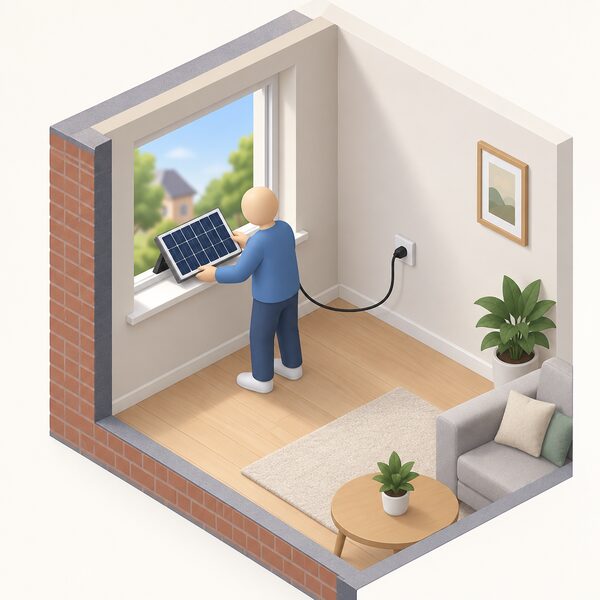
A different supplier changes the price and the service, not the dependence. A household on any domestic tariff still depends on the grid, on a licensed company to bill it, on imported gas within the fuel mix, and increasingly on an app or online account to manage the relationship. Switching from an incumbent to a challenger moves the counterparty; it does not move the meter.
Where challengers do bear on independence is at the edges. Suppliers hold the Feed-in Tariff agreements that pay for exported generation, and the licensee that holds that agreement is the one a household must deal with11. Obligated suppliers are the route to Energy Company Obligation measures such as insulation, and a household can approach any obligated supplier, not only its own18. Government intends to update regulations to allow plug-in solar of less than 800W to be connected without requiring a professional electrician, which would reduce the household's reliance on both an installer and a supplier for the smallest generation; the Microgeneration Certification Scheme covers microgeneration technologies of 50kW or smaller29.
The honest reading is that supplier choice is a price and service decision within continued dependence. Real reduction in dependence comes from generation, storage and fabric, and the supplier's role in that is as the administrator of schemes and export payments. The relationship is explored further in energy suppliers and household energy independence and across the supplier guide.
Sources35 cited
- Energy terms explained, Ofgem, 2026
- Tesla Energy Ventures Limited granted electricity supply licence covering Great Britain, Ofgem, 12 March 2026
- Domestic energy prices briefing, House of Commons Library, 20 September 2026
- Changes to the energy price cap between 1 January and 31 March 2026, Ofgem, 21 November 2025
- Gas prices and energy supplier exits, House of Commons Library, January 2022
- Customers' satisfaction with their supplier: supplier level findings, July to August 2025, Ofgem, 2025
- Domestic energy prices, House of Commons Library, July 2024
- We may be able to help resolve your energy dispute, Energy Ombudsman, 20 September 2026
- Energy Consumer Satisfaction Survey findings, July to August 2025, Ofgem, 2025
- Energy Consumer Satisfaction Survey: January 2025, Ofgem, 2025
- FIT guidance for licensed electricity suppliers, Ofgem, 6 September 2024
- The Great Energy Savings Switch, Uswitch, 19 September 2026
- Information for disputes with flexibility service providers, Energy Ombudsman, 20 September 2026
- FIT licensee contact details, Ofgem, 17 September 2026
- Deemed contracts and rates, Energy Ombudsman, 20 September 2026
- Energy Prices Act 2022, legislation.gov.uk, 25 October 2022
- Heat networks consumer protection guidance, Ofgem, 5 September 2025
- ECO: homeowners and tenants, Ofgem, 17 September 2026
- Great British Insulation Scheme: local authorities, Ofgem, 17 September 2026
- Changes to the energy price cap between 1 October and 31 December 2025, Ofgem, 27 August 2025
- Energy price cap: proposed changes to the Contracts for Difference cost allowance, Ofgem, 30 July 2026
- Domestic energy tariff reductions 2026: guidance for energy suppliers, GOV.UK, 2 July 2026
- Review of how suppliers support customers in vulnerable situations, Ofgem, 22 November 2022
- Understanding consumers' energy tariff choices, Ofgem, July 2025
- Consumer Standards decision, Ofgem, 18 October 2023
- Complain about your energy supplier or network operator, Ofgem, 2026
- Complain about your energy supplier, Ofgem, 2026
- Advice if you're struggling to pay your energy bills, nidirect, 17 September 2026
- Energy Trends and prices statistical release, GOV.UK, 29 January 2026
- Understanding your rights, Energy Ombudsman, 20 September 2026
- Complain about your energy supplier: what to contact them about, Ofgem, 2026
- Problems with services: energy complaints, Isle of Anglesey County Council, October 2025
- Worried about your energy bills, Energy Ombudsman, 24 March 2026
- Raise a dispute, Energy Ombudsman, 19 September 2026
- Supplier of last resort information, Energy Ombudsman, 20 September 2026
 Supplier Licensing and FailureWhat happens when your energy supplier goes bust?
 Financial Resilience RulesYour supplier going bust raises two questions: who takes over and what happens to your credit balance?
 The Full Energy Suppliers GuideWho the UK's domestic gas and electricity suppliers are, how the market is structured across Great Britain and Northern Ireland, what a supplier is licensed and obliged to do, how the price cap limits bills, what happens when a supplier fails, and who regulates it all.
 Comparison Sites and BrokersWhich energy comparison sites can you trust, and what happens if a switch goes wrong?
 Suppliers and IndependenceCan you really cut your energy bills by making your own power, and how much of your supplier do you still need?
 The Full Installers GuideHow do you find an installer you can trust, and what should you check before signing anything?