
In this guide
Support for vulnerable energy customers in Great Britain is not discretionary goodwill. It sits in the supply licence as the Standards of Conduct, which apply to suppliers and operators of domestic and non-domestic networks and to alternative models and ownership structures including bulk supply arrangements, shared ground loop arrays and small communal heating systems1. The Standards of Conduct have an overarching objective and then five principles to be followed, and the objective is that each consumer, including each occupant of a domestic premises who is in a Vulnerable Situation, is treated Fairly1.
The practical machinery is the Priority Services Register, a record of consumers who require Priority Services because of their personal circumstances or because they are in a vulnerable situation2. Suppliers must proactively identify and record domestic customers in a vulnerable situation and offer services to support them within that register3. The services themselves are free of charge to vulnerable consumers who have been added to it4.
Alongside the licence sits a voluntary layer. Thirteen energy suppliers representing more than 95% of UK homes are signed up to the Energy UK Vulnerability Commitment, which has been in place since 2020, and 15 suppliers covering almost the entire market signed the winter 2024 commitment5. Energy suppliers' overall commitments to additional support for customers during winter 2024/2025 stood at over £500 million5.
What suppliers must do: the Standards of Conduct
The Standards of Conduct are the licence backbone of vulnerable customer support. They apply across a wide set of supply arrangements, not only conventional household accounts: suppliers and operators of domestic and non-domestic networks, bulk supply arrangements, shared ground loop arrays and small communal heating systems all fall within scope1. All occupants of domestic premises are afforded vulnerability protections under the Standards of Conduct, which matters because vulnerability is assessed per occupant rather than per named account holder1.
The structure is deliberately simple. There is an overarching objective, then five principles to be followed1. The objective is that each consumer, including each occupant of a domestic premises who is in a Vulnerable Situation, is treated Fairly1. Suppliers must have regard to Ofgem's guidance document setting out how the standards are to be met6.
Contact is where the standards bite hardest in daily life. Enquiry services must be available via contact methods that meet customer needs, be open at times that meet customer needs, be free for customers struggling to pay their energy bills, and prioritise vulnerable customers who need immediate support or their representatives6. That last clause is the one households most often need to invoke: a call from a carer or relative acting for a vulnerable customer is meant to be treated as a priority contact, not as an ordinary enquiry.
Compliance is monitored rather than assumed. Ofgem expects suppliers to take seriously their obligations and comply with business-as-usual practices in line with Standard Licence Conditions7. The government has also been working with Ofgem on the publication of a wider range of supplier performance data, which is the mechanism by which treatment of vulnerable customers becomes visible outside the individual complaint8.
For a household, the Standards of Conduct do not deliver energy independence in any physical sense. They deliver something narrower but real: a set of enforceable expectations about how a supplier must behave towards a household that cannot easily switch, cannot easily absorb a billing error, and may depend on supply for medical equipment. The dependence on the supplier remains; what changes is that the supplier carries defined obligations in return.
The Priority Services Register: what it is and who qualifies

The Priority Services Register is a list of customers who need extra support, held by the energy network and the supplier9. Under their licences, suppliers and electricity distributors must maintain a register and put consumers from certain eligible groups on it when they request it10. Heat network suppliers are required to establish and maintain a Priority Services Register, a record of consumers who require Priority Services due to their personal circumstances or being in a vulnerable situation2.
Eligibility has widened over time. Ofgem broadened the eligibility criteria for the register from January 2016 to include any energy customers in vulnerable situations who need it, including those whose situation is temporary11. That temporary element is important: a household recovering from surgery, or coping with a short-term crisis, can qualify without a permanent condition. Suppliers must take all reasonable steps to identify customers in vulnerable situations and offer to place them on the register11.
The register is not one national database. It is held separately by each supplier and each network operator, which is why a household usually has to make the request more than once. Ofgem has consulted on requiring all energy companies to record relevant data about their vulnerable customers and to share it with each other with the customer's informed consent using consistent vulnerability categories4. It has also considered supplier-to-supplier sharing of vulnerable customer data at the point of switching within the scope of its project on reliable next-day switching4. Neither is presented as a completed reform, so the working assumption for a household is that registration is per supplier.
In Northern Ireland the equivalent structure carries a different name. Electricity suppliers, gas suppliers and NI Water hold Customer Care Registers for consumers in vulnerable circumstances12. The functions overlap heavily with the Priority Services Register, but the terminology and the holders differ, and a household in Northern Ireland should ask for the Customer Care Register by name.
What you actually get on the Priority Services Register
The services energy companies are required to provide free of charge are set out in tables in Ofgem's consultation on the register10. They cover a wider range than most households expect, and they are practical rather than financial.
- A password scheme, so that callers at the door can be verified
- A free gas appliance safety check
- Advice on interruptions and information about planned interruptions
- Alternative heating and cooking facilities during an interruption
- Quarterly meter readings
- Moving a prepayment meter
- Accessible bills and information
- Redirection of bills to a nominated person
- Facilities to complain
- Information about the register in accessible formats
- Assistance for customers whose English is not their first language10
The accessible formats element is the one that connects most directly to energy independence at home. It is essential that consumers can access communications from energy companies, and the register exists partly to make that possible for households that cannot read a standard bill or operate a standard online account unaided10. A household that cannot read its own consumption data cannot manage its own consumption, so accessible billing is a precondition for any degree of self-management.
The same principle applies to the smart meter in-home display. Those needs should be proactively identified by energy suppliers, and additional support provided wherever appropriate13. That is the hook for adaptations such as accessible in-home displays: the obligation is framed as proactive identification and appropriate additional support, not as a fixed catalogue of devices.
The register does not reduce a bill. It does not insulate a home, generate anything, or store anything. What it does is remove a set of practical dependencies that would otherwise force a vulnerable household to rely on a relative, a neighbour or a call centre to keep the account functioning. The dependence on the supplier and the network remains complete; the register changes the terms on which that dependence is managed.

How to join the Priority Services Register
Joining is deliberately low-tech. To sign up for the Priority Services Register a household needs to contact all its utility suppliers directly14. That includes the electricity supplier, the gas supplier, the water company and, where relevant, the network operator, because each holds its own list.
There is no single national phone number, because the register is provided by water and power suppliers rather than by a central body15. It is a free service, and the same source directs households to sign up in case of power cuts15. A household that wants to register a relative should therefore gather the account numbers and contact each supplier, asking specifically for the Priority Services Register and stating the circumstances that create the vulnerability.
The register is a free support service offered by energy suppliers and network operators to help vulnerable people16. Because it is free and because eligibility now includes temporary situations, the barrier is awareness rather than cost. Suppliers are required to take all reasonable steps to identify customers in vulnerable situations and offer to place them on the register, so a household that has never been asked has grounds to raise the point11.
For households in Northern Ireland, the request is for the Customer Care Register, held by electricity suppliers, gas suppliers and NI Water12. The Consumer Council for Northern Ireland and the Utility Regulator's code of practice for consumers in vulnerable circumstances sit alongside that structure, and the Northern Ireland supplier pages set out how the separate market is organised.
Once registered, the household should expect the services to be delivered without charge and to persist for as long as the circumstances do. Where circumstances change, the register entry should be updated, because the services offered are matched to the need recorded.
Disconnection protections: when suppliers cannot cut you off
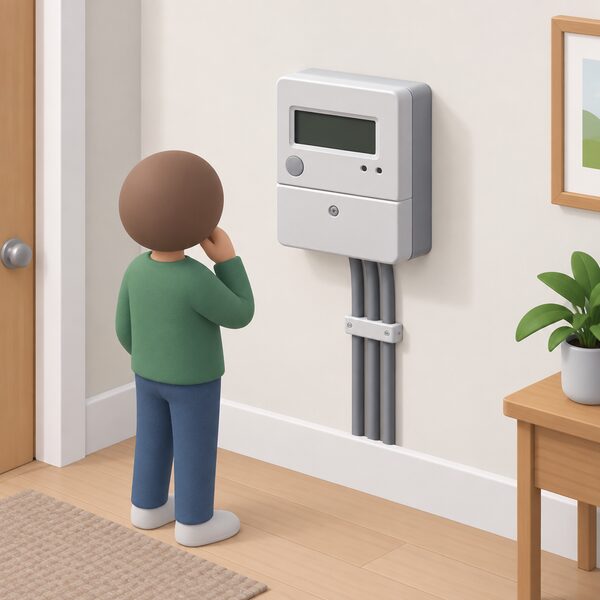
The protection against disconnection is layered, and the layers come from different places. Suppliers cannot disconnect any customers without first taking all reasonable steps to help them repay their debts, and are not allowed to cut off supply for certain vulnerable consumers17. That is the baseline: debt alone is not sufficient grounds for disconnection while reasonable steps remain untaken.
All fuel suppliers, electricity and gas, follow a code of practice that means they will not cut off supply if a payment plan is agreed and then kept to18. This is the practical route for most households in difficulty, and it applies in Northern Ireland as well as Great Britain. The same guidance sets out that suppliers can agree a payment plan, a payment break or a reduction, review payments and debt repayments, and give access to hardship funds19.
There is also a statutory restriction on creditors and their agents. A creditor or agent must not take steps to disconnect a debtor's premises from a supply of electricity unless the debtor had taken the supply illegally, during a moratorium period20. That protection is separate from the supplier's own licence obligations and applies to the debt recovery route rather than the supply relationship.
For prepayment customers the protection takes the form of credit rather than forbearance. Suppliers are required to offer additional credit to vulnerable prepayment customers who have self-disconnected or are at risk of doing so21. Self-disconnection, where a meter runs out and the household does not top up, is the prepayment equivalent of being cut off, and the Additional Support Credit route exists specifically to address it.
Households in Northern Ireland have their own published guidance on overdue utility bills, which sets out the code of practice position for electricity and gas18. The Northern Ireland keypad meter pages cover how self-disconnection risk works on that meter type.
Energy UK's Vulnerability Commitment: what signatories promise
The Energy UK Vulnerability Commitment is a voluntary commitment, over and above existing regulation, whose signatories are scrutinised by an independent panel each year and required to evidence their activities5. It has been in place since 2020, and 13 energy suppliers covering more than 95% of homes are signed up to it5. Because it is voluntary, it is not enforceable in the way a licence condition is, but the annual evidence requirement gives it more weight than a public statement of intent.
The commitment's focus has shifted towards identification and monitoring. In 2024 the panel focus included processes to define and identify the most vulnerable customers, innovative routes to affordable repayment plans, and the steps energy suppliers take to monitor customers on prepayment meters who might be at risk of self-disconnection5. Monitoring is the operative word: self-disconnection is invisible unless a supplier is actively watching the meter data.
The winter commitment that sits alongside it runs for a defined season. It applies from 1 October 2024 through to 31 March 20255. Fifteen suppliers covering almost the entire market signed it, and the support committed included credit on bills or prepayment meters, enhanced debt write-off schemes and hardship funds, enhanced funding to charity partners, reducing or waiving standing charges over winter, and access to energy-saving devices and technology5.
The commitment also constrains enforcement and repayment practice. Policies for High Court enforcement and County Court Judgement actions for debt cannot be signed off unless agreed at board level or equivalent5. Only High Court Enforcement Officers may be used to recover debts where appropriate for a vulnerable customer, taking consideration of any wider vulnerabilities that may be exacerbated by Court enforcement action5. Signatories must track how vulnerabilities may change over time to ensure debt repayment plans are genuinely affordable, and must continue to proactively identify and support customers struggling to pay their bills and ensure repayment plans reflect their ability to pay, including the use of payment holidays where appropriate5.
Third-party representation is written into the commitment. Suppliers will fully consider information, including budgets, affordable payment offers and prepared Standard Financial Statements, and third-party authority forms from a customer's chosen credible debt or consumer organisation, including FCA-authorised debt advisors5. That is the clause that makes a Trusted Contact or an advice agency effective in practice.
Someone else to manage the account: Trusted Contact schemes
A Trusted Contact is a person the account holder nominates so that the supplier can deal with someone else about the account. The licence conditions support this indirectly but firmly. Relevant information on potential vulnerabilities and a consumer's ability to pay from a third party, where offered to the supplier, must be accepted, for example from the consumer's representative or from support organisations such as Citizens Advice, Advice Direct Scotland and other customer support and debt advice organisations2.
That obligation matters because it removes the excuse that a supplier will only discuss an account with the named holder. Where a relative, carer or advice agency is acting with the householder's authority, the supplier must accept the information offered. The Energy UK commitment reinforces the same principle by requiring signatories to fully consider third-party authority forms from a customer's chosen credible debt or consumer organisation5.
The practical steps are straightforward. The account holder gives consent for a named person to be recorded, the supplier adds that person to the account, and the supplier then deals with them on the matters covered by the consent. The register entry and the Trusted Contact arrangement are separate: one records a vulnerability and unlocks services, the other records who may speak for the account.
For households in Northern Ireland, suppliers are expected to refer customers who are struggling to pay bills to organisations such as Advice NI, which offer free, independent debt advice22. That referral route performs a similar function to a Trusted Contact arrangement where the household has no relative able to act.

Accessible in-home displays and other practical adaptations
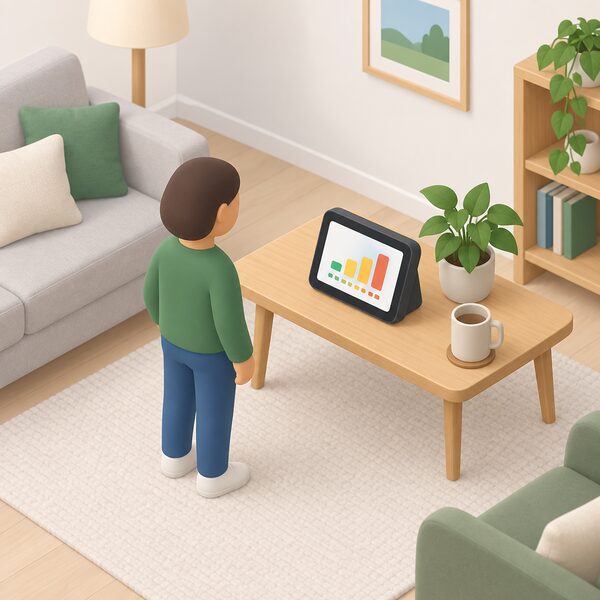
Accessibility is treated as part of the support obligation rather than as an afterthought. Those needs should be proactively identified by energy suppliers, and additional support provided wherever appropriate13. The wording places the duty on the supplier to look for the need, not on the household to prove it.
The register's service list is where accessibility becomes concrete: accessible bills and information, information about the register in accessible formats, and assistance for customers whose English is not their first language10. A household that cannot read a standard bill, or cannot follow a standard online account, is not in a position to manage its own consumption, and the register is the mechanism that closes that gap.
In-home displays sit at the edge of this. The support obligation is framed as proactive identification and appropriate additional support rather than as a specified device, so what a household receives depends on what the supplier judges appropriate to the need recorded13. The wider consumer protection framework has been moving in the same direction: suppliers are required to meet standards of conduct on how they treat consumers, covering customer service, engagement and being transparent and clear when sharing information23.
Heat network customers have a parallel set of protections. Heat network suppliers are required to establish and maintain a Priority Services Register, and must offer, and if accepted provide, free of charge Priority Services to vulnerable consumers on it2. The same free-of-charge requirement appears in the regulatory guidance for the sector4. For a household on a communal or district heating scheme, that is the route to accessible information and priority treatment, and the heat network supplier pages explain how those schemes are structured.
The limit is worth stating plainly. None of these adaptations reduces consumption or generates energy. They make the account and the meter legible to the household, which is a precondition for managing either, but the household remains dependent on the supplier for billing, on the network for supply, and on the meter for measurement.
Where to go when support is refused: complaints and the Extra Help Unit
The first step is a complaint to the supplier. A household should contact its energy supplier about late, incorrect or missing bills, back billing, being overcharged, a faulty meter, poor customer service, and refusing to refund credit from the account24. Those are the recognised complaint categories, and a refusal of vulnerable customer support can be raised in the same channel.
If the supplier's response is unsatisfactory, the Energy Ombudsman is the next route. A household can contact the Energy Ombudsman if it is not happy with the way its energy supplier has handled the complaint25. The Ombudsman's own registration process begins by searching for the name of the energy supplier26. The complaints process pages set out the full escalation path, including the deadlock letter stage.
For households that cannot pursue a complaint themselves, there is a specialist route. The Extra Help Unit supports vulnerable consumers by raising complaints with energy suppliers on their behalf, particularly where there is a risk of disconnection or complex personal circumstances27. Citizens Advice may refer a household to the Extra Help Unit if it needs support with a difficult or urgent complaint, cannot deal with its energy supplier on its own due to personal circumstances, is considered vulnerable, or is at risk of being disconnected from an energy supply24. The same referral route appears in the heat network guidance, which names the Citizens Advice Extra Help Unit for consumers in vulnerable circumstances, by referral4.
Local authority services can also help before a complaint becomes necessary. One council service offers information on grants and help with checking eligibility, benefits support, supplier switching advice, energy saving advice, debt advice and referral to other organisations or contractors28. Similar schemes operate across England, Scotland and Wales, and the energy consumer bodies pages explain which organisation covers which nation.
The pattern across all of these routes is the same. Support for vulnerable customers is a set of obligations and voluntary commitments that a household has to activate, and the activation depends on the household or someone acting for it making contact. Nothing in the framework reaches a household that has not been identified, which is why the register, the Trusted Contact and the complaint routes all begin with the same step.
Sources28 cited
- Heat networks regulation: consumer protection guidance decision, Ofgem, 2026-01-13
- Heat networks consumer protections draft guidance, Ofgem, 2025-09-05
- Ofgem completes review into how suppliers support customers in vulnerable situations, Ofgem, 2022-11-22
- Priority Services Register final proposals, Ofgem, 2015-12-17
- Energy UK's Winter 2024 Commitment, Energy UK, 2024-11-20
- Consumer Standards decision, Ofgem, 2023-10-18
- Summary of changes to the energy price cap, 1 April to 30 June 2025, Ofgem, 2025-02-25
- Putting consumers first: empowering and protecting energy consumers, GOV.UK, 2024-05-24
- Complain to your energy supplier, Citizens Advice, 2026-09-20
- Priority Services Register review consultation, Ofgem, 2014-06-30
- More customers in vulnerable situations receive help under the Priority Services Register, Ofgem, 2016-10-25
- Code of Practice for Consumers in Vulnerable Circumstances, Utility Regulator, 2025-06
- Smart meters: your rights and expectations, GOV.UK, 2025-08-08
- Heating your home, Carmarthenshire County Council, 2026-04-04
- What to do in a power cut, Met Office, 2026-09-20
- Energy costs, Swansea Council, 2022-12-14
- Energy pricing and the future of the energy market, House of Commons Library, 2023-09-26
- Overdue utility bills, nidirect, 2026-09-17
- Get help with your home or business energy bills, Ofgem, 2026
- The Electricity and Gas (Moratorium) Regulations 2020, regulation 7, legislation.gov.uk, 2026-09-17
- Regulatory expectations: Additional Support Credit, Ofgem, 2025-08-25
- Advice if you're struggling to pay your energy bills, nidirect, 2026-09-17
- Heat network customers to be shielded from unfair price hikes, GOV.UK, 2026-01-26
- Complain about your energy supplier, Ofgem, 2026
- Understand your electricity and gas bills, Ofgem, 2026
- Raise a dispute, Energy Ombudsman, 2026-09-19
- Worried about your energy bills, Energy Ombudsman, 2026-03-24
- Home energy support service, East Herts Council, 2026-09-17
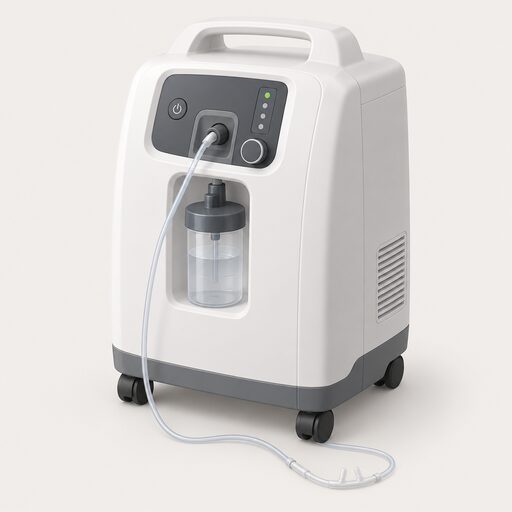 Vulnerable Households EnergyIf someone in your home relies on powered medical equipment, or needs extra warmth because of a health condition, what help is available?
 Disconnection and WarrantsCan your energy supplier force you onto prepayment or cut you off for debt?
 Prepare a Home for a Power CutA household checklist for before, during and after an outage: what to keep charged and to hand, which appliances to switch off, how long food stays safe and what to do about medical equipment.
 Prepayment and Vulnerable RulesThe licence obligations on energy suppliers when a household falls into debt: when a prepayment meter may be installed without consent, the warrant process, the ban covering highly vulnerable households, remote switching of smart meters, and the free help available.
 Prepayment Meters and DebtCan your energy supplier force you onto a prepayment meter because you owe them money?
 Supplier Apps and AccountsWhat can you actually do in your supplier's app?