

In this answer
Short answer
Additional Support Credit (ASC) is emergency credit that a supplier gives to a prepayment customer who has self-disconnected or is at risk of doing so. It is a loan, not a grant, and it is repayable by agreement. Ofgem introduced the ASC rules in 2020, and its regulatory expectations, published on 25 August 2025, set out how suppliers should assess requests, when refusal is justified, and what must happen instead1.
A supplier can refuse ASC, but only on limited grounds. Ofgem's expectations name two: failing to adhere to agreed ASC repayment terms without further engagement, and providing false information about vulnerability status or financial hardship1. Refusal is not a general discretion. Ofgem expects suppliers to assess each offer or request for ASC on an individual basis, and the rules include a requirement for suppliers to consider whether providing ASC is in the customer's best interest1.
Where ASC is refused, the obligation does not end. Suppliers must consider and should offer support with long-term solutions, including signposting to free debt advice, sustainable repayment plans, energy efficiency support, income maximisation, or a review of whether prepayment is the most suitable payment method1. Ofgem's separate guidance page sets out the same expectations for how suppliers assess and provide ASC, how to identify and respond to vulnerability, and when ASC may not be appropriate2.
Can your supplier refuse it? Yes, but only on limited grounds
The starting point is that ASC exists for a specific situation: vulnerable prepayment customers who have self-disconnected or are at risk of doing so1. Ofgem describes it as a vital tool for exactly that group2. A refusal that ignores the customer's circumstances runs against the individual-assessment expectation.
Citizens Advice frames the same support in practical terms. A supplier might give additional support credit if it classes the customer as vulnerable, and the customer can agree how to pay it back3. For heat network customers, the equivalent credit is described as extra temporary credit, a loan from the supplier which the customer agrees how to pay back, for example in monthly payments5.
The scope of who counts as vulnerable is broad. Citizens Advice lists disabled people and those with a long-term health condition, including hearing and sight conditions, and people recovering from an injury5. It also covers households that would struggle to answer the door or get help in an emergency, cannot get to a shop to top up, or need extra help with communication5. Those criteria matter because they feed directly into the assessment a supplier is expected to make.
Ofgem's 2026 progress report on its consumer vulnerability strategy records a shift in practice. Some suppliers are now restricting Additional Support Credit to consumers in acute but temporary financial stress, rather than treating it as ongoing or unlimited support, a change in ASC practice since the August 2025 expectations letter6. That is a description of market behaviour, not a change to the rules, and it sits alongside the individual-assessment requirement rather than replacing it.

The grounds for refusal: misuse and false information

Ofgem's regulatory expectations letter of 25 August 2025 sets out what can justify a refusal. The named examples are failing to adhere to agreed ASC repayment terms without further engagement, or providing false information about vulnerability status or financial hardship1. Both are conduct-based grounds. Neither is a judgement about whether the household is poor enough, and neither permits a blanket policy of declining requests.
The false-information ground raises an obvious question about verification. Ofgem has said it is open to further discussion on vulnerability verification, including when it may be appropriate to ask for verification and what would be appropriate to request as evidence1. That signals the area is not settled. A supplier asking for proof of a health condition or a financial position is operating in a space where the regulator has invited further debate rather than fixed a list.
Third-party information carries weight. For heat network suppliers, relevant information on potential vulnerabilities and a consumer's ability to pay from a third party must be accepted where offered, for example from the consumer's representative or from support organisations such as Citizens Advice, Advice Direct Scotland and other customer support and debt advice organisations5. A supplier that receives such information and refuses without engaging is not following the expectation.
"This could include failing to adhere to agreed ASC repayment terms without further engagement or providing false information about vulnerability status or financial hardship"
What your supplier must do instead of refusing
Refusal is not the end of the process. Ofgem expects that where ASC is refused, suppliers must consider and should offer support with long-term solutions. The examples given are signposting to a free debt advice service, sustainable and affordable repayment plans, support with energy efficiency measures, income maximisation, or considering whether prepayment is the most suitable payment method1.
That list matters because it reframes the decision. A supplier concluding that a one-off credit advance is not the right answer still has to address the underlying position. Income maximisation means checking benefit entitlement. Energy efficiency support points towards measures that reduce consumption. A repayment plan addresses arrears. A payment method review asks whether prepayment itself is part of the problem.
The best-interest test sits at the centre of this. Ofgem's rules include a requirement for suppliers to consider if the provision of ASC is in the customer's best interest, and a requirement to provide alternative support where this is more appropriate to the customer's circumstances1. The guidance page published on 6 November 2025 covers expectations for how suppliers assess and provide ASC, guidance on identifying and responding to vulnerability, examples of good practice observed across the sector, and clarification on when ASC may not be appropriate and how to respond in such cases2.
For households on heat networks, the wider principle is that disconnection should only be undertaken as a last resort, once all other reasonable options have been exhausted5. That framing applies to the decision to withdraw support as much as to the decision to cut supply.
Ofgem's rules and the best-interest test

Ofgem's Standard Licence Conditions govern how suppliers must treat domestic customers, and the best-interest test sits at the centre of them. Where a supplier fails to meet the conditions, Ofgem can intervene: on the Debt Relief Scheme it will adjust or reject specific items rather than rejecting the whole claim, and may revise or reject a claim entirely where evidence is insufficient1. The same principle runs through the back billing rules, which limit what a supplier can recover where it has not billed accurately. A customer is protected where they have not had an accurate bill for the charge before, or where their Direct Debit amount was previously set too low to cover what they needed to pay2. On the debt trigger figure, Ofgem has stated that it did not receive sufficient evidence to inform what an alternative number should be set at, and is aiming in the first instance to provide comparable consumer outcomes to those in gas and electricity, keeping this under review3. For households on a heat pump tariff or considering one, these protections matter: they set the terms on which a supplier can pursue a debt, and they apply regardless of how the home is heated.
The ASC rules sit in the standard licence conditions, and Ofgem's expectations letter is the plain-English statement of what they require. The core obligations are that suppliers offer additional credit to vulnerable prepayment customers who have self-disconnected or are at risk of doing so, assess each request individually, apply the best-interest test, and provide alternative support where ASC is not appropriate1.
Record keeping is part of the rule set. Suppliers must record clear justification for decisions taken, including evidence for why the assessment determined ASC to be unsuitable, to ensure transparency and accountability1. That requirement gives a household a route to challenge a refusal: if the decision was made without a recorded justification, the supplier has not met the expectation.
The wider regulatory direction of travel is towards firmer treatment of debt and vulnerability. Ofgem's Debt Relief Scheme consultation sets out that any supplier who fails to demonstrate compliance with the licence changes, including by failing to respond, will be ineligible to submit a claim and will not be reimbursed7. Its delivery guidance states that where Ofgem is not satisfied with any aspect of a claim, it will adjust or reject specific items rather than rejecting the whole claim, and may revise or reject a claim entirely where evidence is insufficient8. Those are separate schemes, but they show the same emphasis on documented evidence.
The guaranteed standards regime also has a rule about continuing failures: where a supplier's failure to meet an individual standard of performance is continuing, a supplier is not required to make more than one standard payment, though this would not apply to the new standard9.
How much ASC is provided across the market
Ofgem's own figures give the scale. From September 2022, provision increased from around £4m a month to between £8m and £18m a month, with seasonality peaks1. The seasonal pattern is unsurprising: credit demand rises when consumption rises and when household budgets are tightest.
The cost of the scheme is recognised in the price cap. Ofgem introduced a specific allowance to the price cap from 1 October 2023 for anticipated increased costs of bad debt associated with Additional Support Credit given to prepayment customers10. That means the cost of ASC is shared across billpayers rather than absorbed only by the suppliers issuing it.
Consumer experience data is thinner. Ofgem's satisfaction research records that 79% of respondents had not received support11. Which?'s energy company complaints research, from autumn 2024, found that 3% of respondents cited a supplier refusing to return excess credit12. Neither figure measures ASC refusal directly, and both should be read as context rather than as a refusal rate.
The practical picture is that ASC is a substantial and seasonal flow of support, concentrated among prepayment customers in vulnerable circumstances, with a cost recovered through the cap. For a household, that means the support exists at scale, but access depends on the supplier's assessment of the individual case.
Asking for ASC, and what happens if it is refused

The request itself is straightforward: contact the supplier, explain the prepayment situation and any vulnerability, and ask for additional support credit. Suppliers must assess each request on a case-by-case basis2. Where a third party offers relevant information about vulnerability or ability to pay, the supplier must accept it5.
If the request is refused, the household should expect the alternative support list to be worked through: debt advice signposting, a repayment plan, energy efficiency support, income maximisation, or a payment method review1. Emergency credit works differently from ASC: it must be paid back when the customer next tops up, with an affordable payment plan agreed with the supplier13.
Complaints escalate in a defined way. A complaint can go to the Energy Ombudsman if a reported problem is not fixed within eight weeks, if the customer and the company cannot agree on how to fix it, if a deadlock letter is received, or if the customer is not happy with the decision received4. Ofgem's own consumer guidance points to the same route where a supplier has handled a complaint unsatisfactorily16.
The Ombudsman can go beyond standard payments. It may make an additional award where the standard compensation payment does not adequately reflect the detriment experienced by the consumer17. Case studies include a consumer struggling to meet ongoing energy payments under an agreed 12-month debt payment plan whose changing financial circumstances were not reviewed by the supplier18.
ASC compared with other support
| Support | Nature | Repayable | Key condition |
|---|---|---|---|
| Additional Support Credit | Emergency credit for vulnerable prepayment customers who have self-disconnected or are at risk | Yes, by agreement3 | Individual assessment; best-interest test1 |
| Emergency credit | Credit to keep supply on | Yes, on next top-up, with an affordable plan13 | Supplier must agree a payment plan13 |
| Warm Home Discount | Direct financial assistance for paying bills19 | No | Separate scheme; ECO and WHD funding cannot be combined for any measures20 |
The distinction between a loan and a grant is the one households most often need clarified. ASC and emergency credit both create a repayment obligation. The Warm Home Discount does not. The two funding streams also cannot be mixed: ECO and Warm Home Discount funding cannot be combined for any measures under industry initiatives20.
For households in Scotland, Wales and Northern Ireland, the practical position differs. Citizens Advice publishes separate guidance for Wales and for Scotland, and the Scottish material covers heat network customers as well as standard prepayment users3. Northern Ireland operates a separate energy market, so the ASC rules described here, which sit in the Great Britain licence conditions, do not apply in the same form there.
What this means for a household's energy independence
Additional Support Credit is a safety net, not a route to independence. It keeps a prepayment supply on during a crisis, and it does so on terms that create a debt to the supplier. A household using ASC is more dependent on that supplier, not less: the credit comes from the company, is repaid to the company, and the assessment of whether to grant it sits with the company.
The dependence is layered. The household depends on the supplier for the credit decision, on the prepayment meter as the payment method, and on the grid for the supply itself. Where the supplier refuses, the fallback is a complaint route through the Ombudsman rather than an alternative source of energy. Nothing in the ASC framework gives a household a way to generate or store its own power.
What the rules do provide is a set of procedural protections. Individual assessment, the best-interest test, a requirement to record justification, and an obligation to offer alternative support together mean a refusal has to be reasoned and documented1. That is a meaningful check on arbitrary decisions, and it gives a household something concrete to point to in a complaint.
The limits are equally clear. ASC is temporary by design, and Ofgem's 2026 progress report records that some suppliers are restricting it to acute but temporary financial stress6. A household that needs ongoing support will not find it here. The durable answers sit elsewhere: a repayment plan, income maximisation, energy efficiency measures, or a change of payment method, which is precisely the alternative support list Ofgem expects suppliers to work through1.
Sources20 cited
- Regulatory Expectations on Additional Support Credit, Ofgem, 2025-08-25
- Additional Support Credit: our expectations, Ofgem, 2025-11-06
- You can't afford to top up your prepayment meter, Citizens Advice, 2026-09-17
- Complain about your energy supplier or network operator, Ofgem, 2026
- Struggling to pay your heat network bills, Citizens Advice, 2026-09-17
- Consumer Vulnerability Strategy Progress Report, Ofgem, 2026-07-21
- Debt Relief Scheme statutory consultation, Ofgem, 2025-11
- Debt Relief Scheme delivery guidance, Ofgem, 2025-11-06
- Smart Meter Guaranteed Standard statutory consultation, Ofgem, 2025-08-08
- Decision: Involuntary PPM, Ofgem, 2023-10-01
- What drives consumer satisfaction with energy suppliers, Ofgem, 2025-07
- Energy company complaints, Which?, 2024
- Prepayment meters: consumer guidance, Ofgem, 2026
- Get help with your prepayment meter, Ofgem, 2026
- Get help your prepayment meter, Ofgem, 2026
- Understand your electricity and gas bills, Ofgem, 2026
- New guaranteed standards, Energy Ombudsman, 2026-09-20
- Debt and payment case studies, Energy Ombudsman, 2026-09-20
- Energy policy research briefing, House of Commons Library, 2026-09-20
- ECO4 delivery guidance v3.2, Ofgem, 2025-12-08
 Disconnection and WarrantsCan your energy supplier force you onto prepayment or cut you off for debt?
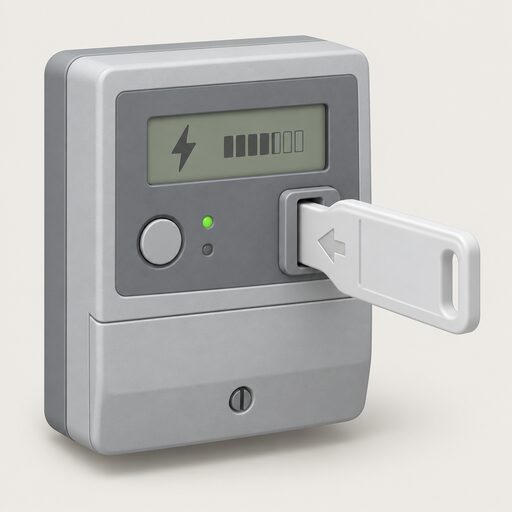 Top Up a Prepayment MeterHow to top up by card, key, app and code, how to enter a vend code by hand and how emergency credit and friendly-hours protection work.
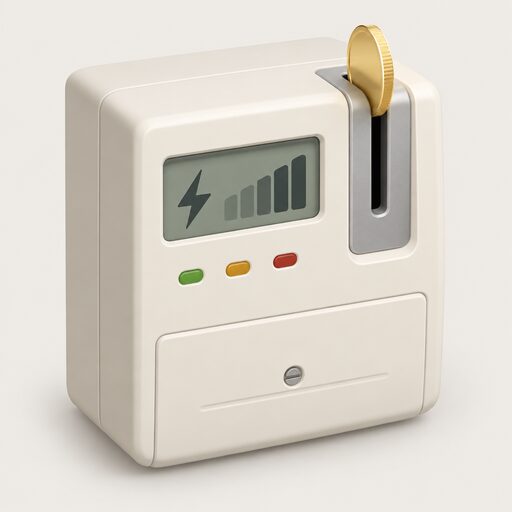 Prepayment MetersHow do you top up a prepayment meter for gas or electricity, and what happens when the credit runs out?
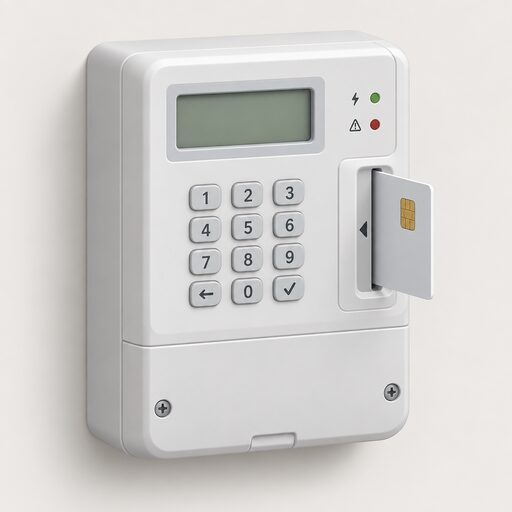 Prepayment and Vulnerable RulesThe licence obligations on energy suppliers when a household falls into debt: when a prepayment meter may be installed without consent, the warrant process, the ban covering highly vulnerable households, remote switching of smart meters, and the free help available.
 Prepayment Meters and DebtCan your energy supplier force you onto a prepayment meter because you owe them money?
 Financial Resilience RulesYour supplier going bust raises two questions: who takes over and what happens to your credit balance?