

In this guide
Energy debt is treated differently from every other kind of home energy help. Most grants pay for equipment: a boiler, insulation, a heat pump. The funds in this guide exist to clear or reduce what a household already owes, and the largest of them is not applied for at all. The Debt Relief Scheme (DRS) is a statutory write-off being built by Ofgem, expected to benefit between 280,000 and 400,000 accounts in Phase 1 and to write off between £312.4 million and £472.9 million of debt1. Phase 1 targets households on means-tested benefits holding £100 or more of eligible debt, and Ofgem expects it to reduce the debt stock by up to £500 million2.
Alongside it sits a second layer of help that a household does apply for: council crisis funding in England, charity trusts such as the British Gas Energy Trust, emergency fuel vouchers through the Fuel Bank Foundation, and the repayment plans, payment breaks and hardship funds that every supplier can offer. These are smaller and discretionary, but they are available now, and several are open to customers of any supplier.
The distinction matters for independence. A debt write-off restores a household's standing with its supplier and removes a barrier to switching, but it does not reduce consumption, generate a unit of electricity or cut the standing charge that funds it. The DRS is recovered from domestic customers through electricity standing charges and gas volume charges, so the cost of clearing one household's crisis debt is spread across all bills4.
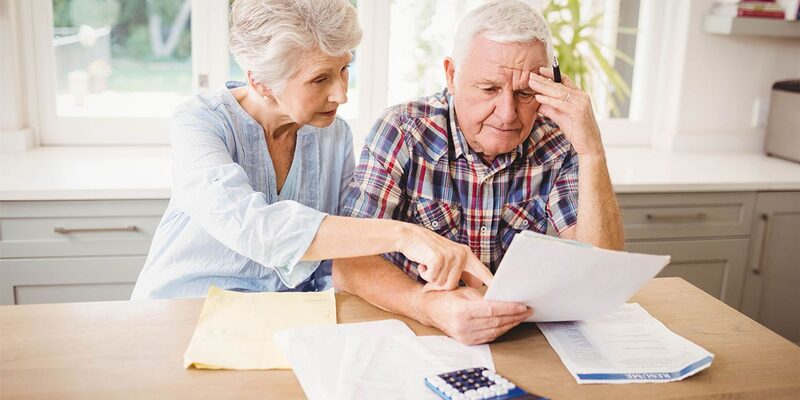
Where to get help with energy debt: the main routes at a glance
There are four routes, and they operate on different principles. The first is statutory: the Debt Relief Scheme, which writes off eligible crisis debt for households identified through benefit data rather than through an application. The second is local: the Crisis and Resilience Fund in England, which gives grant funding to local authorities to pass on to households in crisis, often through voluntary and community sector partners7. The third is charitable: trusts such as the British Gas Energy Trust, which make grants to individuals in poverty or distress, and the Fuel Bank Foundation, which provides emergency vouchers and one-off payments for fuel5. The fourth is the supplier's own duty: repayment plans, payment breaks or reductions, reviews of payments and debt repayments, and access to hardship funds12.
The routes are not alternatives to each other. A household can hold a repayment plan with its supplier while a charity grant clears part of the balance, and the DRS engagement condition can be satisfied by adopting a repayment plan, paying through Fuel Direct, or being referred to a debt advice service8. That last point is worth dwelling on: the scheme is designed so that engaging with the debt at all, in one of three recognised ways, is what unlocks the write-off.
| Route | Who administers it | How a household reaches it |
|---|---|---|
| Debt Relief Scheme | Ofgem, delivered by obligated suppliers | Automatic, by benefit data matching4 |
| Crisis and Resilience Fund | English local authorities and their partners | Through the council or a community organisation7 |
| Charity trusts | British Gas Energy Trust, Fuel Bank Foundation | Direct application, debt advice usually required5 |
| Supplier support | The household's own supplier | Request a plan, break or hardship fund12 |
For a household's energy independence, these routes do one specific thing. They remove the arrears that block a switch to a cheaper supplier or tariff, and they stop a prepayment meter being installed as a debt recovery measure. They do not change how much energy the home uses or how it is supplied. The structural dependence on a supplier and a grid remains, and the DRS itself is funded through the network and the bill.
The Debt Relief Scheme: crisis debt written off automatically for some households
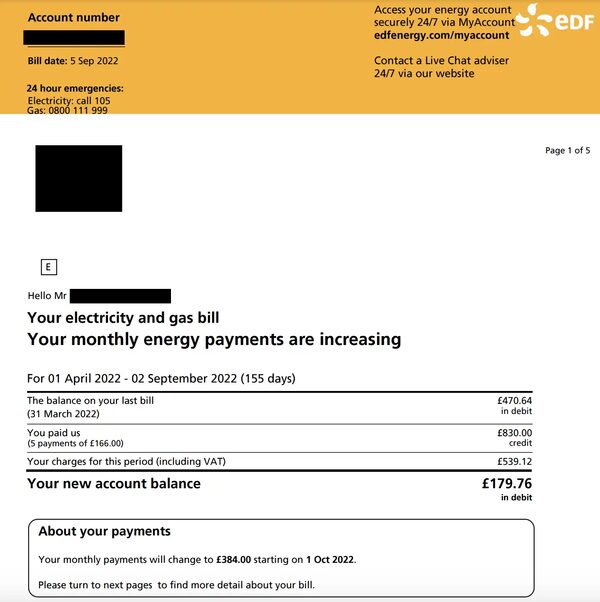
The DRS is the centrepiece of Ofgem's debt strategy, which set out to reset the historic debt from the crisis, raise debt standards for domestic energy consumers, and reform how debt is managed to prevent it building up again2. It is not a grant a household applies for. Phase 1 targets customers in receipt of means-tested benefits, identified through data matching with data from the Department for Work and Pensions, who meet the eligibility criteria and the engagement condition4. Ofgem estimates Phase 1 represents approximately one third of all consumers eligible for the debt relief scheme3.
The write-off itself is applied by the supplier. A DRS Credit is defined as a full write-off of DRS Eligible Debt applied by licensees to the account of Phase 1 and Phase 2 customers3. Only suppliers that are obligated under the DRS and that have passed the Phase 1 Readiness Assessment can make a claim, so the scheme reaches customers through their supplier's participation rather than through a central application8. Ofgem states that this would give almost 100% of customers with energy crisis debt access to the scheme4.
The timetable is long. Suppliers are expected to begin writing off debt in the first quarter of 2026, with Phase 2 expected to go live in summer 20264. Network distribution charges will collect and then distribute funds to eligible suppliers from May 2027, with monthly payments beginning then and claims in subsequent years following from May 2028 and May 20298. The recovery period is one year4. For a household, the practical consequence is that the write-off and the bill impact arrive at different times.
Who qualifies for DRS Phase 1: means-tested benefits and £100 or more of eligible debt
Phase 1 eligibility has four parts, and all four must be met. The household must hold £100 or more of eligible debt; the debt must have accumulated between 1 April 2022 and 31 March 2024; the household must make some payment towards current usage in the most recent billing period; and it must be in receipt of means-tested benefits3. Ofgem's statutory consultation confirms the target group as customers in receipt of means-tested benefits, identified through data matching with DWP data, who meet the eligibility criteria and the engagement condition4.
The £100 threshold is a floor, not a target. A Phase 1 Customer is defined as a domestic customer with equal to or more than £100 of DRS Eligible Debt who is identified as eligible by the Department for Work and Pensions3. Legislation enabling the use of means-tested benefits data for energy debt relief must be in place for DWP data matching to be used, which is one of the dependencies the scheme carries3.
Closed accounts are treated narrowly. Only closed accounts where the customer is actively engaging with their supplier, such as making efforts to repay their energy crisis debt, will be eligible; all other closed accounts are excluded from Phase 14. A household that has already left a supplier and stopped engaging with the old balance falls outside this phase.
Prepayment customers are included. Ofgem's consultation states that prepayment customers should be eligible for support if they top up their existing consumption4. That top-up requirement is the same engagement principle applied to a meter rather than a bill.
| Phase 1 condition | Requirement |
|---|---|
| Minimum debt | £100 or more of DRS Eligible Debt3 |
| Eligible period | Debt accrued 1 April 2022 to 31 March 20244 |
| Benefit status | In receipt of means-tested benefits, matched via DWP data4 |
| Engagement | Repayment plan, Fuel Direct, or referral to a debt advice service8 |
| Payment | Some payment towards current usage in the most recent billing period3 |
| Closed accounts | Eligible only where the customer is actively engaging4 |
Phase 2: help for households in genuine hardship who do not claim benefits

Phase 2 exists because benefit receipt is an imperfect proxy for hardship. Ofgem describes it as support for other households in payment difficulty who are not in receipt of benefits, where a robust approach to affordability assessment can be put in place2. The statutory consultation sets out the target group more precisely: customers with eligible debt who are genuinely unable to repay that debt but are not in receipt of means-tested benefits, identified via a standardised and enhanced income and expenditure assessment4.
That assessment is the mechanism that replaces benefit data. Where Phase 1 relies on DWP records, Phase 2 relies on a documented picture of what a household earns and spends, which is why the scheme describes the approach as needing to be robust before it can be applied. Phase 2 is expected to go live in summer 20268, and its costs are recovered in the second claim period, Q3 or Q4 2027, recovered in 2028/20298.
An earlier consultation had already proposed an alternative eligibility path involving consumer groups and charities, described as the application route15. That route was one of the options considered for reaching households the benefit data would miss, and it reflects a wider problem: the households least likely to be captured by automatic matching are often those least likely to apply.
For a household not on benefits but carrying crisis-era arrears, the practical position is that Phase 2 is the route designed for it, and it depends on an affordability assessment rather than a benefit award. The engagement condition still applies, and the same three routes satisfy it8.
Crisis and Resilience Fund: grants from your local council in England
The Crisis and Resilience Fund provides grant funding to local authorities in England7. It supports local councils to work with voluntary and community sector partners9, which means the household's point of contact is often a charity or community organisation rather than the council itself. The government made an additional £27 million available through the fund to local authorities in England for 2026-279.
The fund is the successor arrangement to earlier crisis support, and it is the route through which heating oil help reaches households in England. Funding for households struggling with heating oil costs is distributed by local authorities via the Crisis and Resilience Fund16. That matters because off-gas households are outside the mains gas network and outside the standing charge mechanism that funds the DRS, so their crisis support arrives through a different door.
The grant period runs to 31 March 2027, and from Year 3 District Councils will no longer receive an allocation, with funding distributed to Unitary Authorities and continuing County Councils. A household in a two-tier area should therefore expect the administering body to change over the life of the fund.
Ofgem's consumer guidance confirms the general principle: a local council may also offer support with home or business energy bills12. The fund is discretionary, so what is available varies by authority, and there is no national entitlement to a set amount.
British Gas Energy Trust: charity grants of up to £2,000, open to any supplier's customers

The British Gas Energy Trust is a registered charity that helps individuals and families in poverty, suffering or other distress who are struggling to pay their gas or electricity debts5. Its grants are available to both British Gas customers and customers of other energy suppliers6, which makes it one of the few charity routes open regardless of who bills the household. Grants can also be used to cover funeral expenses5.
The condition that catches people out is the advice requirement. Independent guidance states plainly that households need to get debt advice before applying14. That is not a formality: the trust expects an applicant to have engaged with a free debt advice service, which will produce the income and expenditure picture the application needs.
Applications are made by calling 01733 421 021 or through the British Gas Energy Trust website5. The trust's own description of who it helps is broad, covering poverty, suffering or other distress, and it is not limited to households on means-tested benefits.
For a household's independence, a charity grant of this kind does something the DRS does not: it can clear a debt that falls outside the eligible period, or a debt held with a supplier that is not obligated under the scheme. It is discretionary and finite, and it depends on a charity's funding rather than a statutory entitlement, so it cannot be relied on in the way the DRS can.
Fuel Bank Foundation: emergency fuel vouchers, especially in Wales
The Fuel Bank Foundation offers emergency financial support and practical advice for people struggling to pay for energy10. Its support takes two forms: vouchers for those with prepayment meters, and help with the cost of fuel for off-grid households11. In Wales, the Welsh Government has funded the foundation to provide support for households that pre-pay for their fuel and are at risk of disconnection11.
The Welsh schemes are the most developed in the UK. The foundation provides fuel vouchers for deliveries of oil or gas for those not connected to the mains gas network18, and it is increasing the minimum delivery support through its National Heat Fund Scheme in Wales for those in fuel crisis18. The scheme delivers up to 10 days of essential energy assistance19, and it has provided support to eligible households that pre-pay for their fuel and are at risk of disconnection20.
The scale is substantial. Since 2022, more than 230,000 people across Wales have received energy top-ups and fuel deliveries through the national fuel voucher and emergency heat fund21, and more than 200,000 people across Wales have received emergency fuel top-ups22. The foundation also provides one-off payments for fuel for those in need19.
To apply, households get in touch with any of the foundation's partners, which are placed in every local authority area in Wales19. The scheme is aimed at households across Wales facing tough times who have to pre-pay for their energy19. Outside Wales, the foundation's role is described more generally as emergency financial support and practical advice10, so the Welsh schemes are the ones with a published delivery structure.
What your own energy supplier can offer: repayment plans, temporary credit and hardship funds
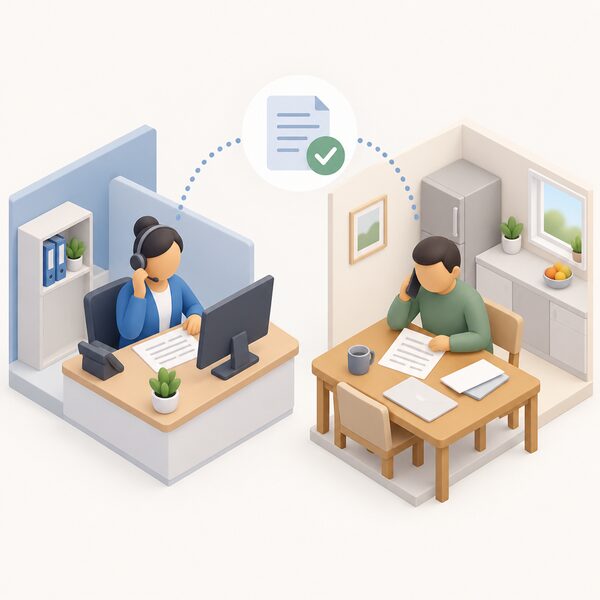
Every domestic supplier has a licence obligation to help customers in payment difficulty, and the options are broader than most households realise. If a household is struggling to pay for energy or thinks it may get into difficulty, it can ask its supplier to agree a payment plan, a payment break or reduction, review current payments and debt repayments, and give access to financial support called hardship funds12. Suppliers can also reassess or cut debt repayment and bill payments for domestic customers in financial trouble23.
Some suppliers go further and offer grants to help pay off energy debt for their own customers14. These are distinct from the charity trusts: they are the supplier's own funds, and eligibility is set by the supplier. Ofgem's consumer guidance lists paying off energy debt among the things supplier schemes and grants fund24.
The engagement condition for the DRS runs through this same territory. Adoption of a repayment plan, payment through Fuel Direct, or referral to a debt advice service are the three alternative routes to meeting it8. A household that has already agreed a repayment plan with its supplier has, in effect, already done the thing the scheme asks for.
Fuel Direct is worth understanding on its own terms. It is the option of paying towards energy bills directly out of a range of benefits where the claimant is in debt and having difficulty budgeting, and it is not intended to be an alternative to energy prepayment meters15. It is one of the three engagement routes, and for households on benefits it can be the simplest way to demonstrate engagement.
Free advice and casework: Citizens Advice and the Extra Help Unit
Citizens Advice offers information and support on a range of topics, including struggling to pay bills, problems with an energy supplier or energy supply, saving energy at home, and getting a better energy deal12. In England, the consumer service can be reached on 0808 144 884412. The service is free and independent of suppliers.
The Extra Help Unit is the escalation route. Citizens Advice may refer a household to it where support is needed with a difficult or urgent complaint, where the person cannot deal with their energy supplier on their own due to personal circumstances, where they are considered vulnerable, or where they are at risk of being disconnected from an energy supply25. That last criterion is the one that most often triggers a referral.
In Northern Ireland, the advice landscape is different. Energy suppliers refer customers who are struggling to pay bills to organisations such as Advice NI, which offers free, independent debt advice23. NI Energy Advice provides referrals to energy grants and other sources of help26, and covers energy grants and support, heating and energy use, energy bills and fuel poverty support, damp, condensation and ventilation, insulation and home improvements, renewable energy, changing electricity or gas supplier, and heating-oil savings27.
In Scotland, the Home Energy Scotland Grant and Loan Scheme helps eligible homeowners pay for energy efficiency improvements and clean heating systems28, and help with home energy bills is available from the Scottish government through mygov.scot12. That is equipment and efficiency funding rather than debt relief, but it sits alongside the GB-wide DRS.
For a household's independence, advice and casework do something no grant does: they establish what is actually owed, whether it is correct, and what the household can sustain. A repayment plan agreed with a supplier is a form of control over the account, and it is the same act that satisfies the DRS engagement condition.
What happens to your bill: how the DRS is paid for
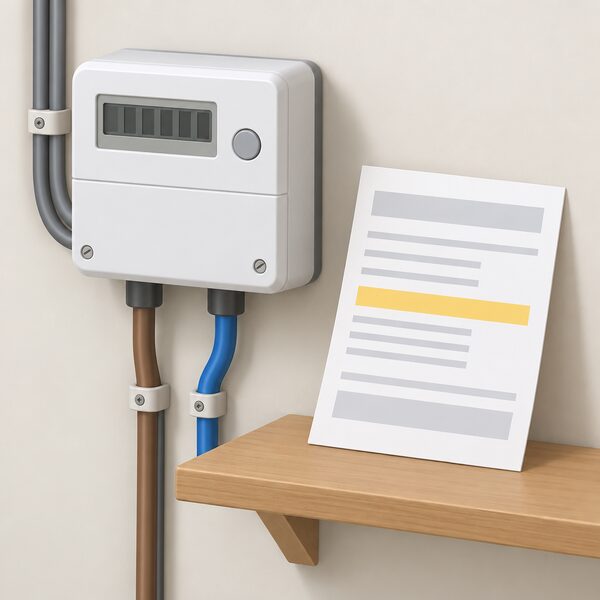
The DRS is not funded from general taxation. Ofgem proposes to recover the costs from domestic customers, through standing charges for electricity customers and volume charges for gas customers4. A DRS Payment is defined as a sum of money payable to the licensee or any permitted assignee to compensate for additional costs associated with the scheme, as outlined in the supplier reimbursement methodology3.
The mechanism runs through the network. The Authority may direct recovery of a specified amount of DRS Payments in a particular regulatory year via Use of System Charges3. Network distribution charges will collect and then distribute funds to eligible suppliers from May 20278. Suppliers claim for costs associated with debt write-off and administrative costs, with Ofgem assessing whether claimed costs represent value for money8. A flat administration cost is applied to each customer supported8.
The claim timetable has three windows. The first is Q3 or Q4 2026, recovered in 2027/2028, primarily for Phase 1 costs. The second is Q3 or Q4 2027, recovered in 2028/2029, primarily for Phase 2 costs. The third is Q3 or Q4 2028, recovered in 2029/2030, acting as a mop-up for any missed costs8. Claims must only include costs already incurred; projected or future costs are not eligible8. Any claims not submitted by the required time must wait until the next charging year8.
One earlier analysis found that around £400 million of the debt due to be written off under a debt relief scheme would be expected to have been recovered already, assuming previous debt allowances were equally distributed15. That figure sits alongside the write-off estimate rather than replacing it, and it illustrates why the net cost of the scheme is a matter of some debate.
For a household, the funding mechanism is the part of the DRS that touches every bill, whether or not that household ever receives a write-off. The standing charge is a fixed daily cost that cannot be avoided by using less energy, which is why the recovery method matters for energy independence: it is a cost of the system, not of the household's own consumption.
Sources28 cited
- Debt Relief Scheme Impact Assessment, Ofgem, 2025-11
- Debt strategy update: supporting reduction in energy debt, Ofgem, 2025-11-06
- DRS working paper, Ofgem, 2025-08
- Debt Relief Scheme Statutory Consultation, Ofgem, 2025-11
- Help with household costs, Isle of Anglesey County Council, 2026-09-20
- Energy costs, Swansea Council, 2022-12-14
- Crisis and Resilience Fund guidance for local authorities in England, GOV.UK, 2026-01-13
- DRS Delivery Guidance V1.0, Ofgem, 2025-11
- Crisis and Resilience Fund debate, Hansard, 2026-03-25
- Worried about your energy bills, Energy Ombudsman, 2026-03-24
- Fuel poverty, Welsh Government, 2025-08-07
- Get help with your home or business energy bills, Ofgem, 2026
- Getting help if you can't afford your energy bills, Ofgem, 2026-09-17
- Grants and benefits to help you pay your energy bills, Citizens Advice Scotland, 2026-09-17
- Resetting the energy debt landscape: the case for a debt relief scheme, Ofgem, 2024-12-12
- Over £50 million to help families struggling with soaring heating oil costs, GOV.UK, 2026-03-16
- Heating Oil Support debate, Hansard, 2026-03-16
- Support available with the cost of living, Welsh Government, 2026-03-18
- Extra support for disadvantaged households this winter, Welsh Government, 2024-11-15
- Tackling fuel poverty, Welsh Government, 2025-01-27
- Thousands of Welsh households get help with oil and LPG heating costs, Welsh Government, 2026-03-31
- Fuel vouchers helping families across Wales keep warm this winter, Welsh Government, 2025-10-17
- Advice if you're struggling to pay your energy bills, nidirect, 2026-09-17
- Get help with your home or business energy bills, Ofgem, 2026-09-17
- Complain about your energy supplier, Ofgem, 2026
- Energy saving grants in your area, nidirect, 2026-09-17
- Energy, Northern Ireland Housing Executive, 2026-09-17
- Home Energy Scotland Grant and Loan Scheme application and claim processing times, Scottish Government, 2026-03-12
 Grants and Energy IndependenceCan you get a grant for solar panels or a battery?
 DESNZ Energy PolicyThe government department behind home energy rules is not the one that pays your grant.
 The Full Grants and Schemes GuideWhich grants can you actually get right now, and how do you apply for them?
 Grant ScamsGrant schemes attract cold callers, doorstep sellers and fake approval letters using real scheme names.
 Check Which Energy Grants ApplyWhich energy grants can you actually get right now, and which have closed?
 Energy Debt and ArrearsHow much do households in the UK owe their energy supplier, and how many people are behind on their bills?