

In this answer
Short answer
The Ofgem Energy Industry Voluntary Redress Scheme is a grant fund that takes voluntary payments from energy companies that may have breached rules administered by Ofgem and distributes them to charities and community energy groups. It is not a household rebate and not a compensation scheme for individual consumers: it is a route by which money from enforcement and compliance settlements reaches projects that support people most at risk from cold homes and high energy bills1.
The scheme has been running since 2018 and has funded over 790 projects, supporting 900,000 households across England, Scotland and Wales2. Its most recent round, the first funding round of phase three, opened on 2 June 2026 with £30 million available and closed at 5pm on Tuesday 23 June 20261. The Energy Saving Trust manages the fund on Ofgem's behalf, assessing applications and paying grants3.
For a household thinking about energy independence, the scheme matters indirectly. It does not pay a home to install solar or a battery, but it funds the community organisations, advice services and local energy projects that reduce dependence on imported energy at a neighbourhood scale. The money is real and the track record is long, but the route to it runs through an eligible organisation, not through a domestic application.
What the scheme is and where the money comes from
The Energy Industry Voluntary Redress Scheme distributes voluntary payments from companies that may have breached rules administered by Ofgem1. The word voluntary matters: these are not fines imposed by a court, but payments a company agrees to make, often as part of a settlement that resolves a compliance failure without contested enforcement. Ofgem collects them and passes them to the scheme rather than to the public purse.
The scale of individual payments can be substantial. OVO Energy agreed to pay £7 million into Ofgem's Voluntary Redress Fund, following enforcement action over prepayment meter installations5. Ofgem has previously used its enforcement powers to require OVO Energy to contribute more than £1 million to a redress fund, and has signalled it is considering more severe financial penalties in future cases6. The unpaid amounts from the prepayment meter market compliance review are reconciled and paid to the Energy Industry Voluntary Redress Scheme7.
That mechanism is what makes the fund unusual. It converts regulatory failure into community benefit, and it does so without drawing on general taxation or on household bills. The trade-off is that the money is irregular: it depends on how many companies breach rules, how large the settlements are, and how quickly cases conclude. A round with £30 million available reflects a period of significant enforcement activity, not a guaranteed annual budget.
For a community group, that means funding is available but not predictable. For a household, it means the scheme's contribution to energy independence is real but indirect, flowing through projects rather than through individual grants.
Who can apply: charities and community energy groups

Eligibility is restricted to organisations, not individuals. Registered charities, community interest companies, co-operative societies and community benefit societies can apply, and must first register with the scheme3. Funding is available as grants to charities and community interest groups focused on supporting households most at risk of high energy bills1.
Community energy groups have a specific route. They can apply to either the Carbon Emissions Reduction Fund or the Innovation Fund1. That gives local generation and energy efficiency projects a path into the scheme that does not depend on charitable status alone, provided the organisation is constituted as one of the eligible forms.
The scheme's purpose is set out in its funding criteria: it funds projects that support vulnerable energy consumers, the development of innovative products or services, and the empowerment of consumers to reduce their carbon emissions4. Those three strands explain why the applicant list mixes advice charities, debt support services and community generation groups.
The distinction matters for anyone searching for a redress grant as a householder. The scheme's beneficiaries are the households a funded project reaches, not the applicants themselves. A community group running an energy advice service, a fuel poverty project or a local generation scheme is the typical applicant.
Four funding streams, including the Carbon Emissions Reduction and Innovation Funds
Charities can apply for grants through four different funding streams1. The Carbon Emissions Reduction Fund and the Innovation Fund are the two named streams open to community energy groups1. The Carbon Emissions Reduction Fund supports work that cuts emissions, while the Innovation Fund backs new products or services.
The main fund accounts for the bulk of the money. It represents around 75% of funding available under the Energy Redress Scheme, £19 million in the first round alone3. That concentration means most successful applicants are likely to be in the main stream, with the smaller funds targeting specific types of project.
The streams reflect the scheme's three purposes: supporting vulnerable consumers, developing innovative products or services, and empowering consumers to reduce carbon emissions4. A debt advice charity, a community solar group and a behaviour change project could each find a home in a different stream.
| Stream | Focus | Open to |
|---|---|---|
| Main fund | Around 75% of funding, £19 million in the first round3 | Charities and eligible organisations |
| Carbon Emissions Reduction Fund | Projects that reduce carbon emissions4 | Community energy groups and charities1 |
| Innovation Fund | Development of innovative products or services4 | Community energy groups and charities1 |
| Fourth stream | Part of the four funding streams available to charities1 | Charities |
The structure rewards organisations that read the criteria carefully. A project that fits the main fund's vulnerable consumer focus faces different competition from one aimed at the Innovation Fund, and the sums involved differ accordingly.
Coverage: England, Scotland and Wales, with £30 million available
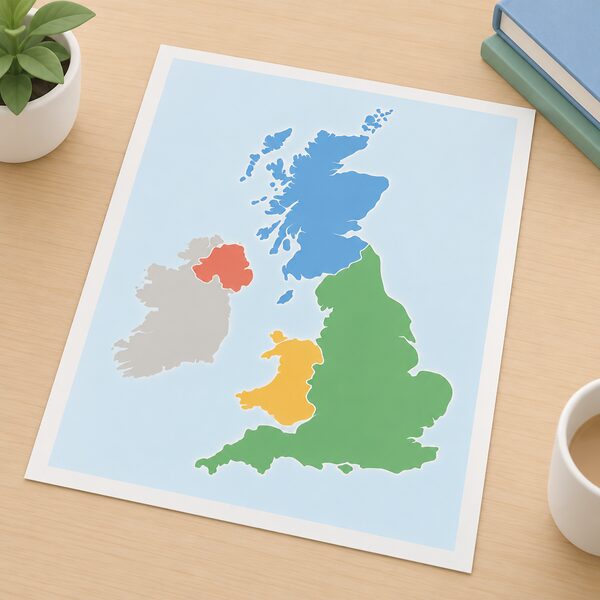
Funds are available as grants to charities and community energy groups across England, Scotland and Wales3. The scheme does not extend to Northern Ireland, which sits outside the Great Britain energy market for these purposes. That territorial limit is consistent with other Ofgem administered schemes: the Feed-in Tariffs scheme covered England, Wales and Scotland9, and Part 7 heat networks regulation would see Ofgem regulate in England, Scotland and Wales10.
The £30 million figure is the headline for the June 2026 round. £30 million is now available to charities and community energy groups that support people most at risk from cold homes and high energy bills1. The same amount is recorded as available under the Energy Redress scheme4.
For a household in England, Scotland or Wales, the practical effect is that local organisations in those nations can bid for the money. For a community group in Northern Ireland, the scheme is not a route, and other funding sources apply. The scheme's reach across three nations, with over 790 projects funded since 2018, makes it one of the larger dedicated funding pools for community energy and consumer support in Great Britain2.
How to apply: pre-registration, deadlines and the application process
Pre-registration is mandatory. Organisations must pre-register before applying, and organisations not yet registered must do so 10 working days before the relevant fund closes1. Scheme rules state that applicants must first register with the scheme at least 2 weeks before the funding round deadline so that the Energy Saving Trust can verify eligibility3.
The two figures differ: 6 February 2025 and 5pm on Friday 29 August 2025. An organisation working to the earlier of the two is safer. Registering well before either deadline removes the risk.
The application process itself runs through the Energy Redress website. The deadline for applications for the June 2026 round was 5pm on Tuesday 23 June 20261. An earlier round closed at 5pm on 8 July 20241, showing the scheme operates successive rounds rather than a single permanent window.
- Check the organisation's legal form against the eligible list: registered charity, community interest company, co-operative society or community benefit society3.
- Pre-register with the scheme, allowing at least 10 working days and preferably 2 weeks before the fund closes1.
- Identify the funding stream that fits the project: main fund, Carbon Emissions Reduction Fund, Innovation Fund or the fourth stream1.
- Submit the application through the Energy Redress website before the published deadline1.
The scheme is now closed to applications for the June 2026 round4. Organisations planning a bid should watch for the next round opening rather than prepare against a closed window.
What the scheme has funded so far: over 790 projects and 900,000 households

Since 2018, the Energy Redress Scheme has funded over 790 projects, supporting 900,000 households across England, Scotland and Wales2. That is the scheme's central measure of reach, and it places it among the larger funders of community level energy support in Great Britain.
The projects it backs sit alongside other funded programmes that reach vulnerable households. The Affordable Warmth Scheme has installed more than 56,000 energy efficiency measures in over 31,000 low-income households11. The Safe and Warm Community Scheme has helped almost 19,000 vulnerable households with energy triage and crisis support12. Scotland's Area Based Schemes have supported over 104,000 households to improve warmth and energy efficiency since 201313.
Those figures show the wider landscape the redress scheme operates in. It is one of several routes by which public and regulatory money reaches households at risk, and its community energy strand connects it to the local generation sector covered in community energy and funding for community energy projects.
For a household, the benefit is indirect but measurable: advice, crisis support and local energy projects funded through the scheme reach people who would otherwise pay more for imported energy. For a community group, the scheme is a repeatable funding route with a long track record, provided the organisation is constituted correctly and registers in time.
Sources13 cited
- Ofgem Energy Redress Scheme opens funding round for charities and community energy groups, Energy Saving Trust, 2025-09-22
- Energy Redress funding, Energy Saving Trust, 2026-09-20
- Energy Industry Voluntary Redress Scheme, Community Energy England, 2026-09-20
- Obtaining funding, Community Energy England, 2026-09-20
- OVO Energy fined as prepayment meter scandal continues to expose failures, End Fuel Poverty Coalition, 2026-06-16
- Market Compliance Review: prepayment meter installations, Ofgem, 2026-06-03
- Ofgem enforcement and redress, Public Accounts Committee, 2023-10-20
- Get help with your home or business energy bills, Ofgem, 2026-09-17
- Feed-in Tariffs annual report, Ofgem, 2026-09-17
- Heat networks regulation, House of Commons Library, 2026-09-20
- Warm Healthy Homes Fund consultation, Department for Communities, 2026-05
- How we're helping vulnerable customers most at risk of fuel poverty, SGN, 2024-07-22
- Heat in Buildings Strategy 2022 update, Scottish Government, 2022-10-31
 OfgemOfgem sets the rules energy suppliers and network companies must follow, including the price cap on standard tariffs.
 Energy Complaints and RedressMaps the routes a householder has when an energy supplier, network operator, broker or heat network gets something wrong, which body handles which dispute, and what the Energy Ombudsman can and cannot do.
 Financial Resilience RulesYour supplier going bust raises two questions: who takes over and what happens to your credit balance?
 Erroneous TransfersSomeone else has switched your gas or electricity without asking you.
 Ofgem Consumer ArchetypesWhich kind of household are you, and does it change what you pay for energy?
 Energy Debt Repayment PlansOwe money to your energy supplier?