
In this guide
A supplier hardship fund is a pot of money an energy supplier sets aside to help customers who cannot pay, and it can do two quite different things: write off or reduce arrears, or pay for a replacement appliance such as a cooker, fridge or washing machine. Ofgem's consumer guidance is direct about the first: suppliers "give you access to financial support, called 'hardship funds'"1. The same wording appears in Ofgem's wider help page, which also lists paying off energy debt among what supplier schemes and grants cover2.
The funds are not a statutory entitlement in the way the Warm Home Discount is. They sit alongside the things a supplier must do, such as agreeing a payment plan, a payment break or a reduction, and reviewing payments and debt repayments3. A household in difficulty can ask for those regardless of whether a fund exists, and the fund is the discretionary layer on top.
The practical picture is uneven. Some funds are large and well documented, such as the EDF Customer Support Fund, which offers debt support and energy efficient appliances including cookers, fridges and washing machines, plus smaller products to keep customers warmer during colder months4. Others are small, local or tied to a particular fuel. Eligibility usually turns on being a customer, being in genuine payment difficulty, and having taken debt advice first.
What a supplier hardship fund is, and who has to offer one
There is no general legal duty on every supplier to run a hardship fund. What exists instead is a patchwork of obligations that push suppliers towards supporting vulnerable customers, and a set of voluntary or trust-based funds that suppliers operate on their own terms.
The statutory layer includes the Warm Home Discount, which "requires obligated domestic energy suppliers to provide support to fuel poor customers"9. Suppliers can use additional eligibility criteria beyond the core group, as long as those criteria identify households at risk of fuel poverty and are approved by Ofgem10. The Energy Company Obligation is a separate, supplier-led and funded scheme aimed at energy efficiency rather than bill support11. Support under the current obligation is targeted at those most vulnerable but is also available for the least efficient homes in lower council tax bands12.
Alongside those, Ofgem's guidance tells households that suppliers "give you access to financial support, called 'hardship funds'"1. The funds themselves are typically administered through a charitable trust or an independent grant administrator rather than by the supplier's billing team, which is why the application process looks more like a charitable grant application than a customer service request.
The distinction matters for a household's energy independence. A hardship fund reduces what you owe a supplier, which loosens the grip of arrears on your account and can make switching or moving to a cheaper arrangement possible. It does not change your dependence on the grid, on gas, or on the supplier's billing systems. It is relief within the existing supply relationship, not an exit from it.
What the E.ON Next Energy Fund pays for
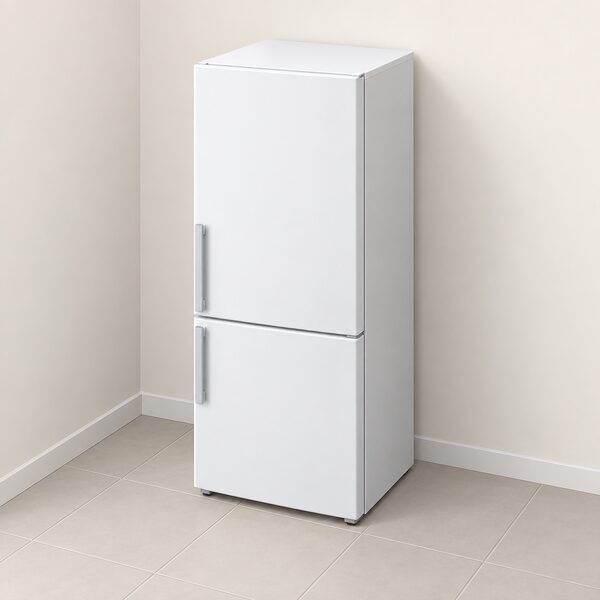
The E.ON Energy and E.ON Next Funds cover two broad categories. The first is repaying arrears. The second is replacing white goods such as cookers, fridge-freezers and washing machines5. Earlier documentation of the E.ON Energy Fund described a wider remit: it could help pay current or final E.ON bills, replace appliances and even repair gas boilers13.
That breadth is unusual. Most supplier-linked funds concentrate on debt, because debt is what threatens the supply relationship. Appliance replacement is a second, distinct purpose: a broken fridge or cooker forces spending that pushes a household further behind, so replacing it can be cheaper for the fund than letting the arrears grow.
The appliance element is shared across several schemes, which is useful context for anyone weighing up where to apply:
| Fund | What it covers | Source |
|---|---|---|
| E.ON Energy and E.ON Next Funds | Repaying arrears; replacing white goods such as cookers, fridge-freezers and washing machines | 5 |
| EDF Customer Support Fund | Debt support and energy efficient appliances such as cookers, fridges and washing machines, plus smaller products for colder months | 4 |
| EDF Energy Customer Support Fund | Grants to buy essential energy efficient white goods such as cookers, refrigerators or washing machines | 14 |
| Let's Talk Energy Fund | Help with bills or replacing broken cookers, fridges, freezers and washing machines | 5 |
| Discretionary Assistance Fund (Wales) | A fridge or washing machine and other white goods | 15 |
The pattern is consistent: cookers, fridges, freezers and washing machines recur across funds, and the appliance is usually specified as energy efficient. That last condition is not decoration. A fund that pays for a replacement is buying a lower running cost as well as a working appliance, which is the closest these schemes come to improving a household's underlying position rather than just its balance.
Who qualifies for the E.ON Next Energy Fund
The headline eligibility rule is generous on the customer question and strict on the financial one. The fund is available to help existing and previous E.ON and E.ON Next customers5. The E.ON Energy Fund was set up to help existing or previous customers receive extra support13. So a household that has left E.ON, or that has a final bill outstanding, is not automatically excluded.
The financial conditions are where most applications succeed or fail. Applicants are asked to show that they are able to pay future energy bills, to provide evidence of the income they receive, and to have received money advice and a budget sheet from their local Citizens Advice or StepChange Debt Charity5. That combination is deliberate: the fund is aimed at households that can be stabilised, not at households with no prospect of paying an ongoing bill.
The same logic runs through comparable schemes. The Discretionary Assistance Fund in Wales requires that the applicant is experiencing extreme financial hardship15. The Energy Company Obligation is aimed at those within a local authority most likely to be in fuel poverty16. The Emergency Heating Oil Scheme focuses on low income households, including those in receipt of means-tested social security, but is also open to applications from other people who have unavoidable additional heating needs and may face hardship, including people with disabilities or those at risk of self-rationing fuel17.
How to apply, and the evidence you need
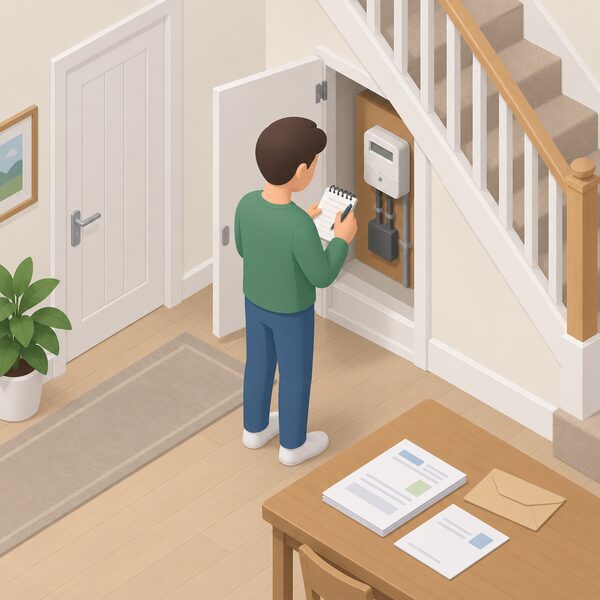
The application process for supplier funds is closer to a charitable grant application than to a call to a billing line. The published requirements for the EDF Energy Customer Support Fund give the clearest checklist: know your EDF Energy account number, take a meter reading on the day you send the application, tell EDF why you are applying, and have proof of any benefits5.
For the E.ON funds, the equivalent list is: show that you are able to pay future energy bills, provide evidence of the income you receive, and have received money advice and a budget sheet from your local Citizens Advice or StepChange Debt Charity5. EDF's fund adds a further condition: applicants must have completed a budget planner or received money advice before applying, so that the application form can confirm how much money is left each month after priority bills and essential expenditure4.
A workable order of events looks like this:
- Take debt advice first, through Citizens Advice or a debt charity, and complete a budget planner or budget sheet4.
- Gather income evidence and proof of any benefits5.
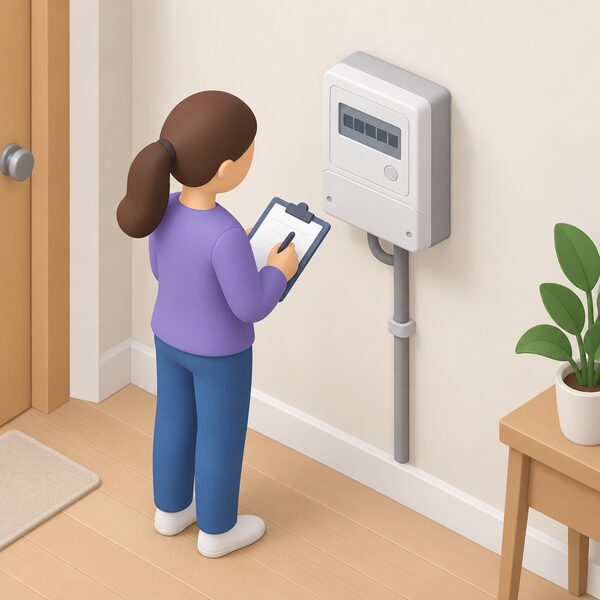
- Take a meter reading on the day the application is sent5.
- Apply to the fund with the account number and a clear explanation of why support is needed5.
The meter reading requirement is easy to overlook and worth planning around. It fixes the balance at the point of application, which matters when the grant is applied against a specific arrears figure.
The three-month Provisional Award Scheme and how debt suspension works
The Provisional Award Scheme is the mechanism by which a fund clears debt conditionally rather than outright. The award is made, the household keeps to a payment plan, and the debt is written off if the plan is honoured. If it is not, the position reverts.
The EDF Customer Support Fund rules state the consequence plainly: if payments are not kept up, the award is withdrawn and the debt, together with any further debt accrued over the payment plan period, remains4. That is a meaningful risk. A household that misses payments during the scheme can end up owing more than it did at the start, because new debt accrued during the plan is added to the original balance.
Heat network rules use a comparable early-warning trigger. Authorised heat network suppliers are required to include flags where a customer has consecutively missed two monthly payments or, if billed less frequently, has missed one payment, or has informed the supplier they are unable to make the next scheduled payment17. The principle is the same across the sector: a missed payment is treated as a signal to intervene, not simply as a default.
This is where the independence question becomes sharp. A provisional award keeps the household tied to the supplier's payment plan for its duration. The debt relief is real, but it is contingent on conduct, and the household's freedom to switch or renegotiate during the plan is limited by the fact that the arrears have not yet gone.
Where a hardship fund falls short
Hardship funds are discretionary, unevenly sized and not designed to reach everyone in difficulty. The sector's own history explains why they exist at all: between July 2021 and July 2022, the lack of financial resilience within many energy suppliers and the rise in wholesale prices led to the failure of 29 energy suppliers18. When suppliers fail, their funds go with them, and the households relying on them are transferred to a new supplier with no continuity of support.
The scale of the gap is visible in the debt figures. Ofgem's debt strategy work describes a scheme intended to provide one-time debt relief for households in genuine payment difficulty who accrued debt during the energy crisis and are in receipt of means-tested benefits19. The proposed eligible debt period is limited to debt accrued between 1 April 2022 and 31 March 2024, the energy crisis period8. Debt outside that window falls outside the proposed scheme.
Supplier-funded forgiveness is small relative to the problem. Good Energy highlighted around £400k in supplier funded debt forgiveness and the use of flexible additional support credit for high-risk prepayment customers20. That is one supplier's contribution, and it illustrates the order of magnitude involved.
The design of the proposed debt relief scheme also shows how tightly eligibility is drawn. Ofgem proposed that consumers would have to meet all three arms of the eligibility criteria to access support via suppliers21, and floated an alternative eligibility path involving consumer groups and charities, the application route21. Both routes assume that the household can demonstrate its circumstances, which is precisely what households in crisis often struggle to do.
For energy independence, the limit is structural. A hardship fund addresses the symptom, the arrears, without changing the household's exposure to the price cap, to wholesale costs, or to the supplier's commercial decisions. The statutory levy that funds Contracts for Difference payments, for instance, falls on all UK-based licensed electricity suppliers22, and those costs ultimately reach bills. A grant does not alter that.
Free advice charities that can help
The advice step is not optional in practice, because several funds require it before an application will be considered. The good news is that the advice is free and the routes are well established.
Citizens Advice offers information and support on a range of topics, including struggling to pay bills, problems with your energy supplier or energy supply, saving energy at home, and getting a better energy deal1. It covers consumers in England and Wales17. The main telephone line is 0808 223 1133, with a Welsh language line on 0808 223 1144, open Monday to Friday, 9am to 5pm7. In England there is also a line on 0808 144 88443.
National Energy Action provides free advice about energy bills and keeping warm and safe in your home, and can also help with benefits advice and income maximisation16. It offers advice and support to help people across England, Wales and Northern Ireland stay warm and manage energy costs, on 0800 304 71596. A British Sign Language interpreter can be requested16.
Local authority routes add a further layer. Some councils arrange a free telephone advice service to help with benefits, money and bill problems23. Others run trust fund grants for customers in financial difficulty of many utility suppliers23.
| Service | Coverage | Contact |
|---|---|---|
| Citizens Advice | England and Wales | 0808 223 1133; Welsh language 0808 223 11447 |
| Citizens Advice | England | 0808 144 88443 |
| National Energy Action | England, Wales and Northern Ireland | 0800 304 71596 |
| Local authority advice lines | Varies by council | Free telephone advice on benefits, money and bill problems23 |
Fuel poverty in context: why these funds exist
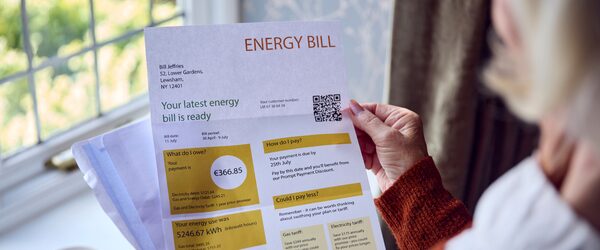
Hardship funds exist because the statutory safety net does not catch everyone, and because the gap between a household's income and its energy bill widened sharply during the energy crisis. The funds are a supplier-level response to a problem that is measured nationally.
The Warm Home Discount is the largest statutory bill support scheme, and it "requires obligated domestic energy suppliers to provide support to fuel poor customers"9. It has been expanded territorially: government announced support for 280,000 Scottish households with energy bills through the scheme10. The Energy Company Obligation, by contrast, is a supplier-led and funded scheme11 aimed at efficiency rather than cash.
Beyond those, government has funded schemes that sit outside the supplier relationship entirely. The Energy Bills Support Scheme Alternative Fund was intended to provide £400 of support for household energy bills for households across the UK that do not receive the equivalent support through the main Energy Bills Support Scheme because they do not have a domestic energy contract24. The main scheme provided a one-off £400 payment to households to help with bills over winter 2022-2325. In Northern Ireland, government announced that thousands more households were on course to benefit from help with energy bills26.
Off-grid households have their own routes. The Emergency Heating Oil Scheme focuses on low income households, including those in receipt of means-tested social security, but is also open to applications from other people who have unavoidable additional heating needs and may face hardship, including people with disabilities or those at risk of self-rationing fuel27. Cornwall's Crisis and Resilience Fund Energy Support Scheme has a particular focus on low-income heating oil users28.
The picture across the four nations is genuinely different. Wales runs the Discretionary Assistance Fund, which covers a fridge or washing machine and other white goods15. Scotland has run dedicated heating oil and LPG support27. Northern Ireland's support has been delivered through separate announcements and a separate market. England relies more heavily on supplier obligations and local authority schemes. A household's postcode changes which of these it can reach.
Other routes of support beyond hardship funds
A hardship fund is one route among several, and it is rarely the first one a household should try. The order matters, because some routes are entitlements and others are discretionary.
The first step is to ask the supplier directly. Ofgem's guidance is that if you are struggling to pay for energy or think you may get into difficulty, you can ask your supplier to agree a payment plan, a payment break or a reduction, review payments and debt repayments, and give access to hardship funds3. Those first three items are available without a grant application.
The second step is statutory support. The Warm Home Discount reaches fuel poor customers through obligated suppliers9, and suppliers can use additional criteria identifying households at risk of fuel poverty, subject to Ofgem approval10. The Energy Company Obligation funds efficiency measures rather than bills11, with support targeted at those most vulnerable and also available for the least efficient homes in lower council tax bands12.
The third step is government funding outside the supplier relationship. The Energy Bills Support Scheme Alternative Funding was aimed at households who do not have a direct relationship to a domestic electricity supplier, such as park home residents, people living in care homes and households who get their energy through a commercial contract, with payments delivered directly into people's bank accounts by UKSBS26. That route exists precisely because supplier-based support cannot reach households without a supplier account.
The fourth step, where a dispute has arisen, is the Energy Ombudsman. Its eligibility checklist requires that you complain to the supplier first, wait 8 weeks or receive a Deadlock Letter, have sufficient evidence including the complaint date, and confirm the supplier name matches the bill29. That is a separate process from a hardship fund and does not produce a grant, but it can resolve billing errors that are themselves the cause of arrears.
For a household's energy independence, the honest summary is this. Hardship funds and the routes around them can clear a debt, replace a broken appliance and stabilise an account. They cannot reduce your reliance on the grid, on gas, or on a supplier's pricing. The dependence that remains is the same dependence every household on a domestic supply has, and the funds are relief within it rather than an escape from it.
Sources29 cited
- Getting help if you can't afford your energy bills, Ofgem, 2026-09-17
- Get help with your energy bills, Ofgem, 2026-09-17
- Get help for your home or business energy bills, Ofgem, 2026
- EDF Customer Support Fund, Charis Grants, 2026-09-17
- Energy bills help, Scope, 2026-07-24
- Worried about your energy bills, Energy Ombudsman, 2026-03-24
- Consumer protection rights, UK Government, 2026-09-17
- Debt Relief Scheme statutory consultation, Ofgem, 2025-11
- Warm Home Discount annual report, scheme year 4, Ofgem, 2015-11-02
- Warm Home Discount expanded to help 280,000 Scottish households, UK Government, 2022-05-09
- Energy Company Obligation inquiry, UK Parliament, 2019-07-12
- £1.5 billion to improve energy efficiency and slash bills, UK Government, 2022-09-29
- Energy costs support, Swansea Council, 2022-12-14
- EDF Energy Customer Support Fund, Swansea Council, 2022-03-07
- Discretionary Assistance Fund, Welsh Government, 2026-09-17
- Getting help with your energy bills, Birmingham City Council, 2026-06-24
- Heat networks consumer protection draft guidance, Ofgem, 2025-09-05
- Committee of Public Accounts report, UK Parliament, 2022-07
- Debt strategy update: supporting reduction in energy debt, Ofgem, 2025-11-06
- Consumer vulnerability strategy progress report, Ofgem, 2026-07-21
- Resetting the energy debt landscape, Ofgem, 2024-12-12
- Decision on the CfD allowance methodology in the default tariff cap, Ofgem, 2022-06-23
- Grants and funding, Tameside Council, 2026-09-17
- Energy Bills Support Scheme Alternative Fund, UK Parliament, 2022-10-18
- Energy Bills Support Scheme briefing, House of Commons Library, 2022-23
- Thousands more households in Northern Ireland to benefit from £600 government help, UK Government, 2023-02-27
- Support for households using heating oil and LPG, Scottish Government, 2026-09-17
- Cost of living support for rising energy costs, Cornwall Council, 2026-04-02
- Raise a dispute: Cynon Taf Community Housing, Energy Ombudsman, 2026-09-19
 The Full Grants and Schemes GuideWhich grants can you actually get right now, and how do you apply for them?
 Scams and Mis-SellingHow energy supplier scams present, what the doorstep and phone selling rules require, the redress available when a contract was mis-sold, and how the Energy Ombudsman handles a dispute.
 Grants and Energy IndependenceCan you get a grant for solar panels or a battery?
 When Your Installer Goes BustWhat happens to deposits, part-completed work, workmanship guarantees and complaints when a home energy installation company fails, and how to claim on deposit protection, an insurance-backed guarantee, card or finance cover, and who honours the manufacturer's warranty.
 The Full Installers GuideHow do you find an installer you can trust, and what should you check before signing anything?
 Apply for a Home Energy GrantThe application sequence common to funded schemes: the checker, the survey or assessment, the installer, the paperwork and the sign-off.