

In this guide
The Energy Debt Relief Scheme is a one-off, government-backed programme to write off domestic gas and electricity arrears built up during the energy crisis. It is aimed at households in genuine payment difficulty who accrued debt between 1 April 2022 and 31 March 2024, and it is delivered by energy suppliers under licence conditions administered by Ofgem1.
The scheme is being run in two phases. Phase 1 covers domestic customers on means-tested benefits who hold £100 or more of eligible debt, identified by data matching with the Department for Work and Pensions. Ofgem expects Phase 1 to benefit between 280,000 and 400,000 accounts, writing off between £312.4 million and £472.9 million, and to address £0.905 billion in eligible debt across 706,000 customer accounts1. Phase 2 is intended to cover the remaining accounts, with around £1.6 billion of eligible debt across approximately 1.7 million customer accounts1.
The money is not a grant paid to households. Suppliers apply a DRS Adjustment to reduce the balance, then claim the cost back through network charges, which are recovered from domestic customers from charging year 2027/282. The scheme closes to applications on a set date in Q1 2027, with final claim submissions in Q3/Q4 20283.
What the Energy Debt Relief Scheme is and who it is for
The DRS is a debt write-off programme, not a payment. Its stated purpose is to provide one-time debt relief for households in genuine payment difficulty who accrued debt during the energy crisis, and to reduce the debt stock by up to £500 million1. Ofgem's earlier case for the scheme described the intention as forgiving debt or a portion of debt of eligible customers, and/or providing debt matching to crowd in customer debt repayments5.
Eligible debt is defined narrowly. It means debt and arrears, monies owed to a licensed energy supplier for charges in relation to the licensed supply of gas and electricity, which built up during the eligible period and is still outstanding1. Debt and arrears are treated as outstanding where they have been unpaid for at least 91 days1. The eligible period is the energy crisis window of 1 April 2022 to 31 March 20241.
The scheme is not open to everyone with arrears. It is targeted at domestic customers on means-tested benefits in Phase 1, and at customers genuinely unable to repay in Phase 2. Ofgem's impact assessment sets out that eligible customers are those domestic customers identified as being on means-tested benefits who hold more than £100 of eligible debt at the point the scheme is implemented1.
For a household, the practical effect is that a historic crisis-era balance can be removed rather than repaid over years. Ofgem's own estimate is that the average time to recover outstanding eligible debt is more than 22 months, which is the recovery burden the scheme is designed to short-circuit1.
Eligibility: the £100 threshold, the eligible period and means-tested benefits

Three conditions do most of the work: the size of the debt, when it was built up, and the household's benefit status.
The debt floor is £100. Ofgem's statutory consultation states that a floor of £100 on the level of eligible debt is appropriate, and the working paper describes the criteria as domestic customers or households with £100 or more of debt2. The eligible period is fixed: debt accumulated between 1 April 2022 and 31 March 2024, the energy crisis period2.
The benefit test in Phase 1 draws on the same means-tested benefits used across other energy support schemes. The ECO4 eligibility list, which is the closest published enumeration, covers Child Benefit (with income thresholds), Pension Credit (Guaranteed or Savings Credit), income-related Employment and Support Allowance, income-based Jobseeker's Allowance, Income Support, Child Tax Credit and Working Tax Credit, Universal Credit, and Housing Benefit6. Ofgem's own working paper confirms the Phase 1 group as customers in receipt of means-tested benefits, identified through data matching with DWP data, who meet the eligibility criteria and the engagement condition3.
Legislation enabling the use of means-tested benefits data for energy debt relief must be in place for DWP data matching to be used, and the working paper puts that legislation coming into force in December 2025 to January 2026 under the Digital Economy Act 20172.
Phase 1 and Phase 2: who is covered in each
The two phases use different eligibility machinery and run on different clocks.
Phase 1 targets customers in receipt of means-tested benefits, identified through data matching with DWP data, who meet the eligibility criteria and the engagement condition3. Ofgem estimates this phase will cover approximately one-third of all customers with eligible debt3. Suppliers are expected to deliver this phase in the first half of 2026, once licence changes come into force and the DWP data matching legislation has passed, subject to Parliamentary approval3.
Phase 2 targets customers with eligible debt who are genuinely unable to repay but are not in receipt of means-tested benefits, identified through a standardised and enhanced income and expenditure assessment3. The working paper puts Phase 2 timing at summer 2026, covering all other eligible customers2. Ofgem's earlier consultation had proposed an alternative eligibility path involving consumer groups and charities, the application route, as a way of reaching households the benefit data would miss5.
| Phase 1 | Phase 2 | |
|---|---|---|
| Target group | Customers on means-tested benefits, identified by DWP data matching3 | Customers genuinely unable to repay, not on means-tested benefits3 |
| Identification | DWP data matching3 | Standardised and enhanced income and expenditure assessment3 |
| Expected coverage | Approximately one-third of all customers with eligible debt3 | The remaining customer accounts with eligible debt1 |
| Eligible debt | £0.905 billion across 706,000 accounts1 | Around £1.6 billion across approximately 1.7 million accounts1 |
| Delivery timing | First half of 20263 | Summer 20262 |
The scale difference matters. Phase 1 addresses the smaller share of the debt but reaches households whose circumstances are already verified by the benefit system. Phase 2 carries the larger balance and depends on an assessment of means that suppliers must apply consistently, which is why Ofgem describes it as standardised and enhanced3.
The automatic route and the engagement condition
The scheme does not write off debt for households that have stopped paying altogether. Engagement is a condition, and it takes specific forms.
Customers on means-tested benefits who are already engaged, such as those on a repayment plan or paying towards ongoing usage, automatically qualify for debt write-off on eligible balances2. The automatic route criteria are that the customer holds eligible debt of £100 or more, is identified as being in receipt of means-tested benefits, and has made a payment in the billing period immediately prior1.
For customers who are not engaged, Ofgem sets out three alternative engagement routes: adoption of a repayment plan, payment through Fuel Direct, or referral to a debt advice service4. The working paper describes the requirement for disengaged means-tested benefit customers as responding to supplier contact, providing basic information, and engaging with at least one additional support option such as a repayment plan, a smart meter installation, the Fuel Direct Scheme or a signpost to a debt advice service2.
The payment test is deliberately light. The statutory consultation states that the criteria is met if a customer has made a payment during their most recent billing period, whether monthly, quarterly or otherwise depending on the supplier's billing approach3. The payment is towards current usage, not the historic eligible debt.
"the criteria is met if a customer has made a payment during their most recent billing period"
The Fuel Direct route is a long-standing mechanism: paying towards energy bills directly out of a range of benefits where the claimant is in debt and having difficulties budgeting, and it is not intended as an alternative to energy prepayment meters7.

How much debt could be written off: the scale of the scheme
The published figures describe a scheme of substantial but bounded size, and the range across documents reflects how the design changed between consultation stages.
Ofgem's December 2024 case for a scheme estimated that it could write off £0.5 to £1 billion5. The November 2025 impact assessment narrows Phase 1 to between £312.4 million and £472.9 million, benefiting between 280,000 and 400,000 accounts1. The same document puts Phase 1 eligible debt at £0.905 billion across 706,000 customer accounts, and Phase 2 eligible debt at around £1.6 billion across approximately 1.7 million customer accounts1.
The gap between eligible debt and write-off is explained partly by prior recovery. Ofgem's earlier consultation expected around £400m of the debt due to be written off under a debt relief scheme to have been recovered already, assuming previous debt allowances were equally distributed5. In other words, some of the eligible balance has already been paid down or provided for, so the write-off is smaller than the stock.
There is also a cap. The statutory consultation retains a cap on the amount of debt relief available to each individual customer at the total value of their eligible debt as it stands on the date of the consultation's publication3. The working paper states the same principle: capped at total outstanding eligible debt at the point of statutory consultation publication2.
The scheme is also expected to change payment behaviour. The impact assessment estimates benefits of £4 million to £11.2 million over a three-year period in 2025's price level for all engaged eligible households1.
How the scheme is funded and what it adds to bills
The DRS is funded by network companies and recovered through network charges, a financing option Ofgem consulted on alongside recovery through a price cap allowance, supplier voluntary contributions, and debt matching with customer contributions5. The working paper confirms the chosen mechanism: using network distribution charges to collect and distribute funds for a one-off debt relief scheme2.
The recovery method is split by fuel. Ofgem proposes to recover DRS costs from domestic customers via standing charges for electricity customers and volume charges for gas customers2. Networks would recover DRS costs through higher network use of system charges from charging year 2027/282. Payments commence at the start of the 2027/2028 charging year, with the first DRS payments from networks to suppliers occurring in May 20273.
The statutory consultation proposes a one-year payment and recovery period3. The delivery guidance sets out three claim periods: Q3/Q4 2026 with recovery in 2027/2028, primarily for Phase 1 costs; Q3/4 2027 with recovery in 2028/2029, primarily for Phase 2 costs; and Q3/4 2028 with recovery in 2029/2030, acting as a mop up for any missed costs4.
This is the dependence the scheme creates. The write-off is real for the household that receives it, but the cost is socialised across all domestic customers through network charges, and it lands on bills from 2027/28 onwards. The scheme does not reduce the total cost of the energy crisis debt; it moves who pays it and when.
How suppliers claim and how Ofgem decides

Delivery is by suppliers, with administration and oversight by Ofgem, which the statutory consultation confirms remains the preferred delivery approach3. Only suppliers that are obligated under the DRS and that have passed the DRS Phase 1 Readiness Assessment can make a claim4.
The claims process closely aligns with the approach used in the Supplier of Last Resort levy claims framework, with suppliers submitting claims to Ofgem and presenting validated claims to network operators for payment4. Claims must be submitted via Huddle, a secure file-sharing platform, using an Excel template, and claims not in the correct format must be resubmitted4. Claims must only include costs that have already been incurred; projected or future costs are not eligible4.
Suppliers can claim for costs associated with debt write-off and administrative costs, with Ofgem assessing whether claimed costs represent value for money4. A flat administration cost is applied to each customer supported under the scheme4. Claims must include the number of customers supported and the monetary value of support, summarised by fuel type and disaggregated by payment method and account type4.
The final decision on all claims rests solely with Ofgem, though suppliers may meet Ofgem and submit further evidence for reconsideration4. Where Ofgem is not satisfied with any aspect of a claim, it will adjust or reject specific items rather than rejecting the whole claim, and may revise or reject a claim entirely where evidence is insufficient4. Ofgem takes a zero-tolerance approach to fraud, and suppliers must mitigate fraud risk with senior manager oversight, accurate reporting processes and processes for handling suspected fraud, whistleblowing and allegations4.
Suppliers provide monthly reporting on the number of Phase 1 customers engaged through the scheme, and Ofgem may request an end-of-scheme report following closure4. The supplier must retain an audit trail for DRS Adjustment made to customers, and Ofgem may request that a supplier commissions an independent audit where it identifies a risk to customer outcomes4.
Timetable: launch, application window and scheme closure
The timetable has moved since the scheme was first proposed, and the published dates now run from late 2025 through to 2030.
The December 2024 consultation proposed a scheme opening period of summer/autumn 2025 to spring 2026, with decisions expected in late spring 2025 and implementation targeted at summer/autumn 20255. The November 2025 documents set a later and firmer sequence. DWP data matching legislation comes into force in December 2025 to January 2026, and Phase 1 standard licence conditions come into force in January 20262. DRS licence changes come into force in Q1 20263.
Phase 1 launch, when suppliers begin applying DRS adjustments to accounts, is early 2026, once licence changes come into force and the DWP data matching legislation has passed, subject to Parliamentary approval3. Suppliers are expected to deliver Phase 1 in the first half of 20263. The first Phase 1 claim submission round is Q3/4 2026, with the first Phase 1 claim payment from networks to suppliers in Q2 20273.
The scheme closes to applications on a set date in Q1 20273. The working paper puts Phase 1 and Phase 2 close to applications at Q1 2027, with a wind-up period of early 2027 to mid 20272. The delivery guidance indicates the scheme is expected to close after final claim submissions in Q3/Q4 20284.
| Stage | Date |
|---|---|
| DWP data matching legislation in force | December 2025 to January 20262 |
| Phase 1 licence conditions in force | January 20262 |
| Phase 1 launch and delivery | Early 2026, first half of 20263 |
| Phase 2 delivery | Summer 20262 |
| Scheme closes to applications | Q1 20273 |
| First payments from networks to suppliers | May 20273 |
| Final claim submissions | Q3/Q4 20284 |
How the DRS interacts with other debt and hardship schemes
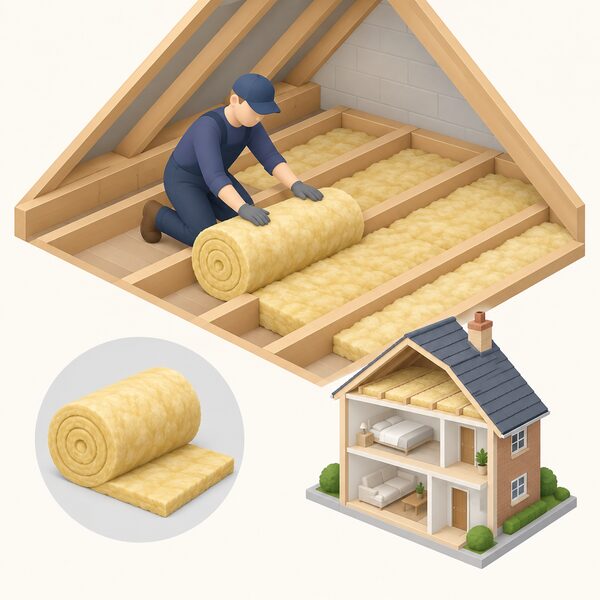
The DRS sits alongside a crowded landscape of energy debt and efficiency support, and the boundaries between them are set out in the delivery guidance.
The clearest rule is that the DRS Adjustment should not be used to meet any other obligation, including debt write-off offered under the Industry Initiatives component of the Warm Home Discount4. The two cannot be stacked on the same debt.
Beyond that, the schemes do different jobs. The Warm Home Discount helps households in, or at risk of, fuel poverty with direct energy bill payments as well as other financial and energy-related support, and it is funded through a levy on all domestic gas and electricity customers8. The Energy Company Obligation is an energy supplier led energy efficiency scheme in England, Scotland and Wales designed to tackle fuel poverty and help reduce carbon emissions, focused on supporting low-income households, and it supports energy efficiency measures in the home of those considered to be in fuel poverty9. ECO helps make homes more energy efficient by installing improvements free of charge to eligible households11.
The distinction matters for a household's position. The DRS removes a historic balance; ECO and similar schemes reduce future consumption. A household that receives a write-off but remains in a hard-to-heat home has not changed its underlying exposure to prices.
Charitable support continues in parallel. The British Gas Energy Trust is a registered charity that helps individuals and families in poverty, suffering or other distress who are struggling to pay their gas and/or electricity debts12. Supplier funds operate on their own terms: the EDF Customer Support Fund requires applicants to show commitment to financial stability by making regular payments for ongoing energy usage, and once an application for debt support is successful a payment plan is agreed and any debt activity is suspended13.
For households in Northern Ireland, the support landscape is separate. A Northern Ireland energy bill reduction scheme is being paid for through £81 million in funding14.
What the scheme means for household energy independence
The DRS addresses the consequence of dependence rather than the dependence itself. It clears a balance owed to a licensed supplier, which restores a household's ability to switch, to move to a cheaper payment method, or simply to stop servicing a historic debt out of current income. That is a real gain in control.
What it does not change is the underlying position. The household remains connected to a licensed supplier, buying gas and electricity at prices set by the market and the price cap, and the cost of the write-off is recovered from all domestic customers through network charges from 2027/282. The scheme is funded by network companies and recovered through network charges, one of several financing options Ofgem considered5. The money comes from the same customer base that carries the debt.
The scheme also leaves the physical causes of arrears untouched. Energy Company Obligation measures support energy efficiency in the homes of those considered to be in fuel poverty, and the Domestic Renewable Heat Incentive is a government financial incentive to promote the use of renewable heat9. Those schemes reduce consumption and exposure to prices; the DRS does not. A household that clears its crisis-era debt but still lives in a poorly insulated home remains exposed to the next price shock.
There is a timing dependence too. The write-off is applied by the supplier, but the supplier is reimbursed by network operators from May 2027, and the cost reaches bills from charging year 2027/282. Until then, the household's relief depends on the supplier's readiness assessment, its claim being validated, and Ofgem's decision on that claim, which rests solely with Ofgem4.
The honest summary is that the DRS is a one-off correction of a specific historic problem. It restores a household's standing with its supplier. It does not make the household independent of the grid, the supplier, the gas network or the price of energy, and it does not prevent the same debt arising again if prices rise faster than income.
Sources15 cited
- Debt Relief Scheme Impact Assessment, Ofgem, 2025-11-06
- DRS Working Paper, Ofgem, 2025-08
- Debt Relief Scheme Statutory Consultation, Ofgem, 2025-11
- DRS Delivery Guidance V1.0, Ofgem, 2025-11-06
- Resetting the energy debt landscape: the case for a debt relief scheme, Ofgem, 2024-12-12
- Energy Company Obligation ECO4 scheme, Derbyshire County Council, 2026-09-17
- Fuel Direct Scheme, House of Commons Library, 2022-04-26
- Warm Home Discount guidance: England and Wales, Ofgem, 2022-07-05
- Energy Company Obligation (ECO), Ofgem, 2026-09-17
- The Energy Company Obligation, House of Commons Library, 2026-09-17
- ECO4 Flex Open, South Cambridgeshire District Council, 2026-09-17
- Help with household costs, Isle of Anglesey County Council, 2026-09-20
- EDF Customer Support Fund, Charis Grants, 2026-09-17
- Northern Ireland energy bill reduction scheme, House of Commons Library, 2026-08-06
- Domestic Renewable Heat Incentive (Domestic RHI), Ofgem, 2026-09-17
 Energy Debt Repayment PlansOwe money to your energy supplier?
 Energy Debt and ArrearsHow much do households in the UK owe their energy supplier, and how many people are behind on their bills?
 Prepayment Meter DebtHow debt repayment is set on a prepayment meter, the limits on the share of a top-up that can be taken, and how to have a rate reviewed.
 DESNZ Energy PolicyThe government department behind home energy rules is not the one that pays your grant.
 The Full Grants and Schemes GuideWhich grants can you actually get right now, and how do you apply for them?
 Final Bills and Credit RefundsHow final bills and credit refunds work when you leave an energy supplier: the six-week deadline for the final bill, the ten-working-day deadline for refunding credit, the twelve-month back billing limit, and the automatic compensation that applies when suppliers miss these standards.