
In this guide
- Unit Rate and Standing Charge
- Consumption and Meter Readings
- Back Billing 12 Month Limit
- When the Limit Does Not Apply
- Supplier Responsibility Bills
- Limit for Direct Debits
- Guaranteed Standards of Service
- Power Cut Compensation
- Storm Payments Without a Claim
- When No Payment Is Due
- Ofgem Role in Enforcement
- What a Readable Bill Does
A domestic gas and electricity bill is built from two charges and one number. The two charges are the unit rate, how much is paid for each unit of gas or electricity used, and the standing charge, the daily fixed cost of supplying the home1. The number is consumption in kilowatt hours (kWh), worked out from meter readings recorded on the bill2. Everything else on the page, the tariff name, the account number, the meter serial number, the balance carried forward, exists to let a household check those three things.
Every domestic bill must carry a defined set of information: the customer's name and address, the supplier's name and address, the account or reference number, meter serial numbers, meter readings, usage over the last billing period, a breakdown of the current charges, tariff details including unit price and standing charge, contract details with any end date and exit fees, a tariff comparison rate, and a reminder of the right to switch3. The standing charge appears as a daily unit rate, with different prices for electricity and gas4. Where a household pays by credit meter, the regular bill shows tariff, unit price, energy usage, payments made and account balance5.
Two protections matter most when a bill looks wrong. Back billing rules mean a household does not have to pay for energy used more than 12 months ago where it has not had an accurate bill for that period6. Guaranteed standards set minimum service standards, with automatic compensation when they are breached7. Both are set by Ofgem and enforced through the supply and distribution licences.
Unit rate, standing charge and the meter details
The unit rate is the price per kWh. The standing charge is a daily amount that covers the fixed costs of providing the home with gas and electricity, including the network connection, meter readings, maintenance and government initiatives5. A household pays the standing charge whether or not it uses any energy, which is why a bill for a nearly empty property is never zero.
Behind those two figures sit the cost components Ofgem uses to calculate them: wholesale costs, network costs, operating, debt and industry costs, EBIT, policy costs and VAT, together with the type of energy used, the type of meter installed and how the bill is paid12. A single bill does not itemise all of those, but they explain why two homes using identical amounts of energy can be charged different rates. More detail sits on what makes up a UK energy bill and policy costs and levies.
Standing charges also differ by region. Ofgem's benchmark maximum charges for 1 July to 30 September 2026 show the spread across electricity regions on single-rate terms13:
| Region | Standing charge, single rate | Annual bill at 2,500 kWh |
|---|---|---|
| Northern | £223.48 | £824.03 |
| Midlands | £207.57 | £810.72 |
| South East | £189.27 | £824.22 |
| East Midlands | £186.33 | £783.86 |
| London | £181.21 | £843.39 |
Those are cap benchmarks, not a quote for any one household. The point for bill reading is that a high standing charge in one region and a low one in another can sit alongside similar annual totals, because unit rates move in the opposite direction. Regional detail is covered in electricity and gas unit rates by region and standing charges.
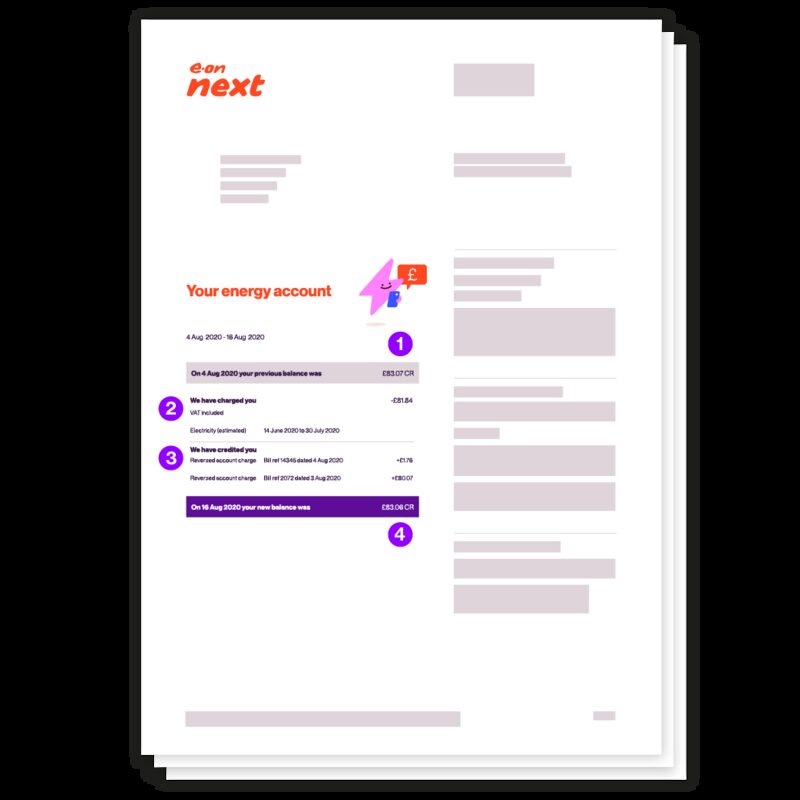
The tariff name identifies which price list applies, and is what a household needs alongside annual usage or cost when comparing deals3. Tariff details can usually be found on the latest bill or statement, or in the supplier's app or online account1. A dual fuel arrangement can be confirmed by checking whether a recent bill shows spending on both gas and electricity.
Consumption in kWh and what the meter readings show
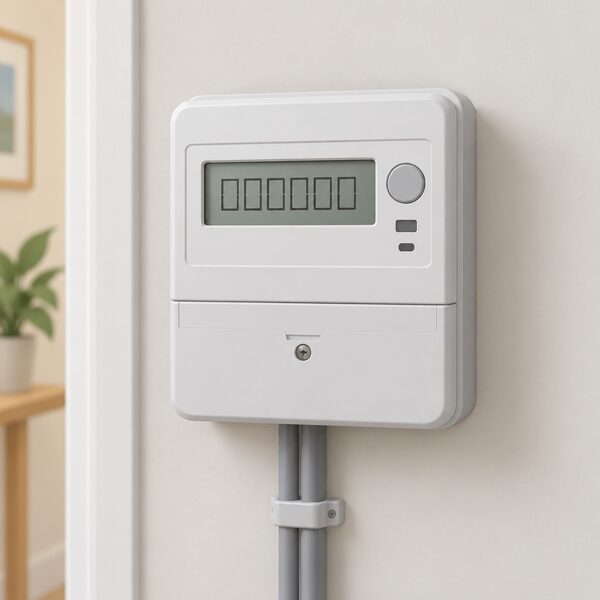
The bill records gas and electricity meter readings, and those readings are used to calculate how many units of energy have been used2. A supplier needs regular readings to work out bills, and will estimate usage where no readings are sent14. Estimation is the origin of most disputed bills: where suppliers do not receive readings they estimate based on how much energy they think has been used, which can lead to overpayment or to a large amount owed later15.
Not sending readings most often produces an estimated bill and therefore over-paying or under-paying, rather than any immediate loss of rights16. A smart meter removes the step: readings are sent automatically, and bills are based on accurate meter readings rather than estimates17. Households with prepayment meters do not need to take readings to be billed accurately, though tracking use can still be useful15.
Gas meters add one complication that a reader should expect: the meter records volume, and the bill converts that to kWh before applying the unit rate. The reading, the conversion and the resulting kWh figure all appear on the bill, which is what makes the arithmetic checkable. See how to read a gas or electricity meter and meter readings and estimated bills.
Back billing: the 12-month limit on charges for past energy use
A back bill is what a supplier asks a household to pay when it has not accurately charged for energy already used6. Ofgem's back billing rules mean a household does not have to pay for energy used more than 12 months ago where it has not had an accurate bill, statement of account, or where a Direct Debit was set too low6. The same limit is stated in Ofgem's consumer guidance on receiving a back bill18.
The restriction is a licence condition, not guidance. Ofgem's implementation work describes it as SLC 21BA, restricting suppliers from charging for energy used more than 12 months ago, with limited exceptions19. Independent consumer bodies describe the same rule from the customer's side: firms are banned from back billing for energy used more than 12 months before the error was detected where the supplier is at fault20, and a supplier cannot usually send a bill for energy used more than 12 months ago21.
The rule also bites where estimates have gone uncorrected. It applies where a supplier has continued to send bills based on estimated readings even after accurate meter readings were sent22. A household that has been submitting readings and still receiving estimates is in the protected category, not outside it. A back bill can be challenged by writing to the supplier and making a formal complaint if needed22. The detail sits on back billing and how to complain about a back bill.
Where the 12-month limit does not apply
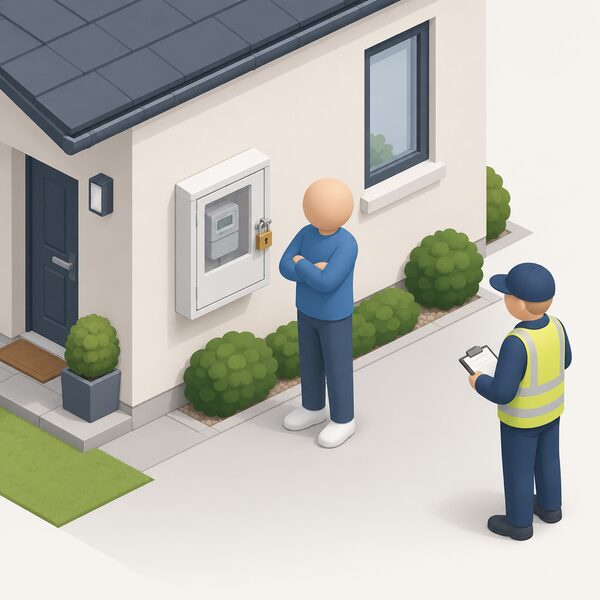
The limit is not absolute, and the exceptions are narrow but real.
- Unreasonable behaviour by the customer. A household will have to pay for energy used more than 12 months ago where it has acted unreasonably, for example by stopping the supplier from billing accurately, including by blocking access to the meter, ignoring requests for payment, or stealing electricity or gas18.
- A bill that was sent and not paid. The rules do not apply where the supplier sent a bill before the year passed and it was not paid; the supplier can still charge for it21. The same principle applies to heat: a bill sent within the time limit but left unpaid can still be charged even after 12 months has passed8.
- Charges outside the condition. In heat networks, charges recovered through a service charge are not covered by the 12-month back billing limit8.
- Non-domestic consumers. The back billing authorisation condition applies only to domestic and microbusiness consumers, so non-domestic consumers are not covered8. Ofgem's implementation consultation confirms that SLC 21BA on backbilling applies to microbusinesses, while the meter read requirement condition applies to all non-domestic consumers19.
The heat network guidance also sets out fault based exceptions in similar terms: where the consumer was obstructive in refusing a meter reading, where the consumer had a responsibility to provide a reading and did not, or where the consumer failed to manage or report faults, resulting in unpaid consumption.
When a bill is wrong, the supplier carries the responsibility
The starting point is that a supplier is responsible for making sure the meter works properly23. Where there is a problem with a bill, the first step is to contact the supplier12. Ofgem lists the issues a supplier should be contacted about: late, incorrect or missing bills, back billing, being overcharged, a faulty meter, poor customer service, and refusing to refund credit from an account24.
Where a meter has been billing inaccurately, a supplier might only be able to charge for the energy used in the last 12 months23. The exception to the back billing protection is narrow: it applies where the household has prevented the supplier from taking or receiving accurate meter readings25.
Households that pay a landlord or site owner rather than a supplier are in a different position. Ofgem's guidance for those homes is that residents cannot choose their own supplier, cannot switch suppliers themselves, cannot complain directly to the energy supplier where they have no contract with them, and do not access all the protections available to domestic energy customers. They do have the right to see the bills and contract between the landlord or site owner and the energy supplier, and to know how the bill is calculated where the home has no meter.
Power cuts are the one bill related problem where the supplier is not the right contact: the gas or electricity network operator, not the supplier, is responsible for fixing power cuts and paying compensation11.
How the limit works for direct debits and prepayment meters
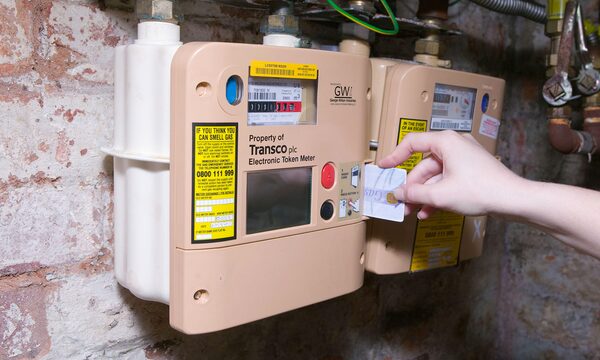
Direct debit payments are usually based on an estimate of the amount of energy that will be used over a year26, typically calculated from past energy use and spread evenly over 12 months. Payments will increase if more energy is used than the supplier has estimated26, and a supplier should review a direct debit at least annually.
The back billing protection reaches into that mechanism. A supplier should not increase payments to cover the cost of energy used over 12 months ago27. Where a debt falls inside the 12-month window, the supplier might increase payments and use the extra amount to pay off the amount owed over a few months21. That distinction, between clearing a recent shortfall and recovering charges from two years ago, is the one to test when a direct debit jumps. See why is my energy direct debit so high and how to challenge a direct debit increase.
Prepayment works the other way round. Prepayment customers pay in advance, before they use the energy, rather than paying by direct debit or paying bills after submitting readings28. Because payment precedes consumption, a classic back bill is less likely, though it can still arise where the meter has been set to the wrong rate or where a debt recovery rate has been applied incorrectly. Related detail is on prepayment meters and repaying energy debt through a prepayment meter.
Guaranteed standards of service: who sets them and what they cover
Guaranteed standards set out minimum performance standards which all energy suppliers must meet, and when they do not, automatic payments are issued to the affected consumers7. Ofgem describes supplier guaranteed standards in the same terms: minimum supplier service standards, with consumers automatically compensated if they are breached19. For networks, the Guaranteed Standards of Performance specify what an electricity distribution network operator must pay a customer or relevant authority if it fails to meet specified standards of performance29.
A distribution operator puts it plainly:
"These standards are independently set and judged by our regulator, Ofgem"
The network standards cover how operators respond to and deal with power cuts, and the service provided to people wanting to connect to the network30. Gas standards cover restoring gas supply, reinstatement after works, notification of planned interruptions, connections, alterations and disconnections, provision of alternative cooking and heating facilities for priority domestic customers, and response to complaints.
In Northern Ireland the framework is separate but parallel: the electricity network operator, NIE Networks, and electricity suppliers all have guaranteed standards of service, and there are exceptions under which a company may not have to make a compensation payment in all instances31. See energy bills in Northern Ireland.
Ofgem is also consulting on extending the standards into smart metering, with new definitions planned for smart meter, in-home display, first time smart meter appointment and not operating as intended7.
Power cut compensation: the amounts and the thresholds
The amounts below are guaranteed standards payments made by the electricity network operator. Ofgem reviews and updates the amount paid for a power cut each year based on inflation32.
| Situation | Payment |
|---|---|
| Unplanned cut, fewer than 5,000 homes affected | £100 once power is off for 12 hours, then £45 for every further 12 hours9 |
| Unplanned cut, more than 5,000 homes affected | £100 once power is off for longer than 24 hours, then £45 for every further 12 hours, up to £4009 |
| Storm related cut | £90 initial payment, then £45 for every further 6-hour period without power10, up to a maximum of £2,23511 |
| Four or more cuts between 1 April and 31 March, each 3 hours or more | £10011 |
| Planned cut with less than 2 days' notice, or on a different day from the one notified | £4011 |
| Unplanned gas cut | £70 extra for every additional 24 hours the gas supply is off33 |
| Businesses, planned and unplanned power cuts | £12033 |
Ofgem gives worked examples for unplanned electricity cuts: a cut lasting more than 12 hours and interrupted for 36 hours attracts 2 additional £45 payments, adding up to £90, and a cut lasting more than 24 hours and interrupted for 72 hours attracts 4 additional £45 payments, adding up to £18033. Ofgem's guidance states that an extra £45 is paid for every additional 12-hour period without electricity32, while the storm arrangements run on 6-hour increments10. Where a payment is late, an automatic payment should arrive from the network operator within 10 working days, and where it has not, making a claim should bring an extra £40 compensation11.
Payments cannot be credited to an energy bill, because network operators do not have access to billing information held by suppliers. Unplanned cuts should be reported by calling 105 free of charge, which connects the caller to the electricity network operator32.
Storm payments arrive without a claim
For storm related cuts, eligible customers do not need to apply: payments are issued automatically by cheque once all affected power supplies have been safely restored10. The same operator sets out its wider guaranteed standards payment as £100 for domestic customers and £195 for non-domestic customers10.
Gas works the same way for loss of supply. Compensation for a loss of gas supply is paid through energy suppliers, appears as a credit on the next bill, and is paid automatically with no need to apply34.
The practical implication for bill reading is that an unexplained credit line is not always an error. A credit that appears after a supply interruption may be a guaranteed standards payment passed through by the supplier, and it should be identifiable from the date of the interruption.
When no payment is due
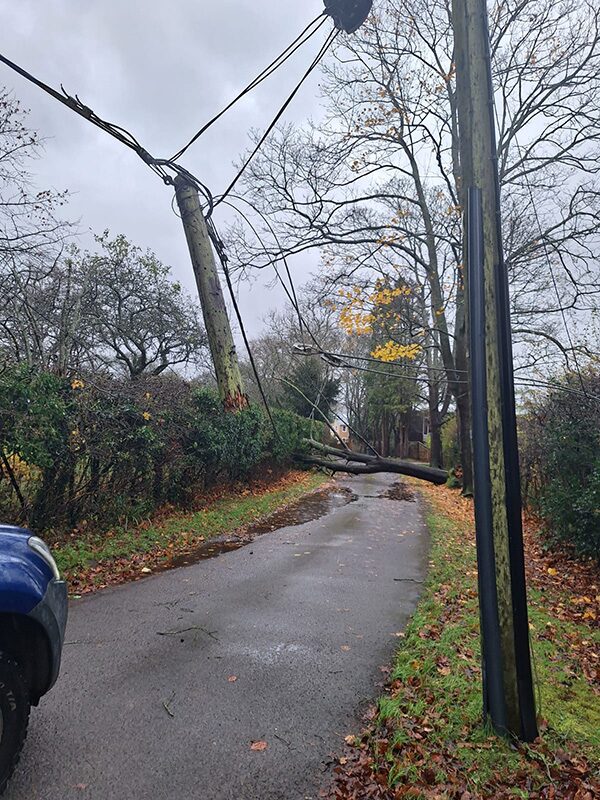
Exemptions exist and they are written into the legislation. The legislation behind the guaranteed standards recognises exceptional events and allows exemptions to be applied, so no guaranteed standard payments would be due, for example where extreme weather conditions cause significant damage to the electricity network or create access difficulties35.
Power cut compensation is also not paid for blackouts caused by a national power shortage, damage to electrical equipment or appliances, or a low supply after a power cut32.
Where a payment should have been made and was not, the Energy Ombudsman can act. Its case work records a further £30 awarded for failing to make the initial guaranteed standards payment within 10 working days36. Its published principle is that where a company has not made the standard compensation payment, the Ombudsman will make an award that ensures the consumer is compensated in line with the regulations. The Ombudsman is an independent service, separate to Ofgem, for problems with an energy supplier, an energy broker, a network operator or a heat network supplier24.
Ofgem's role when suppliers do not follow the rules
Ofgem monitors energy suppliers and network operators closely to make sure they meet the rules set out in licences, regulations and law, provide good customer service, and reply quickly to customers who contact them37. Where it thinks a supplier or network operator has not met certain rules, it will start an investigation24. It has the power to set fines for non-compliance, including for mis-selling, erroneous fees, complaints handling and slow rural electricity connections38.
Ofgem has stated that it will be closely monitoring supplier compliance and will continue to take firm action against suppliers who fall short of their requirements. That enforcement, not the individual complaint, is what makes the billing rules on the page in front of a household more than a courtesy.
What a readable bill does, and does not do, for energy independence
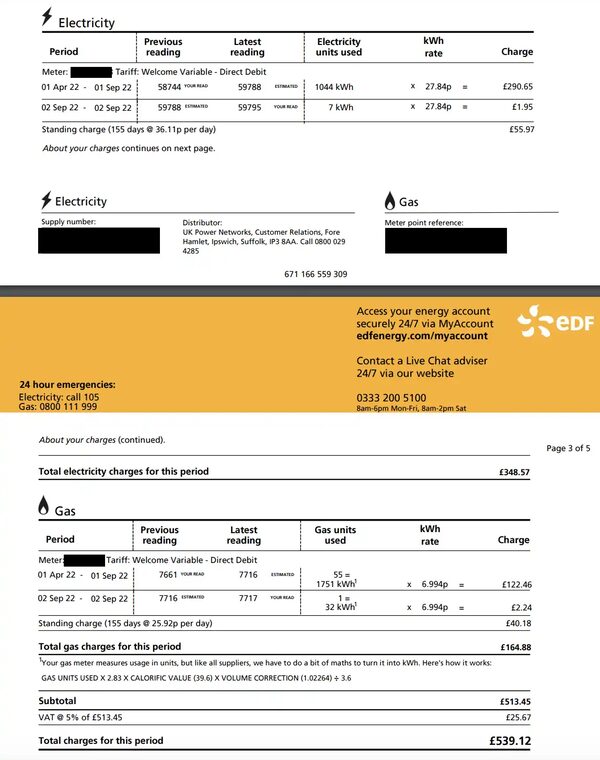
A bill that can be read is the instrument of control a household has over a supply it does not own. The kWh figure is the only measurement of how much energy the home actually consumed; the unit rate and standing charge are the only measurements of what that consumption and that connection cost. Checking the two against each other is how overcharging, a mis-set tariff or a faulty meter is found.
What the bill cannot do is reduce dependence. The standing charge is payable regardless of consumption, so a household that cuts usage sharply still pays the daily fixed cost of remaining connected5. The unit rate is set by the supplier within the cap, not by the household. Even the guaranteed standards depend on a network operator identifying the affected supplies and issuing payment, and on the supplier passing gas compensation through as a bill credit34. The protections described here are real, and they are all protections against a counterparty the household cannot leave. Reducing what is drawn through the meter is the only lever the household holds directly: see energy bills and energy independence and reducing an energy bill, and the pillar guide at /bills-price-cap/.
Sources38 cited
- How to check your energy tariff and switch, British Gas Energy Trust, 30 July 2026
- How to understand your energy bill, Energy Saving Trust, 8 November 2024
- How to read your energy bill, Confused.com, 15 December 2025
- Standing charges, E.ON Next, 17 September 2026
- Bills and metering, Consumer Council for Northern Ireland, 2026
- What to do if you get a back bill, Ofgem, 2026
- Supplier Guaranteed Standards of Performance: statutory consultation, Ofgem, 8 August 2025
- Heat networks consumer protection guidance decision, Ofgem, 13 January 2026
- Get compensation if you have a power cut (Wales), Citizens Advice, 17 September 2026
- Welfare reimbursements, SSEN, 17 September 2026
- Get compensation if you have a power cut, Citizens Advice, 17 September 2026
- Understand your electricity and gas bills, Ofgem, 2026
- Energy price cap levels, 1 July to 30 September 2026, Ofgem, 2026
- How to read your energy meter, Citizens Advice, 17 September 2026
- Reading your gas or electricity meter, Centre for Sustainable Energy, August 2026
- How to submit a meter reading, Uswitch, 23 April 2026
- Get help with your smart meter, Ofgem, 17 September 2026
- What to do if you get a back bill, Ofgem, 2026
- Energy Consumer Outcomes: proposed implementation, Ofgem, 23 June 2026
- How to complain about your energy bill, Which?, 30 July 2026
- You haven't received a gas or electricity bill in a while, Citizens Advice, 20 September 2026
- Energy back billing, Confused.com, 6 July 2026
- Find out if your energy meter is faulty, Citizens Advice, 20 September 2026
- Complain about your energy supplier or network operator, Ofgem, 2026
- Help if you're struggling to pay your energy bill, Which?, 19 August 2026
- Energy supplier has increased your direct debit, Citizens Advice, 17 September 2026
- Energy bill too high, Citizens Advice, 19 January 2024
- Prepayment meters, British Gas Energy Trust, 12 April 2023
- Adjustments to Guaranteed Standards of Performance 2026, Ofgem, 13 March 2026
- Guaranteed standards, Electricity North West, 19 September 2026
- Electricity and gas consumer protection, Consumer Council for Northern Ireland, 2026
- Plan for a power cut, Ofgem, 2026
- Check if you can get a payment after a power cut, Ofgem, 2026
- Gas supply updates, SGN, 2026
- Customer standards, NIE Networks, 20 September 2026
- Switching case studies, Energy Ombudsman, 20 September 2026
- Complain about your energy supplier or network operator, Ofgem, 2026
- What is Ofgem?, Uswitch, 26 August 2026
 Reducing Your BillRanks household electricity and gas uses by share of the bill and sets out what each measure changes, from heating settings and insulation to appliance use and tariff choice.
 Dual Fuel TariffsExplains what a dual fuel tariff is, how discounts and single billing work, and where separate gas and electricity contracts remain available.
 Meter Readings and EstimatesWhy is my energy bill estimated, and how often should my meter be read?
 What Makes Up a BillBreaks a domestic energy bill into wholesale costs, network charges, policy levies, operating costs, supplier margin and VAT, with the share each takes and how those shares have moved since the energy crisis.
 Back Billing RulesCan a supplier really charge you for energy you used years ago?
 Unit Rates by RegionWhy do electricity and gas prices differ depending on where you live?