

In this answer
Short answer
A gas supply that stays off for more than 24 hours puts a household into a compensation scheme run by the gas network operator, not by the energy supplier. The figures differ depending on which document you read. Ofgem's consumer guidance states that for unplanned gas cuts a household can claim £70 extra for every additional 24 hours the supply is off1. Citizens Advice states that a household gets £60 after the first 24 hours, and another £60 for each following 24 hour period2. The two figures are not reconciled in the published guidance, so a household should expect the payment to be calculated by the network operator under its licence conditions and to check the amount against the operator's own guaranteed standards.
What is consistent across the sources is the mechanism. Compensation is paid automatically, within 10 working days, either directly or through the gas supplier, and a further £40 is owed if the payment is missed2. Cadent states that a household is entitled to compensation if the gas supply is off for a period of 24 hours or more, processed automatically once supply is turned on3. Nothing in the scheme requires the household to apply, and nothing in it depends on which supplier sends the bill.
Who runs your gas pipes, and who pays when they fail
The gas network operator for your area owns and runs the pipes that carry gas to your home5. It is not the company that sends your bill. Ofgem sets out the split plainly: a network operator is responsible for the pipes and wires that move energy, and should be contacted about power cuts or connection issues in your area6. Citizens Advice puts the compensation duty in the same place: the gas or electricity network operator is responsible for fixing power cuts and paying compensation, not the energy supplier2.
Your supplier sits at the other end of the arrangement. Cadent states that the gas supplier, the company you pay your bill to, is responsible for your meter and any faults7. Northern Gas Networks describes the same division: the supplier is responsible for the installation and maintenance of the gas meter, owns the gas that is transported through the network, and sends the bills8.
That matters for a household because it determines who to chase. A meter fault is a supplier matter. A loss of supply affecting the street, or a leak on the network, is a network operator matter. The network operator also carries the compensation obligation, which is why the payment can arrive without the household ever contacting the supplier.
The practical consequence for energy independence is limited but real. A household cannot choose its gas network operator, cannot switch away from it, and cannot substitute another pipe. The only control available is over the meter and the appliances behind it, and over whether the home has a fallback for heating and cooking while the network is down. That dependence on a single regional monopoly is the structural fact behind every compensation rule on this page.
Reporting an outage and getting your supply restored

The first call is to the National Gas Emergency Service on 0800 111 999, which is free and available 24 hours a day4. Cadent states the line is available 24 hours, 365 days a year9, and SGN describes it as a free 24-hour helpline10. Network operators run their own emergency lines alongside it: Wales & West Utilities states it is available 24 hours a day, 365 days a year11, and Northern Gas Networks describes providing its region's 24/7 gas emergency service4.
Restoration itself is governed by guaranteed standards. SGN commits to reconnecting a household within 24 hours if the gas supply is interrupted12. SSEN's published performance standards set a 12 hour restoration limit where an electricity supply fails because of a problem in the network during normal weather conditions13. The two figures cover different fuels and different operators, and a gas interruption should be measured against the gas operator's own standard.
Once the supply is back, the compensation process runs on its own timetable. Citizens Advice states the network operator should pay automatically within 10 working days, directly or through the supplier, with a further £40 if it is not paid2. SGN notes that processing usually takes four to five weeks, and can sometimes take up to three months depending on the supplier's billing cycle14. Those two statements describe different stages: the operator's payment obligation and the time the money takes to reach a household account.
What you may be owed when the outage runs past 24 hours
The compensation structure has a threshold, a rate and a penalty for late payment. Cadent states a household is entitled to compensation if the gas supply is off for a period of 24 hours or more, processed automatically once supply is turned on3. Ofgem's guidance gives the rate as £70 extra for every additional 24 hours the gas supply is off1, repeated in its separate consumer pages15. Citizens Advice gives £60 after the first 24 hours, and another £60 for each following 24 hour period2, and its Wales page carries the same wording17. Uswitch states payments should be made within 10 working days, either directly or through the supplier18.
| Element | Figure | Source |
|---|---|---|
| Threshold for compensation | Gas off for 24 hours or more | Cadent3 |
| Rate per further 24 hours | £70 | Ofgem1 |
| Rate per further 24 hours | £60 | Citizens Advice2 |
| Payment window | 10 working days | Citizens Advice2 |
| Late payment addition | £40 | Ofgem1 |
| Processing time after that | Four to five weeks, up to three months | SGN14 |
The gap between £60 and £70 is unresolved in the published documents. Both figures come from bodies with standing in the area, and neither is marked as superseded. A household in this position should treat the lower figure as the floor and check the network operator's own guaranteed standards statement for the rate that applies to its area.
Northern Ireland runs a separate arrangement. Which reports that where supply is not restored within 24 hours, a household is due £50, then £25 for every 12 hour period after that19. That is a different structure from the Great Britain scheme, with a lower initial payment and a shorter interval, and it reflects the separate regulatory framework that applies there.
What the network charges you for, and what it does not

The compensation scheme is not the only payment a network operator can owe. Ofgem states that if a network operator does not give notice of planned gas maintenance, a household may get £40 extra1, a rule repeated across its consumer guidance15. The same £40 figure applies where a payment that should have been automatic has been missed after a few months1. Both are additions to the underlying compensation rather than replacements for it.
What the network does not pay for is the wider cost of an outage. There is no provision in the published rules for spoiled food, lost business, hotel costs or the price of running alternative heating. The scheme is a fixed statutory payment, not a reimbursement of loss. A household that runs electric heaters or buys fuel during an outage does so at its own cost.
Network costs themselves are a visible part of the bill. Nesta reports that network costs made up 24% of an electricity bill and 22% of a gas bill, rising to 23% and 23% respectively from January 202620. That is the share of a household's bill funding the pipes, the restoration crews and the compensation scheme. It is also the part of the bill a household cannot reduce by switching supplier, because the network charge is set by the operator's price control rather than by the retail market.
"They currently make up 24% of an electricity bill and 22% of a gas bill (23% and 23% respectively from January 2026)."
After the supply comes back: safety checks before you use gas again
Restoration is not the same as permission to use gas. Cadent's instruction is direct: do not turn the supply back on until advised it is safe to do so21. That applies after an emergency turn-off at the meter, where an engineer has isolated the supply. The network operator's engineer carries out the checks and confirms when the system can be used again.
Where an electricity supply has been reconnected after work, UK Power Networks describes the same principle: safety checks are carried out to make sure everything is working correctly and safe before the engineer leaves22. The pattern is consistent across fuels, and it means the household's role is to wait for confirmation rather than to test the supply itself.
Two specific situations have their own rules. If water has got into gas pipes within the home, both Northern Gas Networks and Cadent state that a Gas Safe registered engineer must be contacted to clear the system23. If a household has evacuated, Northern Gas Networks states there is no safety reason to turn off the gas supply before vacating, though it may be turned off at the emergency control handle if preferred or if an authorised agency advises it, and not if the meter is under water or in a cellar23. Cadent recommends ensuring gas appliances are switched off before evacuating24.
For landlords, the annual gas safety check has a timing allowance. The Health and Safety Executive states the check on each appliance or flue can be carried out up to 2 months before the date it needs to be carried out while retaining the original deadline date25. Ofgem records that suppliers must also provide free gas safety checks to eligible homeowners once every 12 months if a customer requests it, under standard licence condition 2926.
Support during an outage if you need extra help
Households that would struggle during an interruption can register for additional support. SGN states that it provides Priority Services Register customers with alternative heating and cooking appliances when it needs to interrupt the gas supply, and access to hot food and hot water after 48 hours if the supply is off longer27. That is a practical provision rather than a payment, and it addresses the period before compensation becomes relevant.
The Priority Services Register is operated by network operators and suppliers together. The Fuel Bank Foundation describes the register as covering households that need extra help, and network operators hold their own versions of it5. Electricity North West's Extra Care Register uses a broad eligibility test: if there is a chance a household might struggle during a power cut, even for a few hours, the support can help28. Energy Networks, the trade body for the networks, publishes winter readiness guidance for households preparing for interruptions29, and the National Energy Action charity provides additional help routes30.
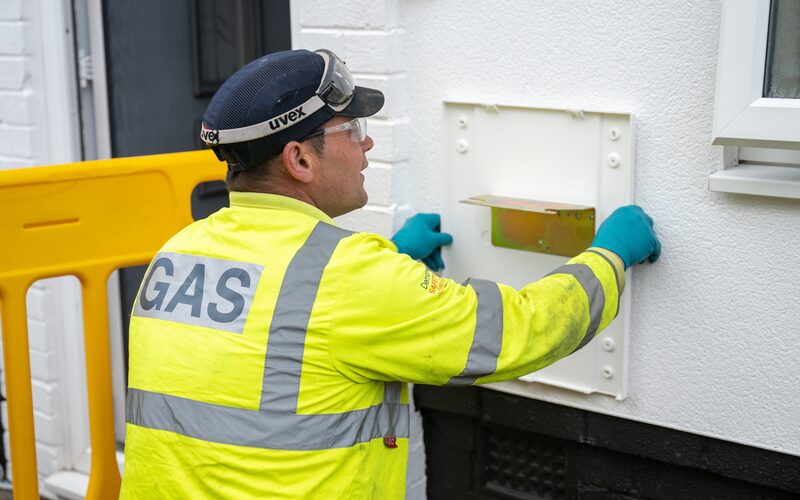
Engineers visiting a property carry identification. Northern Gas Networks states its engineers carry ID cards so that householders can identify them easily when they knock on the door8. A household should check that identification before admitting anyone, and verify it against the network operator's published contact details rather than a number supplied by the caller.
Where the scheme leaves a household
The compensation rules give a household a defined payment after a long interruption, paid automatically and without an application. They do not give the household any control over the network, any choice of operator, or any cover for the costs an outage imposes beyond the fixed sum. The dependence is structural: one regional monopoly owns the pipe, one supplier owns the meter and the gas, and the household's only lever is preparation, registration where eligible, and a fallback for heat and cooking while the supply is down.
Sources30 cited
- Check if you can get payment for a power cut, Ofgem, 2026
- Get compensation if you have a power cut, Citizens Advice, 2026
- Support if you are temporarily off gas, Cadent Gas, 2026
- Take no chances with gas safety, Northern Gas Networks, 2026
- Priority Services Register, SGN Scotland, Fuel Bank Foundation, 2026
- Complain about your energy supplier or network operator, Ofgem, 2026
- Emergency engineer visit, Cadent Gas, 2026
- Apply now for a gas connection, Northern Gas Networks, 2026
- Summer CO awareness, Cadent Gas, 2026
- Smell gas, SGN, 2026
- Dial before you dig, Wales & West Utilities, 2026
- Guaranteed standards, SGN, 2026
- Performance standards, SSEN, 2026
- Gas supply updates, SGN, 2026
- Check if you can get payment for a power cut, Ofgem, 2026
- Plan for a power cut, Ofgem, 2026
- Get compensation if you have a power cut (Wales), Citizens Advice Wales, 2026
- How to get power cut compensation, Uswitch, 2025
- Power cuts: how to find out if there's a power cut, Which?, 2026
- What's in an energy bill: network costs, Nesta, 2026
- Locating your meter and turning off the gas, Cadent Gas, 2026
- Tips to prepare for a power cut, Electricity North West, 2026
- Flood advice, Northern Gas Networks, 2025
- Flood advice, Cadent Gas, 2026
- Gas safety in the home: frequently asked questions, Health and Safety Executive, 2026
- Vulnerability report 2018, Ofgem, 2018
- Our customer promises, SGN, 2026
- Get winter ready, Energy Networks, 2026
- Additional help, National Energy Action, 2026
- Gas connections: make changes, FAQs and guidance, Northern Gas Networks, 2025
 Reading an Energy BillA line-by-line walk through a domestic gas and electricity bill: unit rate, standing charge, kWh consumption, meter readings, tariff name and balance, plus the 12-month back billing limit and the guaranteed standards payments that apply when a supplier or network operator gets it wrong.
 Gas Supply EmergenciesIf gas runs short, will my home lose supply?
 Getting a New Gas ConnectionHow a household applies for a new or upgraded gas connection, who carries out the work, the quotation and contribution rules, typical timescales, and what a connection means for a home's energy independence.
 Energy Debt Repayment PlansOwe money to your energy supplier?
 Power Cuts in WalesWho do you call when the power goes out in Wales, and how long should it take to come back on?
 Prepare a Home for a Power CutA household checklist for before, during and after an outage: what to keep charged and to hand, which appliances to switch off, how long food stays safe and what to do about medical equipment.