
In this guide
The Priority Services Register is a free record of households that would need extra help during a power cut, a gas emergency or any interruption to supply, and of households that need energy information delivered in a way they can use. Energy companies are required to offer a set of services free of charge to customers on their register1, and heat network suppliers are now required to establish and maintain one too2. It is not one national list: every gas, water and electricity supplier, and every electricity distribution network, keeps its own.
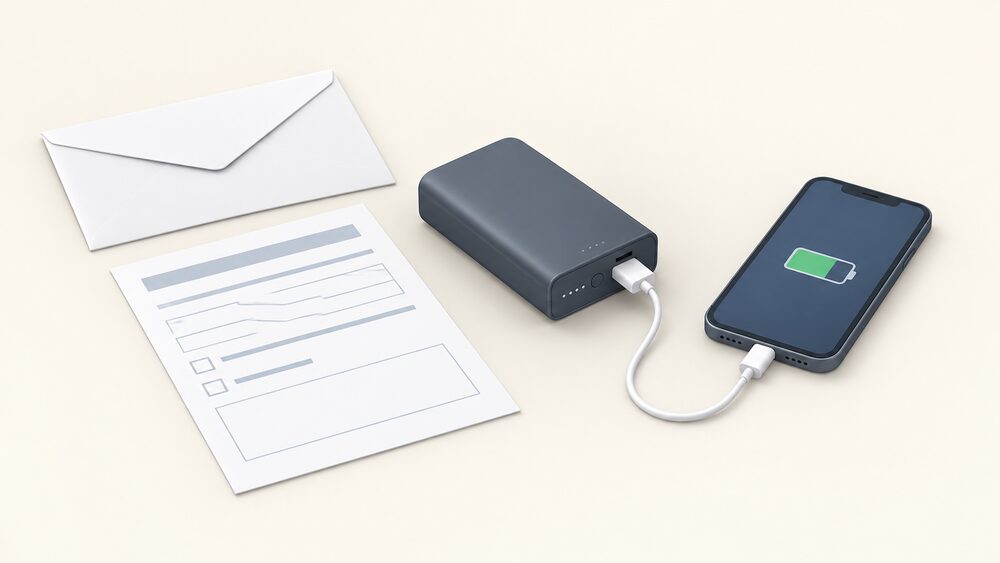
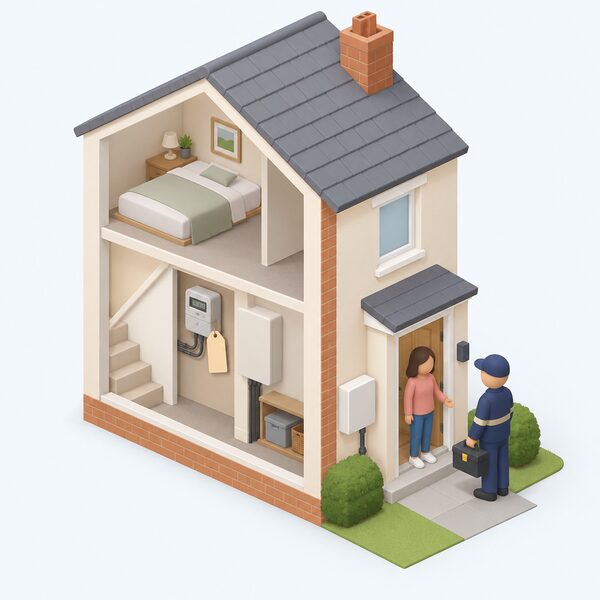
What registration buys is not a guaranteed supply. It is advance notice of planned interruptions, updates during unplanned ones, welfare provision such as alternative heating and cooking, accessible formats including large print and Braille, a password scheme so a visiting engineer can be identified, and the right to nominate someone else to deal with bills. Ofgem states that network operators must offer registered customers extra help during both planned and unplanned cuts, for example battery packs so that phones or medical equipment can still be charged3.
Uptake has historically been low. In 2015 around 13% of customers taking both fuels were signed up to suppliers' registers4, and Ofgem noted in 2016 that only a quarter of consumers knew the services existed5. For a household thinking about backup power, the register is the layer of support that sits underneath any equipment it owns: it does not restore the supply, and it should not be treated as a substitute for a plan.
What the register provides: priority support, advance notice and accessible services
Ofgem's guidance describes the register as a record of consumers who have requested, or been identified and agreed, to be on it because of their personal circumstances or a vulnerable situation2. Cadent describes it as prioritising customers with access, communication, health or safety needs11. The services grouped under it fall into three broad families.
The first is communication. Ofgem's illustrative list for heat networks covers accessible formats such as large print or Braille, nominating a person to act on the consumer's behalf, regular meter reading, priority support in emergencies, and identification and password schemes for visits12. Suppliers offer the same shape of thing: Braille, large print or compact disc communications, interpreters for many languages, and non-telephone contact routes including webchat, email, letter, Relay UK and Facebook Messenger for customers with hearing or speech difficulties13. SSEN offers British Sign Language Video Relay free of charge, and a dedicated textphone on 0800 316 545714.
The second is advance warning and live information. Registered customers are told about planned interruptions and kept up to date during unplanned ones15. SSEN's welcome letter includes a free personalised Power Cut Plan tailored to needs, routines and communication preferences16, and its registered customers receive power cut updates 24 hours a day17. Electricity North West, which calls its version the Extra Care register18, adds early weather warnings, a nominated friend or family member scheme, and hot meals or additional services during longer power cuts for the households struggling most19.
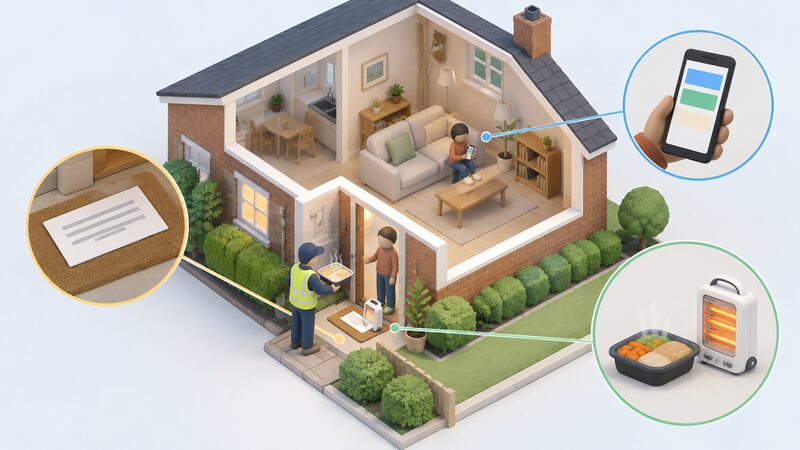
The third is physical welfare. Wales & West Utilities describes electric heating and cooking appliances, or even alternative accommodation, to keep customers safe and warm while off gas20, and Cadent provides regular updates through a gas supply interruption21. Citizens Advice states that people on their supplier's register should be given alternative cooking and heating facilities during a gas cut22.
A free service, and what companies promise in return
Every operator and supplier describes the register the same way: free. Ofgem's rules require energy companies to offer a specific set of services free of charge to customers registered for their register1, and the heat network guidance obliges authorised persons to offer and, if accepted, provide priority services free of charge to their vulnerable consumers2. National Grid, SSEN, SGN, Cadent and Electricity North West all state the same23.
Alongside the price, most network operators publish a promise. Wales & West Utilities commits to never using register data for marketing, never charging for the services, supporting additional needs, and sharing only the data necessary to support the customer24. National Grid puts it directly:
"We value the privacy of our customers and can assure you that your information will never be used for marketing."
UK Power Networks describes the promise as one made by all participating energy companies in England, Wales and Scotland26. Northern Ireland runs the equivalent under a different name, the Customer Care Register, covered on the Northern Ireland priority services page.
One point of caution: the scheme is voluntary, and not all energy providers offer it, though most major suppliers do27. Free does not mean automatic, and a household that has not asked will not appear.
Suppliers, network operators and why one registration may not be enough
This is the part that most often goes wrong. Each energy supplier and network operator maintains its own register7. The Centre for Sustainable Energy states that the register kept by a network operator is not the same as the one kept by an energy supplier28. Registering with the company that sends the bill does not, by itself, tell the engineers who restore the supply.
In practice the companies do pass details between each other. Energy UK states that distribution network operators share register information with suppliers, so registering with the network operator should mean registration with the supplier too10. Citizens Advice describes the flow the same way: the electricity network passes details to the gas network operator and to energy suppliers, who all add the customer to their registers29. Scope describes registering once and the request going to the supplier and to the regional electricity, gas and water networks30. Electricity North West shares details with trusted partners including water and energy suppliers, with permission, so a customer need register only once19.
Dual fuel customers, with one company supplying both fuels, need register only once with that supplier; where gas and electricity come from different suppliers, registration with both is needed31.
| Situation | What registration requires |
|---|---|
| One supplier for gas and electricity | One registration with that supplier31 |
| Separate gas and electricity suppliers | Register with both32 |
| Network operator's register | A separate record; details are usually shared with suppliers10 |
| Water company | Some networks will sign customers up to water priority services where possible33 |
| Heat network | The heat network supplier must maintain its own register2 |
Citizens Advice notes that the gas network operator and energy supplier should contact you to confirm you have been added to their register29; Energy Systems Catapult says the network operator should confirm by email or post34. A confirmation that never arrives is a reason to check. Who runs the wires in a given area is set out on the electricity network operators page.
How to apply: online, by phone, by post or through someone you trust

There are four routes, and no charge on any of them.
- Online. UK Power Networks asks for a short application form with some details35. National Grid's form asks whether the application is for yourself or for someone else36. Citizens Advice suggests identifying the electricity network first and filling in the form on that network's website29.
- By phone. SSEN takes registrations on 0800 294 3259, with a textphone on 0800 316 545717. Wales & West Utilities takes them on 0800 912 299937. Electricity North West uses 0800 195 41 41 or 10519. ScottishPower's line is 0345 270 0700, Monday to Friday 9am until 5pm13.
- By post. SSEN provides a leaflet to complete and return, available in alternative languages, large print and easy read16.
- Through someone else. Care givers and family members can register on a customer's behalf24, and SSEN accepts sign-ups made for others, including a family member thought likely to benefit17.
The application form should ask how you prefer information to be sent; where it does not, Citizens Advice says there should be a box to give extra details about the preferred contact method29. Ofgem's own advice adds that where electricity is crucial for medical equipment, the distribution network operator can be contacted at any time9. A fuller walk-through sits on the how to join page, and the criteria in detail on who is eligible.
Who qualifies, and what counts as medical equipment
There is no single statutory list, but the criteria published by networks and suppliers converge closely. National Grid groups them into three: medically dependent, communication needs, and other needs15.
Medically dependent. Heart or lung machine or ventilator; dialysis or feeding pump or automated medication; sleep apnoea monitor or nebuliser; oxygen concentrator; refrigerated medicine38. Ofgem's advice extends this to anyone depending on electricity to keep medical or mobility equipment running9.
Communication needs. Blind; partially sighted; unable to communicate in English; hearing, including deaf; speech impairment38.
Other needs. Pensionable age; physical impairment; mental health issues; a careline system installed; stairlift, hoist or electric bed; temporary impairment such as recovery from hospital; water dependency due to a health condition; medically dependent showering or bathing38.
SGN adds children under five or pregnancy, long-term physical or mental health conditions, disability, and being over 6039. Cadent recognises a lost or reduced sense of smell as a qualifying condition, and states plainly that it wants such customers responded to as a priority40. SSEN includes temporary need for extra support17, and Electricity North West extends its register to unpaid carers supporting someone in a separate household who would struggle in an outage41. Uswitch lists a mental health condition that makes a bill hard to understand, and an inability to top up a prepayment meter because of injury5.
Proof is not normally sought. Scope states that the register is free and that there is no need to prove condition, age or situation6; SSEN states that it does not need any proof of eligibility17. Households that depend on powered equipment will find the practical side covered on help if you rely on medical equipment.
Your data: who sees it, why, and what it is never used for
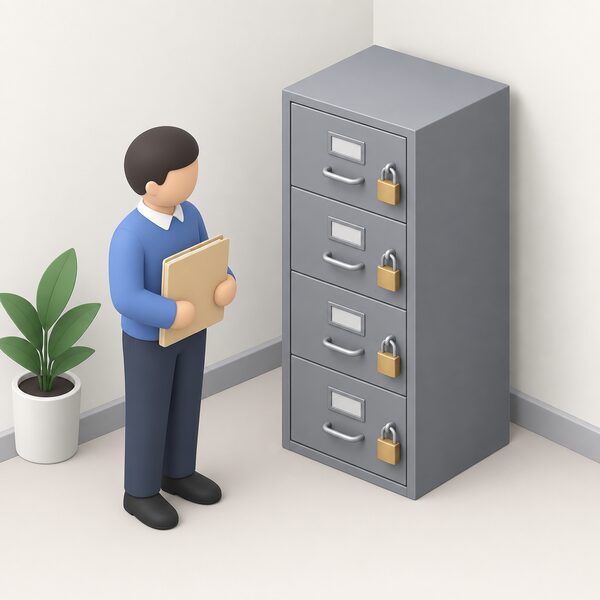
The register holds sensitive information, and the rules around it are narrow. Ofgem's heat network guidance defines the minimum details as the names of consumers in vulnerable situations, relevant details of their personal circumstances and vulnerable situations, and any other relevant details12.
Companies state the legal grounds. SSEN processes the data on the basis of legitimate interests, and on substantial public interest: protecting adults and children at risk16. EDF states that any sharing of data is done in accordance with UK privacy laws and the Data Protection Act, and that details given when joining are never used for marketing42. Wales & West Utilities states that data is stored securely and that only data essential to support the customer is shared24. SGN describes the register as completely free and confidential39.
Sharing is bounded by category rather than left open. National Grid guarantees that information will only be shared with other energy and utility companies, and with trusted partners such as charities including the British Red Cross25. UK Power Networks defines energy companies as gas and electricity suppliers, the network companies that transport energy to the home and meter operators, and partners as trusted charities such as the British Red Cross who may assist during incidents33. ScottishPower shares its register with the distribution network operator to help manage customers in emergency situations43.
What the register does not guarantee
Registration changes the quality of support around an interruption. It does not change the physics of a fault, and both networks and suppliers say so.
- It does not guarantee supply. Energy UK states plainly that being registered does not guarantee a continuous supply of energy10.
- It does not prevent disconnection. ScottishPower states that being on the register does not mean that you will not be disconnected43.
- Individual households are not reconnected first. SSEN states that its teams work hard to restore power to affected areas but cannot prioritise individual households16. Northern Ireland's NIE Networks describes its Medical Customer Care Register differently, saying crews can be arranged to prioritise getting power back on for registered properties that lose supply44. The two descriptions differ, and the difference is worth knowing before relying on either.
- Free gas safety checks are conditional. ScottishPower's eligibility requires owning and occupying your own home, receiving a means tested benefit, and either living with at least one child under five, or being of pensionable age, disabled or chronically sick and living alone or only with others who are of pensionable age, disabled, chronically sick or under 18, with no check received in the past 12 months13. Where a property is rented, the landlord is responsible for arranging the annual gas safety check13, a point the Health and Safety Executive also makes45.
For a household that depends on powered equipment, the honest reading is that the register is an information and welfare service. Equipment resilience, whether a portable power station or a home UPS, remains the household's own responsibility. The clearest exception is SSEN's Home Battery Pack programme, delivering packs to thousands of its priority services customers who need the most support17, described further on the SSEN Home Battery Pack scheme page. Ofgem frames loan equipment as an obligation in general terms: network operators must offer extra help, for example battery packs so phones or medical equipment can still be charged3.
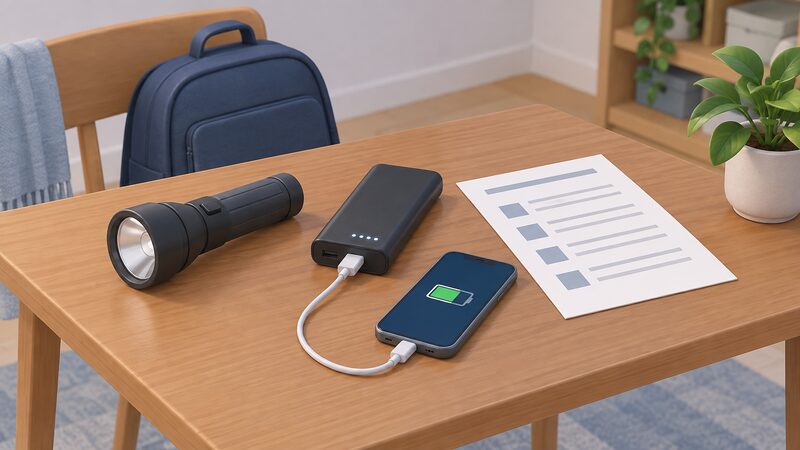
105 and the numbers worth keeping
105 is the free emergency number for anyone to call in a power cut46, promoted by the Energy Networks Association for use in overhead line emergencies47. SSEN states that customers who may be more vulnerable in a power cut can seek advice by calling 10548. It reaches the local electricity distribution network, not the supplier. More on how the call is routed is on the 105 number page.
| Purpose | Number | Company |
|---|---|---|
| Power cut, any caller | 10546 | Local distribution network |
| Register by phone | 0800 294 325917 | SSEN |
| Register by textphone | 0800 316 545717 | SSEN |
| Register by phone | 0800 912 299937 | Wales & West Utilities |
| Register or report | 0800 195 41 4119 | Electricity North West |
| Eligibility check | 0800 169 99705 | National Grid |
| Detail verification calls | 0800 032 830123 | National Grid |
| Supplier support line | 0345 270 0700, Mon to Fri 9am to 5pm13 | ScottishPower |
Staying on the register: switching, moving and the two-yearly check

A register entry is a live record, not a permanent one. Scope states that switching supplier means registering again with the new company, and that moving house while staying with the same company keeps the entry but requires details to be updated49. Ofgem considered supplier-to-supplier sharing of vulnerable customer data at the point of switching within the scope of its reliable next-day switching project1, but the practical position for a household today is to re-register after a switch.
There is no annual reapplication. Cadent states that once registered you do not need to apply on an annual basis31. Instead, companies check. National Grid contacts its registered customers every two years to make sure details are up to date23, and the Utility Regulator's code of practice for Northern Ireland requires that a company holding a register entry contacts the customer at least every two years to ensure it is providing the support needed8. Electricity North West asks customers who joined before 2022 to update their details even if nothing has changed, and notes that calls or texts may come at any time, day or night, only where necessary for safety or critical updates, with support available 24/719.
Leaving is straightforward. UK Power Networks states that if you no longer want to be on the register you simply ask to be removed33; SSEN accepts removal by email or on 0800 294 325917; EDF states that a customer need only get in touch and ask to be taken off42. Because each company holds its own record, removal, like registration, may have to be repeated.
Ofgem retains reporting requirements for suppliers and distribution network operators covering the provision of priority services1, and has monitored suppliers' registers through annual social obligations reporting at 31 December each year50. In 2015 smaller suppliers accounted for 2.4% of the electricity register and 1.8% of the gas register1, and Ofgem's 2016 consultation work noted around 1m households registered for specific services provided by suppliers51. Uswitch describes the register as designed and overseen by Ofgem5.
What it means for energy independence
The register is a dependence, not an escape from one. It records a household with a supplier, a network operator and in some cases a water company and a charity partner, and it works only while those companies are functioning and the household's details are current. What it removes is information asymmetry: a registered household learns about a planned cut before it happens, hears what is going on during an unplanned one, and can ask for heating and cooking when the gas is off.
It does not shorten an outage for one address, does not prevent disconnection and carries no payment. Everything that keeps a fridge cold or a nebuliser running through a cut is the household's own kit. The register is best understood as the welfare and communication layer around that kit, free to join, requiring no proof, and worth keeping current at each company that holds a record.
Sources51 cited
- Priority Services Register review: final proposals, Ofgem, 17 December 2015
- Heat networks consumer protection guidance: decision, Ofgem, 13 January 2026
- Plan for a power cut, Ofgem, 2026
- More customers in vulnerable situations receive help under the Priority Services Register, Ofgem, 25 October 2016
- Priority Services Register guide, Uswitch, 7 November 2025
- Cost of living report, Scope, 2026
- Struggling with energy bills, National Energy Action, 6 May 2026
- Code of Practice for Consumers in Vulnerable Circumstances factsheet, Utility Regulator, 2025
- What to do in a power cut, Met Office, 20 September 2026
- Vulnerable customers, Energy UK, 4 September 2026
- Help and support with energy bills, Cadent, 17 September 2026
- Heat networks consumer protections: draft guidance, Ofgem, 5 September 2025
- Priority Service Register, ScottishPower, 10 March 2026
- Priority Services for customers with hearing loss, SSEN, 19 September 2026
- Who can join the Priority Services Register, National Grid, 17 September 2026
- Priority Services and dementia, SSEN, 19 September 2026
- Priority Services, SSEN, 19 September 2026
- Tips to prepare for a power cut, Electricity North West, 19 September 2026
- Our Extra Care register, Electricity North West, 19 September 2026
- Priority Services Register, Wales & West Utilities, 20 September 2026
- Support when temporarily off gas, Cadent, 20 September 2026
- Get compensation if you have a power cut, Citizens Advice, 17 September 2026
- Priority Services, National Grid, 17 September 2026
- Priority Services Register promise, Wales & West Utilities, 20 September 2026
- Priority Services Register promise, National Grid, 17 September 2026
- About the Priority Services Register, UK Power Networks, 17 September 2026
- Energy for those with sight loss, Uswitch, 9 April 2026
- Priority Services Register advice, Centre for Sustainable Energy, November 2025
- Getting extra support from your energy supplier, Citizens Advice, 17 September 2026
- Disability Energy Support, Scope, 20 September 2026
- Priority Services Register, Cadent, 20 September 2026
- Priority Services Register and energy companies, Turn2us, 8 September 2026
- PSR promise and keeping your data safe, UK Power Networks, 17 September 2026
- Priority services, Energy Systems Catapult, 19 August 2025
- Sign up to our Priority Services Register, UK Power Networks, 17 September 2026
- Priority Services Register application, National Grid, 17 September 2026
- Supporting you, Wales & West Utilities, 20 September 2026
- Priority Services FAQs, National Grid, 17 September 2026
- Priority Services Register, SGN, 2026
- Sense of smell, Cadent, 20 September 2026
- Support for those who help others, Electricity North West, 19 September 2026
- Extra or specialised support, EDF, 17 September 2026
- Blackouts, ScottishPower, 26 September 2025
- Medical Customer Care Register and generators, NIE Networks, 19 September 2026
- Gas appliances: get them checked, keep them safe, Health and Safety Executive, September 2011
- Extra support for people reliant on electricity for medical reasons, UK Power Networks, 9 January 2024
- Public safety commitment, Energy Networks Association, 17 September 2026
- Emergency planning portal for residential customers, SSEN, 19 September 2026
- Priority Services Register: extra services from energy suppliers, Scope, 17 August 2026
- Priority Services Register review consultation, Ofgem, 30 June 2014
- Citizens Advice response to the PSR review, Ofgem, June 2016
 Prepare a Home for a Power CutA household checklist for before, during and after an outage: what to keep charged and to hand, which appliances to switch off, how long food stays safe and what to do about medical equipment.
 Vulnerable Households EnergyIf someone in your home relies on powered medical equipment, or needs extra warmth because of a health condition, what help is available?
 The Full Backup Power GuideHow long do UK power cuts usually last, and what can keep your fridge, heating or phone going until the power comes back?
 Gas Supply EmergenciesIf gas runs short, will my home lose supply?
 Network Operators and 105When the lights go out, who do you actually ring?
 Starting on a Small BudgetCovers the order of work for households with little to spend, the support routes open on low incomes, and the measures with the shortest payback.