
In this answer
Short answer
SSEN is giving away 20,000 home battery packs, at no cost, to Priority Services customers in its network areas. The scheme launched at the beginning of February 2026, and by 24 February 2026 the company reported that 94% of those offered a pack since launch had accepted it1. By September 2026, more than six thousand customers had accepted the offer2.
The packs are not sold, and there is no application form. SSEN states plainly: "If you meet the eligibility criteria for a battery, you don't need to apply for one; we'll be in touch to offer you one in due course"2. Eligibility is worked out from the information a household gives when it joins the Priority Services Register, combined with data on how often power cuts happen in that area2.
The scheme grew out of a six-month trial that gave batteries to 28 customers who rely on powered medical equipment2. The packs now being issued have one third more capacity than the trial units1. This page sets out what the scheme is, who it reaches, what it costs, where it runs, and what it does and does not guarantee for a household that depends on mains power for medical reasons.
What the SSEN Home Battery Pack scheme is
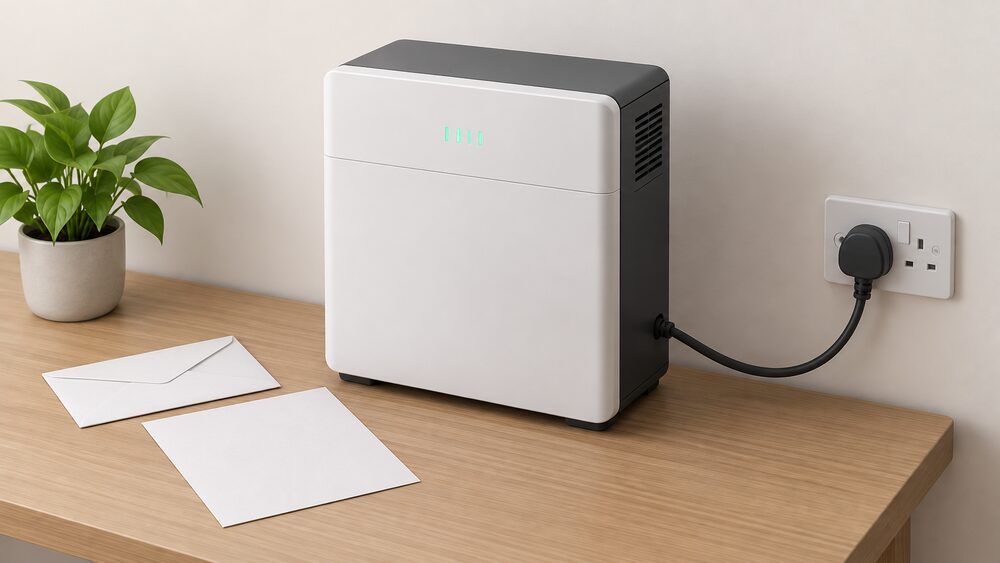
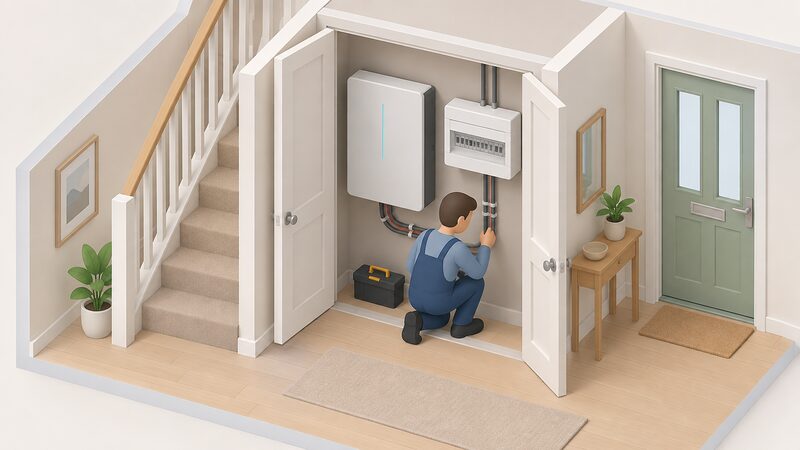
The scheme is a network operator's support measure, not a retail product. SSEN, which trades as Scottish and Southern Electricity Networks, runs the electricity distribution network in two licence areas: the north of Scotland and central and southern England3. Its Home Battery Pack scheme takes battery units that would otherwise be bought by a household and gives them, free, to customers the company judges need them most2.
The packs are home battery units of the kind normally installed alongside solar panels. Lithium-ion storage batteries of this type are "installed as part of a residential energy solar panel system" in their usual domestic role4. SSEN's version is not tied to a solar installation: it is issued as resilience equipment for households at risk during a power cut.
That distinction matters for how the scheme sits alongside the wider market. Most domestic battery installations in the UK go onto homes that already have solar: 92% of battery installations so far this year went onto properties with solar panels5. SSEN's scheme inverts that pattern, putting storage into homes on the basis of vulnerability rather than generation. The company's wider network investment is also framed around enabling low-carbon technologies, with a Swindon upgrade intended to help enable the connection of "more low-carbon technologies like EV chargers and heat pumps" and "solar and battery storage"6.
For a household, the effect is a small measure of independence from the grid at the moment the grid fails. It is not independence from the network in general: the battery is charged from the mains, and the household remains an SSEN customer, supplied through the same wires, with the same exposure to storms and cable faults.
Who is eligible: how the offer works through Priority Services
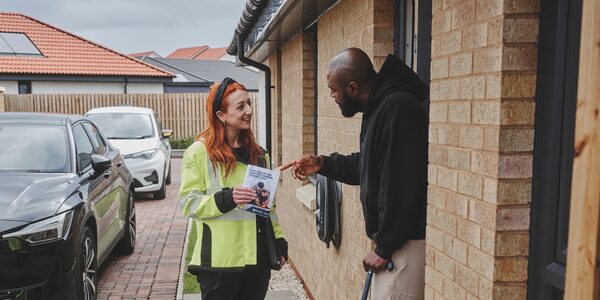
There is no open application. SSEN describes the process in one sentence: "When customers sign up for Priority Services, their needs and circumstances are assessed. This process, together with data on the frequency of power cuts in their area, will determine if a customer is eligible for a battery"2. Two things therefore drive eligibility: the household's circumstances as recorded on the register, and how often its area loses power.
The Priority Services Register itself is free, and SSEN describes it as offering "tailored support, live updates and more during unplanned outages"7. It is open to customers in vulnerable circumstances8. SSEN's published eligibility list for the register covers households where someone is deaf or hard of hearing, has a disability, lives with children under five, is blind or partially sighted, has a chronic illness, uses medical equipment or aids reliant on electricity, or is over 609.
The register is a national mechanism, not an SSEN invention, and it operates across the industry. It is distinct from the Warm Home Discount, which is a bill rebate scheme covering England, Scotland and Wales and running until 31 March 203112. A household can be on the register without receiving a battery pack, and the register brings its own benefits during an outage regardless of whether a pack is ever offered.
For households outside SSEN's two areas, the scheme does not apply. Network operators run their own support arrangements, and the shape of those varies. The Priority Services Register is the common thread; the battery pack is SSEN's own addition to it.
What it costs: free to eligible customers
SSEN is explicit that the packs carry no charge: "We are providing these at no cost to people who meet certain specific criteria, and who are signed up for our Priority Services"1. There is no published price for the unit, because it is not sold. A household that is offered a pack and accepts it pays nothing for the hardware.
That places the scheme outside the normal cost structure of home storage. For comparison, the Warm Homes Plan funding packages for solar panels and a battery could be worth around £9,000 to £12,000 per home, based on current costs13. SSEN's scheme is not a grant of that kind: it is a direct provision of equipment by the network operator, with no voucher, no installer quote and no household contribution.
Other SSEN services carry their own cost rules, which are worth separating from the battery scheme. A supply increase is usually free of charge up to a maximum of 80amps for domestic customers14. Tree cutting near lines is free of charge14. Neither has anything to do with the battery pack, but both are sometimes confused with it in searches for free SSEN help.
For a household weighing up backup power more generally, the free pack changes the arithmetic entirely: the usual capital cost of a home battery does not arise. What remains is the same as for any battery, namely that it must be charged, maintained and replaced at the end of its life. Domestic battery storage has a shorter lifetime of around 10 to 15 years, when compared to solar panels15.
Where the scheme runs: central southern England and north of Scotland
The scheme covers SSEN's two distribution areas. The company describes the packs as going to "communities across the central southern England and north of Scotland network areas"1. SSEN states that it is "responsible for powering homes in the north of Scotland and central and southern England"3.
That geography is the same one SSEN uses for its other network work. Its rolling transformer replacement programme covers "locations across our network areas in central southern England and the north of Scotland"16, and its distribution areas are described in the same terms in its own reporting17. The battery scheme is not a pilot confined to one region: it spans both licence areas.
| Nation or region | Covered by the SSEN Home Battery Pack scheme? | Notes |
|---|---|---|
| Central southern England | Yes | SSEN distribution area1 |
| North of Scotland | Yes | SSEN distribution area1 |
| Wales | No | Served by other network operators |
| Northern Ireland | No | Separate network and separate support arrangements |
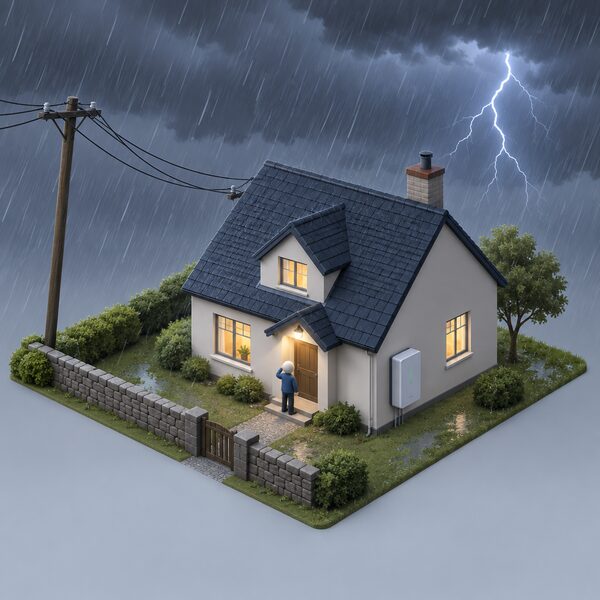
The weather that drives outages in these areas is well documented by SSEN itself. The company issues warnings for the north of Scotland ahead of extensive lightning10 and for further weather warnings in the same region11, and it has restored supplies after named storms including Ciaran18 and Floris19. Storm Floris prompted a compensation package to cover the cost of food and drink for affected customers19. The battery scheme sits in that same operational context: a network area exposed to severe weather, with a support mechanism aimed at the customers least able to absorb an outage.
Households in Wales and Northern Ireland are outside the scheme. Support there runs through the same Priority Services Register model and through separate network operator arrangements, and the register remains the first point of contact for anyone who needs priority help during a cut.
Scale and uptake: 20,000 packs, more than six thousand accepted, 94% acceptance rate
The headline numbers are large for a support scheme. SSEN states that it has "now delivered the first of 20,000 home battery packs to customers who will most benefit from the extra peace-of-mind"1. By September 2026, "more than six thousand customers have already accepted our offer of a free Home Battery Pack"2.
The acceptance rate is the striking figure. SSEN reported that "94% of those who have been offered one since the launch of the scheme at the beginning of February have accepted it"1. That is a measure of how the offer lands with the households it reaches, not of how many households will ultimately receive a pack.
The trial that preceded the rollout was small by comparison: a six-month trial with 28 customers who rely on powered medical equipment2. The packs now being issued are more capable than the trial units, with capacity increased by one third compared with those used during the trial1.
Uptake of home batteries more generally follows a different pattern, which helps explain why a scheme like this is unusual. Energy Systems Catapult found that "a striking 96% of homes with batteries also have at least one other technology"20, meaning batteries in the wider market are typically bought as part of a package rather than alone. SSEN's scheme supplies the battery on its own, to homes selected for vulnerability rather than for their existing technology.
There is also a wider policy backdrop of storage being underused in some settings: the Clean Flexibility Roadmap notes a 35% battery skip rate21. That figure concerns grid-scale and flexibility assets rather than domestic packs, but it illustrates that storage capacity is not automatically put to work. SSEN's scheme is aimed at a different problem: keeping specific households supplied when the network is down.
Keeping powered medical equipment running during outages
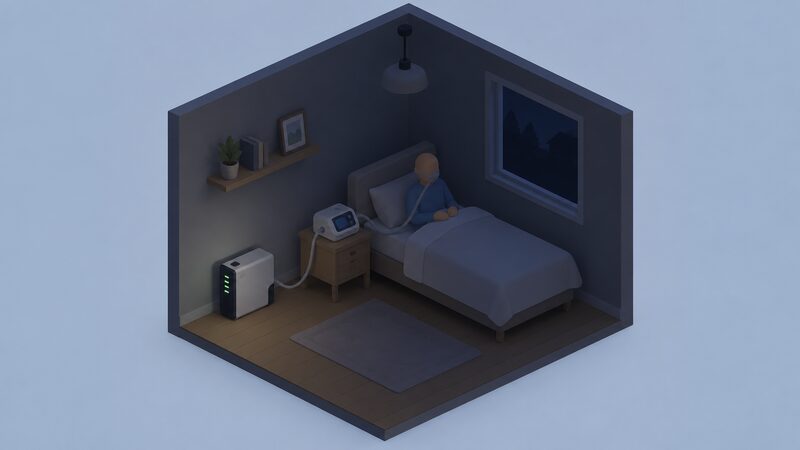
This is the core purpose of the scheme, and it comes with a clear condition. SSEN states: "Subject to approval from the manufacturers of specialist in-home medical equipment, the battery may keep these devices operating for longer during a power cut"1. The same wording appears on the scheme's own page2. The words "may" and "subject to approval" carry the weight: the battery is not presented as a guaranteed supply for medical devices.
The trial was designed around exactly this group, providing batteries to 28 people who rely on powered medical equipment1. The increase in capacity for the rollout is consistent with that aim.
"Subject to approval from the manufacturers of specialist in-home medical equipment, the battery may keep these devices operating for longer during a power cut."
General guidance for households with medical equipment is to have a fallback that does not depend on the battery. That is a separate safeguard, and it applies whether or not a battery pack is in place.
Home storage does not always provide backup at all. Guidance from Electricity North West notes that "In some cases these storage devices can provide back-up supplies for use in a power cut, but this is not always possible", and advises checking with the installer22. SSEN's scheme is designed for backup, but the general caution is worth holding alongside the offer.
SSEN's own preparation advice for any household includes keeping a mobile phone charged, a torch nearby, a battery-powered radio tuned to a local station, a note of key contacts, checking with neighbours, keeping warm with a thermos flask, and saving work regularly7. The company also runs a 24/7 line for queries23, and faults can be reported on the freephone 105 number18.
What the scheme does and does not change for a household
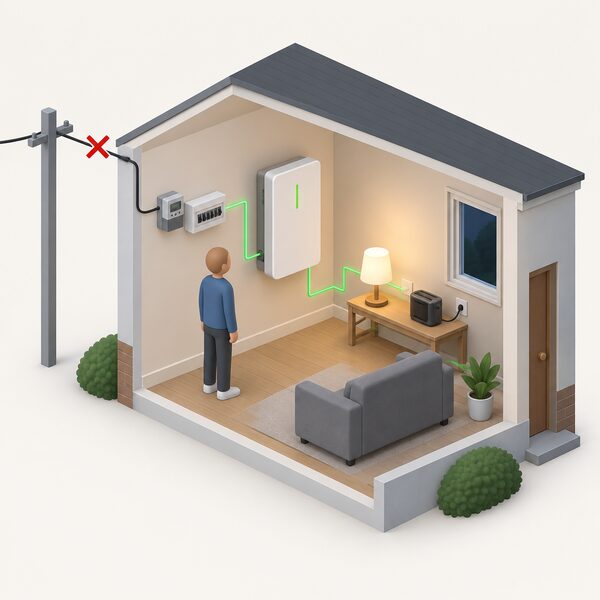
The scheme gives a household a charged store of electricity that can run some equipment when the mains fails. That is a real measure of resilience during an outage, and it is provided without capital cost to the customer1. It also brings the household into closer contact with SSEN through the Priority Services Register, which carries its own benefits during unplanned outages7.
What it does not do is remove dependence on the network. The battery is charged from the mains supply, so it is only as useful as its state of charge at the moment a cut begins. The household remains connected to SSEN's wires, exposed to the same storms, cable faults and planned interruptions as its neighbours. SSEN explains cable faults and planned cuts through its own pages23, and the battery does not alter either.
There are also limits that come with the technology itself. Domestic battery storage has a lifetime of around 10 to 15 years15, so a pack issued today will eventually need replacing, and the scheme does not state what happens at that point. Lithium-ion batteries of the kind used in home storage carry fire and disposal considerations, and the North Wales Fire and Rescue Service notes that the average UK household already contains many rechargeable lithium-ion items including laptops, mobile phones, e-scooters, e-cigarettes and mobility vehicles25. A home battery adds to that list and should be treated with the same care.
For households outside the scheme, the same resilience questions apply and are answered differently. Network operator support schemes, portable power stations and standby generators all serve parts of the same need, with different costs, runtimes and installation requirements. The Priority Services Register remains the common starting point for anyone who needs priority help during a cut, in SSEN's areas and beyond.
Sources26 cited
- SSEN gives 20,000 home battery packs to customers who need the most support, SSEN, 2026-02-24
- Home Battery Packs, SSEN, 2026-09-17
- Priority Services: Sight, SSEN, 2026-09-19
- LG ESS Battery Division RESU ESS Home Batteries, Electrical Safety First, 2026-09-17
- Low Carbon Landscape 2026, MCS Certified, 2026
- £100m Swindon network upgrade will power local economic growth and more choice for communities, SSEN, 2026-01-13
- Preparing for a power cut, SSEN, 2026-09-19
- Grant to combat fuel poverty in Rother and Eastbourne, UK Power Networks, 2026-09-17
- We're finalising our preparations ahead of Storm Amy this weekend, SSEN, 2025-10-02
- Weather Warning ahead of extensive lightning in the north of Scotland, SSEN, 2025-08-12
- Weather warning for the north of Scotland, SSEN, 2026-03-11
- Warm Home Discount, Ofgem, 2026-09-17
- What the Warm Homes Plan means for you, Energy Saving Trust, 2026-01-23
- Existing electricity supplies, SSEN, 2026-09-19
- POSTnote: Domestic battery storage, Parliamentary Office of Science and Technology, 2026-06-25
- Talking Transformers: the essential parts of our network you seldom see, SSEN, 2025-11-20
- SSEN saveenergy Thames Valley help powercuts, SSEN, 2026-02-17
- SSEN restores supplies after Storm Ciaran, SSEN, 2023-11-03
- Thank you to our customers following Storm Floris, SSEN, 2025-08-08
- What can the Living Lab tell us about home energy technology adoption, Energy Systems Catapult, 2025-11
- Clean Flexibility Roadmap: July 2026 update, GOV.UK, 2026-05
- Renewable energy storage, Electricity North West, 2026-09-19
- Your power cut explained: cable fault, SSEN, 2026-09-19
- Planned power cuts, SSEN, 2026-09-19
- Lithium-ion batteries, North Wales Fire and Rescue Service, 2026
- What happens in an energy shortage, Energy Networks Association, 2026-09-17
 Sodium-Ion Home BatteriesSodium-ion cells are being offered for home storage in the UK, but almost all published performance data still comes from makers.
 Home Battery Install StatisticsHow many homes in the UK actually have a battery, and is that number growing quickly?
 The Full Backup Power GuideHow long do UK power cuts usually last, and what can keep your fridge, heating or phone going until the power comes back?
 Planning Permission in ScotlandDo you need planning permission for a home battery in Scotland?
 Batteries and IndependenceHow far home battery storage moves a UK household away from the grid and supplier pricing, covering self-sufficiency, winter limits, cost, lifespan, backup, export payments and flexibility earnings.
 Heat Battery Trials and ResultsDo heat batteries actually work in real UK homes, and what did the trials find?