
In this answer
Short answer
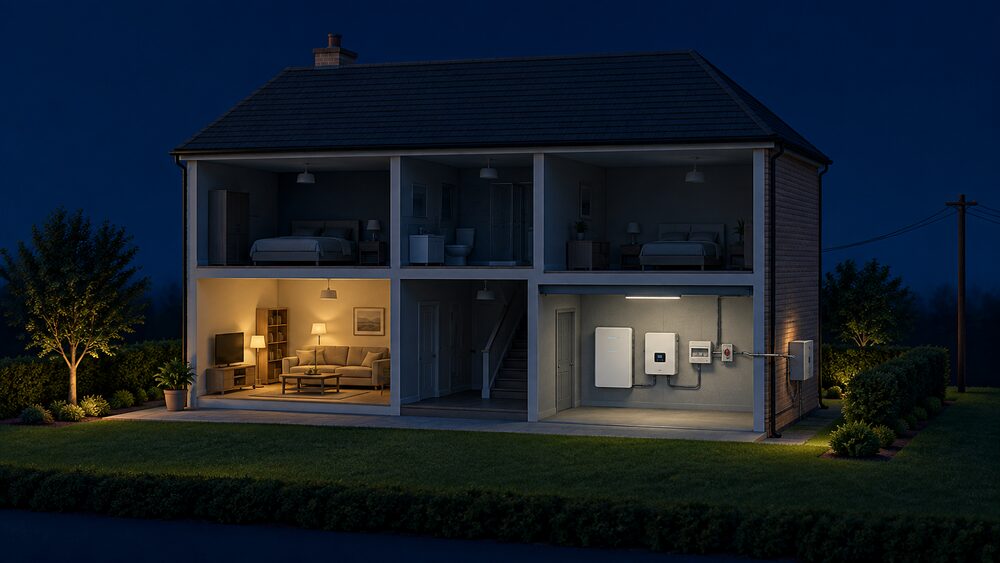
Most home battery systems will not power a house during a power cut. A battery storage system does not normally provide power in a power cut unless additional equipment and configuration is included, and not all batteries can deliver electricity during a cut at all1. The battery is rarely the limiting component: the inverter and the switchgear around it decide whether the property can separate from the grid and keep running.
Where backup is specified, it is a deliberate design choice. Some, but not all, battery storage systems can be set up to provide electricity to your home during a power cut, and they must be specifically set up to do so3. The more expensive battery systems can also provide electricity during a power cut, which is the clearest signal that this is a paid-for capability rather than a default4.
The practical consequence for a household is that a battery bought purely for tariff arbitrage and self-consumption will go dark with the grid. Independence from a supplier's pricing is not the same as independence from the network, and the two are often confused in marketing. What follows sets out why standard systems shut down, what a cut-proof installation actually contains, what backup mode does for a household's energy position, and what is known about cost.
The short answer: most battery systems do not power your home in a cut
The headline is a no for the majority of installations. Independent guidance is consistent on this: a battery storage system does not normally provide power in a power cut unless additional equipment and configuration is included1. Which? puts it in consumer terms, noting that not all systems are suitable if the aim is protection against power cuts, and that the installer should be asked whether a given battery will work in an outage, and for how long2. The Centre for Sustainable Energy states plainly that not all batteries can deliver electricity during a power cut8.
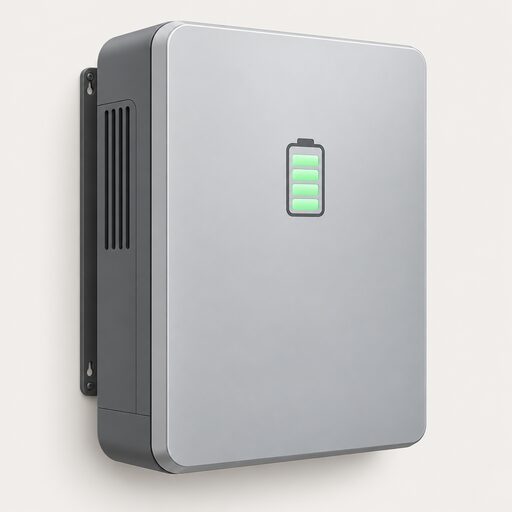
That is not a defect. A grid-tied battery is designed to trade energy with the network, charge when tariffs are cheap and discharge when they are expensive. It can draw power from the grid when it is at a cheaper rate than normal, and it discharges when import power from the grid is higher than a set limitation value9. Both of those functions assume the grid is present. When it is not, the system has nothing to synchronise to and no safe path to export, so it stops.
The distinction that matters to a household is between three things that are often sold as one: storing cheap electricity, using your own solar generation, and staying powered when the network fails. The first two are standard. The third is an optional mode of operation that has to be designed in, and it changes the inverter, the wiring and the price. A battery that saves money on a time-of-use tariff may have no backup capability whatsoever, and nothing in the saving figure will tell you which you have bought.
Why a standard battery shuts down when the grid fails
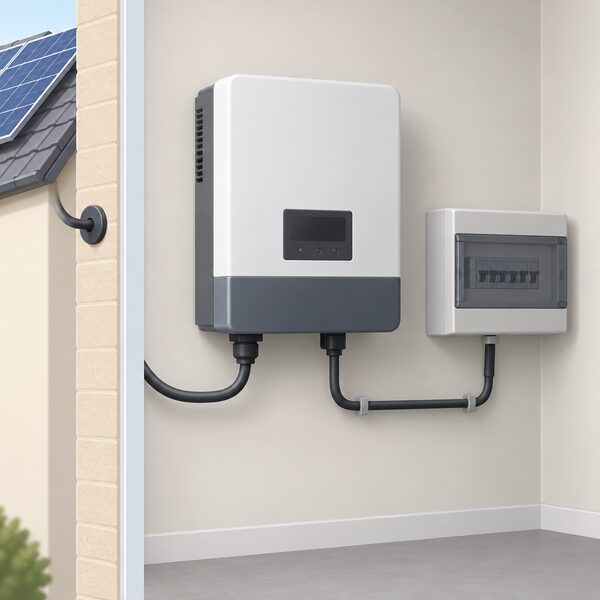
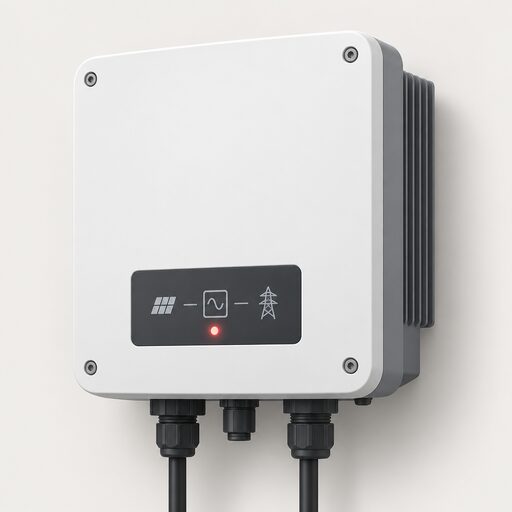
The shutdown is a safety function, not a failure. A standard grid-connected solar inverter shuts down when the grid fails, a behaviour known as anti-islanding11. Most standard installations are designed to shut down when the grid goes dark for safety reasons, and a standard grid-connected solar system normally shuts down during a power cut12. The reason is that a live generator feeding a dead network endangers anyone working on the lines, and the inverter cannot tell a local outage from a fault it should stay clear of.
Solar panels behave the same way. Your solar panels will automatically switch off during a power cut, a safety feature that prevents electricity being exported to the network, and most restart automatically once power is restored7. The panels are not damaged and need no intervention; the system simply waits for a stable grid to reappear.
"Your solar panels will automatically switch off during a power cut. This is a safety feature that prevents electricity being exported to the network."
There is one configuration where this does not apply. An off-grid system, which has no grid connection to protect, works in a power cut as a matter of course15. That is a different product category with different costs and constraints, and it is not what a standard grid-tied home battery is.
A second limit sits inside the battery itself. Systems commonly stop discharging at a set floor, maybe 20% of total storage capacity, to protect the cells7. That reserve is not available to ride through an outage unless the system has been configured to hold it for that purpose. Batteries are also not 100% efficient, so not all the energy put in comes back out4.
Backup capability: the extra equipment and configuration a cut-proof system needs
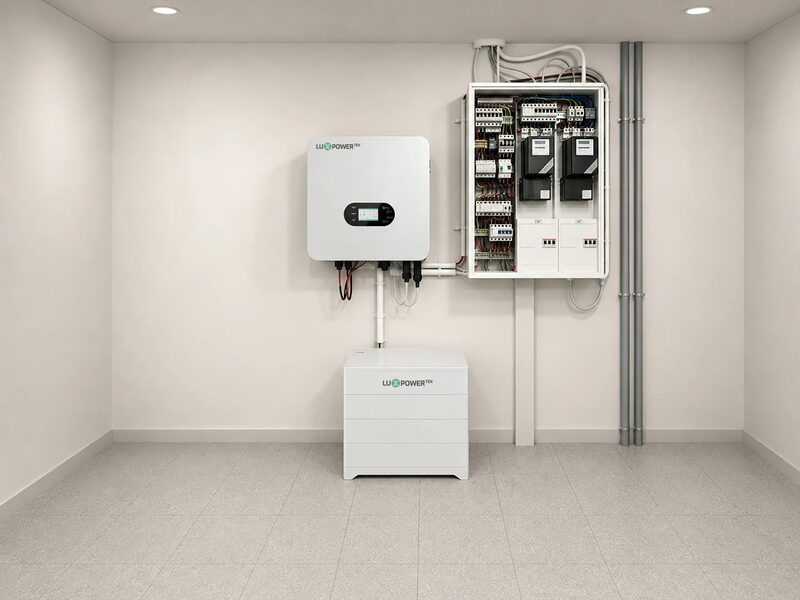
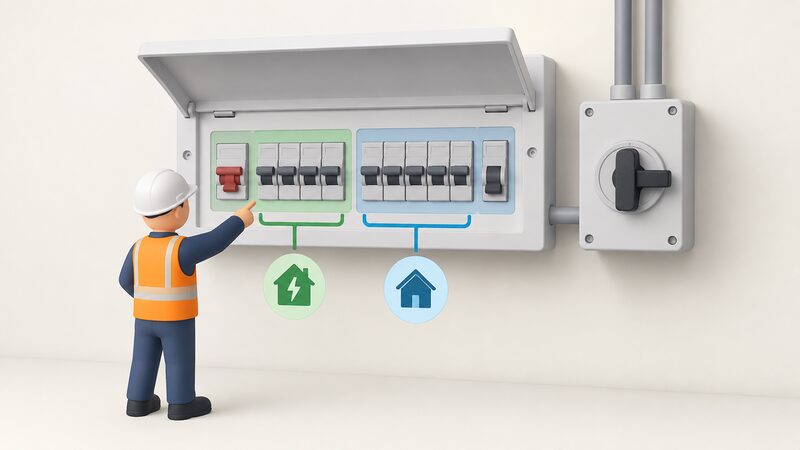
A backup-capable setup typically includes battery storage, a compatible hybrid inverter, control functions for safe off-grid switching, and a design that prioritises critical loads5. Each element does a distinct job. The hybrid inverter can form its own reference voltage and run independently of the network. The control functions isolate the property from the grid before that happens. The critical-load design decides which circuits are fed, because the inverter's output rating and the battery's capacity will not usually carry everything at once.
The terminology to look for in documentation is specific. Systems described as having blackout protection or island mode can automatically disconnect from the grid and continue to power essential circuits in your home during an outage16. Emergency power supply, or EPS, is the same idea under another name: a reactive system that physically isolates the home and switches to battery backup within milliseconds when a grid failure occurs17. One maker describes a standalone home battery backup unit taking over in about 20 milliseconds18.
The contrast with an off-grid inverter is worth holding on to. An off-grid inverter depends only on solar panels or battery storage and has no grid to synchronise with20. A hybrid inverter in backup mode does both jobs: it stays grid-tied in normal operation and forms its own supply when the grid disappears. That dual role is why the changeover equipment exists and why the installation is more involved than a straightforward grid-tied battery.
What backup mode means for household energy independence
Backup mode changes what a battery is for. Instead of shifting cheap units to expensive hours, it holds capacity back for an event that may not arrive for years. Tesla's Backup Reserve Mode keeps a portion of stored energy reserved for emergencies so the home stays powered during outages, and SolarEdge ONE lets homeowners set the minimum percentage of battery capacity reserved for an outage event, working with all battery modes where a backup interface is available21. At the extreme, a Backup Only Mode reserves the battery entirely for outage protection22.
That reserve has a cost in normal operation, because energy held for an emergency is energy not cycled for savings. It also has a limit: a reserve sized for a few hours of essential circuits will not carry a heat pump, an electric shower and an EV charger through a multi-day outage. The honest framing is that backup buys resilience for selected loads, not self-sufficiency.
The wider direction of travel is towards more household options. Further innovation in home battery technology, vehicle-to-everything and solar can provide households with additional backup options during power outages, and where a building has the functionality to operate independently from the grid, known as islanding, V2X can enable a vehicle to act as a backup power source in a power cut23. That is a statement of direction rather than of what is widely available today: using an EV as a home battery is currently being trialled in some places but is not widely available7.
For a household, the independence a battery delivers is therefore partial and layered. It reduces exposure to supplier pricing and to peak-hour import. It does not remove dependence on the grid for the overwhelming majority of installations, and it does not remove dependence on a manufacturer's app, firmware and cloud service to configure and monitor the reserve. Where backup is fitted, the household gains a genuine but bounded island: essential circuits, for a period set by capacity and reserve, until the grid returns or the battery empties.
Can a battery backup system run my whole house?
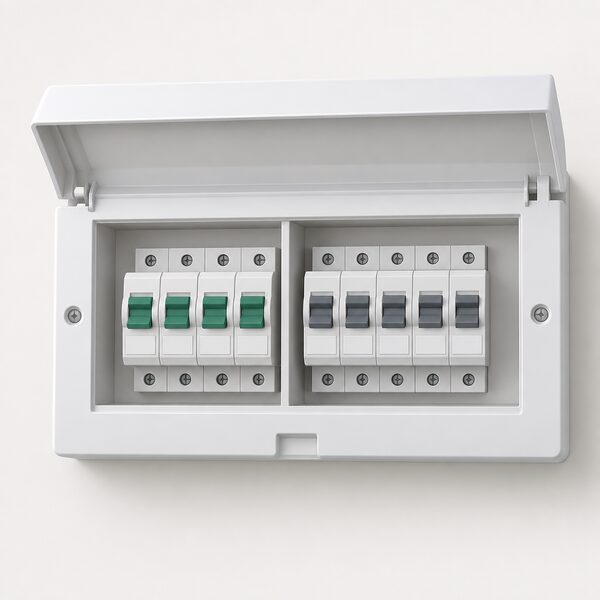
Usually not, and the design assumption runs the other way. Backup-capable setups are built around a design that prioritises critical loads, and systems with blackout protection or island mode continue to power essential circuits rather than the whole property5. Which circuits count as essential is a decision made at the consumer unit, where backed-up and non-backed-up ways are separated.
Whole-home backup is possible in principle but depends on the inverter's output rating, the battery's usable capacity and the load profile of the property. A house with electric heating, an immersion heater and an EV will exceed what a domestic battery and hybrid inverter can supply continuously. A house with gas heating and a modest electrical load is a different proposition. Not every battery storage system can supply the home during a power cut: some can, but they must be specifically set up to do so1. Where backup is configured, the RCT Power Switch disconnects the home from the mains automatically and supplies it from the in-house battery2, and a certified LuxpowerTek battery storage system can be used for home backup power3. No verified runtime figure for whole-home backup is published, so the installer's design is the only reliable basis for a specific property.
There is also a regulatory boundary worth knowing. An electrical storage battery qualifies for the relevant treatment where it is intended for use solely for storing energy converted from electricity supplied to the residential accommodation in question, or generated by a microgeneration system25. That framing describes a battery serving one property, which is the context in which backup is designed.
Cost and installation: what adding backup involves
There is no published standalone price for the backup function. Battery storage as a whole is estimated at up to £10,000 depending on size, with a typical 5kWh system around £4,6006. Backup hardware sits inside that specification rather than beside it, so a backup-capable system is generally at the higher end of the range, and any quote for retrofitting backup to an existing installation is installer-quoted. No range can be given for that work.
The economics of the battery itself are already marginal in some cases. Adding a battery to a solar panel system can increase bill savings, but often not enough to recover the cost of the battery within its expected lifetime, particularly where households already have access to a good export tariff28. Installing battery storage lowers the amount exported to the grid, meaning less income from export payments, though overall savings are greater than relying on export payments alone29. Backup capability does not change either calculation: it is a resilience purchase, not a savings one.
Installation is a design exercise before it is a fitting one. The installer has to establish which circuits will be backed up, whether the inverter supports islanding, where the changeover equipment sits, and what reserve level the household wants held back. Consumer guidance from the battery storage sector covers typical costs and benefits of installing a battery storage system, including the effect on Feed-In Tariff income, which indicates the level of detail a household should expect at quotation stage30. MCS certified installers are the recognised route for battery storage work in the UK31.
Where a combi-style all-in-one falls short, and what to check before buying
All-in-one systems bundle battery, inverter and backup interface into one enclosure, which simplifies the wiring but does not change the underlying requirement: the unit still has to support islanding and still has to be configured for critical loads. The questions to put to an installer are the same regardless of form factor. Does the inverter support blackout protection or island mode? What is the changeover time? Which circuits will be backed up? What reserve percentage will be held, and can it be changed? How long will the backed-up circuits run on that reserve?
The answers determine whether a household gets anything at all in a cut. A system without backup capability will simply shut down alongside the grid, however large the battery. A system with it will hold a reserve, isolate the property and run selected circuits until the reserve is exhausted.
For households weighing the wider picture, the related questions are how much capacity is usable rather than nominal, how the reserve interacts with cycle life, and how backup sits alongside tariff optimisation. Those are covered in battery capacity and usable capacity, battery backup power and EPS and batteries and smart tariffs. The starting point for the whole subject remains home battery storage.
Sources31 cited
- Solar power facts, Energy Saving Trust, 2026-08-13
- Solar panel battery storage, Which?, 2026-05-14
- Should you get solar panels?, Which?, 2024-07-03
- Making the most of your solar PV panels, Centre for Sustainable Energy, 2026-08
- Solar power modes explained: self-consumption, solar export and backup power, Astronergy, 2026-09-17
- Research briefing: domestic battery storage, Parliamentary Office of Science and Technology, 2026-06-25
- Battery storage, Energy Saving Trust, 2026-08-19
- Battery storage advice, Centre for Sustainable Energy, 2025-10
- Battery storage, MCS Certified, 2026-09-17
- Solar hybrid inverter FAQs, LuxPowerTek, 2024-08-07
- Types of solar panels: UK guide, BLUETTI, 2024-08-06
- Is a solar battery worth it in 2026, LONGi, 2026
- Traditional vs plug and play solar battery, Jackery, 2026-07-17
- Power cuts and emergencies: planned power cuts, SSEN, 2026-09-19
- Solar power for your home, BLUETTI, 2026-08-06
- Solar panel installation, Lowestoft, Fuse Energy, 2026-09-11
- Smart home panel, Jackery, 2026-07-02
- Home battery storage UK without solar, BLUETTI, 2026-08-03
- RCT Power Battery Premium, RCT Power, 2026-09-19
- Hybrid inverter vs off-grid inverter, LuxPowerTek, 2024-07-24
- Charge your Tesla with solar energy using Tesla Powerwall 3, Tesla Powerwall, 2026-09-17
- SolarEdge ONE, SolarEdge, 2026-09-17
- Well-adapted energy system, Climate Change Committee, 2026-09-19
- Emergency power cuts, UK Power Networks, 2026-09-17
- Electricity Act 1989, Schedule 7A, legislation.gov.uk, 2026-09-17
- Plug-in solar consumer guide, Electrical Safety First, 2026-08
- Plug-in solar interim product specification, Department for Energy Security and Net Zero, 2026-07
- Supporting households with low carbon technology combinations, Energy Saving Trust, 2026-07-15
- Battery storage, Home Energy Scotland, 2026-09-20
- RECC consumer guide to battery storage, Renewable Energy Consumer Code, 2016-01-20
- Selling solar energy back to grid, BLUETTI, 2024-09-16
 Backup Power and EPSWill your lights stay on when the power goes out?
 Islanding and Anti-IslandingWhy do solar panels switch off in a power cut, and can you keep the lights on anyway?
 The Full Home Batteries GuideA home battery stores cheap or solar power for later, but will it really cut your bills enough to be worth it?
 Maintaining Backup PowerWill your generator actually start when the power goes off?
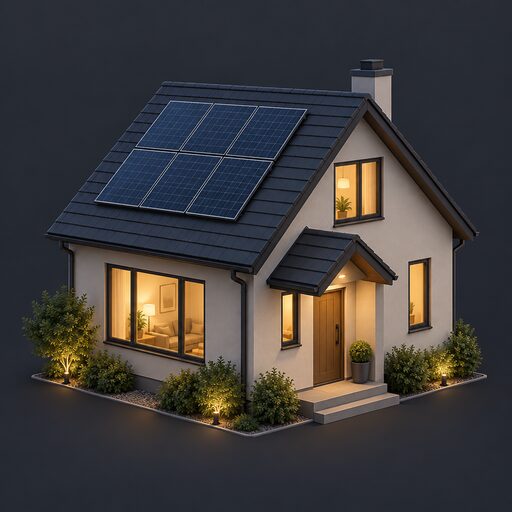 Backup Power and IndependenceA power cut leaves most homes completely dark, so how much backup do you actually need to keep the lights on?
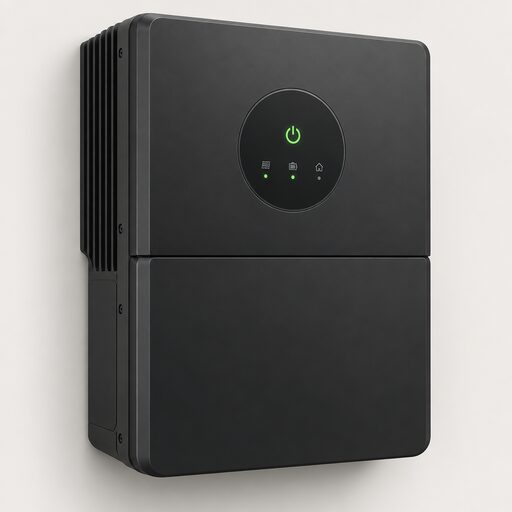 Hybrid InvertersA hybrid inverter lets you store solar power in a battery and use it later, all through one unit instead of two separate boxes.