In this guide
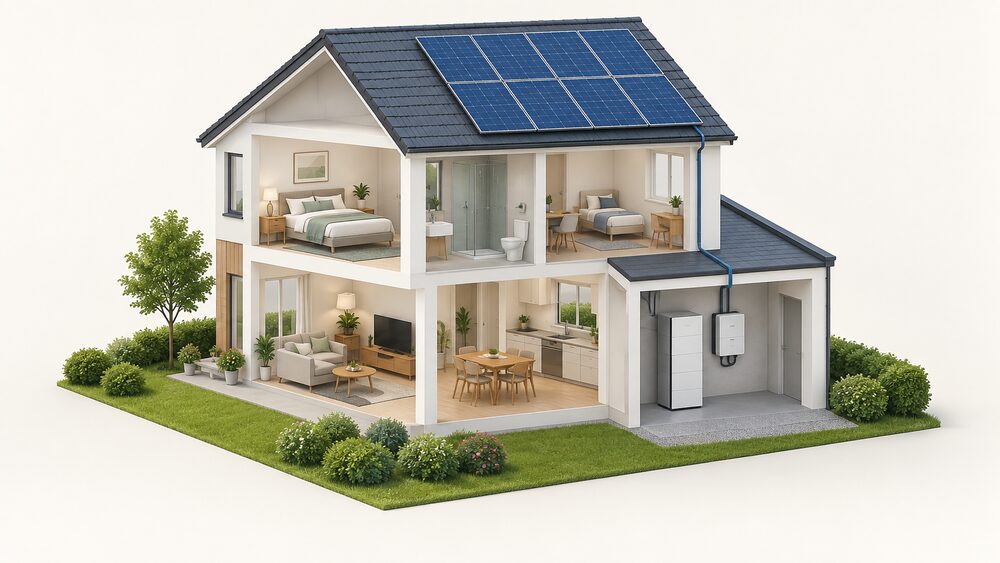
An RCT Power home battery is a German-made lithium storage unit that sits alongside a solar array and holds surplus generation for use after dark. The residential range is built around three parts: a battery, a battery inverter and a sensor1. Nominal capacities run at 5.7, 7.6, 9.6 or 11.5 kWh gross, and the modular design can be upgraded and adapted to fit what a household actually needs2.
The chemistry is lithium iron phosphate, which RCT Power describes as among the safest lithium ion types, and the cells are held in a fanless, convection-cooled enclosure1. Charging and discharging are rated at 25 A each, and the system is DC-coupled, with an optional backup function that keeps selected circuits live during a grid outage2.
For a UK household the appeal is straightforward: more of your own generation used at home, less bought from a supplier. What follows is what the units hold, how they behave, what the guarantee covers, and where the dependence on the grid, the installer and the manufacturer remains.
What an RCT Power home battery is
The system is a high-voltage battery built for DC-coupled storage, with AC-coupled battery inverters offered separately for homes that already have panels installed3. That split matters, because it decides how the battery connects to the array and whether the existing inverter stays in place.
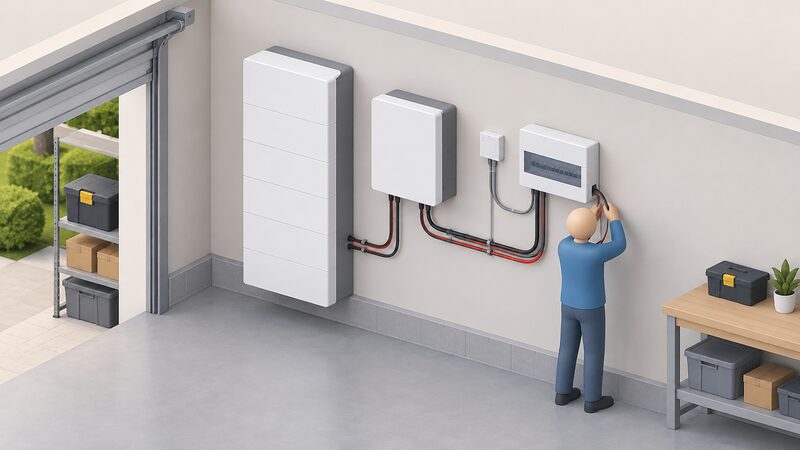
RCT Power's own description of the components is short: a battery, a battery inverter and a sensor1. The battery inverter is the core of the AC-coupled variant, converting the direct current generated by the PV system into alternating current and storing power in the battery5. The sensor sits alongside as a monitoring element, and RCT Power lists it with a two-year product guarantee, shorter than the battery's own term6.
The range covers more than the headline domestic sizes. Alongside the 5.7 to 11.5 kWh units, RCT Power lists a 19.2 kWh model, and the Premium tower scales to 30 kWh per system3. That upper end is aimed at homes with heavy demand or small commercial premises rather than a typical three-bedroom house.
Cooling is passive. The residential range uses fanless cooling, and the Battery Flex uses free air convection, so there is no fan noise and no moving part to fail in the thermal path1. The Battery Premium housing is corrosion-resistant aluminium7.
Sizes and scalability: 5.7 to 11.5 kWh, expandable module by module
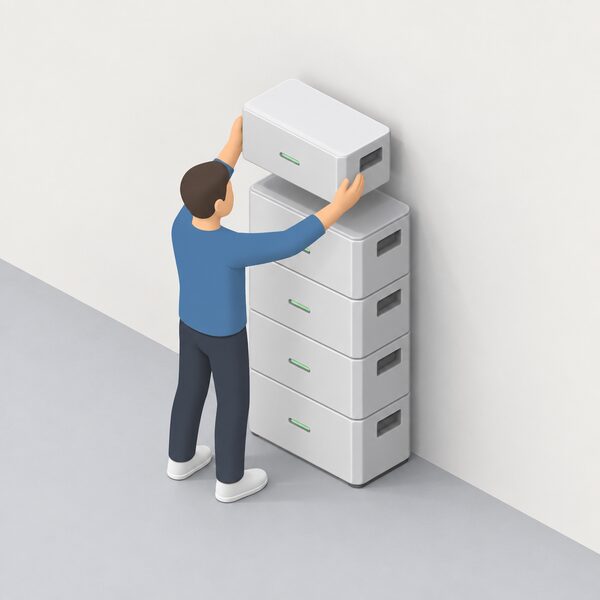
The headline domestic capacities are 5.7, 7.6, 9.6 and 11.5 kWh gross2. Those are the factory configurations a household chooses between at the point of order, and they set the ceiling on how much of a day's generation can be carried into the evening.
Expansion is where the range becomes flexible. The Battery Premium takes two to six battery modules per tower, each module rated at 2.5 kWh nominal and 2.25 kWh usable at 90% depth of discharge7. Capacity therefore grows in 2.5 kWh steps, and a single system can reach up to 30 kWh7. The Storage Flex supports up to two battery towers per inverter, which is the route to larger installations without adding a second inverter9.
RCT Power states plainly that the warranty is not affected by battery expansion, because the guarantee relates to each individual module, and recommends expanding within the first 18 months2. That timing advice keeps the modules closer in age, which matters for balancing across a pack.
| Configuration | Nominal capacity | Usable capacity | Notes |
|---|---|---|---|
| Battery Premium module | 2.5 kWh | 2.25 kWh at 90% DoD7 | 2 to 6 modules per tower7 |
| Battery Flex 6.02 | 6.02 kWh | 5.83 kWh at 97% DoD8 | Free air convection cooling8 |
| Battery 11.5 | 11.5 kWh | Not stated | Gross capacity figure3 |
| Battery DT 19.2 | 19.2 kWh | Not stated | Larger single unit3 |
| Premium system maximum | Up to 30 kWh | Not stated | Per system7 |
The modular approach suits a household that wants to start modestly and add capacity after a year of real data. It also means the practical limit is set by the inverter and the available wall space, not by the battery alone. More on how capacity and usable capacity differ is at battery capacity and usable capacity, and the wider case for stacking modules is at modular and stackable battery systems.
Specifications: LiFePO4 chemistry, 25 A charge and discharge, low standby draw
Every battery in the range uses LiFePO4 cells, listed as the battery technology on the Battery, Battery Premium, Battery Flex and Storage DC pages3. RCT Power describes these as lithium iron phosphate cells considered to be among the safest lithium ion batteries3. The chemistry has a practical consequence beyond safety: LiFePO4 cells deliver a constant voltage output during discharge and a flat discharge curve, and they have a low self-discharging rate, so stored energy retains for longer periods when not in use or under a very light load11.
Charge and discharge current is rated at 25 A / 25 A3. The residential range supports up to 11.5 kW charging and 10 kW discharging capacity at system level1. Those are the figures that decide how quickly a battery refills on a bright morning and how much load it can carry in the evening.
Standby consumption is the detail worth reading closely, because it runs continuously. RCT Power lists non-DT models at under 5,0 W and DT models at under 10,0 W3. The DT variants draw roughly twice the standing load. Over a year that difference is small in cash terms but real, and it is the kind of parasitic draw that eats into savings in a low-consumption home. The wider picture on losses is at battery round trip efficiency.
DC-coupled storage with optional emergency power backup
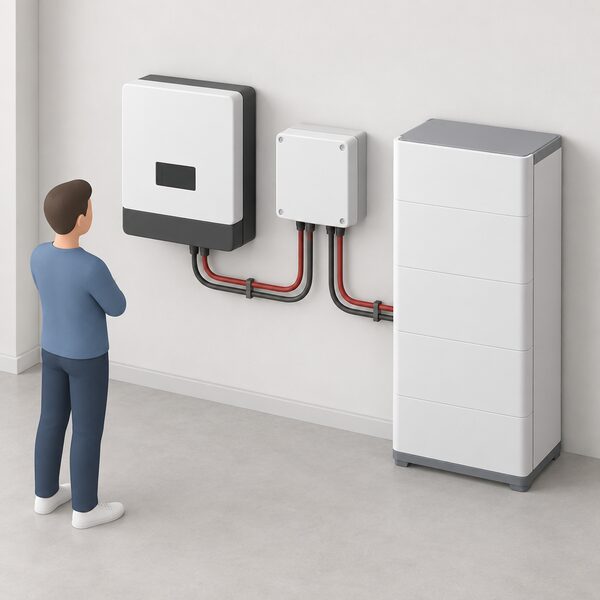
RCT Power builds primarily for DC-coupled storage. The Battery Flex and Battery Premium are both described as DC-coupled, and the Storage DC is used for new PV systems8. The maker's own guidance is that DC-coupled storage systems are recommended for new photovoltaic installations, while the AC-coupled battery inverters are a very good fit for already installed photovoltaic systems5.
Backup power is optional across the residential range, and RCT Power notes that the optional backup power function is often an important criterion when a DC-coupled storage system is selected7. The device that delivers it is the RCT Power Switch, which works only with a DC-coupled storage system from RCT Power and can be retrofitted on request4.
When the grid fails, the Switch triggers an instant switch-over to the in-house battery storage system within a few seconds, disconnecting the home from the mains automatically4. The advantage RCT Power highlights is that the PV system can keep running and keep charging the battery during a public grid power outage, so a sunny day during an outage still tops the battery up4. The Storage Flex switches internally to backup mode in case of grid outage, and the Storage Premium offers backup capability in conjunction with the Switch9.
"Your home is automatically disconnected from the mains. Then the back-up power takes over the supply via your in-house battery storage."
What backup does not do is make the home independent of the grid in normal operation. It covers selected circuits during an outage, and the Switch is an extra component with its own two-year product guarantee rather than the battery's ten4. The full picture on what stays live is at battery backup power and EPS.
Warranty and registration: 10-year time value guarantee
The battery carries a 10-year time value guarantee, stated on the Battery, Battery Premium and Battery Flex pages3. The inverter carries a 10-year product guarantee10. The sensor and the Switch are shorter, at two years each6.
A time value guarantee is not the same as a promise that the battery holds its original capacity for a decade. It sets out a minimum retained value over the term, and the detail sits in the guarantee document rather than the product page. What the maker does state is that expansion does not affect the warranty, because it relates to each individual module2.
Registration is handled through the commissioning route rather than a public portal. RCT Power's storage system records the power consumption and generated solar power values of the last ten days, which is the operating data the support team works from2. For comparison, some publicly funded schemes require inverter product registrations to activate guarantees and warranties to be completed within 48 hours of commissioning, so the paperwork window can be tight13.
How retained-capacity guarantees are worded across the market is covered at home battery warranties.
Efficiency and recognition in HTW Berlin storage testing
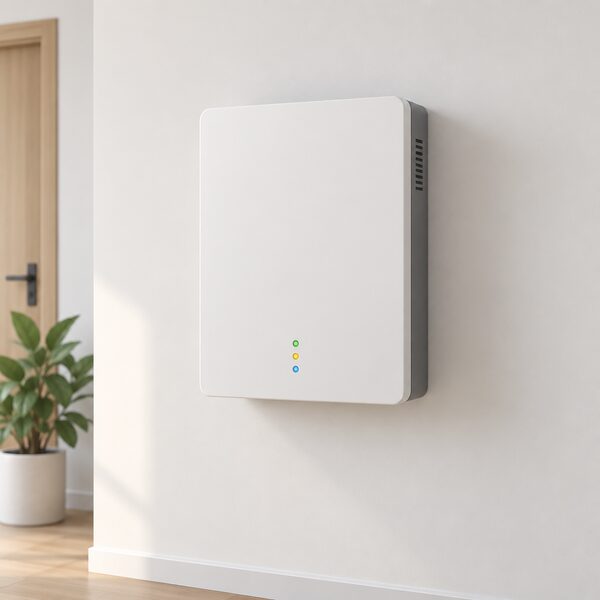
RCT Power states that its storage systems are consistently ranked in the highest efficiency class in the HTW Berlin power storage system inspection1. The inspection is run by the Berlin University of Applied Sciences, and RCT Power reports being among the most efficient PV storage systems again in the 2026 round, having been recognised annually since 20181.
The maker's own efficiency figure for the Storage Premium is a European efficiency above 98%12. That is an inverter-side figure rather than a whole-system round-trip number, and the two should not be read as the same thing. The Storage System is also described as having extremely short settling time and minimal dead time, which affects how quickly it responds to changes in generation and load12.
Depth of discharge varies by model. The Battery Flex is quoted at 97% depth of discharge, giving 5.83 kWh usable from a 6.02 kWh nominal unit8. The Battery Premium module is quoted at 90% depth of discharge, giving 2.25 kWh usable from 2.5 kWh nominal7. The higher the depth of discharge, the more of the nameplate figure a household can actually use, though running cells harder has a bearing on long-term degradation.
At the low end, RCT Power's default setting stops supplying household consumers at 7% state of charge, with a 100 W trickle charge triggered at 5%2. General guidance on home storage suggests systems commonly stop discharging at around 20% of total capacity14. RCT Power therefore runs its cells to a lower floor than the typical default, which is consistent with the high depth of discharge figures but leaves less reserve. More on this trade-off is at battery cycle life and degradation.
Made in Germany: the company and its HyperStrong joint venture
RCT Power describes its batteries as all made in Germany, and the Storage Premium carries the same country of manufacture3. That is a supply-chain point rather than a performance claim: European assembly shortens the distance for parts and service compared with cells and packs shipped from Asia.
The company has been active in the European storage market through 2025 and 2026. RCT Power exhibited at Solar Solutions Düsseldorf in 2025 and at Intersolar Europe in Munich in June 20261. In June 2026, RCT Power and HyperStrong signed a strategic joint venture agreement at The Smarter E to drive smart battery energy storage system manufacturing in Malaysia1. That venture sits alongside the German manufacturing base rather than replacing it, and it points to a company scaling beyond the domestic market.
For a UK buyer, the practical questions are parts availability and service response rather than the flag on the factory. RCT Power maintains a compatibility list naming manufacturers that offer products with interfaces to its storage system, which is the route to integrating third-party hardware15. The company also publishes a sensor and an inverter as separate components, so a system can be extended or repaired part by part6.
What owning one means for household energy independence
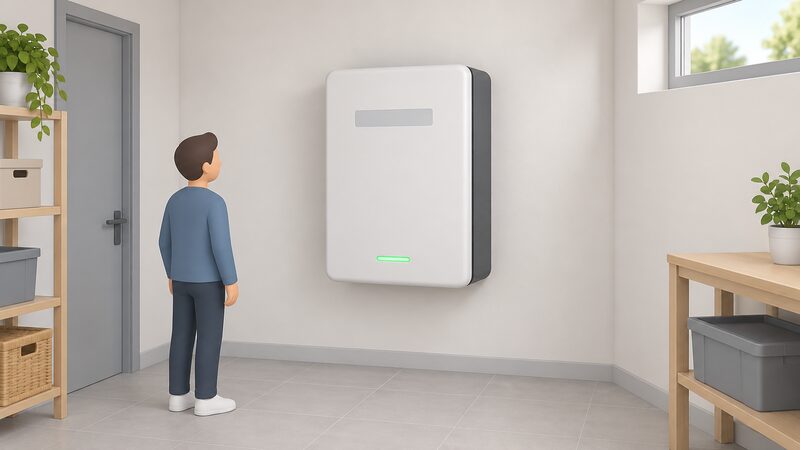
A home battery changes when electricity is used, not where it comes from. RCT Power's own framing is that connected partner products let householders charge an electric vehicle or heat water using their solar power, so a household can generate and store its own electricity and then use it through intelligent interfaces15.
The scale of that shift is measurable. Independent guidance puts domestic battery systems at being able to store as much electricity as a household typically uses in a day, enabling a PV system to provide up to 70% of a household's annual electricity demand16. Solar Energy UK's position is that batteries are a way for homeowners to store excess electricity produced from their solar system17. The Energy Saving Trust notes that a battery will increase the cost of an installation but will allow a household to use more of what it generates18.
The dependence that remains is specific. The battery stays connected to the grid for import when it is empty and for export when it is full, and it relies on a supplier for whatever it cannot cover. Backup, where fitted, covers selected circuits rather than the whole house. The RCT Power system can be operated without internet connectivity, which is unusual and worth noting: local control continues without a broadband link1. Remote monitoring and app features still depend on the manufacturer's platform.
"More homegrown energy means greater energy independence"
For a household weighing the decision, the honest position is that an RCT Power battery raises self-consumption and can carry a home through a short outage if the Switch is fitted, while leaving the grid connection, the supplier relationship and the installer's ongoing role in place. How that compares with other routes to the same end is at home batteries and household energy independence, and the starting point for the whole subject is home battery storage.
Sources19 cited
- Residential energy storage systems, RCT Power, 2026
- RCT Power FAQ, RCT Power, 2026
- RCT Power Battery, RCT Power, 2026
- RCT Power Switch, RCT Power, 2026
- AC-coupled storage system, RCT Power, 2026
- RCT Power Sensor, RCT Power, 2026
- RCT Power Battery Premium, RCT Power, 2026
- RCT Power Battery Flex, RCT Power, 2026
- RCT Power Storage Flex, RCT Power, 2026
- RCT Power Inverter, RCT Power, 2026
- LiFePO4 cell technology, BLUETTI UK, 2026
- RCT Power Storage Premium, RCT Power, 2026
- Barcud Solar Panel Installation Scheme Specification, Sell2Wales, 2026
- Battery storage, Energy Saving Trust, 2026
- Compatible products, RCT Power, 2026
- Making the most of your solar PV panels, Centre for Sustainable Energy, 2026
- Batteries in the home, Solar Energy UK, 2026
- Installing solar panels to help reduce your carbon footprint, Energy Saving Trust, 2025
- Solar Energy Scotland manifesto, Solar Energy UK, 2026