
In this comparison
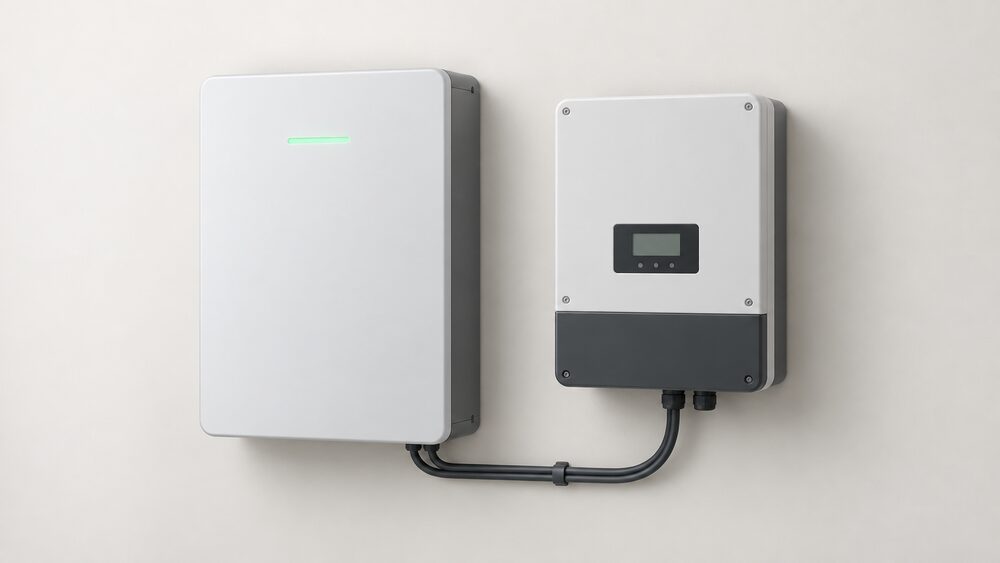
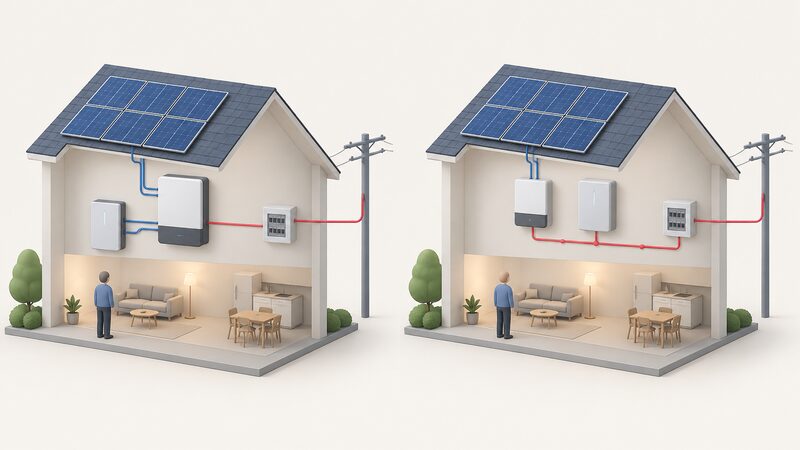
The choice between a hybrid inverter and an AC-coupled battery is really a choice about when storage arrives in a home's life. A hybrid inverter is a battery plus solar inverter in one unit, and hybrid (DC coupled) batteries are intended for new installations, where the photovoltaic panels connect directly to the inverter1. An AC-coupled battery is a separate unit installed next to an existing inverter and connected into the home's AC network, which is why it suits a system that already generates3.
The practical split follows that. If solar is already on the roof and working, an AC-coupled battery adds storage without replacing or altering the existing solar inverter setup, and it is generally easier to retrofit4. If the system is being designed from scratch, a DC-coupled hybrid uses fewer components and has less upfront cost overall, even though the hybrid inverter itself is the more expensive unit6.
Efficiency points the same way. DC coupling lets power pass directly between panels and battery, described as slightly higher efficiency, while an AC-coupled battery performs multiple conversions and lands a little lower, a difference the makers call minimal8. The one place the retrofit wins clearly is an old feed-in tariff contract, where a DC system could reduce payments and an AC system will not10.
Hybrid inverter vs AC-coupled battery: the short answer
The short answer turns on whether the solar array already exists. A hybrid inverter manages power flow between the solar panels, battery storage and the utility grid in a single box, and it is designed to work as part of a solar-plus-storage architecture rather than handling only basic solar conversion12. An AC-coupled battery is a separate unit next to the existing inverter that connects into the home's AC network, adding storage to a system that is already generating3.
That difference in architecture drives everything else: efficiency, cost, warranty exposure and what happens to feed-in tariff payments. DC-coupled systems connect the battery directly to the solar panels before the inverter, which is often more efficient and usually simpler to install with new solar PV systems14. AC-coupled systems connect the battery after the solar inverter, which is often easier to retrofit to existing solar PV installations14.
There is a middle case worth naming. A hybrid solar inverter can operate in a battery-less mode, working like a grid-tied inverter until a battery is added later15. That gives a household the option of installing the hybrid unit now and the storage when budget or need allows, without a second inverter purchase.
What a hybrid inverter does: one box controlling solar and battery
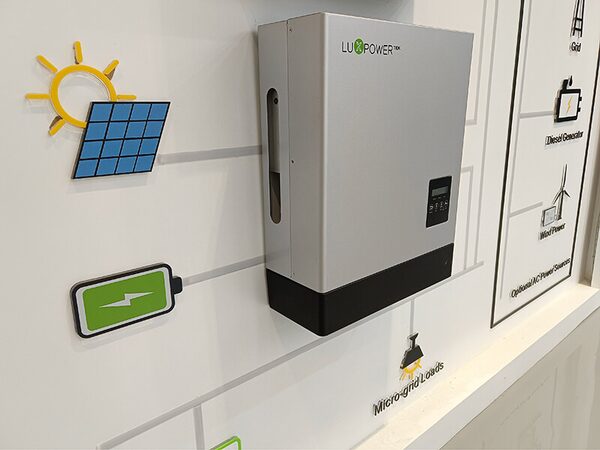
A hybrid inverter is the combination of a solar and battery inverter altogether, and it manages power flow between the solar panels, battery storage and the utility grid12. It can convert DC solar to AC, route energy to a DC-coupled battery, and convert DC battery energy back to AC for the home7. In a hybrid solar battery system, the unit handles DC input from the solar panels, power conversion into energy stored in the battery, and bidirectional DC-AC and AC-DC conversion for home use6.
Battery management is built in. Hybrid inverters are described as battery-ready with built-in battery management, and they connect to the grid while also managing battery storage11. The battery DC/DC boost module sits inside the inverter, which makes the inverter design relatively complicated but strengthens battery compatibility and widens the application scenarios it suits8.
Backup behaviour is one of the practical differences. A hybrid inverter supports energy storage and uses battery energy during power outages, without portable generators, fuel storage or manual power switching18. It will automatically disconnect from the grid during a blackout and keep the home powered using solar and stored energy when paired with a battery11. That automatic disconnection is the anti-islanding behaviour that keeps the network safe, and it is worth understanding alongside islanding and anti-islanding.
The limits are real. A hybrid inverter carries a higher cost, and a failure in the device results in the simultaneous loss of both solar power generation and battery storage capability. It is also typically compatible only with specific battery brands, which limits future upgrade options5. That single point of failure is the trade for having one box instead of two.
What an AC-coupled battery adds to an existing system
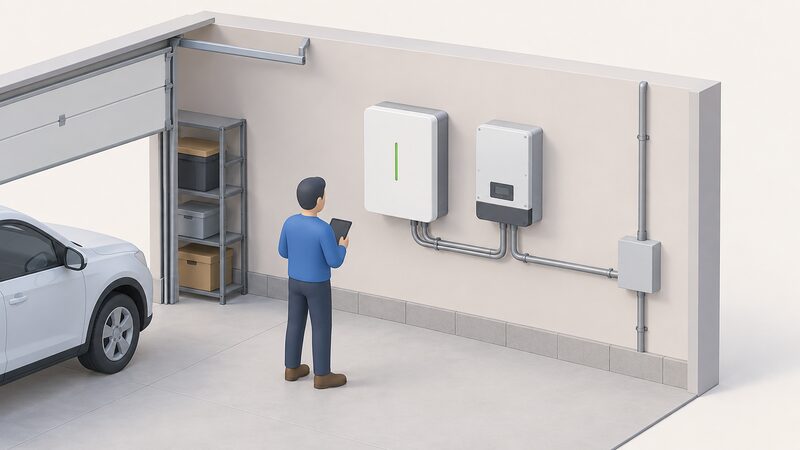
An AC-coupled battery is a separate unit next to the existing inverter that connects into the home's AC network3. It integrates battery storage into an existing or new solar panel system through an AC connection, and it allows storage to be added without replacing or altering the existing solar inverter setup4. The battery storage connects to the grid or solar panels via an alternating current connection, and the system typically consists of a battery, an inverter and a connection to the AC grid4.
The retrofit case is the strongest argument for it. AC-coupled batteries are probably better if a household already has PV, because they are easier to retrofit5. An AC coupler plus energy storage battery solution suits users who have already installed photovoltaic systems, with no additional equipment and costs beyond the AC-coupled inverter and the energy storage battery19. In an AC-coupled energy storage system, the PV array and the battery storage system each have their own inverters, tied together on the AC side20.
Flexibility is the second benefit. AC coupling allows for the integration of different types of inverters and batteries, and solar panels and batteries can be added or upgraded independently21. AC-coupled batteries are compatible with a wide range of inverters22. That matters for a household that may want to change battery brand later without touching the solar side.
Warranty exposure is lower too. An AC-coupled battery system generally does not interfere with the original solar panel or inverter warranties4. The key difference in the other direction is that hybrid-coupled systems can accommodate additional PV panels, so a household planning to expand its array later is weighing that against the retrofit advantages20.
Efficiency: where DC coupling wins and loses
DC coupling connects the battery charger to the DC side of the PV system, so electricity generated by the panels can be stored before inversion to AC3. DC-coupled systems connect the battery directly to the solar panels before the inverter, which is often more efficient and usually simpler to install with new solar PV systems14. A hybrid inverter (DC coupled) is described as having slightly higher efficiency because the power runs DC to DC directly4.
AC coupling connects the battery charger to the AC side of the network, with the battery inverter or charger separate from the PV inverter3. An AC-coupled battery storage system features multiple energy conversions, so overall efficiency is a bit lower than DC-coupled, but the difference is described as minimal and not enough to affect the outcome9. Modern inverters are highly efficient and minimise energy loss, although conversion processes cause some losses9.
The efficiency advantage therefore sits with new installations rather than retrofits. For new installations, DC-coupled systems with hybrid inverters are preferable for optimal energy efficiency and to maximise self-consumption and self-sufficiency20. That is the point at which the household is choosing an architecture rather than working around one, and the gains compound over the system's life through self-consumption.
There is a caveat on the DC side. DC-coupled systems are typically more efficient and tend to be cheaper, though such a system might not be able to charge from the grid5. Grid charging matters for a household using a cheap overnight tariff to fill the battery in winter, so the efficiency gain is not the only consideration. The wider question of how much a battery lifts self-consumption is covered in how much a battery increases self-consumption.
Cost: higher upfront hardware against cheaper overall for new installs
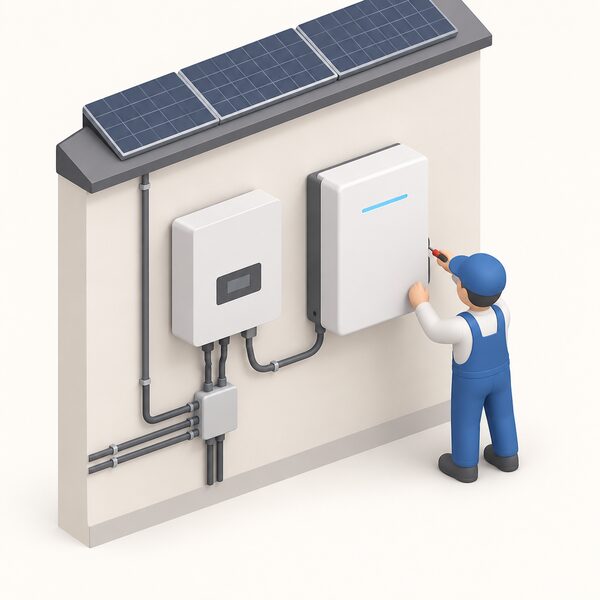
The cost picture splits cleanly between upfront hardware and whole-system cost. A hybrid inverter (DC coupled) carries higher upfront hardware cost, because the household pays for the battery plus a new inverter, and high installation labour cost because it requires complex rewiring of the original setup4. An AC-coupled battery system has lower upfront hardware cost, because only the battery is bought4.
For a new build, the arithmetic reverses. A hybrid solar battery system requires fewer components and thus has less upfront cost, and the system uses fewer components, making it easier for new solar homeowners to start out6. Hybrid inverters have a higher upfront cost due to their advanced features, and the installation process is also more complex23. On-grid systems are the most affordable, while hybrid systems are the most expensive due to battery integration23.
Independent guidance adds a caution on the AC side. AC systems are more expensive than DC systems, according to Energy Saving Trust10. The up-front cost of installing a battery can be up to £2,544 more24. Those two statements sit alongside the maker position that AC-coupled retrofits avoid extensive wiring modifications, reducing installation and hardware costs20. The figures differ because they compare different things: a like-for-like new system against a retrofit onto existing panels.
| Hybrid inverter (DC coupled) | AC-coupled battery | |
|---|---|---|
| Upfront hardware | Higher: battery plus a new inverter4 | Lower: battery only4 |
| Installation labour | High: complex rewiring of the original setup4 | Without extensive wiring modifications, reducing installation and hardware costs20 |
| New installation | Fewer components, less upfront cost6 | More expensive than DC systems, according to Energy Saving Trust10 |
| Maintenance | Inverter maintenance cost lower in a separate boost module system8 | Separate units, each serviceable20 |
One compatibility point decides the question for some homes. With microinverters, an AC-coupled battery system is the only realistic and cost-effective option4. Microinverters and power-optimisers separate panels so shading on one does not affect the rest, but may be more expensive25. Where panels each carry their own inverter, there is no single DC bus to couple a battery into.
What replacing your inverter means for FIT payments
Feed-in tariff payments rest on generation, not on where the power goes. FIT generation payments are based on the electricity the solar panels generate, so adding battery storage does not change the basis of the payment26. What changes is whether the generation meter still sees everything the array produces.
An AC system will not affect feed-in tariff payments, because the generation meter can register the total system output10. A DC system could reduce payments under an old feed-in tariff contract, because charging and discharging is less efficient10. A DC-coupled energy storage system carries some slight reduction in the PV feed-in tariff due to energy used in the battery charge and discharge process27. Where DC coupling reduces measured generation and tariff income, an AC-coupled retrofit battery may make more financial sense3.
The replacement itself is a costed event. Inverter replacement is put at 18% of PV cost in an official consultation28. That figure is from 2021 and predates recent equipment prices, so it is a proportion rather than a current quote. A household weighing a hybrid retrofit against an AC-coupled battery is comparing that replacement cost, plus the tariff risk, against the lower upfront hardware of an AC-coupled unit.
The decision also has a timing element. A DC-coupled battery can be a good option if the existing inverter is already nearing the end of its life, but it is generally a larger upgrade than an AC-coupled system26. Where the inverter has years left, the AC route preserves it. Where it is failing, the replacement cost is coming anyway and the hybrid route folds two purchases into one.
Which option costs less overall?

There is no single answer, because the two routes are cheapest in different circumstances. For a new installation, the hybrid route uses fewer components and has less upfront cost overall, even though the hybrid inverter unit itself is the most expensive of the inverter types6. For a retrofit onto working panels, the AC-coupled route avoids a new inverter and complex rewiring, so the upfront hardware is lower4.
The deciding factors are the existing equipment and the household's plans. Where microinverters are fitted, an AC-coupled battery system is the only realistic and cost-effective option4. Where the array may be expanded later, hybrid-coupled systems can accommodate additional PV panels, which AC-coupled systems do not do in the same way20. Where an old feed-in tariff is in payment, the AC route avoids any reduction in measured generation10.
Control systems sit above either choice. Homey works with either a hybrid inverter or a separate AC battery as long as there is a way to exchange data or a suitable integration3. That matters for a household building toward wider whole-home energy system design, where the inverter choice is one component among several.
The dependence that remains is worth stating plainly. Both architectures keep the home connected to the grid, and both rely on a manufacturer for the inverter, the battery and, in most cases, an app or cloud service for monitoring and control. A hybrid inverter concentrates that dependence in one box, so a failure takes out generation and storage together, and compatibility is typically limited to specific battery brands5. An AC-coupled system spreads it across two units from potentially different makers, at the cost of a little efficiency and, in some cases, a higher system price9.
Sources28 cited
- What comprises a typical GivEnergy system, GivEnergy, 2026-09-17
- Energy storage FAQ, Eaton, 2026-09-17
- Batteries, inverters and chargers, Spirit Energy, 2026
- Add a battery to an existing solar system, SolaX Power, 2026-06-05
- Off-grid vs hybrid inverter, SolaX Power, 2026-03-13
- DC-coupled vs AC-coupled vs hybrid solar battery storage, Hoymiles, 2025-09-23
- Microinverter tax: DC optimizers and DC-coupled batteries, Tigo Energy, 2025-04-03
- Introduction of DC coupling system for home energy storage, Dyness, 2024-01-15
- AC-coupled battery storage: enhancing energy efficiency, AlphaESS, 2023-11-10
- Solar panel battery storage, Which?, 2026-05-14
- Microinverter vs hybrid inverter, SolaX Power, 2026-08-25
- What is a hybrid inverter, LuxPowerTek, 2022-04-11
- Solar inverter replacement: homeowner guide, Tigo Energy, 2026-09-02
- Solar panel battery storage, Fuse Energy, 2026-08-13
- Can a hybrid solar inverter work without batteries, LuxPowerTek, 2023-10-30
- Hybrid vs on-grid vs off-grid solar inverter, LuxPowerTek, 2022-09-29
- Hybrid inverter vs off-grid inverter, LuxPowerTek, 2024-07-24
- How choosing the right hybrid inverter can reduce household solar panel costs, LuxPowerTek, 2026-07-15
- Prepare for backup power this winter, Solis Inverters, 2022-01-17
- Understanding PV BESS coupling methods, AlphaESS, 2024-07-23
- Maximizing efficiency: key benefits of AC-coupled systems, AlphaESS, 2023-05-19
- Decoding AC-coupled vs DC-coupled batteries, AlphaESS, 2023-05-31
- Inverter technologies compared, Sungrow, 2025-01-07
- Solar panel installation, maintenance and repair, NICEIC, 2026-09-17
- Solar panels, Electrical Safety First, 2026-09-17
- How to add battery storage to a feed-in tariff solar system, Good Energy, 2026-07-24
- Grid connect system with battery storage, Wind & Sun, 2026-09-20
- Draft Regulatory Impact Assessment, Northern Ireland Department of Finance, 2021-10
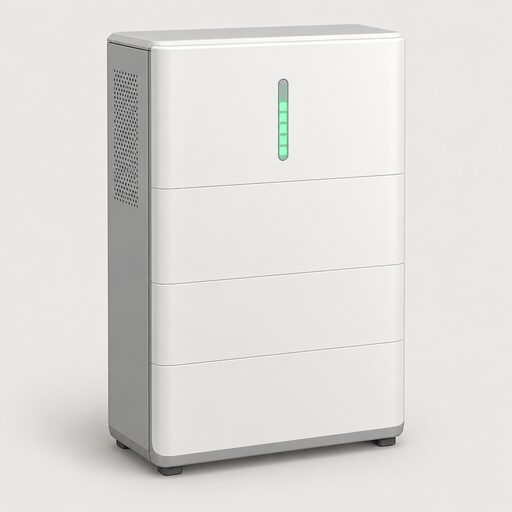 AC-Coupled vs DC-CoupledCan you add a battery to your existing solar panels without swapping the inverter, and does one kind waste more of your solar power than the other?
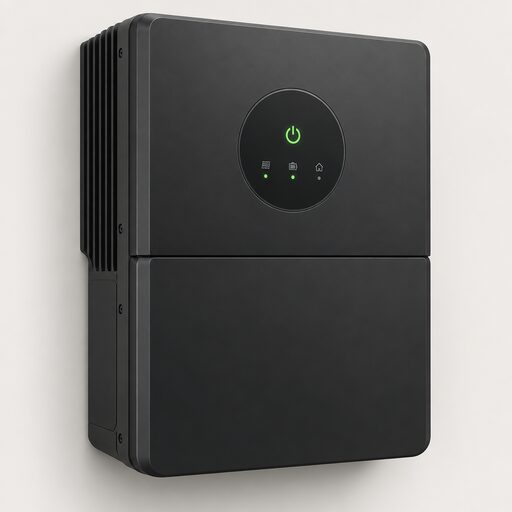 Hybrid InvertersA hybrid inverter lets you store solar power in a battery and use it later, all through one unit instead of two separate boxes.
 Adding Battery StorageCan you add a battery to solar panels you already have, or does the whole system need replacing?
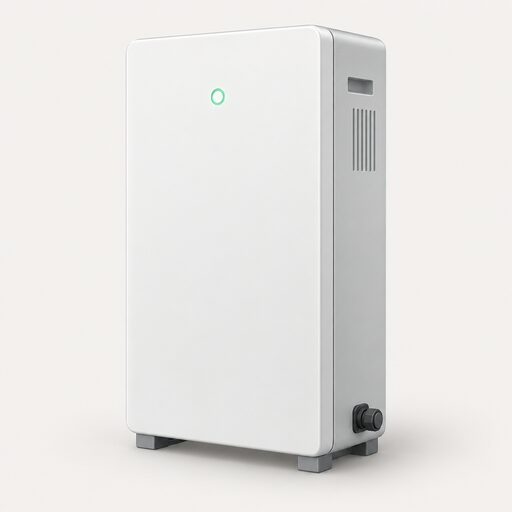 All-in-One Battery SystemsA single unit holding your battery and the equipment that turns its power into usable electricity.
 Solar and Energy IndependenceHow far domestic solar cuts dependence on suppliers and the grid, what self-consumption really looks like across the year, what a battery, diverter or EV adds, and the grid-outage limit of ordinary inverters.
 Hybrid Heat PumpsHow hybrid systems pair a heat pump with a gas, oil or LPG boiler, what decides which appliance runs, what they cost, how much gas they displace, and why the Boiler Upgrade Scheme will not fund them.