
In this answer
Short answer
A home battery does not need solar panels. It can be charged from the grid on a time-of-use tariff, held through the expensive hours, and discharged when electricity costs most. The Energy Saving Trust puts it plainly: a battery can be charged with cheap electricity from a supplier, typically on certain tariffs at night or in the middle of the day1. Home Energy Scotland gives the same advice, noting that switching to a time-of-use tariff lets a household charge the battery during off-peak times when electricity is cheap2.
The one technical condition is the type of system. The Energy Saving Trust states that DC systems cannot be charged from the grid, so a solar-less installation needs an AC-coupled battery or a hybrid inverter that accepts a grid charge3. Beyond that, the case for a battery without solar rests on tariff arbitrage rather than generation: buy low, use high, and let the battery management system do the switching.
What a battery without solar cannot do is generate. It shifts when electricity is bought, not where it comes from, so the household remains dependent on the grid and on a supplier for every unit. Independence here is partial: protection from peak prices and from some outages, not from the network itself.
Yes: a home battery works without solar panels
The question is settled by the equipment, not by the roof. A battery stores electricity; it does not care whether that electricity came from a panel or a substation. The Energy Saving Trust's guidance on battery storage describes the full cycle for a solar-less system: the battery stops charging when it is full, and discharges when the next cheap tariff period ends, automatically1. Nothing in that sequence requires a generator on site.
The wider context explains why the question is asked at all. Solar panels do not need direct sunlight to work and can generate electricity even on cloudy days, and they work year-round even without consistent direct sunlight6. But they cannot work at night, which is exactly when most households use most of their electricity7. A battery without solar sidesteps the mismatch entirely by taking its energy from the grid at the hours the household chooses.
The economics of self-consumption explain the appeal of the solar route, and also why a battery has value on its own. Rates for selling electricity to the grid are much lower than tariffs for using electricity from the grid, so using solar electricity yourself is much more cost-effective than exporting it8. A grid-charged battery applies the same logic to imported electricity: it buys at the cheap rate and avoids the expensive one.
For a household's energy independence, the honest position is that a solar-less battery is a price hedge, not a generating asset. It reduces exposure to peak rates and can keep selected circuits running in an outage where the system is specified for backup. It does not reduce the volume of electricity drawn from the network, and it does not reduce reliance on a supplier. The independence it buys is financial and temporal, not physical.
Why install a battery on its own: cheap off-peak charging and time-of-use tariffs
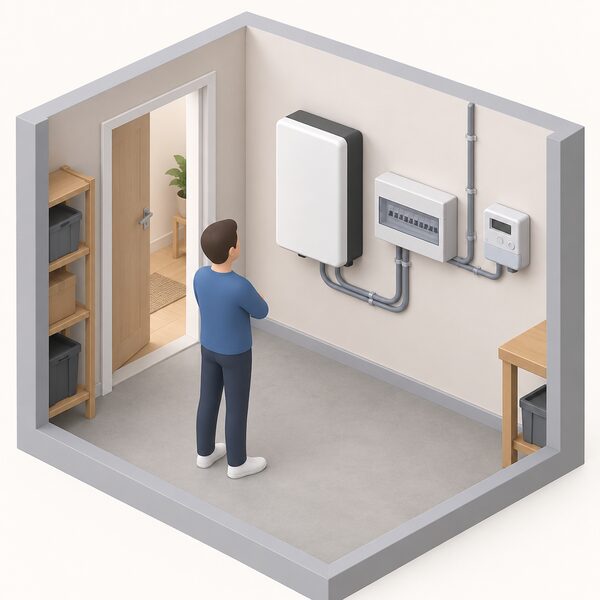
The case for a standalone battery is tariff arbitrage. Home Energy Scotland advises that a battery can be charged with cheap electricity from a supplier, typically on certain tariffs at night or in the middle of the day, and that switching to a time-of-use tariff maximises the saving2. The battery becomes a device for moving cheap units into expensive hours, and the wider the gap between the two rates, the more it earns its place.
The evidence on whether it is worth doing is mixed and depends on circumstances. Independent guidance on home solar batteries concludes that a battery is most worthwhile if a household wants backup power, does not have full-retail export rates, or can access cheap overnight charging tariffs9. Those three conditions describe a solar-less installation well: no export income is available without generation, so the value has to come from the import side.
A worked example gives a sense of scale. One independent guide calculates that a battery charged at 12p per kWh, with no solar PV installed, would give an annual electricity cost of £4204. That figure is a modelled example for a particular household, not a prediction, and it depends entirely on the tariff rates and the load profile assumed. It shows the mechanism rather than a guaranteed outcome.
The Energy Saving Trust's research on technology combinations found that tariff choice is decisive for heat pump savings, and that integrated electric homes can cut bills by around £800 a year10. That finding supports the general principle that the tariff, not the hardware alone, drives the result. A battery without solar is the purest expression of that principle, because there is no generation to confuse the picture.
How a solar-less battery is charged and sized
Charging is straightforward where the system allows it. A standalone home battery without solar can charge from a normal 230V socket, with no rewiring or electrician needed unless it is wired into the consumer unit for whole-home cover, and it charges straight from the mains before pushing that stored energy back into the home hours later5. That description covers the plug-in end of the market; a permanently installed AC-coupled battery does the same job through the consumer unit.
Sizing works differently without solar. With panels, the question is how much of the generation to capture, and the numbers are stark: without a battery, a household might use only 30 to 50% of what it generates11. Without panels, there is no generation figure to work from, so sizing is driven by the load the household wants to shift. The useful measure is the overnight or off-peak consumption the battery can cover, plus any circuits the household wants kept running in an outage.
The system type determines what is possible. The Energy Saving Trust states that DC systems cannot be charged from the grid, which rules them out for a solar-less installation unless solar is planned from the outset3. AC-coupled batteries and hybrid inverters that accept a grid charge are the workable options. This is the single most important specification point for anyone buying a battery before panels, and it is worth confirming before purchase rather than after.
Practical sizing also has to account for the battery's own limits. Round-trip losses mean not every unit put in comes back out, and the usable capacity is lower than the nominal figure. Those constraints apply to every battery, solar or not, and they are covered in more detail in the guides to battery capacity and usable capacity and round-trip efficiency.
Adding solar panels later
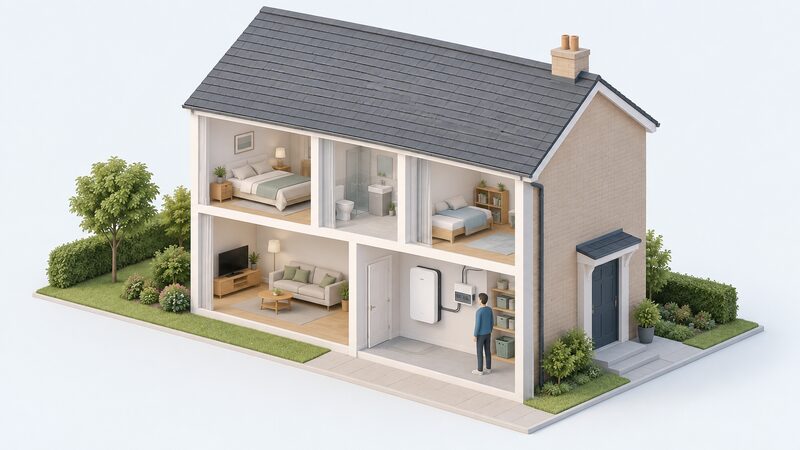
The order of installation is not fixed. Duracell Energy states that if a household chooses a standalone battery system, solar panels can always be added later5. That is the maker's own guidance on its own product, and it describes the intended upgrade path for a battery-first purchase.
Adding solar to an existing battery is a different proposition from adding a battery to existing solar, and the evidence on the second route is cautionary. The Energy Saving Trust found that adding a battery to a solar panel system can increase bill savings, but often not enough to recover the cost of the battery within its expected lifetime, particularly where households already have access to a good export tariff10. The same arithmetic does not automatically apply in reverse, but it shows that retrofit economics are not guaranteed.
For plug-in solar, the rules are tighter. Battery storage can be added alongside plug-in solar panels, but it must be permanently wired and installed by a qualified electrician, and under the current regulations plug-in solar panels with integrated battery storage are not covered12. The government's consultation on plug-in solar describes systems without batteries connected directly to a standard mains socket, and the proposed changes would allow some solar panel systems without batteries to be plugged into a normal socket-outlet where they meet set safety requirements13. The Electrical Contractors' Association has warned that speed should not come ahead of safety on plug-in solar14.
In Northern Ireland, the connection process differs. Installing solar panels or wind turbines, or adding a new battery, is a different process from the EV charger and heat pump route, directed to a separate page by NIE Networks15. Households that bought a home with an existing system, or that are considering a free solar PV arrangement, should check whether the consumer can add to the system at a later date, which is one of the questions such schemes raise16.
"If you choose a standalone battery system, you can always add solar panels later."
What it means for energy independence
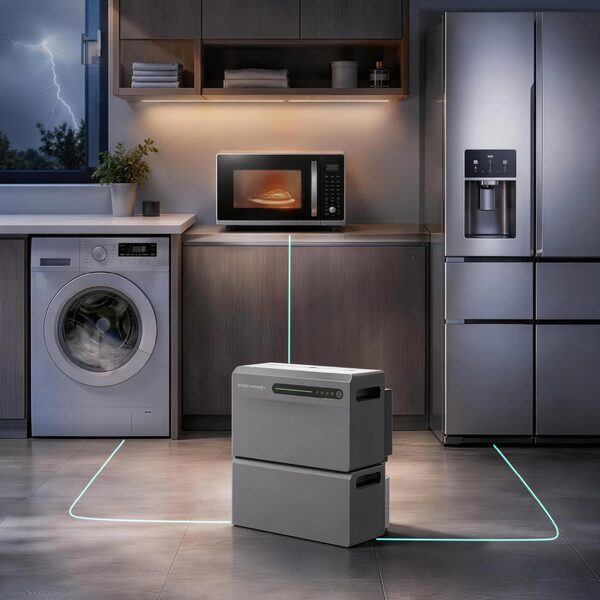
A battery without solar changes a household's relationship with time, not with the network. It buys electricity when it is cheap and uses it when it is expensive, which reduces exposure to peak pricing and to the volatility of the import market. It does not reduce the total volume of electricity drawn from the grid, and it does not remove the need for a supplier. Every unit still arrives through the meter.
The dependence that remains is worth stating plainly. The household depends on the grid for all its energy, on a supplier for the tariff that makes the battery worthwhile, and on the manufacturer for the battery management system, the app and the warranty. If the cheap overnight rate disappears, the arbitrage disappears with it. If the maker fails, the warranty may be worth little. A battery is a financial instrument tied to a tariff, and tariffs change.
Where the battery does add resilience is in backup. Independent guidance notes that solar panels typically cannot power a home during a power cut unless the home is off the grid or has additional equipment17. A battery specified with backup capability can keep selected circuits running, which is a form of independence that generation alone does not provide. The conditions and equipment involved are set out in the guide to battery backup power and EPS.
For households weighing the two technologies, the Energy Saving Trust found no great difference between installing solar and a battery together versus separately in its research6. That is a useful corrective to the assumption that one order is obviously right. The choice depends on the tariff available, the load profile, and whether the household wants backup. The wider picture, including how batteries fit alongside heat pumps and electric vehicles, is covered in home battery storage and in the guide to batteries and energy independence.
Grants and support for a battery without solar
There is no grant in the current guidance for a standalone battery without solar. The ECO4 rules allow electric storage heaters without solar PV in the private rented sector, provided listed measures are part of the same project and the installation does not replace an electric storage heater, an electric heating system or a boiler18. That is a specific route for a specific technology, not a general battery grant.
Battery storage does appear in wider support programmes. The Low Carbon Hub notes that if solar generation does not match patterns of energy use, installing battery storage can provide more low-cost energy to the building19. Birmingham City Council's Switch Together scheme allows households to register to have battery storage added to existing solar panels to maximise the benefits of the system20. Both are examples of battery storage being supported as part of a package rather than on its own.
For a solar-less household, the practical position is that the battery is funded by the buyer. Prices are installer-quoted, and no published figure applies across the market. The cost depends on capacity, system type, whether backup is included, and the installation route. The guide to home battery cost sets out the components that make up a quote.
Sources20 cited
- Battery storage advice, Energy Saving Trust, 2026-08-19
- Battery storage, Home Energy Scotland, 2026-09-20
- Solar panel battery storage, Which?, 2026-05-14
- Battery storage advice, Centre for Sustainable Energy, 2025-10
- Home battery storage, Duracell Energy, 2026-09-17
- Tariffs for renewable technology, Energy Saving Trust, 2026-08-12
- Do solar panels work in winter?, Uswitch, 2026-09-15
- Solar panels, London Borough of Hammersmith and Fulham, 2026-09-17
- Is a home battery worth it?, Independent Advisor, 2026-09-20
- Supporting households with low carbon technology combinations, Energy Saving Trust, 2026-07-15
- Solar panels, Uswitch, 2026-09-16
- Plug-in solar panels, Which?, 2026-09-15
- Plug-in solar consultation, GOV.UK, 2026-06-16
- Government must not put speed ahead of safety on plug-in solar panels, Electrical Contractors' Association, 2026-07-20
- EVs and heat pumps, NIE Networks, 2026-09-19
- Information regarding free solar PV systems, Renewable Energy Consumer Code, 2026-09-17
- Solar power facts, Energy Saving Trust, 2026-08-13
- Summary of updates to ECO4 delivery guidance and measures table, Ofgem, 2024-04-05
- Clean Energy Boost, Low Carbon Hub, 2024-06-25
- Switch Together Birmingham, Birmingham City Council, 2026-01-27
 Charging and Energy IndependenceCharging an electric car at home can cut your fuel costs, but how much does it really free you from the grid?
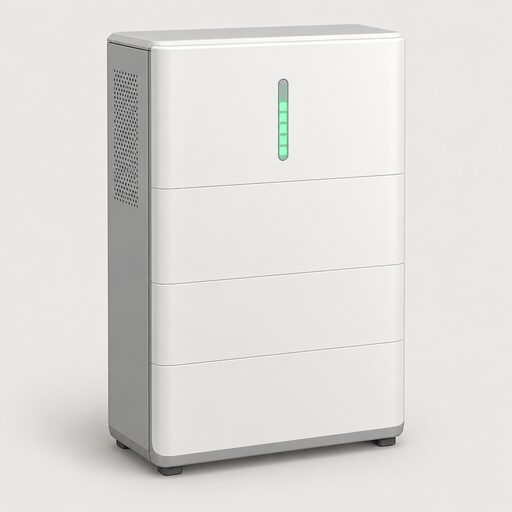 AC-Coupled vs DC-CoupledCan you add a battery to your existing solar panels without swapping the inverter, and does one kind waste more of your solar power than the other?
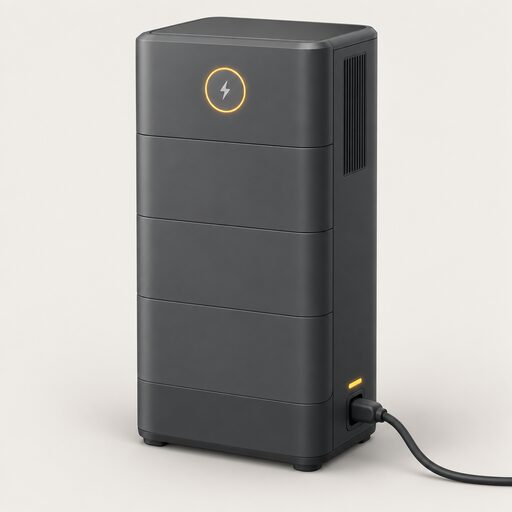 Solar and Battery Import TariffsWhat does a special import tariff actually get you when you have solar panels or a home battery?
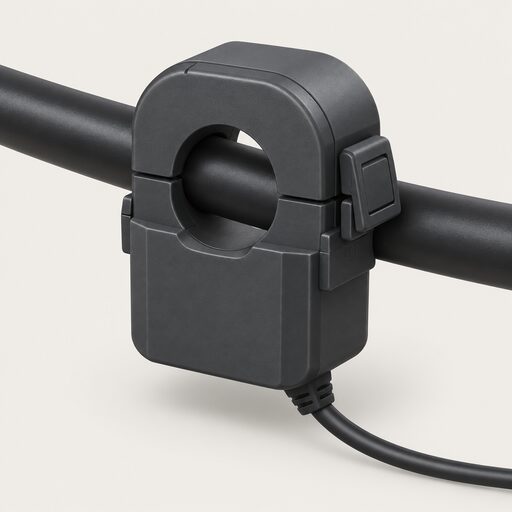 Charging an EV from Solar PanelsCharging your car from solar panels means using the power your roof makes instead of sending it to the grid.
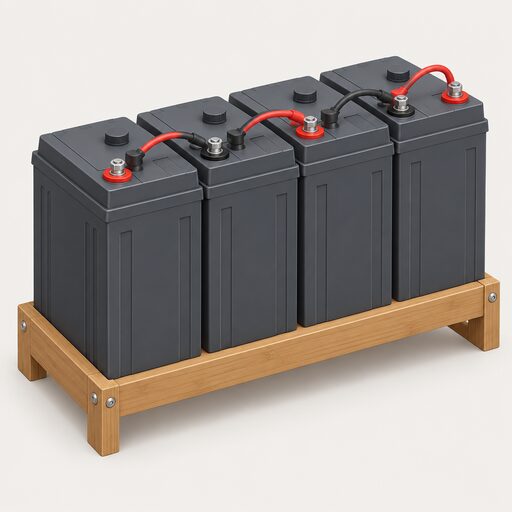 Off-Grid Battery SystemsHow many days of power do you need when there is no sun?
 Self-ConsumptionHow much of the electricity from your own solar panels do you actually use, and how much goes to the grid?