
In this guide
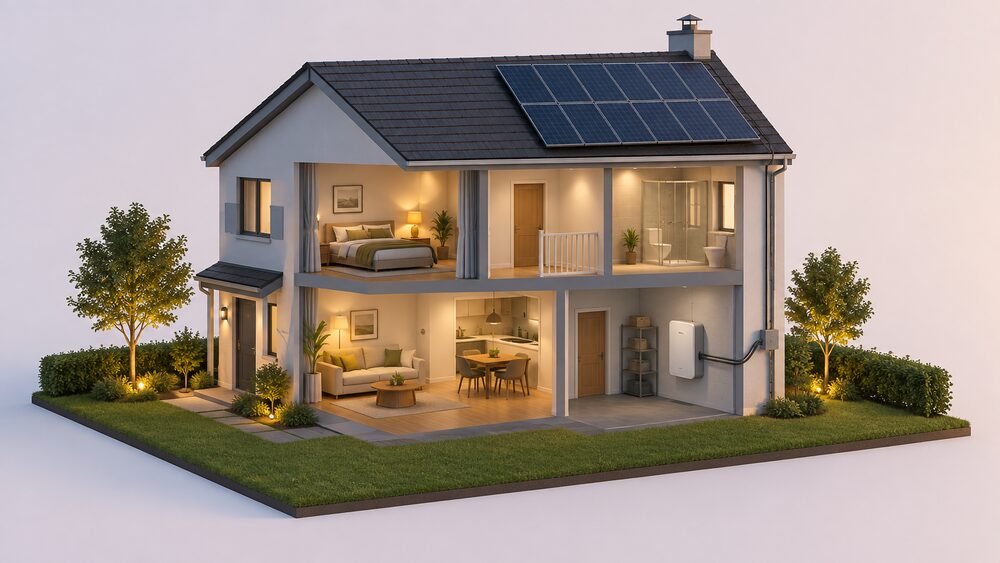
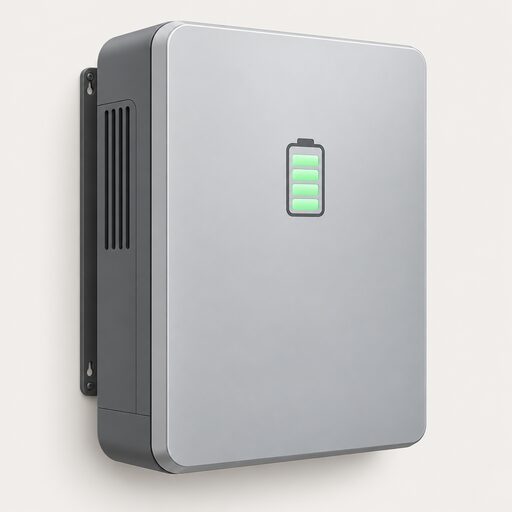
A home battery does not take a household off the grid. It changes the terms on which the grid is used. The battery stores electricity that would otherwise have been exported or bought at a peak rate, and releases it when the home needs it, so less electricity is drawn from the grid and less is paid in bills1. That is the honest shape of the independence on offer: fewer units bought at the worst times, more control over when the home imports, and a residual dependence on the network, a supplier and a smart meter that never fully goes away.
The scale of the shift is set by two numbers. A typical 5kWh battery system costs around £4,600, with the range running from £1,500 to £10,000 depending on size2. Lifespan is around 10 to 15 years, and payback is usually discussed over a similar horizon2. Those figures frame everything else: how much of the year a battery can cover, whether backup is included, and whether the household earns anything for the flexibility it provides.
What a home battery does for energy independence
The core function is simple and consistent across sources. A battery stores any unused energy for use later, for example to power the home during the night8. For a household with solar, it stores excess electricity produced from the solar system rather than letting it leave the property the moment it is generated1. The effect is that generation and consumption are decoupled: the middle of a sunny day and the middle of a dark evening stop being two different problems.
Independence here is measured in reduced imports, not in isolation. Less electricity is drawn from the grid, which reduces the amount paid in bills1. A battery also works without solar. With a battery and no solar panels, charging stops when the battery is full and the battery discharges when the next cheap tariff period ends, automatically2. That is a grid-charged battery shifting consumption away from expensive hours, which is a different proposition from a solar battery but a real one for households on a time-of-use tariff.
The system-level picture matters too, because it explains why the payments exist. Energy storage in the form of battery storage plays an important role in supporting the flexibility of the energy system, helping to avoid peaks and troughs in supply, particularly in relation to renewable energy9. At household level, further innovation in home battery technology, vehicle-to-everything (V2X), and solar can provide households with additional backup options during power outages10. The combined potential of millions of homes with batteries to help balance supply and demand across the country, releasing stored power onto the grid when needed, is the reason flexibility services and export tariffs are offered at all1.
What remains is dependence on the grid for every unit the battery cannot cover, on a supplier for the tariff that makes charging cheap, and on a smart meter to measure and be paid for exports. A battery reduces exposure to peak pricing. It does not remove the connection.
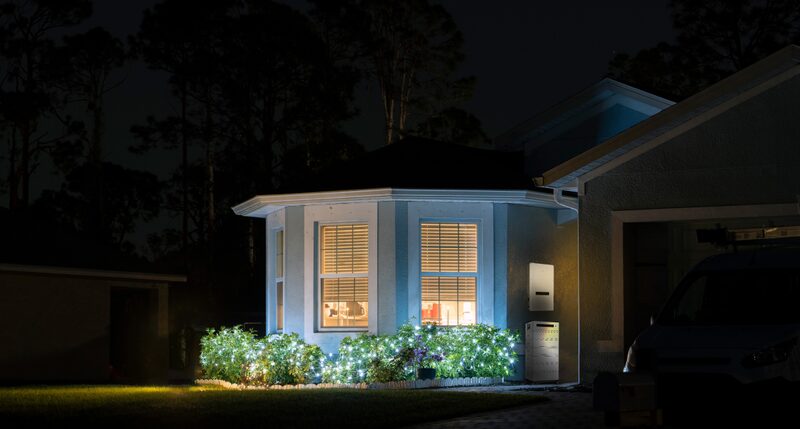
Cost: up to £10,000, with a typical 5kWh system around £4,600
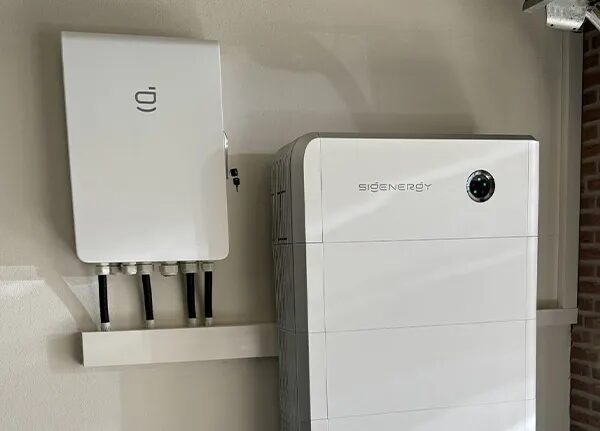
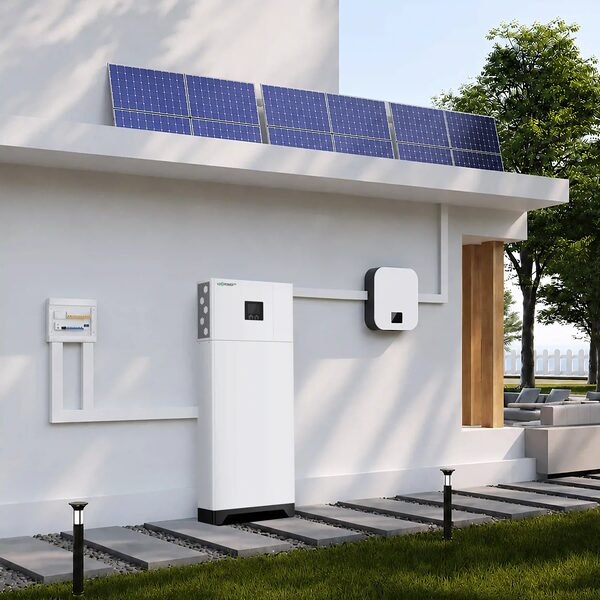
Battery storage costs can be up to £10,000 depending on size, with a typical 5kWh system around £4,6003. Independent guidance gives a wider band: it can range from £1,500 to £10,000, but the cost for a 5kWh battery system is around £4,6002. The two figures agree on the midpoint and differ on the floor, which reflects how much of the price is the battery itself and how much is the inverter, mounting, wiring, certification and labour around it.
| Item | Figure | Source |
|---|---|---|
| Typical 5kWh system | around £4,600 | 2 |
| Full range | £1,500 to £10,000 | 2 |
| Upper bound by size | up to £10,000 | 3 |
The drivers are capacity, whether the system is AC or DC coupled, whether backup circuitry is included, and whether the installation is a retrofit or part of a wider renovation. Prices are installer-quoted, and no published price list sits behind these ranges. Where a household is comparing quotes, the useful comparison is not the headline battery price but the installed system price including certification, because the certification is what makes the installation eligible for schemes and what a future buyer or insurer will look for.
VAT sits on top of the headline in the ordinary case, but not always. A rate of either 5% or 0% VAT applies when certain energy-saving products are installed in the home, if the household is eligible4. The 0% treatment is time-limited, and the date matters for anyone timing an installation.
Lifespan and payback: 8 to 12 years on both counts
The typical lifespan of a battery is about 10 to 12 years2. Domestic battery storage has a shorter lifetime of around 10 to 15 years when compared with solar panels3. The two ranges overlap heavily and the difference between them is mostly about how the end of life is defined: a battery that has fallen to a given retained capacity is still usable, just less useful, and the point at which a household replaces it is a judgement as much as a specification.
Payback is discussed over a similar horizon, and the honest position is that it depends on the tariff, the household's consumption pattern and the size of the system. A battery that shifts a large evening load off a peak rate pays back faster than one that only absorbs a modest solar surplus. A battery that earns from flexibility events adds a second income stream on top of avoided import costs. No single payback figure holds across households, and any page that offers one without the household's own consumption data is guessing.
What can be said firmly is that the lifespan and the payback period are of the same order. A household is not buying a battery that will outlive the calculation, nor one that will fail before it has done its work. The relevant question is whether the system is sized to the load it is meant to shift, which is covered in more detail in what size home battery you need and in home battery savings and payback.
Backup during a power cut: not every battery can do it
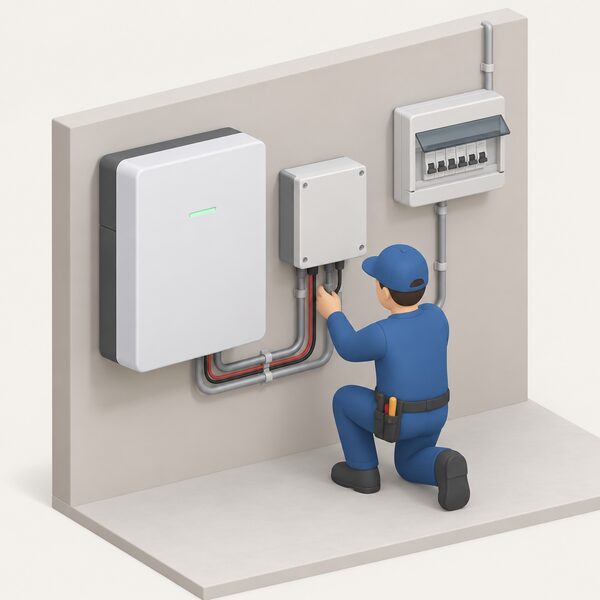
Backup is the feature most often assumed and least often verified. A battery can only keep circuits live during an outage if it has the hardware to island the home from the grid, and not every system does. The distinction between a battery that stores energy and a battery that can run the house when the network is down is a distinction of installed equipment, not of battery chemistry or capacity.
At household level, further innovation in home battery technology, vehicle-to-everything (V2X), and solar can provide households with additional backup options during power outages10. That is a statement about where the technology is heading as much as where it is. The practical position for a household specifying a system now is that backup capability is a design decision made at survey and installation, and it needs to be asked about explicitly. The mechanics of how a system isolates from the grid, and what keeps running, are set out in battery backup in a power cut and in do I need a backup interface.
Batteries and solar: the next logical step after panels
Solar without storage exports its best output at the moment the household is least likely to use it. A battery is the way for homeowners to store excess electricity produced from their solar system1, and the effect is that the same panels cover more of the evening load. The household can store any unused energy for use later, for example to power the home during the night8.
The pairing is not mandatory. A battery with no solar panels still charges from the grid, stopping when full and discharging when the next cheap tariff period ends, automatically2. That makes a battery useful on a time-of-use tariff alone, and it means a household can add storage first and panels later, or the reverse. The coupling arrangement, AC or DC, affects efficiency and cost, and is covered in AC-coupled and DC-coupled home batteries.
For a household weighing self-sufficiency, the arithmetic is about the ratio of generation to consumption across the day, not across the year. A battery can lift daytime generation into the evening reliably in summer. In winter, when generation is low and the evening load is high, the same battery covers a much smaller share, and the grid supplies the rest. That seasonal limit is the single most important thing to understand about what a battery can and cannot do for independence, and it is why the phrase "off grid capable" needs care. A system can be capable of running a home for a period without the grid. It is a different claim to say it will do so through a British winter.
Getting paid for exports: the Smart Export Guarantee and how a battery changes it
The Smart Export Guarantee enables small-scale generators to receive payments from electricity suppliers for electricity which they export back to the National Grid, providing certain criteria are met11. It requires electricity suppliers to pay small-scale generators for low-carbon electricity which they export back to the National Grid12. For a solar household, this is the payment known as the Smart Export Guarantee8.
A battery changes the timing of exports rather than the right to be paid. Surplus solar electricity can be sold back to an energy supplier through a Smart Export Guarantee tariff when the battery is full2. Homeowners can sell power produced and stored in a battery back to the grid automatically1. So a battery does two things at once: it keeps generation for the home when that is worth more than the export rate, and it releases stored electricity for export when the battery is full or when the price is right.
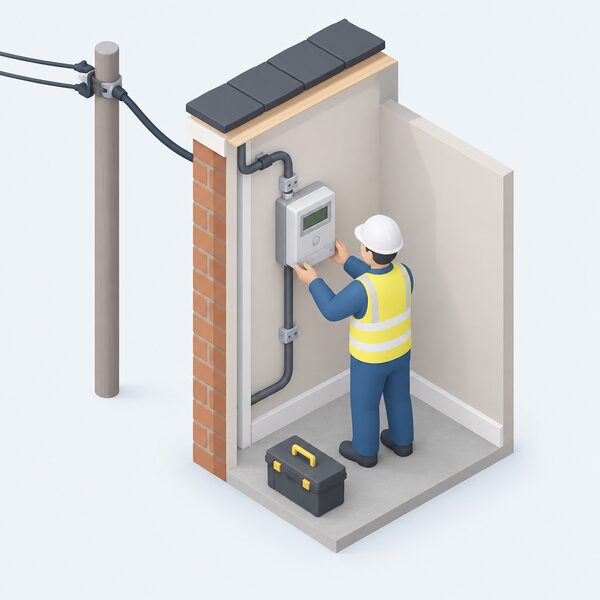
The condition that catches households out is metering. In order to qualify for the Smart Export Guarantee, generators must have a smart meter to monitor exports3. Without one, the export cannot be measured and the payment cannot be made. Smart meters are installed by energy suppliers at no extra cost5, and any household that pays for energy, whether owning or renting, should be able to book a smart meter installation where it is expected to work in the property13. Smart meters also enable accurate billing by automatically recording energy use in half-hour periods, which is the same data that flexibility services rely on13.
The Feed-in Tariff, the older export and generation scheme, is closed to new applicants, so the Smart Export Guarantee is the route for new installations12.
Earning from flexibility: the Demand Flexibility Service and peak-hour shifting
The Demand Flexibility Service is designed to make it easier for homes and businesses to take part in the electricity market and be rewarded for shifting when they use electricity7. It launched in winter 2022/23 and was designed to help manage potential winter pressures by reducing demand during evening peak periods and reducing reliance on more expensive electricity generation7. Each event usually lasts for around an hour in the evenings when demand for electricity is at its peak14, and customers are asked to turn everything off for a specified length of time, usually an hour or two15.
The service uses several energy saving events throughout the year14. Rewards vary depending on the supplier, but the more electricity you save during each event the greater your rewards will be14. These include pounds or points that you can use towards paying for your energy bills14. A battery is well suited to this because it can discharge during the event window and recharge afterwards, without the household changing its behaviour.
The scheme has evolved. From 9 April 2026 it operates with a reduced eligibility threshold of 0.1MW, the introduction of bi-directional flexibility, zonal procurement, and additional features including Primacy and a Self-Nominated Baseline option7. From 7 October 2026 it will launch the capability to procure constraint management actions, and participants will be able to take part in both margin and system tagged actions7.
The historical record gives a sense of scale. The service incentivised 1.6 million households and businesses in winter 2022/23, saving over 3.3GWh of electricity16. Between December 2024 and March 2025 it delivered 3.9GWh of flexibility across 44 events16. The winter 2024/2025 overview report covers the period 27 November 2024 to 28 March 20257. Earlier reporting recorded a reduction of almost 800 megawatt hours (MWh) throughout events to date, with some companies earning up to £8,000 so far7. Those company figures are not household figures, and no per-household rate is published.
VAT: 0% on battery storage until the rate returns to 5%
A rate of either 5% or 0% VAT applies when certain energy-saving products are installed in the home, if the household is eligible4. The 0% rate is the one that applies to qualifying residential battery storage at present, and it is scheduled to end. The published summaries disagree on the exact date: some state the 0% rate runs until 31 March 2027, after which the reduced 5% rate applies, while others put the change at 1 April 2027. Both are given here because the documents conflict.
The practical consequence is that the VAT position is a timing question. A household installing before the change pays nothing in VAT on qualifying work; after it, the reduced rate applies. The difference on a £4,600 system is not trivial, and it is the kind of figure that should be confirmed with the installer at quote stage rather than assumed from a headline. The full treatment of which installations qualify and how the rate is applied is in what is the VAT rate on home battery storage.
Materials and installer certification: lithium systems and MCS
For domestic batteries to be eligible for the Warm Homes: Social Housing Fund scheme, the product must be installed by a MCS certified installer, to the relevant MCS installation standard (MCS 3012)19. MCS is an independent certification scheme for microgeneration installation companies and products20. It certifies, quality assures and provides consumer protection for microgeneration installations and installers, covering small-scale renewable electricity technologies such as solar photovoltaic panels, biomass, wind, heat pumps and heat products22.
The battery standard itself is specific. On-site electricity storage and battery systems that are connected to on-site electricity generation should be commissioned to MCS' MIS 3012: The Battery Standard (Installation)23. That is the standard a household should expect to see referenced in the handover documentation. The same certification logic runs through other schemes: eligible renewable technology must be installed and commissioned by an MCS certified installer who can provide an MCS certificate24, and a renewable heating system must be issued with an MCS certificate by the installer, with certificates only issued for systems using an MCS certified product25. Boiler Upgrade Scheme installers must be MCS certified and certified to install heat pumps and/or biomass boilers26.
MCS domestic battery installation statistics cover retrofitting electric batteries into domestic properties in the United Kingdom, and are published as Official Statistics in development21. That status is worth noting: the data on how many batteries are being fitted is still maturing.
On the materials themselves, lithium-ion systems dominate the domestic market, and the fire safety guidance that applies to them is the same guidance that applies to lithium-ion batteries in any household device. Fire services advise: don't charge devices overnight when anyone is asleep or leave on charge when you've left the home, and ensure that you charge your device in a room that has a working smoke alarm, which doesn't compromise your escape route, keeping the door closed whilst it's charging and away from any heat source27. For a permanently installed home battery, the installation standard and siting requirements do the work that these behavioural rules do for portable devices. The detail is in home battery fire safety and the standards governing home battery installation.
What owning a battery means for grid dependence
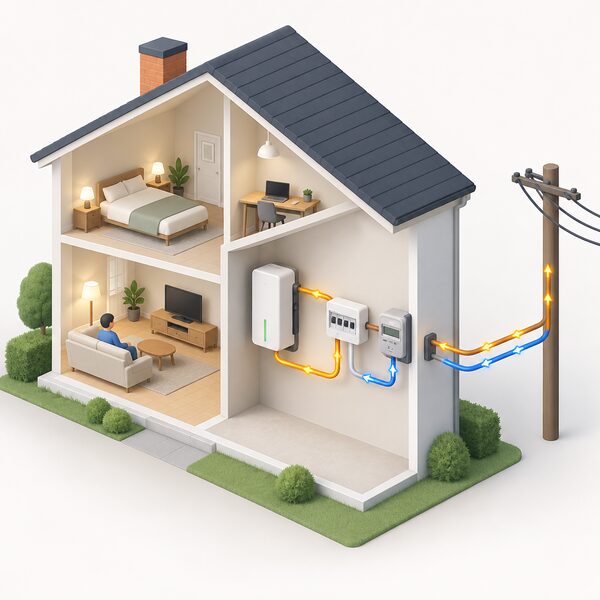
The honest summary is that a battery reduces the volume and the cost of grid electricity a household buys, and increases the amount of control it has over when it buys. Less electricity is drawn from the grid, reducing the amount paid in bills1. A battery with no solar still shifts consumption away from peak periods automatically2. A battery with solar keeps generation for the evening instead of exporting it at the moment of production1.
What it does not do is remove the connection. The household still needs the grid for every unit the battery cannot cover, which in a British winter is most of them. It still needs a supplier for the tariff that makes charging cheap and for the export payment. It still needs a smart meter to measure exports and to qualify for the Smart Export Guarantee3. And it still depends on the manufacturer of the battery for the warranty and, in the case of app-controlled systems, on the company's software and cloud services for monitoring and control.
The system-level role is the other side of the same coin. Millions of homes with batteries could release stored power onto the grid when needed to help balance supply and demand across the country1. That is a benefit to the network, and it is why flexibility payments exist. It also means the household's battery is, in part, a grid asset that the household is paid to host. Independence and participation are not opposites here; they are the same arrangement viewed from two ends.
For a household deciding what to install, the useful questions are how much of the evening load the battery can cover, whether backup is included, whether the system is certified to MIS 3012, and what the tariff and flexibility terms are. The answers determine whether the battery is a modest bill-reduction tool or something closer to genuine resilience. The starting point for the wider picture is home battery storage for UK homes.
Sources27 cited
- Batteries in the home, Solar Energy UK, 2026-09-17
- Battery storage, Energy Saving Trust, 2026-08-19
- Battery storage and the grid, UK Parliament POST, 2026-06-25
- Tax on shopping: energy-saving products, GOV.UK, 2026-09-17
- How to get a smart meter, Smart DCC, 2026
- Do you have to have a smart meter by law?, Smart DCC, 2026
- Demand Flexibility Service, NESO, 2026-09-17
- Solar panels, Oxfordshire County Council, 2026-09-17
- Extending permitted development rights in Scotland: sustainability appraisal, Scottish Government, 2019-06
- Well-adapted energy system, Climate Change Committee, 2026-09-19
- Smart Export Guarantee: generators, Ofgem, 2026-09-17
- Feed-in Tariffs: scheme closure, Ofgem, 2026-09-17
- Smart meters: your rights and expectations, GOV.UK, 2025-08-08
- Demand Flexibility Service, Energy Saving Trust, 2026-05-21
- How does the Demand Flexibility Service work?, Uswitch, 2025-09-04
- Statutory security of supply report 2025, GOV.UK, 2025-12-17
- Insulation, nidirect, 2026-09-02
- Affordable Warmth Scheme, Northern Ireland Housing Executive, 2026-09-17
- Warm Homes: Social Housing Fund wave 3 scheme guidance addendum, GOV.UK, 2026-06
- Boiler Upgrade Scheme, Ofgem, 2026-09-17
- MCS domestic retrofit battery installations 2025 to 2026, GOV.UK, 2026-05-28
- ECO4 Flex and GBIS Flex information document, Ceredigion County Council, 2025-11
- Approved document L volume 1 consultation, Welsh Government, 2026-09-17
- Domestic Renewable Heat Incentive: applicants, Ofgem, 2026
- Domestic Renewable Heat Incentive: eligible heating systems, Ofgem, 2026-09-17
- Boiler Upgrade Scheme guidance for installers, Ofgem, 2026-07-02
- Low carbon heating, nidirect, 2026-09-17
 The Full Home Batteries GuideA home battery stores cheap or solar power for later, but will it really cut your bills enough to be worth it?
 The Full Energy Independence GuideCan you really run your home on your own power in the UK, and how far can that go before the grid still matters?
 Charging and Energy IndependenceCharging an electric car at home can cut your fuel costs, but how much does it really free you from the grid?
 Grid-Scale Battery StorageConnected and pipeline battery capacity in Great Britain, what these assets are paid to do, how long they can run, and how grid batteries differ in purpose and scale from a home battery.
 Data and Energy IndependenceHow many UK homes actually make their own power, and is that number really growing?
 Can a Home Be Self-Sufficient?Can a UK home really run on its own energy all year, or does the grid still do the heavy lifting in winter?