In this guide
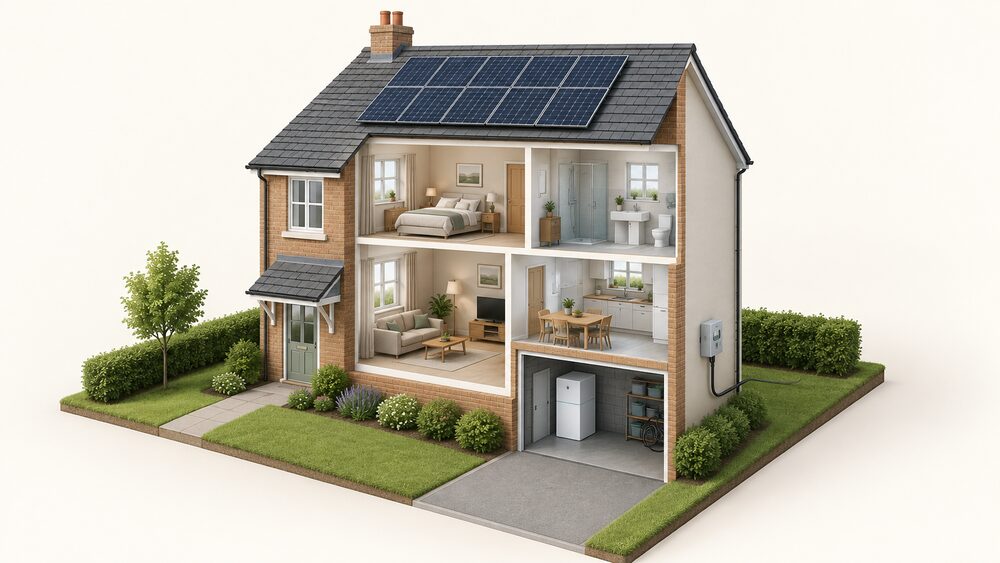
A UK home can get a long way towards running on its own energy, but complete, year-round self-sufficiency is rare and is not what most systems sold as "self-sufficient" actually deliver. Nearly all homes in the UK are connected to the electricity grid, and that connection is the default assumption behind almost every domestic solar, battery and heat pump installation1. The realistic goal for a grid-connected household is a high self-sufficiency ratio, not a severed connection.
Self-sufficiency has a precise meaning in UK certification. Grid electricity independence is defined as the percentage of electricity consumed in the property over a year that is met by behind-the-meter solar or electrical energy storage, in other words the fraction of consumption met by self-consumed electricity2. That definition is deliberately annual, because it averages a summer surplus against a winter deficit. A home can be exporting freely in June and importing almost everything it uses in December while still recording a respectable annual figure.
True independence from all networks is a minority condition and is usually about gas rather than electricity. Some four million UK properties are off the gas grid and depend on alternative fuels for heating and cooking3. In Great Britain in 2024, 16.0 per cent of domestic properties were not connected to the gas grid4. Those homes are off one network, not off all of them: most still take electricity from the grid, and most still buy delivered fuel from a supplier. That is the honest picture of "self-sufficiency" in the UK: a reduction in imports, with a residual dependence that has to be named rather than hidden.
What self-sufficiency means: grid-tied, partial and fully off-grid
Three different arrangements get described with the same word, and they carry very different obligations.
A grid-tied home generates and stores its own electricity but keeps its connection and its supplier. Its performance is measured by the certified definition above: the share of annual consumption met by behind-the-meter solar or storage, or equivalently the fraction of consumption met by self-consumed electricity2. Anything not consumed in the house leaves by the meter. This is the arrangement behind the great majority of domestic systems, and it is the one where the self-sufficiency ratio is the meaningful number.
A partially independent home is off one network and on another. That is the position of the four million off-gas-grid properties3, described elsewhere as approximately 15 per cent of the 28 million properties in the UK8. The geography is uneven. In the Isles of Scilly, 100.0 per cent of domestic properties were off the gas grid in 2024; in Ceredigion the figure was 74.6 per cent9. Rural Wales, rural Scotland and Northern Ireland carry far more off-gas-grid homes than urban England, so the starting point for independence differs by nation and by district.
A fully off-grid home has no electricity connection at all and no delivered mains fuel. It must cover every winter evening, every cold spell and every appliance from its own generation, storage and backup. That is a design problem rather than a purchase, and it is covered in more depth under going off-grid and off-grid legality and rules.
Solar and battery: how far domestic generation actually goes
Domestic solar is now the dominant format by count rather than by scale. At the start of 2026, domestic solar comprised 30 per cent of UK solar capacity and 84 per cent of total UK solar installations5. Domestic PV systems convert sunlight into electricity that can be used in the home and can help reduce energy bills10.
The arithmetic of a typical array shows why a battery raises self-sufficiency but does not complete it. For an array generating 3,500 kWh a year, with one quarter used directly in the home and the rest exported at about 15p per kWh against an import saving of about 22p per kWh, the modelled overall benefit is almost £600 a year11. The gap between the 22p saved on self-consumed units and the 15p earned on exported units is the whole economic case for storage: a battery moves units from the export column to the self-consumption column. It does not create new generation, and it cannot move July output into January. How far it shifts the ratio is examined in how much a battery increases self-consumption.
Policy points the same way without promising autonomy. The British Energy Security Strategy set out that UK solar capacity could grow up to five times by 2035, including consultation on rules for domestic and commercial solar12. More capacity on more roofs reduces national import exposure; it does not by itself disconnect any individual house.
What a solar PV system costs, saves and earns back
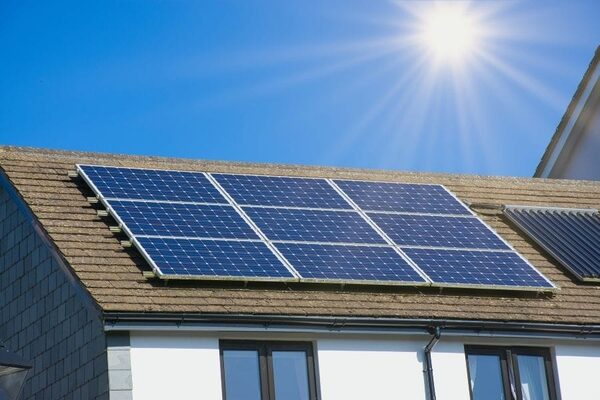
Published modelling for a 4.6kWp ten-panel system on a 35-degree pitched roof shows how strongly orientation and shading drive the result, and how much less location matters than people assume.
| System and location | Generation | Bill saving | Export income | Total benefit | Payback |
|---|---|---|---|---|---|
| South-facing, no shading, London | 4,200 kWh/yr | £285 | £370 | £655 | 11 years 3 months |
| South-facing, no shading, Belfast | 3,900 kWh/yr | £275 | £345 | £620 | 11 years 11 months |
| East-facing, modest shading, London | 2,800 kWh/yr | £225 | £235 | £460 | 16 years 1 month |
| East-facing, modest shading, Belfast | 2,600 kWh/yr | £215 | £210 | £425 | 17 years 4 months |
Figures modelled as at 1 June 20256.
On a good south-facing roof the gap between London and Belfast is 11 years 3 months against 11 years 11 months; within London alone, moving from south-facing and unshaded to east-facing with modest shading takes payback from 11 years 3 months to 16 years 1 month. Orientation and shading, not latitude, decide whether a roof is worth the money.
Payback estimates from other bodies sit in the same band. One London borough puts it at 10 to 12 years7, a consumer body at 10 to 13 years for a typical rooftop system13, and one city council's warm homes plan gives a wider range of 6 to 12 years14. The spread reflects different assumptions about install cost, tariff and export rate rather than disagreement about the technology. Separately, a solar array is estimated to repay its embodied energy in less than three years even under UK levels of sunshine11.
There is a capital dimension as well as a bill dimension. A report by Solar Energy UK estimated that a solar energy system could add £1,800 to the value of an average home and save over £300 a year on energy bills15. The wider picture is set out in what energy independence costs a UK household.
Roof suitability: orientation, pitch and shading
Solar panels are suitable across the UK16, and orientation matters more than location: south-facing roofs capture peak sunlight, while east or west facing roofs give a more balanced output through the day and can still be effective13. The constraint is not the climate in general but the specific roof.
- Orientation. The modelled gap between a south-facing and an east-facing array of identical size is 4,200 kWh against 2,800 kWh a year in London6.
- Shading. Modest shading is built into that east-facing case and is part of why its benefit falls to £460 from £6556.
- Pitch. Approved Document L uses a reference pitch of 45 degrees for roof-mounted photovoltaic arrays on dwellinghouses17, while the published cost modelling assumes a 35-degree pitch6.
- Fire spread. Government guidance on fire spread over pitched roofs fitted with solar panels applies to England18.
For a household chasing a high self-sufficiency ratio, the roof sets the ceiling before any battery is specified. Sizing the array to the home rather than to the available roof area is dealt with in sizing generation and storage.
Permission: solar is usually permitted development, with exceptions
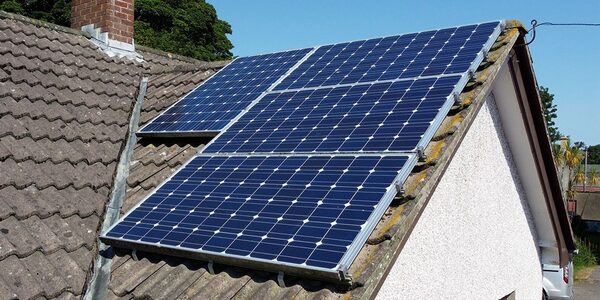
Placing solar panels on the roof of a house or flat, or on a building in its grounds, is in most cases permitted development under the Town and Country Planning (General Permitted Development) (England) Order 2015, Schedule 2, Part 14, Class J19. Councils across England describe the same position: installation on residential buildings and land may be permitted development with no need to apply for planning permission20. In many cases, even in conservation areas, homes can have panels without a planning application22.
The exceptions are real. Listed buildings, conservation areas, World Heritage Sites and other designated areas may still require planning permission13. Changes intended to broaden the scope of domestic solar installations that do not require an application extend to England23, so householders in Scotland, Wales and Northern Ireland should check their own devolved planning rules rather than assume the English position applies.
Plug-in solar: a low-cost entry point, not a route to independence
Plug-in solar became legal for homes in Great Britain from 27 August 202624. Before that date, UK standards only permitted solar generation that was permanently connected25. Government set out the intention that families could buy a low-cost panel straight from a supermarket and set it up on a balcony or in a garden26.
The savings are modest and are stated as such. Government estimates put the saving at £70 to £110 a year25, and the announcement of market availability gave up to £110 a year, with a separate figure of up to £100 a year27. A household at home all day is estimated to save £100 a year28. One community energy organisation reports that a two-panel 800W system can pay for itself in two to three years24.
The limit is the output. UK-compliant plug-in devices are capped at around 800W, which is enough for everyday appliances while higher-use appliances will still need grid electricity28. Plug-in solar shaves the daytime base load of a flat or a rented home; it does not approach self-sufficiency. Where it matters most is access, since it reaches renters and flat dwellers who cannot install a roof array27. Cutting the load it has to cover is treated under reducing base load.
Going fully off-grid: generation, storage, backup and what you give up
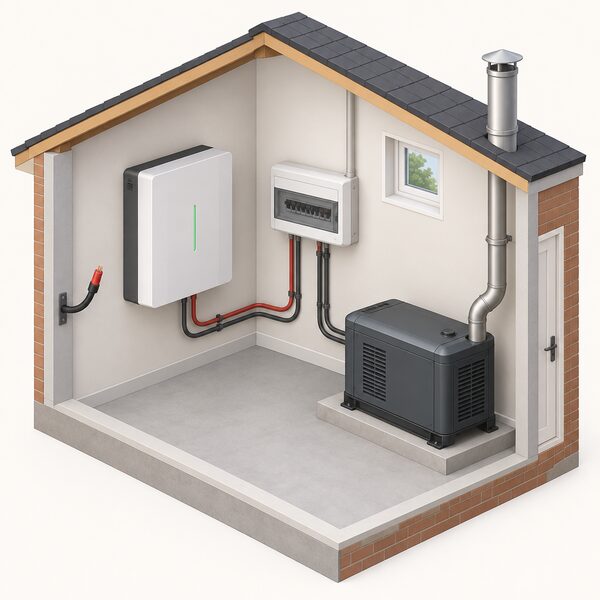
Leaving the electricity network entirely means replacing services that a connection provides silently. The most obvious loss is the export route. The Smart Export Guarantee supports solar PV, wind, micro-combined heat and power, hydropower and anaerobic digestion up to 5 megawatts of capacity, or up to 50 kW for micro-CHP, and installations must be located in Great Britain29. A disconnected home has nothing to sell and no payment for surplus, so every kilowatt hour generated beyond what can be stored is simply lost. That changes the economics fundamentally, because in the modelled cases above export income was the larger share of the annual benefit on a south-facing roof: £370 of the £655 total in London6.
The second loss is the backstop. A grid connection is, in effect, unlimited winter capacity available on demand. Replacing it requires storage sized for the worst week of the year plus a fuel-burning generator, and the fuel for that generator is bought from a supplier, which is a dependence of a different shape rather than none at all.
The third point is what staying connected costs, which is the figure an off-grid plan is measured against. Under the price cap for 1 July to 30 September 2026, a Midlands household paid a standing charge of £207.57 and an annual bill of £810.72 at 2,500 kWh on a single rate, and £206.15 with an annual bill of £977.09 at 3,400 kWh on a multi-rate meter30. Caps vary by region and payment method. For 1 October to 31 December 2025, prepayment customers in Yorkshire faced £203.87 at nil consumption and £928.82 at 3,100 kWh, while other payment method customers in North Wales and Mersey faced £243.15 at nil consumption and £1,061.64 at 3,100 kWh31. The standing charge is the part a disconnection removes, and it is the smaller part.
Households that want renewable supply without leaving the network have a fourth option. One supplier is described as the only UK supplier offering 100 per cent renewable energy across the board, including gas from anaerobic waste, and another supplies electricity tariffs powered by 100 per cent renewable energy generated in the UK by independent producers32. That is contractual rather than physical independence, and it is worth stating the difference plainly.
Where the grid still matters: heat is the harder half
Electricity is the part of household energy that domestic generation addresses. Heat is the part it largely does not. Most heating in the UK is supplied by gas33, and homes account for just under 30 per cent of UK energy use34.
Heat demand is also concentrated in exactly the months when solar output is lowest. That seasonal mismatch, examined in the winter gap, is the single reason a UK home rarely reaches 100 per cent on its own generation. Even reducing the temperature a heating system runs at is constrained by the building: research published in 2021 found that 91 per cent of homes could meet heat demand on a typical winter day at a 70°C flow temperature, 72 per cent at 60°C, and only 25 per cent at 50°C35.
Electrifying that heat is possible in most homes but not all, and the estimates conflict. Government guidance states that studies suggest 90 per cent of UK homes already have enough insulation to run a heat pump36, and a parliamentary committee report cites 90 per cent of UK homes having sufficient insulation and electrical capacity to operate a heat pump37. Against that, one independent analysis puts only 11 per cent of privately owned homes as "heat pump-ready"38, and a gas network study classifies 20 to 40 per cent of UK homes, around 6 to 11 million, as hard to electrify39. These documents disagree, and the disagreement is largely about what "ready" means: bare technical feasibility, or fitness without further fabric work. The untapped efficiency resource is itself substantial, with technical potential exceeding 50 per cent and cost-effective potential exceeding 25 per cent by 203540.
For homes beyond the gas grid the fuel question is explicit. Around 84 per cent of UK domestic properties are connected to the gas grid, with some two million properties off-grid and dependent on alternative fuels41; a parliamentary briefing gives four million UK households, or 15 per cent, off the mains gas grid42. Government proposals set out in 2023 would delay the ban on installing oil and LPG boilers and new coal heating for off-gas-grid homes in England from 2026 to 2035, and exempt certain households from the fossil fuel boiler phase out in 203543.
Grants and schemes that shape the route to independence
Public funding is devolved and differs sharply by nation, which changes the practical cost of moving towards independence depending on where the home is.
| Nation | Scheme | What is available |
|---|---|---|
| Scotland | Home Energy Scotland Grant and Loan | Grant funding up to 75% of combined cost of energy efficiency measures, to a maximum grant of £7,50047; funding covers up to 100% of the quoted installation cost but not more than the maximum for an individual improvement48 |
| Scotland | Home Energy Scotland Grant and Loan | A grant, interest-free loan or a combination of both for homeowners in Scotland49, including renewable measures such as heat pumps or battery storage50 |
| England | Warm Homes: Local Grant | 100% of the cost up to £15,000 for an owner occupier or a private landlord's first property in England51 |
Government guidance confirms that households in Scotland may be able to get an interest-free loan or a grant to make a home more energy efficient52. The inclusion of battery storage in the Scottish offer is notable, because it is one of the few routes where public funding touches the equipment that raises self-sufficiency rather than only the equipment that reduces demand50.
Off-gas-grid homes had a dedicated route that has since closed. Phase 1 of the Home Upgrade Grant allocated £218 million to improve energy efficiency in low-income homes off the gas grid, with latest funding totalling £220 million53, and Phase 2 funded local authorities in England to improve the energy performance and heating systems of off gas grid homes54. The scheme ended in March 2025, with off-grid homes previously supported by it now covered by the Warm Homes: Local Grant29.
How household self-sufficiency fits UK energy security
The national framing makes the household case clearer, and also its limits. For the UK to meet net zero by 2050, 29 million homes must be decarbonised to supply clean, affordable energy55. Over 15 million homes across Great Britain can be classed as energy inefficient, with an EPC rating of C or below, and the share of UK homes with low carbon heating needs to rise from 9 per cent today to 39 per cent within a decade56. Against that backdrop, the British Energy Security Strategy anticipates nuclear capacity representing up to around 25 per cent of projected electricity demand by 205012.
A self-sufficient household therefore sits inside a system it continues to depend on. Even at a high self-sufficiency ratio, the residual dependencies are specific and worth naming: the distribution network for winter evenings and cold spells, a licensed supplier for imported units and for the export payment29, a fuel supplier if the heating is oil or LPG41, and a manufacturer for inverters, batteries and the software that controls them, an issue treated under local control versus the manufacturer's cloud.
Industry bodies are pressing for the tax treatment to follow. Solar Energy UK recommends that all solar and energy storage installations, including maintenance to existing sites, should be subject to 0 per cent VAT, and that residential energy storage should qualify when installed as a standalone measure55.
The defensible conclusion is that a UK home can reach a high annual self-sufficiency ratio on a good roof with storage, can leave the gas grid as four million properties already have3, and can displace a meaningful share of its imported electricity. What it cannot generally do, at UK latitude with UK winter heat demand, is meet every kilowatt hour it uses from its own roof in every month of the year. The wider route is mapped on the household energy independence guide and in whole-home energy system design.
Sources56 cited
- Navigating the network: consumer journey for low carbon technology, Citizens Advice, 2026-07-01
- MCS 032: self-consumption and grid electricity independence, MCS, 2025-01-01
- LPG in the home, Liquid Gas UK, 2026-09-20
- Households not connected to the gas grid, House of Commons Library, 2024
- POSTnote on domestic solar, Parliamentary Office of Science and Technology, 2026
- Are solar panels worth it?, Which?, 2025-06-01
- Solar panels, London Borough of Hammersmith and Fulham, 2026-09-17
- Written evidence on off-grid properties, UK Parliament, 2026
- Households off the gas grid by local authority, House of Commons Library, 2024
- Solar PV advice, National Energy Action, 2026-04-23
- Solar photovoltaic information, Centre for Alternative Technology, 2026-03-10
- Major acceleration of homegrown power, GOV.UK
- Solar panel myths debunked, Which?, 2026-06-09
- Bristol Warm Homes Plan, Bristol City Council, 2025-04
- Briefing on solar and property value, House of Commons Library, 2025-01-15
- Solar panel installation, Energy Saving Trust, 2026-09-07
- Approved Document L Volume 1: Dwellings, GOV.UK, 2026
- Fire spread over pitched roofs fitted with solar panels, GOV.UK, 2025-12-22
- Solar panels, Wirral Council, 2026-09-17
- Solar photovoltaic (PV) panels, London Borough of Bromley, 2026-09-17
- Guidance on retrofitting homes: solar panels, London Borough of Lambeth, 2026-09-17
- Solar panels and permitted development, London Borough of Richmond upon Thames, 2026-07-06
- Changes to permitted development rules for domestic solar, Planning Portal, 2026-08-28
- Plug-in solar explained, Low Carbon Hub, 2026-07-09
- Plug-in solar panels, Which?, 2026-09-15
- Heating Oil Support debate, Hansard, 2026-03-16
- Households can save as plug-in solar panels come to market, GOV.UK, 2026-08-26
- Plug-in solar panels advice, Energy Saving Trust, 2026-09-17
- Smart Export Guarantee briefing, House of Commons Library, 2026-05-13
- Energy price cap levels 1 July to 30 September 2026, Ofgem, 2026
- Energy price cap levels 1 October to 31 December 2025, Ofgem, 2025
- Green energy tariffs, Uswitch, 2026-09-04
- Heat networks and domestic heating briefing, House of Commons Library, 2022-01
- Energy efficiency of existing homes consultation, CIBSE, 2026-09-17
- Helping homeowners optimise boiler flow temperatures, Nesta, 2022-10-10
- Heat pump guidance, Clean Energy campaign, 2026-09-10
- Heating our homes: select committee report, UK Parliament, 2025-05-09
- Future subsidies for heat pumps, Nesta, 2026-09-17
- The future of the gas network: recommendations for hybrid heating, Cadent Gas, 2025-04
- Buildings and energy research, CREDS, 2026
- New to LPG, Liquid Gas UK, 2026-09-20
- Off the mains gas grid briefing, House of Commons Library, 2026-09-17
- Delivering net zero for Scotland's buildings: consultation, Scottish Government, 2023-11-28
- Energy in a Net Zero Adapted Society: heat and buildings, GOV.UK, 2025-06
- Progress in reducing emissions: 2026 report to Parliament, Climate Change Committee, 2026-06-24
- Addressing overheating risk in existing UK homes, Climate Change Committee, 2026-09-19
- Energy saving home improvements, Scottish Government, 2026-09-17
- Home Energy Scotland Grant and Loan terms and conditions, Home Energy Scotland, 2026-09-17
- Local and small-scale renewables, Scottish Government, 2026-09-17
- Home energy efficiency advice, Argyll and Bute Council, 2026-09-17
- Warm Homes: Local Grant, Greater Manchester Combined Authority, 2026-09-17
- Apply for the Boiler Upgrade Scheme, GOV.UK, 2026-09-17
- Home Upgrade Grant briefing, House of Commons Library, 2026-09-17
- Home Upgrade Grant Phase 2, GOV.UK, 2022-09-29
- VAT on solar and battery storage, Solar Energy UK, 2026-09-17
- What the UK needs from the Warm Homes Plan, Energy Saving Trust, 2025-04-17
 The Full Energy Independence GuideCan you really run your home on your own power in the UK, and how far can that go before the grid still matters?
 Data and Energy IndependenceHow many UK homes actually make their own power, and is that number really growing?
 Off-Grid in a UK WinterHow does a home with no mains connection keep the lights on through the darkest, stillest weeks of a UK winter?
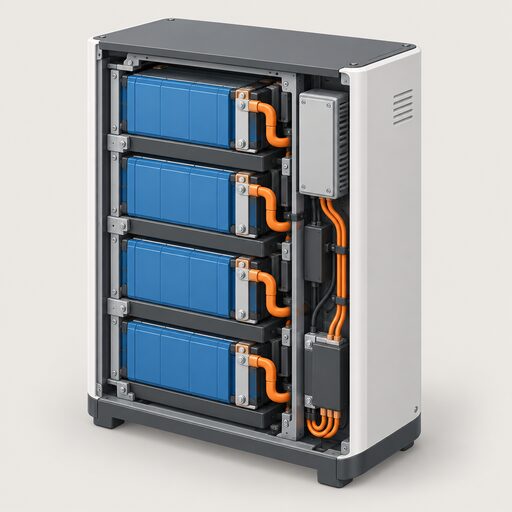 Batteries and IndependenceHow far home battery storage moves a UK household away from the grid and supplier pricing, covering self-sufficiency, winter limits, cost, lifespan, backup, export payments and flexibility earnings.
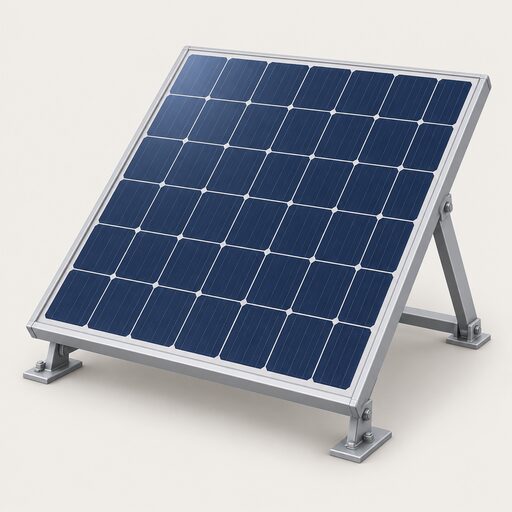 Planning Energy IndependenceCutting what you use, moving heating off gas, putting solar on the roof and adding a battery all help, but none of them takes you off the grid completely.
 The Full Statistics GuideHow many homes in the UK have solar panels, heat pumps or batteries?