
In this guide
Around four million UK households, about 15% of the total, are off the mains gas grid1. An estimated 4.8 million households across Great Britain were not connected to the gas grid in 2024, a figure that has been stable in recent research briefings2. For scheme purposes, an off-gas grid home is defined as one that does not use mains gas for heating purposes4.
Those households heat with a different set of fuels: heating oil, liquefied petroleum gas (LPG), solid fuels, mains electricity, and microgeneration1. That changes the economics of the home. There is no gas standing charge, no gas boiler, and no automatic access to the gas price cap in the way a connected home has. Instead there is a tank to fill, a delivery to schedule, or an electricity meter carrying the whole heating load.
The concentration is uneven. In the East Midlands, 11.9% of domestic properties are off the gas grid; in Ceredigion the figure is 74.6%2. Off-grid living is therefore a rural and peri-urban phenomenon in the main, and the support available to those homes is a patchwork across England, Scotland, Wales and Northern Ireland rather than a single national scheme.
What "off gas grid" means and how many homes it covers
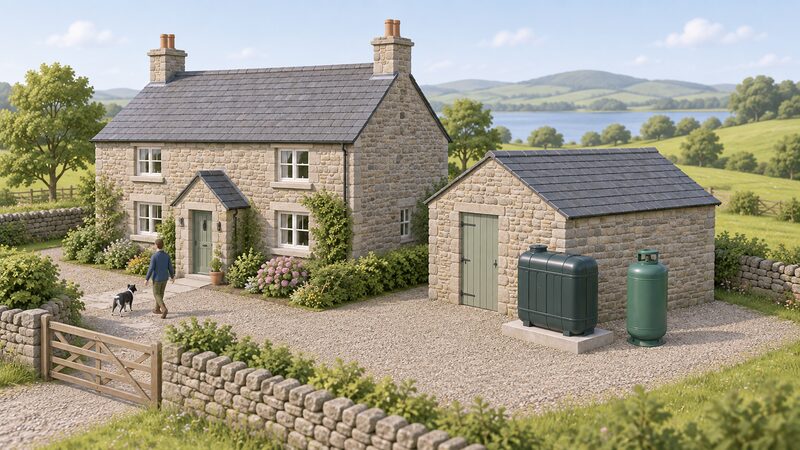
The definition is narrower than it sounds. A home is off the gas grid when no mains gas connection serves it, and the Warm Homes: Social Housing Fund Wave 3 guidance states that "an off-gas grid home is defined as one that does not use mains gas for heating purposes"4. A property could in principle have a gas supply for cooking and still count as off-gas for heating scheme purposes, though in practice most off-grid homes have no gas connection at all.
The headline count is four million UK households, or 15%1. A separate written evidence submission puts it at approximately 15% of the 28 million properties in the UK9. The most recent official statistics give an estimated 4.8 million households across Great Britain not connected to the gas grid in 20242. The two figures differ because they measure different things: the four million figure is a UK-wide estimate of households, while the 4.8 million figure is a Great Britain estimate from 2024 and reflects a different base and year. Both are in circulation and both are used by government and Parliament.
| Measure | Figure | Coverage | Source |
|---|---|---|---|
| Households off the gas grid | Four million, about 15% | UK | 1 |
| Properties off the gas grid | Approximately 15% of 28 million | UK | 9 |
| Households not connected | 4.8 million, 2024 | Great Britain | 2 |
| Off-grid share, East Midlands | 11.9% of domestic properties | East Midlands | 2 |
| Off-grid share, Ceredigion | 74.6% of domestic properties | Ceredigion | 2 |
The distribution matters more than the total for anyone trying to understand their own position. Off-grid homes cluster in rural areas, in parts of Wales, Scotland and Northern Ireland, and in pockets of England where the gas network never reached. A household in a remote Welsh village and a household on the edge of an English town may both be off-grid, but the fuels available, the installer base and the grant landscape around them differ.
For energy independence, the position is mixed. An off-grid home is not exposed to the gas network's supply risk or to gas standing charges, and it can store fuel on site in a tank or a bunker. But it is exposed to oil and LPG price movements, to delivery logistics, and to the electricity grid for any electrically heated home. The independence is real but partial, and it comes with more of the household's energy decision-making sitting with the occupant rather than a supplier.
Heating options without mains gas: heat pumps and electric systems
The fuels used by off-grid homes are heating oil, LPG, solid fuels, mains electricity, and microgeneration1. Each carries a different cost structure and a different level of household control.
- Oil and LPG: delivered fuels, bought by the tankful and stored on site. The price is set at the point of order and varies with the market, so the household carries the price risk rather than a regulated tariff.
- Solid fuels: wood and coal, with more manual handling and, in smoke control areas, restrictions on what can be burned.
- Electricity: no fuel delivery at all, but the whole heating load sits on the electricity meter.
- Microgeneration: solar PV and similar, which offsets some of the electricity drawn from the grid.
Electric heating removes the fuel delivery entirely and puts the whole load on the electricity meter. That is the route most often available to off-grid homes with no existing central heating: official statistics note that customers in off-gas areas with no existing central heating, where a solid fuel fire or electric room heater is used, can only convert to other forms of electric heating10. That is a significant constraint. A home with no wet radiator system and no gas connection cannot simply install a gas boiler; its realistic options are electric.
Heat pumps sit within that electric route but use electricity far more efficiently than resistive heating. Additional savings are possible with flexible electricity tariffs, which allow a heat pump or a heat battery to run when electricity is cheapest11. For an off-grid household, that combination, a heat pump plus a time-of-use tariff, is the main way to reduce running costs without a gas connection.
Air source heat pumps: how they work and what they cost
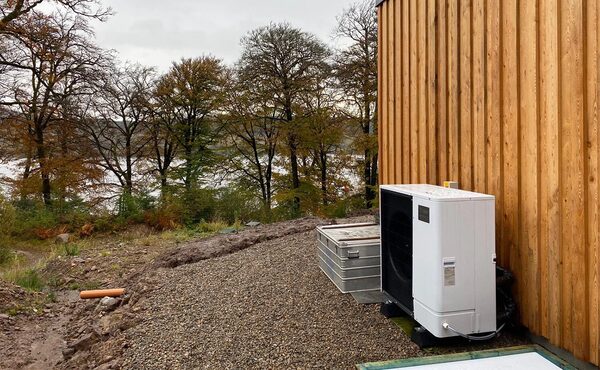
An air source heat pump takes heat from the outside air and delivers it to the home's heating and hot water. It runs on electricity, so for an off-grid home it replaces a delivered fuel with a grid-supplied one, or with self-generated electricity if solar is present.
Cost is where the sources diverge, and the divergence is worth stating plainly. Official guidance from a London borough puts air source heat pump cost at £10,000 or more12. Parliamentary written evidence from 2022 states that air source heat pumps "currently cost off gas grid households £12000 on average to install", which is "£8000 more than equivalent fossil fuel systems"13. Government news guidance from March 2024 gives a different framing: "Including VAT, labour costs and the Boiler Upgrade Scheme grant, you could expect to pay around £6,500 to £11,500 depend"14. That last figure is a post-grant household cost, not a gross installation price, which explains much of the apparent gap.
| Figure quoted | What it measures | Source |
|---|---|---|
| £10,000 or more | Installation cost | 12 |
| £12,000 average | Installation cost for off gas grid households | 13 |
| £8,000 more than fossil fuel systems | Cost premium | 13 |
| £6,500 to £11,500 | Household cost after the Boiler Upgrade Scheme grant | 14 |
The documents also disagree on gross price. One set of figures puts air source heat pump price at £7,000 to £13,000, another at around £14,000 typical cost according to Energy Saving Trust estimates, and a third at £7,000 to £10,000. These are not reconciled in the material, and a householder comparing quotes should treat any single figure as indicative only. Prices are installer-quoted and vary with property size, radiator replacement, and whether a cylinder is needed.
Efficiency figures also differ between sources. Coefficient of performance values of 4.3 and 3.9 both appear for air source heat pumps, and the two are not reconciled. A higher coefficient means more heat delivered per unit of electricity, so the difference matters to running costs, but neither figure should be treated as a guarantee for a specific home.
For energy independence, an air source heat pump moves the household off a delivered fuel and onto electricity. That reduces exposure to oil and LPG price spikes but increases reliance on the electricity grid and, if the home has solar and a battery, on the household's own generation. It is a shift in the type of dependence, not an end to it.
Ground source heat pumps: higher efficiency at roughly twice the cost
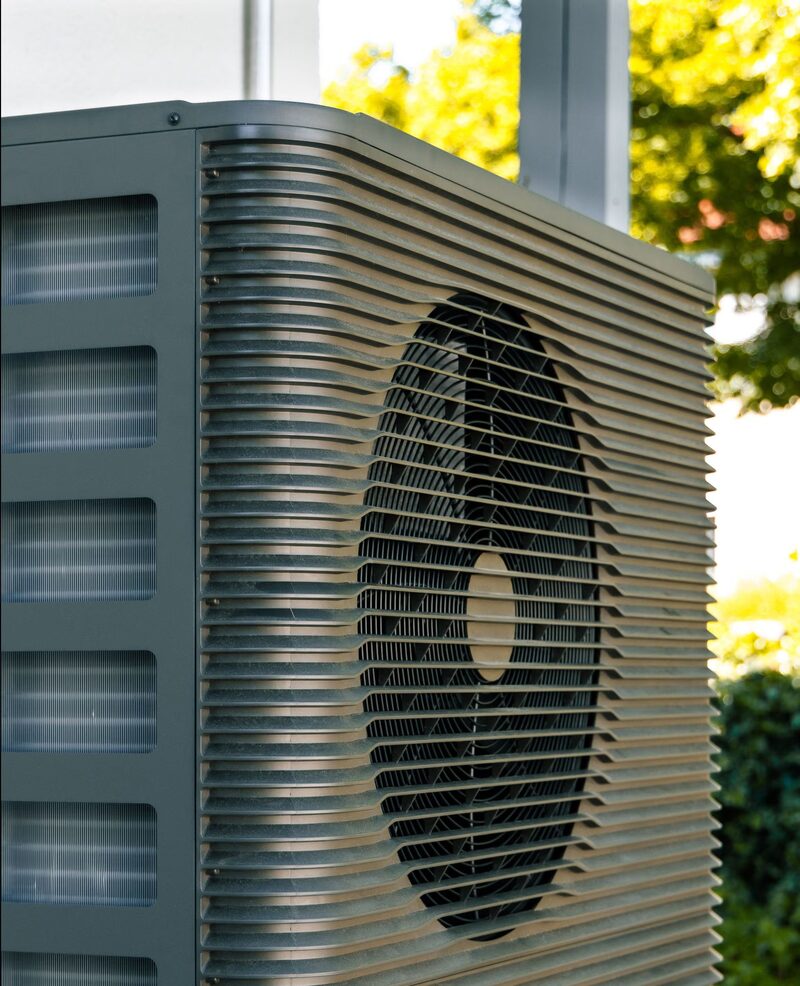
A ground source heat pump transfers energy from the natural heat stored in the earth to heat the home and domestic hot water15. Because ground temperatures are more stable than air temperatures, ground source systems are generally more efficient than air source, though this depends on ground conditions, and they have higher set-up costs16. They are also quieter and offer increased energy efficiency15.
The cost reflects that. Official guidance puts ground source heat pump cost at more than £10,00012. Distributor figures put the price at an average of £33,080 in one source and £15,000 to over £30,000 in another; the two are not reconciled, and both are distributor guidance rather than official or independent figures. The practical point is that ground source is a substantially larger capital project than air source, requiring either boreholes or a ground array, and the installation work is correspondingly more invasive.
Running costs are also disputed. One source gives annual running costs of £1,050 to £1,650, another £540 to £900. What can be said with confidence is that ground source systems deliver more heat per unit of electricity than air source in suitable conditions, so where the ground conditions suit and the capital is available, the running cost case is stronger.
Installation quality matters to performance. Ground arrays, including header pipes and manifolds, should be flushed as one system to remove all debris and purged to remove all air, and a pressure test in accordance with BS EN 805, section 11.3.3.4 should be conducted on a closed-loop installation17. Commissioning information provided to the dwelling owner should include details of the fluids used and their commissioned concentrations17. These are the details that determine whether a ground source system performs as designed over its life.
"Ground arrays, including header pipes and manifolds, should be flushed as one system to remove all debris and purged to remove all air, and a pressure test in accordance with BS EN 805, section 11.3.3.4 should be conducted on a closed-loop installation."
For an off-grid household, a ground source heat pump is the closest thing to a like-for-like replacement for an oil boiler in terms of whole-home heating and hot water, but it is an electric technology and it depends on the grid or on self-generation. The independence it offers is from delivered fuel, not from electricity.
Which heat pump suits which home: space, insulation and existing heating
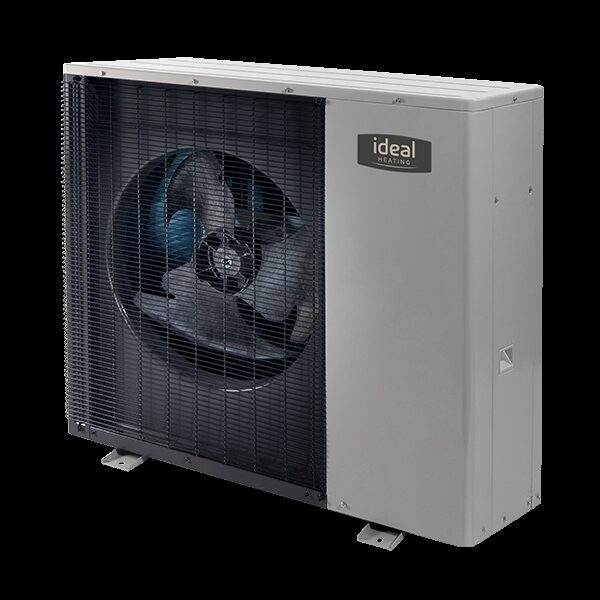
Heat pumps are technically suitable for most UK homes if installed appropriately11. That is the broad position from official guidance, and it is worth holding onto because the common assumption that heat pumps only suit certain properties is not supported.
Insulation still matters. Heat pumps are best suited to buildings with good insulation levels, and insulation may need to be added internally or externally if homes do not already have good levels18. But the scale of that requirement is often overstated: 80% to 90% of UK homes do not need additional insulation for a heat pump to work effectively19. The two statements are consistent. Most homes are already adequate; a minority need fabric work first.
The government's own suitability checker asks for the nation (England, Scotland, Wales or Northern Ireland), the heating system type, and the number of bedrooms20. That is a deliberately simple input set, and it reflects the fact that the main variables are the existing distribution system and the heat loss of the property rather than anything exotic.
Space is the practical differentiator between the two technologies. An air source unit needs an external position with airflow and, in most cases, a place where noise will not disturb neighbours. A ground source system needs either boreholes or a sufficient area of garden for a ground array, which rules it out for many smaller or hard-landscaped plots. Where ground space is unavailable, air source is the realistic option regardless of the efficiency argument.
Existing heating matters too. A home with wet radiators and a cylinder can often accept a heat pump with limited changes. A home with night storage heaters and no wet system faces a larger conversion, and one with no central heating at all is in the position described in official statistics, able to convert only to other forms of electric heating10.
Planning permission and siting rules for heat pumps
Installation of an air source heat pump is permitted development in most cases12. That means no planning application is normally needed, but the permitted development rights come with conditions, and the conditions are where most householder questions arise.
Planning permission is required in the following circumstances:
- There is already an air source heat pump on a non-detached dwelling or block of flats, or two existing air source heat pumps on a detached dwelling house18.
- The unit is on a pitched roof or less than 1m from the edge of a flat roof18.
- The building is listed, in which case planning permission and listed building consent are required12.
Ground source and water source heat pumps are treated differently. Installation within the curtilage, meaning the garden or grounds, of a house or block of flats does not require planning permission, though listed building consent may be required if the property is listed18. The Planning Portal states that the installation of a ground source heat pump or a water source heat pump on domestic premises is usually considered to be permitted development, not needing an application for planning permission22.
The rules are not identical across the UK. Amendments to permitted development rights in England include the removal of the rule that a heat pump must be installed at least 1 metre from the property boundary23. In Scotland, domestic air source heat pumps are subject to prior notification to the planning authority on siting and design21. The permitted development rights relating to air source heat pumps in England sit within Part 14 (Renewable Energy) of The Town and Country Planning (General Permitted Development) (England) Order 201521.
For a householder, the practical sequence is to check the position of the proposed unit against the boundary and roof conditions, confirm whether any other heat pump already serves the property, and check whether the building is listed. Where any of those conditions bites, a planning application or prior notification is needed before installation.
Grants and support: the £7,500 Boiler Upgrade Scheme grant

The Boiler Upgrade Scheme is the main capital grant for heat pump installation in England and Wales. It provides £7,500 off the cost and installation of an air source heat pump and £7,500 off the cost and installation of a ground source heat pump5.
There is a higher figure in circulation for off-gas grid properties. Official installer guidance gives a £9,000 grant value from 21 July 2026 for air-to-water or ground source heat pumps in off-gas grid properties replacing a heating system fuelled by oil or liquefied petroleum gas24. The same guidance also lists a £7,500 grant value for ground source heat pumps from 21 July 202624. The two figures appear in the same document and are not reconciled. A separate Ofgem guidance dated 28 April 2026 lists a £7,500 grant value for ground source heat pumps25. Householders in off-gas grid properties replacing oil or LPG should be aware that both £7,500 and £9,000 appear in official guidance, and should confirm the applicable figure with the installer or scheme administrator before committing.
| Grant value | Technology and condition | Effective date | Source |
|---|---|---|---|
| £7,500 | Air source heat pump | Current scheme | 5 |
| £7,500 | Ground source heat pump | Current scheme | 5 |
| £7,500 | Ground source heat pump | From 21 July 2026 | 24 |
| £7,500 | Ground source heat pump | 28 April 2026 guidance | 25 |
| £9,000 | Air-to-water or ground source, off-gas grid, replacing oil or LPG | From 21 July 2026 | 24 |
Vouchers have a validity period. Ground source heat pump vouchers are valid for 6 months24. That is a deadline worth diarising, because a voucher that expires before installation is completed may need to be reissued or may lapse.
The scheme is not the only route. The Warm Homes: Local Grant lists eligible low carbon heat measures including air source heat pumps, ground source heat pumps, hybrid heat pumps (retrofit and packaged only, for mains gas heated homes), shared ground loops, high heat retention storage heaters, and biomass boilers26. In Wales, Green Homes Wales supports a wider list including air source heat pumps, ground and water source heat pumps, high heat retention storage heaters, biomass boilers and stoves, solar thermal, solar PV with and without battery storage, solid wall insulation, loft and cavity wall insulation, high performance glazing, draught proofing, floor insulation, and heating controls and smart home energy management systems27.
Warm Home Discount: the £150 annual rebate and who qualifies
The Warm Home Discount is a fuel poverty reduction scheme, reducing the energy costs of low-income and vulnerable households across Great Britain since its inception in 20116. It primarily provides support through the provision of £150 energy bill rebates, funded through a levy on all domestic electricity suppliers6. The scheme requires large domestic energy suppliers to provide an annual discount of £150 to eligible households28.
Eligibility rests on three conditions, all of which had to be met on 23 August 2026:
- The energy supplier is part of the scheme.
- The householder or their partner gets certain means-tested benefits, including Housing Benefit.
- The householder's or partner's name is on the electricity bill29.
The scheme covers England, Scotland and Wales and will run until 31 March 20316. It runs in annual scheme years6. The Warm Home Discount has been confirmed through to 2030-31, and it reached around 6 million households in winter 2025-2630. The Department for Energy Security and Net Zero publishes the statistics28.
Northern Ireland is not covered by the Warm Home Discount in the same way. The scheme's territorial extent is England, Scotland and Wales6. Northern Ireland has its own arrangements, and the Northern Ireland Sustainable Energy Programme annual report for 2024-25 is the relevant official document for that jurisdiction10.
For off-grid households, the Warm Home Discount matters because it is paid as a rebate on the electricity bill, and an off-grid home that heats with electricity carries a larger electricity bill than a gas-heated home. The £150 is the same amount regardless of how the home is heated, but the bill it offsets is typically larger. The contact telephone number for the scheme is 0800 030 93227.
Park homes and the Warm Home Discount

Park home residents are in a different position because many pay the site owner for their electricity rather than buying directly from a supplier. The Park Homes Warm Home Discount Scheme exists for that reason. It is for permanent residents of park homes who pay the site owner for their electricity31.
Eligibility requires the resident to pay council tax and to receive certain benefits or be on a low income. Applicants need to apply each year, and only one application per household is considered31. The payment is £15031. The scheme year referenced in the guidance is 2025/202631.
The practical difference is the application route. A park home resident does not wait for a supplier to apply the discount automatically; they apply through the Park Homes scheme. That makes it a scheme a householder has to know about in order to use, and it is one of the reasons park home energy support is treated separately from the main Warm Home Discount.
For energy independence, park homes sit at the far end of the dependence spectrum. The resident often does not choose the electricity supplier, does not control the meter, and pays the site owner rather than a licensed supplier. The £150 payment is a partial offset, not a route to independence. Households in that position may find the wider guidance on park homes and static caravans relevant to how bills and rules work on a site.
Economy 7 tariffs: cheaper night-rate electricity for all-electric homes
Economy 7 is a tariff which has a cheap off-peak rate for electricity at night and a higher standard day-rate32. It is usually taken by households with night storage heaters, which charge overnight and release heat during the day32.
For an all-electric off-grid home, Economy 7 is the traditional way to reduce running costs, because the heating load can be shifted into the cheaper window. The trade-off is the higher day-rate, which penalises any electricity used during the day, including hot water, cooking and lighting. A household that cannot shift its load into the night window pays more, not less.
The cost picture is significant. A typical cost is around £1,770 a year for an average home on Economy 7 or an off-peak tariff8. That figure is for an average home, and an off-grid all-electric home with a larger heating load would sit above or below it depending on fabric and behaviour.
Heat batteries change the calculation. A heat battery can store heat generated on a cheap off-peak tariff and release it later, which allows a household to use the night rate without night storage heaters. The same source that gives the £1,770 figure describes heat batteries running on Economy 7 or an off-peak tariff8. That makes the tariff relevant to homes considering a heat pump or a heat battery rather than only to homes with existing storage heaters.
Additional savings are possible with flexible electricity tariffs11. These are tariffs that vary by time of day or by wholesale price, and they reward a household that can run flexible loads, such as a heat pump or a heat battery, when electricity is cheapest. For an off-grid home with a heat pump, a time-of-use tariff is the main lever on running cost after the installation itself.
The independence question here is about control of timing rather than control of supply. An Economy 7 or flexible tariff household still depends on the grid, but it can choose when to draw from it, and that choice is worth money.
What living off the grid means for household energy independence
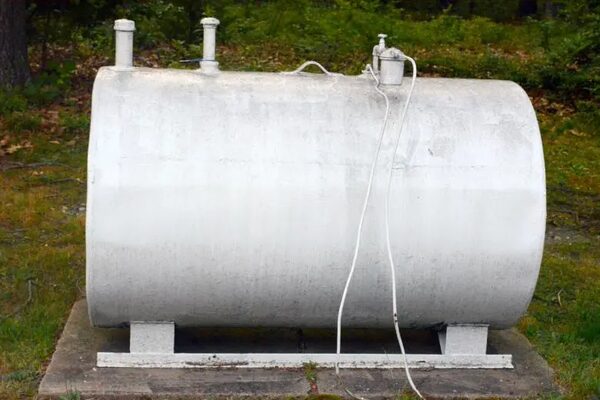
Off-grid living delivers a specific kind of independence and leaves a specific kind of dependence. It is worth being precise about which is which.
The independence is from the gas network. An off-grid home has no gas standing charge, no gas boiler, and no exposure to gas supply interruptions. It can store fuel on site, whether in an oil tank, an LPG cylinder or a wood store, which gives a buffer that a gas-connected home does not have. Where the household has solar PV and a battery, it can generate and store some of its own electricity, and Green Homes Wales supports solar PV with battery storage as an eligible measure27.
The dependence is on delivered fuel, on the electricity grid, and on the supply chain behind both. An oil or LPG heated home is exposed to the price of that fuel at the point of order, and to the logistics of delivery, which can be disrupted by weather or by access. An electrically heated home is exposed to electricity prices and to the grid, and its heating stops if the power does. A heat pump household is dependent on the electricity grid for the majority of its heating, and on the installer and manufacturer for servicing and parts.
There is also a dependence on support schemes that are not permanent. The Warm Home Discount is confirmed through to 2030-3130. The Boiler Upgrade Scheme grant values have changed over time, with £7,500 and £9,000 figures both appearing in 2026 guidance24. A household that builds its plans around a grant should treat the grant as time-limited.
The most durable form of independence for an off-grid home is fabric efficiency plus a heating system that can run on electricity the household partly generates itself. That combination reduces the amount of delivered fuel or grid electricity needed, and it reduces exposure to whichever price moves. It does not remove dependence, but it changes the household's position from a price-taker to something closer to a price-manager.
Households in rural areas may find the wider guidance on energy in rural homes useful for the specific issues that arise with delivery, access and older building fabric. Those considering a heat pump as the replacement for an oil or LPG system may also want to compare the alternatives in oil vs LPG heating for off-gas-grid homes.
Sources32 cited
- Constituency data: households off the gas grid, House of Commons Library, 2026
- Off-gas grid households in Great Britain, House of Commons Library, 2024
- Off-gas grid households: research briefing, House of Commons Library, 2024
- Warm Homes: Social Housing Fund Wave 3 scheme guidance addendum, Department for Energy Security and Net Zero, 2026
- Boiler Upgrade Scheme, GOV.UK Find a Grant, 2026
- Warm Home Discount, Ofgem, 2026
- Warm Home Discount: contacts, guidance and resources, Ofgem, 2026
- Electric heating, Centre for Sustainable Energy, 2026
- Written evidence on off-gas grid households, UK Parliament, 2026
- Northern Ireland Sustainable Energy Programme annual report 2024-25, Utility Regulator Northern Ireland, 2026
- Heat pumps and household energy, Parliamentary Office of Science and Technology, 2026
- Air and ground source heat pumps, London Borough of Croydon, 2026
- Written evidence on heat pump costs for off gas grid households, UK Parliament, 2022
- Heat pumps explained: experts answer your questions, GOV.UK, 2024
- HFC phasedown reform de minimis assessment, Department for Environment, Food and Rural Affairs, 2026
- Advice on improving energy efficiency, Eryri National Park Authority, 2022
- Approved Document L volume 1 consultation, Welsh Government, 2025
- Heat pumps, New Forest District Council, 2026
- Heat pumps and home insulation, Public Accounts Committee, 2024
- Check if a heat pump could be suitable for you, GOV.UK, 2026
- Permitted development rights: impact assessments, Scottish Government, 2026
- Heat pumps: planning permission, Planning Portal, 2026
- Amendments to the Boiler Upgrade Scheme: government response, Department for Energy Security and Net Zero, 2025
- Boiler Upgrade Scheme guidance for installers v5.1, Ofgem, 2026
- Boiler Upgrade Scheme guidance for installers V5, Ofgem, 2026
- Warm Homes: Local Grant policy guidance, Department for Energy Security and Net Zero, 2026
- Green Homes Wales, Development Bank of Wales, 2026
- Warm Home Discount statistics 2025 to 2026, Department for Energy Security and Net Zero, 2026
- Warm Home Discount: if you live in England and Wales, GOV.UK, 2026
- DESNZ annual report and accounts 2025 to 2026: performance report, Department for Energy Security and Net Zero, 2026
- Warm Home Discount and park homes, House of Commons Library, 2026
- Getting smarter with energy, Centre for Sustainable Energy, 2026
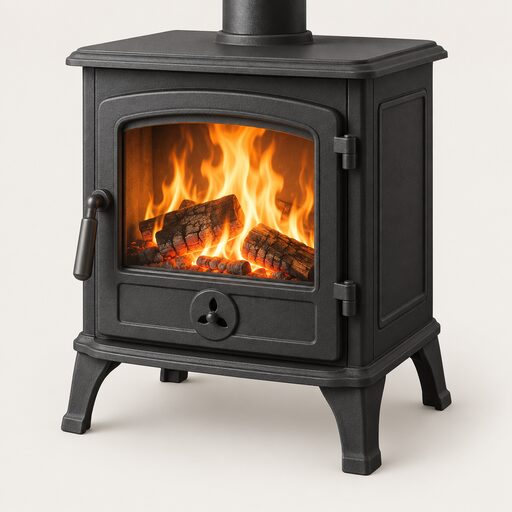 Heating Off the Gas GridThe options for the four million UK households with no mains gas connection: oil, LPG, electric, heat pump, biomass and solid fuel, and how their costs, storage and supply security compare.
 Heating and Energy IndependenceCan you heat your home without relying on gas or oil, and what would that take?
 Energy IndependenceA heat pump runs your heating on electricity instead of gas or oil, so how much does that really cut what you pay and how exposed you are when fuel prices jump?
 Running Costs by FuelHow the cost of heat compares across mains gas, heating oil, LPG, electricity, solid fuel and heat pumps once efficiency and the price cap are applied.
 Is Off-Grid Living Legal?Can you legally live without mains gas or electricity in the UK?
 Energy in Rural HomesHeating a rural home costs more because there is often no gas supply, so you rely on oil or electricity instead.