
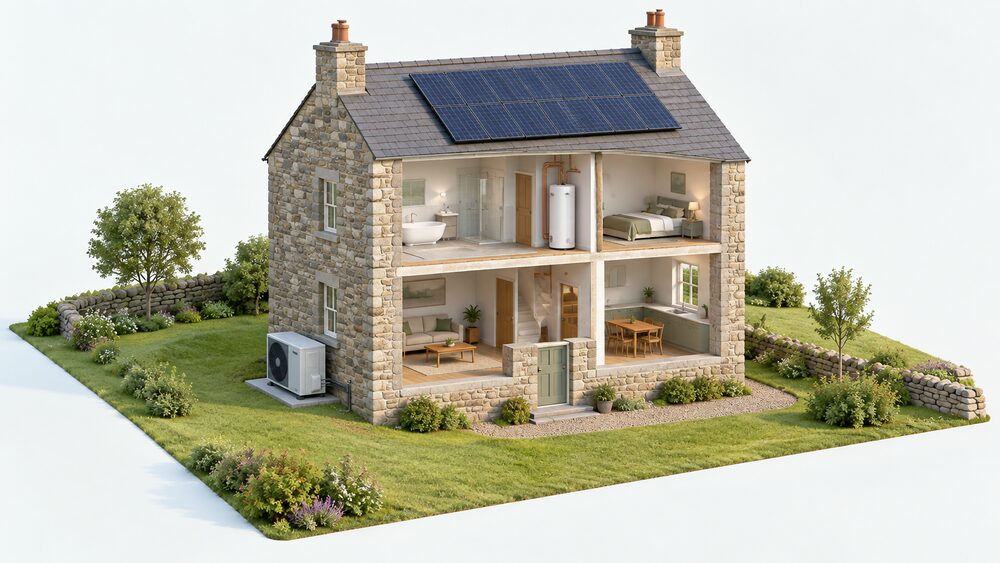
In this guide
Rural homes in the UK are harder to heat than their urban equivalents, and the reasons are structural rather than a matter of effort. In Scotland, 89 per cent of urban dwellings use mains gas as their primary heating fuel, compared with 40 per cent of rural dwellings; rural homes instead rely on electricity (22 per cent) and oil (28 per cent)1. That single split explains much of the rural energy picture: no gas network, higher-cost fuels, and a building stock that predates modern insulation standards.
The fabric compounds the fuel problem. Great Britain has 8.76 million homes with solid walls, and as of June 2025 only 10 per cent of them, some 876,000, had solid wall insulation2. Solid stone and brick walls lose heat faster than a modern cavity wall, and rural properties are frequently larger, detached and exposed on more than one elevation. The Heat in Buildings Bill consultation in Scotland found that traditional buildings, flats and rural properties were frequently noted as being less suitable for both energy efficiency improvements and clean heating systems3.
The good news is that rural homes have two advantages that urban terraces lack: space for ground arrays and outdoor plant, and access to grant schemes with rural uplifts. Air source heat pumps are the most commonly installed heat pump type in the UK4, and the Boiler Upgrade Scheme pays £7,500 towards one, or £9,000 where an off-gas grid property replaces an oil or LPG system5. This page sets out what the fabric work costs, how the grants work, what planning rules allow in the countryside, and where to get independent help.
Why rural homes are harder to heat: solid walls and no mains gas
The rural heating problem starts with the network. Where mains gas is unavailable, households fall back on oil, LPG, electricity or solid fuel, all of which cost more per unit of delivered heat than gas in most of the UK. The Scottish House Condition Survey found higher rates of electricity and oil as the primary heating fuel in rural locations, at 22 per cent and 28 per cent respectively, against 89 per cent mains gas in urban locations1. That is a Scottish figure, but the pattern holds across the UK's off-gas grid areas, which are concentrated in the countryside.
The building fabric then multiplies the cost. Solid wall construction, common in pre-1930s rural housing, has no cavity to fill, so the only routes to better performance are external or internal insulation. The government's review of barriers to adapting historic homes notes that planning barriers, local authority and construction industry capacity, guidance and information, and affordability and financial incentives all slow this work down7. That review applies to England.
There is also a resilience dimension. Rural properties on the electricity network can face longer restoration times after storms, and oil deliveries depend on road access. The Whole House Warmer Homes NI scheme, which covers solid wall insulation, cavity wall insulation where required, loft insulation, and either a natural gas central heating system where gas is available or an oil system or high heat retention storage heaters where it is not, reflects how Northern Ireland's rural housing stock is served8.
For a household, the practical consequence is that rural energy independence is a two-part project: reduce the heat the building loses, then change what supplies the remaining heat. Neither part alone delivers much. Insulation without a change of heat source leaves an expensive fuel in place; a heat pump without fabric work leaves a system working harder than it needs to.
Solid wall insulation: external or internal, and what it costs
There are two ways to insulate a solid wall, and the choice is usually dictated by the building rather than the budget.
External wall insulation wraps the outside of the property in an insulating layer with a rendered finish. It is the more thermally effective option because it removes thermal bridges at floor and ceiling junctions, and it does not reduce internal floor area. It is also the more expensive and the more visually intrusive, and it is often restricted on listed buildings or in conservation areas.
Internal wall insulation fits insulated boards or studwork to the inside face. It costs less, can be done room by room, and leaves the external appearance untouched, which matters for period and stone properties. It reduces room sizes slightly and creates a cold bridge at the wall's base and at party wall junctions if not detailed carefully.
Costs vary widely by property. Government statistics put external solid wall insulation at over £12,000 for a typical three-bedroom semi-detached house, in a range that runs from £950 for loft insulation to that figure at the top end2. Independent guidance gives around £15,000 for external wall insulation across a whole property with professional installation, and around £12,000 for internal solid wall insulation for a whole house, usually including redecoration2. External work is likely to be more expensive than internal because the cost of material and labour are higher2.
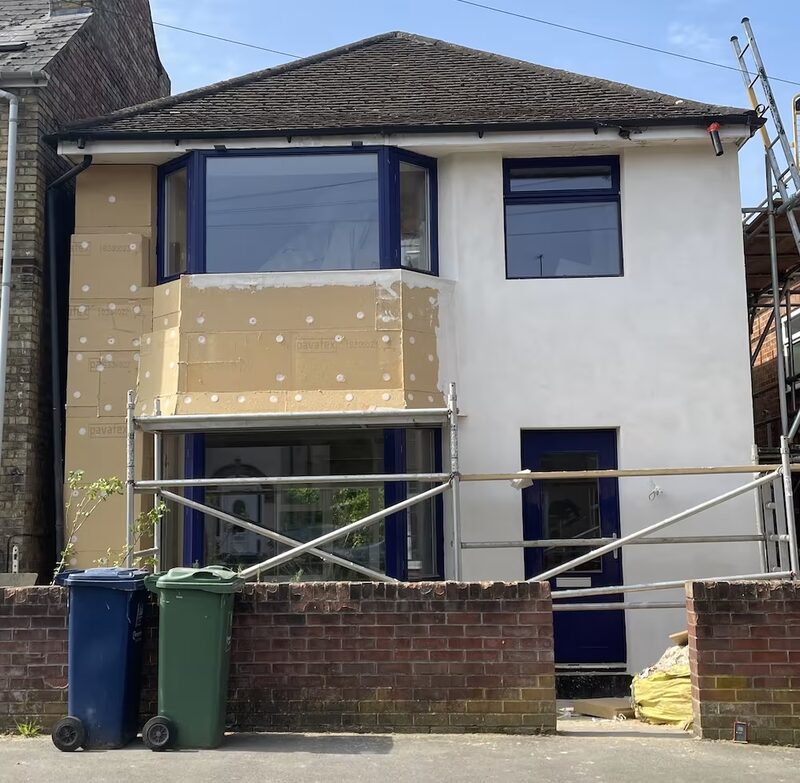
Solid wall insulation savings: £150 to £550 a year on bills
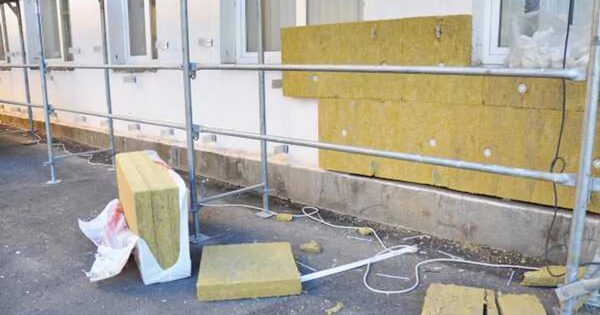
The savings from solid wall insulation are real but modest relative to the capital cost, and the published figures vary. Independent guidance gives a range of £150 to £550 a year on bills for homes with solid walls, and a separate figure of around £330 a year2. A semi-detached house could save around £280 a year in Great Britain and £330 in Northern Ireland, while internal solid wall insulation for a semi-detached dwelling with gas heating is put at £280 a year2.
A local authority retrofit programme cited as evidence puts the combined effect of external wall insulation and heat pumps at approximately 25 per cent, or £350 per year, reduction in energy bills9. That is a combined figure for two measures, not insulation alone, and it is drawn from council projects rather than a national average.
For context, solar photovoltaic panels on a typical home without electrical heating or an electric vehicle save between £530 and £650 a year on electricity bills, according to a London borough's guidance10. That is a different measure with a different mechanism, but it illustrates how the savings stack: fabric first, then generation or a lower-carbon heat source.
The honest position for a rural household is that solid wall insulation is unlikely to pay for itself on bill savings alone within a normal ownership period. Its case rests on comfort, on reducing the size of heat pump needed, and on the fact that a well-insulated solid wall property can run a smaller, cheaper heating system. Where a grant covers part of the cost, the arithmetic changes.
Air source heat pumps: the most common choice for off-gas-grid homes
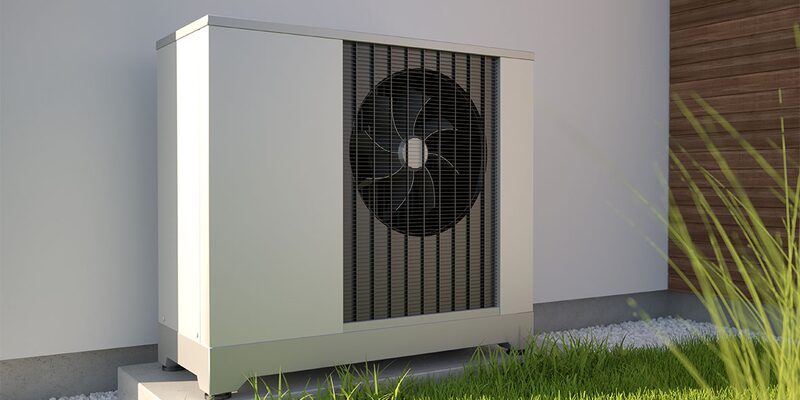
Air source heat pumps are the most commonly installed heat pump type in the UK4. For a rural property with no gas connection, they are usually the simplest route to a lower-carbon heat source, because they need only an outdoor unit and a electricity supply, not a ground array.
An air-to-water heat pump transfers heat drawn from surrounding air to water in a wet central heating system11. That is the type eligible for the Boiler Upgrade Scheme. An air-to-air system, which heats air directly rather than water, is not considered to be a renewable system in ECO411, so it does not attract the same support.
Installation costs are quoted by installers rather than published as a fixed price. Independent guidance gives a range of £7,000 to £13,000 in one source and around £14,000 as a typical cost in another, and the difference reflects property size, radiator replacement and hot water cylinder work6. Where a combi boiler is being replaced, a hot water tank or cylinder will probably need to be installed, because heat pumps heat water more slowly than a combi6.
Air source heat pumps can operate effectively at minus 15 degrees Celsius, although their efficiency drops in very cold weather6. That matters in exposed rural locations: the system still delivers heat, but at a lower coefficient of performance, so the coldest days are the most expensive to run.
Ground source heat pumps: more efficient, but around twice the cost
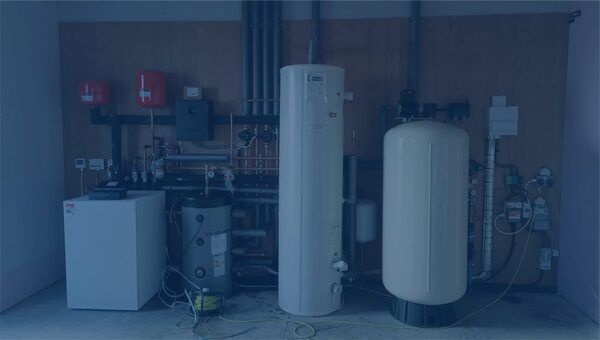
Ground source heat pumps take heat from the ground rather than the air. They are generally more efficient than air source systems, dependent on ground conditions, but have higher set-up costs13. They are also quieter and offer increased energy efficiency14.
The cost gap is significant. Official guidance puts ground source heat pump cost at more than £10,00015. Distributor guidance gives an average of £33,080 in one source and a range of £15,000 to over £30,000 in another, and the spread reflects whether the quote includes drilling, trenching and the ground array itself15.
The efficiency advantage is real but conditional. Ground temperature is more stable than air temperature, so a ground source system holds its performance through cold spells better than an air source unit. That stability is worth more in a rural location with a long heating season. The trade-off is the ground works: a horizontal array needs a large garden, and a vertical borehole needs access for a specialist drilling rig to bore up to 200 metres down6.
Ground arrays, including header pipes and manifolds, should be flushed as one system to remove all debris and purged to remove all air, and a pressure test in accordance with BS EN 805, section 11.3.3.4 should be conducted on a closed-loop installation16. Commissioning information provided to the dwelling owner should include details of the fluids used and their commissioned concentrations16. These are the details that determine whether a ground array performs as designed over its life.
For a rural household with the land, a ground source system offers the highest efficiency and the lowest outdoor noise. For one without, the borehole route works but adds cost and disruption.
Grants and support: £7,500 for heat pumps and what the voucher covers
The Boiler Upgrade Scheme is the main grant route in England and Wales. It pays £7,500 towards an air-to-water or ground source heat pump, including water source heat pumps and those on shared ground loops17. Where an off-gas grid property replaces a heating system fuelled by oil or LPG, the grant is £9,000 for air-to-water or ground source heat pumps5.
Voucher validity differs by technology. Air-to-water heat pump vouchers are valid for three months, and ground source heat pump vouchers are valid for six months17. The grant values and validity periods were set from 21 July 20265.
| Technology | Grant | Voucher validity |
|---|---|---|
| Air-to-water heat pump | £7,500 | 3 months17 |
| Air-to-water heat pump, off-gas grid oil or LPG replacement | £9,000 | 3 months5 |
| Ground source heat pump | £7,500 | 6 months17 |
| Ground source heat pump, off-gas grid oil or LPG replacement | £9,000 | 6 months5 |
Eligibility is broad on property type. Heat pumps can be installed in an eligible self-build, the property can be on or off the gas grid, and urban and rural properties in England or Wales qualify18. The home must be energy efficient enough for the scheme15, and the installer applies for the voucher on the householder's behalf.
In Scotland, the Home Energy Scotland Grant and Loan scheme offers a £7,500 grant for heat pumps without the rural uplift19, and an additional rural uplift of £1,500 has been applied to both clean heating and energy efficiency grants20. The Heat in Buildings programme includes targeted support for those in rural areas21.
The Warm Homes Plan sets out a £7,500 universal grant for heat pumps22. In Northern Ireland, the Whole House Warmer Homes NI scheme covers solid wall insulation, cavity wall insulation where required, loft insulation, and a heating system appropriate to the property's fuel availability8.
Planning rules for heat pumps in the countryside: permitted development and its limits
In England, the permitted development rights relating to air source heat pumps sit within Part 14 (Renewable Energy) of The Town and Country Planning (General Permitted Development) (England) Order 201523. Installation of an air source heat pump is permitted development15, and generally heat pumps are permitted development for domestic premises, including ground source and water source heat pumps24.
Permitted development is conditional, not automatic. The air source heat pump must be sited, so far as practicable, so as to minimise its effect on the amenity of the area12. It must comply with Microgeneration Certification Scheme Planning Standards or equivalent standards25. Under the rules as written, no part of the air source heat pump is to be within one metre of the site boundary25, although amendments to permitted development rights in England include the removal of the rule that a heat pump must be installed at least one metre from the property boundary26.
Ground source heat pumps are typically considered permitted development15, and permitted development rights permit the installation, alteration or replacement of a ground source heat pump or water source heat pump within the curtilage of a dwellinghouse27.
The limits bite in protected areas. In a conservation area, planning permission is needed if the pump would be on a wall or roof which fronts a highway, or be nearer to any adjoining highway than any part of the building24. Planning permission is needed if the house or flat is a listed building, or within the garden or grounds of a listed building24, and listed buildings also require listed building consent15.
Territorial differences matter. The guidance on permitted development relates to the planning regime for England, and the policy in Wales may differ28. Wales has its own guidance on planning permission for heat pumps27. Scotland has consulted on permitted development rights for heat pumps29.
Sizing the ground array: trenches, boreholes and garden space
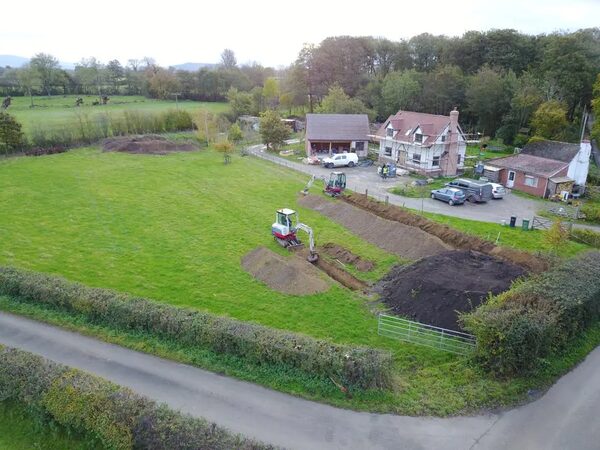
A ground source heat pump needs a ground array, and the array needs land. There are two forms.
A horizontal array lays pipework in trenches at shallow depth across a garden or field. It is the cheaper option where space allows, but it takes the ground out of use during installation and for a season afterwards while the ground settles. The area required scales with the heat demand of the property, so a larger, poorly insulated rural house needs more trench than a smaller, improved one.
A vertical borehole array drills down rather than across. A specialist drilling rig needs access to bore up to 200 metres down6. Boreholes suit gardens too small for trenches, and they are less affected by surface conditions, but they cost more and the drilling equipment must be able to reach the site.
The array is a permanent installation and its quality determines performance for decades. Ground arrays, including header pipes and manifolds, should be flushed as one system to remove all debris and purged to remove all air, and a pressure test in accordance with BS EN 805, section 11.3.3.4 should be conducted16. Commissioning information provided to the dwelling owner should include details of the fluids used and their commissioned concentrations16.
For a rural household, the practical questions are access for the rig or excavator, the area of ground that can be given over, and whether the ground conditions suit the design. These are settled by a site survey, not by a rule of thumb.
Running costs: when a heat pump beats a gas or oil boiler
The running cost picture is more nuanced than the capital cost picture. Heat pumps currently have similar running costs to gas boilers30. That is the official position, and it is worth stating plainly because it corrects the assumption that a heat pump is automatically cheaper or automatically more expensive.
Independent guidance goes further: a household could save as much as 50 per cent and more on running costs with a heat pump compared to a gas boiler, but that requires high quality installation, high efficiency and a heat pump tariff6. Those three conditions are doing a lot of work in that sentence. A poorly installed system, or one running on a standard electricity tariff, will not deliver that saving.
For rural households, the comparison is usually against oil or LPG rather than gas, and the relevant question is how the heat pump's running cost compares with the delivered cost of the fuel it replaces. The same conditions apply: installation quality, system efficiency and tariff.
Ground source heat pump running costs are quoted at £1,050 to £1,650 in one source and £540 to £900 in another, and the difference reflects system size, tariff and the efficiency assumed15. Air source heat pump coefficient of performance is given as 4.3 in one source and 3.9 in another, both from the same date6.
The independence point is that a heat pump running on electricity still depends on the grid and a supplier. What changes is the fuel: imported gas or delivered oil is replaced by UK-generated electricity, and the household gains the option of pairing the system with solar generation and a cylinder to shift some load off peak.
Where to get help: Home Energy Scotland and other schemes

Advice is free and independent in each nation, and it is the right starting point before committing to a measure.
Home Energy Scotland offers free advice on improving the energy efficiency of your home31. It also provides a Funding Finder to search for funding and support on improving your home's energy efficiency, reducing energy bills and making your home warmer31. The Home Energy Scotland Scheme offers grants to homeowners to install heat pumps21, and the Heat in Buildings programme includes targeted support for those in rural areas21.
In England, the Energy Saving Trust offers advice on energy at home and a guide to green renovation to help put energy efficiency first room by room31. Local authority retrofit guidance, such as Croydon's on air and ground source heat pumps, sets out the options at a council level15.
In Wales, the Climate Action Wales guidance on heat pumps and the Welsh Government's planning permission guidance for heat pumps cover the devolved rules27. In Northern Ireland, the Whole House Warmer Homes NI scheme sets out the measures available and the heating systems supported where gas is not available8.
For historic and traditional properties, the government's review of barriers to adapting historic homes covers planning barriers, local authority and construction industry capacity, guidance and information, and affordability and financial incentives7. That review applies to England.
Sources31 cited
- Scottish House Condition Survey 2024: Key Findings, Scottish Government, 2024
- Energy Efficiency of Housing in England and Wales: 2025, UK Government, 2025
- Delivering Net Zero for Scotland's Buildings: Heat in Buildings Bill Consultation Analysis, Scottish Government, 2026
- Heat Pumps Explained: Experts Answer Your Questions, UK Government, 2024
- Boiler Upgrade Scheme Guidance for Installers v5.1, Ofgem, 2026
- An Introduction to Heat Pumps, Which?, 2025
- Adapting Historic Homes for Energy Efficiency: A Review of the Barriers, UK Government, 2024
- NISEP List of Schemes 2026-27, Utility Regulator Northern Ireland, 2026
- High Rise Retrofit and Upgrade Programme Phase 1, City of Edinburgh Council, 2026
- Solar Panels, London Borough of Hammersmith and Fulham, 2025
- ECO4 New Measures and Products Guidance v3.0, Ofgem, 2026
- Class G: Installation or Alteration of Air Source Heat Pumps on Domestic Premises, legislation.gov.uk
- Advice on Improving Energy Efficiency, Eryri National Park Authority, 2022
- HFC Phasedown Reform De Minimis Assessment, Defra, 2025
- Air and Ground Source Heat Pumps, Croydon Council, 2026
- Approved Document L Volume 1 Consultation Version, Welsh Government, 2025
- Boiler Upgrade Scheme Statistics: July 2026, UK Government, 2026
- Boiler Upgrade Scheme Participant Guidance V2.3, Ofgem, 2023
- FOI 202400442664, Scottish Government, 2025
- Heat in Buildings Progress Report 2024, Scottish Government, 2024
- The Heat in Buildings Programme, Scottish Government, 2026
- Families to Save in Biggest Home Upgrade Plan in British History, UK Government, 2026
- Planning Guidance: Heat Pumps, Richmond Council, 2026
- Heat Pumps, New Forest District Council, 2026
- Permitted Development Rights Impact Assessments, Scottish Government, 2026
- Amendments to the Boiler Upgrade Scheme: Government Response, UK Government, 2025
- Planning Permission for Heat Pumps, Welsh Government
- Heat Pumps: Building Regulations, Planning Portal
- Heat Pump Deployment Quarterly Statistics: UK 2025 Q2, UK Government, 2025
- Heat Pumps and the UK's Net Zero Target, Parliamentary Office of Science and Technology, 2026
- Financial Help for Energy Efficiency and Low Carbon Heating Improvements, City of Edinburgh Council, 2026
 Living Off the Gas GridNo mains gas at your home?
 Heating and Energy IndependenceCan you heat your home without relying on gas or oil, and what would that take?
 Grants and Energy IndependenceCan you get a grant for solar panels or a battery?
 Energy IndependenceA heat pump runs your heating on electricity instead of gas or oil, so how much does that really cut what you pay and how exposed you are when fuel prices jump?
 Heating Off the Gas GridThe options for the four million UK households with no mains gas connection: oil, LPG, electric, heat pump, biomass and solid fuel, and how their costs, storage and supply security compare.
 Off-Grid in a UK WinterHow does a home with no mains connection keep the lights on through the darkest, stillest weeks of a UK winter?