In this guide
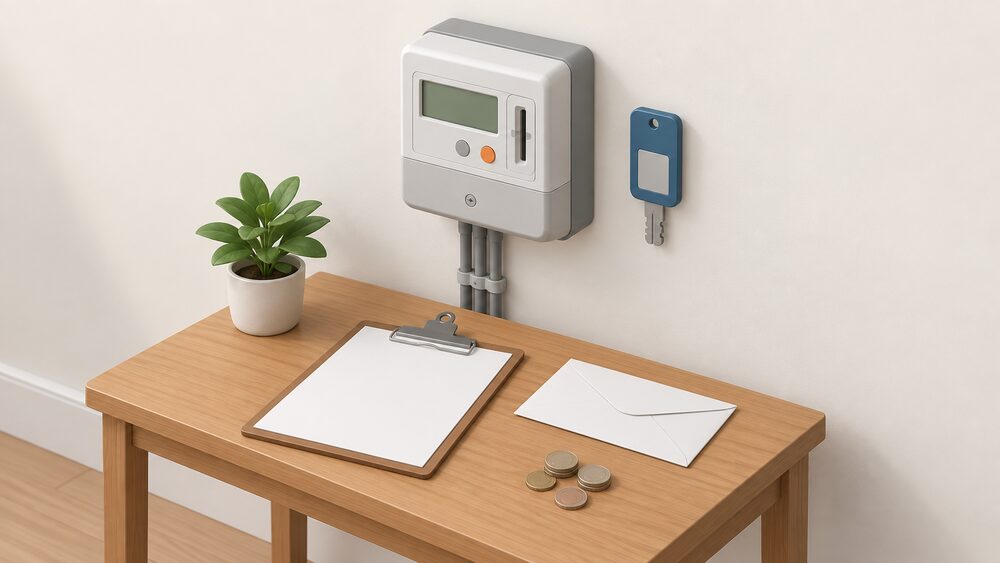
A Warm Home Prescription is not a medicine and not a benefit claim. It is a referral route: a clinician or another referring organisation identifies a patient whose health is being damaged by a cold home, and an energy service then adds credit directly to that patient's energy account while arranging efficiency measures for the longer term. Energy Systems Catapult describes it as "a full end to end service which provides immediate short-term help by adding credit directly to patients' energy accounts and installs energy efficiency measures in patients' homes, for long-term impact"1.
The case for treating warmth as clinical need rests on cost. Energy Systems Catapult estimates that the NHS spends up to £856m every year treating illnesses made worse by cold homes, and reports that for every £1 spent on the service there is a £5 return to society1. The Catapult has been trialling and refining the service since 2021, and commissioned independent third party experts to examine trials run between 2021 and 20231.
Those trials found that most households taking part put their heating up by 2 degrees or more, that most people said they felt warmer and, as a result, better, that people receiving a prescription used NHS primary care services less than before, and that most clinicians said they could see benefits for their patients1. The scheme has been delivered in several UK NHS regions, with the Catapult supporting others to design their own versions, so what exists nationally is a model and a body of evidence rather than a single nationwide entitlement1.
What the Warm Home Prescription is, and what it is not
The service sits between the health system and the energy system. On the health side, a patient is identified because a cold home is making a diagnosed condition worse. On the energy side, credit is applied to the account and physical measures are installed. The Catapult's own framing of the work is collaborative: "Combine your healthcare knowledge with our energy industry expertise. We'll design entirely new services with you, target different health conditions and try new technologies and funding methods"1.
It is important to separate this from the schemes with similar names. The Warm Home Discount is a statutory rebate scheme, providing £150 energy bill rebates funded through a levy on all domestic gas and electricity customers, and it is provided for under the Warm Home Discount (England and Wales) Regulations 2022 and the Warm Home Discount (Scotland) Regulations 20223. The Warm Homes: Local Grant provides free or subsidised home improvements for eligible households, including insulation upgrades, heat-pump installations, solar panels, ventilation and damp-prevention measures5. Neither is a prescription, and neither is triggered by a clinical judgement about an individual patient.
The distinction matters for a household trying to work out what it can claim. A prescription is not applied for; it is conferred through a referral. The Warm Home Discount is claimed or auto-applied according to benefit receipt and supplier participation. The Warm Homes: Local Grant is applied for through an online eligibility check5. Three different doors, three different sets of rules.
Who it is for: cold-sensitive conditions and low income
The clinical list is broad and specific at the same time. Energy Systems Catapult states there are "a wide range of health conditions made worse by living in a cold environment", and names cardiovascular conditions; respiratory conditions, in particular chronic obstructive pulmonary disease and childhood asthma; illnesses affecting the immune system; and physical disabilities that limit mobility1. It adds that a warm home makes a significant difference to those undergoing treatments such as cancer patients undergoing chemotherapy, renal patients undergoing dialysis, and people who have just been discharged from hospital1.
The Welsh pilot, Warmth on Prescription, targeted the same territory: people with chronic conditions such as chronic obstructive pulmonary disease (COPD), asthma, and cardiovascular disease that are worsened by cold, damp homes2.
Low income is the second limb, and it is handled differently across schemes. The ECO4 Flex route allows participating local authorities or devolved administrations to refer households they consider to be living in fuel poverty or on a low income, and vulnerable to the effects of living in a cold home, who may not qualify via the standard eligibility criteria6. West Lindsey District Council describes the same route as covering households identified as low income and vulnerable, with an occupant whose health conditions may be impacted further by living in a cold home7. Birmingham City Council's statement of intent sets out a proxy under which a person living at the premises is considered to be vulnerable to the cold under NICE Guidance NG6 for a reason other than their low income8. Leeds City Council operates a comparable statement of intent9.
That NICE-based proxy is the hinge between health and energy eligibility, and it recurs across local authority flex routes. It allows a household to qualify on clinical grounds even where the income test alone would not capture them.
What you get: energy credit and wider support
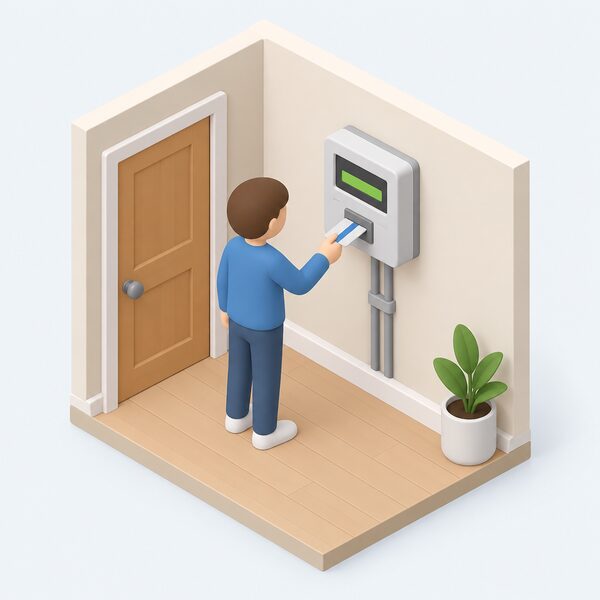
The core of the offer is money on the meter. The Catapult describes adding credit directly to patients' energy accounts as the immediate short-term element, with energy efficiency measures installed for long-term impact1. The published material does not state a single national credit figure, and the amount has varied between trials and funding partners.
The closest published figure comes from Wales. The Welsh Government announced a Warmth on Prescription pilot providing 100 households with £500 paid directly to their energy supplier, with participants identified and referred through the health board rather than by individual application2. That is a Welsh pilot figure, not a UK-wide entitlement, and it should be read as such.
For scale, the statutory Warm Home Discount provides £150 off the energy bill as a one-off payment to eligible older and low-income consumers10, and Ofgem describes the scheme as primarily providing support through the provision of £150 energy bill rebates funded through a levy on all domestic gas and electricity customers3. The Warm Home Discount Scheme rebate is £150 per household energy bill4. Eligible households receive a £150 discount on their electricity bills11.
The wider support is where a prescription differs from a rebate. Because the referral comes through a health route, the household is known to a service that can also arrange physical improvements. The Warm Homes: Local Grant, as a comparison, funds insulation upgrades, heat-pump installations, solar panels, ventilation and damp-prevention measures, and may also recommend energy-efficient lighting, underfloor insulation, high-temperature heat pumps, solar thermal or direct electric heaters5.
Eligibility and how referrals work
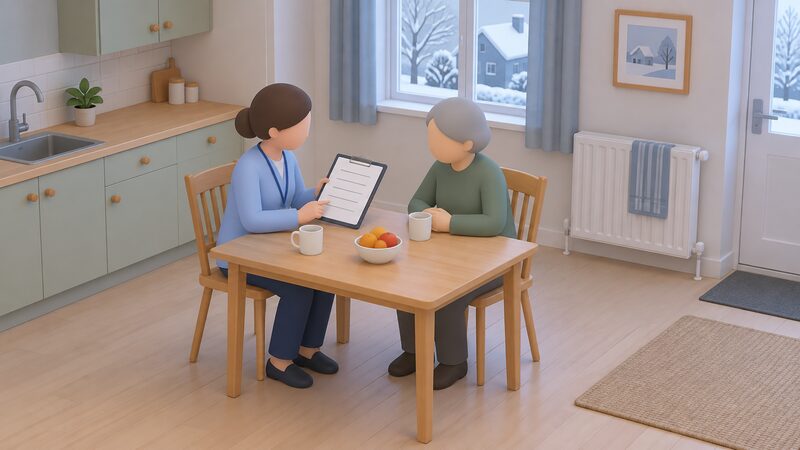
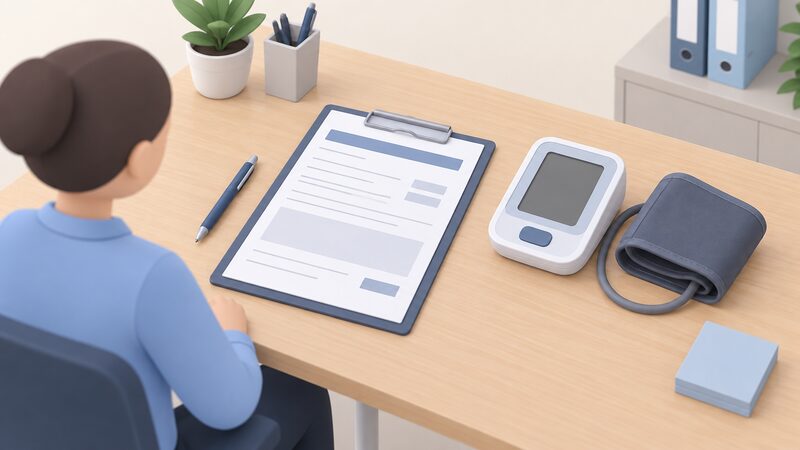
Referral is the whole mechanism. Doctors and GPs can refer households by using the NHS referral template, if they identify that someone has a medical condition that follows NICE guidance NG6, Recommendation 2, with an exception to the low-income proxy13. That exception is what allows a clinical judgement to stand in place of a means test.
Local authority and devolved administration routes run in parallel. The Great British Insulation Scheme guidance allows participating local authorities or devolved administrations to refer households they consider to be living in fuel poverty or on a low income, and vulnerable to the effects of living in a cold home, who may not qualify via the standard eligibility criteria6. ECO4 Flex operates on the same principle, covering households identified as low income and vulnerable, with an occupant whose health conditions may be impacted further by living in a cold home7.
Some local schemes name the qualifying conditions explicitly. Warm Well Homes assists owner occupier households on low incomes suffering from a cardio-vascular condition, respiratory condition, mental health condition, or who are over age 65 with a frailty, have a disability affecting mobility, or are pregnant or have a child of school age; households with children up to age 5 are considered eligible for ECO4/GBIS-flex9.
In Wales, the Nest scheme takes a health route with a fabric test attached: to be eligible, a home must have an EPC rating of D or lower (SAP score 68 or lower), and someone in the household must have a qualifying health condition14. That is a useful illustration of how a health referral and a property standard can be combined.
How to apply: the prescription code and referral form
There is no published prescription code that a household can obtain and redeem. The referral form is the entry point, and it is held by the referring organisation rather than the patient. In practice a household's route in is a conversation with a clinician, a local authority energy officer or a devolved administration scheme.
For comparison, the application mechanics of the statutory and grant schemes are well documented, and they show how different the prescription route is. The Warm Homes: Local Grant uses an online form on GOV.UK to check eligibility, and the form may ask about benefits received, household income in one year, tax and deduction costs in one year, council tax costs in one year, and mortgage or rent costs in one year5. Birmingham City Council sets out four steps: apply, upload documents, get your home assessed, approve the work15. Surrey County Council requires recent council tax bill or a recent energy bill as proof of address, with a Council Tax Bill mandatory for sole occupiers, and utility bills accepted where more than one adult resides or in auto-eligible postcode areas16. Surrey also states that postal applications must be returned within 14 days16.
In Northern Ireland the Affordable Warmth Scheme works through a different door again: contact the NI Energy Advice Service, and if the household meets the entry requirements an application form will be sent out, to be completed and returned with supporting documents to the local Grant Office17.
The lesson for a household is that the prescription route removes the paperwork burden from the patient. The referring clinician or organisation carries it.
The evidence: warmer homes, better health and less NHS use

The evidence base is the strongest part of the case, and it comes from an independent evaluation rather than the service's own marketing. Energy Systems Catapult commissioned independent third party experts to look into its trials between 2021 and 20231.
Four findings stand out. Most households taking part put their heating up by 2 degrees or more1. Most people said they felt warmer, and as a result, better1. People receiving a Warm Home Prescription used NHS primary care services less than before1. Most clinicians said they could see benefits for their patients1.
The economic case rests on the same evaluation. For every £1 spent, there is a £5 return to society1. Set against an estimated NHS spend of up to £856m every year treating illnesses made worse by cold homes, the argument is that spending on warmth displaces spending on treatment1.
Two further findings from the first year of trials are reported but not reconciled with each other: over 80% of participants reported keeping their homes warmer than the previous winter, and over 50% spent less time confined to their beds or huddled under blankets1. Both are reported outcomes from the same period.
The mechanism behind these results is not mysterious. A cold home imposes costs that fall partly on the health service: cardiovascular and respiratory conditions worsen, mobility is reduced, and recovery after discharge is slower. The Catapult's list of conditions and treatments maps directly onto that pattern1.
"Most people said they felt warmer, and as a result, better"
Trials and scale: from pilot to thousands helped
The service has moved from small pilots to wider delivery. The Catapult has delivered Warm Home Prescription in several UK NHS regions and supported many others to design their own1. That means the model has been replicated rather than simply expanded, and the version a household encounters will reflect local commissioning.
The Welsh pilot gives a concrete scale figure: 100 households, with £500 paid directly to their energy supplier, referred through the health board2. The Welsh Government has also committed £1.5 million to over 400 warm hubs across Wales as part of its 2025 to 2026 budget, a separate but related strand of warmth support2.
Delivery partnerships have varied. The Catapult worked with BP in 2022 for large-scale social impact, and with Scottish Power in 2025 to test how energy company obligations could drive health outcomes1. The programme has been trialling and refining its Warm Home Prescription service since 2021, with independent third party experts commissioned to look into trials between 2021 and 2023, and aims to reach up to 2,000 households with targeted support1.
Delivery on the ground has been handled by specialist organisations. The Welsh Warmth on Prescription pilot was delivered by energy charity Severn Wye2. Energy Systems Catapult also completed the Home energy information, advice and guidance report for government18.
The pattern across these facts is a service that is tested in one place, evaluated, and then adapted elsewhere with different funders and different delivery partners. That is why no single national eligibility rule exists.
Who runs and funds it
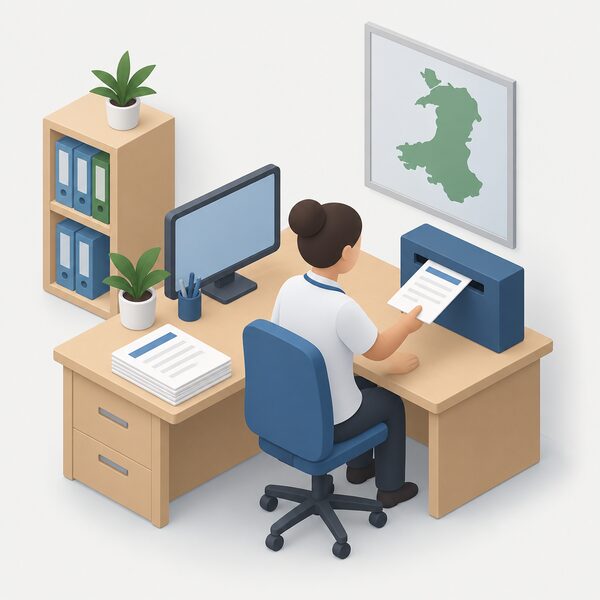
Energy Systems Catapult is the organisation behind the service. It describes itself as combining healthcare knowledge with energy industry expertise, designing new services with partners, targeting different health conditions and trying new technologies and funding methods1. It has been trialling and refining the service since 20211.
Funding has come from more than one direction. Energy company partnerships have been used to test how obligations could drive health outcomes, and philanthropic or corporate social impact funding has been used at larger scale1. The Welsh pilot was funded through the Welsh Government and delivered by Severn Wye2.
The Catapult's role extends beyond delivery into design support for other regions, which is why the service appears under different names in different places. Warmth on Prescription in Wales is one such variant2.
For a household, the practical consequence is that the organisation that contacts you may be a charity, an energy company contractor or a health board programme rather than the Catapult itself. The clinical trigger and the credit to the account are the constants.
Related schemes: Warm Homes, Healthy Futures and other warmth support
Several schemes occupy adjacent ground, and households often qualify for more than one.
The Warm Homes Plan brings existing programmes together. It includes the existing WH:LG, WH:SHF and BUS schemes, and new plans for loans to consumers for home retrofits and investment in the retrofit supply chain19. A separate £2bn in low interest loans for heat pumps, solar panels, batteries and more is intended to help households meet the upfront costs of home improvements20.
In Northern Ireland, the Warm Healthy Homes Fund is targeted at lower-income households in owner-occupied and private rented homes21. A consultation on the fund covers eligibility criteria including income thresholds and benefits, the impact of householder personal savings, increased grant limits per household, support for the Private Rented Sector, and Quality Standards and Redress for consumers22. The same consultation proposes eligibility qualification criteria including income thresholds and the use of certain benefits to determine entitlement22.
Local authority schemes fill gaps. The Warm Homes: Local Grant provides grants to low-income households living in privately owned properties23. Oxfordshire County Council directs residents to apply directly through official channels via the council website or the retrofit team24. Essex County Council's WarmHomesEssex website carries details of other funding, advice, and support available in Essex25. The Greater Manchester Combined Authority runs its own Warm Homes Local Grant23.
Scotland has its own payment structure. Social Security Scotland offers a range of payments to keep homes warm, from pension age winter heating to child and disability payments26. The Winter Heating Payment is abbreviated WHP27.
What it means for household energy independence
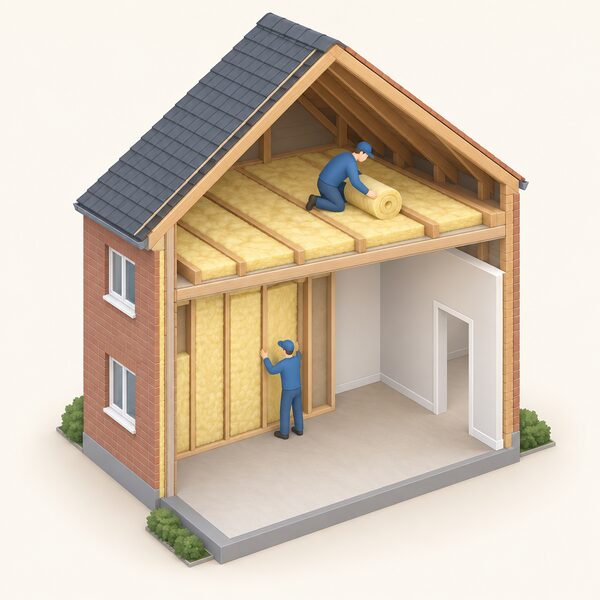
A Warm Home Prescription does something specific and limited for a household's energy position. It removes, for a period, the trade-off between heating and other spending, and it does so without the household having to navigate a means-tested application. The credit lands on the account and the measures go into the fabric of the home.
What it does not do is change the underlying dependence. The household remains connected to a supplier, and the credit is applied to an account held with that supplier. The measures installed improve the building, which reduces the energy needed to keep it warm, but the home is still on the grid or on a delivered fuel. The service is a bridge to a warmer home, not a route to self-sufficiency.
The structural dependence is worth naming plainly. A household receiving a prescription is dependent on a referral being made, on a region having commissioned the service, and on a funding partner continuing to pay. The Catapult's own description of the work as designing new services with partners, targeting different health conditions and trying new technologies and funding methods makes clear that the model is still being shaped1.
Where the scheme does build lasting independence is in the fabric measures. Insulation, ventilation and damp prevention reduce the energy a home needs permanently, which is the only form of independence that survives a change of supplier, a change of scheme or a change of government. The credit is temporary; the insulation is not.
For households in rented property, the picture is more constrained, since improvements require landlord consent and the split between who pays and who benefits is contested. The pages on energy independence for renters and flats and asking a landlord for energy improvements set out those limits. Households in cold, damp or hard-to-heat homes may also find the material on cold homes and health and fuel poverty in UK households useful for understanding how their situation is measured and what support follows from it.
Sources27 cited
- Warm Home Prescription, Energy Systems Catapult, 2025-11-13
- Thousands of Welsh households get help with oil and LPG heating costs, Welsh Government, 2026-03-31
- Warm Home Discount, Ofgem, 2026-09-17
- Continuing the Warm Home Discount Scheme: government response, UK Government, 2026-01-30
- Warmer Homes, Greater London Authority, 2026-09-17
- Great British Insulation Scheme and ECO4 local authority administration guidance, Ofgem, 2025-04-03
- ECO4 Scheme, West Lindsey District Council, 2025-07
- Birmingham City Council's GBIS and ECO4 Flex statement of intent, Birmingham City Council, 2025-08-11
- Statement of Intent, Leeds City Council
- Keeping your home warm in winter, Met Office, 2026-09-20
- Warm Home Discount Scheme statistics, House of Commons Library, 2024-02-29
- Warm Homes Local Grant 2025 to 2028, Birmingham City Council, 2026-06-24
- ECO4 Flex fact sheet, Ofgem, 2022-09
- Warm Homes Nest scheme annual report 2024 to 2025, Welsh Government, 2026-03-26
- Getting help with your energy bills, Birmingham City Council, 2026-04-15
- Warm Homes Local Grant, Surrey County Council, 2026-09-17
- Affordable Warmth Scheme, Northern Ireland Housing Executive, 2026-09-17
- Home energy information, advice and guidance, UK Government, 2026-03-11
- The Warm Homes Plan, House of Commons Library, 2026-09-17
- Reforming consumer protection for home upgrade schemes, UK Government, 2026-06-17
- Warm Healthy Homes Fund, Northern Ireland Department for Communities, 2026-09-17
- Consultation on Warm Healthy Homes Fund, Northern Ireland Department for Communities, 2026-09-19
- Warm Homes Local Grant, Greater Manchester Combined Authority, 2026-09-17
- Oxfordshire expands support to make homes warmer and cheaper to heat, Oxfordshire County Council, 2026-03-30
- Energy Company Obligation ECO4, Essex County Council, 2026-09-17
- Benefits, Social Security Scotland, 2026-09-17
- Winter Heating Payment, mygov.scot, 2026-09-17
 The Full Heat Pumps GuideWill a heat pump keep my house warm in winter, and what does one cost to buy and run?
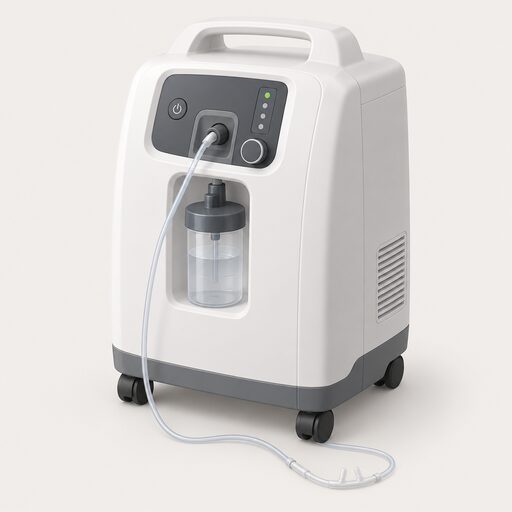 Vulnerable Households EnergyIf someone in your home relies on powered medical equipment, or needs extra warmth because of a health condition, what help is available?
 The Full Grants and Schemes GuideWhich grants can you actually get right now, and how do you apply for them?
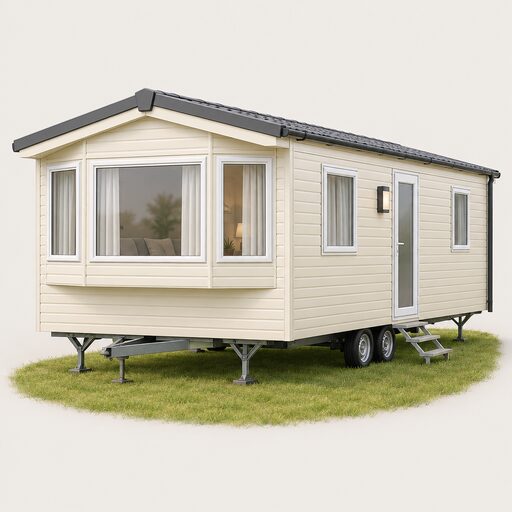 Park Homes and CaravansExplains how park homes are constructed, why they are expensive to heat, and which insulation, heating and metering arrangements apply.
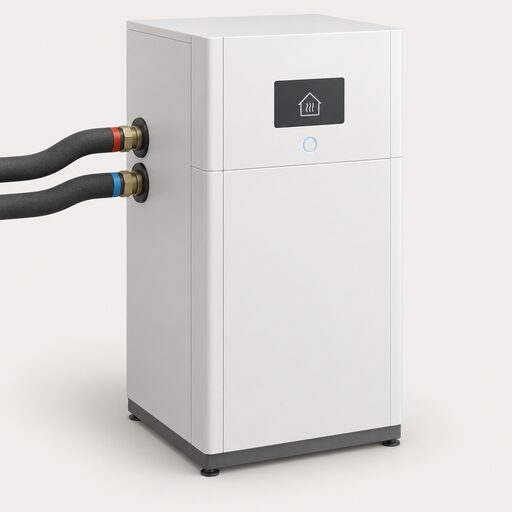 Ground Source Heat PumpsA ground source heat pump takes warmth from the ground to heat your home and water.
 Grant ScamsGrant schemes attract cold callers, doorstep sellers and fake approval letters using real scheme names.