
In this guide
ECO4 Flex, formally local authority flexible eligibility, is a household referral mechanism inside the wider ECO4 scheme rather than a grant in its own right1. It allows local authorities, and the Scottish and Welsh governments, to identify low-income or vulnerable households who are not in receipt of the means-tested benefits that would otherwise make them eligible for ECO, but who would benefit from energy efficiency improvements2. A council declares the household eligible; an obligated energy supplier then funds the measures and claims the score against its obligation.
The two criteria a householder will meet most often are a combined gross annual household income under £31,000, or a person in the home with a severe or long-term health condition that is adversely affected by living in a cold home and is due to a cardiovascular condition, a respiratory disease, limited mobility or immunosuppression2. Measures delivered through Flex must go to private tenure homes, meaning owner-occupied or private rented households, and all local authorities in England, Wales and Scotland may make referrals3. Suppliers can deliver up to 50% of their obligation through Flex3.
The timing matters more than anything else on this page. ECO4 was due to end on 31 March 2026 with no ECO5 replacement1. Ofgem states that the scheme will run until 31 December 2026 following a nine-month extension4, and the obligation period is now recorded as 27 July 2022 to 31 December 20265. That extension covers completion of existing work: Birmingham City Council records that the ECO4 Flex scheme was closed to new applications following the Chancellor's 2025 Autumn Budget, and that no new applications can be funded6.
What flexible eligibility is, and who it was built for
ECO is a supplier obligation: it requires medium and large energy suppliers to support energy efficiency improvements for eligible households10, and Ofgem administers it on behalf of the Department for Energy Security and Net Zero, which sets ECO4 policy and legislation4. ECO4 is enacted by the Electricity and Gas (Energy Company Obligation) Order 2022, as amended8.
Within that structure, ECO4 has several eligibility routes: the Help to Heat Group, Social Housing, LA Flex, In-Fill and Supplier Flex11. Flex is the route that does not depend on a benefit award. Ofgem describes Flex as a referral mechanism that enables local authorities and devolved administrations to widen the eligibility criteria12. Breckland Council puts the same point in local terms: ECO4 allows local authorities to identify the most vulnerable households who could benefit from energy efficiency improvements13.
Two boundaries apply from the start. Leeds City Council states that the flexible eligibility route is only applicable to private sector housing14, which matches Ofgem's rule that Flex measures must be delivered to private tenure homes3. And suppliers themselves can refer households under Flex where they are struggling with persistent fuel debt and are supported by suppliers, or are using pre-payment meters and have regularly been unable to stay connected to their fuel supplies due to financial hardship2.
For a household's independence, the honest reading is narrow. Flex removes a paperwork barrier, not a dependence: the funding comes from obligated suppliers, the measure is chosen by a provider, and the household remains connected to the same grid and the same supplier afterwards. What changes is the fabric and the heating system, and therefore how much energy the home needs. See the wider Energy Company Obligation page for how the obligation itself works.
How Flex differs from the benefits route

The main ECO4 route, the Help to Heat Group, works from receipt of a qualifying means-tested benefit. Benefits listed as qualifying include Child Benefit, Pension Guarantee Credit, income-related Employment and Support Allowance, income-based Jobseeker's Allowance, Income Support, Tax Credits, Universal Credit, Housing Benefit and Pension Credit Savings Credit15. Flex replaces that test with a local declaration.
| Benefits route | ECO4 Flex | |
|---|---|---|
| Trigger | Receipt of a qualifying benefit15 | Council, devolved government, health or supplier referral2 |
| Income test | Not applied through benefit receipt | Under £31,000 combined gross household income on the income route2 |
| Tenure | Includes social housing as a separate route11 | Private tenure only: owner-occupied or private rented3 |
| Decision maker | Supplier against benefit evidence | Local authority against its published statement of intent14 |
| Availability | National | Voluntary; only where a council participates9 |
Essex County Council notes that income is not taken into consideration if a household qualifies because of a health condition16, which is the practical difference between the income route and the health route. Bridgend County Borough Council frames Flex as the fallback where none of the qualifying benefits are being claimed17.
The design has been criticised. Energy Systems Catapult reported in July 2025 that although ECO4 includes health-related eligibility routes on paper, the reality of delivery excludes many eligible residents due to cost caps, administrative burden, and a delivery model driven by commercial installer priorities18. A household holding a valid declaration may therefore still find no provider willing to work on the property.
For a direct comparison of the two paths, see ECO4 Flex vs the Help to Heat route and the detail on ECO4 eligibility.
The four referral routes
Ofgem guidance sets out four separate qualifying routes to identify low income and vulnerable households, and notes that suppliers may only provide evidence for routes 2 and 419. Council statements of intent repeat the same four20, although some councils, such as Ceredigion, describe only three available routes locally1.
| Route | Basis | Bands, owner-occupied | Bands, private rented |
|---|---|---|---|
| Route 1 | Total combined gross annual income from all sources less than £31,0001 | D to G8 | E to G1 |
| Route 2 | At least two of the listed proxies3 | E to G8 | E to G1 |
| Route 3 | Referral by a GP, a Health Board or an NHS trust for a cold-home-affected health condition1 | D to G8 | E to G1 |
| Route 4 | Bespoke targeting, applicable to ECO4 Flex only12 | D to G8 | E to G, with at least one of solid wall insulation, first-time central heating, renewable heating or district heating connection21 |
Route 2 requires at least two proxies, and the combinations are constrained. Proxies 1 and 3 cannot be used together, a restriction stated in the Ofgem statement of intent template from 202222, repeated in council statements of intent in 202320 and carried into delivery guidance version 4.0 in March 20263. Earlier guidance also stated that proxies 6 and 7 could not be used in combination with one another19; the documents are not consistent on which further pairs are excluded, so both restrictions appear in the record. Individual proxies can also be switched off locally: Ceredigion lists proxy 5 as not available in its area1.
Route 3 is the health route. The standard NHS referral letter can be used for Route 2, proxy 3, and must be used for Route 319. The qualifying conditions are a cardiovascular condition, a respiratory disease, limited mobility or immunosuppression8.
Route 4 is bespoke targeting. Suppliers and local authorities can submit an application to DESNZ where they have identified new methods to identify low-income and vulnerable households, demonstrating the methodology is more effective than Routes 1 and 212. It is the only route confined to ECO4 Flex. In the ECO4 scoring design, LA flex route 4 was among the uplifts that do not have a fixed value.
Which homes qualify, and what the work must achieve
Property condition matters as much as household circumstance. ECO4 is targeted at households with a low Energy Performance Certificate rating23, and only properties in EPC band D to G can be treated24. Under Flex the bands narrow by route and tenure as the table above shows: D to G for owner-occupied homes under Routes 1, 3 and 4, and E to G for Route 28.
The scheme then sets an outcome, not just an input. Properties with starting EPC bands F and G must be improved to an EPC D, while properties with starting EPC bands E and D must be improved to an EPC C1. Across ECO4 as a whole, suppliers must upgrade a minimum equivalent of 150,000 private tenure band E, F and G homes3, a floor introduced in the 2022 government response25. For social housing and private rented accommodation, ECO4 supports the least efficient homes in bands E to G only26.
Tenure conditions are simple but firm. To benefit from ECO4 Flex a household must own its own home or have the permission of the landlord1. Essex describes eligible applicants as a homeowner, private tenant or landlord16, and landlords may be asked to contribute towards the costs of installed measures, depending on the circumstances of the tenant at the qualifying property16. West Lindsey District Council states the route is available for private owner occupiers and private rented properties that meet the necessary criteria10.
A separate In-Fill route sits alongside Flex for neighbouring properties: for a house, solid wall insulation and, or, a district heating connection, where the applied measures match those of the associated ECO-eligible property, at any tenure and starting SAP bands D to G3.
What ECO4 Flex pays for
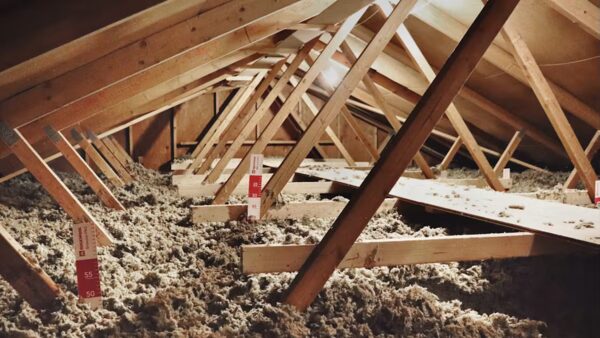
ECO funding pays for energy efficiency measures such as heating improvements and insulation17. Ceredigion County Council lists examples of measures installable under Flex: solid wall insulation, cavity wall insulation, room in roof insulation, loft insulation, flat roof insulation, electric storage heater upgrade, first time central heating to an air source heat pump, boiler upgrade from oil, LPG and solid fuel to an air source heat pump, and solar photovoltaic panels1. The council is clear that the measures actually offered are determined by the ECO provider, agent or installer27. West Lindsey groups the same ground as insulation, boilers and central heating, and solar and renewable energy technologies10, and window glazing appears in some council listings28.
What a home receives is therefore not a menu choice. ECO4 scores a project on the modelled improvement it delivers, so the package is assembled to hit the required band uplift, which is why insulation usually precedes or accompanies a heating measure. The scoring rules are set out on how ECO4 measures are scored, and the solar question specifically on ECO4 and solar panels.
Combining ECO4 with other funding is constrained. Any measures outside of ECO4 delivered to the same property have to be installed either before the ECO4 retrofit project is started, or after the entire project is complete and all measures have been installed2. That sequencing rule is the main trap for households also pursuing the Boiler Upgrade Scheme or a council scheme.
Applying: statements of intent, providers and TrustMark
Participation is voluntary. Local authorities need to publish a statement of intent that outlines their intention to participate in the scheme and follow its rules29, and applicants are then individually assessed against the published criteria set out in that document14. Statements of intent are versioned and revised: Birmingham City Council reached version 7.0 in August 202530, Bristol publishes version 3.131, and Ceredigion works from version 4 of its combined ECO4 and GBIS Flex statement1.
The application itself runs through installers, not through a council front door. All potentially eligible households should apply through a TrustMark-registered or approved ECO or GBIS installer30, or contact one of the council's approved providers or agents, who will facilitate the process27. The approved provider or agent is required to collect and submit evidence of income and other relevant details to the council for eligibility assessment1. Arrangements vary: Bridgend has partnered with E.ON on delivery and passes information to the council for checking via that partner17; Bristol requires installers and managing agents to contact the Centre for Sustainable Energy and sign its Code of Conduct31; West Lindsey directs householders to YES Energy Solutions as its local authority partner10. YES Energy Solutions is covered separately.
- Confirm the council participates and has a current statement of intent29.
- Approach an approved provider or TrustMark-registered installer30.
- Provide evidence of income, health condition or proxies for submission to the council1.
- The council issues a declaration and notifies Ofgem via the declaration notification template32.
- A survey determines the measures and the modelled band improvement27.
All ECO4 measures except district heating connections must be installed by, or under the responsibility of, a person registered with TrustMark or equivalent for that measure, and lodged with TrustMark or equivalent33. Installations must adhere to the independent Publicly Available Specification standards27. See ECO4 and the TrustMark requirement for detail.
South Cambridgeshire District Council advises householders to check whether planning permission or building regulations approval is needed for the work, and whether the installer is Gas Safe registered to work on gas boilers28.
Councils, devolved administrations and the limits of the local role

Flex is a voluntary referral route for local authorities, the Scottish Government, the Welsh Government and suppliers25. Ofgem's 2022 fact sheet describes the approach as available for local authorities and devolved administrations, with suppliers and devolved administrations holding an optional role35. Referrals through Flex are open to all local authorities in England, Wales and Scotland3: Northern Ireland is not part of the Flex mechanism, and households there are covered by the arrangements described on home energy grants in Northern Ireland.
The split of responsibility is worth stating plainly. DESNZ sets ECO4 policy and legislation, Ofgem administers the scheme on the government's behalf and publishes separate guidance for local authorities, devolved administrations and suppliers4, and the council's role is confined to declaring households eligible under its own published criteria. Councils do not hold the money. Ofgem has published an ECO4 LA Flex audit report setting out the results of the Flex audits, the framework, stakeholder expectations, roles and responsibilities and actions for local authorities and suppliers36.
Local variation is real and is the main reason two neighbouring households can get different answers. Councils disapply individual proxies, use different delivery partners, and set different evidence requirements, all within the same national rules. Council and local authority energy grants covers the wider picture of locally administered funding.
The 50% cap on Flex delivery
Suppliers can deliver up to 50% of their obligation through Flex3. Expressed in obligation terms, Ofgem's supplier administration guidance states that suppliers can achieve no more than 50% of their Home Heating Cost Reduction Obligation through the installation of measures under ECO4 Flexible Eligibility37.
That ceiling explains a great deal of householder experience. Flex is deliberately a minority route: at least half of each supplier's obligation must be met through benefit-led and social housing delivery. Once a supplier approaches its Flex limit, or its wider obligation, appetite for new Flex referrals falls away regardless of how many valid declarations councils have issued. Pembrokeshire's observation that many approved ECO providers have no access to funding is the visible end of that mechanism9.
Other caps sit alongside it in the same guidance: no more than 12.5% of an obligation through the awarding of Partial Project Scores, and no more than 0.5% through building fabric repair uplifts37. Innovation measures are capped at 10% of a supplier's total obligation33, and suppliers could carry over up to 10% of their ECO3 obligation37. Obligated status applies to suppliers with at least 150,000 customers in the relevant qualification year, and the delivery target is divided between obligated suppliers according to each one's relative share of the domestic gas and electricity market37. Which suppliers carry the obligation is covered on ECO obligated energy suppliers.
Dates, records and what happens at closure

ECO4 applies to measures installed from 1 April 20224, and the obligation period ran from the commencement of the ECO4 Order on 27 July 2022. The documents differ on the end point because the scheme was extended: the original close was 31 March 20261, and Ofgem now records 31 December 2026 following a nine-month extension4, with the obligation period stated as 27 July 2022 to 31 December 20265. Older council and industry pages still show March 202638.
The operational date for households is earlier. Cumberland Council reported in December 2025 that the ECO4 scheme would close in March 2026 as announced in the Autumn Budget39, and Birmingham City Council records that Flex was closed to new applications following that Budget and that no new applications can be funded6. Government guidance for energy suppliers issued in March 2026 refers to the ending of funding for the ECO4 scheme37. There is no ECO5 replacement1.
Records outlast the scheme. Ofgem expects evidence of eligibility to be retained for up to three years following the end of the scheme3, and applications and declarations may be subject to Ofgem audits during the time ECO4 is in effect and for up to three years after the scheme ends1. A declaration must be issued within the 12-month period preceding the day on which the project or measure is complete, and remains usable so long as the project starts within one year of the declaration being issued8. Installation extensions operate on a per measure basis8.
Delivery volumes give a sense of scale: monthly installation totals under ECO4 stopped increasing in autumn 2023 and have generally been in the range of 27,000 to 34,000 measures per month40. For households now outside ECO, the successor routes are the Warm Homes: Local Grant in England, the devolved schemes set out on home energy grants in Scotland and Wales, and the Boiler Upgrade Scheme for heat pumps. The pillar page on home energy grants maps the rest.
Sources40 cited
- ECO Flexibility Funding, Ceredigion County Council, 2026-09-17
- ECO: information for homeowners and tenants, Ofgem, 2026-09-17
- ECO4 delivery guidance version 4.0, Ofgem, 2026-03-26
- Energy Company Obligation (ECO), Ofgem, 2026-09-17
- ECO public reports and data, Ofgem, 2026-09-17
- End of ECO announcement, Birmingham City Council, 2026-09-20
- Getting help with your energy bills, Birmingham City Council, 2025
- ECO4 delivery guidance v3.2, Ofgem, 2025-12-08
- Energy efficiency, Pembrokeshire County Council, 2026-09-17
- ECO4 scheme, West Lindsey District Council, 2025-07
- ECO4 eligibility and pre-installation declaration, Ofgem, 2026-01
- GBIS and ECO4 local authority administration guidance, Ofgem, 2025-04-03
- ECO4 and ECO Flexible Eligibility, Breckland Council, 2026-09-17
- Energy Company Obligation scheme, Leeds City Council, 2026-09-20
- ECO4 consumer guidance, MCS, 2026-09-07
- ECO4 and GBIS Flex in Essex, Essex County Council, 2026-09-17
- Home energy efficiency, Bridgend County Borough Council, 2026-09-17
- ECO4 scheme failing health-vulnerable households, Energy Systems Catapult, 2025-07-08
- ECO4 delivery guidance v1.1, Ofgem, 2023-02-03
- ECO flexible eligibility statement of intent, Bristol City Council, 2023-09-04
- ECO4 delivery guidance V1, Ofgem, 2022-10-14
- Statement of Intent template, Ofgem, 2022-09
- ECO4, Elmhurst Energy, 2026-09-20
- Grants and funding, Tameside Council, 2026-09-17
- ECO4 government response, Department for Business, Energy and Industrial Strategy, 2022-04-01
- Design of the Energy Company Obligation ECO4 consultation, GOV.UK, 2021-07-20
- ECO4 Flex and GBIS Flex information document, Ceredigion County Council, 2025-11
- ECO4 Flex, South Cambridgeshire District Council, 2026-09-04
- Great British Insulation Scheme: local authorities, Ofgem, 2026-09-17
- GBIS and ECO4 Flex statement of intent, Birmingham City Council, 2025-08-11
- Energy Companies Obligation, Bristol City Council, 2026
- ECO4 Flex statement of intent, Birmingham City Council, 2024-11-01
- ECO4 new measures and products guidance v3.0, Ofgem, 2026-03-26
- Energy efficiency of homes briefing CBP-9585, House of Commons Library, 2026-01
- ECO4 Flex fact sheet, Ofgem, 2022-09
- ECO4 LA Flex audit report, Ofgem, 2025-06-20
- ECO4 guidance: supplier administration, Ofgem, 2026-07-06
- Leeds statement of intent, Leeds City Council, 2024-12-23
- More households benefitting from free energy saving home improvements, Cumberland Council, 2025-12-08
- Energy Company Obligation briefing CBP-9889, House of Commons Library, 2026-09-17
 Permitted Development by HomeCan you put up solar panels or a heat pump without asking the council?
 Energy Improvements in FlatsLiving in a flat, what can you actually change yourself and what needs the freeholder or management company to agree?
 Energy Independence for RentersHow far a renter or flat dweller can cut reliance on grid supply without owning the building: smart meters and prepay, portable heating and its safety limits, Economy 7 timing, and the planning rules that govern a heat pump on a block of flats.
 The Full Your Type of Home GuideLiving in a flat, an old listed house or somewhere off the gas grid changes what energy help you can get and what you are allowed to install.
 Choosing Heating by Home TypeWhat heating can you actually have in a flat, a park home, a listed building or a new build?
 Where to Start If You RentRenting means you can switch supplier or get a smart meter yourself, but insulation, glazing and heating need your landlord's agreement.