
In this guide
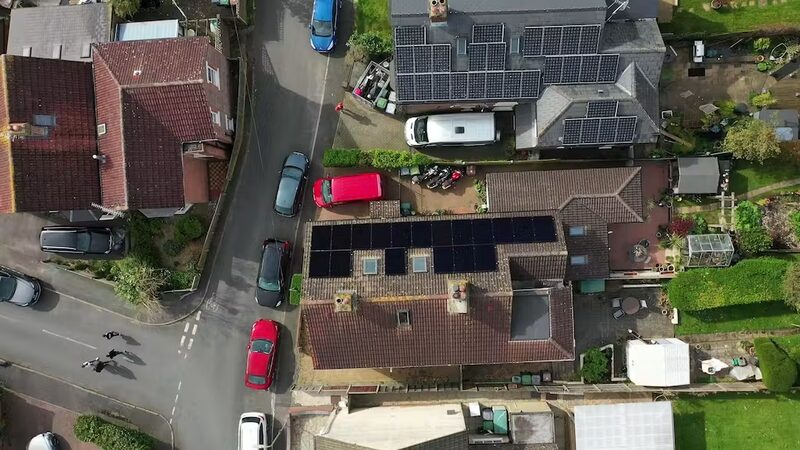
There is no dedicated government grant for solar panels in the UK at the moment. Energy Saving Trust states the position plainly: "There are no dedicated government grants for solar panels in the UK at the moment."1 What exists instead is a patchwork: solar funded through the Energy Company Obligation for eligible households, a legal obligation on suppliers to buy your exported electricity, and a zero rate of VAT on installation that runs until 31 March 2027.1
The good news is that the underlying resource works here. Energy Saving Trust notes that solar panels are suitable across the UK, and that they even work on cloudy days.1 A typical home without electrical heating or an electric vehicle saves between £530 and £650 a year on electricity bills, according to Hammersmith and Fulham Council.3 Uswitch reports that homeowners installing solar panels have seen average savings of £964 a year, based on real customer quotes generated through its own service since April 2026.4
The distinction that matters for a household is between a grant, which reduces the capital cost, and a payment, which rewards the output. Solar sits mostly in the second category now. The Feed-in Tariffs scheme, which paid both, closed to new applications on 1 April 2019, and its replacement, the Smart Export Guarantee, pays only for what you export.5
What solar PV can do for a household: bills, export income and independence
Solar photovoltaic panels capture energy from the sun and turn it into electricity for your home to use.3 That is the whole mechanism, and it is worth being exact about what it delivers. Bromley Council puts the household benefit as: "Photovoltaic (PV) panels could power your home, reduce your bills and may earn you money."6 Three separate things, and they behave differently.
The bill reduction is the largest and most reliable element. Hammersmith and Fulham Council gives a figure of between £530 and £650 a year for a typical home without electrical heating or an electric vehicle, as of October 2025.3 Uswitch's figure of £964 a year is higher and comes from a different basis: average savings seen by homeowners seeking installation through its service since April 2026, which will skew towards larger systems and higher-consumption homes.4 The two are not in conflict so much as measuring different populations, and a household should treat the council figure as the conservative case.
Export income is the second element and is now governed by the Smart Export Guarantee. Oxfordshire Council describes the arrangement as a payment "known as the Smart Export Guarantee (SEG)" in return for what you send to the grid.8 Uswitch confirms that with the SEG, you can get paid for any surplus energy your panels send back to the grid.4 Rates are set by suppliers, not by government, so the value varies.
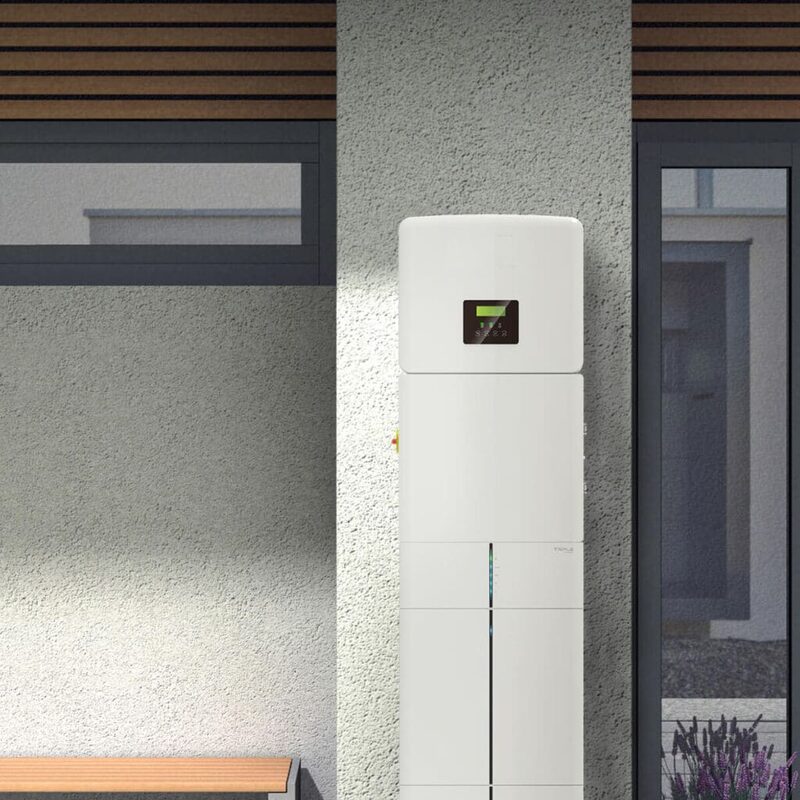
Independence is the third and the most qualified. A solar system reduces the electricity you buy, which reduces exposure to wholesale price movements and to a supplier's tariff decisions. It does not remove the grid connection, and it does not remove the supplier: export payments require a licensed supplier, and a smart meter to measure them.7 A system without a battery exports most of its midday generation and buys back in the evening, so the independence gained is partial. Energy Saving Trust suggests considering battery storage where a system does not already have it, so that surplus electricity is stored rather than exported.9
Is there a solar panel grant in the UK?
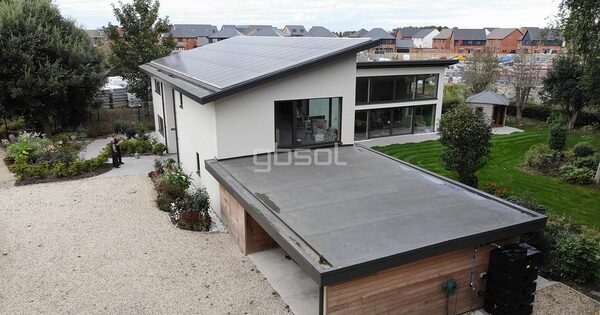
No dedicated grant exists. Energy Saving Trust's guidance, dated 7 September 2026, states: "There are no dedicated government grants for solar panels in the UK at the moment."1 The same source notes this might change as details of the Warm Homes Plan emerge, which is a statement of possibility rather than a commitment.
What people searching for a "free solar panels grant" are usually looking for is one of three different things, and it helps to separate them.
- A capital grant that pays part of the installation cost. There is none dedicated to solar.1
- A supplier-funded measure delivered under the Energy Company Obligation, where solar PV can be installed at no cost to an eligible household. This is not a grant scheme and is not open to everyone.10
- A tax relief, in the form of the zero rate of VAT on installation, which reduces the cost without any application.2
The third is the one that applies to every household regardless of income or benefits, and it is the most widely available form of public support for solar at present. It is also time-limited, which is covered below.
There is one further development worth noting for new-build buyers rather than retrofitters. Energy Saving Trust reports that the UK Government is set to include requirements in its Future Homes Standard for most new builds in England to have solar panels.9 That is a requirement on builders, not funding for householders, but it changes the starting position for anyone buying a new home.
ECO4: solar funded through the supplier obligation
The Energy Company Obligation is the main route by which a household can have solar installed at no capital cost, and it is routinely misdescribed as a grant. Ceredigion Council is explicit: "It is important to note that ECO4 is a supplier obligation and not a grant scheme."10 West Lindsey Council describes the mechanism as one that "requires medium and large energy suppliers to support energy efficiency improvements for eligible households."11
What can be funded under ECO4 includes insulation, boilers and central heating, and solar and renewable energy technologies.11 Cambridgeshire's South Cambridgeshire district lists solar PV panels among the measures available.12 So solar is within scope, but it is one measure among several and is not guaranteed for any particular property.
The obligation is divided between suppliers according to market share. Ofgem's supplier administration guidance states that the target for delivery is divided between obligated suppliers according to each obligated supplier's relative share of the domestic gas and electricity market.13 There is a supplier allowance mechanism with a threshold of 150 GWh per year for electricity and 350 GWh per year for gas.13
A significant part of ECO4 delivery runs through local authority flexible eligibility, known as ECO4 Flex. Ofgem's delivery guidance states that suppliers can deliver up to 50% of their obligation through Flex, a figure repeated in both the December 2025 and March 2026 versions of the guidance.14 Under Flex, a council can declare a household eligible on income or health grounds even where it does not receive a qualifying benefit, which widens the route considerably. The detail of who qualifies sits on the ECO4 Flex page, and the wider scheme on ECO4.
For a household, the practical consequence is that solar through ECO4 depends on where you live, which suppliers are active in your area, and whether your property scores well against the scheme's requirements. Edinburgh Council describes ECO4 and related schemes as "UK Government-backed schemes regulated by Ofgem", which is the correct framing: the money comes from suppliers under a regulator's rules, not from a government grant pot.16
The Smart Export Guarantee: getting paid for electricity you export
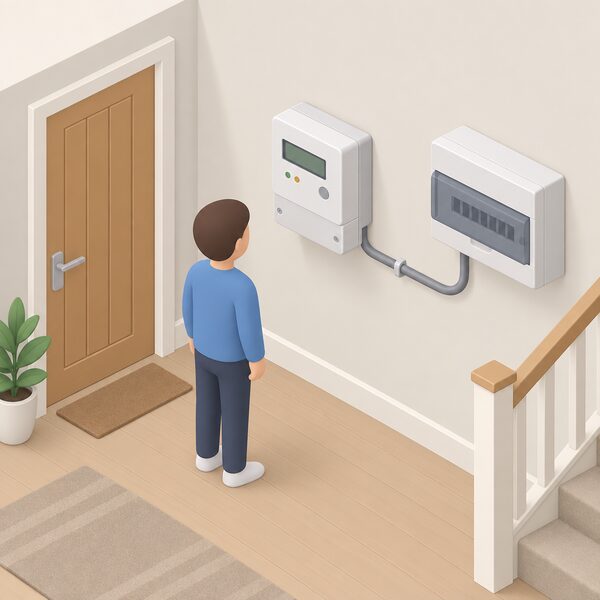
The Smart Export Guarantee is the successor to the export half of the Feed-in Tariffs scheme, and it is the only routine payment a new solar household can expect. Oxfordshire Council describes it as a payment made in return for exported electricity.8 Uswitch confirms that households can get paid for surplus energy sent back to the grid.4
Two conditions govern access, and both are firm.
- A smart meter. Ofgem guidance states that "in order to qualify for the Smart Export Guarantee (SEG), generators must have a smart meter to monitor exports."7
- Certification of the installation. Energy Saving Trust notes that to sign up you will usually need a smart meter and proof that your solar installation is certified.1
The rate is set by the supplier offering the tariff, not by government, so it varies between suppliers and over time. That is a meaningful difference from the FIT scheme, where tariffs were set administratively and index-linked. A household weighing export income should treat it as variable rather than fixed.
Battery storage interacts with export payments in a way worth understanding before purchase. Energy Saving Trust advises considering battery storage if the system does not already have it, so that surplus electricity is stored instead of exported.9 Storing and using generation at home reduces the volume exported and therefore the export payment, but it also reduces the electricity bought in the evening. Whether that trade is favourable depends on the export rate available and the household's evening consumption pattern.
VAT relief on solar installations: the zero rate and when it ends
The most broadly available public support for solar is a tax relief rather than a grant, and it applies across the UK. HMRC guidance states that solar panel installation is "until 31 March 2027: zero rated UK wide."2 That is the end date, and it is the single most important date on this page for anyone planning work.
The relief rests on The Value Added Tax (Installation of Energy-Saving Materials) Order 2022, instrument number 2022 No. 361, signed by Alan Mak and Amanda Solloway.17 The legislation record shows no known outstanding effects, meaning the order stands as made.17
Three practical points follow.
- No application is needed. The zero rate is applied by the installer at the point of sale, so the benefit appears in the quote rather than in a claim.
- It is UK wide, which distinguishes it from the devolved grant schemes that vary between England, Scotland, Wales and Northern Ireland.2
- It has a fixed end date. Work completed after 31 March 2027 does not attract the zero rate on the current legislation.2
The relief covers energy-saving materials generally, not solar alone, and the qualifying list is set out on the VAT relief on energy-saving materials page. The end date itself is covered in more detail at how long the 0% VAT relief lasts.
For a household's independence, VAT relief is a straightforward reduction in the capital cost of generation equipment. It does not create an ongoing payment and it does not depend on a supplier, which makes it the cleanest form of support currently available.
The Feed-in Tariffs scheme: what it paid and who still receives it
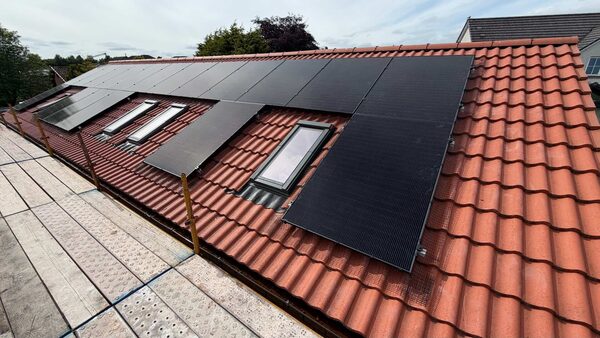
The Feed-in Tariffs scheme is the reason solar has a legacy in the UK, and it is still paying. Ofgem states that the scheme is closed to new applications, but that installations already accredited under the scheme will continue to receive payments.18 The closure date was 1 April 2019, barring some exceptions in response to disruption caused by COVID-19.18 Ofgem's scheme closure page adds that the closure does not affect installations which are already accredited.5
The scheme was designed to promote the uptake of small-scale renewable and low-carbon electricity generation, and it was funded by a levy paid by electricity suppliers rather than by general taxation.19 Accredited installations that meet their ongoing obligations receive tariff payments for both the amount of renewable electricity they generate and the renewable electricity they export into the national grid.21
The scale is worth stating. In scheme year 14, FIT generators were paid £1.76 billion in generation payments and £78 million in export payments.22 In scheme year 13, generators were paid just over £1.63 billion.21 Solar accounted for 79.42% of installed capacity, or 5.15 GW, in scheme year 13.21 The scheme's stated benefits include helping the UK reduce carbon emissions, meet its renewable energy and 2050 decarbonisation targets, and reduce reliance on expensive gas imports.21
Two structural features explain why the payments are so durable. First, solar installations accredited before 1 August 2012 have a maximum eligibility period of 25 years.22 Second, tariff periods for solar PV, wind, hydro and anaerobic digestion installations are quarterly, with deployment caps limiting the total capacity that can receive a particular tariff rate in a particular period.23
For a household buying a house with panels already on the roof, the FIT entitlement can transfer. Energy Saving Trust advises that the previous owner should inform Ofgem they no longer own the solar panels due to the house sale, after which the buyer can apply for the remaining FIT payments.9 The obligations that come with it, including notifying the licensee of modifications, are set out on the ongoing obligations for Domestic RHI participants page's counterpart for FIT, and the generator guidance is the authoritative source.24
"You must notify your FIT licensee of any modifications to an accredited installation that increase or decrease its total installed capacity (TIC) from the same type of eligible technology."
Closed schemes householders still search for
Several schemes that never funded solar, or funded it only briefly, still attract searches. The most common is the Green Homes Grant, which opened in September 2020 and closed in March 2021 in England.25 It was a voucher scheme, and it is closed. The detail is on the Green Homes Grant page.
The Great British Insulation Scheme is a different case, because it is not entirely finished. Government guidance states that "some energy suppliers are however still accepting applications. Check with your supplier."26 That is a live position as of 17 September 2026, and it is worth checking rather than assuming closure. The scheme covers insulation rather than solar, and is described on the Great British Insulation Scheme page.
There is also a newer development that has nothing to do with grants but is driving interest in self-generation. Uswitch reports that a quarter of UK households, 26% or about seven million, want to get plug-in solar panels as rules change, with a similar proportion, 9%, saying they would like to get some but have no firm plans.4 That is a survey finding from May 2026, not a scheme, but it indicates where household demand is moving.
A full account of schemes that have closed but are still searched for sits on the closed home energy grants page. The general principle is that a closed scheme cannot be applied to, and any offer that claims otherwise should be treated with suspicion. The energy grant scams page covers how those offers present themselves.
Costs, savings and payback: what a typical system returns
The economics of solar now rest on three numbers: the capital cost, the bill saving, and the export payment. Only two of those are published in a form a household can rely on.
The bill saving is the best-evidenced figure. Hammersmith and Fulham Council gives between £530 and £650 a year for a typical home without electrical heating or an electric vehicle, as of October 2025.3 Uswitch reports average savings of £964 a year for homeowners seeking installation through its service since April 2026.4 The gap between them is explained by the population measured: Uswitch's figure comes from people actively quoting for solar, who tend to have larger systems and higher bills.
The export payment depends on the supplier's rate and on how much is exported, which in turn depends on whether a battery is fitted. Energy Saving Trust's advice to consider battery storage where none exists is aimed at increasing self-consumption rather than export.9
Capital cost is not published in a form that can be quoted here. Prices are installer-quoted and vary with system size, roof complexity, scaffolding and whether a battery is included. Any figure given without a survey should be treated as indicative only.
| Element | Figure | Basis and date |
|---|---|---|
| Annual bill saving, typical home | £530 to £650 | Home without electrical heating or EV, October 20253 |
| Average saving reported by Uswitch | £964 a year | Customer quotes since April 20264 |
| Export payment | Supplier-set rate | Smart Export Guarantee, requires smart meter7 |
| VAT on installation | Zero rated | UK wide until 31 March 20272 |
| Capital cost | Installer-quoted | No published figure available |
Payback therefore cannot be stated as a single number, because two of its three inputs vary by household and by supplier. What can be said is that the VAT zero rate reduces the capital figure until 31 March 2027, and that the bill saving is the dominant return for a system without a battery.2
Conditions attached: eligibility, building regulations and planning
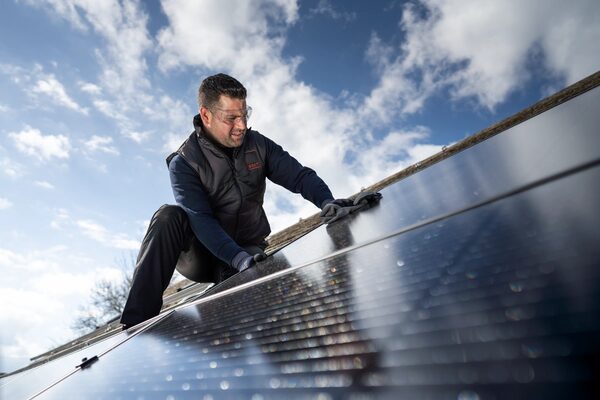
Planning is more permissive than most householders expect, and building regulations are the part more often overlooked.
Roof-mounted solar on a house or flat is considered in most cases permitted development under The Town and Country Planning (General Permitted Development) (England) Order 2015, Schedule 2, Part 14, Class J.27 Richmond Council confirms the legal basis sits in Part 14 (Renewable Energy) of that order.28 Bristol Council notes the permitted development rights are Class A and Class B for domestic premises.29
Conservation areas are less restrictive than their reputation suggests. York Council states that planning permission is not usually required to install solar panels on the roof of a house or block of flats in a conservation area, even if the roof faces a highway.30 Richmond Council agrees that in many cases, even in conservation areas, homes can have solar panels without requiring planning permission under permitted development.28 Bromley Council notes that installation on residential buildings may be permitted development with no need to apply.6
The exceptions are specific and worth listing.
- Walls fronting a highway in a conservation area. Planning permission is required when installing solar panels or other equipment on a wall fronting a highway within a conservation area.30 Bristol Council gives the same condition.29
- Listed buildings. Cornwall Council states that solar panels on listed buildings will need planning permission and listed building consent.31 Bromley Council adds that planning permission may apply in addition.6
- Schools, colleges, universities and hospitals within a conservation area require planning permission.27
- Industrial buildings and warehouses require permission if the installation is used for any purpose other than those of the undertaking concerned, if within 5 metres of any boundary of the curtilage, or if the external appearance of the building is materially affected.27
Building regulations are separate from planning. York Council states that installing solar panels may require approval under the Building Regulations, and specifies that this covers the associated electrical works.30 Bromley Council gives the same position.6
There is also a network registration step that catches people out. Hammersmith and Fulham Council states that you must register the installation with UK Power Networks, usually done by your installer.3 That registration is what makes the connection legitimate, and it is normally handled as part of commissioning.
Where funding stands in each UK nation
Support for solar is not uniform across the four nations, and the differences are structural rather than cosmetic.
England has the Energy Company Obligation operating UK wide, with ECO4 Flex delivered through local authority declarations.10 The Future Homes Standard is set to require solar panels on most new builds in England.9 Planning rules described above are those of the England order.27
Scotland is covered by the same ECO4 obligation and the same FIT legacy, since the FIT scheme's territorial extent was England, Wales and Scotland.22 Edinburgh Council describes ECO4 and related schemes as UK Government-backed schemes regulated by Ofgem.16 Devolved grant and loan support for home energy work is administered separately, and is set out on the home energy grants in Scotland page.
Wales also sits within the FIT territorial extent and the ECO4 obligation.22 Welsh Government guidance on generating your own solar electricity confirms that power can be generated even on a cloudy day.32 Ofgem's Domestic RHI annual report records that Wales has the highest proportion of solar thermal accreditations at 11.4%, against England at 8.4% and Scotland at 6.4%.33 That is a heat technology rather than PV, but it indicates a higher uptake of renewable measures in Wales. Devolved support is covered on the home energy grants in Wales page.
Northern Ireland sits outside the FIT scheme's territorial extent, which covered England, Wales and Scotland only.22 The VAT zero rate applies UK wide, so Northern Ireland households get that relief.2 Devolved support is covered on the home energy grants in Northern Ireland page.
The VAT relief is the one measure that behaves identically in all four nations, which makes it the most dependable element of the picture.2 Everything else depends on where the property is and which suppliers operate there.
Sources33 cited
- Solar panel installation, Energy Saving Trust, 2026-09-07
- VAT energy saving materials and grant funded heating supplies, HM Revenue and Customs, 2026-09-17
- Solar panels, London Borough of Hammersmith and Fulham, 2025-10
- Plug and play: 7 million want plug-in balcony solar as law changes, Uswitch, 2026-08-18
- Feed-in Tariffs scheme closure, Ofgem, 2026-09-17
- Solar photovoltaic (PV) panels, London Borough of Bromley, 2026-09-17
- POST note 771: Smart Export Guarantee, Parliamentary Office of Science and Technology, 2026-06-25
- Solar panels, Oxfordshire County Council, 2026-09-17
- Buying a house with solar panels, Energy Saving Trust, 2026-08-13
- ECO flexibility funding, Ceredigion County Council, 2026-09-17
- ECO4 scheme, West Lindsey District Council, 2025-07
- ECO4 Flex open, South Cambridgeshire District Council, 2026-09-17
- ECO4 supplier administration guidance, Ofgem, 2026-07-06
- ECO4 delivery guidance v3.2, Ofgem, 2025-12-08
- ECO4 delivery guidance version 4.0, Ofgem, 2026-03-26
- Financial help for energy efficiency and low carbon heating, City of Edinburgh Council, 2026-09-17
- The Value Added Tax (Installation of Energy-Saving Materials) Order 2022, legislation.gov.uk, 2026-09-17
- Feed-in Tariffs FIT generators, Ofgem, 2026-09-17
- FIT quarterly report issue 63, Ofgem, 2026-03-30
- VAT fuel and power, HM Revenue and Customs, 2026-09-17
- Feed-in Tariffs annual report scheme year 13, Ofgem, 2023-12
- FIT annual report scheme year 14, Ofgem, 2026-09-17
- Feed-in Tariffs deployment caps reports, Ofgem, 2026-09-17
- Guidance for FIT generators V18, Ofgem, 2026-04-01
- Heat pump deployment quarterly statistics, United Kingdom 2025 Q3, Department for Energy Security and Net Zero, 2025-12-04
- Apply for the Great British Insulation Scheme, GOV.UK, 2026-09-17
- Solar panels, Wirral Council, 2026-09-17
- Solar panels and permitted development, London Borough of Richmond upon Thames, 2026-07-06
- Planning permission for solar panels, Bristol City Council, 2026-09-17
- Solar panels guidance, City of York Council, 2026-09-17
- Solar panels and planning permission, Cornwall Council, 2026-09-17
- Generating your own energy: solar electricity, Welsh Government, 2018-09
- Domestic RHI annual report scheme year 11, Ofgem, 2025-07
 Solar Export PaymentsIf you have solar panels, how do you actually get paid for the electricity you send back to the grid?
 Grants and Energy IndependenceCan you get a grant for solar panels or a battery?
 The Full Solar Panels GuideHow much do solar panels cost, and what could they save you each year?
 Solar PV Deployment StatisticsHow much solar power does the UK actually have, and how much of it sits on people's roofs?
 Solar and Energy IndependenceHow far domestic solar cuts dependence on suppliers and the grid, what self-consumption really looks like across the year, what a battery, diverter or EV adds, and the grid-outage limit of ordinary inverters.
 The Full Grants and Schemes GuideWhich grants can you actually get right now, and how do you apply for them?