

In this guide
A Cold Weather Payment is £25 paid automatically for each seven-day period of very cold weather between 1 November and 31 March. The trigger is an average temperature of zero degrees Celsius or below, recorded or forecast, over seven consecutive days at the weather station linked to the household's postcode1. Nothing is claimed and nothing is applied for: eligibility follows from receipt of a qualifying benefit, and the payment arrives in the same account as the household's benefit payments2.
The scheme runs in England, Wales and Northern Ireland. It does not run in Scotland, where the Winter Heating Payment replaced it from winter 2022/23 and is paid regardless of weather conditions in the area1. That single difference changes the character of the support entirely: south of the border the money is contingent on the weather, and north of it the money is not.
For a household watching its energy independence, the payment is small and conditional. It does not reduce reliance on the grid or on a supplier, and it does not fund any measure that would. What it does is soften the cost of the coldest weeks, at a fixed rate that does not vary with the size of the home, the fuel used or the number of occupants.
What a Cold Weather Payment is and who it is for
The payment exists to support people on certain benefits when very cold weather settles over their area for more than a week5. It is a targeted, weather-contingent top-up rather than a general winter allowance, and the design reflects that: the money moves only when the temperature does.
Eligibility rests on two things happening at once. The household must be receiving a qualifying benefit or Support for Mortgage Interest, and the linked weather station must record or forecast the seven-day average at or below zero degrees Celsius2. Neither condition alone produces a payment. A household on Pension Credit in a mild winter receives nothing; a household in a freezing postcode with no qualifying benefit receives nothing either.
The scheme is administered by the Department for Work and Pensions in England and Wales, and by the Northern Ireland Department for Communities through the Northern Ireland Pension Centre and Jobs and Benefits offices2. Payments are automatic for those eligible, and most people are paid automatically if they qualify6. There is no application form, no assessment of the home's energy performance, and no requirement that the money be spent on heating.
Because the payment is automatic, it depends on the benefit record being correct. A change of address, a change in the benefits received, or a new child in the household can all affect whether a payment is generated, and the scheme rules place the duty to report those changes on the claimant rather than the department1.
"You do not need to apply."
£25 for each 7-day cold spell: the trigger and the amount
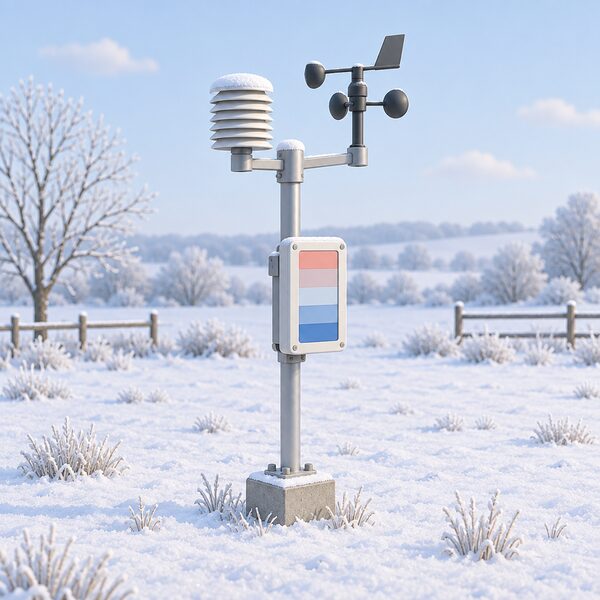
The amount is £25 for every seven-day period of very cold weather7. The trigger is precise: the average temperature in the area must be recorded as, or forecast to be, zero degrees Celsius or below over seven consecutive days1. The forecast element matters, because it means a payment can be generated before the cold has finished, and it means the scheme does not wait for retrospective confirmation.
The measurement is not taken at the household. It is taken at the weather station linked to the postcode, which is why two streets in different postcode areas can produce different outcomes in the same week. The Commons Library describes the payment as aimed at people on certain benefits and paid when the local temperature reaches below 0°C8, while the scheme rules state the seven-day averaging condition in full2. The two descriptions are consistent: the average over the week is what counts, not the minimum on any one night.
A postcode checker is available for England and Wales, allowing a household to see whether a payment has been triggered for its area1. The same tool does not cover Northern Ireland, where queries go to the Northern Ireland Pension Centre or a local Jobs and Benefits office2.
| Element | Detail |
|---|---|
| Amount per qualifying period | £257 |
| Qualifying period | 7 consecutive days1 |
| Temperature threshold | Average of 0°C or below2 |
| Measurement point | Weather station linked to the postcode5 |
| Season | 1 November to 31 March4 |
| Payment deadline | Within 14 working days of the cold spell2 |
The rate has been stable. The Scottish Government's consultation on replacing the payment described it as a Cold Weather Payment of £25 for every 7 day period of very cold weather7, and the engagement responses to that consultation described the Winter Heating Payment as a replacement for the previous £25 per week payment for each week of cold weather9. The scheme has not been uprated in line with energy prices, and the £25 figure is the same in each source that states it.
Who qualifies: the benefits that make you eligible
The qualifying benefits are Pension Credit, income-related Employment and Support Allowance, Universal Credit and Support for Mortgage Interest2. Receipt of one of these is the gateway; the weather trigger then determines whether money moves in any given week.
For income-related Employment and Support Allowance there are additional routes. A household may also qualify with a severe or enhanced disability premium, a pensioner premium, a disabled child, or a child under five living with the claimant2. These are not separate benefits but characteristics of the claim that bring the household within scope.
Universal Credit claimants are within scope, and the payment is separate from the Universal Credit award itself. It does not affect other benefits, and it is paid into the same bank or building society account as the household's benefit payments2. The same principle applies to the Winter Heating Payment in Scotland, which does not affect any other benefits the recipient may get3.
The benefit gateway means the payment reaches a defined group rather than every household in a cold area. A household on a low income but not in receipt of one of the listed benefits does not qualify, however cold the weather. That is a deliberate limit, and it is the reason the scheme is described as aimed at people on certain benefits rather than at households generally8.
Where it runs: England, Wales and Northern Ireland, and the Scottish alternative

Cold Weather Payments are made to certain recipients of means-tested benefits in England, Wales and Northern Ireland3. The postcode checker covers England and Wales1. Northern Ireland operates the same payment under its own administration, with queries directed to the Northern Ireland Pension Centre or a local Jobs and Benefits office2.
Scotland is different. Cold Weather Payments do not run there, and a household in Scotland cannot get them1. The Winter Heating Payment replaced the Cold Weather Payment in Scotland from winter 2022/233, and it is paid regardless of weather conditions in the area1. It is a single payment during winter each year rather than a payment per cold spell10.
The Scottish Government has set out a further change. It stated its intention to replace the Cold Weather Payment with a new annual payment of £50 for all low-income households who are currently eligible for the Cold Weather Payment, covering around 400,000 people in Scotland11. The same commitment appears in the periodic report on tackling fuel poverty, under Action 4111. The rationale given in consultation was that removing the cold weather condition would provide people on other qualifying low income benefits with an additional payment12, and the Scottish Government's response to that consultation confirmed the direction of travel13.
| Nation | Scheme | Weather condition |
|---|---|---|
| England | Cold Weather Payment | Average of 0°C or below over 7 days1 |
| Wales | Cold Weather Payment | Average of 0°C or below over 7 days1 |
| Northern Ireland | Cold Weather Payment | Average of 0°C or below over 7 days2 |
| Scotland | Winter Heating Payment | None; paid regardless of weather1 |
There is also a separate Scottish payment for disabled children and young people and their families with increased heating costs over winter, the Child Winter Heating Payment13. Statistics for winter 2021/2022 covered payments issued to 31 March 2022, with breakdowns by child age, local authority, and recipient age and number of eligible children14.
How the payment arrives: automatic, within 14 working days
After each period of very cold weather in the area, payment should arrive within 14 working days2. The clock starts when the cold spell is identified, and the payment is made automatically if the household is eligible2. No claim, no form and no contact with the department is required to start the process.
The scheme operates between 1 November and 31 March4. The published guidance for the 2025 to 2026 season states the same window, with £25 for each 7-day period of very cold weather between 1 November 2025 and 31 March 20261. The scheme runs from 1 November to 31 March each winter3, and the Met Office describes the same arrangement, noting that between 1 November and 31 March people claiming certain benefits will receive a payment of £2515.
Because the season closes on 31 March, a cold spell in the final week can generate a payment that arrives in April. The 14 working days run from the cold spell, not from the end of the season, so the payment is not lost by the calendar.
The payment is automatic for those eligible4, and payments are automatic so there is no need to apply16. Most people are paid automatically if they qualify6. The money goes into the same account as the household's benefit payments2.
Changes you must report: babies, children under 5 and hospital stays
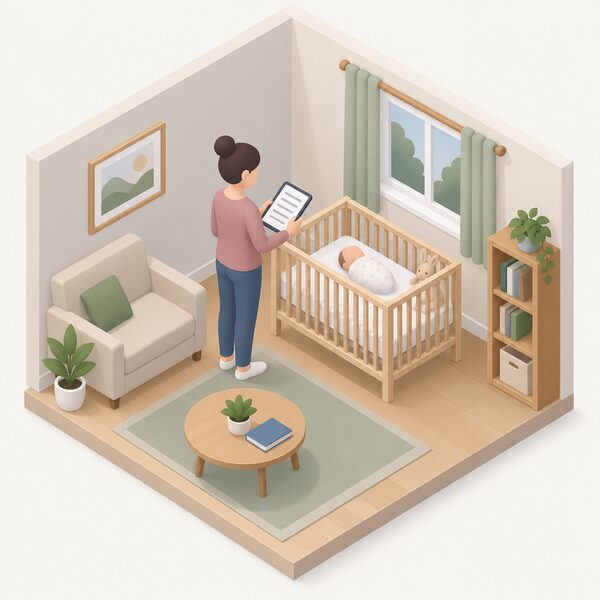
The automatic nature of the payment depends on the benefit record being current. A household may need to report a change in circumstances if it has a baby or if a child under 5 comes to live with it1. The duty sits with the claimant, and the consequence of not reporting is that a payment that should have been generated may not be.
For income-related Employment and Support Allowance, the office that pays the benefit must be told if a child under five comes to live with the household2. For Universal Credit, the change is recorded in the Universal Credit account, the baby or child under five is added to the claim, and a note is added to the journal2. These are administrative steps rather than applications for the Cold Weather Payment itself, but they determine whether the household is in scope when the temperature falls.
Hospital stays are treated separately. In Northern Ireland, the Northern Ireland Pension Centre or a local Jobs and Benefits office must be told if the claimant goes into hospital, as this could affect the payment2. The same principle of prompt reporting applies to the Winter Fuel Payment, where any changes in circumstances should be reported straight away17.
How it differs from the Winter Fuel Payment and other winter support
Cold Weather Payments are different to Winter Fuel Payments1. The distinction is structural rather than a matter of amount. A Cold Weather Payment is triggered by temperature and can be paid several times in a winter; a Winter Fuel Payment is an annual, lump-sum payment for older people in England, Wales and Northern Ireland3, made automatically between November and December in most cases16.
The Winter Fuel Payment is intended to help pay winter heating bills17, and independent guidance describes it as a tax-free payment of between £100 and £300 to help certain groups pay for heating18. Eligibility is age-based rather than weather-based, and a household usually living outside England, Wales or Northern Ireland is excluded19. The amount may be different for those receiving Pension Credit, Universal Credit or income-related ESA and living with someone else who is eligible20. It does not affect other benefits or income17.
The Warm Home Discount is a third, separate mechanism. It is a fuel poverty reduction scheme, reducing the energy costs of low-income and vulnerable households across Great Britain21, and it primarily provides support through the provision of £150 energy bill rebates, funded through a levy on all domestic gas and electricity customers21. It covers England, Scotland and Wales and runs until 31 March 203121, and it does not run in Northern Ireland, where an Affordable Warmth Scheme is available instead21. The scheme requires large domestic energy suppliers to provide an annual discount of £150 to eligible households22, and it is a one-off discount off household electricity bills23. Eligibility turns on receiving Pension Credit or living in a low-income household24.
| Scheme | Amount | Trigger | Nations |
|---|---|---|---|
| Cold Weather Payment | £25 per 7-day cold spell1 | Temperature at linked weather station2 | England, Wales, Northern Ireland |
| Winter Fuel Payment | £100 to £300, tax-free18 | Age and benefit status19 | England, Wales, Northern Ireland |
| Winter Heating Payment | Single winter payment10 | None; paid regardless of weather1 | Scotland |
| Warm Home Discount | £150 electricity bill rebate21 | Benefit and supplier membership24 | England, Scotland, Wales |
The Warm Home Discount has been confirmed through to 2030-3125, and the government has set out a change to how its costs are recovered, shifting the recovery of Warm Home Discount costs from the standing charge to the unit rate from April 202625. The scheme reached around 6 million households in winter 2025-26, with a £150 rebate off their winter energy bill25. An earlier figure of £140 appears in some official guidance26, so the two amounts sit side by side in the published material; the £150 figure is the one carried by the most recent statistics and by the scheme's own guidance21.
Beyond these, the Crisis and Resilience Fund provides grant funding to local authorities in England27, replacing the Household Support Fund in England from April 202628. It brings together existing provisions by replacing the household support fund28. The Welsh Government publishes its own guidance on help with utility bills29.
If a payment has not arrived: who to contact

In Northern Ireland, a household that thinks it should have received a payment but has not should tell the Northern Ireland Pension Centre or a local Jobs and Benefits office2. That is the route for both a missing payment and a query about whether a cold spell was recorded in the area.
In Scotland, where the Winter Heating Payment applies, a household worried that it has missed a payment it should have got can send Social Security Scotland a request10. The Winter Heating Payment does not affect any other benefits the recipient may get3.
For the Winter Fuel Payment, a household that qualifies but is not paid automatically can phone the Winter Fuel Helpline on 08459 15 15 1516. That route is separate from the Cold Weather Payment and applies to the age-based payment rather than the weather-triggered one.
The postcode checker is the first step for a Cold Weather Payment query in England or Wales, because it establishes whether the trigger was met for the area1. If the checker shows a qualifying period and no payment has arrived within 14 working days, the query goes to the office that pays the household's benefit2.
What the payment does for a household's energy independence
The Cold Weather Payment is a cost offset, not a step towards self-sufficiency. It does not fund insulation, a heat pump, solar panels or battery storage, and it does not reduce the household's reliance on the grid or on a supplier. The dependence it addresses is financial rather than technical: it lowers the bill in the coldest weeks without changing what the home draws from the network.
The conditionality is the defining feature. In England, Wales and Northern Ireland the money is contingent on a weather station reading, which means a household can do nothing to bring a payment forward and nothing to prevent one. In Scotland the Winter Heating Payment removes that condition and pays regardless of the weather1, which makes the Scottish support predictable and the rest of the UK support not.
The amount is fixed at £25 per qualifying period and does not scale with the size of the home, the fuel used or the number of occupants1. A large, poorly insulated house and a small flat receive the same sum for the same cold spell. That is a limit worth stating plainly: the payment softens the coldest weeks but does not change the underlying cost of heating a home, and it does not move a household any closer to generating or storing its own energy.
For households looking at measures that do change the underlying position, the wider grant landscape is covered in home energy grants, with the supplier-funded route set out in the Energy Company Obligation and the current phase in ECO4. The age-based payment is covered in the Winter Fuel Payment, and the bill rebate in the Warm Home Discount. Households in Scotland can compare the devolved schemes in Home Energy Grants in Scotland, and those in Northern Ireland in Home Energy Grants in Northern Ireland.
Sources29 cited
- Cold Weather Payment, GOV.UK, 2026-09-17
- Cold Weather Payment, Northern Ireland Direct, 2026-09-17
- Winter Fuel Payment and Cold Weather Payment, House of Commons Library, 2026-02-26
- Home and business grants, schemes and advice, East Herts Council, 2026-09-17
- Vital help with energy bills on the way for millions more homes, GOV.UK, 2024-04-05
- Help with household costs, Isle of Anglesey County Council, 2026-09-20
- Low Income Winter Heating Assistance: analysis of consultation responses, Scottish Government, 2022-06-07
- Cold Weather Payments, House of Commons Library, 2026-09-17
- Low Income Winter Heating Assistance: analysis of consultation responses, Scottish Government, 2025-04-22
- Winter Heating Payment, mygov.scot, 2026-09-17
- Tackling fuel poverty in Scotland: periodic report 2021 to 2024, Scottish Government, 2025-04
- Scottish Government response to the LIWHA consultation, Scottish Government, 2022-06-07
- Child Winter Heating Payment, mygov.scot, 2026-09-17
- Child Winter Heating Assistance statistics: winter 2021/2022, Scottish Government, 2022-04-26
- Keeping your home warm in winter, Met Office, 2026-09-20
- Energy saving grants and funding, Tameside Council, 2026-09-17
- Winter Fuel Payment, GOV.UK, 2026-09-17
- Warm Home Discount guide, Uswitch, 2026-08-12
- Winter Fuel Payment: eligibility, GOV.UK, 2026-09-17
- Winter Fuel Payment: how much you'll get, GOV.UK, 2026-09-17
- Warm Home Discount, Ofgem, 2026-09-17
- Warm Home Discount statistics 2025 to 2026, Department for Energy Security and Net Zero, 2026-06-18
- Warm Home Discount statistics 2025 to 2026, Department for Energy Security and Net Zero, 2026-09-17
- The Warm Home Discount Scheme: if you live in England and Wales, GOV.UK, 2026-09-17
- DESNZ annual report and accounts 2025 to 2026: performance report, Department for Energy Security and Net Zero, 2026-09-17
- Energy pricing and the future of the energy market, Public Accounts Committee, 2026-09-20
- Crisis and Resilience Fund: guidance for local authorities in England, GOV.UK, 2026-01-13
- Crisis and Resilience Fund, Hansard, 2026-03-25
- Get help with your utility bills, Welsh Government, 2026-09-17
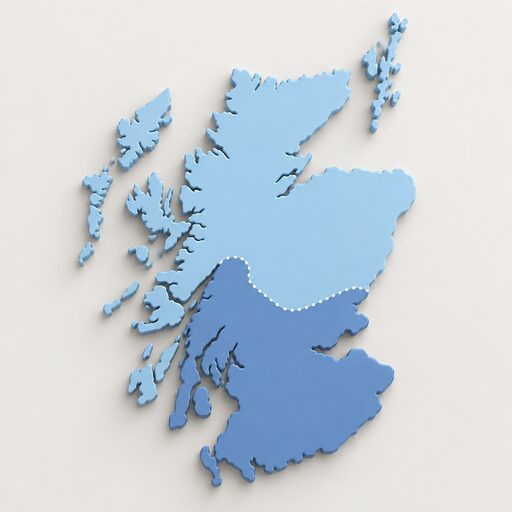 Tariffs in ScotlandWhy do Scottish electricity bills differ from the rest of Great Britain, and why do standing charges cost more in the north?
 Older People and Home EnergyOlder people often pay more to keep warm and can miss out on help they are entitled to.
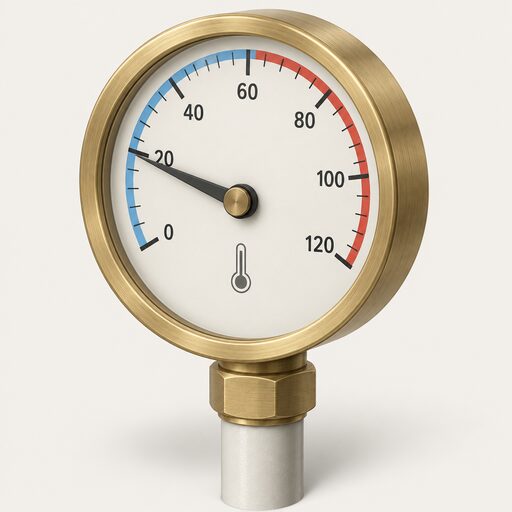 Weather Compensation ControlsDoes your boiler or heat pump run hotter on cold days and cooler when it is mild?
 Flexibility Payments for HomesCan you really get paid for using less electricity at peak times, and how much would a household actually earn?
 The Full Tariffs GuideWhich energy tariff suits how you live, and will switching really save you money?
 Power Cuts in ScotlandWho do you call when the power goes out in Scotland, and how long should it take to come back on?