
In this guide
A "free solar panel" offer is almost never a gift. It is a financing arrangement in which a company pays for the panels, owns them, and recovers its money from the income the system generates. The household gets the electricity the panels produce while the agreement runs; the company gets the Feed-in Tariff (FIT) income, and sometimes a monthly charge as well. The Renewable Energy Consumer Code (RECC), which governs the sale and leasing of small-scale generators to domestic consumers, requires the company to set out the value and conditions of that arrangement in writing before a contract is signed1.
The sums involved are not trivial. The FIT scheme paid out almost £1.86 billion in Scheme Year 14, made up of £1.76 billion in generation payments and £78 million in export payments, and the value of the scheme rose by £125.3 million (7.3%) on the previous year2. A rent-a-roof contract assigns the full value of the expected Feed-in Tariff income over 20 years to the company that owns the panels1. That is the trade at the centre of every one of these deals.
The FIT scheme closed to new applications on 1 April 2019, so no new rent-a-roof arrangement can be built on FIT income3. Existing accredited installations continue to receive payments for their eligibility period, typically 20 years3. What remains available to a householder today is either an outright purchase, a grant-funded installation, or a subscription-style arrangement with different economics. This page sets out how third-party ownership works, what the contract must disclose, and what it means for a mortgage, a sale, and the household's control of its own energy.
What "free solar panels" actually means
The phrase covers two distinct arrangements, and the difference matters. In a rent-a-roof deal, the company installs and owns the panels on the householder's roof and takes the FIT income for the life of the agreement. In a third-party ownership or subscription model, the household pays a monthly fee for the use of a system owned by someone else, or receives the electricity at a discounted rate. Both leave the equipment in someone else's name.
The physical installation is the same either way. Solar panels include roof-mounted panels as well as ground-mounted panels within the curtilage of residential accommodation, and free-standing solar means photovoltaic or solar thermal equipment not installed on a building6. A rent-a-roof system is normally roof-mounted, which is why the state of the roof and the terms of any lease or mortgage become part of the deal rather than a side issue.
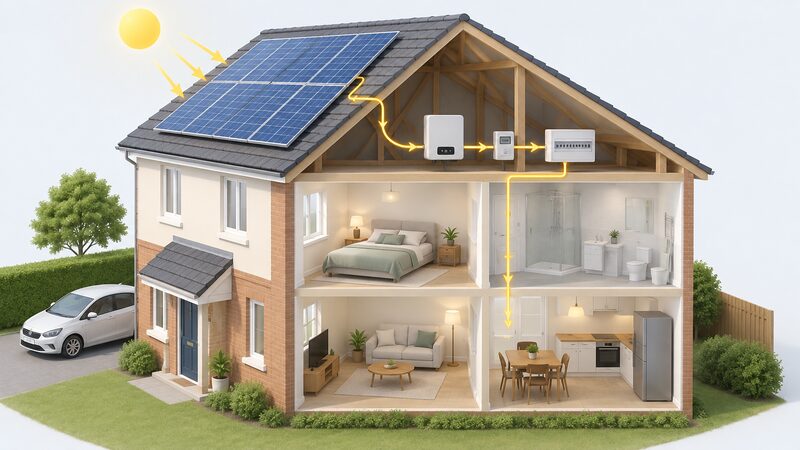
What the household receives is the electricity generated on site, which reduces the import from the grid. What it does not receive, under a standard rent-a-roof contract, is the generation income. The RECC's guidance for consumers considering free solar PV systems is built around a single principle: the company must give full information in writing about the value and conditions of the arrangement before the consumer signs1. That includes the value being handed over, not just the benefit being received.
The lens for a household is straightforward. A third-party-owned system reduces the amount of electricity bought from a supplier, which is a real gain in independence from the grid. It does not give the household control of the asset, the income, or the decision about what happens to the panels at the end. Those remain with the owner.
What you give up: the Feed-in Tariff income over 20 years
The FIT scheme was designed by government to promote the uptake of small-scale renewable and low-carbon electricity generation, and it launched on 1 April 20108. It covered solar photovoltaic, wind, hydro, anaerobic digestion and fossil fuel-derived combined heat and power (micro-CHP), with installations up to 5MW total installed capacity, or 2kW for micro-CHP2. It operated across England, Wales and Scotland2.
Most generators accredited on the FIT are eligible to receive payments for a maximum period of 20 years following their eligibility date, with solar installations accredited before 1 August 2012 running to a maximum of 25 years, and all micro-CHP installations to 10 years2. Tariffs were adjusted annually, and deployment caps placed limits on the total capacity that could receive a particular tariff rate in a particular tariff period3. Tariff periods for solar PV, wind, hydro and anaerobic digestion were quarterly; for micro-CHP they were six monthly3.
The scale of what a rent-a-roof contract assigns is visible in the scheme accounts. In Scheme Year 14, running from 1 April 2023 to 31 March 2024, the total number of active accreditations fell by 206 to 869,857, and 8.3 TWh of renewable electricity was generated on the scheme, a decrease of around 0.56 TWh on the year before2. Approximately 1.3 TWh was exported to the grid2. The total scheme cost was nearly £1.76 billion, and Ofgem's cost to administer the scheme was just under £3.9 million, equivalent to 0.22% of the levelisation fund2.
For a householder weighing an offer, the point is that the income stream being signed away is the mechanism by which the company recovers its capital and makes a return. The RECC requires disclosure of whether the consumer will receive the Feed-in Tariff income once the capital cost of the system has been repaid1. Where the answer is no, the household's benefit is limited to the electricity used on site for the whole term.
What the company must tell you in writing before you sign
The RECC sets out the standards applicable to the selling or leasing of small-scale heat and power generators, whether from renewable or other low carbon sources, to domestic consumers5. It was formed in 2006 and is developed, sponsored and run by Renewable Energy Assurance Ltd (REAL)5. Its scope covers marketing, pre-contractual information, quotations, deposits, contracts, guarantees and after-sales service, and it dovetails with the MCS5.
For members offering free systems in return for assigning Feed-in Tariff benefits, the disclosure list is specific. Before the consumer signs a contract, the company must give full information in writing about the value and conditions of the arrangement1. That disclosure must cover:
- the legal ownership of the system1
- the up-front cost of the system if purchased outright, and the up-front cost if purchased with a loan1
- whether the consumer can opt to purchase the system at a later date1
- whether the consumer can add to the system at a later date1
- whether the consumer will receive the export premium1
- whether the consumer will receive the Feed-in Tariff income once the capital cost of the system has been repaid1
- arrangements for maintaining and insuring the system1
- implications for the consumer's existing or future mortgage or other loans1
- arrangements for terminating the agreement1
- arrangements for assigning the arrangement if the property changes hands1
- who will be responsible for removing the system at the end of its useful life1
- any additional charges1
- in the case of a hire purchase agreement, details of the consumer credit licence1
"they must give the consumer full information in writing about the value and conditions of the arrangement before the consumer signs a contract"
A householder reading an offer can use that list as a checklist. If any of those points is missing from the paperwork, the disclosure is incomplete.
Ownership, the roof and your mortgage
The single most consequential term in a rent-a-roof contract is who owns the equipment. Where the company owns the panels, a third party has a legal interest in fixtures on the property, and that interest has to be disclosed to a mortgage lender. The RECC requires the contract to address the implications for the consumer's existing or future mortgage or other loans1.
The physical condition of the roof matters too. Official guidance is that the roof must be in good condition and that there must be sufficient space for the installation9. A roof that needs replacing during the term of a 20-year agreement creates a problem the contract should anticipate, because the panels have to come off and go back on.
Planning status is usually straightforward but not universal. Fixing solar panels to the roof of a single dwelling house is likely to be considered permitted development in many cases, and installing solar panels on a roof will often fall under permitted development rights where certain limits and conditions are met10. These permitted development rights apply to houses; residents of flats considering solar panels are directed to their local planning authority for guidance10. Leaseholders may need permission from a landlord, freeholder or management company, and building regulations will normally apply to a solar panel on a roof12.
Listed buildings are a separate regime. Listed building consent is required to place solar panels on a listed building, including buildings within the curtilage which pre-date July 1948, and it is needed before works can commence13. Some authorities state that listed properties always need both planning permission and listed building consent14. In Scotland, free-standing solar is defined in legislation as photovoltaic or thermal equipment not installed on a building, and free-standing panels within the rear curtilage of a dwellinghouse are a typical development permitted under Class 3B15.
Maintenance, insurance, repairs and who is responsible
Who maintains and insures a third-party-owned system is a contractual matter, and the RECC requires the arrangements for maintaining and insuring the system to be disclosed before signature1. In practice, where the company owns the asset, it has an interest in keeping it working, because the income depends on generation. But the contract is what determines who pays when something fails, and a householder should not assume the owner's interest and the owner's obligation are the same thing.
The same applies to removal at the end of life. The RECC requires the contract to state who will be responsible for removing the system at the end of its useful life1. Official guidance on domestic solar panels is that panels should be removed as soon as they are no longer needed17. Where the company owns the panels, that obligation normally sits with the company, but the wording of the individual agreement governs.
The National House Building Council has taken a view on the technology itself, stating that "providing the maintenance costs and pay-back periods are accurately predicted, this reliable technology [solar panels] has a role"18. That is a statement about solar panels in general, not an endorsement of any particular ownership model, and it turns on the accuracy of the cost and payback assumptions in the individual case.
For a household, the independence question here is real. A system owned by someone else means the household does not choose the maintenance contractor, does not control when the panels are serviced, and cannot simply decide to remove them. The electricity saving continues only while the arrangement continues and the equipment works.
Buying the system later, adding to it, or ending the agreement
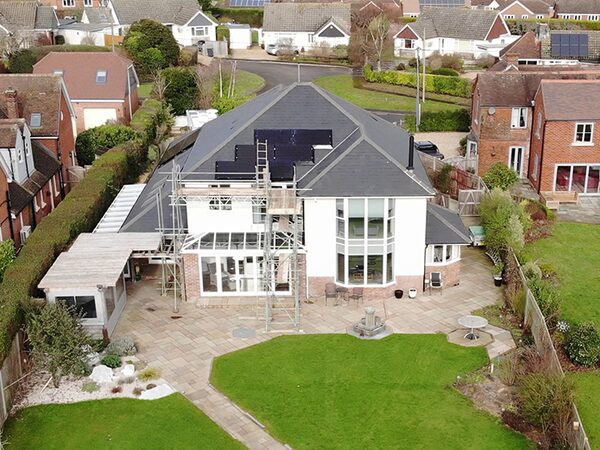
Three exit routes matter: buying the system, extending it, and terminating the contract. All three are disclosure points under the RECC, which requires the contract to state whether the consumer can opt to purchase the system at a later date, whether the consumer can add to the system at a later date, and the arrangements for terminating the agreement1. It also requires the up-front cost of the system if purchased outright and the up-front cost if purchased with a loan to be set out, so that the household can see what buying out the arrangement would cost1.
Where a purchase option exists, the price is a matter for the contract. Where it does not, the household has no route to ownership short of the agreement ending. Adding to a third-party-owned system raises the same issue: any additional charges must be disclosed, and the owner's consent is required because the equipment belongs to the company1.
There is a parallel structure in another government scheme that shows how assignment of rights can work. Under the Domestic Renewable Heat Incentive, an Assignment of Rights arrangement allowed an investor to assist in meeting the cost of the installation in exchange for rights to receive RHI payments; the applicant owned the system but received no RHI payments19. That is a different scheme with different rules, but it illustrates the same underlying trade: someone else funds the equipment and takes the income.
For a household considering a buy-out, the practical question is what the system is worth at the point of purchase against what it will generate for the remaining term. The FIT eligibility period is typically 20 years, and for older solar installations it can be 252. A buy-out late in the term buys a shorter remaining income stream.
Selling the property: assigning the arrangement to a new owner
A rent-a-roof agreement does not disappear when the house is sold. The RECC requires the contract to set out the arrangements for assigning the arrangement if the property changes hands1. In practice the buyer has to take on the agreement, or the seller has to buy it out, or the sale stalls.
This is not unique to solar. The Green Deal loan was attached to a property rather than an individual, so if a homeowner sold their home, the loan passed to the new owner20. The principle is the same: an obligation tied to the property travels with it, and a buyer's solicitor and lender will look for it.
The practical consequences for a sale are worth stating plainly. A buyer's mortgage lender will want to see the terms of any third-party interest in the roof. A buyer may be unwilling to take on an agreement that gives them the electricity but not the income. And the remaining term of the agreement affects how attractive the property is, because the new owner inherits both the benefit and the restriction.
For the household's energy independence, this is the sharpest limit of the model. The system reduces grid import while the household lives there, but the household never owns the means of generation, and the arrangement constrains what can be done with the property itself.
Your protections: the Renewable Energy Consumer Code and MCS installers
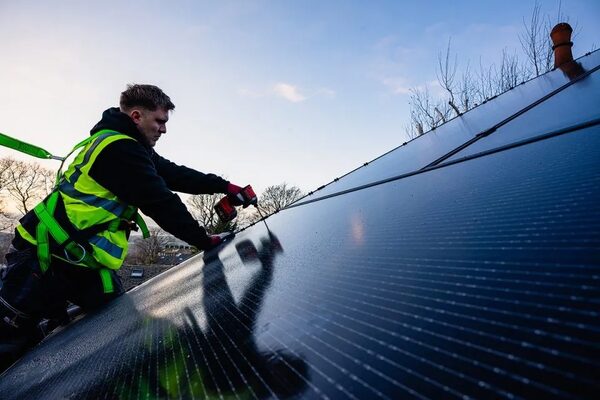
The RECC is the main consumer protection for the sale and lease of small-scale generators to domestic consumers5. It covers marketing, pre-contractual information, quotations, deposits, contracts, guarantees and after-sales service, and it dovetails with the MCS5. It is run by Renewable Energy Assurance Ltd5.
For anyone comparing offers, official guidance is to get various quotes to compare prices of different installers9. The Centre for Sustainable Energy publishes a detailed guide with information about the cost of solar panel installation and how to find an MCS accredited installer7.
Complaints about FIT payments themselves go to Ofgem, but the rules on who may complain are narrow. Only the owner of the installation, or those who have been assigned FIT Payment rights (nominated recipients), may complain or raise a dispute, although non-owners may still make certain information requests21. That is a direct consequence of third-party ownership: if the company owns the system and holds the FIT rights, the householder is not the party who can dispute the payments.
How the Feed-in Tariff scheme worked, and what its closure means
The FIT scheme launched on 1 April 2010 and closed to new applications on 1 April 2019, with all pathways for accreditation now closed2. It was underpinned by the Feed-in Tariffs Order 2012 as amended and conditions 33 and 34 of the Standard Conditions of Electricity Supply Licence2. It applied in England, Wales and Scotland2.
The closure does not affect installations which are already accredited3. FIT support is payable for the installation's eligibility period, typically 20 years, and tariffs are adjusted annually3. The scheme's statistics run from 1 April 2010 to 31 March 2026, covering the total number of installations and total capacity by technology alongside installation types, with a further breakdown by region22. The most recent quarterly report covers the third quarter of FIT Year 16, from 1 October to 31 December 20258.
For existing rent-a-roof arrangements, the closure changes nothing about the payments already flowing. For anyone considering a new offer today, it changes everything: there is no FIT income to assign, so a modern third-party ownership or subscription deal has to be built on a monthly charge, a share of the electricity saving, or export payments under the Smart Export Guarantee rather than the FIT7.
The direction of travel in policy is towards householder ownership rather than third-party ownership. Changes to permitted development rights rules mean more homeowners and businesses will be able to install solar panels on their roofs without going through the planning system, and homes with flat roofs will be able to install panels without planning permission, bringing the rules in line with those for businesses23. Plug-in solar panels have come to market, with government noting that installation may require permission from a landlord, building owner or freeholder, planning permission, or listed building consent24.
For a household, the choice between a third-party-owned system and an owned one is a choice about who holds the asset and the income. A grant-funded or self-funded installation leaves the household in control of the panels, the export payments and the decision about what happens next. A rent-a-roof or subscription arrangement trades that control for a lower up-front cost, and the contract is where the terms of that trade are written down.
Sources24 cited
- Information regarding free solar PV systems, Renewable Energy Consumer Code, 2026-09-17
- Feed-in Tariffs annual report, Scheme Year 14, Ofgem, 2024-12
- Feed-in Tariffs scheme closure, Ofgem, 2026-09-17
- Guidance for FIT Generators V18, Ofgem, 2026-04-01
- Renewable Energy Consumer Code, Chartered Trading Standards Institute, 2026-09-20
- VAT Energy Saving Materials and Grant Funded Heating Supplies, HM Revenue and Customs, 2026-09-17
- Solar panels, Oxfordshire County Council, 2026-09-17
- Feed-in Tariffs quarterly report, issue 63, Ofgem, 2026-03-30
- Solar photovoltaic (PV) panels, London Borough of Bromley, 2026-09-17
- Planning permission: solar panels, Welsh Government, 2026-09-17
- Do I need planning permission to add air conditioning to my home?, Planning Portal, 2026-09-17
- Solar panels guidance, London Borough of Islington, 2026-09-17
- Solar photovoltaics and planning in conservation areas, West Suffolk Council, 2026-09-17
- Solar and beyond: planning and solar, Frome Town Council, 2025-09-02
- The Town and Country Planning (General Permitted Development) (Scotland) Amendment Order 2009, legislation.gov.uk, 2009-02-05
- Circular 1/2024: Householder permitted development rights, Scottish Government, 2021-04-01
- Renewable energy, e.g. solar panels and heat pumps, Rother District Council, 2026-09-17
- Research briefing CBP-10170, House of Commons Library, 2026-09-17
- Domestic Renewable Heat Incentive Essential Guide, Ofgem, 2024-06
- Research briefing CBP-9585, House of Commons Library, 2026-05-13
- Dispute resolution, Ofgem, 2026-09-17
- Feed-in Tariffs quarterly statistics, Ofgem, 2026-09-17
- New planning rules to boost solar rollout and slash energy bills, Department for Energy Security and Net Zero, 2023-11-30
- Households can save as plug-in solar panels come to market, Department for Energy Security and Net Zero, 2026-08-26
 Workmanship WarrantiesIf something goes wrong with your solar panels, who actually fixes it and who pays?
 Solar Export PaymentsIf you have solar panels, how do you actually get paid for the electricity you send back to the grid?
 Selling a Home With Energy KitCovers the paperwork a sale requires when a home has solar panels, a heat pump, insulation or a leased roof, and how warranties, export payments and guarantees transfer.
 Financing an InstallationPaying monthly for a boiler, solar panels, battery or heat pump sounds simple, but who actually lends you the money and what happens if the work goes wrong?
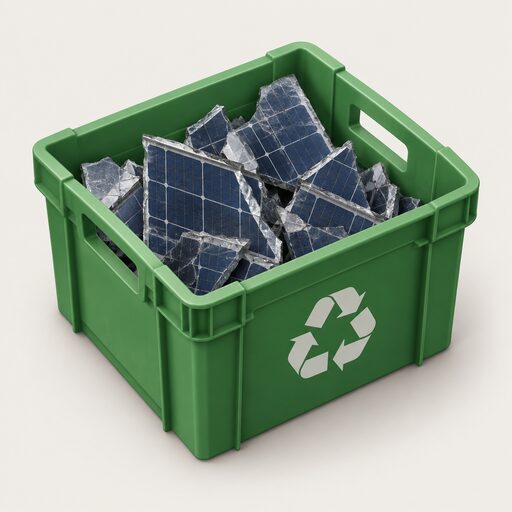 Panel RecyclingWhat actually happens to a solar panel when it stops working, and what can a household do with one?
 When an Installation Goes WrongYour solar panels have stopped generating.