

In this guide
A closed scheme is not the same as a finished one. Several of the grant and payment schemes that householders still search for have stopped taking new applicants but continue to pay the households already inside them, sometimes for years. The Domestic Renewable Heat Incentive closed to new applicants at midnight on 31 March 2022, yet Ofgem has paid almost £1.2 billion in support since the scheme began in 2014 and expects to keep paying until the last participant completes their seven-year support period in March 20291. The Feed-in Tariffs scheme closed to new applications on 1 April 2019 and still generates quarterly statistics on accredited installations3.
Others have simply ended. The Green Homes Grant voucher scheme opened in September 2020 and closed to new applications at 5pm on 31 March 2021, having aimed to enable up to 600,000 households to save up to £600 on their energy bills5. The Home Upgrade Grant ended in March 20258. The Green Deal loan scheme is closed8. The Great British Insulation Scheme is not a grant at all, and runs only until 31 March 20269.
This page is an index of those schemes: what each one did, when it stopped, what replaced it where anything did, and what remains for a household that arrives at a dead scheme name through a search. It covers all four nations, because the closures do not line up across England, Scotland, Wales and Northern Ireland.
The short answer: closed to new applicants, not always finished
Most of the scheme names that still draw searches are closed to new applicants, and the pattern of closure is uneven. The Green Homes Grant voucher scheme provided grants to homeowners and landlords to make energy efficient improvements to homes in England, ran between September 2020 and March 2021, and is now closed5. The Home Upgrade Grant, which served off-gas homes, ended in March 20258. Green Deal loans are closed8. The Domestic Renewable Heat Incentive in Great Britain has now closed, and only applications following a change of ownership can be made1.
What replaced them is not a like-for-like successor in every case. In England, the Warm Homes: Local Grant is a government-funded scheme delivered by local authorities that provides grants for energy performance upgrades and low carbon heating to low-income households living in the worst quality, privately owned homes, with the aim of achieving energy bill savings and carbon savings13. That is a narrower, more targeted instrument than the Green Homes Grant voucher, which was open to homeowners and landlords generally.
In Scotland, the Home Energy Scotland Scheme offers grants to homeowners to install heat pumps, and the Home Energy Scotland Grant and Loan Scheme provides grants and loans to all domestic owner-occupiers in Scotland to install clean heat and energy efficiency measures14. In Wales, Green Homes Wales offers access to grant funding alongside loans for specific energy efficiency measures, reducing out-of-pocket expenses16. Northern Ireland is not covered by the Great Britain-wide schemes described here, and the statistics on government-supported energy efficiency schemes are explicitly for Great Britain17.
The practical answer for a household searching a dead scheme name is that the name is a dead end, but the need it addressed may still be met by a different route. The sections below set out which routes remain.
The figures: dates, totals and the size of each gap

The figures that matter for closed schemes are mostly dates, totals and the size of the gap each closure left.
The Domestic RHI is the largest by money. It was introduced in England, Scotland and Wales in April 2014 and closed to new applications on 31 March 20222. It paid quarterly amounts over seven years for the estimated low-carbon heat systems were expected to produce, based on the annual heat demand of the property taken from its EPC, except for solar thermal and installations metered for payment2. Total support paid since 2014 is almost £1.2 billion, and almost £106.2 million was paid in the past year of the scheme2. Installations accredited on the scheme have generated over 10,121.7 GWh of low-carbon heat2.
The Green Homes Grant is the largest by ambition. It aimed to enable up to 600,000 households to save up to £600 on their energy bills7. Its Local Authority Delivery arm was intended to support retrofit measures improving energy efficiency and increasing low carbon heating in circa 50,000 low-income households6.
The Feed-in Tariffs scheme is the longest-running. It was introduced on 1 April 2010 and closed to new applications from 1 April 2019, with all pathways for accreditation now closed3. Ofgem's quarterly statistics cover the period from 1 April 2010 to 31 March 20264.
| Scheme | Status | Key figure |
|---|---|---|
| Domestic RHI | Closed to new applicants 31 March 2022 | Almost £1.2 billion paid since 20142 |
| Green Homes Grant voucher | Closed 5pm 31 March 2021 | Up to 600,000 households targeted7 |
| Green Homes Grant Local Authority Delivery | Closed | Circa 50,000 low-income households6 |
| Home Upgrade Grant | Ended March 2025 | Not stated in the sources used here8 |
| Feed-in Tariffs | Closed to new applications 1 April 2019 | Statistics to 31 March 20264 |
| Great British Insulation Scheme | Ends 31 March 2026 | Not a grant scheme9 |
What drives a scheme to close
Closure is driven by three things: budget exhaustion, scheme redesign, and the shift from subsidy to obligation.
The Green Homes Grant is the clearest case of a scheme that did not deliver what it promised. The National Audit Office reported that the scheme aimed to enable up to 600,000 households to save up to £600 on their energy bills, and the Public Accounts Committee took evidence on its performance6. The scheme closed to new applications from 5pm on 31 March 2021, well inside its intended window6.
Redesign drives others. The Clean Heat Grant scheme and the Green Gas Support Scheme were both proposed to incentivise the cost effective installation of low carbon heat technologies and the generation of renewable heat18. The Clean Heat Grant was expected to be available GB-wide, subject to the consent of UK and Scottish Ministers19. That is the lineage that leads to the current Boiler Upgrade Scheme rather than to a revived voucher scheme.
The shift from grant to obligation is the third driver. The Great British Insulation Scheme is not a grant scheme; it is an obligation on medium and large energy companies to deliver measures that result in reduced energy usage9. It is up to the energy companies to determine which retrofit projects they choose to fund and the level of funding they provide, depending on the measure type and other factors9. Funding for measures delivered under the scheme cannot be blended with funding from other government schemes or grants, including the Warm Home Discount, Home Upgrade Grant, Boiler Upgrade Scheme, Social Housing Decarbonisation Fund and ECO410.
That non-blending rule is one of the most consequential details for a household. It means a measure funded through one route cannot be topped up from another, so the choice of scheme is exclusive at the measure level.
How the closures differ across the four nations
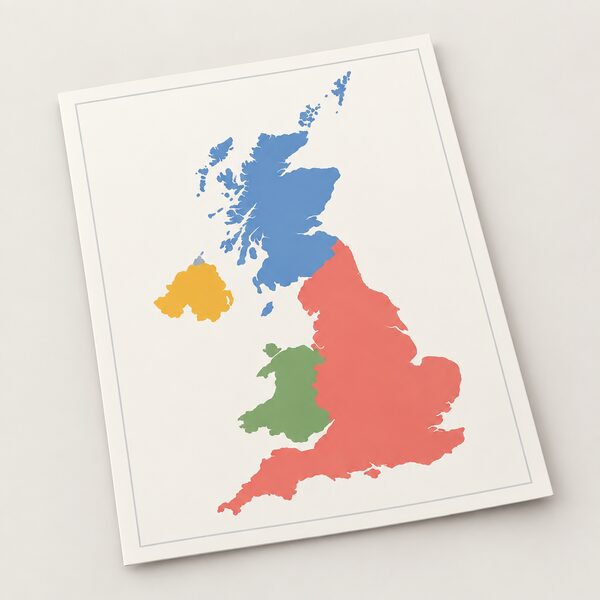
The closures do not align, and the administering bodies differ.
In England, the Green Homes Grant was a government grant aimed at assisting homeowners with energy-efficient and low carbon improvements, and it was England-only20. The Warm Homes: Local Grant now covers England, delivered by local authorities, and its statistics monitor the installation of energy efficiency measures in domestic properties in England13. The Home Upgrade Grant, which ended in March 2025, also served England8.
In Scotland, the Home Energy Scotland Grant and Loan Scheme provides grants and loans to all domestic owner-occupiers in Scotland to install clean heat and energy efficiency measures15. The Scottish Central Government Energy Efficiency Grant scheme is targeted at public bodies with no borrowing powers, has not been funding new measures since January 2024, and its funding is due to end in 202621. Between 2021 and 2023 that scheme supported around 350 energy efficiency measures and nearly 170 renewables and clean heat measures21. Energy Saving Trust was awarded a contract from 1 December 2023 to administer and manage Scottish Government heat and energy efficiency live and closed grant and loan schemes22. Area Based Schemes provide home owners and landlords with access to grant funding that meets the Scottish Government's future minimum energy efficiency standards23.
In Wales, Green Homes Wales offers access to grant funding alongside loans for specific energy efficiency measures16. The Domestic RHI, which covered Great Britain, had 75.1% of installations in England, 18.0% in Scotland and 6.9% in Wales2. Household penetration was highest in Scotland at 0.8% of households, 0.6% in Wales and 0.4% in England2.
Northern Ireland sits outside the Great Britain-wide schemes. The annual statistics on government-supported energy efficiency schemes cover Great Britain, not the UK as a whole17. Households there should look to the Northern Ireland routes rather than to the closed GB schemes.
The rules: who could apply, when the door shut, what continues
The rules that govern closed schemes fall into three groups: who could apply, when the door shut, and what continues afterwards.
On eligibility, the Domestic RHI covered single domestic properties and was open to owner-occupiers, private landlords, social landlords and self-builders17. The Green Homes Grant voucher scheme provided grants to homeowners and landlords for domestic properties in England11. The Home Energy Scotland Grant and Loan Scheme is open to all domestic owner-occupiers in Scotland15.
On closure dates, the record is precise. The Green Homes Grant closed to new applications from 5pm on 31 March 20216. The Non-Domestic Renewable Heat Incentive in Great Britain closed to new applicants at the end of midnight on 31 March 202120. The Domestic RHI closed to new applicants, including metering and monitoring service package applications, at midnight on 31 March 202212. The Feed-in Tariffs scheme closed to new applications from 1 April 20193.
On what continues, the Domestic RHI is the fullest example. Every year, participants are asked to complete and submit an annual declaration confirming they continue to meet the ongoing obligations1. Once an accreditation has been granted the tariff rate is secured and will change each year in line with inflation but will never decrease2. Applications accredited up to 31 March 2016 are adjusted annually by the Retail Prices Index, and applications accredited after that date by the Consumer Prices Index2. Ofgem administers the scheme and will contact participants on behalf of DESNZ1.
"Only applications following a change of ownership can be made now that the scheme has closed."
For the Feed-in Tariffs scheme, only the owner of the installation or those who have been assigned FIT Payment rights may complain or raise a dispute, although non-owners may still make certain information requests24. Deployment caps placed limits on the total capacity that could receive a particular tariff rate in a particular tariff period, with quarterly tariff periods for solar photovoltaic, wind, hydro and anaerobic digestion installations and six-monthly periods for micro CHP24.
What closed schemes mean for household energy independence
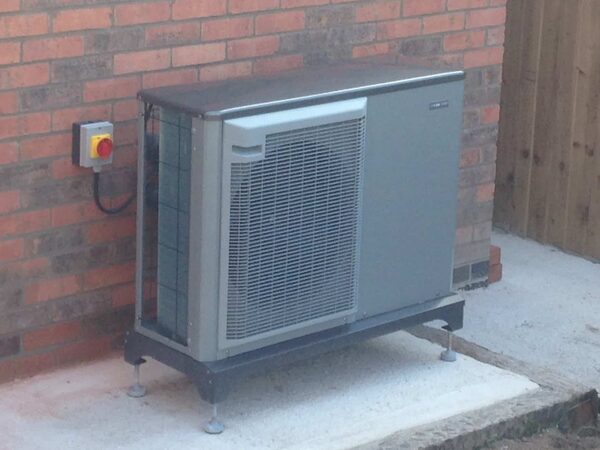
Closed schemes matter to household energy independence because they set the terms on which a home can reduce its reliance on bought energy, and because their closure removes a route that many households were counting on.
The Domestic RHI is the clearest case of a scheme that bought lasting change. A total of 78,553 boilers using fossil fuels were replaced by lower carbon alternatives under the scheme, and 95.8% of the 82,000 replaced boilers used fossil fuels such as oil, gas, coal and LPG2. Of those replaced boilers, 52.6% used oil, 28.6% gas, 7.8% LPG and 6.8% coal2. Replacing an oil boiler is the single most direct step a household can take away from a delivered fuel, and the scheme's own figures show oil was the most common fuel displaced.
The scheme also shows the limits. Heating our homes accounts for around 14% of the UK's total greenhouse gas emissions2. The British energy security strategy sets out how Great Britain will accelerate homegrown power for greater energy independence, and describes this as central to weaning Britain off expensive fossil fuels, which are subject to volatile gas prices set by international markets25. A household that installed a heat pump under the Domestic RHI reduced its own exposure to those prices, but it remains connected to the electricity grid and to a supplier.
The Feed-in Tariffs scheme did the same for electricity. It was designed by government to promote the uptake of small-scale renewable and low-carbon electricity generation, and covered England, Wales and Scotland3. Households accredited under it continue to receive payments, but the scheme is closed to new entrants and is expected to wind down by 2039.
What remains for a household arriving at a closed scheme name is a set of live routes rather than a dead end. The Boiler Upgrade Scheme supports heat pumps and biomass. The Energy Company Obligation and ECO4 place obligations on suppliers. The Warm Homes: Local Grant covers England, and the Home Energy Scotland Grant and Loan covers Scotland. The Home Upgrade Grant page records the closed scheme for off-gas homes, and the Green Homes Grant and Green Deal pages record the other two closures most often searched for.
The dependence that remains after any of these schemes is the same: the grid, a supplier, and for many homes a gas connection or a delivered fuel. A grant changes the equipment in a home; it does not remove the connection.
Sources26 cited
- Domestic RHI participants, Ofgem, 2026-09-17
- DRHI Annual Report Scheme Year 11, Ofgem, 2025-07
- FIT annual report SY14, Ofgem, 2026-09-17
- Feed-in Tariffs quarterly statistics, Ofgem, 2026-09-17
- Green Homes Grant Scheme collection, GOV.UK, 2021-03-31
- Green Homes Grant voucher scheme closure, UK Parliament, 2021-04-30
- Green Homes Grant, National Audit Office, 2021-09-08
- The Home Upgrade Grant: The Closed Scheme for Off-Gas Homes, House of Commons Library, 2026-09-17
- Great British Insulation Scheme: homeowners and tenants, Ofgem, 2026-09-17
- Great British Insulation Scheme Delivery Guidance, Ofgem, 2023-08-31
- Heat pump deployment quarterly statistics UK 2026 Q1, GOV.UK, 2026-06-11
- Domestic RHI tariffs and payments, Ofgem, 2026
- Warm Homes: Local Grant statistics August 2026, GOV.UK, 2026-08-27
- The Heat in Buildings Programme, Scottish Government, 2026-09-17
- Heat in Buildings progress report 2024, Scottish Government, 2024-10-10
- Green Homes Wales, Development Bank of Wales, 2026-09-17
- HEE Stats Detailed Release March 23, GOV.UK, 2023-03-30
- Help design digital services for future low carbon heat schemes, Ofgem, 2020-09-14
- Draft Heat in Buildings Strategy, Scottish Government, 2021-02
- Domestic RHI Essential guide, Ofgem, 2022-03
- Heat in Buildings progress report 2025, Scottish Government, 2026
- FOI 202500448310, Scottish Government, 2025-07-22
- Area Based Schemes, Glasgow City Council, 2026-06-08
- FIT dispute resolution, Ofgem, 2026-09-17
- British energy security strategy, GOV.UK, 2022-04-07
- FIT quarterly report issue 63, Ofgem, 2026-03-30
 Closed Energy PoliciesIf a scheme you used has closed, do you still get paid?
 The Full Grants and Schemes GuideWhich grants can you actually get right now, and how do you apply for them?
 Grant ScamsGrant schemes attract cold callers, doorstep sellers and fake approval letters using real scheme names.
 Check Which Energy Grants ApplyWhich energy grants can you actually get right now, and which have closed?
 Apply for a Home Energy GrantThe application sequence common to funded schemes: the checker, the survey or assessment, the installer, the paperwork and the sign-off.
 Why Energy Grants DifferWhere you live in the UK changes which home energy grants you can get.