In this guide
The Warm Homes: Local Grant is an England-only scheme that gives councils money to upgrade the energy efficiency of privately owned homes lived in by low-income households. It runs from April 2025 to March 2028 with £500 million of funding, and it is open to all fuel types: homes on the mains gas grid as well as homes heated by electricity, oil, coal or liquid petroleum gas1. It replaces the Local Authority Delivery scheme and the Home Upgrade Grant, which ended in March 20252.
Households qualify on a mix of income, benefits and postcode, in a home with an Energy Performance Certificate of D to G, and the aim is to bring treated homes to EPC band C wherever that is possible within the cost caps4. For owner occupiers the work is fully funded: there is no application fee and no contribution to the cost of measures6. Landlords get one property fully funded and pay at least 50% towards any further properties5. The money is not unlimited: it is delivered place by place, some councils received less than they hoped, and eligibility does not guarantee measures7.
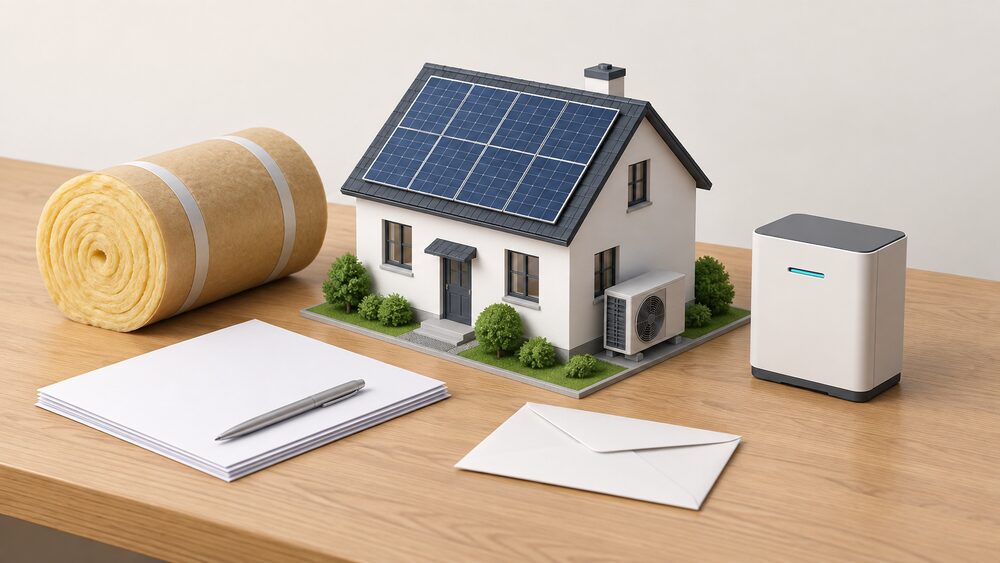
For a household's energy independence, the grant matters because it pays for fabric and generation, insulation, solar PV, battery storage and heat pumps, rather than a bill rebate. What it does not do is remove every dependence: gas and oil boilers are excluded as improvements but existing ones may stay, the grant is administered by a council and a contractor rather than by the householder, and the measures chosen are set by a retrofit assessment and by value-for-money checks, not by preference4.
What the Warm Homes: Local Grant is and who runs it
The grant awards funding to local authorities so they can upgrade the energy-inefficient homes of low-income households in their area. Money comes from the Department for Energy Security and Net Zero, and each council, or a consortium of councils, decides how to find and treat properties7. That local layer is the defining feature: the national rules set who is eligible and what may be funded, but the target areas, the contractor, the application form and the queue are all set locally.
The delivery models differ widely. In London the grant is run on behalf of 31 local authorities working together as a consortium, with the total shared between them according to the number of fuel-poor homes in each area6. In Greater Manchester, some districts are handled by the combined authority while others, including Rochdale and Bury, run their own contact routes, and at least one district had no delivery partner appointed at the time of writing4. Birmingham took a place-based approach, targeting 625 private homes in designated Retrofit Priority Areas: Balsall Heath, Bromford, Castle Vale, Sparkbrook, Sparkhill, and Tyseley and Hay Mills9. Liverpool City Council was awarded £5.8 million to improve roughly 450 homes over three years11.
Councils choose target areas on economic need, meaning high deprivation and fuel poverty, on building condition, meaning homes that are cold, expensive to heat or affected by damp, and on deliverability, meaning areas with strong retrofit interest where works can be completed within programme timelines9. The expression of interest window for councils closed on 1 December 2024, and the list of successful authorities was later updated to reflect additional funding given to some of them in the first year of delivery1.
The scheme sits alongside the Warm Homes: Social Housing Fund for tenants of social landlords, and alongside supplier-funded help under ECO4. For the wider landscape, see the guide to home energy grants in England and the grants and schemes pillar.
£500 million to 73 projects across 270 councils
The headline figure is £500 million over three years, allocated as part of the Autumn Budget 2024 settlement and distributed to 73 projects covering 270 local authorities2. The same £500 million figure is used as the indicative national pot in combined authority planning documents, where the West Midlands Combined Authority records a 6.0% share of it13.
The scale is comparable to the Green Homes Grant Local Authority Delivery scheme, launched in August 2020 with £500 million to support energy efficiency upgrades for low-income households across England, and which aimed at around 50,000 homes2. That history is useful context because it shows how far a national pot stretches once it is split between hundreds of councils: Liverpool's £5.8 million, for example, buys approximately 450 homes over three years, and Birmingham's programme covers 625 private homes11. A grant of this size is a targeted intervention in the worst-performing privately owned stock, not a universal offer.
Progress is published in monthly official statistics covering measures installed and homes upgraded. Those releases are one month in arrears and are described as provisional and subject to future revisions, so early figures should be read as indicative14.
Who qualifies: income, benefits and postcode routes
There are several routes into eligibility, and a household needs only one of them. The general test is household income of usually £36,000 a year or less, with household savings below £25,0006. Households earning more may still qualify if they live in a certain postcode area or if someone in the household receives certain benefits6.
Councils describe the postcode route precisely: a home in a postcode falling within Income Deciles 1 to 2 of the Indices of Multiple Deprivation qualifies without a separate income test15. Greater Manchester selected its target areas on the same basis, combining Income Deciles 1 or 2 of the Indices of Multiple Deprivation 2025 with a high count of privately owned homes in EPC bands D to G4. A further route accepts homes that qualify under ECO4 Flex Route 215.
Where income is assessed directly, the test is income after housing costs. Household income includes benefits received, with the exception of Personal Independence Payment, Disability Living Allowance and Attendance Allowance15. Scheme policy guidance also sets example after-housing-costs thresholds by household composition: £20,000 for one adult, for one adult with one dependent and for one adult with two dependents, £23,600 for one adult with three dependents, and £27,600 for one adult with four dependents5.
Residents must physically occupy the property, and shared ownership is treated as private rented where the resident pays any rent7. Supported home types include houses, flats, park homes and houses in multiple occupation with separate kitchens, and some other property types may also apply6. More detail sits on the page covering Warm Homes: Local Grant eligibility and income limits and on which benefits qualify you for energy grants.
EPC band D to G: which homes are eligible
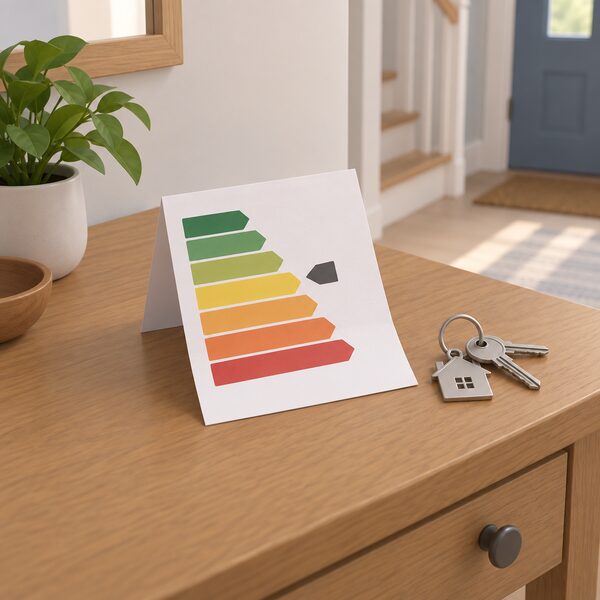
The property test is an EPC of D to G, or the equivalent for a park home, and the home must be privately owned, either by the occupier or by a landlord, and in England6. Homes treated under the scheme should reach EPC EER band C wherever possible within the cost caps, which is the scheme's stated outcome rather than a guarantee for every property5.
Tenure changes the band range in some areas. Greater Manchester applies bands D, E, F or G to owner-occupied properties but bands D or E to privately rented ones4. Birmingham's landlord rules require properties to be at least EPC band E unless band F or G with a registered exemption, reflecting the minimum standards that apply to lettings15. Where a home has no certificate, councils handle it in different ways: one district scheme arranges a free EPC, London points to limited funding from SHINE London towards the cost of a new certificate, and the national eligibility form establishes the EPC position during the application6.
| Route | EPC bands accepted | Source |
|---|---|---|
| Owner occupied, Greater Manchester | D, E, F or G | 4 |
| Privately rented, Greater Manchester | D or E | 4 |
| National guidance, all tenures | D to G, or park home equivalent | 6 |
| Landlord properties, Birmingham | E, or F/G with registered exemption | 15 |
The EPC condition also explains the treatment of homes helped before. A property previously upgraded under the Home Upgrade Grant or Local Authority Delivery can be re-treated only if the result is that the property reaches EPC C or low carbon heating is installed, and the same individual measure cannot be funded twice unless it is a top up5.
What the grant pays for
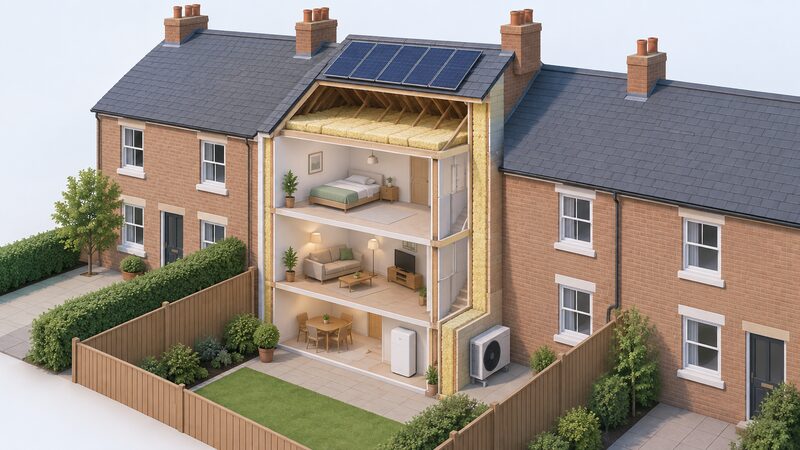
Funding covers energy performance improvements and low carbon heating. The energy performance list runs to cavity wall, external wall, internal wall, loft, room-in-roof, flat roof, underfloor and park home insulation, draughtproofing, hot water cylinder insulation, low energy lighting, heating controls, solar PV and battery storage, with double or triple glazing and energy efficient doors recommended only in rare cases4. Scheme guidance also lists solar thermal and digital or smart controls among eligible measures5.
Councils apply a fabric-first approach, prioritising insulation and ventilation such as trickle vents and extractor fans, following a technical survey, with other measures then considered: energy-efficient lighting, underfloor insulation, high-temperature heat pumps, solar thermal or direct electric heaters9. Which measures are approved depends on the technical assessment, industry standards, value-for-money checks and programme budgets, and improvements are offered in the order recommended by the retrofit assessment4.
For independence, the combination matters more than any single measure. Insulation cuts demand permanently and cannot be switched off by a supplier; solar PV with battery storage shifts part of the household's electricity off the meter; a heat pump moves heating off gas or oil onto electricity, which trades an imported fuel for grid electricity. Grid dependence remains in every case, as does dependence on the council and its contractor while the work is done. Related detail sits on grants and funding for solar panels and grants and funding for home battery storage.
Cost caps: up to £30,000 per property, less for extra landlord homes
One council states that up to £30,000 of measures is available per property16. The structure behind that figure, as set out in parliamentary briefing, splits it: £30,000 for the first property a landlord upgrades, made up of £15,000 for energy-efficiency measures and £15,000 for low-carbon heating measures, and £15,000 per property for any other properties a landlord upgrades, made up of £7,500 and £7,50017. Greater Manchester publishes the same first-property figure as 100% of the cost up to £15,000 for energy performance improvements, and 50% of the cost up to £7,500 for a private landlord's second and subsequent properties4.
The July 2026 policy guidance update increased the scheme cost caps and revised guidance on household and measure eligibility, and clarified TrustMark and MCS requirements18. The uplifted caps in that guidance are stated as £16.6k for energy performance and £16.6k for low carbon heating, £33.2k in total, for a private rented sector first property; and £8.3k plus £8.3k, £16.6k in total, for second and subsequent private rented properties and for social housing5.
| Case | Energy performance | Low carbon heating | Total |
|---|---|---|---|
| PRS first property (July 2026 guidance) | £16.6k | £16.6k | £33.2k5 |
| PRS second and subsequent (July 2026 guidance) | £8.3k | £8.3k | £16.6k5 |
| Social housing (July 2026 guidance) | £8.3k | £8.3k | £16.6k5 |
| Landlord first property (earlier briefing) | £15,000 | £15,000 | £30,00017 |
| Landlord further properties (earlier briefing) | £7,500 | £7,500 | £15,00017 |
Published figures disagree on the overall amount per household: one council states up to £30,000 per property, while another official source gives up to £12,400 per household as a whole-project average estimate. The two are measuring different things, a maximum and an average, and neither has been reconciled in the documents. A separate cap applies to landlords overall: a private rented sector landlord cannot exceed the Minimal Financial Assistance limit of £315,000 over three years, set by section 36 of the Subsidy Control Act 2022 and the EU-UK Trade and Cooperation Agreement5.
Free for owner occupiers, with contributions from landlords
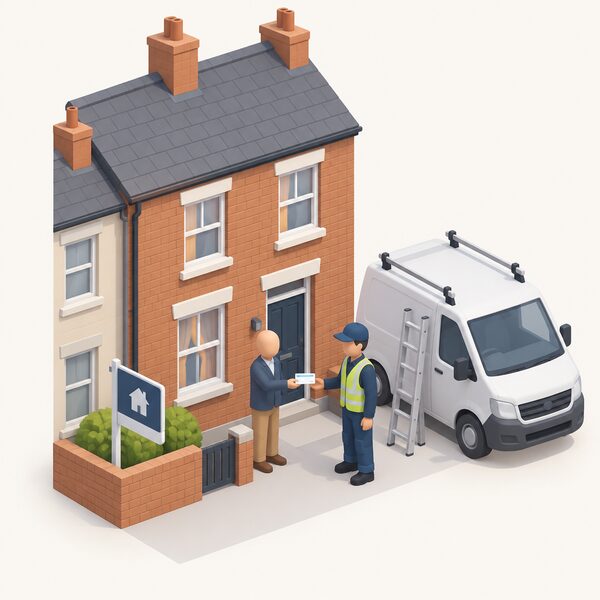
Upgrades are free for eligible residents, and owner occupiers are not expected to contribute anything towards the cost7. Scheme guidance is explicit that for an owner-occupied home the upgrade should be fully funded and the household must not be required to contribute5. Tenants should not pay upgrade costs either6. There is no match funding requirement for owner-occupied homes13.
Landlords are treated differently. There is no eligibility restriction based on how many properties a landlord owns, but only the first property upgraded is fully funded; every subsequent property requires a landlord contribution of at least 50% of the total cost of works, and that contribution must be paid before installation5. Birmingham publishes a different graduated arrangement, a 30% contribution for up to four dwellings and 50% for any additional properties15. Social housing landlords must also contribute at least 50% of the total cost of upgrades, and one county scheme applies that to social housing in-fill properties within a wider street-level project5.
Two conditions attach to landlord participation. Rent must not be increased as a result of upgrades funded by government through the scheme, and tenants must meet household eligibility and provide evidence of income5. Greater Manchester adds a local condition, restricting landlord eligibility to supporters of the Greater Manchester Good Landlord Charter4.
"Upgrades are free for eligible residents; however, landlords must contribute towards costs."
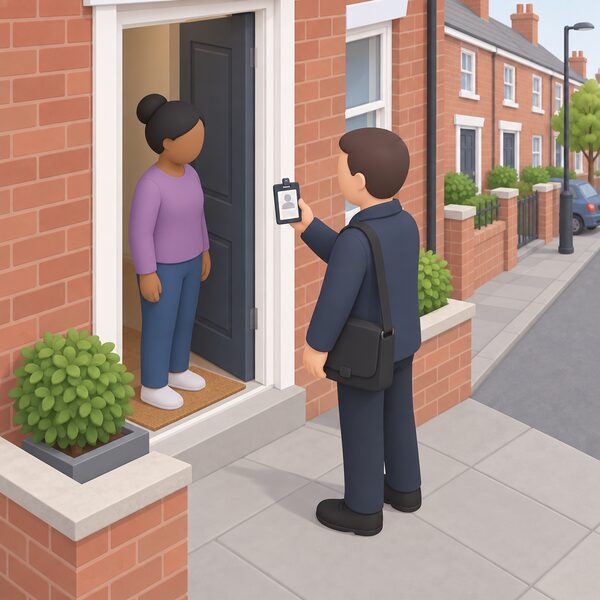
That warning is not theoretical. In London, individuals have approached residents asking for a fee of £300 to £1,500, claiming to ensure an application succeeds or to organise solar panel installation; neither the Greater London Authority nor its delivery partner will ever ask for such a fee6. All officers carry official photo identification, and Greater Manchester asks residents to see it before letting anyone into the home4. See also energy grant scams and fake government schemes.
From eligibility check to retrofit assessment
The national route begins with an online form on GOV.UK to check eligibility. It may ask about benefits received, household income in one year, tax and deduction costs, council tax costs and mortgage or rent costs over the same period6. Eligible applications are then passed to the local authority or its official contractor10. Some councils reverse the direction of travel: in selected Greater Manchester areas, residents are contacted by officers working for named delivery organisations, while Liverpool asks residents to register interest through the government portal4.
Birmingham sets out four steps, which describe the pattern most councils follow:
- Apply.
- Upload any documents needed to check eligibility.
- Have the home assessed.
- Approve the proposed work, after which an installation date is booked19.
Evidence requirements are practical. Sole occupiers must support an application with a council tax bill; utility bills are accepted where more than one adult lives in the home or in auto-eligible postcode areas, and postal applications must be returned within 14 days7. A retrofit assessment takes one to three hours on site, and the applicant can approve or reject the proposed work before installation is booked7.
Timescales vary. One county council reports anything from three weeks to several months between initial application and completion, depending on installers' schedules and capacity7. Queue management is a real constraint: in years two and three of the London consortium, applications are managed first come, first served within each local authority rather than across London as a whole, with each authority's queue capped at up to 250% of its allocation to allow for applications that fall away or prove ineligible. Once a queue is full, further applications from that area go on a waiting list and are invited in the order received, and being in the queue does not guarantee funding6. Cornwall reports that its allocation was less than expected, producing a long waiting list8. Eligibility does not guarantee measures15.
Installer standards: TrustMark registration and MCS certification
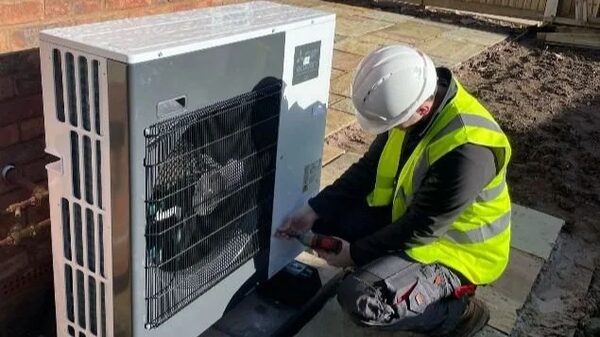
Work funded by the grant must be carried out by installers registered with TrustMark, and low carbon technology installations such as heat pumps, solar panels and battery storage must be done by a business certified on the MCS Installer Scheme20. One county council describes its network as TrustMark registered, MCS accredited for renewable technologies and certified to PAS 2035:2023, and requires that an installer from that network is used for the funding to apply7. The July 2026 guidance update included clarifications on the TrustMark and MCS requirements18.
These are the same certification routes used across publicly funded retrofit, which is why a household cannot simply choose its own builder and claim the money back. The trade-off is consumer protection: registration brings a lodgement record for each installation and a defined complaints route. Related pages cover whether ECO4 installations need a TrustMark registered installer and whether an MCS-certified installer is required for a heat pump grant.
Complaints are handled locally. Birmingham publishes a freephone contractor number, 0800 021 3145, and an email address for its delivery partner, with unresolved complaints escalated to a council mailbox9. Cornwall directs residents to its own Warm Homes Local Grant team email8. Surrey publishes a phone line, 01483 404 5057.
Planning permission and other practical constraints
Most retrofit measures can be installed without planning permission, but homes in conservation areas and listed buildings may require planning consent, which can take up to 12 weeks and may delay installation15. Planning rules for heat pumps were loosened under the Warm Homes Plan, which included removing planning restrictions so more households can install air source heat pumps without applying for permission21. Changes to buildings are the category where permission is most likely to be needed, so external wall insulation and visible plant are the measures most often affected7.
Three further constraints are worth knowing before applying. Measures are chosen by assessment, not request: approval depends on the technical survey, industry standards, value-for-money checks and programme budgets9. Funding cannot always be stacked, and a measure already funded cannot be funded again unless it is a top up5. And the scheme is place-based in many areas, so an eligible household outside a council's target streets may find no offer available at all9.
What it means for household energy independence
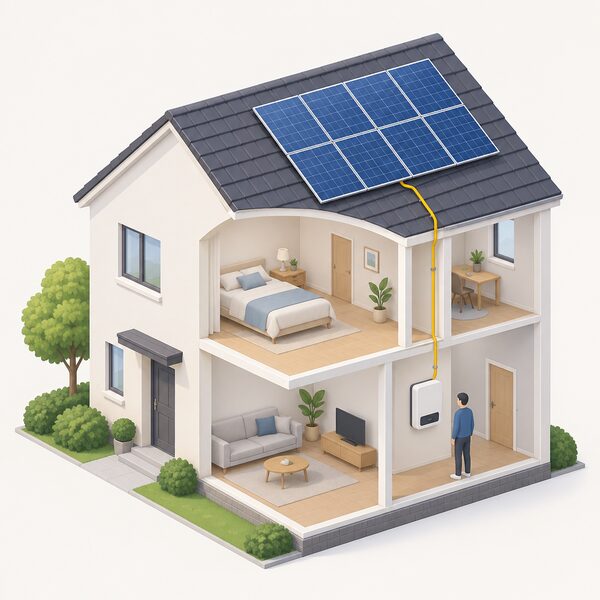
The grant moves a household towards independence in the way that lasts: by cutting the heat a home needs, then by changing where its energy comes from. Insulation and draughtproofing reduce demand permanently, solar PV and battery storage displace part of the electricity bought from a supplier, and a heat pump removes the dependence on delivered oil or LPG, or on mains gas, in exchange for a larger electricity load4.
The dependencies that remain should be stated as plainly. The scheme is fully funded by government, which means the household depends on a public budget that ends on 31 March 2028 and on its council's share of it7. Delivery depends on a contractor appointed locally and on an assessment the household does not control. Homes that keep a gas or oil boiler keep their fuel supplier, because boilers are not eligible improvements4. And a tenant depends on a landlord's willingness to take part and to pay a contribution on any property after the first5.
For households outside England, the equivalent routes are different: see home energy grants in Scotland, Wales and Northern Ireland, and the comparison of Nest Wales and the Warm Homes: Local Grant.
Sources22 cited
- Warm Homes: Local Grant statistics, August 2026, GOV.UK, August 2026
- Energy efficiency schemes research briefing, UK Parliament, 2026
- Energy efficiency schemes briefing summary, House of Commons Library, 2026
- Warm Homes: Local Grant in Greater Manchester, Greater Manchester Combined Authority, 2026
- Warm Homes: Local Grant policy guidance, GOV.UK, July 2026
- Warmer Homes: Warm Homes Local Grant in London, Greater London Authority, 2026
- Warm Homes Local Grant in Surrey, Surrey County Council, March 2026
- Housing decarbonisation programme, Cornwall Council, June 2026
- Warm Homes Local Grant 2025 to 2028, Birmingham City Council, June 2026
- Warm Homes: Local Grant, a guide for local authorities, Energy Saving Trust, May 2026
- Apply for a Warm Homes Local Grant, Liverpool City Council, 2026
- Warm Homes: Local Grant successful local authorities, GOV.UK, July 2026
- Devolved retrofit pilot FAQs, West Midlands Combined Authority, 2026
- Warm Homes: Local Grant statistics, July 2026, GOV.UK, July 2026
- Warm Homes Local Grant eligibility, Birmingham, Birmingham City Council, 2026
- Home and business grants, schemes and advice, East Herts Council, 2026
- Household energy efficiency research briefing, UK Parliament, May 2026
- Warm Homes: Local Grant publication page, GOV.UK, July 2026
- Getting help with your energy bills: application steps, Birmingham City Council, April 2026
- What the Warm Homes Plan and Future Homes Standard mean for installers, NICEIC, April 2026
- Warm Homes Plan and heat pumps, Ministry of Housing, Communities and Local Government, November 2024
- Residents urged to stay safe as Oxfordshire expands warmer homes support, Oxfordshire County Council, March 2026
 Grants and Energy IndependenceCan you get a grant for solar panels or a battery?
 The Full Grants and Schemes GuideWhich grants can you actually get right now, and how do you apply for them?
 The Full Heat Pumps GuideWill a heat pump keep my house warm in winter, and what does one cost to buy and run?
 The Full Your Type of Home GuideLiving in a flat, an old listed house or somewhere off the gas grid changes what energy help you can get and what you are allowed to install.
 DESNZ Energy PolicyThe government department behind home energy rules is not the one that pays your grant.
 Where to Start If You RentRenting means you can switch supplier or get a smart meter yourself, but insulation, glazing and heating need your landlord's agreement.