

In this answer
Short answer
A first-time central heating grant pays for a heating system in a home that has never had one, and for the gas connection that feeds it. The best-known route, the Warm Homes Fund, has closed to new applications, so a household searching for it today is looking at a scheme that no longer takes applicants1. What survives is the measure itself: first-time central heating is still a recognised category under ECO4, with its own eligibility test, and energy-efficient heating systems remain fundable under the Warm Homes: Local Grant2.
The eligibility test is the part that matters. Under ECO4, the premises must not previously have had a wet central heating system, nor since 1 April 2022 a working, efficient electric storage heater2. That is a stricter condition than most grant rules, and it is what separates a first-time central heating grant from an ordinary boiler grant. The measure is eligible across owner-occupied, private rented sector and social housing tenure types4.
The Warm Homes: Local Grant, which started in 2025 and runs to 31 March 2028, funds insulation, energy-efficient heating systems and renewable energy installations, delivered through local authorities3. Several councils report it closed to new applicants because of demand, with an expression of interest form adding households to a waiting list6.
The Warm Homes Fund has closed to new applications
The starting point for anyone searching for a first-time central heating grant is that the fund most associated with the phrase no longer accepts applications. Applications for the current funding round are closed1. That is a statement about the scheme's own status, not a pause: the funding round has ended.
The pattern repeats across the successor schemes. The Warm Homes: Local Grant is currently closed due to high demand, and its expression of interest form adds applicants to a waiting list rather than opening a new application6. The expression of interest window for local authorities interested in participating closed on 1 December 2024, and all eligible local authorities that completed and submitted a form by that deadline were allocated funding9. Once a local authority has spent its allocated share, no further applications are possible until the next phase of funding.
In Northern Ireland the position is different again. The Warm Healthy Homes Fund public consultation ran open until 19 August 2026, and the Department proposes that an applicant may apply only once, with the Home Assessment determining what follows10. That is a consultation proposal rather than a live scheme, and it sits alongside the existing Warm Healthy Homes Fund rather than replacing it10.
What the fund paid for: a first gas connection and a first central heating system
The measure at the centre of the Warm Homes Fund was two things at once: a first gas connection and a first central heating system. That combination is what made it distinct from boiler grants, which assume a system already exists.
The gas connection element survives in other forms. Some people qualify for a grant towards the cost of a new gas connection through the Warm House Assistance scheme13. Northern Gas Networks describes funding for a new gas connection with first-time gas central heating or a renewable alternative, alongside energy efficiency upgrades, free advice and support, welfare benefit checks and help with managing debt, subject to eligibility14.
On the tax side, a mains gas connection or reconnection can be zero-rated where it is paid for under a grant-funded scheme and the person qualifies15. Grant-funded heating equipment work covers the installation of heating appliances, the installation, repair and maintenance of central heating systems, and the installation, repair and maintenance of renewable source heating systems16. Those are the categories that make a funded first-time installation possible without a VAT charge on top.
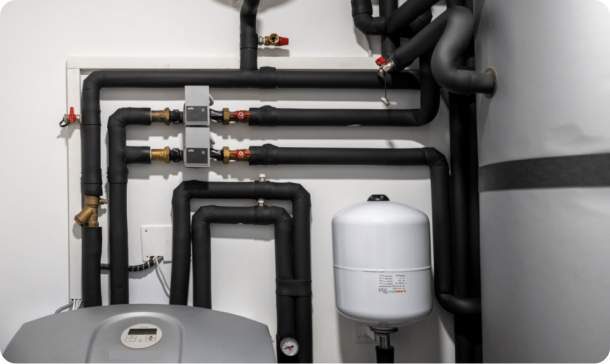
The wider funding landscape for first-time systems has moved towards heat pumps. The Clean Heat Grant scheme was designed to offer upfront capital grants to enable the installation of heat pumps and, in limited circumstances, biomass boilers, for households and small non-domestic buildings17. For a home with no heating at all, that is the direction of travel: a first system is increasingly a low carbon one rather than a gas boiler.
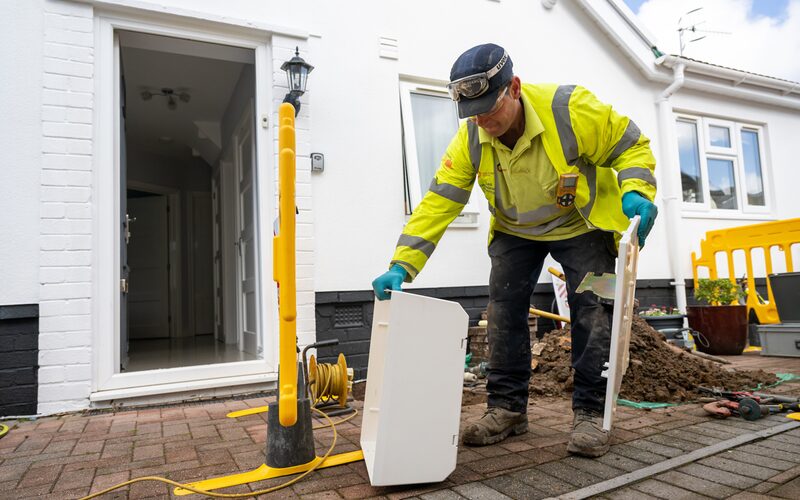
Who qualified: eligible homes, delivered through local councils
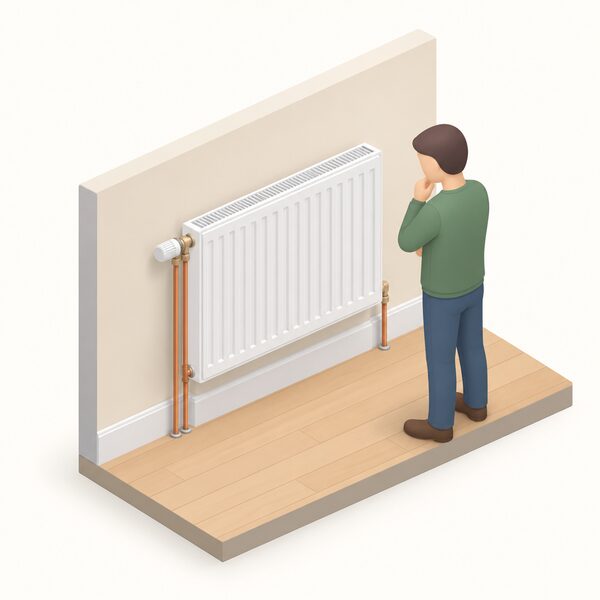
Eligibility for first-time central heating turns on the history of the property, not only on the household's income. Under ECO4, the premises must not previously have had a wet central heating system, nor since 1 April 2022 a working, efficient electric storage heater2. A home that once had a system and lost it does not qualify on that test.
The measure is eligible across owner-occupied, private rented sector and social housing tenure types4. That breadth is unusual: most grant measures narrow by tenure, and first-time central heating does not.
Delivery sits with local authorities. The Warm Homes: Local Grant provides energy performance upgrades and low carbon heating via local authorities, and local authorities install energy performance measures and low carbon heating to eligible homes in their area3. The list of successful local authorities was updated to reflect additional funding given to some local authorities in the first year of delivery19. The scheme aims to increase a property's Energy Performance Certificate rating to Band C20.
For a household, the practical consequence is that the council is the gatekeeper. A home in an area whose authority has spent its allocation waits, regardless of how well it meets the property test.
Which councils delivered the first-time central heating scheme
Delivery ran through councils rather than a single national contractor, and the London arrangement shows how that works at scale. The Warm Homes: Local Grant is being delivered across London on behalf of 31 local authorities working together as a consortium, with total funding shared between local authorities based on the number of homes in fuel poverty in each area7.
Funding for that London programme came through the Greater London Authority, which secured £53,470,024 from the Department for Energy Security and Net Zero through the Warm Homes: Local Grant21. The allocation model is the point: money follows measured fuel poverty rather than being spread evenly, so authorities with colder, older or poorer housing stock receive more.
Elsewhere the pattern is individual. Surrey County Council sets out the Warm Homes: Local Grant for residents in its area5, and East Hertfordshire lists it among the home and business grant schemes it administers22. Greater Manchester Combined Authority runs its own Warm Homes: Local Grant programme23. Each authority publishes its own eligibility and waiting list position, and those positions differ.
The older Central Heating Fund shows the same local-authority delivery model in an earlier form: a £25 million scheme available for local authorities to support off-grid households in England specifically to fund new first-time central heating measures24. That scheme is closed, but it established the pattern that the Warm Homes: Local Grant now follows.
Running costs and the evidence on savings
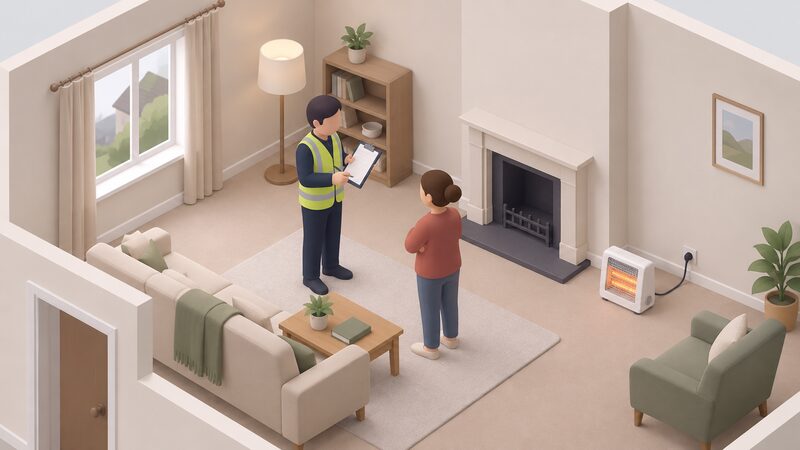
The evidence on what a first system does to running costs is thinner than the scheme's profile suggests. Turning central heating down by one degree could cut heating bills by up to 10 per cent25. That is a control measure rather than an installation measure, but it shows how sensitive running costs are to how a system is used once fitted.
Independent modelling of the successor funding gives a sense of scale. Energy UK states that if just £1.5 billion of the Warm Homes Plan funding were invested into the Energy Upgrade Grant, it would serve 252,000 households with an average of £620 annual savings, representing 37% of a typical bill8. That is a modelled figure for a scheme running from October 2026 to December 2029, not a measured result of the closed fund, and it should be read as such8.
In Scotland, the Warm Homes Nest scheme delivered home energy efficiency improvements including central heating systems, boilers, insulation, solar panels and air source heat pumps26. That is a record of what was installed rather than a saving figure, and it shows that first-time central heating sits inside a broader package of measures in the devolved schemes.
"turning your central heating down by one degree could cut your heating bills by up to 10 per cent"
Where first-time central heating funding stands now

First-time central heating remains a live measure even though the fund named after it has closed. Under ECO4 it carries the measure type B_First_Time_CH, and it is eligible across owner-occupied, private rented sector and social housing tenure types4. That means the route still exists through an obligated energy supplier rather than through a standalone grant.
The Warm Homes: Local Grant is the main funded route for a first system now. It launched in 2025 and its delivery window closes on 31 March 20283. Eligible applicants receive upgrades such as insulation, energy-efficient heating systems and renewable energy installations22. Off-grid homes previously supported by the Home Upgrade Grant are included in its scope27.
Beyond individual homes, Scotland funds heat networks through the Heat Network Support Unit, which offers grant funding and expert advice throughout the pre-capital stages of development, and the Green Heat Network Fund, which provides capital support to develop low carbon heat network infrastructure28. Those are communal rather than household measures, but they matter for homes that will never have their own gas connection.
The Carbon Budget Delivery Plan sets the wider framework30. For a household, the practical position is that a first central heating system is fundable, but through a narrower set of routes than the phrase "first-time central heating grant" suggests.
If you missed the fund: loans and other routes to a warm home
Where a grant is not available, loan finance is the main alternative, and in Scotland the two can be combined. The Home Energy Scotland Grant and Loan provides up to £7,500 as a grant and £7,500 as an interest free loan for the installation of a heat pump30. That is a grant and a loan in one package rather than a choice between them.
Combining grant and loan is not universal. Under the Domestic Renewable Heat Incentive, installations fully funded by a public funds grant were not eligible, and partial grants were deducted from payments spread evenly over the seven years of accreditation31. The scheme has closed, and only applications following a change of ownership can be made now32. For installations commissioned on or after 1 March 2019, applications could be made at any time before the scheme closed at midnight at the end of 31 March 202233.
For immediate hardship rather than installation, the Scottish Welfare Fund offers Crisis Grants, including help to get food or with heating costs34. In Wales, £15 million was directed to helping keep communities warm and connected, with warm hubs receiving funding through local authorities35. Northern Ireland publishes energy efficiency tips for households managing costs36.
The Warm Homes: Social Housing Fund on gas grid low carbon heating incentive offer is the nearest live equivalent for social housing. It is limited to air source heat pumps, ground source heat pumps and shared ground loops in the first instance, with heat network connections also eligible once permitted under the scheme, and up to 10% of homes in an application can gain access to a £20,000 grant fund per home12.
Sources36 cited
- The Warm Homes Plan, Elmhurst Energy, 2026
- ECO4 and GBIS eligibility and pre-installation declaration, Ofgem, 2026
- Warm Homes: Local Grant, House of Commons Library, 2026
- ECO4 Measures Table, Ofgem, 2025
- Warm Homes: Local Grant, Surrey County Council, 2026
- Warwick Warm Homes Local Grant, Act on Energy, 2026
- Warmer Homes, Greater London Authority, 2026
- Clean heat: supporting low-income households, Energy UK, 2026
- Warm Homes: Local Grant statistics, August 2026, Department for Energy Security and Net Zero, 2026
- Warm Healthy Homes Fund, Department for Communities (Northern Ireland), 2026
- Warm Healthy Homes Fund consultation, Department for Communities (Northern Ireland), 2026
- Warm Homes: Social Housing Fund Wave 3 scheme guidance addendum, Department for Energy Security and Net Zero, 2026
- Domestic customers FAQs, Wales & West Utilities, 2026
- Apply now, Northern Gas Networks, 2026
- VAT energy saving materials and grant funded heating supplies, HM Revenue & Customs, 2026
- VAT: energy saving, HM Revenue & Customs, 2026
- Energy terms explained, Ofgem, 2026
- Warm Homes: Local Grant budget allocation, Department for Energy Security and Net Zero, 2024
- Warm Homes: Local Grant successful local authorities, Department for Energy Security and Net Zero, 2026
- Warm Homes: Local Grant, Greater Manchester Combined Authority, 2026
- Warm Homes Local Grant 2025-2028, Greater London Authority, 2025
- Home and business grants, schemes and advice, East Hertfordshire District Council, 2026
- Warm Homes: Local Grant, Department for Energy Security and Net Zero, 2024
- Review of the fuel poor network extension scheme, Ofgem, 2015
- Energy efficiency tips, nidirect, 2026
- Warm Homes Nest scheme annual report 2024-2025, Welsh Government, 2026
- Warm Homes: Local Grant policy guidance, July 2026, Department for Energy Security and Net Zero, 2026
- Heat networks, Scottish Government, 2026
- Carbon Budget Delivery Plan, Department for Energy Security and Net Zero, 2023
- Scotland's Climate Change Plan 2026-2040, Scottish Government, 2026
- Domestic Renewable Heat Incentive applicants, Ofgem, 2026
- Domestic Renewable Heat Incentive, Ofgem, 2026
- Key terms explained: Domestic Renewable Heat Incentive, Ofgem, 2026
- Scottish Welfare Fund crisis grants, mygov.scot, 2026
- £15 million helping keep communities warm and connected, Welsh Government, 2025
- Warm Homes: Local Grant, House of Commons Library, 2026
 Grants and Energy IndependenceCan you get a grant for solar panels or a battery?
 The Full Heat Pumps GuideWill a heat pump keep my house warm in winter, and what does one cost to buy and run?
 Living Off the Gas GridNo mains gas at your home?
 The Full Grants and Schemes GuideWhich grants can you actually get right now, and how do you apply for them?
 Warm Air Heating SystemsWarm air heating works by pushing heated air through vents in your floors or walls.
 Older People and Home EnergyOlder people often pay more to keep warm and can miss out on help they are entitled to.