

In this answer
Short answer
Connected for Warmth was a first-time central heating and insulation scheme that ran between March 2023 and November 2025, supported by the National Grid energy efficiency fund and delivered in thousands of eligible homes across England and Wales1. It is closed. No application made now will be assessed under it, and any household searching the name is looking at a scheme that has already finished.
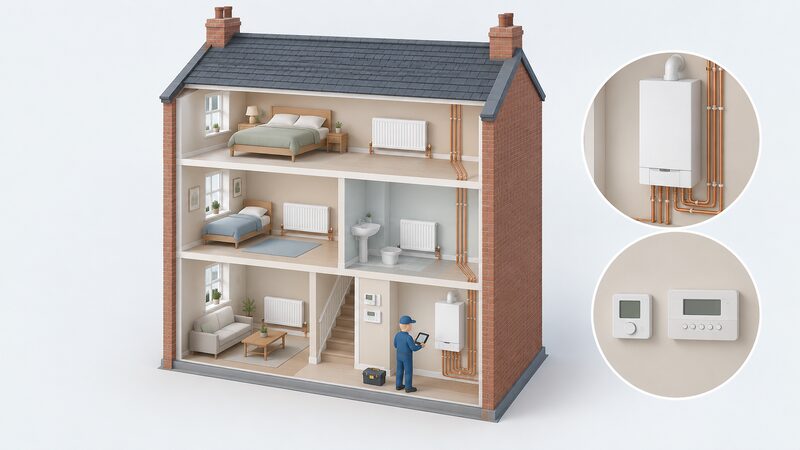
What it did was narrow and specific: it put central heating where there had been none, and wrapped insulation around the properties it touched. That matters for household energy independence because a home with no heating system is entirely at the mercy of whatever it plugs in or burns in a single room. A fitted system with controls, plus insulation, is the first step away from that dependence, though it does not remove the gas connection, the electricity supply or the supplier bill that follows.
The replacement landscape is now the Warm Homes: Local Grant in England, the Warm Healthy Homes Fund in Northern Ireland, and the national schemes in Scotland and Wales. Each has its own eligibility, its own delivery body and its own end date. This page sets out what Connected for Warmth funded, who it reached, what the evidence says about outcomes, and which route a household without central heating should now approach.
Connected for Warmth: what the scheme funded and who it was for
Connected for Warmth was an insulation and heating scheme rather than a cash grant. Its stated scope was insulation installed in thousands of eligible homes across England and Wales, supported by the National Grid energy efficiency fund, running from March 2023 to November 20251. The households it was built for were those without a central heating system, typically on low incomes and often in older, hard-to-treat properties where a first heating system had never been fitted.
The delivery model was not a national application portal. Work of this kind reaches households through councils, housing associations and accredited installers, with eligibility assessed locally against benefit receipt and property condition. That is the same pattern the successor schemes use. The Warm Homes: Local Grant, for instance, is delivered on behalf of 31 local authorities working together as a consortium in London, with total funding shared between authorities based on the number of homes in fuel poverty in each area5.
For a household, the practical meaning is that the scheme name on a leaflet matters less than the route into it. A first-time central heating installation is a capital project: a boiler or heat pump, radiators or emitters, pipework, controls and commissioning. It is not something a household buys at retail and claims back. The funding sits with the delivery body, and the household is assessed.
"Between March 2023 and November 2025, through the award-winning Connected for Warmth scheme"
The dependence that remains after an installation of this kind is worth stating plainly. A new heating system ties the household to a fuel: mains gas where a connection exists, oil or LPG where it does not, or electricity if a heat pump is fitted. It also ties the household to a supplier and a standing charge. What changes is the ability to heat the whole home rather than one room, and the ability to control what is spent.
The scheme has closed: what that means for households seeking first-time central heating

The closure of Connected for Warmth in November 2025 is not unusual. Home energy schemes in the UK open, allocate a fixed pot and close, and several well-known ones have shut in the same period. The Warm Home Discount Scheme has closed for the current cycle6, the Domestic Renewable Heat Incentive is closed to new applicants with only applications following a change of ownership possible8, and the Park Homes Warm Home Discount Scheme closes once its allocated funding is spent, with applications assessed in order of date received until then9.
The pattern matters because households often find a scheme name years after it stopped taking applications. A closed scheme cannot be applied to, appealed or reopened. What a household can do is identify the live scheme covering its area and its circumstances, and approach that instead.
For first-time central heating specifically, the live routes are:
- England: the Warm Homes: Local Grant, which funds insulation, energy-efficient heating systems and renewable energy installations10
- Northern Ireland: the Warm Healthy Homes Fund, which replaces the Affordable Warmth Scheme4
- Scotland and Wales: national schemes delivered by the devolved governments, with Wales named among the governments providing home energy-efficiency support11
- Social housing: the Warm Homes: Social Housing Fund, which provides funding for energy performance and low carbon heating improvements to social homes12
A household in a property that has never had central heating should treat the search as a local one. The funding is allocated by area, and the council or consortium holding it is the body that decides.
First-time central heating via councils: how delivery worked in England and Wales
Delivery through councils is the mechanism that made schemes like Connected for Warmth work, and it is the mechanism the current schemes use. The Warm Homes: Local Grant is delivered on behalf of 31 local authorities working together as a consortium in London, with funding shared between authorities according to the number of homes in fuel poverty in each area5. That is an area-based model: money follows measured need rather than applications in a queue.
The grant is open to all fuel types, including on-gas-grid households heated by mains gas and off-gas-grid households heated by electricity, oil, coal or liquid petroleum gas3. That breadth is significant for first-time central heating, because the homes most likely to lack a system are often off the gas grid, where the alternative is oil, LPG or electric heating. A scheme restricted to gas would miss them.
Eligible applicants receive upgrades such as insulation, energy-efficient heating systems and renewable energy installations10. The Warm Homes: Local Grant and Warm Homes: Social Housing Fund statistics apply to England13, so households in Scotland, Wales and Northern Ireland are covered by separate arrangements.
Contact routes are published by each council. Cornwall Council's Warm Homes Local Grant team can be reached at warmerhomes@cornwall.gov.uk14. In Greater Manchester, Rochdale Council uses eco-matters@rochdale.gov.uk and Bury Council uses privatesectorhousing@bury.gov.uk15. Where a council is not listed, its housing or environmental sustainability pages carry the route.
Funding and scale: from National Grid support to the wider Warm Homes Fund
Connected for Warmth drew on the National Grid energy efficiency fund1. That is a company-backed pot rather than a government one, which places it in a different category from the schemes funded by levy or by Treasury allocation. The distinction is worth holding on to, because the two are often confused in searches.
The Warm Homes Fund is a separate thing, and its size is reported differently. One figure is an initial £2 billion of government support for zero- and low-interest consumer finance; another is £1.7 billion of financial transactions and £300 million in subsidy. Both figures stand, and the difference between them is unresolved.
The wider Warm Homes landscape has clearer numbers. The Warm Homes: Social Housing Fund received an additional £295m for FY 26/27 under Wave 316. The Warm Home Discount Scheme is funded through a levy on all domestic gas and electricity customers17, which is a different funding principle again: the cost sits on bills rather than on taxation.
| Scheme | Funding basis | Coverage | Status |
|---|---|---|---|
| Connected for Warmth | National Grid energy efficiency fund1 | England and Wales1 | Closed November 20251 |
| Warm Homes: Local Grant | Government allocation, shared by area5 | England13 | Open, delivery window to 31 March 20283 |
| Warm Homes: Social Housing Fund | Additional £295m for FY 26/27, Wave 316 | England13 | Open |
| Warm Home Discount | Levy on domestic gas and electricity customers17 | England, Scotland and Wales18 | Runs to 31 March 203118 |
The scale question for a household is simpler than the budget question. What matters is whether the pot covering its area still has money in it. Area-based allocation means a household in one council area may find the fund exhausted while a neighbouring authority is still installing.
Measured outcomes: running costs, warmth and health after upgrades
The evidence on outcomes comes from two directions: modelled savings for proposed schemes, and the stated purpose of the schemes themselves. Energy UK modelled that investing £1.5 billion of Warm Homes Plan funding into an Energy Upgrade Grant would serve 252,000 households with an average of £620 annual savings, representing 37% of a typical bill2. That is a model, not a measurement, and it applies to a scheme that has been proposed rather than delivered.
The Warm Healthy Homes Fund in Northern Ireland is described as providing measures designed to improve warmth, health and energy affordability4. That framing, warmth and health alongside cost, reflects how these schemes are now assessed: not only on the bill but on the living conditions the household gains.
The Warm Homes: Local Grant statistics releases report on measures installed and homes upgraded19. That is the measured side of the picture: how many installations happened, in how many properties. It does not, on its own, tell a household what its own bills will do.
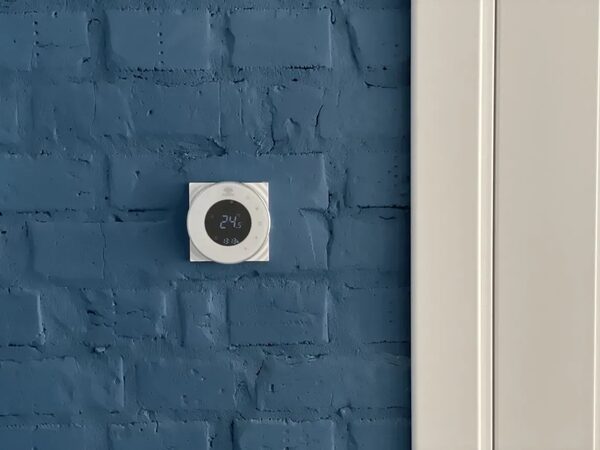
What a household should expect in practice is a warmer home and a controllable one. A property that previously relied on individual room heaters gains a system that can be timed, zoned and set to a temperature. That is a real change in energy independence at the household level, even though the fuel supply and the supplier relationship remain.
Warm Homes schemes now and next: what replaces Connected for Warmth
The replacement picture is national rather than uniform. In Northern Ireland, the Warm Healthy Homes Fund will replace the current Affordable Warmth Scheme4, with a more streamlined delivery model and a whole-house, fabric-first approach reflecting lessons learned from the Affordable Warmth Scheme4. The Affordable Warmth Scheme itself is funded by the Department for Communities and delivered by the Northern Ireland Housing Executive23, and has installed more than 56,000 energy efficiency measures in over 31,000 low-income households24.
In England, the Warm Homes: Social Housing Fund replaces the Social Housing Decarbonisation Fund11. Smart heating controls remain eligible under Wave 312. For non-social homes, the fund is available for insulation, associated ventilation and communal low carbon heating, with additional measures on an exceptional basis with justification25.
For a household with no central heating, the eligibility routes now look like this:
- Northern Ireland: NISEP whole house solution schemes list no central heating as an eligibility route26, and the Affordable Warmth Scheme offers help to improve home heating for those receiving certain benefits27
- England: the Warm Homes: Local Grant, open to all fuel types3
- Wales: home energy-efficiency support delivered by the government of Wales11
- Scotland: national energy saving funding routes11
The measures available alongside a heating system have widened. Northern Ireland's Better Energy Homes Plus package combines an A rated oil or gas boiler conversion or upgrade with cavity wall and loft insulation, plus LED light bulbs, remote smart heating controls, a low-flow or eco shower head, a hot water tank jacket, reflective radiator panels and draught proofing measures if required28. Under ECO4, heating controls are eligible in the private rented sector if one of a set of measures is installed in the same project: solid wall insulation, a renewable heating system, first time central heating, or a connection to a district heating system29.
The direction of travel is toward whole-house work rather than single measures. That is better for the household, because insulation and controls determine what a new heating system actually costs to run. It also means longer projects and more assessment before work starts.
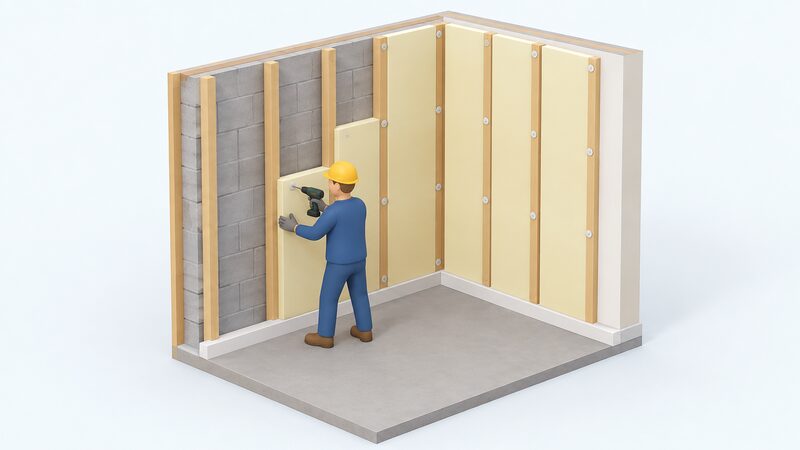
For a household whose home has never had central heating, the practical sequence is to find the scheme covering the area, establish whether the property meets the local criteria, and expect the assessment to consider the whole house rather than the boiler alone. The Warm Homes: Local Grant and the Warm Homes: Social Housing Fund are the two live English routes, and the full guide to home energy grants sets out how they sit alongside ECO4, the Boiler Upgrade Scheme and the devolved schemes.
Sources29 cited
- Wall insulation and Connected for Warmth, Agility Eco, 2026-09-20
- Clean heat: supporting low-income households, Energy UK, 2026-06-11
- Warm Homes: Local Grant statistics, August 2026, GOV.UK, 2026-08-27
- Warm Healthy Homes Fund, Department for Communities, 2026-09-17
- Warmer Homes London, Greater London Authority, 2026-09-17
- The Warm Home Discount Scheme, GOV.UK, 2026-09-17
- The Warm Home Discount Scheme: if you live in Scotland, GOV.UK, 2026-09-17
- Domestic RHI tariffs and payments, Ofgem, 2026
- Warm Home Discount eligibility statement, England and Wales 2026 to 2027, GOV.UK, 2026-09-17
- Home and business grants, schemes and advice, East Herts Council, 2026-09-17
- Research briefing CBP-9585, House of Commons Library, 2026-09-17
- Warm Homes: Social Housing Fund, Greater Manchester, Greater Manchester Combined Authority, 2026-09-17
- Warm Homes statistics methodology and background note, GOV.UK, 2026-08-27
- Housing decarbonisation programme, Cornwall Council, 2026-06-18
- Warm Homes: Local Grant, Greater Manchester, Greater Manchester Combined Authority, 2026-09-17
- Carbon Budget and Growth Delivery Plan: heat and buildings factsheet, GOV.UK, 2026-06-23
- Continuing the Warm Home Discount Scheme: government response, GOV.UK, 2026-01-30
- Warm Home Discount, Ofgem, 2026-09-17
- Warm Homes: Local Grant statistics, June 2026, GOV.UK, 2026-06-25
- Warm Homes: Local Grant statistics, July 2026, GOV.UK, 2026-07-30
- Warm Homes: Local Grant statistics, February 2026, GOV.UK, 2026-02-26
- Warm Homes: Local Grant statistics, May 2026, GOV.UK, 2026-05-28
- Research briefing CBP-9585, House of Commons Library, 2026-05-13
- Warm Healthy Homes Fund consultation, Department for Communities, 2026-05
- Warm Homes: Social Housing Fund Wave 3 scheme guidance addendum, GOV.UK, 2026-06
- Energy saving grants in your area, nidirect, 2026-09-17
- Stay warm at winter, Belfast City Council, 2026-09-20
- NISEP list of schemes 2026-27, Utility Regulator, 2026-04
- ECO4 measures table, Ofgem, 2025-07-29
 Future Homes StandardWill your new build still have a gas boiler, and when do the new rules actually start?
 Warm Air Heating SystemsWarm air heating works by pushing heated air through vents in your floors or walls.
 Domestic Energy Prices Over TimeTracks the published domestic gas and electricity unit rates, standing charges and cap levels over time, from the £1,277 cap of early 2022 through the crisis peak to the 2026 quarters.
 Climate TargetsScotland aims to stop adding greenhouse gases by 2045, five years before the rest of the UK.
 The Full Heat Pumps GuideWill a heat pump keep my house warm in winter, and what does one cost to buy and run?
 Mine Water Heat for HomesCan old coal mines under your street heat your home?