

In this guide
The most recent official count of UK heat pump installations is 47,507 in the year ending September 2025, covering heat pumps supported through a Department for Energy Security and Net Zero scheme1. That is up from 46,423 in the year ending June 20252, 45,076 in the year ending March 20253 and 42,645 in the year ending December 20244. The direction is steadily upward, but the absolute numbers remain small against a housing stock of roughly 28 million homes.
Government-supported installations are not the whole market. MCS, which certifies microgeneration installations and installers, reported that the UK finished 2024 with more than 275,000 certified heat pump installations in total5, having passed 250,000 all-time certified installations in August 20246. A consumer body estimate put approximately 60,000 heat pumps installed across the UK in 2024, a figure that exceeds the grant-supported count because it includes installations made without a government grant7.
Set against targets, the gap is large. A parliamentary briefing records a UK Government target of 600,000 installations per year by 20288, while a later government factsheet states an aim of 450,000 annual installations per year by 2030, with 70% targeted to be manufactured in the UK by 20359. On any of the counts above, the UK is running at roughly a tenth of that rate.
The published annual totals, and what each one counts
The DESNZ heat pump deployment statistics are the official quarterly series. They provide information to monitor the number of hydronic heat pumps with a capacity up to 45kW installed in the United Kingdom, and they count only units supported through a government scheme11. That scope matters: a hydronic limit excludes air-to-air units from the headline series, a 45kW cap excludes larger commercial plant, and the grant condition excludes every self-funded installation.
| Twelve months to | Government-supported installations, UK |
|---|---|
| June 2024 | 35,7022 |
| September 2024 | 38,30512 |
| December 2024 | 42,6454 |
| March 2025 | 45,0763 |
| June 2025 | 46,4232 |
| September 2025 | 47,5071 |
Two cautions apply to that table. First, the figures are revised: the year ending September 2024 was first published as 38,30512 and later restated as 39,777 in the 2025 Q3 release1. Anyone comparing releases from different quarters will find small discrepancies of this kind, and the later release is the one to use. Second, the series is a subset of the market, so it should never be read as the number of heat pumps fitted in the UK.
Certification data tells a different story because it counts differently. MCS reported the UK passing 200,000 certified heat pump installations in total since 200813, 250,000 all-time by August 20246 and more than 275,000 by the end of 20245. Those are cumulative totals of certificates issued, not a stock count of working units. Between January and July 2024 alone, more than 30,000 certified heat pumps were installed in homes and small businesses across the UK6.
Older market estimates are wider still. Published counts for 2022 include 72,0008, 40,00014 and 32,91015. These figures cannot be reconciled with one another, and the gaps come from whether air-to-air units, non-certified work and commercial installations are counted. More detail on the certification series sits in the MCS installation statistics and on grant-linked counts in the Boiler Upgrade Scheme statistics.
Quarterly shape: a market that peaks in the first quarter
The quarterly figures show both growth and a seasonal pattern. Government-supported installations across the UK reached 11,001 in 2025 Q2, of which 8,897 were in England2, against 9,871 UK-wide in 2024 Q2 with 7,257 in England16. The quarter before was higher again at 12,1752, and 2024 Q4 recorded 11,9273.
| Quarter | Government-supported installations, UK |
|---|---|
| 2021 Q3 | 5,76916 |
| 2022 Q1 | 11,08617 |
| 2022 Q3 | 5,47216 |
| 2022 Q4 | 6,1513 |
| 2023 Q2 | 6,8194 |
| 2024 Q2 | 9,87116 |
| 2024 Q4 | 11,9273 |
| 2025 Q1 | 12,1752 |
| 2025 Q2 | 11,0012 |
The 2022 Q4 figure illustrates the revision point again: it appears as 6,143 in one release and 6,151 in a later one16. Differences of that size do not change the trend, but they do mean a quarterly number quoted from memory is likely to be slightly out of date.
Read across the whole series, the picture is of a market that roughly doubled between 2022 and 2025 without ever reaching the scale policy assumes. Quarterly installations have moved from the 5,000 to 6,000 range in 2021 and 2022 to the 11,000 to 12,000 range in 2024 and 2025.

What drives the numbers
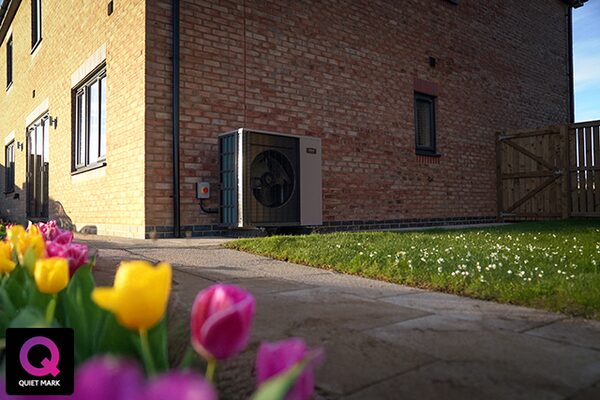
Three forces set the pace: grants, installer capacity and the replacement cycle for existing heating.
Grant availability is the clearest driver, because the official series counts grant-supported units by definition. The Boiler Upgrade Scheme provides upfront capital grants of up to £7,500 to encourage property owners to replace existing fossil fuel heating10, and all installations funded through it must be MCS certified18. Every change in grant value, eligibility or budget therefore moves both the underlying market and the measured total.
The replacement cycle sets the ceiling on how fast the stock can change. Heat pumps are typically fitted when an existing system fails or is replaced, and the scale of that competing market is the reason progress looks slow: one account of the 2019 market recorded 27,000 heat pumps installed in UK homes against about 1.7 million gas boilers19. Earlier estimates of the running rate were around 20,000 a year20, and 55,000 a year was recorded for 2021 in a government roadmap22. UKERC put 2018 at 27,00023.
Fuel choice is close to settled: more than 95% of heat pumps sold in the UK use electricity as the driving fuel21. That is what makes the deployment numbers a question of electrification rather than of heating equipment alone.
Finally, consumer cost and confidence sit behind all of it. Which? has published on barriers discouraging consumers from switching to heat pumps24, and a separate report recorded low take-up of the grant scheme against the roughly 50,000 heat pumps installed in the UK in 202125. The installed base has grown from around 160,000 units20 and 260,000 units in operation, less than 1% of all installed heating systems26, to the certified totals above, but the share of homes has barely moved.
The UK in context: around 1% of homes
Three independent readings agree on the share. A parliamentary briefing states that heat pumps "are widely used in some European countries but are currently installed in 1% of UK homes"8. A Commons committee report records that around 1% of homes have a heat pump installed27. The Climate Change Committee used the same approximately 1% figure in July 2024 when warning the UK was off track for net zero28.
Against comparable countries the gap is stark. Official analysis states that "the number of heat pump units installed in the UK is just 7% of that in France"29. European market context sits in the European heat pump market statistics.
The long-run assumption used in network planning is that 23 million homes in Great Britain will have heat pumps by 205030. Government has treated the technology as central to that outcome, describing heat pumps as "a key solution for decarbonising homes" and critical to the UK's net zero commitment31. Moving from around 1% of homes to that figure implies a sustained rate far above anything the published series has yet recorded.
How the four nations differ

The single most important national difference is not in the technology but in the grant, and therefore in the statistics. Only properties in England and Wales are eligible for Boiler Upgrade Scheme funding32. Scotland and Northern Ireland operate separate support arrangements, so a household there will not appear in Boiler Upgrade Scheme counts even though it may appear in MCS certification data.
| Nation | Boiler Upgrade Scheme eligibility | Where installations show up |
|---|---|---|
| England | Eligible32 | DESNZ series, MCS certification |
| Wales | Eligible32 | DESNZ series, MCS certification |
| Scotland | Not eligible32 | MCS certification and devolved schemes |
| Northern Ireland | Not eligible32 | MCS certification |
The scale difference between nations is also large. In 2025 Q2, England accounted for 8,897 of the 11,001 UK government-supported installations2, and in 2024 Q2 for 7,257 of 9,87116. England therefore dominates the headline totals, and a UK growth rate is mostly an England growth rate. Nation-level breakdowns are covered in heat pumps in Wales, heat pumps in Scotland and heat pumps in Northern Ireland.
The rules behind the counted installations
Because the official series counts grant-supported units, the grant rules define what gets counted. The Boiler Upgrade Scheme is administered by Ofgem, opened on 23 May 2022 and is installer-led: MCS certified installers apply for and redeem vouchers on behalf of property owners, and the full grant value must be deducted from the quote before the owner pays anything10.
Current grant values and conditions, as set out in installer guidance:
- £7,500 towards an air-to-water heat pump or a ground source heat pump32
- £9,000 uplifted grant for eligible off-gas-grid properties replacing oil or LPG heating, in place until 31 March 202732
- £5,000 towards a biomass boiler, which may only be installed in rural properties not connected to the gas grid10
- £2,500 for air-to-air heat pumps, for residential properties only9
- One grant, and one redeemable voucher, per property32
The technical conditions shape which installations qualify: air-to-water and ground source heat pumps must achieve an in situ seasonal coefficient of performance of at least 2.8, compressors must be electric-driven, the system must provide 100% of the property's space heating needs, and capacity is capped at 45 kWth for an individual heat pump system, 70 kWth for a multi heat pump system and 300 kWth for shared ground loops32.
"Fossil fuel hybrids are not eligible."
Eligibility has been loosened over time. The scheme has been extended to 203032, and from 28 April 2026 properties are no longer required to have a valid EPC to apply32 and BUS heat pumps may be installed alongside supplementary heating appliances provided those appliances are not fossil fuel based33. Social housing, including shared ownership, remains ineligible, as do new builds still being built by a developer33. Applications must be properly made within 120 days of the commissioning date32.
MCS certification is the gatekeeper for all of this. MCS certifies, quality assures and provides consumer protection for microgeneration installations and installers, covering solar photovoltaic panels, biomass, wind, heat pumps and heat products34, and every Boiler Upgrade Scheme installation must be MCS certified18. That is why the certification totals and the grant totals track each other without matching.
What the numbers mean for household energy independence
A heat pump changes the shape of a household's energy dependence rather than removing it. More than 95% of heat pumps sold in the UK use electricity as the driving fuel21, so a household that fits one moves off gas, oil or LPG and onto the electricity grid and an electricity supplier. Where the previous fuel was delivered oil or LPG, the change removes exposure to a delivered commodity price; where it was mains gas, it removes a standing charge and a gas connection but adds electricity demand in winter, when grid prices are highest.
The deployment numbers set the limits on what that means collectively. With around 1% of UK homes heated this way8, and government-supported installations running at 47,507 in the year to September 20251 against an aim of 450,000 a year by 20309, the UK's residential heating is still overwhelmingly a fossil fuel system. A household fitting a heat pump today is doing something unusual, and is doing it into a supply chain and installer base sized for the current rate rather than the target rate.
Dependencies that remain are worth stating plainly. The grant route depends on an MCS certified installer and on Ofgem's voucher process, with one grant per property and no second grant at the same address32. Eligibility depends on which nation the property is in32. And because the official statistics count only grant-supported hydronic units up to 45kW11, a household's own installation may not appear in the headline number at all. The wider picture across technologies is drawn together in the market data pillar and in what the data says about household energy independence.

Sources34 cited
- Heat pump deployment quarterly statistics, UK 2025 Q3, DESNZ, 2025
- Heat pump deployment quarterly statistics, UK 2025 Q2, DESNZ, 2025
- Heat pump deployment quarterly statistics, UK 2025 Q1, DESNZ, 2025
- Heat pump deployment quarterly statistics, UK 2024 Q4, DESNZ, 2024
- 2024 was a record year for small-scale renewables, MCS, 2024
- UK reaches 250,000 certified heat pump installations, MCS, 19 August 2024
- Engaging homeowners: messaging that drives earlier boiler replacement planning, Which?, 2024
- Heat pumps research briefing, POST, 19 September 2026
- Carbon Budget and Growth Delivery Plan: heat and buildings factsheet, UK Government, 23 June 2026
- Boiler Upgrade Scheme grant listing, Find a Government Grant, 18 September 2026
- Heat pump deployment statistics: December 2025, DESNZ, 12 March 2026
- Heat pump deployment quarterly statistics, UK 2024 Q3, DESNZ, 2024
- UK sees the best year ever for renewable energy and heating installations, MCS, 2023
- Confirmation of no gas grid connections for new homes under the Future Homes Standard, E3G
- Green home statistics, Uswitch
- Heat pump deployment quarterly statistics, UK June 2024, DESNZ, 2024
- Heat pump deployment tables, Q2 2026, DESNZ, 2026
- Boiler Upgrade Scheme statistics, July 2026, DESNZ, 27 August 2026
- How to install a heat pump at home, Quiet Mark
- The electrification of heat, ECIU, 10 August 2020
- Domestic heat pump guide, MCS, 2 April 2024
- Heat pump investment roadmap, UK Government
- Net zero heating, UKERC
- Government must do more to tackle cost and other barriers to heat pumps and EVs, Which?, 2024
- Heat pump grant scheme comes under fire for low take-up, Which?
- Net Zero by Design: our vision of a zero carbon home, BEAMA, 2019
- Heating our homes report, House of Commons, 9 May 2025
- UK off track for net zero, say country's climate advisors, Climate Change Committee, 18 July 2024
- Energy Innovation Needs Assessment: heat and buildings, UK Government, June 2025
- Future Energy Scenarios document, NESO, July 2022
- Heat Pump Ready Programme, UK Government, 19 October 2021
- Boiler Upgrade Scheme guidance for installers, v5.1, Ofgem, 2 July 2026
- Boiler Upgrade Scheme guidance for installers, v5, Ofgem, 28 April 2026
- ECO4 Flex and GBIS Flex information document, Ceredigion County Council, November 2025
 How They Perform in UK HomesHow well do heat pumps really work in UK homes, and why do some run far better than others?
 Policy, Targets and Coming RulesHeat pumps are central to the government's plans for greener home heating.
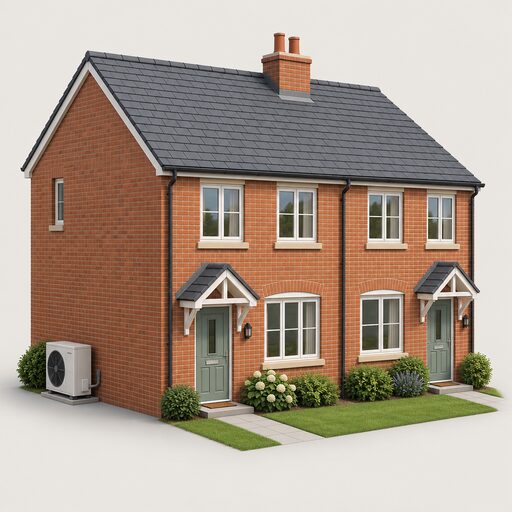 Which Homes Suit a Heat PumpMost UK homes can have a heat pump fitted, so the real question is whether yours makes it easy or expensive.
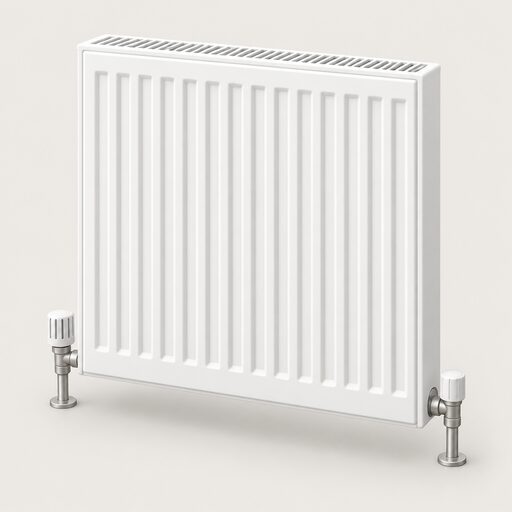 How Much Does a Heat Pump CostA heat pump usually costs around eleven thousand pounds installed, though quotes vary a lot depending on your home.
 Paid and Restricted Energy DataWhere can you actually read the numbers behind a news story about heat pumps or solar?
 The Full Statistics GuideHow many homes in the UK have solar panels, heat pumps or batteries?