

In this guide
A future weather file is an hourly weather year for a location that describes a projected climate rather than the recent past. The CIBSE set is built on the more recent weather projections produced by the Met Office, produced in collaboration with the University of Exeter1. The 2025 release uses historical observations from 1994 to 2023, covers 28 climate zones, and includes UKCP18 projections for the 2030s, 2050s and 2080s2.
The purpose is narrow and practical. A building that performs acceptably against a present-day weather year can still overheat in a warmer one, and the gap between the two is what these files exist to expose. CIBSE was prominently featured on BBC News discussing overheating homes amid high temperatures in England, which is the problem the data is meant to catch at design stage rather than in occupation1.
The files matter to a household's energy independence in a specific way. They do not generate energy or reduce a bill directly. They determine whether a home is designed and assessed against a climate it will actually experience, which affects how much cooling it needs, how much it relies on the grid at peak summer demand, and whether a passive design strategy holds up. The dependence that remains is on the projections themselves, on the modelling software that reads the files, and on the licence terms under which they are supplied.
What a future weather file is and why buildings need one
A future weather file is a synthetic year of hourly values, typically dry bulb temperature, humidity, solar radiation and wind, constructed so that the statistics of the year match a projected future climate rather than an observed one. It is used in the same way as a present-day test reference year: the building model is run through it, and the outputs are compared.
The reason buildings need one is that the regulatory and design horizon is long. The Future Homes and Buildings Standards aim to improve the energy efficiency and reduce the carbon emissions of new dwellings and non domestic buildings, to ensure they are zero carbon ready4. Those standards will be implemented via the Building Regulations etc. (Amendment) (England) Regulations 20264. A dwelling consented under that framework will still be standing in the 2080s, which is the far end of the projection range the CIBSE files cover2.
There is a second reason, which is that the assessment regime already assumes a warmer future in some places and not in others. Approved Document O in Wales sets standards for reducing overheating risk in new residential buildings, and provides guidance for reducing overheating risk in new residential buildings3. The Welsh frequently asked questions document is explicit that current day weather files and future climate considerations are not required for compliance with the Regulation3. That is a compliance position, not a statement that future climate is irrelevant to the building.
"This is not required for compliance with the Regulation."
The distinction matters for a household reading a design assessment. A home can be fully compliant and still be modelled only against a present-day year. The future files are the tool that shows what the compliance test does not.
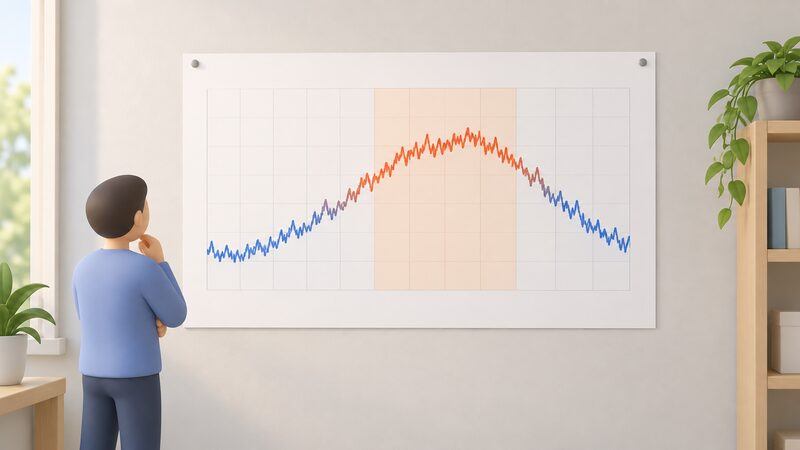
CIBSE weather data: the UK reference set

CIBSE publishes the weather data that UK building services practice treats as the reference set. The 2025 release is the current one, and it is a substantial change from what came before rather than a routine refresh.
The headline changes are the baseline and the geography. The release uses historical observations from 1994 to 2023, covers 28 climate zones, and includes UKCP18 projections for the 2030s, 2050s and 2080s2. Each of those three elements does work. The longer observation window gives a more stable present-day baseline, so that the difference between present and future is not contaminated by an unusual reference period. The 28 zones allow a building to be matched to something closer to its actual local climate. The three future periods give a trajectory rather than a single future snapshot.
CIBSE signalled the change in advance. It stated that it was planning to launch the TM59 revision and updated CIBSE Weather Data at its upcoming CIBSE Build2Perform Live event1. The pairing is deliberate: the overheating assessment method and the weather data it runs on were revised together.
The reference set sits alongside the wider body of UK building energy methodology. The Notice of Approval of the methodologies for expressing the energy performance of buildings in England and Wales dated 24 March 2026 supersedes the Notice of Approval dated 15 June 2025, and the standard assessment methodology for new dwellings moved from version 10.2 to version 10.35. Weather data and compliance methodology are separate documents, but they are read together in practice.
| Element | Value | Source |
|---|---|---|
| Historical observation period | 1994 to 2023 | 2 |
| Climate zones | 28 | 2 |
| Future periods | 2030s, 2050s, 2080s | 2 |
| Projection set | UKCP18 | 2 |
| Current file version | v1.1 | 2 |
Basis: Met Office climate projections and independent collaboration
The provenance of the data is the part that determines how much weight it can carry. The new data set is based on the more recent weather projections produced by the Met Office, produced in collaboration with the University of Exeter1. That is a national meteorological service projection set, developed with an academic partner, rather than a set derived by a single commercial or professional body.
The projections themselves are UKCP18, which is the set named in the release description2. The three future periods, the 2030s, 2050s and 2080s, are the horizons the projections are sampled at2.
The independent assessment landscape around building climate risk is well developed, which is why the weather data is scrutinised rather than taken on trust. The Climate Change Committee commissioned Arup to appraise the current and future risks posed by summertime overheating to the UK housing stock at scale, considering what factors influence risk, how homes can be adapted or upgraded to mitigate the impacts and how much that costs6. That work is a risk appraisal across the stock, not a weather file, but it is the evidence base that makes the case for using future climate in design.
The Committee has also assessed whether the UK's housing stock is adequately prepared for the challenges of climate change, both in terms of emissions reduction and adaptation7. Its wider assessment of the UK Government's Heat and Buildings Strategy concluded that the Strategy sets a new policy direction, focusing on a rapid scale-up of supply chains through a market-based approach, while noting that plans are not yet comprehensive or complete and significant delivery risks remain8.
Climate zones and updated baseline data in the new release

The move to 28 climate zones is the change most likely to alter a result. A single national weather year forces every building in the country through the same climate, which is a poor fit for a stock spread across coastal, upland, urban and southern inland conditions. Twenty-eight zones allow the nearest representative climate to be selected2.
The updated baseline is the other half of the change. Using historical observations from 1994 to 2023 rather than an earlier window means the present-day file and the future files share a common reference period2. That matters for how a comparison is read: the difference between the present-day run and the 2050s run is then a climate signal, not a difference in how the two files were constructed.
The baseline also affects how the files relate to the compliance world. The standard assessment methodology for new dwellings in England moved from version 10.2 to version 10.3 under the March 2026 notice of approval5. Approved Document L, Conservation of fuel and power, Volume 1: Dwellings notes that as of 15 June 2022 the guidance changed due to The Building Regulations etc. (Amendment) (England) Regulations 2021, and that these documents are updated regularly due to improvements in technologies and materials available in the construction and modification of buildings9.
Scotland runs its own documentation. The Building standards technical handbook April 2024: domestic carries a Version 1.1 update, in which Clause 6.11.0 was amended to note the issue of a Direction to relax standard 6.1110. The Scottish Government has consulted on proposed changes to energy standards and associated topics, published as a consultation paper11.
| Nation | Document or position | Date |
|---|---|---|
| England and Wales | Notice of approval of energy performance methodologies, superseding the 15 June 2025 notice | 24 March 20265 |
| England | Approved Document L Volume 1, guidance changed under the 2021 amendment regulations | 15 June 20229 |
| Scotland | Building standards technical handbook, Version 1.1 update, Clause 6.11.0 amended | 30 September 202410 |
| Wales | Approved Document O 2022 edition, future climate not required for compliance | 14 May 20243 |
| Northern Ireland | Future Homes fabric standards may become requirements in 2026/27 | 11 October 202312 |
Version 1.1: what changed in the re-released files
CIBSE re-released the 2025 weather files as v1.1 after updating horizontal infrared radiation intensity values affecting v1.0 files used in DesignBuilder and EnergyPlus2. That is a technical correction with a practical consequence: any simulation run on the original files used a radiant environment that has since been revised.
Horizontal infrared radiation intensity is the downward longwave radiation from the sky. It feeds the surface heat balance in a dynamic simulation, so a change to it alters predicted surface temperatures and, in turn, predicted overheating. The correction is not cosmetic.
The wider pattern of corrigenda in this field is worth noting, because it tells a reader how to treat a result. CIBSE issued a corrigendum to TM54 in July 2024 correcting pages 35 and 36, superseding corrections made to Box 5 on Page 36 in July 202313. A published technical memorandum can carry more than one round of correction.
The version history also has a bearing on how a report is read. A design submission that cites a weather file version without a date cannot be checked against the corrigendum record. The version number is part of the evidence.
TM54 and using weather files in operational performance assessment

TM54 addresses operational energy use at the design stage. It is a separate document from the weather files, and it is not a prerequisite for using them. A future weather file can be run in any dynamic simulation that accepts hourly data.
Where TM54 becomes relevant is in the purpose of the exercise. Testing a design against a future climate is a resilience question. Predicting how much energy a building will actually use in operation is a performance question, and it requires assumptions about occupancy, controls, setpoints and equipment that a weather file does not supply. The two are often run together, which is why the corrigendum history matters to anyone relying on a TM54 output13.
The regulatory backdrop to operational performance is moving. The Energy Performance of Buildings (England and Wales) (Amendment) Regulations 2024 were made on 14 May 2024 and amend the disclosure provisions in the Energy Performance of Buildings (England and Wales) Regulations 201214. The instrument's territorial application is England and Wales15. Among other things, the keeper of the register may publish on a website bulk access data relating to any building appearing on the register14.
The principal regulations themselves extend to England and Wales and implement Directive 2010/31/EU of the European Parliament and of the Council on the energy performance of buildings (recast)16. The 2021 amendment regulations were made on 31 March 2021 and came into force on 1 April 202118.
Energy Performance of Buildings Certificates statistics for England and Wales were published as Official Statistics in Development in the July to September 2023 release, and the April to June 2023 release was published on 27 July 202319. The statistical status of that series has since changed, which affects how the underlying data should be treated in analysis.
How future weather files relate to design and overheating risk
Overheating is the application that drives most use of future weather files, and the guidance is specific about method. Overheating modelling should use Chartered Institution of Building Services Engineers (CIBSE) guidance and dynamic overheating modelling21. In London, residential developments are expected to complete the Good Homes Alliance (GHA) Early Stage Overheating Risk Tool at pre-application stage21.
The Welsh position is the clearest statement of where future climate sits in the compliance chain. Approved Document O 2022 edition (Wales) sets standards for reducing overheating risk in new residential buildings and provides guidance for reducing overheating risk in new residential buildings3. Where paragraphs 1.2 and 1.3 have not been followed, designers and/or developers should still provide general mitigating overheating information that is applicable to the design of the building3. Future climate considerations are not required for compliance with the Regulation3.
The independent evidence on overheating risk in the existing stock is substantial. The Climate Change Committee commissioned Arup to appraise the current and future risks posed by summertime overheating to the UK housing stock at scale, considering what factors influence risk, how homes can be adapted or upgraded to mitigate the impacts and how much that costs6. The Committee has separately assessed whether the UK's housing stock is adequately prepared for the challenges of climate change, both in terms of emissions reduction and adaptation7.
The policy context in which this sits has been unsettled. The Committee's independent assessment of the UK Government's Heat and Buildings Strategy found that the Strategy sets a new policy direction, focusing on a rapid scale-up of supply chains through a market-based approach, while concluding that plans are not yet comprehensive or complete and significant delivery risks remain8. The Strategy itself was published in October 2021 and included specific deadlines for when gas and oil boilers should be phased out, new long-term policies for low-carbon heat, and new funding for heat networks, public buildings and the fuel poor22.
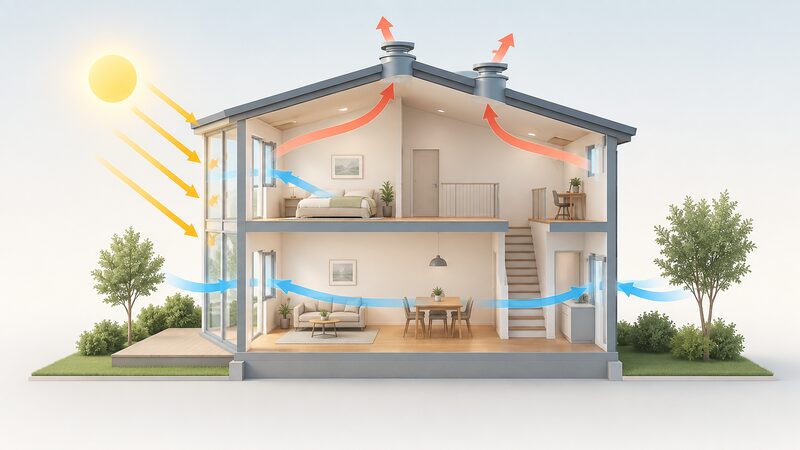
For a household, the practical reading is this. A future weather file does not change a home's energy supply. It changes whether the home was assessed against a climate it will experience. A dwelling designed only against a present-day year carries an unquantified summer risk, and the cost of that risk falls on whoever occupies it.
Where to obtain the files and what a licence covers
The CIBSE weather data is published through CIBSE's knowledge portal, which also carries the technical memorandum corrigenda2. Access and licence terms are set by CIBSE, and the terms are the part a commercial user needs to read, because a weather file embedded in a simulation tool or a consultancy deliverable is a redistribution question.
Northern Ireland's energy performance guidance has historically taken a different route for related documents. Copies may be obtained on request from the Energy Performance Unit, Building Standards Branch, Department of Finance and Personnel, 3rd Floor Northland House, 3-5A Frederick Street, Belfast BT1 2NR, or downloaded from www.epb.dfpni.gov.uk24. That is the older distribution model, and it illustrates how much the delivery of this material has changed.
The wider data landscape around buildings is now largely open. Energy Performance of Buildings Certificates statistics apply to England and Wales19. The Energy Performance of Buildings (England and Wales) (Amendment) Regulations 2024 permit the keeper of the register to publish bulk access data on a website relating to any building appearing on the register14. UK local authority and regional greenhouse gas emissions statistics are compiled using nationally available datasets25.
The Housing Energy Fact File aimed to draw together most of the important data about energy use in homes in Great Britain26. That tradition of consolidating published data is the context in which the weather files sit: they are a specialist input, licensed and versioned, feeding a wider body of open statistics.
Sources26 cited
- BBC News highlights CIBSE's expertise on managing overheating in homes, CIBSE, 31 July 2024
- Weather data, CIBSE, 2025
- Approved Document O Wales overheating frequently asked questions, Welsh Government, 14 May 2024
- RPC opinion: Future Homes and Buildings Standards impact assessments, UK Government, 25 March 2026
- Notice of approval of the methodologies for expressing the energy performance of buildings, UK Government, 24 March 2026
- Addressing overheating risk in existing UK homes, Climate Change Committee, 2026
- UK housing: fit for the future, Climate Change Committee, February 2019
- Independent assessment: the UK's Heat and Buildings Strategy, Climate Change Committee, 16 March 2022
- Approved Document L, Conservation of fuel and power, Volume 1: Dwellings, Planning Portal, 15 June 2022
- Building standards technical handbook April 2024: domestic, Scottish Government, 30 September 2024
- Building regulations: energy standards and associated topics, Scottish Government, 23 July 2021
- Building regulations discussion document 2023, Northern Ireland Department of Finance, 11 October 2023
- TM54: Evaluating operational energy use at the design stage, CIBSE, July 2024
- The Energy Performance of Buildings (England and Wales) (Amendment) Regulations 2024, legislation.gov.uk, 14 May 2024
- Explanatory memorandum to the Energy Performance of Buildings (Amendment) Regulations 2024, legislation.gov.uk, 2024
- The Energy Performance of Buildings (England and Wales) Regulations 2012, legislation.gov.uk, 17 December 2012
- The Energy Performance of Buildings (England and Wales) Regulations 2012, regulation 9, legislation.gov.uk, 13 March 2017
- The Energy Performance of Buildings (England and Wales) (Amendment) Regulations 2021, legislation.gov.uk, 31 March 2021
- Energy Performance of Buildings Certificates in England and Wales: July to September 2023, UK Government, 26 October 2023
- Energy Performance of Buildings Certificates in England and Wales: April to June 2023, UK Government, 27 July 2023
- GLA energy assessment guidance, Greater London Authority, June 2022
- Taking stock of the UK Government's heat and buildings strategy, Climate Change Committee, 9 March 2022
- Heat and Buildings Strategy, House of Commons Library, October 2021
- Energy Performance of Buildings amendment, February 2014, Building Control Northern Ireland, 24 February 2014
- UK local authority and regional greenhouse gas emissions statistics, 2005 to 2024, UK Government, 25 June 2026
- Housing Energy Fact File 2012, UK Government, 19 December 2012
 CIBSE Weather DataIf a new home is being checked for overheating, which weather is that based on?
 Overheating and Hot WeatherIs your home getting uncomfortably hot in summer, and is there anything you can do about it?
 UK Cooling DemandPublished data on air conditioning ownership and home overheating, with projections for summer temperatures in each UK nation, and what rising cooling demand means for summer electricity use.
 Future Homes Standard FabricWill a new home be cheaper to heat than an older one?
 CIBSE TM59 OverheatingWill your new home get too hot in summer?
 Test Reference and Summer YearsWhich weather year should you use for a building assessment, a typical one or a hot one?