

In this guide
The published cost picture for home energy installations in the UK is not a single number but a set of scheme figures, grant values and modelled estimates that move at different speeds. The clearest movement is on solar: the cost of acquiring and installing solar PV has decreased by up to 9%, according to a government clean power release dated 28 May 20261. On heat pumps the direction is different. Parliament's research service states plainly that heat pump installation costs are higher than gas boilers, in part due to the need for additional retrofitting2.
What has changed most visibly is the grant that sits against the installation price. From 21 July 2026 the Boiler Upgrade Scheme grant was increased by 20%, from £7,500 to £9,000, to help rural households3. The standard air-to-water and ground source grant remains £7,500, air-to-air sits at £2,500, and an off-gas grid property replacing oil or liquefied petroleum gas can access £9,0004. Those are the figures that come off a quoted bill, not the bill itself.
What has actually changed in the cost of a heat pump installation
The honest answer is that the equipment has not become dramatically cheaper, while the support against it has become more generous. Parliament's briefing is direct on the underlying position: heat pump installation costs are higher than gas boilers, in part due to the need for additional retrofitting2. That word, retrofitting, is where most of the money goes. A heat pump installation is rarely a like-for-like swap. Radiators may need resizing, pipework may need altering, and the property may need insulation work before the heat pump performs as modelled.
Against that, the volume of installations has grown sharply. In the latest 12 months to June 2025 there was a 30% increase in the number of government-supported heat pumps installed compared to the preceding 12 months6. Volume of that kind normally pulls installed cost down through installer familiarity and competition, but the published statistics do not yet show a headline fall in the median installed cost of a heat pump. The 2025 Q2 volume was 6% higher than the same quarter the previous year6, which is growth but not the steep curve that would force prices down quickly.
The cost figures that circulate for air source heat pumps vary widely. Independent guidance gives a range of £7,000 to £13,000 in one place and around £14,000 as a typical cost in another, while other guidance puts the total installed cost at £7,000 to £10,000 in one source and £7,000 to £13,000 in another. The published figures are not reconciled, and the spread reflects different assumptions about the property, the specification and whether enabling work is included. Heat pump installation costs are higher than gas boilers, in part due to the need for additional retrofitting1, and since 2022 average installation costs have not followed any clear downward trend: in cash terms, costs remain stubbornly high, and by March 2026 real-terms costs are down less than one percent2. A household comparing quotes should expect the range to be wide rather than tight.
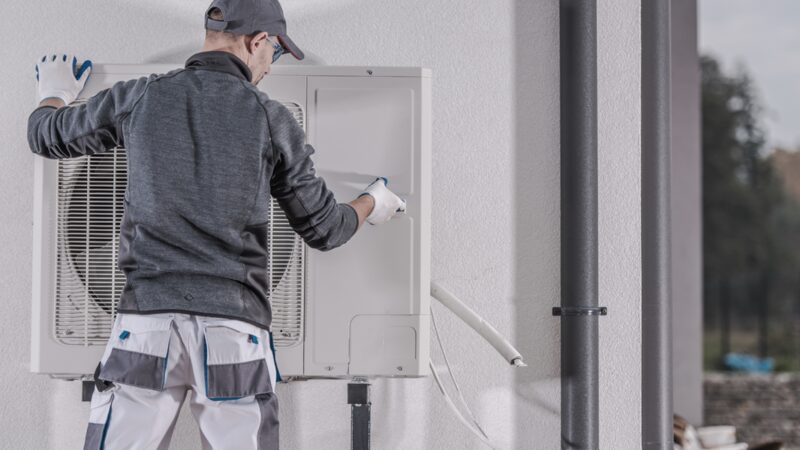
The Boiler Upgrade Scheme: how much comes off the bill

The Boiler Upgrade Scheme is the main capital grant for heat pumps in England and Wales. It provides upfront capital grants towards the cost of installing approved heat pumps7, and it opened on 23 May 20228. The scheme is administered by Ofgem, and property owners apply to Ofgem, the scheme administrator, for a grant voucher8. The closing date is 30 December 20298.
The grant values are set out in Ofgem's installer guidance and are dated 21 July 20264:
| Technology | Grant value | Voucher validity |
|---|---|---|
| Air-to-water heat pump | £7,500 | 3 months |
| Air-to-air heat pump | £2,500 | 3 months |
| Air-to-water heat pump, off-gas grid, replacing oil or LPG | £9,000 | 3 months |
| Ground source heat pump, off-gas grid, replacing oil or LPG | £9,000 | 6 months |
The £9,000 tier is the one that changed most recently. The government announced that from 21 July the Boiler Upgrade Scheme grant is being increased by 20%, from £7,500 to £9,000, to help rural households3. That is a targeted increase rather than a general one: it applies where an off-gas grid property replaces a heating system fuelled by oil or liquefied petroleum gas4.
There is a conflict in the published figures that a household may encounter. One government grant listing describes the scheme as providing upfront capital grants of up to £7,5008, while another official guidance page refers to £5,000 off the cost and installation of a biomass boiler alongside £2,500 grants for air-to-air heat pumps9.
Grants: £7,500 standard, £9,000 off-gas grid, £2,500 air-to-air
The three headline grant values serve three different households. The £7,500 standard grant covers air-to-water heat pumps and ground source heat pumps4. The £9,000 grant applies to air-to-water or ground source heat pumps in off-gas grid properties replacing a heating system fuelled by oil or liquefied petroleum gas4. The £2,500 grant covers air-to-air heat pumps4, which heat air directly rather than water and so cannot serve a wet radiator system or a hot water cylinder.
Scotland runs a separate scheme with its own figures. The Home Energy Scotland Grant and Loan Scheme provides up to £7,500 as a grant and £7,500 as an interest free loan for the installation of a heat pump11. The published statistics distinguish between heat pumps without rural uplift, at a £7,500 grant, and heat pumps with rural uplift, at a £9,000 grant12. For rural and island households, the uplift increases the heat pump grant flat rate and the maximum limit of the energy efficiency grant to £9,000, meaning up to £18,000 in grant funding compared to £15,000 in non-rural areas13.
An earlier Scottish scheme, the Home Energy Scotland Loan and Cashback scheme, offered loans of up to £10,000, of which up £7,500 was available as non-repayable cashback grant for renewable heating systems including heat pumps14. That is a historical figure and the current scheme figures are the ones above.
Wales has its own capital funding route. The Ynni Cymru capital grant funding scheme guidance for 2026 to 2027 sets out grants of £7,500 for air source and ground source heat pumps15. Green Homes Wales can be used alongside the UK Government's Boiler Upgrade Scheme, which provides grants for heat pump installations across England and Wales16.
Northern Ireland operates separately again. The Northern Ireland Sustainable Energy Programme list of schemes for 2026-27 includes a Keep Warm Discount Scheme offering a grant of 40% towards the cost of cavity wall insulation and loft insulation, up to £650 maximum grant per insulation measure and up to £1,000 maximum grant for cavity wall insulation by extraction and refill, with a hot water tank jacket as a fully funded additional measure17. That is fabric funding rather than heat pump funding, and it reflects the different administrative structure in Northern Ireland.
Who qualifies for the grant, and who does not
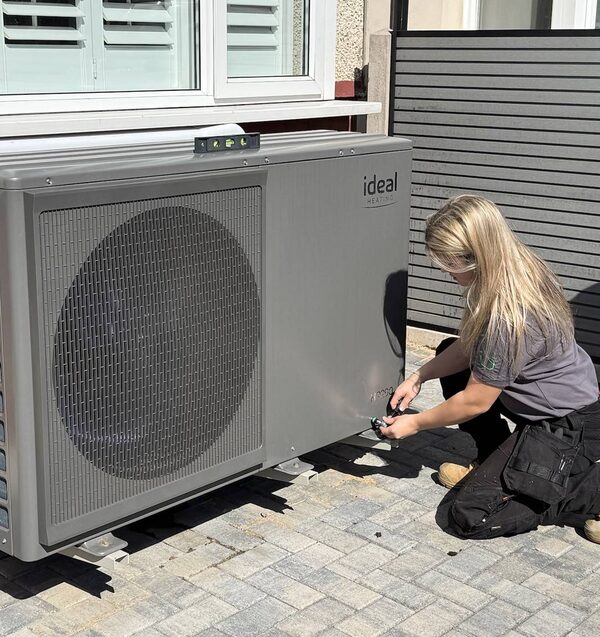
Eligibility for the Boiler Upgrade Scheme turns on a small number of conditions. The property must have a valid energy performance certificate8. The scheme supports the decarbonisation of homes and small and medium non-domestic buildings in England and Wales8, so it does not extend to Scotland or Northern Ireland. The chosen installer must be certified by the Microgeneration Certification Scheme, a nationally recognised certification body8.
There are two conditions that catch households out. The first is hybrid systems: you cannot get a grant for a hybrid heat pump system, for example a combination of gas boiler and air source heat pump18. The second is timing. The scheme rules state that an eligible low-carbon technology must not yet have been installed or commissioned within the last 120 days, and that it must have an installation capacity of no more than 45kW, which covers most homes, or a shared ground loop capacity of 300kW for ground source heat pump installs. Those two conditions sit in the same maker guidance and are not reconciled there.
Social housing and new build households sit outside the main scheme in different ways. The Warm Homes: Social Housing Fund announced a further £100m in April 2026, with a focus on solar PV and battery installation9. That is a separate funding stream aimed at social housing rather than owner-occupied homes.
Scotland has narrowed its own scheme. The Heat in Buildings progress report records changes including removing hybrid heat pumps, solar PV and battery as eligible measures and the eligibility of self-builders for funding14. A Scottish household considering a hybrid system or a battery alongside a heat pump should note that those measures are no longer supported through that route.
How the grant is paid: upfront discount, not a cheque to you
The Boiler Upgrade Scheme grant is an upfront capital grant, not a payment to the household. It provides upfront capital grants to support the installation of heat pumps and biomass boilers in homes and non-domestic buildings19, and it provides upfront capital grants towards the cost of installing approved heat pumps7. The money reduces the quoted installation cost rather than arriving in a bank account.
The application is a two-stage process10. The installer submits a voucher application, Ofgem issues a voucher, the installer submits a voucher redemption application, and the installer receives the grant payment10. The property owner's role is to agree the work and confirm the application; the installer carries the administrative steps.
That structure has practical consequences. Because the grant is paid to the installer after redemption, the household is not holding the money at any point, and the discount should be visible in the quote. Because the voucher has a validity period, the work must be completed and redeemed inside the window: three months for air-to-water and air-to-air heat pumps, six months for a ground source heat pump in an off-gas grid property replacing oil or LPG4.
Ofgem publishes quarterly and annual reporting on the scheme. The quarterly report covering 1 May 2026 to 31 July 2026 provides an update on the scheme for that period19, and the annual report covers April 2025 to March 20267. General queries go to the BUS enquiries team at BUS.Enquiry@ofgem.gov.uk20.

MCS certification and why it shapes the price you are quoted
Certification is not a formality in this market; it is the gate through which grant funding passes. The installer must be certified by the Microgeneration Certification Scheme for a Boiler Upgrade Scheme application to proceed8. That requirement narrows the pool of installers who can deliver a grant-funded job, and a narrower pool is one reason quotes for the same specification can differ substantially between companies.
The cost of certification itself is supported. The MCS Certification Fund pays 75%, up to a maximum of £1,000, of the certification fees for MCS certification on heat pumps14. That reduces the barrier for installers entering the market, which over time should widen the pool rather than narrow it.
For solar, the same certification logic applies. Local authority guidance points households to a detailed guide that has information about the cost of solar panel installation and how you can find an MCS accredited installer21. The certification route is therefore the common thread between the two technologies: it determines who can install, and it determines who can access the grant.
Where a household has a problem with an installer or a certificate, official guidance advises contacting an installer who can provide the necessary advice, preferably one who belongs to either the Microgeneration Certification Scheme or the relevant Competent Person Scheme22. Those bodies are the route for a complaint about a certified installation.
Running costs: what energy rates mean for a heat pump household
Installation cost is only half the arithmetic. Parliament's briefing states that heat pumps currently have similar running costs to gas boilers2. That is the central running cost fact, and it is more favourable than the older modelling.
The older modelling was less favourable. A 2023 consultation recorded running costs increasing by as much as 20% compared with the illustrative gas boiler example23. That figure is dated 11 October 2023 and reflects the price relationship at that time. The two positions are not contradictory so much as separated by the energy price environment: the same heat pump can run cheaper or dearer than a gas boiler depending on the ratio between electricity and gas unit rates.
The environmental case is separate from the cost case. Welsh government guidance states that a heat pump is potentially slashing your heating carbon footprint by up to 70%24. That is a carbon figure, not a cost figure, and it holds regardless of the price ratio.
For a household, the practical point is that the running cost comparison is not fixed. It moves with tariffs, with the efficiency of the installed system, and with how the property is heated and controlled. The installation cost is a one-off; the running cost is a recurring exposure to the electricity price, and that is the dependence a heat pump household retains even after the grant is spent.
Solar PV and heat pumps: how the two combine
Solar and heat pumps are increasingly installed together, and the cost trends for the two run in opposite directions. The cost of acquiring and installing solar PV has decreased by up to 9%1, while heat pump installation costs remain higher than gas boilers because of retrofitting2. A household considering both is looking at a falling cost on one side and a stubborn one on the other.
The bill reduction from solar is the more measurable of the two. Government analysis states that solar can reduce bills for households by around £500 a year for a typical UK home that installs solar, based on the current energy price cap5. That figure is dated June 2025 and is tied to the price cap at that time.
Solar thermal is a separate technology and remains widely used. Northern Ireland guidance describes solar thermal panels as the most popular form of solar energy used in the UK25. That is a statement about solar thermal specifically, not about solar PV, and the two are often confused.
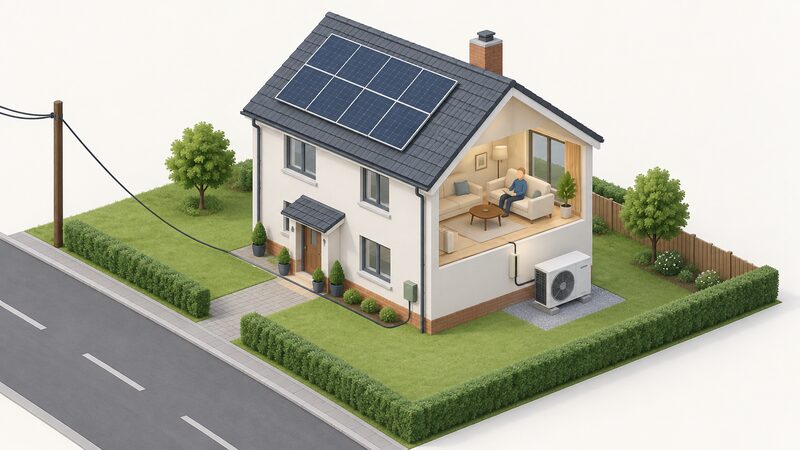
The combination matters for independence because it changes the shape of the household's exposure. A heat pump shifts heating demand onto electricity; solar generation offsets some of that demand. Neither removes the connection to the grid, and a heat pump household without solar or a battery is more exposed to electricity prices than a gas-heated household is to gas prices, because the grant reduces the capital cost but not the running cost.
Where the money goes: budgets, quarterly caps and scheme reporting
The scheme figures are published on a quarterly cycle, and the reporting has widened over time. The heat pump deployment statistics are a quarterly statistical release on the number of heat pumps installed in the United Kingdom26. The published figures cover the period 2018 quarter 1 to 2026 quarter 127, and since March 2026 the tables in the release have been expanded to cover all retrofit installations27. Earlier releases covered January 2018 to June 20256, January 2018 to December 202428, and January 2018 to September 202429, which shows how the coverage has extended with each edition.
The funding mix is recorded in the same series. In the year ending December 2024, government-supported installations were funded through the Boiler Upgrade Scheme and the Energy Company Obligation at 53% and 40% respectively28. By the year ending June 2025 the split recorded was 60% and 31% respectively6. Those two figures are from different reporting periods and are not directly comparable, but they show that the Energy Company Obligation has been a substantial funding route alongside the grant scheme.
The budget position is contested in the published documents. One official statistics source gives £295 million for 2025/26, with 2024/25 funding increased by £30 million, while another official guidance source gives £450 million. What is consistent is the rule that unspent budget is not carried over to the next scheme year10.
The evidence base for how households actually experience these costs is also documented. Research on the transition to heat pumps for households at risk of fuel poverty combined in-depth interviews with households at risk of fuel poverty, technical home audits, analysis of monitored heat pump performance data, cost modelling and a review of existing evidence30. That methodology matters because it distinguishes measured performance from modelled performance, and the two do not always agree.
What this means for household energy independence
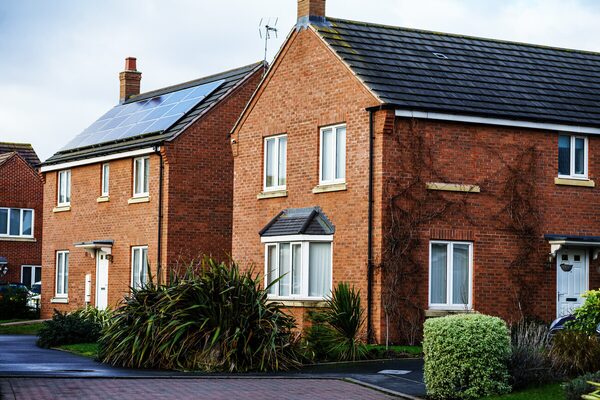
The cost data tells a story about partial independence. A grant-funded heat pump reduces the capital barrier to moving a home off gas, and solar reduces the electricity bill by around £500 a year for a typical UK home based on the current energy price cap5. Those are real reductions in exposure to fossil fuel prices and to the gas network.
What remains is dependence of a different kind. A heat pump household is still connected to the electricity grid and still buying from a supplier. The grant is a one-off capital contribution; it does not insulate the household from electricity unit rates, which is where the running cost comparison with gas is decided. Parliament's position that heat pumps currently have similar running costs to gas boilers2 is a statement about the present price relationship, not a guarantee about future ones.
There is also a dependence on the scheme itself. The Boiler Upgrade Scheme closes on 30 December 20298, and unspent budget is not carried over to the next scheme year10. A household planning an installation years ahead is planning against a funding regime with a published end date and an annual budget that resets rather than accumulates.
The certification requirement adds a further layer. Because the installer must be certified by the Microgeneration Certification Scheme8, the household's choice of installer is constrained by who holds certification, and the price quoted reflects that narrower market. Independence in this context means reduced exposure to gas and to the price of imported fuel, not independence from the grid, the supplier, the scheme administrator or the certified installer market.
Sources30 cited
- Britain continues to break clean power records, GOV.UK, 2026
- Heat pumps and energy efficiency in homes, UK Parliament POST, 2026
- Thousands of homes will be eligible for £9,000 off a heat pump, GOV.UK, 2026
- Boiler Upgrade Scheme guidance for installers v5.1, Ofgem, 2026
- UK Solar Roadmap, Department for Energy Security and Net Zero, 2025
- Heat pump deployment quarterly statistics, United Kingdom 2025 Q2, Department for Energy Security and Net Zero, 2025
- Boiler Upgrade Scheme annual report, April 2025 to March 2026, Ofgem, 2026
- Boiler Upgrade Scheme, Find Government Grants, 2026
- Carbon Budget and Growth Delivery Plan: heat and buildings factsheet, GOV.UK, 2026
- Boiler Upgrade Scheme quarterly report, issue 14, Ofgem, 2025
- Scotland's Climate Change Plan 2026-2040, Scottish Government, 2025
- Home Energy Scotland Grant and Loan Scheme statistics, Scottish Government, 2025
- National Islands Plan annual report 2022, Scottish Government, 2022
- Heat in Buildings progress report 2025, Scottish Government, 2025
- Ynni Cymru capital grant funding scheme 2026 to 2027 guidance, Welsh Government, 2026
- £5 million to help Welsh households invest in greener homes, Welsh Government, 2026
- NISEP list of schemes 2026-27, Utility Regulator Northern Ireland, 2026
- Boiler Upgrade Scheme: what you can get, GOV.UK, 2026
- Boiler Upgrade Scheme quarterly report, issue 17, Ofgem, 2026
- Boiler Upgrade Scheme guidance for property owners V5, Ofgem, 2026
- How do I retrofit my home: solar panels, Oxfordshire County Council, 2026
- Building regulations: heat pumps, Welsh Government, 2026
- Building regulations discussion document, Northern Ireland Department of Finance, 2023
- Your essential guide to heat pumps, Welsh Government, 2025
- Solar thermal panels, nidirect, 2024
- Heat pump deployment statistics: June 2026, Department for Energy Security and Net Zero, 2026
- Heat pump deployment quarterly statistics, United Kingdom 2026 Q1, Department for Energy Security and Net Zero, 2026
- Heat pump deployment quarterly statistics, United Kingdom 2024 Q4, Department for Energy Security and Net Zero, 2025
- Heat pump deployment quarterly statistics, United Kingdom 2024 Q3, Department for Energy Security and Net Zero, 2024
- How to ensure a successful transition to heat pumps for households at risk of fuel poverty, GOV.UK, 2026
 The Full Statistics GuideHow many homes in the UK have solar panels, heat pumps or batteries?
 Getting Installation QuotesHow householders obtain quotes for boilers, heat pumps and solar PV, how many quotes are usually recommended, what a survey should involve, and the difference between an estimate, a quotation and a fixed price.
 Running Costs by FuelHow the cost of heat compares across mains gas, heating oil, LPG, electricity, solid fuel and heat pumps once efficiency and the price cap are applied.
 Baseline Your Energy UseBefore spending money on a heat pump, solar panels or a battery, you need to know what your home actually uses now.
 Cost of Energy IndependenceA heat pump and better insulation are the usual starting point, but what does the whole job really cost, and what help is there with the bill?
 Air Conditioning CostPublished UK equipment prices and the parts of an installed price for portable, single split, multi-split and whole-house air conditioning.