
In this guide
The cheapest way to heat a home in the UK depends on two things read together: what a unit of the fuel costs, and how much of that unit the appliance turns into heat. As of March 2026, mains gas was estimated to be the cheapest way to heat a standard three-bed semi-detached house in the UK1. That finding is a comparison of whole running costs, not of fuel prices alone, and it holds for the roughly four in five homes that have a gas connection.
For the homes that do not, the comparison changes completely. Around one million homes in Great Britain use liquid fuel heating, and for them the choice is usually between heating oil, LPG and electricity2. Electricity is the most expensive fuel per unit under the price cap, at 27.69p per kWh for 1 January to 31 March 2026, against a gas unit rate of 5.74p per kWh for April to June 20263. A heat pump narrows that gap because it moves heat rather than burning fuel, but the unit price gap is where any honest comparison starts.
The energy price cap is the other half of the picture, and it is widely misunderstood. It sets maximum prices for a unit of energy and daily standing charges, with separate caps for gas and electricity, and it does not limit annual bills, which depend on how much energy is used5. It applies where a customer has not signed up for a fixed-term contract with their supplier, and Ofgem revises it each quarter5.
What the figures actually say
The headline numbers come from two different places and measure two different things, which is why they are so often quoted against each other unfairly. The price cap figures are unit rates: what a supplier may charge for each kilowatt hour of gas or electricity consumed. The fuel comparison from March 2026 is a modelled annual running cost for a specific house type, which folds unit price, appliance efficiency and typical consumption into one number1.
The cap itself is set per unit and per standing charge, and a separate cap is set for each of the 14 regions and applies throughout the region, with no breakdown below regional level5. That means two identical homes in different parts of Great Britain can face different maximum unit rates for the same fuel. The cap also varies by payment method: for 1 October to 31 December 2025 the total Direct Debit cost was £1,755, up from £1,720, the Standard Credit total was £1,890, up from £1,855, and the Prepayment total was £1,707, up from £1,6727.
The cap does not cover everything. Fixed tariffs, business energy contracts, heat networks and heating oil all sit outside it3. That last exclusion matters enormously for off-grid households: the price of heating oil is not regulated by Ofgem at all, so the running cost of an oil-heated home moves with the wholesale oil market and with whatever the local distributor charges on the day.
What drives the cost of heat
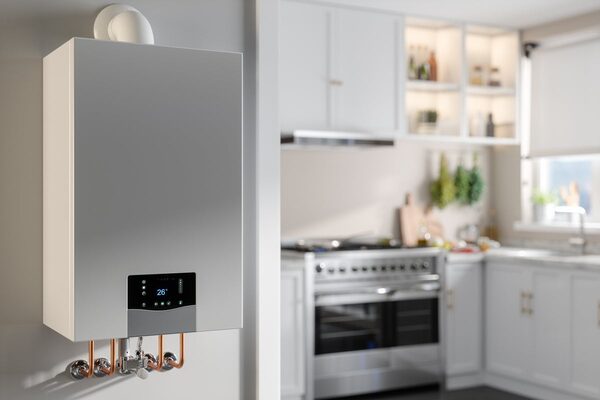
Four things determine what a household actually pays to stay warm, and only one of them is the fuel price.
The unit price of the fuel. This is the figure most people compare, and it is the least useful on its own. Electricity at 27.69p per kWh and gas at 5.74p per kWh are not like for like in outcome, because the appliances that use them convert energy at different rates3.
The efficiency of the appliance. Building Regulations require each new boiler to have a minimum efficiency of 86% for gas and 85% for oil6. An appliance below that standard wastes a measurable share of every unit bought. Older boilers predating those requirements can be considerably worse, and the gap between a modern condensing boiler and an old one is often larger than the gap between two fuels.
The heat demand of the building. Fabric efficiency sets how many kilowatt hours a home needs before any fuel is chosen. This is why the government has invested £12 billion to make homes, particularly for low-income households, warmer and cheaper to heat8. Insulation reduces the number of units required; it does not change the price of a unit.
The standing charge and the payment method. A daily standing charge is payable whether or not any heat is used, and it differs by region and by payment method. For 1 January to 31 March 2026 the electricity standing charge was 54.75p per day3. For April to June 2026 it was 57.21p per day for electricity and 29.09p per day for gas4.
Fuel by fuel: how the options compare
Each fuel has a different purchase model, a different efficiency profile and a different exposure to price movement. Reading them side by side is the only way to see why the "cheapest fuel" answer is conditional.
| Fuel | How it is bought | Unit price or measure | Efficiency requirement | Notes |
|---|---|---|---|---|
| Mains gas | Per kWh, metered, capped | 5.74p per kWh, April to June 20264 | 86% minimum for new gas boilers6 | Estimated cheapest for a standard three-bed semi, March 20261 |
| Heating oil | Per litre, bulk delivery, uncapped | 76.6 pence per litre, mid-June 20265 | 85% minimum for new oil boilers6 | Around one million homes in Great Britain use liquid fuel2 |
| LPG | Per litre or per kWh, bulk or bottled, uncapped | Not published in the figures here | 85% minimum for new boilers6 | Carbon emissions from LPG are slightly lower than oil2 |
| Electricity | Per kWh, metered, capped | 27.69p per kWh, 1 January to 31 March 20263 | Not applicable to resistive heating | 9% of households across Great Britain rely on electricity for heating10 |
| Heat pumps | Per kWh of electricity, metered, capped | Same electricity unit rate as above3 | Not applicable | Approximately 1% of existing homes heated by heat pumps as of July 202411 |
The oil figure deserves a note of its own. In mid-June 2026 the UK figure was 76.6 pence per litre, and the cheapest in the EU was Malta at 86.9 pence per litre5. That makes UK heating oil cheaper than anywhere in the EU on that measure. It does not make oil cheaper than gas, because a litre of oil and a kilowatt hour of gas are different quantities of energy, and the comparison requires a conversion the published figures do not supply.
"the fuel of choice for around one million homes in Great Britain"
Where the UK nations differ
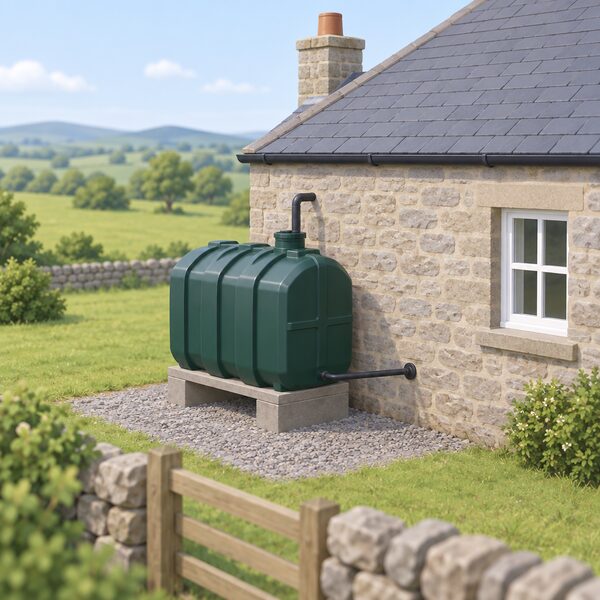
The price cap applies to customers in each energy supply region of Great Britain, and a separate cap is set for each of the 14 regions5. Northern Ireland sits outside that structure entirely, and its households are not covered by the Ofgem cap in the same way.
The pattern of heating fuels also varies by nation and by settlement type. On average across Great Britain, 9% of households rely on electricity for heating10. Communal heating is more common in English urban areas, at 3% of dwellings, than in rural areas, at 0.6%12. Off-gas-grid homes cluster in rural areas, which is where oil and LPG dominate.
Scotland has its own statutory framework for what a heating system must deliver. Every dwelling must have some form of fixed heating system, or an alternative, capable of maintaining a temperature of 21°C in at least one apartment13. The Fuel Poverty (Enhanced Heating) (Scotland) Regulations 2020 set standard heating temperatures of 21°C in the living room and 18°C in other rooms for the standard heating regime14. Those temperatures are the benchmark against which heating cost is measured in Scotland, and they are higher than many households actually run their homes at.
Wales has run its own support alongside the GB-wide schemes. The Welsh Government provided £30 million for the Warm Homes programme to improve energy efficiency in lower-income households15. Northern Ireland households looking to generate their own electricity are directed to the NI Energy Advice service, which provides independent advice on solar panels, heat pumps, and other energy efficiency measures16.
The rules that shape running costs
The regulatory position on existing homes is more permissive than headlines suggest. There is currently no legal requirement for existing homes to be retrofitted or for low-carbon heating technologies to be installed in existing homes, with exceptions for privately rented homes and homes owned by local authorities and housing associations in some parts of the UK17. A household replacing a boiler today is not breaking a rule by choosing another fossil fuel boiler.
What does bind is appliance efficiency. Each new boiler must have a minimum efficiency of 86% for gas and 85% for oil6. That is a floor, not a target, and it applies at installation.
The direction of travel is set out in policy rather than law. It is expected that heating in homes in the UK will be decarbonised by one of three low carbon technologies: heat pumps, hydrogen and/or heat networks, alongside energy efficiency through insulation upgrades18. The average total cost of heat decarbonisation in each home, combining low carbon heating systems and energy efficiency retrofit costs, was put at under £10,00018. A market-based mechanism for low-carbon heat would require obligated parties to achieve the installation of a certain number of heat pumps up to 45kWth to existing UK properties19.
Support schemes carry their own conditions. The Warm Home Discount is a fuel poverty reduction scheme, reducing the energy costs of low-income and vulnerable households across Great Britain, and it primarily provides support through the provision of £150 energy bill rebates, funded through a levy on all domestic gas and electricity customers20. Around 6 million households now benefit from a £150 rebate off their winter energy bill8. The Warm Homes Local Grant provides grants for energy performance upgrades and low carbon heating to low-income households living in the worst quality, privately owned homes in England21. The Warm Homes Loan Scheme offers £2bn in low interest loans for heat pumps, solar panels, batteries and more22.
The Energy Company Obligation sets a heating standard for qualifying actions: a reduction in the cost of heating premises to 21 degrees Celsius in the main living areas and 18 degrees Celsius in all other areas23. Phase 3 of the scheme introduced a home heating minimum requirement from 1st July 201624. The Home Energy Efficiency Scheme (England) Regulations 2005 capped certain works at £6,000 or the amount properly charged for the works, whichever is the less, for oil fired central heating and renewable heating purposes25.
What this means for a household's energy independence
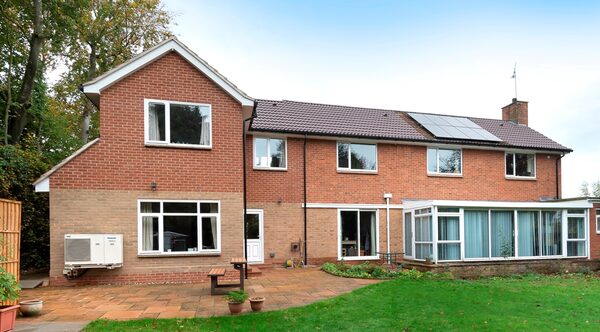
Most heating in the UK is supplied by gas, and that single fact defines the dependence of the majority of homes26. A gas-heated household depends on the gas network, on a supplier, and on imports. The British energy security strategy sets out how Great Britain will accelerate homegrown power for greater energy independence, and heating sits squarely inside that ambition27.
The dependence a household carries varies by fuel in kind, not just in cost. A mains gas home depends on a network it cannot bypass. An oil-heated home depends on a distributor and on bulk deliveries, with no equivalent of the price cap to smooth the price. An electrically heated home depends on the grid and on a supplier, but the fuel itself is generated domestically in rising share. A heat pump with solar panels shifts part of that dependence onto the household's own roof, though it still needs the grid for the winter months and for the heat pump's own electricity.
The government's stated aim has been broad for a long time. Under its heat and energy efficiency plan, every household in Britain was to receive expert, targeted help to reduce their fuel bills and access low-carbon heat and power28. The current advice route is Home Energy Advice, a single-entry point for consumer home energy advice on GOV.UK helping homeowners, landlords and tenants find tailored, impartial and trusted advice on how to heat their homes and make them more energy efficient22.
The honest position is that no fuel choice makes a household fully independent. What it changes is who the household depends on, and how exposed that dependence is to a price it does not control. For a household weighing running costs, the practical question is not which fuel is cheapest in the abstract but which combination of fuel, appliance efficiency and building fabric produces the lowest cost per unit of warmth delivered, and how much of that cost is fixed by a regulator and how much by a market.
Sources28 cited
- Cheapest way to heat a home, March 2026, House of Commons Library, 2026
- What heating options are available off the grid, OFTEC, 2026
- Energy price cap, Ofgem, 2026
- Energy price cap explained, Welsh Government, 2026
- Energy price cap: how it works, House of Commons Library, 2026
- Building regulations for boilers and heating, Planning Portal, 2026
- Summary of changes to energy price cap, 1 October to 31 December 2025, Ofgem, 2025
- DESNZ annual report and accounts 2025 to 2026, Department for Energy Security and Net Zero, 2026
- Energy price cap: typical consumption assumptions, House of Commons Library, 2026
- Energy use in Wales, Welsh Government, 2022
- UK off track for net zero, say country's climate advisors, Climate Change Committee, 2024
- English Housing Survey 2023 to 2024: low carbon technologies, Ministry of Housing, Communities and Local Government, 2024
- Building standards technical handbook 2022: domestic, heating, Scottish Government, 2022
- Scottish House Condition Survey 2024: key findings, Scottish Government, 2026
- Safe, warm and connected community hubs, Welsh Government, 2024
- Support to generate your own electricity, nidirect, 2025
- Retrofit requirements for existing homes, House of Commons Library, 2026
- Decarbonising heat in homes, Business, Energy and Industrial Strategy Committee, 2022
- A market-based mechanism for low-carbon heat, Department for Business, Energy and Industrial Strategy, 2021
- Warm Home Discount, Ofgem, 2026
- Warm Homes Local Grant statistics, August 2026, Department for Energy Security and Net Zero, 2026
- Reforming consumer protection for home upgrade schemes, Department for Energy Security and Net Zero, 2026
- Energy Company Obligation: heating standard, legislation.gov.uk, 2014
- Energy Company Obligation phase 3, legislation.gov.uk, 2017
- Home Energy Efficiency Scheme (England) Regulations 2005, legislation.gov.uk, 2005
- Most heating in the UK is supplied by gas, House of Commons Library, 2022
- British energy security strategy, Department for Business, Energy and Industrial Strategy, 2022
- Government plans to improve energy efficiency in homes, Climate Change Committee, 2009
 Heat Pump Running CostsWhat does a heat pump cost to run each year, and is it cheaper than a gas boiler?
 Hybrid Heat PumpsHow hybrid systems pair a heat pump with a gas, oil or LPG boiler, what decides which appliance runs, what they cost, how much gas they displace, and why the Boiler Upgrade Scheme will not fund them.
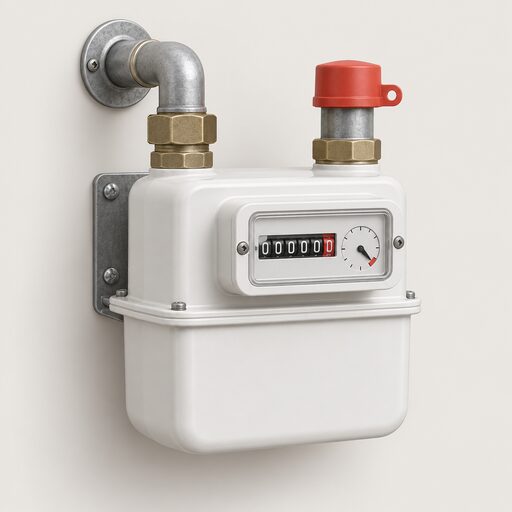 Replacing a Gas or Oil BoilerSwapping a gas, oil or LPG boiler for a heat pump changes how your home is heated and how much it costs.
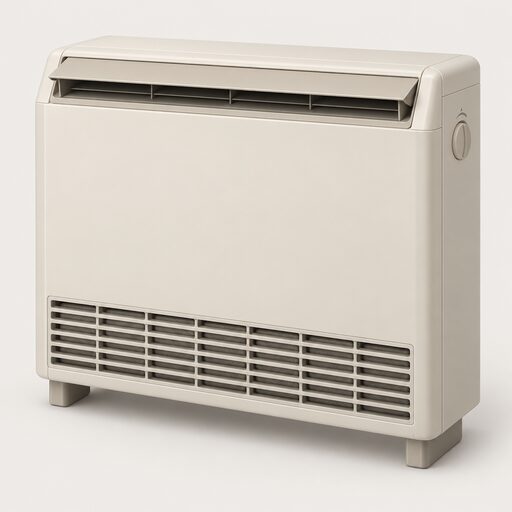 Electric Heating CostsHow to work out what electric radiators, panel heaters, infrared and storage heaters cost to run per hour and per season.
 Energy IndependenceA heat pump runs your heating on electricity instead of gas or oil, so how much does that really cut what you pay and how exposed you are when fuel prices jump?
 Installation Cost TrendsTracks the published median and average installed costs of domestic solar, heat pumps and batteries and how they have moved.