
In this guide
A heating system in a UK home is governed by building regulations from the moment it is installed, replaced or altered. The regulations control certain types of building work and ensure that buildings meet certain standards of health, safety, welfare, convenience and sustainability1. They include requirements to ensure that fuel and power is conserved2. For a household, that means the boiler, the cylinder, the controls, the flue and the fuel store are all covered, and the person who does the work carries a legal duty to get it right.
The practical trigger is simple. Installing or replacing a heating system is listed among the work that needs building regulations approval3. Work to install a new boiler, or a cooker that also supplies central heating, needs approval because of safety issues and the need for energy efficiency4. Where a heating or hot water system is simply replaced, a building control application may not be required, and if one is required it may not be necessary to apply in advance of the work4. If a new system is installed, the installer should proceed as if the work were being carried out in a new building4.
The rules are not identical across the UK. England works to Approved Document L Volume 1 for dwellings and Approved Document J for combustion appliances. Wales has its own Approved Document L and J editions and its own amendment regulations. Scotland uses the Building (Scotland) Regulations 2004 and the New Build Heat Standard. Northern Ireland has its own technical booklets. The sections below set out what each covers, who is responsible, and what happens when work does not comply.
What the Building Regulations are and what they cover
The Building Regulations control certain types of building work and ensure that buildings meet certain standards of health, safety, welfare, convenience and sustainability1. They are separate from planning permission, which controls whether a development may happen at all; building regulations control how the work is done2. The regulations will probably apply if a building is put up, extended or altered, or if services and fittings are provided such as washing and sanitary facilities, hot water cylinders, foul water and rainwater drainage, replacement windows, and fuel burning appliances of any type2.
For heating specifically, the regulations reach further than the boiler itself. Building regulations also apply to other aspects of the work such as electrical installation and plumbing work10. The Building Regulations only set standards for electrical installation work in relation to dwellings, including houses and flats, and they do not set standards for the safety of electrical appliances, though they do require that fixed connections of appliances are safe11. Most electrical work requires either an installer registered with a competent person scheme or approval from a building control body, with repairs, replacements and maintenance work, and extra power points or lighting points or other alterations to existing circuits, exempt except in a kitchen or bathroom or outdoors11.
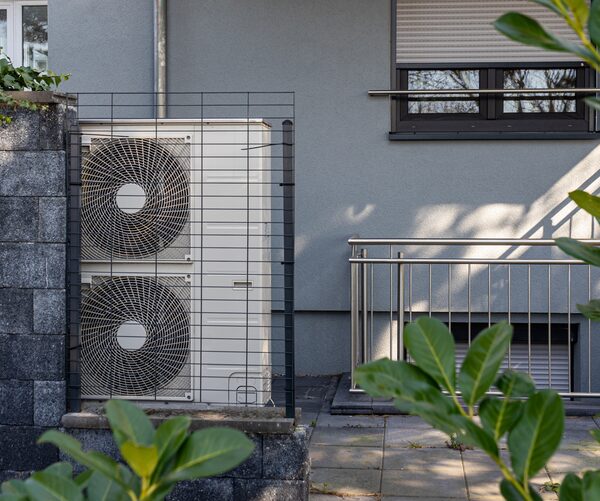
Heat pumps sit inside the same framework. Installation of either a ground source or air source heat pump will have to comply with the Building Regulations12, and Building Regulations parts A to T apply to an air source heat pump plus Regulation 713. The relevant requirements are the same for ground source heat pumps12. General guidance on the performance expected of materials and building work, and practical examples of how to achieve compliance in common situations, sits in the approved documents12.
For a household, the effect is that a heating upgrade is a regulated event, not a private transaction between owner and tradesperson. The paperwork that follows, the certificate and the notification, is what makes the installation legible to a future buyer, a warranty provider and an insurer.
Part L: conserving fuel and power in England
Part L of Schedule 1 to the Building Regulations 2010 is titled Conservation of fuel and power, and the reduction of greenhouse gas emissions14. Approved Document L, Volume 1: Dwellings gives guidance on how to comply with Part L of Schedule 1 to the Building Regulations and the energy efficiency requirements for dwellings in England15. Part 6 of the Building Regulations imposes additional specific requirements for energy efficiency on building work8.
The document is not static. A 2025 review consulted on the impacts of changes to Building Regulations Part L, including changes to Part F on ventilation, Part O on overheating and associated Approved Document guidance16. A newer Approved Document L Volume 1 for dwellings has been published, and it takes effect in England for building work not connected with higher-risk building work on 24 March 2027, and for building work connected with higher-risk building work on 24 September 20279.
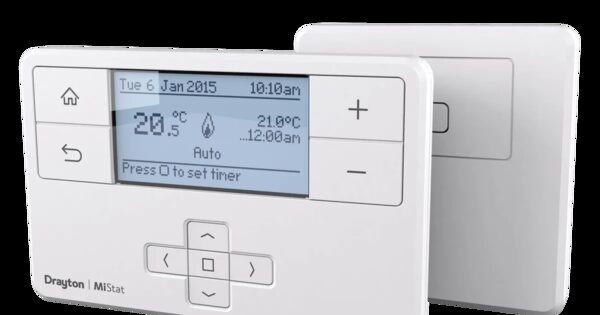
Two requirements in the current guidance matter most to a householder replacing a heat generator. First, controls. For heating systems in new dwellings, or when a heat generator such as a boiler is replaced in an existing dwelling, each room should be provided with thermostatic room controls able to separately adapt the heating output in each room served6. Second, storage. Primary storage systems should meet the insulation requirements of the Hot Water Association's Performance Specification for Thermal Stores6. Buildings containing more than one dwelling follow a split: heated common areas follow Approved Document L Volume 2, and unheated common areas should meet the minimum standards in Section 48.
The compliance route for heat pumps is set out explicitly. The requirements of regulation 11F are met for the installation of heat pumps in new and existing dwellings by following the procedures in Section 8 of Approved Document L Volume 19. That gives an installer a defined path rather than a judgement call.
Approved Document J: combustion appliances, flues and fuel storage
Approved Document J deals with combustion appliances and fuel storage systems in the Building Regulations 2010 as amended7. It provides practical guidance on ways of complying with Requirements J1 to J7 and regulation 7 of the Building Regulations 2010 for England and Wales7. Its scope is bounded by output: Section 2 covers solid fuel installations of up to 45kW rated output, and Section 4 covers oil installations of up to 45kW rated heat output7.
The document's legal character is worth understanding. If guidance in an Approved Document is followed there will be a presumption of compliance with the requirements covered by the guidance7. But there is no obligation to adopt any particular solution contained in the document if the relevant requirement is met in some other way7. In other words, the approved document is a safe harbour, not a straitjacket.
For oil heating, the fuel store is part of the regulated picture. If an oil fired heating system is to have a new storage tank then there are guidelines set out in Approved Document J which should be followed for fire safety reasons and to limit risks of oil pollution17. That connects directly to the siting and bunding rules that apply to domestic heating oil tanks.
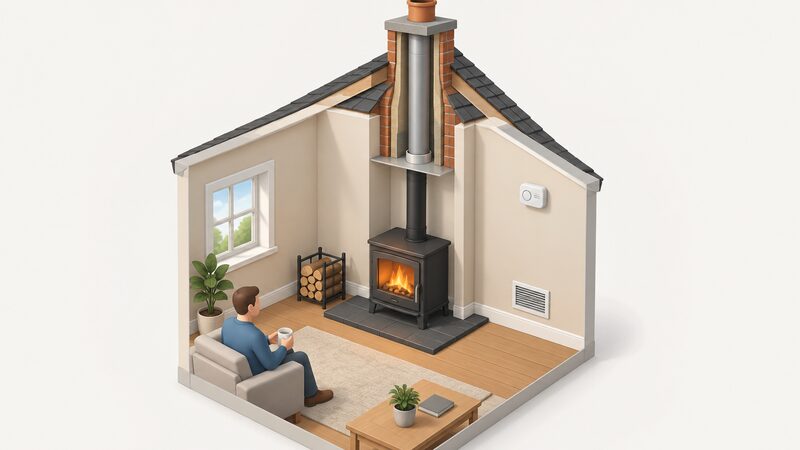
Carbon monoxide provision sits in the same document. Where a new or replacement fixed solid fuel appliance is installed in a dwelling, a carbon monoxide alarm should be provided in the room where the appliance is located7. Wider guidance states that a carbon monoxide alarm meeting European Standards EN 5029 should be fitted in any room that contains a gas fuel burning appliance, like a boiler and gas fire, and a solid fuel burning appliance18. Placement detail is covered in carbon monoxide detector placement.
The Welsh edition of Approved Document J is the 2010 edition incorporating further 2010 amendments, for use in Wales7. The Building Control Body for this work may be either the local authority or an Approved Inspector7.
Scotland, Wales and Northern Ireland: how the rules differ
The four nations do not share a single rulebook, and the differences matter most for new build and for conversion work.
In Scotland, building standards require that every building must be designed and constructed in such a way that the heating and hot water service systems installed are energy efficient and are capable of being controlled to achieve optimum energy efficiency19. The New Build Heat Standard is introduced through building regulations20. It prohibits the use of heating and cooling systems, located within the curtilage of any new building, which produce more than a negligible level of greenhouse gas emissions at the point of combustion20. It extends only to the provision of space heating, cooling and hot water; other processes which use or generate heat or hot water are out of scope20. The standard does not apply to wood burners and other bioenergy (and peat) heating systems under the temporary direction, heating systems used in industrial processes, emergency heating systems, heating whose sole purpose is frost protection, or alterations or extensions to buildings built under a warrant applied for before 1 April 202421. The separate Heat in Buildings Bill would prohibit the use of polluting heating systems, like gas boilers, in all privately owned and privately rented homes and non-domestic properties after 2045, and require some building owners to do so earlier than 2045; that prohibition would apply only to the main heating system or systems of a property21.
In Wales, Part L has been reviewed separately from England, and the Welsh Government has published its own Approved Document L Volume 1 for 20266. The Part L title has been amended to recognise that the requirements also reduce greenhouse gas emissions14. A 2025 review covered Part L, Part F and Part O together16. Welsh amendment regulations for 2026 have also been published14.
In Northern Ireland, the equivalent guidance is issued as technical booklets rather than approved documents, and the numbering and content differ from the English series. Households there should work from the Northern Ireland publications and their own building control service.
Scotland's wider trajectory is set out in its heat and buildings strategy, which proposes converting around 50% of homes and an estimated 50,000 non-domestic properties to zero or low emissions heating by 2030, alongside a 68% reduction in combined building emissions compared with 202022. The same strategy proposes that all buildings should be energy efficient by 2035 and that homes should meet a minimum standard broadly equivalent to EPC C where technically feasible and cost-effective22. A backstop date of 2045 is proposed for low or zero emissions heating in existing buildings22.
Who is responsible: owner, builder or installer
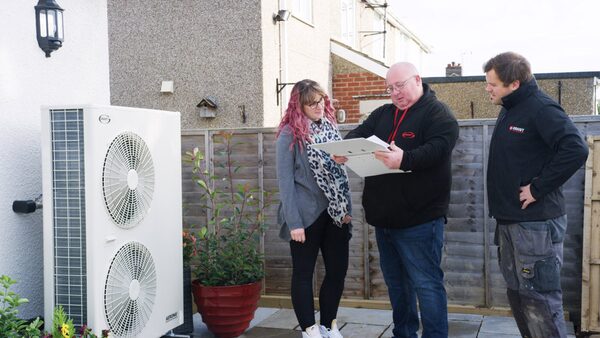
Responsibility is layered, and the householder is not outside it. If an existing system has been altered or replaced then the person who last worked on the system is responsible for its safe running and should issue a certificate showing the necessary checks have been carried out4. That places the immediate duty on the installer or the firm.
But ownership carries its own exposure. If you are the owner of the building, it is ultimately you who may be served with an enforcement notice if the work does not comply with the regulations2. The owner cannot contract out of that by hiring someone. This is the reason the completion certificate matters: it is the document that shows the work was done under the regulations.
For heat pumps, the information handed to the dwelling owner is specified. Operating and maintenance information provided to the dwelling owner should include details of the heat loss calculation, design flow temperature, competent person scheme confirmation, size of emitter circuit and minimum set back temperatures8. That list is a useful checklist for any household receiving a heat pump installation, because it records the design assumptions the system depends on.
Where a heat pump installer is not registered as a competent person, before work begins the installer must either notify the local authority or arrange for a registered building control approver to oversee the work8. The same principle applies to boilers: where the installer is not in an approved Competent Person scheme, the firm or the householder will need to give notice to the Local Authority of the intention to carry out the boiler work in advance17.
The practical consequence is that the household should expect to hold paperwork: a commissioning certificate such as a Benchmark certificate, a building regulations completion certificate, and for heat pumps the design and set-up information. Without them, a future sale, warranty claim or insurance query becomes harder to resolve.
Approval routes: competent person schemes and building control bodies
There are two routes to compliance, and the choice usually sits with the installer rather than the household.
The first is self-certification. An installer, for example of windows or boilers, who is registered with a scheme can self-certify that their work complies with building standards5. Installers who are members of a relevant competent person scheme can self certify certain types of building work, including the installation of solar PV, avoiding the need to seek separate building regulations approval23. For heat pump installation work, the two procedures are self-certification by a registered competent person, or certification by a building control body8.
The second is building control. A building control body can be either the local authority to the site or a registered building control approver24. In England the two types are a local authority building control body and an approved inspector15. The building control body must be notified before the work starts and again once the work is complete, and it will determine the extent of inspection and testing needed to establish compliance9. It may decide not to give a completion or final certificate until it receives the notice of completion of commissioning15.
The schemes themselves are specific to the technology. For installing mechanical ventilation and air conditioning systems in dwellings there are currently four registered competent person schemes: BESCA, Blue Flame Certification, Certsure and Napit25. For renewable technologies including heat pumps, the registered schemes are APHC, BESCA, Certsure, HETAS, NAPIT and OFTEC25. The approved documents have been amended to state that a competent person scheme should be used when undertaking a heat pump or mechanical ventilation installation25.
Where a registered competent person does the work, the duties are set out: install and commission the system to the standards set out in the approved document, give notice to the building control authority that commissioning has been carried out in accordance with the approved document, and give the certificate, or a copy of the information on the certificate, to the building control authority9.
| Route | Who certifies | What the household receives |
|---|---|---|
| Registered competent person | The installer, through their scheme | Building Regulations compliance certificate, copy to the occupier9 |
| Local authority building control | The local authority | Building Regulations completion certificate8 |
| Registered building control approver | The approver | Final certificate8 |
For boiler work, the process is similar in shape. When works have been completed the installer should then produce for you a commissioning certificate such as a Benchmark certificate and notify the local authority building control department directly or via the scheme operator, and the local authority should supply a building regulations completion certificate4.
Controls, TRVs and efficiency standards for heating systems
Controls are where the regulations touch daily life most directly, and the requirements have tightened.
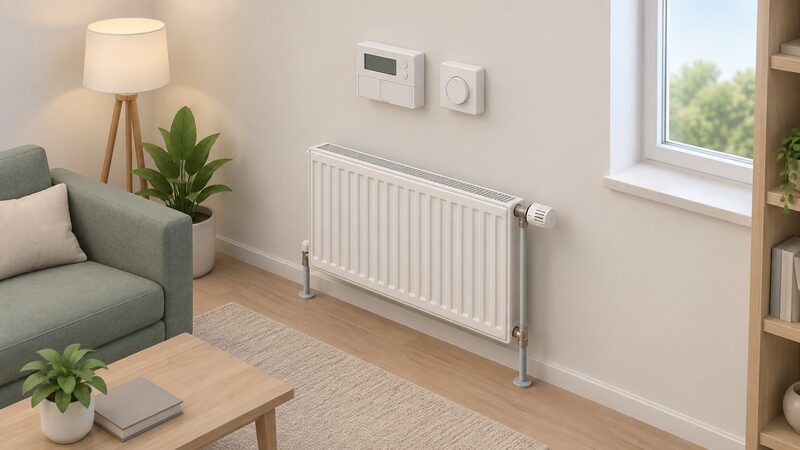
The headline rule is room-by-room control. For heating systems in new dwellings, or when a heat generator such as a boiler is replaced in an existing dwelling, each room should be provided with thermostatic room controls able to separately adapt the heating output in each room served6. That is a stronger requirement than a single wall thermostat and a set of manual radiator valves, and it is why a boiler replacement often comes with a controls upgrade. The practical detail of zoning, thermostats and TRVs is covered in heating controls and thermostats and in Boiler Plus.
For low-temperature systems, the requirements go further. Controls to ensure continued low-temperature operation, limiting flow temperature at the heat generator, have been introduced and must be commissioned in accordance with the design, and they cannot be overridden by the householder26. Where the heat generator provides hot water, controls must be installed that ensure it does not supply hot water services and space heating service simultaneously26. These two rules exist because a heat pump or a low-temperature system loses efficiency quickly if flow temperature drifts upward or if it is asked to do two jobs at once.
Insulation of pipework is also regulated. The guidance on the insulation standard for building heat distribution systems has been proceeded with as proposed in consultation, including referencing BS 5422:2023, under Approved Document L Volume 225.
For a household, the effect is that the control system is part of the regulated installation, not an optional extra. A system designed and commissioned to a low flow temperature, with per-room control and no simultaneous demand, will run differently from one set up to the installer's habit. The design flow temperature recorded in the handover information is the figure that tells a householder what the system was built to do.
What happens if work does not comply
Non-compliance has consequences for both the person doing the work and the owner of the building.
The person doing the work could be prosecuted and fined if they do not comply with building regulations3. The owner is exposed separately: you may have to correct the work or pay a fine if building regulations are not followed5, and as owner you may be served with an enforcement notice if the work does not comply2.
Emergency work is not exempt, only deferred. If emergency works are necessary, because for instance a hot water cylinder springs a leak, there is no bar on carrying out the work straightaway, but it must comply with the requirements and retrospective approval and a completion certificate must be applied for after the event4. That is the route that keeps a burst cylinder repair lawful.
The certificate trail is the household's protection. For heat pump installation work, the certificate or a copy of the information on it must be given to the building control authority, and a copy of the Building Regulations compliance certificate must be given to the occupier, within 30 days of the work being completed8. Where a building control body is involved, it issues a Building Regulations completion certificate if it is a building control authority, or a final certificate if it is a registered building control approver9.
Solar panels, heat pumps and other regulated additions
Heating regulations do not stand alone. A household adding solar panels, a heat pump or a micro-CHP unit meets several parts of the same framework at once.
Solar panels on a roof are caught by the regulations. Building regulations will normally apply if you wish to install solar panels on your roof23, and an application is needed when installing a solar panel on a roof27. The reasons given are the additional loading on the roof structure, which must be assessed and may need strengthening, and the associated electrical works28. This applies regardless of whether planning permission is required for the installation13. Installers who are members of a relevant competent person scheme can self certify certain types of building work, including the installation of solar PV23. The electrical side is covered in electrical safety for electric heating.
Heat pumps follow the same approval logic as boilers. Installation of either a ground source or air source heat pump will have to comply with the Building Regulations12, and the requirements of regulation 11F are met for the installation of heat pumps in new and existing dwellings by following the procedures in Section 8 of Approved Document L Volume 19. For listed buildings, air source heat pumps require planning permission and listed building consent, and ground source heat pumps require listed building consent29. The wider comparison of technologies sits in heat pumps compared with boilers.
Micro-combined heat and power has its own reference point: you must adhere to the building regulations set out in Approved Document L Volume 1, Section 6, Page 4530. Building regulations also apply to other aspects of the work such as electrical installation and plumbing work10. More detail is in micro-CHP for homes.
The pattern across all of these is that adding a low-carbon heat source does not reduce the regulatory burden; it adds to it, because the electrical work, the structural loading and the energy performance of the building all come into scope together.
The Future Homes and Buildings Standards and what comes next
The next regulatory step is already dated. The Future Homes and Buildings Standards are intended to come into force for non-higher-risk building work on 24 March 2027, followed by a 12-month transition period9. The amending regulations are due to come into force for higher-risk building work and work to existing higher-risk buildings on 24 September 20279. The new Approved Document L Volume 1 takes effect on the same two dates, for non-higher-risk and higher-risk building work respectively9.
The direction of travel for heating is explicit. Fossil fuel heating will not meet the Future Homes Standard, including hydrogen-ready and hybrid boilers25. That is a statement about new homes built to the standard, not a ban on existing installations, but it sets the compliance baseline that manufacturers and developers are working towards. The wider policy picture is covered in the Future Homes Standard and new build heating and will gas boilers be banned in the UK.
Some of the proposed changes will apply to existing as well as new homes, including heat pump efficiencies and controls, comfort cooling efficiencies, ventilation system efficiencies, lighting efficacies and fixed external lighting controls, and pipework insulation guidance25. That is the part of the package that reaches a household replacing a boiler or a cylinder in an older property.
For a household, the practical reading is that the controls and efficiency requirements already in force are the floor, not the ceiling. A system installed now to the current Part L requirements, with per-room thermostatic control, a commissioned low flow temperature and documented handover information, is closer to the 2027 baseline than one installed to older habits. The regulations are moving in one direction, and the certificate trail is what records where a given installation sits.
Sources30 cited
- Building regulations and planning permission, Planning Portal, 2026
- When you need approval, Planning Portal, 2026
- Building regulations approval, GOV.UK, 2026
- Boilers and heating: building regulations, Planning Portal, 2026
- Use a competent person scheme, GOV.UK, 2026
- Approved Document L Volume 1: Dwellings 2026, Welsh Government, 2026
- Approved Document J: Combustion appliances and fuel storage systems, Welsh Government, 2025
- Approved Document L Volume 1 consultation version, Welsh Government, 2025
- Approved Document L Volume 1: Dwellings, HM Government, 2026
- Building regulations: micro combined heat and power, Welsh Government, 2026
- Building regulations: electrics, Welsh Government, 2026
- Heat pumps: building regulations, Planning Portal, 2026
- Solar photovoltaics and planning in conservation areas, Bedford Borough Council, 2026
- Building etc. (Amendment) (Wales) Regulations 2026, Welsh Government, 2026
- Approved Document L Volume 1: Dwellings, 2021 edition incorporating 2023 amendments, HM Government, 2021
- Building Regulations Part L: 2025 review, Welsh Government, 2025
- Building regulations: boilers and heating, Welsh Government, 2026
- Solar panels: building regulations, Planning Portal, 2026
- New Build Heat Standard, part two, Scottish Government, 2026
- New Build Heat Standard consultation part II, Scottish Government, 2022
- Scottish Building Regulations: proposed changes to energy standards, Scottish Government, 2021
- Low temperature heating, NCM PCDB, 2026
- Solar panels and planning permission, Cornwall Council, 2026
- Planning permission and building regulations approval, Planning Portal, 2026
- Future Homes and Buildings Standards consultation response, HM Government, 2026
- Keeping your home warm in winter, Met Office, 2026
- Solar panels guidance, City of York Council, 2026
- Solar photovoltaic (PV) panels, London Borough of Bromley, 2026
- Air and ground source heat pumps, London Borough of Croydon, 2026
- Micro combined heat and power: building regulations, Planning Portal, 2026
 Heating Controls Building RulesWhat heating controls must you fit by law when you replace a boiler?
 Boiler InstallationGetting a new boiler means following building rules, and the person fitting it must be registered to sign the work off.
 Overheating StandardsScotland and Northern Ireland handle overheating in new homes differently from England and Wales.
 Building Regulations EnglandAdding a heat pump, solar panels or an extension usually needs building regulations approval, and it is separate from planning permission.
 Building Rules Northern IrelandDoing building work in Northern Ireland?
 Planning Permission NIHow Northern Ireland's planning rules apply to external air conditioning and air-to-air heat pump units, when consent is needed, and how the position differs from England, Scotland and Wales.