
In this answer
Short answer
Most heating controls, radiator and pipework changes in Scotland do not need a building warrant. Scottish building standards guidance places work associated with pipework, radiators, convector heaters and thermostatic controls for, or associated with, type 6 work outside the warrant requirement, and work associated with a combustion appliance installation or another part of a heating installation is also outside it, subject to the listed exceptions1. Type 6 work is itself the category covering work associated with a combustion appliance installation or another part of a heating installation.
Some work does need a warrant. A building warrant must be obtained before work begins where it is required1. Wet underfloor heating is the clearest example on the heating side: adding it will likely require building control approval2. External wall cladding or insulation usually requires a building warrant from the local council, and external wall insulation is likely to need one from the council's planning department, with the responsibility for applying resting on the householder rather than the provider3.
The practical effect for a household's energy independence is narrow but real. A warrant is a legal permission, not a technical standard, and it does not by itself make a home more self-sustaining. What it does is fix the point at which a heating change becomes a regulated alteration, which matters when the change is part of a wider move away from gas, such as a heat pump or a new wet underfloor system.
What the building standards system covers and who administers it
Scotland's building standards system is separate from the building regulations that apply in England and Wales. Electricians carrying out work in England and Wales have to comply with Part P of the Building Regulations, whereas in Scotland the system runs through building standards and the building warrant5.
The Scottish Government's role is to create the building standards regulations and technical guidance, oversee the building approval process, and strengthen the building standards system in Scotland6. A procedural handbook provides clarification on the procedures underpinning the Scottish building standards system, and a revised table of fees applies to all building warrant applications6.
The regulations, standards and supporting guidance in the technical handbooks apply based upon the date on which a building warrant application is submitted, or when work not requiring a building warrant is commenced6. That date rule matters for anyone planning a heating job across a change in the standards: the version that governs the work is the one in force at application or commencement, not at completion.
The New Build Heat Standard is administered by the Heat in Buildings Regulations Unit8. The standard prohibits the use of heating and cooling systems, located within the curtilage of any new building, which produce more than a negligible level of greenhouse gas emissions at the point of combustion8. That is a standards requirement sitting alongside the warrant system rather than a replacement for it.
For a household, the system's significance is that approval is devolved and procedural. There is no UK-wide answer to whether a heating job needs consent, and the Scottish route runs through the local authority and, where relevant, an approved certifier. The wider framework is set out in Scottish building standards and the building warrant system, and the devolved policy context in energy and buildings policy in Scotland.
When heating and pipework work does need a building warrant
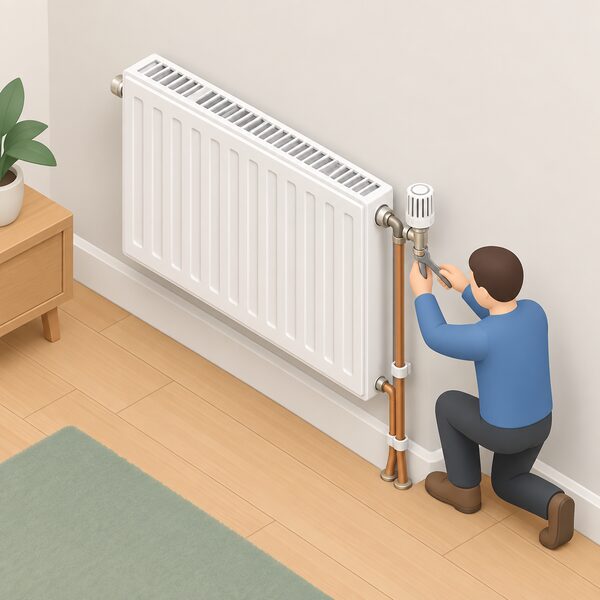
The default position is that a warrant is needed for certain types of work, and where it is needed it must be obtained before work begins1. The exemptions are specific rather than general, so the question is always which category the work falls into.
Work associated with pipework, radiators, convector heaters and thermostatic controls for, or associated with, type 6 work does not require a warrant1. Work associated with a combustion appliance installation or other part of a heating installation does not require a warrant either, subject to the listed exceptions1. Thermal insulation work is treated similarly: work associated with thermal insulating material to or within a wall, ceiling, roof or floor does not require a warrant, except where it is associated with an external wall cladding system consisting of thermal insulating material1.
Where the work falls outside those categories, the position changes. Wet underfloor heating will likely require building control approval2. External wall cladding or insulation usually requires a building warrant from the local council3. External wall insulation is likely to have needed a building warrant from the local council's planning department, the provider should make the householder aware, the responsibility for applying is the householder's, and a retrospective warrant may be needed4.
In Wales, the position on replacing a heating or hot water system is that an application may not be required, and, if it is required, it may not be necessary to apply in advance of carrying out the work9. That is a Welsh rule and does not describe the Scottish position, where the general requirement is that a warrant be obtained before work begins1.
Electrical work on heating controls: the approved certifier requirement
Electrical work carried out under a building warrant in Scotland must be approved by a registered installer, known as an approved certifier, or checked by the local authority5. The Approved Certifier of Construction Scheme allows electricians and other professionals to self-certify that notifiable work complies with the relevant regulations and standards7.
A NICEIC contractor on the scheme will be able to speed up the warrant process and issue a Certificate of Construction8. That is the practical benefit of using a certifier: the compliance sign-off travels with the trade rather than waiting on a council inspection.
The certification routes for heat pump installation work are self-certification by a registered competent person or certification by a building control body10. Once a building control body has decided that the work meets all the Building Regulations requirements, it will issue a Building Regulations completion certificate if it is a building control authority, or a final certificate if it is a registered building control approver10. A copy of the Building Regulations compliance certificate goes to the occupier, and the certificate, or a copy of the information on it, must be given to the building control authority10.
Separately, a person carrying out building work covered by Regulation 7A must give an energy performance certificate for the building to the owner of the building12. That obligation sits on the person doing the work, not on the householder commissioning it.
For a household, the certifier route is what keeps a heating controls job moving. It also means the paperwork trail, the certificate and the completion or final certificate, is the evidence that the electrical side of a heating installation was signed off properly. The wider certification landscape is covered in competent person schemes and self-certification and electrical safety regulation in UK homes.
How warrant rules connect to Scotland's clean heating plans

The warrant system is the point at which Scotland's clean heating ambitions touch an individual property. The Scottish Government has led by requiring new homes to install clean heating13, and the New Build Heat Standard requires all new buildings for which a building warrant is applied for from 2024 to use zero emissions heating14. The trigger is the warrant application date, which is why the standards date rule and the clean heating rules interlock.
The Scottish Government is committed to decarbonising heat in buildings by 204513. It has a target to decarbonise heating systems in all buildings where it is reasonable and practicable to do so, with 2045 as the target year15, and has described the aim as setting a target to decarbonise heating systems by 2045, so far as reasonably practicable16.
The Heat in Buildings Bill is planned to be introduced17. It would provide a clear framework for the transition to clean heating and better improved energy efficiency, and is intended to give industry and homeowners the certainty they need to invest, boost heat network development and set a long-term direction of travel that is deliverable and affordable for households and businesses17. The Bill will introduce a voluntary Scottish installation and maintenance licence for heat networks, giving developers a route into the sector18. A separate proposal would require homeowners in Scotland to meet a minimum energy efficiency standard by 203319.
The draft Buildings (Heating and Energy Performance) and Heat Networks (Scotland) Bill includes provisions to encourage the development of heat networks, including a regulation-making power to require qualifying buildings within a heat network zone to connect to the heat network, or decarbonise their heating system20. For a household inside a heat network zone, that is the point at which the choice of heating system stops being purely a private decision.
Public support runs alongside the rules. The Home Energy Scotland Grant and Loan Scheme supports the installation of clean heating systems and energy efficiency measures21. Warmer Homes Scotland offers households a clean heating system in the first instance, although only where installation of these systems will avoid pushing households into fuel poverty or worsen their depth of fuel poverty23. Most homes also get energy-saving upgrades, no matter which heating system is installed24, and the scheme helps support climate goals by installing more clean heating systems and reducing emissions through improved energy efficiency24.
"We are committed to decarbonising heat in buildings by 2045."
The dependence that remains is on the grid and on whatever generates the heat. A heat pump or a heat network connection reduces a household's reliance on its own gas supply, but it substitutes a dependence on electricity or on a network operator. The rules decide whether that substitution is permitted and when it becomes mandatory, not whether the household becomes self-sufficient. The policy background sits in Scotland's New Build Heat Standard and heat network regulation.
Permitted development rights and where planning permission fits in
Planning permission and a building warrant are separate consents, and clearing one does not clear the other. Development falling within the criteria and thresholds established by permitted development rights would not require planning permission but remains required to gain non-planning consents such as a building warrant25. The Scottish Government has published guidance on permitted development rights26.
The rights themselves are set out in legislation. Class 6E covers the installation, alteration or replacement of a water source heat pump and any associated pipes or apparatus within the curtilage of a dwellinghouse or building containing a flat in Scotland27. For air source heat pumps, the permitted development rights in England are contained within Part 14 (Renewable Energy) of The Town and Country Planning (General Permitted Development) (England) Order 201528, and those rights may be removed through a planning condition, Article 4 Direction or other restriction29. That is the English position and is given here because the Scottish equivalent is not set out in the same terms in the material available.
The practical sequence for a Scottish heating job is therefore: establish whether the work needs a building warrant, establish whether it needs planning permission, and treat the two answers as independent. A job that is exempt from planning permission through permitted development rights can still need a warrant25.
For households weighing a heat pump, the planning limits are covered in air source heat pump size and location limits in Scotland and the general framework in permitted development rights for home energy equipment.
Where to get help with bills and with the process

Ofgem directs households to the Scottish government for help with home energy bills if they live in Scotland30. Ofgem also publishes guidance on getting help if you cannot afford your energy bills and on getting help with your energy bills31.
On the process side, the practical route is the local authority building standards service, which issues warrants and can check electrical work where no approved certifier is used5. Where a certifier is used, the contractor issues a Certificate of Construction and the warrant process moves faster8.
The Climate Change Committee's 2025 progress report on Scotland records the 2045 target year for decarbonising heating systems in all buildings where it is reasonable and practicable to do so15. That report is the independent check on whether the policy and the delivery are moving together.
For a household, the independence question comes down to this: the warrant rules decide what a home may install and when, the clean heating rules decide what it must eventually install, and the support schemes decide what part of the cost is carried publicly. None of them removes the underlying dependence on a network, a supplier or a fuel that arrives from elsewhere. What they change is the terms on which that dependence is held.
Sources32 cited
- Building Standards Technical Handbook, Domestic (April 2026), Scottish Government, 2026
- Do I need building regulations approval to add underfloor heating, Planning Portal, 2026
- Helms Home Energy Lifestyle Management Ltd and Green Deal complaints, Citizens Advice Scotland, 2026
- Problems with your Green Deal energy efficient home improvements, Citizens Advice Scotland, 2026
- Building regulations, Electrical Safety First, 2026
- Building standards, Scottish Government, 2026
- Rewiring your house: an essential guide for homeowners, NICEIC, 2026
- How to work with your tradesperson, NICEIC, 2026
- Building regulations: boilers and heating, Welsh Government, 2026
- Approved Document L Volume 1, Dwellings, HM Government, 2026
- Approved Document L Volume 1 consultation version, Welsh Government, 2025
- Regulation 7A, Building Regulations 2012, legislation.gov.uk, 2012
- Heat in Buildings plans, Scottish Government, 2026
- Heat in Buildings Strategy summary document, Scottish Government, 2021
- Progress in reducing emissions in Scotland 2025, Climate Change Committee, 2025
- Scottish Government response to the Green Heat Finance Taskforce, page 4, Scottish Government, 2025
- Heat in Buildings progress report 2025, Scottish Government, 2025
- Proposals for a Heat in Buildings Bill, Scottish Government, 2026
- Research briefing on the Heat in Buildings Bill, House of Commons Library, 2026
- Decarbonising heating in homes and buildings, Scottish Government, 2026
- Energy saving home improvements, Scottish Government, 2026
- Local and small scale renewables, Scottish Government, 2026
- Scottish Government response to the Green Heat Finance Taskforce, page 3, Scottish Government, 2025
- Warmer Homes Scotland scheme headline data, Scottish Government, 2025
- Permitted development rights impact assessments, Scottish Government, 2026
- Heat pumps, City of Edinburgh Council, 2026
- The Town and Country Planning (General Permitted Development) Order 1992, legislation.gov.uk, 2024
- Planning guidance: heat pumps, Richmond Council, 2026
- Air source heat pumps, Cornwall Council, 2026
- Get help with your home or business energy bills, Ofgem, 2026
- Getting help if you can't afford your energy bills, Ofgem, 2026
- Get help with your energy bills, Ofgem, 2026
 Using an Installer in ScotlandYou live in Scotland and want solar panels or a heat pump fitted.
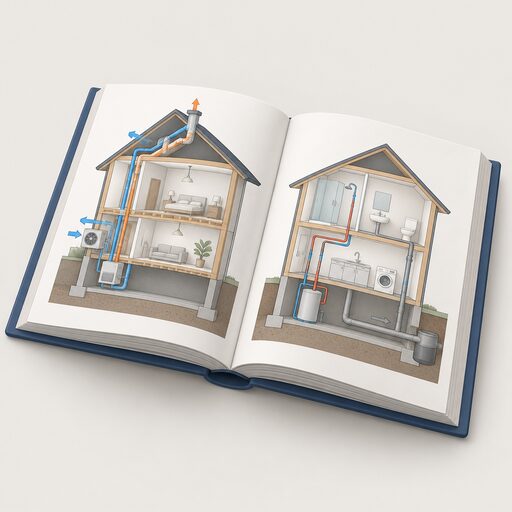 Scottish Building StandardsWork on your home in Scotland may need a building warrant before you start and a completion certificate when you finish.
 Scottish Building StandardsBuilding or extending in Scotland means meeting Scottish rules on insulation, glazing and ventilation.
 Planning Permission in ScotlandDo you need planning permission for a heat pump in Scotland?
 Home Energy Planning ScotlandDo you need planning permission for solar panels or a heat pump in Scotland?
 Building RegulationsReplacing a boiler or heating system usually needs building regulations approval, and the rules differ across England, Scotland, Wales and Northern Ireland.