
In this answer
Short answer
For most flats in Scotland, installing solar panels does not require a planning application. Placing solar panels on the roof of a house or flat, or on a building within the grounds, is in most cases permitted development, whether in a conservation area or otherwise1. The same principle runs through guidance across the UK: solar panels and equipment installed on domestic buildings and land are usually considered permitted development, meaning planning permission is not required, but there are a few exceptions2.
The exceptions are what decide the answer for a particular flat. A listed building always needs consent. A flat roof in a conservation area may need prior approval. And a flat in a block raises a question that planning law does not answer at all: who owns the roof, and who is entitled to alter it.
Permitted development: most solar panels on flats need no planning application
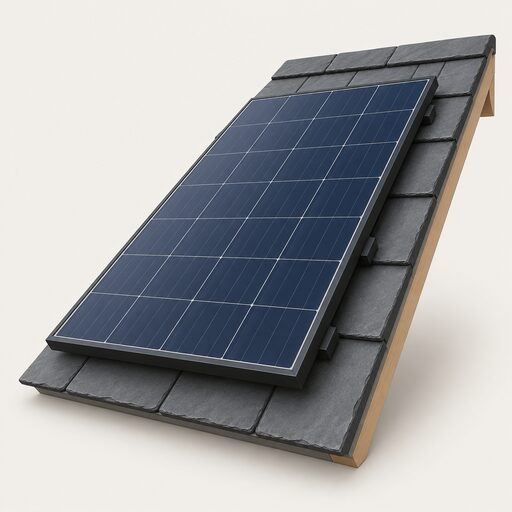
The starting point is that solar panels on a domestic roof are permitted development. Guidance for residential buildings states that the installation of solar panels and equipment may be permitted development with no need to apply to the council for planning permission7. A separate authority puts it as plainly: no planning permission required, permitted development rights apply8. Where a proposed installation meets the criteria and conditions of permitted development, no application is needed9.
The rights are not unlimited. They are conditional, and the conditions are what a householder has to check before work starts. Guidance notes that solar panels often fall under permitted development rights, meaning an application for planning permission is not required provided certain limits and conditions are met10. Another authority describes solar panels and equipment on domestic buildings and land as usually permitted development, with a few exceptions2.
For a flat specifically, the planning position is generally the same as for a house, because the rights attach to the building rather than to the tenure. What differs is the layer underneath: a flat in a block is almost always held under a common ownership arrangement, and the roof is frequently common property. That is a property law question, not a planning one, and it is dealt with below.
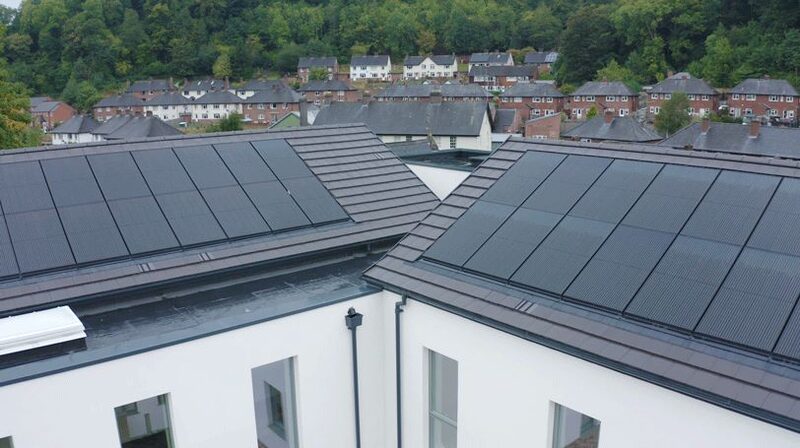
"Placing solar panels on the roof of your house or flat, or a building within the grounds of your house or flat, is considered to be permitted development."
Where permission is still needed: conservation areas, listed buildings and the building warrant
Conservation area status is widely misunderstood. It does not automatically remove the right to put panels on a roof. Guidance for a house or block of flats in a conservation area states that planning permission is not usually required to install solar panels on the roof, even if the roof faces a highway3. The general rule that panels on a roof are permitted development holds whether in a conservation area or otherwise1.
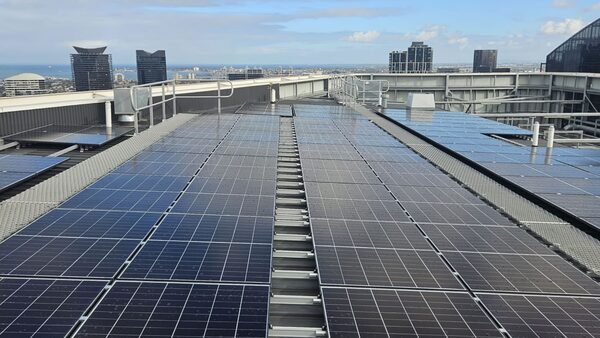
The position changes with the roof type. Any such equipment proposed to be installed on a flat roof in a conservation area may require prior approval with respect to the impact of its appearance on the conservation area4. That is a different route from a full application, but it is still a step that has to be taken before installation. Elsewhere, guidance states flatly that planning permission is required for panels on flat roofs11.
Listed buildings are the clearest case. If a house or flat is a listed building, listed building consent must be applied for to install solar panels5. Planning permission is needed as well: solar panels on listed buildings require planning permission and listed building consent12. Consent extends beyond the listed structure itself, covering buildings within the curtilage of the listed building which pre-date July 194813. The wider consent regime is set out in Listed Buildings and Conservation Areas: Consent for Energy Work.
Building standards sit alongside planning and are administered separately in Scotland. Whether a given installation needs a building warrant turns on the work and the structure, not on the planning outcome. The system is explained in Scottish Building Standards and the Building Warrant System.
The proposed changes to Scottish permitted development rights
Scottish Ministers want to ensure that there is parity in permitted development rights between Scotland and England, in relation to air source heat pumps and solar panels14. That objective is the driver behind the current consultation work, and it matters for flats because the Scottish and English rights are made under different legislation.
The Scottish consultation on permitted development rights for non-domestic solar panels and domestic air source heat pumps set out the existing position. For solar panels on domestic properties the installation is not limited by the potential output of the panels15. The non-domestic side rests on a different instrument, the Town and Country Planning (General Permitted Development) (Non-Domestic Microgeneration) (Scotland) Amendment Order 201116.
A separate consultation, on permitted development rights to support the provision of new homes, anticipated that a Scottish Statutory Instrument containing any changes stemming from it would be laid in the Scottish Parliament in early 202617. That consultation is not the solar consultation, and the timing it gives should not be read across to the solar changes. No commencement date for new solar permitted development rights in Scotland is confirmed.
In England the equivalent rights sit in Part 14 (Renewable Energy) of the Town and Country Planning (General Permitted Development) (England) Order 201518. The two systems are separate, and a change in one does not move the other. The general framework is covered in Permitted Development Rights for Home Energy Equipment.
How solar fits Scotland's heat in buildings targets
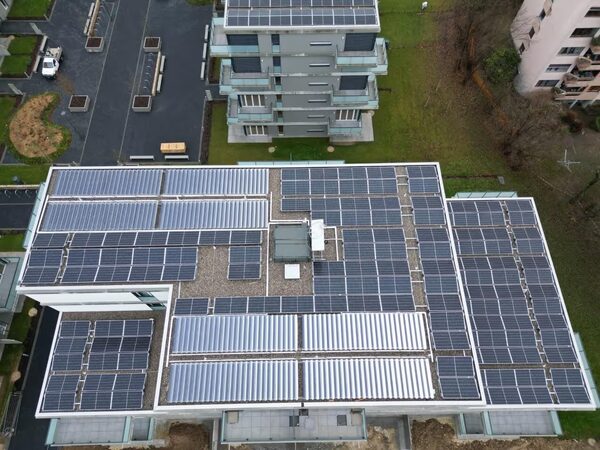
Scotland's building stock is unusual in its ownership pattern. Scotland has many buildings which have multiple owners and mixed uses19. That is the structural reason a flat is a harder case than a house: the decision to install sits with more than one party, and the roof is often shared.
The Heat in Buildings Strategy sets out the direction. The Scottish Government wants to reduce harmful climate change emissions from Scotland's buildings, and the strategy says how it intends to help people save energy and reduce heating bills20. Regulations for new buildings have been developed21. On the Heat in Buildings Bill, the Scottish Government said it would shortly seek the views of the people of Scotland on proposals, and would take account of those views before bringing legislation to Parliament21.
Support has been directed at households through the heat in buildings programmes, which the Scottish Government describes as supporting over 20,000 households to save up to £500 on their energy bills22. That figure is a saving attributed to the programmes as a whole, not a solar-specific payment, and it is not a grant rate for panels.
For a flat, the practical consequence is that solar is one measure among several in a wider retrofit picture, and the multiple-ownership structure of Scottish blocks shapes what can be done and by whom. The devolved settlement behind this is explained in Energy and Buildings Policy in Scotland: Devolved Powers Explained.
EPC reform in Scotland and what it means for flats with solar
Energy Performance Certificates in Scotland are being rebuilt. The Energy Performance of Buildings (Scotland) Regulations 2025 were due to come into force on 31 October 2026 and to be the principal vehicle to deliver the reforms to Energy Performance Certificates6. Later updates schedule the amended regulations to come fully into force on 30 April 2028, replacing the earlier commencement date, with new-style EPCs introduced from that date6.
The reform has been a long time coming. The Scottish Government consulted on reforms to Energy Performance Certificates and their underpinning methodologies, with a commitment to consult by Summer 202123. New EPC regulations were then due to be laid in Parliament in September 202524.
What this means for a flat with solar is narrower than it might appear. A solar installation is a physical improvement to the building; an EPC is an assessment produced under a methodology. The two connect only through whatever method is in force when the certificate is produced, and that method is being replaced. The wider reform is covered in EPC Regulations and the Reform of Energy Performance Certificates.
Scotland's uptake gives some context. Scotland does well on solar density, with 23 out of 32 local authorities showing above average solar panels per 10,000 people25. That is a measure of installed density, not of planning outcomes for flats.
Consent from the landlord or factor is a separate question
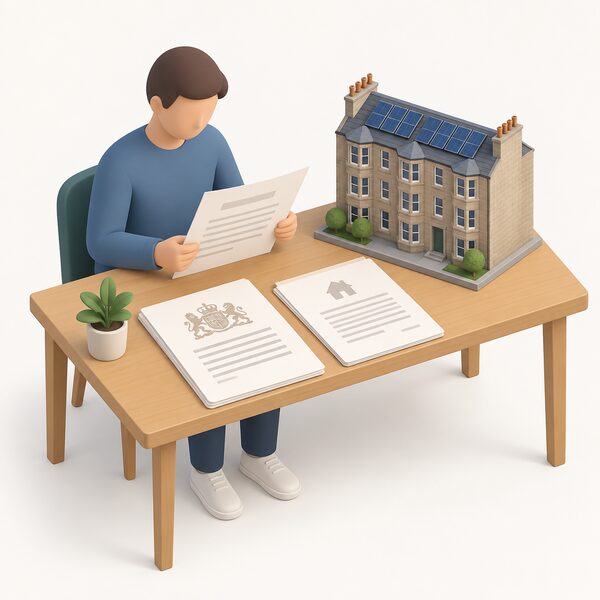
Planning permission and the right to alter a building are different things. A flat in a Scottish block is typically held under a common ownership arrangement, and the roof is often common property. Whether an owner may fix panels to it depends on the title deeds and any deed of conditions, and on the factor's role in maintaining the common parts. None of that is decided by the planning system.
Where the flat is rented, the landlord's consent is normally required before any alteration, and the tenancy agreement governs what is permitted. Where the flat is owned, the other owners in the block may have a say through the title conditions. The multiple-ownership structure of Scottish buildings is the reason this step exists at all19.
The practical sequence is therefore: establish who owns the roof, obtain whatever authority the title deeds and any tenancy require, then check the planning position for the specific building, then check whether a building warrant is needed. Planning is one gate, not the only one.
Sources25 cited
- Circular 1/2024: Householder Permitted Development Rights, Scottish Government, 2024
- Solar panels and equipment on domestic buildings, Cornwall Council, 2026
- Solar panels, City of York Council, 2026
- Solar photovoltaic (PV) panels, London Borough of Bromley, 2026
- Solar panels, Wirral Council, 2026
- Energy Performance of Buildings (Scotland) Regulations 2025 update, Scottish Government, 2025
- Solar panels and planning permission, London Borough of Lambeth, 2026
- Solar Together domestic planning guidance, Southampton City Council, 2026
- Solar panels planning permission checklist, London Borough of Islington, 2026
- Do I need planning permission to add air conditioning to my home?, Planning Portal, 2026
- Planning and solar, Frome Town Council, 2025
- Solar panels and planning permission, Cornwall Council, 2026
- Solar photovoltaics and planning in conservation areas, West Suffolk Council, 2026
- Permitted development rights impact assessments, Scottish Government, 2026
- Permitted development rights: non-domestic solar panels and domestic air source heat pumps, Scottish Government, 2015
- Permitted development rights consultation, Scottish Government, 2015
- Permitted development rights to support the provision of new homes, Scottish Government, 2025
- Solar panels and permitted development, London Borough of Richmond upon Thames, 2026
- Heat in buildings: multiple ownership, mixed use buildings, Scottish Government, 2023
- Heat in Buildings Strategy: easy read, Scottish Government, 2022
- Heat in Buildings progress report 2023: conclusion, Scottish Government, 2023
- Helping households to manage their bills, Scottish Government, 2025
- Heat in Buildings Strategy consultation, Scottish Government, 2021
- Energy efficiency of domestic private rented property in Scotland, Scottish Government, 2025
- UK solar panel hotspots, Energy Saving Trust, 2026
 Planning Permission ScotlandMost solar panels on Scottish homes go ahead without planning permission, but flats, conservation areas and listed buildings change that.
 Home Energy Planning ScotlandDo you need planning permission for solar panels or a heat pump in Scotland?
 Planning Permission EnglandMost homes in England can have solar panels fitted without planning permission, but does yours count as one of the exceptions?
 Permitted Development by HomeCan you put up solar panels or a heat pump without asking the council?
 Planning Permission WalesDo you need planning permission for solar panels on your house in Wales?
 Using an Installer in ScotlandYou live in Scotland and want solar panels or a heat pump fitted.