

In this guide
Scotland runs a separate building standards system from England and Wales, and that single fact changes how an installation is signed off. A building warrant, not a notification to a competent person scheme, is the route by which most structural and service work is approved, and the local authority building standards service is the body that grants it. Scottish building regulations set minimum standards applicable to new buildings and to new work to existing buildings1, and the regulations, standards and supporting guidance in the technical handbooks apply based upon the date on which a building warrant application is submitted or when work not requiring a building warrant is commenced1.
For funded work, the Scottish route is narrower than the UK-wide one. Warmer Homes Scotland is the national fuel poverty programme, launched in September 2015 and relaunched in 2023 with increased funding for clean heating systems2. It offers support worth £10,000 or more for eligible households for energy-saving home improvements like heating and insulation4, and all home improvements funded by it must be delivered by Warmworks-approved installers4. The scheme has helped more than 46,000 households throughout Scotland3.
The practical consequence for a household is that two separate checks matter: whether the work needs a building warrant, and whether the installer is on the approved route the funding body requires. Scotland also has its own statutory consumer advocate, Consumer Scotland, and its own scam enforcement partner, Trading Standards Scotland.
Finding an installer in Scotland: where to start
Scotland's installer base is large but shallow in company size. Ofgem's Feed-in Tariffs annual report for scheme year 13 records Scotland with 65,432 installations accredited, which it notes is only eighth regionally in terms of installations accredited8. The Heat Pump Sector Deal expert advisory group reported that 90% of installers are SMEs9. That matters to a household because a small firm may be excellent on workmanship and thin on administrative capacity for warrant applications and grant paperwork.
The starting points that carry official weight are Home Energy Scotland, which can give free impartial advice on energy efficiency and renewable energy in Scotland10, and the government-endorsed certification and registration routes. Installers under UK Government schemes must be TrustMark registered and or Microgeneration Certification Scheme (MCS) certified11. For renewable work, the guidance is to use the government-endorsed Microgeneration Certification Scheme (MCS) to find certified installers and to get at least three quotes from reputable installers12. Searching a competent person register such as TrustMark is the other recommended route13.
Home Energy Scotland published a guide in August 2026 explaining retrofit services, how they differ from its own advice and Warmer Homes Scotland, and what to check before choosing a paid service14. That distinction is worth holding on to: free advice, a funded scheme, and a commercial retrofit service are three different things, and only one of them is free.
For the registration schemes themselves, the checks are the same as elsewhere in the UK: MCS certified installers for renewable work, TrustMark registered businesses for the government-endorsed quality route, Gas Safe registered engineers for gas work, and NICEIC registered electricians or NAPIT registered installers for electrical work. What differs in Scotland is what happens after the installer finishes.
Building warrants: when Scottish building regulations apply to your installation
The building regulations always apply where construction occurs, unless exempted by regulation 3, and construction includes alterations and extensions as well as entirely new buildings15. Proposed works may require a building warrant before work can start16. That is the test a household has to apply before booking anything: not whether the work is an improvement, but whether it is construction within the meaning of the regulations.
A warrant must be obtained before making a change of occupation or use listed in schedule 2, and those changes are defined as conversions15. The warrant for a conversion will only be granted if the standards set out in regulation 12 are achieved15. So a project that turns a garage into habitable space, or changes how part of a building is used, sits in a different category from a straightforward replacement.
The procedural handbook records that the Building (Fees) (Scotland) Amendment Regulations 2026 increase building warrant fees from 1 April 20266. Fees are therefore a live cost that changes, and the figure that applies is the one in force when the application is submitted.
Assessment speed varies. Local Authority Building Standards Scotland operates a target of 2 weeks to assess the building warrant submission for external wall insulation building warrant applications7. That is a target for one category of work, not a guarantee for all applications, and it is the kind of figure a household should treat as an aim rather than a promise.

What the building standards require for new work and conversions

The technical handbooks set the substance. For heating systems, the standard provides that the building as converted shall meet the requirements of this standard in so far as is reasonably practicable, and in no case be worse than before the conversion, under regulation 12, schedule 617. The same formulation appears in the water efficiency context: the building as converted shall meet the requirement of this standard19. The consistent principle is that a conversion cannot leave the building performing worse than it did.
Where work to an existing building subject to a building warrant includes new fixed building services, or alters or extends the capacity of existing services, the opportunity should be taken to review and improve the performance of fixed building systems, with guidance in annex 6.D18. That is the hook that catches a heating replacement: new fixed building services trigger a review, not merely a like-for-like swap.
Thermal insulation has to be improved even if meeting the full standard is not practically achievable15. This is a firmer requirement than the reasonably practicable language used elsewhere, and it means a conversion project should expect insulation work to form part of the package.
The New Build Heat Standard applies to the conversion of existing buildings where the conversion involves a change in occupation or use of the part of the building in which an existing direct emission heating system is located, and it is reasonably practicable to do so20. The 2022 building regulations also set out standards for energy efficiency in the fabrication of all new builds, which would support the implementation of the New Build Heat Standard21.
Scottish Water requires all new industrial or commercial buildings to be metered, and meters may also be installed in dwellings if requested19. That is a water rather than energy matter, but it sits in the same handbook and affects what a conversion project has to provide.
| Requirement | What it says | Applies to |
|---|---|---|
| Heating system standard | Building as converted meets the standard so far as reasonably practicable, and in no case worse than before17 | Conversions |
| Thermal insulation | Must be improved even if the full standard is not practically achievable15 | Conversions |
| Fixed building services | Review and improve performance where new services are installed or capacity altered18 | Existing buildings with a warrant |
| New Build Heat Standard | Applies to conversions involving a change of occupation or use where a direct emission heating system is located20 | Conversions |
| Water metering | All new industrial or commercial buildings must be metered; dwellings if requested19 | New buildings |
MCS certification and the redeveloped installer scheme's consumer protections
Certification is the baseline for funded work. Installers under UK Government schemes must be TrustMark registered and or Microgeneration Certification Scheme (MCS) certified11. MCS reported on 10 September 2026 that its redeveloped installer Scheme was rolling out across the MCS installer base and described its new consumer protection arrangements22. The redeveloped scheme is therefore in transition rather than settled, and a household checking an installer during this period may find references to both the old and new arrangements.
The Scottish funding route adds its own condition. The successor to the Home Energy Scotland loans and cashback scheme carries a requirement that applicants must use approved suppliers through Scotland's TrustMark scheme for energy efficiency work23. The Scottish Government also stated it would work with TrustMark to develop a quality assurance scheme for Scotland which will enable domestic consumers, including private sector landlords, to access approved suppliers23.
For the detail of what certification covers, the MCS installation standards set out the technical requirements, and the MCS certificate and handover documents page explains what paperwork should follow the work. The Renewable Energy Consumer Code and the HIES consumer code are the two code routes that sit alongside certification for renewable installations.
"Installers under UK Government schemes must be TrustMark registered and/or Microgeneration Certification Scheme (MCS) certified"
Warmer Homes Scotland: fully funded heating and insulation through Warmworks-approved installers
Warmer Homes Scotland is the national scheme that helps households in, or at risk of, fuel poverty improve their heating and energy efficiency2. It was launched in September 2015 and relaunched in 2023 with increased funding for clean heating systems3. The scheme has a strong focus on heating and insulation measures24, and renewable and micro-generation measures have been made available, including ground source heat pumps, micro-wind, micro-hydro and micro-CHP systems24.
The delivery model is closed. All home improvements funded by Warmer Homes Scotland must be delivered by Warmworks-approved installers4. Warmworks is the managing agent, and there were twenty-four contractors registered with it, six of them in island areas5. The business case covered the procurement of 27 subcontracted installers25. Post-installation, all works are inspected by a Warmworks inspector26.
The scheme's own description of what a household receives is that energy efficiency measures and a heat pump can be installed with all the work planned and carried out for the household, fully funded by the Scottish Government, if certain criteria are met27. Where technically suitable, households are offered clean heating systems first; if this would increase energy bills, an emission-producing system may be provided instead2. Most homes also get energy-saving upgrades, no matter which heating system is installed2.
On cost, the scheme offers support worth £10,000 or more for eligible households for energy-saving home improvements like heating and insulation4. In most cases the Scottish Government will meet all the costs, though in some rare cases a household may need to pay some costs4. The scheme also supports climate goals by installing more clean heating systems and reducing emissions through improved energy efficiency2.
Early delivery data gives a sense of the mix. Between September 2015 and June 2016 the scheme recorded 437 heating system insulation installs, 484 heating hot water and controls installs, 372 loft insulation installs and 169 electric storage heater installs28. Those are first-year figures from a scheme that has since been relaunched, and they show insulation and controls dominating the early caseload rather than heat pumps.

Warmer Homes Scotland eligibility and how to apply

Eligibility turns on fuel poverty rather than on the measure alone. The scheme is available to households, both owner-occupiers and some private rented sector tenants, who are living in or at risk of fuel poverty and who meet the qualifying eligibility criteria24. It mainly supports owner occupiers, but it also covers tenants in private rented homes29.
The private rented position has a specific carve-out. Private rented sector properties that are covered by the statutory Repairing Standard no longer receive improvements that a landlord is legally obliged to provide, but remain eligible for other improvements if recommended4. The Repairing Standard itself includes a minimum standard for safe kitchens, a fixed heating system, safe access to and use of common facilities including secure common doors, residual current devices, all fuel types supplying the property to be in a reasonable state of repair and in proper working order, and a requirement that landlords have regard to Scottish Government guidance on the condition of pipes supplying water30. In other words, a private tenant whose heating is the landlord's legal responsibility cannot use the scheme to discharge that responsibility, but can still be helped with measures beyond it.
The application route runs through Home Energy Scotland. A household contacts Home Energy Scotland, an advisor guides them through the process, the online self-assessment tool is used, and the household is then referred to Warmworks for a home survey and assessment4. Around 21,000 households have been referred through to the Warmer Homes Scotland fuel poverty support programme since the new scheme launched in October 20233.
A separate route exists for households that do not qualify on fuel poverty grounds. The Home Energy Scotland Grant and Loan Scheme provides grants and loans to all domestic owner-occupiers in Scotland to install clean heat and energy efficiency measures29. Fully funded support is also available to eligible homeowners through the fuel poverty schemes31. The installer requirements for grants page sets out how approved-supplier conditions work across funded schemes.
Consumer Scotland: the statutory advocate when things go wrong
Consumer Scotland is the statutory consumer body for consumers in Scotland32. Its role is advocacy: representing consumer interests in how markets and policy operate, rather than adjudicating an individual dispute. That distinction matters when a household is trying to work out where to take a complaint.
The escalation route for an installation problem normally runs through the installer first, then the certification or registration body, then the consumer code the installer belongs to, and then the redress scheme. The complaining about an installer page sets out that sequence, and the TrustMark complaint page covers the route for a registered business. Where the installer is MCS certified, the MCS certified installers page explains what the certification body can and cannot do.
Scotland's quality assurance landscape is also being built out. The Scottish Government committed to working with stakeholders, including Trading Standards Scotland, to prevent scams and support improved enforcement action against rogue traders within Scotland23. It also committed to working with TrustMark to develop a quality assurance scheme for Scotland which will enable domestic consumers, including private sector landlords, to access approved suppliers23. Those commitments sit alongside the Heat in Buildings programme, whose quality assurance statement sets out how retrofit work is expected to meet enforceable industry standards with adequate redress33.
For energy supply disputes rather than installation disputes, the routes differ. Ofgem's guidance on who to contact for the Domestic Renewable Heat Incentive lists the bodies involved for that scheme10. The Energy Ombudsman waiting time page covers the supply-side route.
Avoiding rogue traders and energy scams with Trading Standards Scotland
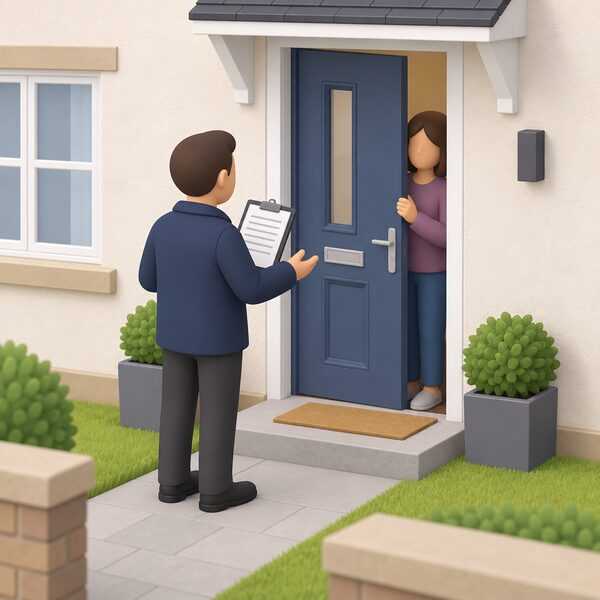
Trading Standards Scotland is the enforcement and disruption partner named in Scottish Government policy on energy efficiency scams. The Scottish Government stated it will work with Trading Standards Scotland to minimise the scale and impact of energy efficiency related scams through intelligence gathering and disruption, and ensure retrofit work meets enforceable industry standards with adequate redress33. It separately committed to working with stakeholders, including Trading Standards Scotland, to prevent scams and support improved enforcement action against rogue traders within Scotland23.
The funded-scheme route is itself a scam filter. Because applicants must use approved suppliers through Scotland's TrustMark scheme for energy efficiency work23, and because Warmer Homes Scotland work must be delivered by Warmworks-approved installers4, a cold call offering funded work outside those routes is not a funded scheme.
Home Energy Scotland can give free impartial advice on energy efficiency and renewable energy in Scotland10, which makes it a useful check on any claim made at the door. The mis-selling and doorstep sales page covers pressure selling more generally, and the installers and retailers section sets out the verification steps.
What owning an installation in Scotland means for energy independence
An installation in Scotland buys a household the same things it buys elsewhere: generation or heat that does not come from the grid or a supplier, and a measure of insulation against price movements. What Scotland adds is a different approval and redress architecture, and a funded route that reaches households the commercial market does not.
The dependence that remains is worth stating plainly. A heat pump, solar array or battery still depends on the electricity network for import and export, on a supplier for billing and metering, and on the manufacturer for parts and warranty support. A Warmer Homes Scotland installation depends on Warmworks and its approved installer network for delivery and inspection4, and on the Scottish Government for the funding that makes it possible4. None of that is ownership in the sense of being off the system.
Scotland also has its own energy certificate service, separate from the one used for properties in England and Wales34. That is a small administrative difference, but it illustrates the wider point: the paperwork, the approval route and the complaint route are all Scottish, and a household that assumes the England and Wales process applies will be working from the wrong set of rules.
The installers and energy independence page sets out how much independence an installation actually delivers. For Scotland specifically, the honest summary is that the building warrant system gives a household a documented, inspected installation with a local authority record behind it, and the funded scheme gives access to work that would otherwise be out of reach. Neither removes the grid connection, the supplier relationship or the manufacturer's role in keeping the equipment running.
Sources34 cited
- Building standards: policy, Scottish Government, 2026-09-17
- Warmer Homes Scotland scheme headline data, Scottish Government, 2025-10-29
- Heat in Buildings progress report 2025, Scottish Government, 2025-10-02
- Warmer Homes Scotland, Home Energy Scotland, 2026-09-20
- National Islands Plan annual report 2022, Scottish Government, 2023-03-31
- Building standards procedural handbook, third edition version 1.9, Scottish Government, 2026-03-25
- External wall insulation building warrant information release, Scottish Government, 2024-08
- Feed-in Tariffs annual report, scheme year 13, Ofgem, 2023-12
- Heat Pump Sector Deal expert advisory group final report, Scottish Government, 2021-12
- Who to contact: Domestic RHI, Ofgem, 2026-09-17
- Consumer protection in home energy schemes, UK Parliament research briefing, 2026-05-13
- Solar panels: energy improvement options, London Borough of Hammersmith and Fulham, 2026-09-17
- Energy Company Obligation scheme and home energy efficiency, Leeds City Council, 2026-09-20
- A simple guide to retrofit services, Home Energy Scotland, 2026-08
- Building Standards Technical Handbook, Domestic (April 2026), Scottish Government, 2026-03
- Circular 1/2024: householder permitted development rights, Scottish Government, 2024-05
- Technical Handbook 2020, Domestic: 6.3 heating system, Scottish Government, 2020-12-02
- Technical Handbook 2022, Non-domestic: 6.3 heating system, Scottish Government, 2022-06-01
- Technical Handbook 2022, Domestic: 3.27 water efficiency, Scottish Government, 2022-06-01
- New Build Heat Standard part two consultation, Scottish Government, 2026-09-20
- New Build Heat Standard consultation part II analysis, Scottish Government, 2023-06
- How MCS is transforming consumer protection for renewables, MCS, 2026-09-10
- Heat in Buildings quality assurance statement, Scottish Government, 2022-06-07
- Energy saving home improvements, Scottish Government, 2026-09-17
- Warmer Homes Scotland business case, Scottish Government, 2015-07
- Warmer Homes Scotland first annual review, Scottish Government, 2016-11-03
- Delivering net zero for Scotland's buildings consultation, Scottish Government, 2023-11
- Warmer Homes Scotland first annual review, installation data, Scottish Government, 2015
- Heat in Buildings progress report 2024, Scottish Government, 2024-10-10
- Energy efficiency programme consultation, Scottish Government, 2026-09-20
- Heat Pump Sector Deal: Scottish Government response, Scottish Government, 2022-11-11
- Heat networks consumer protection draft guidance, Ofgem, 2025-09-05
- Heat in Buildings quality assurance statement, Scottish Government, 2022-06-07
- Get a new energy certificate, EPB NI Register, 2026-09-20
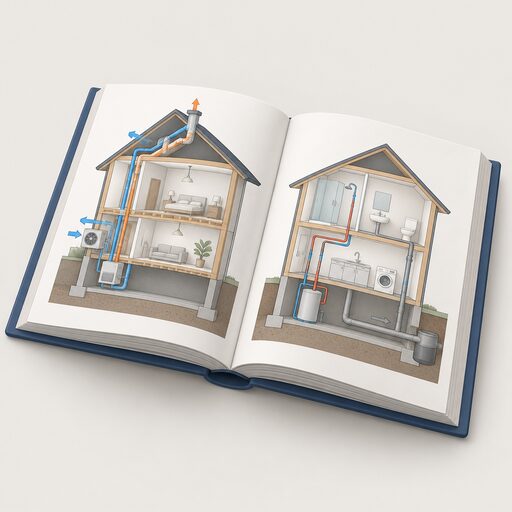 Scottish Building StandardsWork on your home in Scotland may need a building warrant before you start and a completion certificate when you finish.
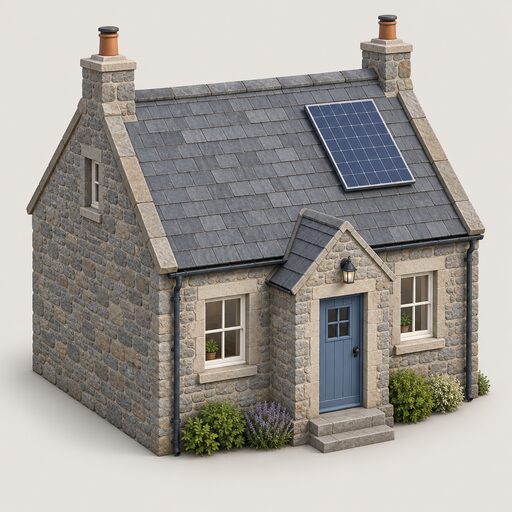 Planning Permission ScotlandMost solar panels on Scottish homes go ahead without planning permission, but flats, conservation areas and listed buildings change that.
 Home Energy Planning ScotlandDo you need planning permission for solar panels or a heat pump in Scotland?
 Scottish Building StandardsBuilding or extending in Scotland means meeting Scottish rules on insulation, glazing and ventilation.
 Planning Permission in ScotlandDo you need planning permission for a heat pump in Scotland?
 Planning Permission in ScotlandDo you need planning permission for a home battery in Scotland?