

In this guide
Installation day is a sequence of isolations, removals, connections and checks, and its length is set by what has to be changed rather than by the appliance alone. A straightforward boiler swap is a one-day job. Converting from a conventional boiler to a system boiler takes 2 to 3 days, and converting from a system or conventional boiler to a combi can take up to two days because of the pipework and extra components involved1. Moving a new combi to a different location takes 1 to 2 days, depending on how far it is moved1.
Other technologies run to their own clocks. Solar panel installation typically takes between one and two days2. A heat pump installation typically takes around three days, and may take longer3. One maker states that its aroTHERM plus unit is complete within one day, which is a claim about that model rather than a general rule4. A home wallbox usually takes around two hours, with the installer coordinating with the Distribution Network Operator5, and a smart meter changeover takes a couple of hours, with each supply switched off during the changeover6.
What happens on installation day, hour by hour
The day begins with access and isolation. For a boiler, the engineer needs access to the boiler, the radiators and possibly the loft, which is why guidance for householders is to be at home while the work is happening1. Gas, water and electricity are shut off for the parts of the work that touch them. A smart meter changeover shows the principle in miniature: a couple of hours, with each supply switched off during the changeover6.
Removal comes next. On a combi conversion, tank removal and pipe installation is likely to happen on the first day, and the new boiler can be installed on the second1. That ordering matters to a household because it means the first day is the disruptive one: floorboards up, water off, and the old storage arrangement taken out before anything new goes in.
Connection and commissioning follow. The installer should produce a commissioning certificate such as a Benchmark certificate and notify the local authority building control department, either directly or through a Competent Person Scheme operator7. The Benchmark Checklist on the inside back pages of the installation instructions must be fully completed by the installer, and signed by the householder to say that a full and clear explanation of operation has been received8.
The last hour is demonstration. That signature is not a formality: it records that the controls, the flue and the operating instructions have been explained. Where a grant-funded scheme is involved, installers are required to make safe within 24 hours any health or safety risks they identify9, which is a reminder that the day's checks are a safety process as much as a handover.
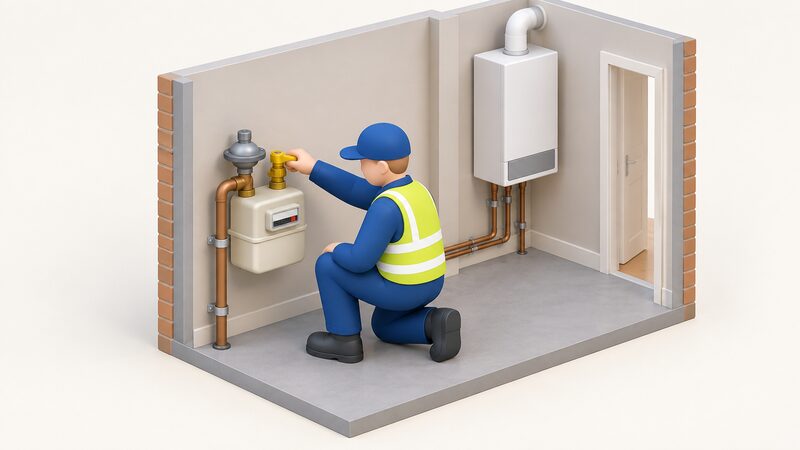
Who can do the work: Gas Safe registration and what it covers

Gas work is restricted. By law, all gas engineers must be on the Gas Safe Register and hold current qualifications to install, repair or maintain domestic gas appliances10. Anyone working with gas should have Gas Safe registration11, and only a qualified Gas Safe registered engineer should carry out the job12. Gas installation businesses, whether an employer or self-employed, must be registered with Gas Safe Register13.
The register is the official one for gas engineers14, and customers should always check that the engineer carrying out gas work is appropriately qualified and registered15. Each installer must carry an ID card, which lists the gas work they are qualified to do16. That card is the practical check on the doorstep: the scope of the card, not the logo on the van, says what the person in front of you may legally touch.
Registration is not a formality for the business either. Applying to the register requires National Insurance numbers for any engineers being registered17, which ties the licence to named individuals rather than to a trading name.
For electrical work, building regulations also apply to other aspects of the work such as electrical installation and plumbing work18. Where the plans or building notice route is used, an Electrical Installation Certificate must be provided when work is finished19. The registration bodies that cover this work are described in Gas Safe registration and NICEIC registration.
How long it takes: a straightforward swap within a day, 1 to 3 days for more
Duration is driven by what is being changed, not by the appliance's box size. A like-for-like boiler replacement is a day. A new boiler with new pipework around the house, removal of floorboards and other system upgrades can take a few days, depending on property size1. Converting from a conventional boiler to a system boiler takes 2 to 3 days1. Converting from a system or conventional boiler to a combi can take up to two days, due to pipework or extra components needed1.
Relocation adds its own time. Moving a new combi boiler to a different location can take 1 to 2 days, depending on how far it is moved1. The distance matters because flue route, condensate route and pipe runs all change with it.
| Job | Typical duration |
|---|---|
| Like-for-like boiler swap | One day1 |
| Conventional to system boiler | 2 to 3 days1 |
| System or conventional to combi | Up to two days1 |
| Combi relocated | 1 to 2 days1 |
| New boiler with new pipework and system upgrades | A few days, depending on property size1 |
| Solar panels | Between one and two days2 |
| Heat pump | Typically around three days3 |
| Home wallbox | Around two hours5 |
| Smart meter | A couple of hours6 |
Two adjacent processes are sometimes confused with installation day itself. Switching energy supplier is a separate administrative process that can take up to 21 days, managed by the new supplier18. And a heat pump installation may take longer than three days for reasons the installer identifies on site3. Neither changes the physical work on the day, but both affect how a household plans the weeks around it.
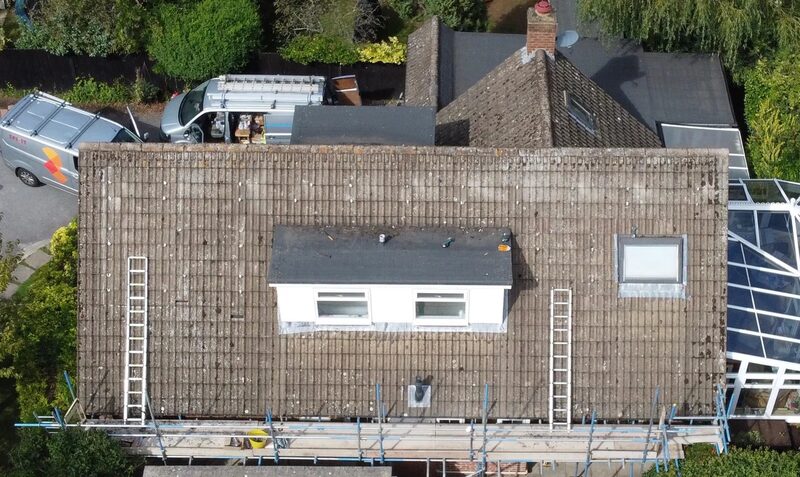
Access the engineers need: parking, scaffolding and working space
Access is the part of the job a household controls, and it is worth settling before the van arrives. For a boiler, the engineer needs access to the boiler, the radiators and possibly the loft1. That means a clear route through the house, a clear working area around the appliance, and loft access that is not blocked by stored items.
Scaffolding is the solar and roof-work equivalent. The rules that bear on it are about the structure rather than the schedule. On a pitched roof, permitted development for solar equipment limits panels to a maximum projection of 200mm from the roof slope or wall surface, and panels should not be installed above the highest part of the roof, excluding the chimney20. For solid fuel appliance flue outlets, the clearance rules require at least 1000mm above the top of an opening below, or within 2300mm horizontally of an openable rooflight, dormer window or other opening13.
Those clearances are why a scaffold sometimes has to be positioned to leave a rooflight or dormer unobstructed, and why the scaffold design is settled with the installer rather than chosen by the household. The same applies to parking: a scaffold lorry and a materials delivery need somewhere to stand, and the working space around the flue terminal has to remain clear once the scaffold is struck.
Where the boiler can go: walls, cupboards and flues
Position is governed by the appliance's own clearances and by the flue and combustion rules. Installers must follow the guidelines set out in Approved Document J, which shows what is necessary for air supplies, hearths, flue linings and chimney labelling where the flue outlet can be positioned7. Building regulations apply when a fixed, flueless gas appliance is installed21, and the same Approved Document J requirements are restated for boiler installation7.
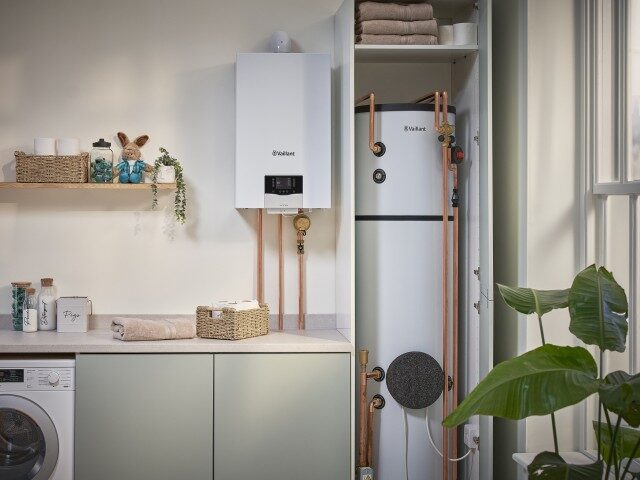
Airing cupboards come into this because of the cylinder, not the boiler. A system boiler provides central heating and hot water via a storage cylinder, which is filled from the mains and often housed in an airing cupboard22. That is the traditional home for the cylinder, and it is why a system boiler conversion leaves a cupboard occupied while a combi conversion frees it.
The practical constraint on any position is the flue and condensate route. A flue outlet has to be positioned within the rules, and a condensate pipe has to run to a suitable discharge point. Where a boiler is moved, those two routes are what the 1 to 2 day relocation time is spent on1. Where a new system is installed, the installer should proceed as if the work is being carried out in a new building7, which is a stricter standard than a like-for-like swap.
What changes the duration and the price: conversions, relocations and flue position
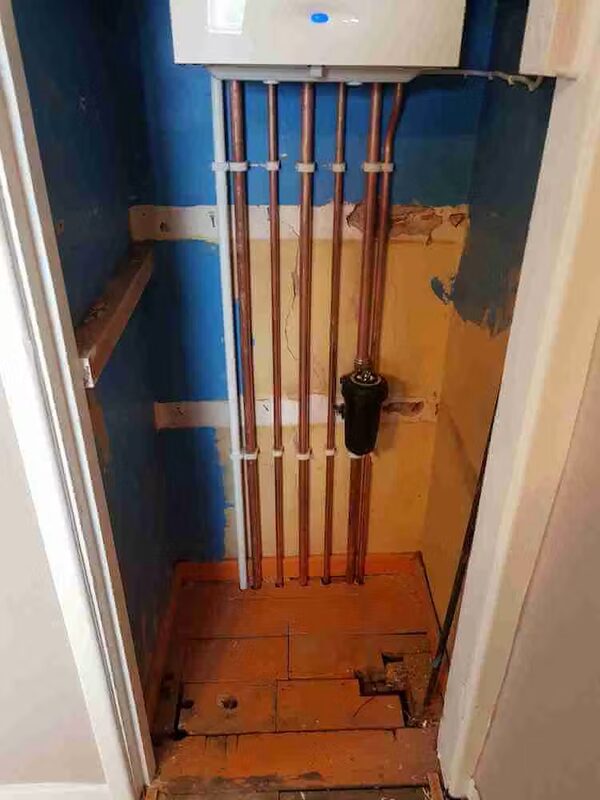
Three things move a job out of the one-day bracket: a change of system type, a change of location, and a change of flue route. Each adds labour, materials and, in the case of a conversion, a period without hot water while the old storage arrangement is removed.
A conversion from conventional to system takes 2 to 3 days1. A conversion from system or conventional to combi can take up to two days, due to pipework or extra components needed1. A relocation of a new combi takes 1 to 2 days, depending on how far it is moved1. A new boiler with new pipework around the house, removal of floorboards and other system upgrades can take a few days, depending on property size1.
Price follows the same drivers. Where a scheme is funding the work, the rules are explicit about what happens when something goes wrong: within 14 days of deciding to withhold a payment, Ofgem will send a notice to the installer23. That is a scheme rule rather than a domestic contract term, but it shows how tightly funded work is audited.
One requirement has been relaxed. Removal of the requirement for a full set of heating controls in the property following a boiler installation was made in ECO4 Delivery Guidance version 3.024. That is a change to a scheme condition, not a statement that controls are unnecessary.
Sign-off: Benchmark commissioning, Building Regulations compliance and Gas Safe notification
Sign-off is where the paperwork is created, and it has deadlines. The installer should produce a commissioning certificate such as a Benchmark certificate and notify the local authority building control department either directly, or, if a member of a Competent Person Scheme, via the scheme operator7. The local authority should then supply a building regulations completion certificate7.
The Benchmark Scheme itself is a legal requirement in England and Wales: the installer is legally required to complete a commissioning checklist as a means of complying with the appropriate Building Regulations8. Installers are required to carry out installation, commissioning and servicing work in accordance with the Benchmark Code of Practice, which covers requirements in relation to Standards of Work and Customer Service8.
Deadlines vary by route and by nation. Notice of commissioning of any new or replacement fixed building services should be given to the Building Control Body with five working days notice after completion of commissioning under Approved Document L2B26. Where a building notice or an application for building control approval with full plans has been given to a local authority, the notice of completion of commissioning should be given within five days of the work being completed27. For heat pumps, the building regulations compliance certificate is delivered within 30 days of the work being completed27.
| Document | Who produces it | Deadline |
|---|---|---|
| Benchmark commissioning checklist | Installer | On completion8 |
| Commissioning certificate | Installer | On completion7 |
| Building regulations completion certificate | Local authority | After notification7 |
| Building regulations compliance certificate (heat pump) | Installer or registration body | Within 30 days of completion27 |
| Notice of completion of commissioning | Installer | Within five days where a building notice or full plans application applies27 |
| Notice of commissioning to Building Control Body | Installer | Five working days after completion of commissioning26 |
| Electrical Installation Certificate | Installer | When work is finished, on the plans or building notice route19 |
Where the installer is not registered under an approved scheme, the position reverses. The installer cannot self-certify, and the firm or the householder must give notice to the local authority of the intention to carry out the boiler work in advance and pay a notification fee7. The firm or the householder will need to give notice to the local authority of the intention to carry out the boiler work in advance21. By contrast, a building control body does not need to be notified for certain services or fittings, including fuel-burning appliances, if the owner employs an installer registered with a relevant competent person scheme designated in the regulations27.
New boilers are generally brought into compliance by employing an installer who is registered under an approved scheme21. The schemes that allow self-certification are set out in Competent Person Schemes, and the notification process for gas work is covered in Gas Safe registration.
After the engineers leave: warranty registration and servicing access
Warranty registration is time-limited, and the clock starts at commissioning. One official scheme specification requires inverter product registrations to activate guarantees and warranties to be completed within 48 hours of commissioning28. That is a scheme rule for one programme rather than a universal deadline, but it shows the pattern: registration is an act that follows commissioning closely, and it is not something to leave until the paperwork is filed.
Servicing access is the other thing to settle while the installer is still on site. The Benchmark Checklist requires the installer to have fully completed it and the householder to have signed to say that a full and clear explanation of operation has been received8. That explanation is the moment to ask where the service points are, how the condensate route runs, and what the controls do.
For landlords, there is a separate reporting duty: supply a copy of the report to the existing tenant within 28 days of the inspection and test29. That sits alongside the installation paperwork rather than replacing it.
"Please ensure that the installer has fully completed the Benchmark Checklist on the inside back pages of the installation instructions supplied with the product and that you have signed it to say that you have received a full and clear explanation of its operation."
Commissioning dates also carry weight in scheme eligibility. For transitional ROO-FIT installations, the eligibility date is the same as the commissioning date30. For FIT installations, the commissioned date is the date on which both commissioning criteria are met31. For Domestic RHI installations, multiple products of the same technology type must be commissioned on the same day to avoid metering for payment requirements31. The date on the certificate is therefore not administrative decoration: it fixes when a scheme's support begins.

What to check before the engineers leave
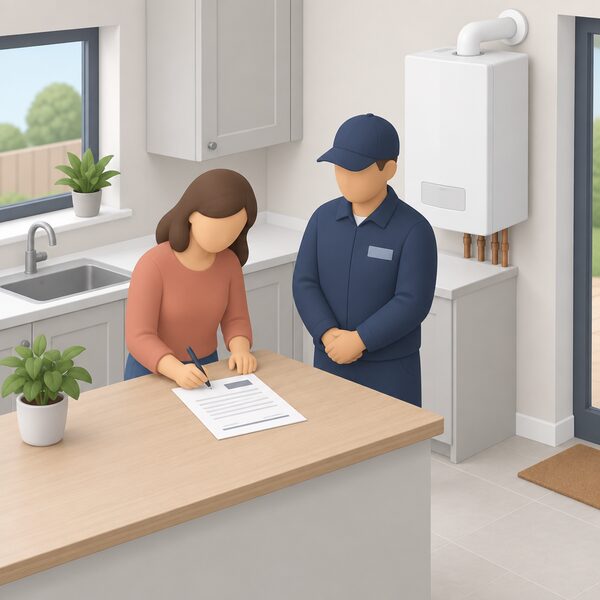
The checks that matter are the ones that are hard to complete later. Confirm that the Benchmark Checklist has been fully completed and that the handover explanation has been given and signed for8. Confirm which notification route the installer is using, because a registered installer notifies through a Competent Person Scheme operator while an unregistered one leaves the notice and the fee with the firm or the householder7. Confirm that any warranty registration the maker requires has been started, given the 48-hour pattern seen in one official scheme specification28.
Then confirm the physical things: that the flue outlet is where the drawings said it would be, that the condensate route discharges where it should, and that the working area has been left safe. Where grant-funded work has been carried out, any health or safety risk identified must be made safe within 24 hours9, so a risk raised on the day should have a same-day or next-day answer.
Before booking, independent guidance for renewable installations recommends aiming for at least three quotes, so that you can be more confident in the cost and the specification32. The same discipline applies to boiler work, and the comparison should be on scope: conversions, relocations and flue changes are what separate a one-day job from a three-day one1.
Sources32 cited
- How long does it take to fit a boiler?, Uswitch, 2026-09-16
- Solar panels, Home Energy Scotland, 2026-09-20
- Heat pump installation: a step by step guide, Energy Saving Trust, 2026-07-15
- Vaillant aroTHERM plus air source heat pump, Quiet Mark, 2026-09-17
- Electric car charging guide, Carwow, 2025-07-16
- How to get a smart meter, Smart DCC, 2026
- Boilers and heating: building regulations, Planning Portal, 2026
- Benchmark Code of Practice, HHIC, 2026-09-17
- Retrofit measures, ECO4 and GBIS, Hansard, 2025-10-13
- Gas Safe Register, nidirect, 2025-10-29
- Cold calling: top 5 tips to avoid rogue traders and installers, Energy Saving Trust, 2026-05-20
- Gas Safety Week 2025, day 5, HHIC, 2025-09-12
- Building regulations guidance Part J: heat producing appliances, Welsh Government, 2026-09-17
- Using a Gas Safe engineer, Liquid Gas UK, 2026-09-20
- Gas Safety Week 2026: keeping safety at the heart of a changing industry, APHC, 2026-09-08
- Buying a new boiler: boiler prices, Which?, 2025-09-17
- Registration to carry out gas work, GOV.UK, 2026-09-17
- Dealing with your energy supplier, Centre for Sustainable Energy, 2026-01
- Electrical safety, Cumberland Council, 2026-09-17
- Planning permission: solar equipment mounted on a house, Planning Portal, 2026-09-17
- Building regulations: boilers and heating, Welsh Government, 2026-09-17
- EcoTEC Plus system boiler range, Quiet Mark, 2026-09-17
- Boiler Upgrade Scheme guidance for installers V5, Ofgem, 2026-04-28
- ECO4 delivery guidance v3.2 and measures table, Ofgem, 2025-08-07
- VAT energy saving materials and grant funded heating supplies, HMRC, 2026-09-17
- Building Regulations Part L and F review, stage 2a, Approved Document L2B, Welsh Government, 2020-11
- Approved Document L, Volume 1: Dwellings, MHCLG, 2026
- Barcud Solar Panel Installation Scheme Specification, Sell2Wales, 2026-06-15
- Electrical safety standards in the private and social rented sectors: guidance, GOV.UK, 2025-11-01
- Guidance for FIT generators V18, Ofgem, 2026-04-01
- Domestic RHI essential guide, Ofgem, 2024-06
- Renewable energy solution, MCS Certified, 2026-08-03
 Air Conditioning InstallationHow long does air conditioning installation take, and what happens on the day?
 Smart Meter Installation DayWhat happens during a smart meter fitting appointment: how long it takes, the supply interruption, the safety checks, the in-home display demonstration, who can book it, and what happens when gas and electricity come from different suppliers.
 Solar Panel InstallationHow long will the panels actually take to fit, and what happens on the day?
 Installation ProcessA home battery installation usually starts with a survey, then the fitting itself, then a handover.
 Smart Meter InstallationCan your supplier make you have a smart meter, and how long should you wait for an appointment?
 Switching SupplierHow long does switching energy supplier actually take, and what happens if you owe money?