

In this guide
Replacement windows and doors are notifiable building work, and there are two ways to satisfy that requirement: use an installer registered with a competent person scheme, who can self-certify the work, or go to a building control body for approval. Competent person schemes were introduced by government to allow tradespeople to self-certify that their work complies with the Building Regulations1, and for glazing the two schemes a household is most likely to meet are FENSA, the Fenestration Self-Assessment Scheme, and Certass. Both are recognised bodies for windows and doors registration2.
FENSA is described as a government-backed competent person scheme for the replacement of windows, doors and roof lights, operating in England and Wales3. Certass runs a competent person scheme under direct licence from the Ministry of Housing, Communities and Local Government, covering glazing: replacement windows, doors, rooflights and roof windows for homes or commercial properties4. Installers registered with either are assessed against Building Regulations standards and are authorised to self-certify that their work is compliant5. FENSA inspections are normally carried out on 1% of each business's installations, subject to a minimum of 2 per year and a maximum of 100 installations inspected per business per year6.
The output for the household is a certificate. FENSA states that the certificate is given by approved installers once an installation has been completed, and that it demonstrates the windows and doors were fitted in compliance with Building Regulations and were installed using energy efficient products7. That document is what a buyer's solicitor asks for years later. Independent guidance for the property trade goes further, describing certification as a legal requirement when selling your home whose absence can complicate or delay a property transaction5.
What a competent person scheme is, and the problem it was created to solve
A competent person scheme is a government-approved arrangement under which a registered installer can certify their own work as compliant with the Building Regulations, instead of getting building regulations approval10. An installer, for example of windows or boilers, registered with a scheme can self-certify that their work complies with building standards11. Certass describes the effect plainly: the scheme allows an installer to self-certify that their work complies with all the local Building Regulations, without a building notice or local authority inspection4.
The practical benefit is administrative rather than technical. Work carried out under a competent person scheme does not need notification to building control12, and members are allowed to certify their own work and tell the council that the work has been properly installed and tested12. Independent trade guidance describes the alternative, obtaining approval from building control, as significantly more expensive than using a scheme-registered installer13.
Schemes are authorised rather than self-declared. Authorised schemes are listed in Schedule 1 of the Building Regulations &c. (Amendment) Regulations 2015, with effect from 18 April 2015, and the last invitation for new scheme applications took place on 10 December 201414. That is why the field of glazing schemes is small and stable: it is closed to new entrants unless government reopens it.
Membership is voluntary for the installer, and schemes have different application processes10. A household therefore cannot assume that a glazing firm is registered; the absence of registration is not unlawful, it simply means the compliance route has to be the other one.
FENSA: the scheme most households meet first
FENSA was established in 20028. It is a competent person scheme for replacement windows, doors and roof lights in England and Wales, described in independent guidance as government-backed3. For installers, FENSA's proposition is that registering window and door installations with the local council is handled by the scheme, which sends each customer a FENSA certificate15.
Registration is not a one-off badge. FENSA states that each approved installer, from large national brands to small local companies, is assessed regularly to ensure its compliance with building regulations is continually maintained7, and that registered businesses have met the eligibility criteria, have been vetted, and are regularly and independently assessed6. FENSA also says it has taken action against rogue traders a number of times, listing installer prosecutions publicly, and publishes a consumer guide to recognising a cowboy6.
There is an energy performance strand to registration as well. FENSA states that householders should choose a fitter or company that is compliant with Building Regulations and will make use of energy efficient products15, and that BFRC energy rating labels are available to all approved installers, who can receive BFRC ratings free of charge where their supplier is BFRC registered and holds the appropriate documentation7. For the household, that connects the compliance paperwork to the thing that actually matters for bills: the rated performance of the glass and frame that were fitted.

Certass: the alternative glazing scheme and how it differs
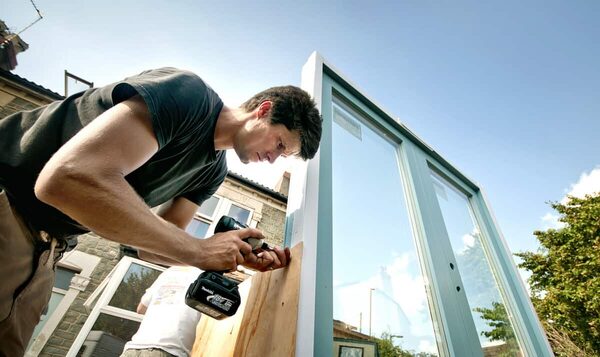
Certass operates its competent person scheme under direct licence from the Ministry of Housing, Communities and Local Government, and the scheme covers glazing: replacement windows, doors, rooflights and roof windows, for homes or commercial properties4. Its installers, like FENSA's, are assessed against Building Regulations standards and are authorised to self-certify compliance5. Trade guidance on spotting rogue traders lists FENSA and Certass together as the recognised bodies for windows and doors registration2, which is the fairest summary: for a householder they answer the same compliance question by different routes.
Certass sets out what scheme membership demands of a business. Membership of any competent person scheme requires quality monitoring of registered installations and a compliance regime to ensure ongoing conformity with scheme rules and building regulations at the time of installation16. Its monitoring is not confined to firms that are busy: Certass states that if a member has not registered any installations, it will contact that member directly to conduct an in-progress inspection of work currently being undertaken16. That closes an obvious gap, where a member could hold a registration without ever presenting work for audit.
The difference a household is most likely to notice is in the name on the certificate. There is no single legally named "FENSA certificate" that only one scheme can issue; the compliance certificate can come from whichever licensed scheme registered the installation. Certification from either scheme is described by the property trade as the thing that may be required at a later date when selling the property17. A related explainer on the Building Regulations Compliance Certificate sets out that document in more detail, and the general mechanics of self-certification are covered under competent person schemes.
What the certificate proves, and why solicitors ask for it
A certificate issued through a competent person scheme is a certificate of compliance issued by the scheme operator and logged with the local building control body13. In FENSA's words, it demonstrates that the windows and doors were fitted in compliance with Building Regulations and were installed using energy efficient products7. It is given by the approved installer once an installation has been completed7, and if it is lost, a replacement can be requested9.
The reason it outlives the installation is conveyancing. FENSA states that when selling your home, the buyer and their solicitor will need proof that any newly installed windows and doors were fitted to the required standards9. Property trade guidance puts the point more strongly, calling certification a legal requirement when selling your home whose absence can complicate or delay a property transaction5. A household with no certificate and no building control completion record is left explaining the gap during a sale, at the worst possible moment to negotiate.
"When selling your home, the buyer and their solicitor will need proof that any newly installed windows and doors were fitted to the required standards"
Two practical habits follow from that, both drawn from FENSA's own advice to householders rather than from any recommendation here. FENSA suggests asking family and friends who have used installers about their satisfaction and whether they got a FENSA certificate, and getting quotes, timeframes and the fact that a certificate will be issued all in writing, with a proper written contract and an agreed completion date9. Its checklist also covers checking references, obtaining at least three quotes and checking they are like for like, and checking the warranty and insurance cover18.
Self-certification or building control: the two routes compared
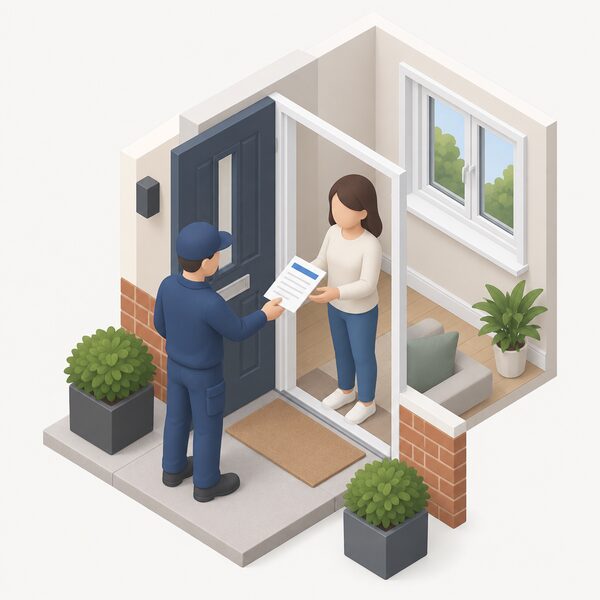
For replacement windows and doors, a registered installer will be approved to carry out the work to comply with building regulations without involving local authority building control, and a certificate is issued on completion19. The alternative, using an unregistered installer or doing the work yourself, means approval is sought from the relevant building control body, either the local authority or a registered building control approver, which checks compliance and issues a certificate of compliance if satisfied19. Welsh Government guidance describes the same two routes for doors and windows20. Where approval is needed and the work is not higher risk, the choice is between the local authority's building control department and a private registered building control approver21.
| Route | Who certifies | What the household receives |
|---|---|---|
| Scheme-registered installer | The installer self-certifies compliance5 | Scheme certificate, logged with the local building control body13 |
| Unregistered installer or DIY | Building control body checks the work19 | Certificate of compliance if the body is satisfied19 |
The same pattern applies well beyond glazing, which is worth knowing because most homes eventually commission more than one kind of notifiable work. It is described by government as best practice to use an installer registered with a competent person scheme who can self-certify compliance22. In Wales, an installer outside an approved scheme will not be able to self-certify that their work is compliant23, and for electrical work a building regulations application should be made if the electrician is not registered as a competent person or the work is done by the householder24. Heating and heat pump work follows the same fork: installers can self-certify if they are part of a competent person scheme, which removes the need for separate building regulations approval25.
Timing is part of compliance, not an afterthought. For electrical work under a competent person scheme, one local authority states that the competent person must send a self-certification certificate to the local authority within 30 days of completion, and that the client must receive both a copy of the self-certification certificate and a BS 7671 electrical installation test certificate26. Welsh guidance adds that a qualified installer, registered or not, should give a signed BS 7671 electrical safety certificate for all types of electrical work27. Glazing schemes set their own registration windows under their scheme rules; the principle, that the paperwork follows the work promptly, is the same.
Assessment and inspection: the 1% rate and what failure costs
FENSA states that inspections are normally carried out on 1% of each business's installations, subject to a minimum of 2 per year and a maximum of 100 installations inspected per business per year6. That is a sampling regime, not an inspection of every job, and a householder should read it accordingly: the odds are that a particular installation will never be physically inspected. The scheme's assurance rests on the consequences of being caught, on the vetting that precedes registration, and on the regular assessment of each approved installer's continuing compliance7.
On what happens when a sample fails, FENSA is explicit.
"We will always insist on the rectification of any job that is sub-standard of building regulations. Failure to comply results in removal from the FENSA scheme with no exceptions."
FENSA adds that companies found to fail inspections will be assessed more often, in line with guidance from the Communities and Local Government Department, and that the majority of installations inspected do meet the compliance criteria6. Certass describes its own equivalent obligation as quality monitoring of registered installations, with a compliance regime ensuring ongoing conformity with scheme rules and the building regulations in force at the time of installation, and with in-progress inspections used where a member has registered no work16.
Sampling rates in the wider home energy world vary widely, which puts the 1% figure in context rather than excusing it: it is a light-touch regime by design, resting on removal from the scheme as the deterrent. Government said in February 2024 that it intends to review the requirements a scheme provider must meet to be authorised as a competent person scheme, so the conditions attached to authorisation are not settled. Households dealing with defective work should read poor-quality installations and complaining about an installer alongside this page.
Insurance-backed warranties and what protection actually attaches

This is the part of scheme membership with the most direct financial value. FENSA states that domestic glazing installers registered with a competent person scheme are legally obliged to provide warranty insurance to cover the installation should the company cease to trade within the life of the warranty9, and that the warranty is insured for all FENSA certificates issued after June 20149. Government guidance puts the same protection in general terms for competent person schemes: the household is given financial protection to cover the event of non-compliant work being found where the installation company has gone out of business28.
Independent trade guidance describes competent person schemes as offering insurance-backed warranties and formal complaints procedures13, and a guide to window installation regulations lists an insurance-backed guarantee among what a FENSA registered installer offers8.
Two limits deserve stating plainly. First, the cover attaches to the installation registered under the scheme, not to every dispute a household may have with a glazing firm. Second, the certificate itself proves compliance, not quality of finish. For the mechanics of these policies see insurance-backed guarantees and, where a business has collapsed mid-contract, when your installer goes bust.
Where the schemes reach, and where they cannot help
The self-certification scheme system operates in England and Wales29. FENSA's scheme is likewise described as covering England and Wales3. Scotland and Northern Ireland run their own building standards and warrant systems, so a glazing certificate from an England and Wales scheme is not the document those systems expect; pages on installers in Scotland and installers in Northern Ireland set out those routes. Guidance for England and guidance for Wales can also diverge in detail even where a scheme covers both.
| Nation | Self-certification system for glazing |
|---|---|
| England | Self-certification scheme system operates29 |
| Wales | Self-certification scheme system operates29; separate Welsh Government guidance on doors and windows20 |
| Scotland | Not covered by the England and Wales scheme system29 |
| Northern Ireland | Not covered by the England and Wales scheme system29 |
The schemes are also narrow by subject. FENSA and Certass cover replacement windows, doors, rooflights and roof windows4. They do not cover the rest of a home energy project. Renewable generation and low carbon heating fall under the Microgeneration Certification Scheme, where all installers are required to be a member of a UKAS approved certification body that assesses their competence30, and MCS planning guidance itself notes that it relates to the planning regime for England, with policy in Wales potentially differing31. Solid fuel appliances fall to HETAS, which describes itself as a voluntary competent persons scheme for installers to sign up to should they wish32. Comparisons are set out under MCS certified installers and HETAS registration.
Finally, registration answers a compliance question, not a commercial one. It does not fix the price, guarantee the survey, or settle a dispute about appearance or timing. Where a complaint arises, the pattern used by comparable schemes is to raise it with the installer first and allow a reasonable timescale for the concerns to be resolved, with the scheme then investigating whether the installation meets the regulations and, where non-compliance is identified, tasking the registrant with addressing it33.
What glazing registration does, and does not do, for energy independence
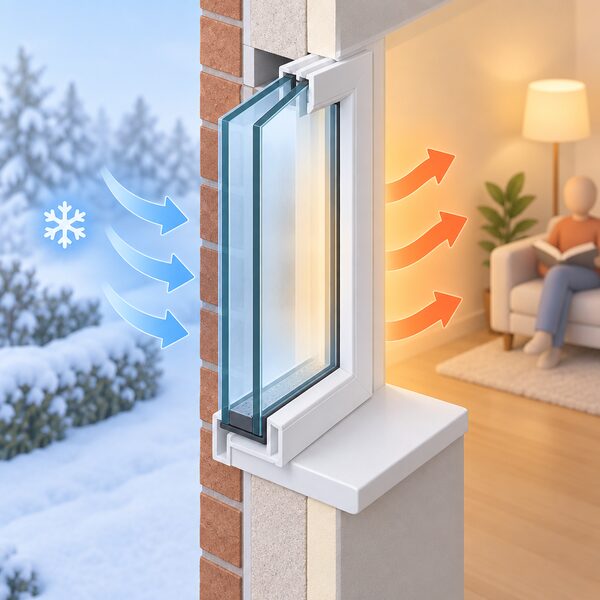
Replacement glazing reduces the amount of heat a house loses, which lowers the quantity of energy it has to buy, whatever the fuel. Certification does not generate anything: it is the audit trail confirming that the fabric improvement was done to the standard the regulations require, and that the products used were energy efficient7. A household that keeps the certificate keeps the evidence; a household that loses it can request a replacement9, and one that never received it has an unresolved question waiting at the point of sale5.
The dependencies that remain are worth naming. The compliance route depends on a private scheme operator holding a government licence4, and on that operator's sampling regime, which for FENSA is 1% of installations with a minimum of 2 and a maximum of 100 per business per year6. The insurance-backed warranty depends on an underwriter remaining solvent and on the policy terms, not on the scheme. And the whole self-certification system is confined to England and Wales29. Registration reduces friction and adds recourse; it does not remove the household's own need to read the contract and keep the paperwork.
Sources33 cited
- Competent person schemes and planning permission, Planning Portal, 2026-09-17
- Spotting rogue traders, The CPA, 2025-12-09
- Energy efficient glazing and high performance external doors, Centre for Sustainable Energy, 2026-06
- What is a competent person scheme, Certass, 2018-02-05
- Energy efficient windows and doors, The CPA, 2026-03-31
- Cowboy conundrums, FENSA, 2026-09-20
- The importance of BFRC energy rated windows and doors, FENSA, 2026-09-20
- Window installations: guide to regulations, The CPA, 2025-07-14
- What to check before appointing an installer, FENSA, 2026-09-20
- Building regulations competent person schemes, GOV.UK, 2026-09-17
- Use a competent person scheme, GOV.UK, 2026-09-17
- Building control application guidance notes, London Borough of Bromley, 2026-09-17
- Is your plumbing and heating compliant with building regulations, APHC, 2025-02-11
- Competent person scheme: current schemes and how schemes are authorised, GOV.UK, 2015-04-18
- Advantages of double glazed windows, FENSA, 2026-09-20
- Certass compliance and quality assurance, Certass, 2025-04-23
- Energy efficient home improvements, The CPA, 2026-05-07
- Condensation advice, FENSA, 2026-09-20
- Doors and windows: building regulations, Planning Portal, 2026
- Building regulations: doors and windows, Welsh Government, 2026-09-17
- Building regulations approval, GOV.UK, 2026-09-17
- Building regulations general information, Planning Portal, 2026
- Building regulations: boilers and heating, Welsh Government, 2026-09-17
- Building regulations: electrics, Welsh Government, 2026-09-17
- Find a heat pump installer, GOV.UK, 2022-07-05
- Building regulations and electrical works, London Borough of Richmond upon Thames, 2026-06-02
- Quick guide to the building regulations, Welsh Government, 2021-12
- Building work, replacements and repairs to your home, GOV.UK, 2014-11-03
- Reforming consumer protection for home upgrade schemes, GOV.UK, 2026-06-17
- Warm Homes social housing fund wave 3 scheme guidance addendum, GOV.UK, 2026-06
- The Microgeneration Certification Scheme, Planning Portal, 2026-09-17
- Consumer FAQs, HETAS, 2026-04-01
- Complaints and concerns, HETAS, 2026-07-14
 Competent Person SchemesIf a tradesperson says they can sign off their own work, how do you know they are genuinely registered?
 Replacement Window RulesWho signs off replacement windows so they meet building rules?
 Checking an InstallerBefore you sign anything, how do you know your installer is genuine?
 Using an Installer in EnglandHow do you check an installer is registered to sign off their own work, and what happens if they are not?
 Finding an Insulation InstallerHow to find, verify and check an insulation, glazing or ventilation installer in the UK: the registration schemes, trade bodies and guarantee arrangements that cover the work, how to compare quotes, what a written specification should state, and how complaints and disputes are handled.
 Insulation StandardsHow do you know your insulation was fitted to a proper standard, and who backs the guarantee if the installer disappears?