
In this answer
Short answer
Certass is a competent person scheme for window and door installation, and its registered installers are assessed against Building Regulations standards and authorised to self-certify that their work is compliant1. That self-certification is the whole point of the scheme: a registered installer is approved to carry out the work to comply with building regulations without involving local authority building control, and a certificate is issued on completion2. When something goes wrong, the complaint route runs through the scheme, then through the consumer code behind it, then through Building Control if the paperwork was never issued at all.
The practical trigger for most complaints is a missing or wrong certificate. Certification is a legal requirement when selling a home, and its absence can complicate or delay a property transaction1. A certificate of compliance is issued for the household's records and for future home sales3. Where the installation is less than 6 months old and the installer is still registered, the first step is to contact the installer and request a new certificate; otherwise the scheme's support team is the next contact4.
What follows sets out what Certass does, what counts as a breach, how the scheme monitors its installers, how to report one, what happens afterwards, and where to go if the problem persists.
What Certass does: self-certification for window and door installations
Certass is one of the recognised bodies for windows and doors registration, alongside FENSA8. Working with installers registered under schemes such as FENSA or Certass matters, because proper installation not only ensures compliance with Building Regulations but also provides certification that may be required at a later date when selling the property9. The scheme's scope is narrow and specific: window and door installations, not heating, not insulation, not renewables.
The mechanism is the competent person route. A registered installer will be approved to carry out the work to comply with building regulations without involving local authority building control, and a certificate is issued on completion2. The same principle applies across the competent person landscape: registrants of a competent person scheme can sign the installation off themselves and notify the local authority, meeting building regulations10. Installers on such schemes have been trained and assessed to carry out installations safely and in line with relevant regulations11.
That structure is what gives the household its leverage. The installer is not simply a contractor; they hold a registration that lets them bypass a Building Control inspection, and the scheme is the body that vouches for them. The registration is also the limit of the scheme's reach: a registered installer can only notify work they have carried out themselves4. A scheme cannot certify, inspect or sign off work by someone outside it.
For a household, this is a modest but real piece of energy independence. A correctly certified window or door installation is part of the building fabric that keeps heat in, and the certificate is the evidence that it was done to the standard the regulations require. What remains dependent is the registration itself: the household relies on the scheme's assessment and on the installer's continuing membership, neither of which the household controls.

What counts as a Building Regulations breach
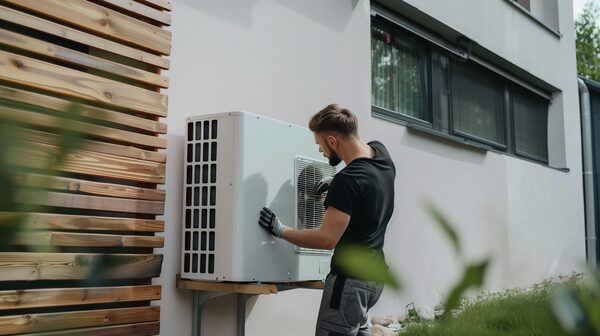
Not every bad job is a Building Regulations breach, and the distinction matters because it decides which route a complaint takes. Building regulations approval is required for certain alterations, including installing or replacing a heating system12. For window and door work, the requirement is that notifiable work is either notified to Local Authority Building Control or self-certified by an installer registered with a Competent Person Scheme, which allows them to issue compliance certificates to customers13.
Where a registered competent person carries out heat pump installation work, the approved document requires that the certificate, or a copy of the information on it, is given to the building control authority, and the installer should give notice to the building control authority that commissioning has been carried out in accordance with the approved document14. The same notification logic runs through the competent person system generally: the work is safe and it is notified to the local council's building control department15.
A breach, then, is one of the following:
- Work that should have been notified and was not, so no certificate exists.
- Work self-certified by an installer who was not registered for that type of work at the time.
- Work that does not meet the technical requirements the scheme assesses against, so the certificate misstates what was done.
- A certificate issued for work the installer did not carry out, which the notification rules do not permit4.
The scale of non-compliance in adjacent schemes gives a sense of how often installer status itself is the problem. In the Boiler Upgrade Scheme's fourth scheme year, 91 cases, 25.0% of non-compliances, were recorded as the installer not meeting the definition of an installer, where the firm had been decertified under Regulation 216. That is a grant scheme rather than a glazing scheme, but it shows that a firm's registration status can lapse between the quote and the completion, and that the paperwork is where it surfaces.
How Certass monitors registered installers
Monitoring works through assessment, notification and audit rather than through site inspection of every job. Installers registered with Certass are assessed against Building Regulations standards and are authorised to self-certify that their work is compliant1. The parallel cavity wall insulation scheme shows the fuller model: registered installers must comply with detailed technical requirements and installations are subject to regular independent inspections and audits to ensure work complies with the Building Regulations17.
Notification is the second control. Installers provide data every time they deliver an installation and raise a certificate with the installation data18. That data trail is what allows a scheme to know a job happened at all, and it is why a missing certificate is a signal rather than a clerical oversight. Where an installer is registered with a guarantee agency, the installer will in most cases submit the building notice19.
The third control is the consumer code sitting behind the scheme. Using a registered installer means that works are safe and that it is notified to the local council's building control department, and that installers are trained, works monitored and dispute resolution provided15. Dispute resolution is the part that matters when a complaint is raised, because it is the mechanism the scheme can actually apply to a member.
What monitoring does not do is guarantee the quality of any individual installation. Assessment happens at registration and at audit; the certificate is issued by the installer, not by the scheme. A household's protection therefore rests on three things at once: the installer's registration being current, the notification being made, and the certificate being correct. Where any of those fails, the complaint route is the way to force the issue.
How to report an installer to Certass
The first step is always the installer. Where concerns are raised, consumers are encouraged to first discuss the issues directly with the installer20. Certified installers are required to give clear information on how to contact them with any questions, concerns or complaints7. If the installation is less than 6 months old and the installer is still registered, the route to a corrected certificate is to contact the installer and request a new certificate; otherwise the scheme's support team is the next contact4.
If the installer does not resolve it, the complaint moves up. Consumer code processes expect a household to have given the installer at least 10 working days to resolve the matter before the code is contacted6. Certified installers are expected to acknowledge a complaint within two working days and respond effectively, and to keep records of all complaints received along with the actions taken7.
For complaints about installation quality, workmanship or the behaviour of an installer, the route is to raise it with the installer in the first instance, then the installer's consumer code, or the installation quality complaints route where the firm is certified under a renewables scheme21. Where a complaint is not resolved, the scheme administrator can be approached for advice on how to make a complaint about the installer22.
The Installation Assurance Authority, which handles complaints, lists its telephone number as 03333 2390455. Complaints are treated in confidence, although details may be passed to the installer, manufacturer or system designer for further investigation5. That is the honest position on anonymity: the substance of a complaint will normally reach the firm, even where the scheme does not publish the complainant's name.

What happens after you report

Once a complaint is lodged, the installer, their certification body, and the consumer code where applicable are kept informed throughout23. That is the shape of the process: it is not a private adjudication between the household and the scheme, but a three-way exchange in which the firm is a party.
The outcome a household is usually seeking is documentary. When work is complete a certificate showing the work was done by a registered installer is issued2. Where the certificate is wrong or missing, the correction route depends on the installer's status: if the installation is less than 6 months old and the installer is still registered, the installer is asked for a new certificate; otherwise the scheme's support team is contacted4. Where no registered installer was involved at all, approval has to be sought from the relevant Building Control Body, either at the local authority or a registered building control approver, which checks compliance and issues a certificate of compliance if satisfied2.
There is no single published timescale for a Certass complaint. The comparable standards give the shape rather than the duration: at least 10 working days for the installer to resolve it before the code is contacted6, and acknowledgement within two working days by certified installers7. Beyond that, the time depends on the installer's responsiveness and on whether the remedy is a corrected certificate or remedial work.
If the household is unhappy with the outcome of a complaint, the next step is to contact the scheme's compliance team in the first instance20. That keeps the escalation inside the scheme before it moves to an external body.
If you reported but the problem persists: other routes
Where the scheme route stalls, the alternatives depend on what the work was and who funded it. For work under a grant scheme, families affected should first contact the installer who carried out the installation, and where the installer is no longer trading or unable to remedy the damage, they can contact their guarantee provider to initiate a claim24. That guarantee route is why the handover paperwork matters: it is the only thing that survives the firm.
Where an installer was not in an approved Competent Person scheme, the notification route is different: approval can be sought from the relevant Building Control Body, either at the local authority or a registered building control approver, and a notification fee is payable25. That is the fallback where self-certification never happened.
For premises complaints in England and Wales, the First Tier Tribunal remains the main route that complaints and redress can be made26. For installations covered by a feed-in tariff, a company can only provide details of an installation when the person requesting it has a legitimate claim over the ownership of the installation27, which is a reminder that records are held by the body that administers the scheme rather than by the household.
Where a firm has ceased trading, the sequence is the same as for grant-funded work: contact the installer, then the guarantee provider24. Where the installer was contracted under a scheme requiring registration with TrustMark, the requirement is that the installer remains registered until the installation work has been completed28, so a lapse in registration during the work is itself a breach of the scheme's terms.
The wider point for a household's energy independence is that none of these routes removes the dependence on a registration body and a guarantee provider. What they do is convert a private dispute with a firm into a documented process with a paper trail, which is the only thing that holds its value when the firm does not.
Sources28 cited
- Energy Efficient Windows and Doors, The CPA, 2026-03-31
- Building Regulations: Doors and Windows, Planning Portal, 2026
- Window Installations: Guide to Regulations, The CPA, 2025-07-14
- HETAS Consumer FAQs, HETAS, 2026-04-01
- Complaints Procedure, The Installation Assurance Authority, 2026-09-20
- Who to Contact, Ofgem, 2026-09-17
- Complaints Handling, MCS, 2026-05-13
- Spotting Rogue Traders, The CPA, 2025-12-09
- Energy Efficient Home Improvements, The CPA, 2026-05-07
- Log Burner Rules, HETAS, 2026
- Rogue Traders, Logo Misuse and Imitation Businesses, HETAS, 2026
- Building Regulations Approval, GOV.UK, 2026-09-17
- Why Use an APHC Member, APHC, 2025-10-31
- Approved Document L, Volume 1: Dwellings, HM Government, 2026
- Unregistered Installer, HETAS, 2023-01-26
- Boiler Upgrade Scheme Annual Report 2025-26, Ofgem, 2025
- CWISC and CIGA's Competent Persons Scheme, CIGA, 2026-09-20
- Why Data Quality Matters, MCS, 2026-05-13
- Building Regulations: Cavity Wall Insulation, Welsh Government, 2026-09-17
- Complaints and Concerns, HETAS, 2026-07-14
- BUS Guidance for Property Owners, Ofgem, 2026-03-25
- Dispute Resolution, Ofgem, 2026-09-17
- What to Do If Things Go Wrong, MCS, 2026-09-07
- Energy Market Consumer Protection, Hansard, 2026-06-17
- Building Regulations: Boilers and Heating, Welsh Government, 2026-09-17
- Heat Networks Consumer Protection Draft Guidance, Ofgem, 2025-09-05
- Feed-in Tariffs, Energy Ombudsman, 2026-09-20
- Green Homes Wales Loan Standard Terms and Conditions, Development Bank of Wales, 2026-09-17
 Installer in Northern IrelandHow do you check an installer in Northern Ireland is properly registered, and who do you complain to if the work goes wrong?
 Using an Installer in EnglandHow do you check an installer is registered to sign off their own work, and what happens if they are not?
 Insulation StandardsHow do you know your insulation was fitted to a proper standard, and who backs the guarantee if the installer disappears?
 When Your Installer Goes BustWhat happens to deposits, part-completed work, workmanship guarantees and complaints when a home energy installation company fails, and how to claim on deposit protection, an insurance-backed guarantee, card or finance cover, and who honours the manufacturer's warranty.
 Installer ReviewsCheck whether an installer is signed up to a scheme like MCS or TrustMark before you trust their star rating.
 Consumer Rights for Faulty WorkIf an installer does shoddy work, can you make them come back and put it right, and can you get money back if they won't?