In this guide
- What a Smart Meter Does
- How the Rollout Works
- What a Smart Meter Costs
- The In-Home Display
- How Readings Reach Suppliers
- Accurate Bills Not Estimates
- Smart Tariffs and Time of Use
- Demand Flexibility Service
- Home Energy Independence
- Brands and Product Ranges
- Data Privacy and Security
- Renters and Prepay Customers
- Limitations and Known Issues
Smart Meters and Home Energy Management: The Full UK Guide
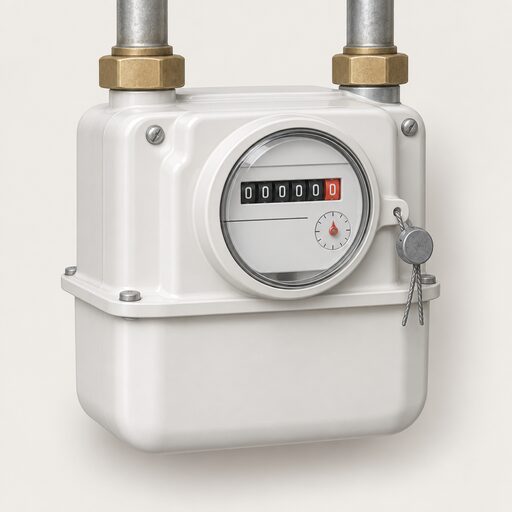
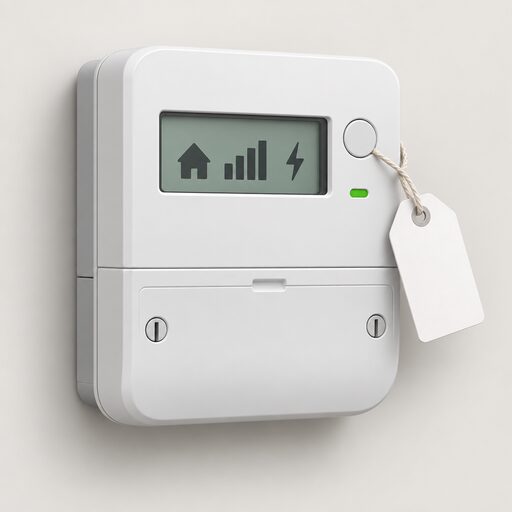
Smart meters are devices installed by your energy supplier which measure how much gas and electricity you are using and send the readings to the supplier automatically. They replace the traditional meter, not the supply. The gas and electricity still come from the same network, but you no longer have to give readings and the supplier no longer has to estimate the bill.1
Ofgem states that a smart meter is available from your supplier for free, in the sense that there is no charge for the visit or the equipment. The meter does not need, or connect to, the public internet or home Wi-Fi. Readings go to your in-home display and to the supplier over the smart energy network run by the Data Communications Company (DCC).2
Energy suppliers carry out the rollout, and the current aim is to complete it by the end of 2030. This guide covers the meter, the display, the network, the rules, and the tariffs and flexibility services that depend on half-hourly data. It then turns to the monitors, hubs and home energy management systems (HEMS) that households add on top, and links to the detailed page on each topic.4
What a smart meter is and what it does
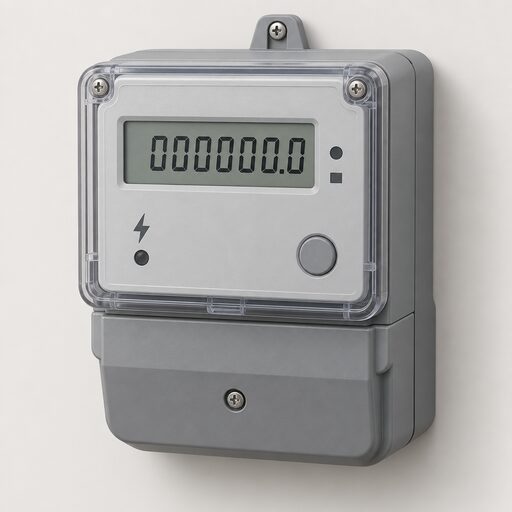
A smart meter does two jobs. It measures how much gas and electricity you use, which every meter does, and it sends those readings to your energy supplier automatically, which no earlier meter did. Energy Saving Trust describes it in those terms and adds that smart meters are different to smart heating controls, and that you can use one without the other. A smart meter meters your energy. It does not switch your boiler, heat pump or appliances on and off.10
The Energy Ombudsman identifies two-way communication as the defining difference from a traditional meter: smart meters can wirelessly send and receive information. The sending covers readings. The receiving covers tariff updates, prepayment credit and changes of mode.7
How detailed the data is depends on what you agree to. The DCC states that automatic readings give your supplier monthly, weekly, daily or even half-hourly readings. Government guidance explains that the meter automatically records energy use in half-hour periods, and that this recording is what makes billing on actual usage possible. The half-hourly record also underpins time-of-use tariffs and flexibility schemes, covered later in this guide.11
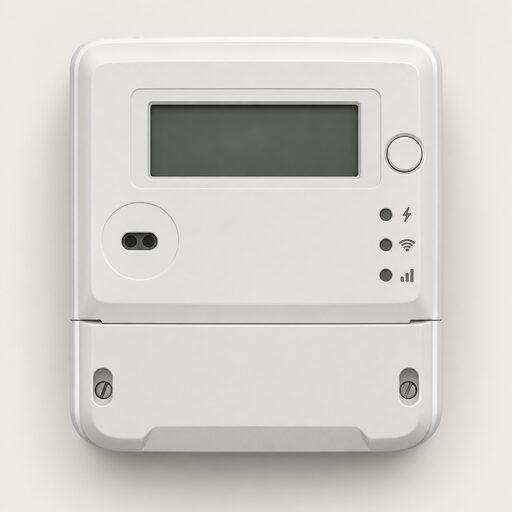
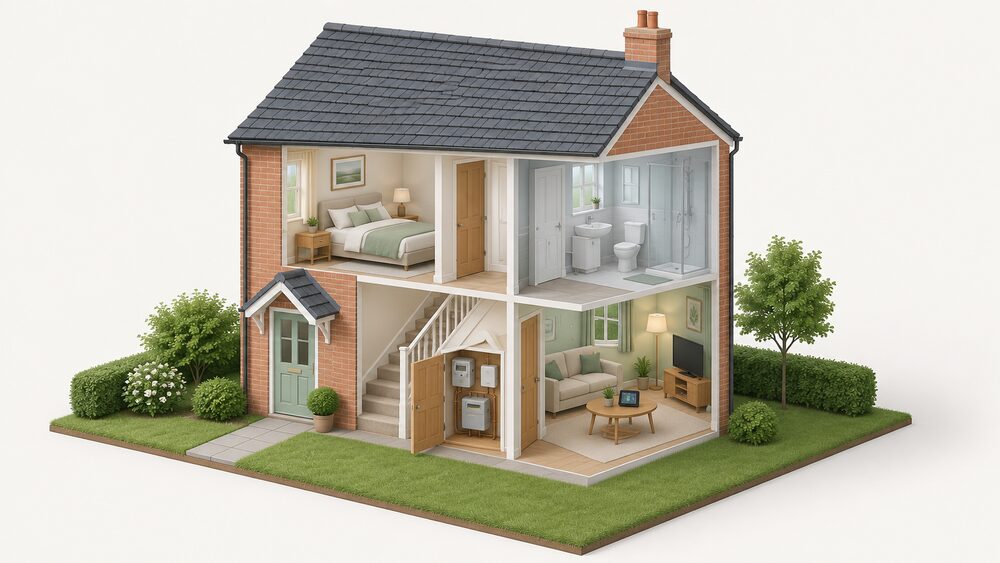
A working installation has four parts:
- a smart electricity meter
- a smart gas meter, where the home has gas
- a communications hub that links the meters to the national network
- an in-home display
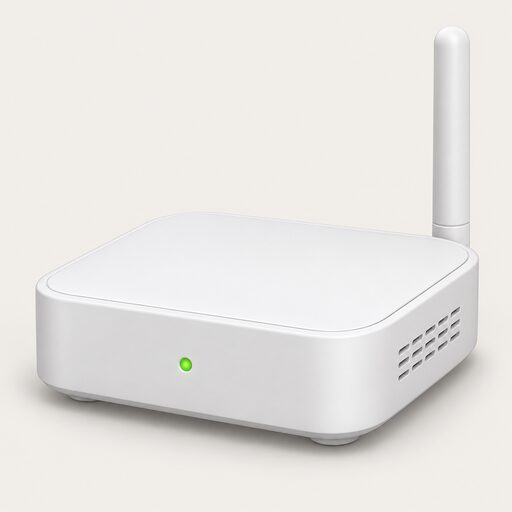
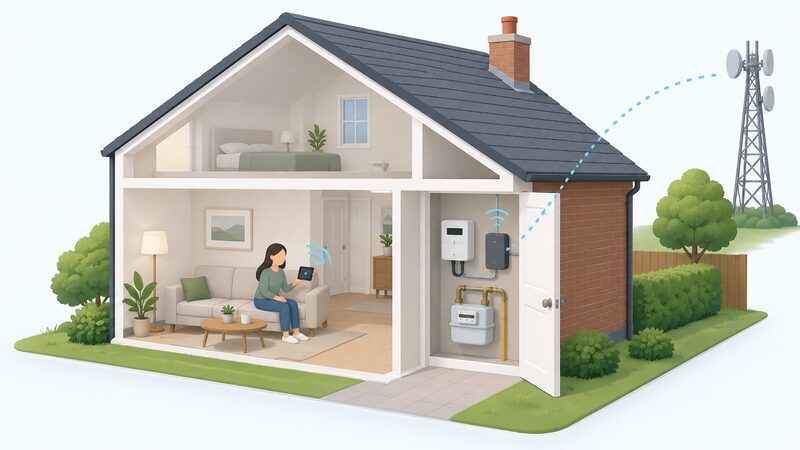
The DCC describes the communications hub as creating a home area network inside the property. Readings then travel from the home to a wide area network.8
There are two generations of smart meter, SMETS1 and SMETS2, and the difference affects what happens when you change supplier. The page on SMETS1 and SMETS2 meters covers this in full, how smart meters work explains the measuring and sending step by step, and smart meter standards and accuracy covers the accuracy rules.
How the rollout works: supplier-led, running to the end of 2030
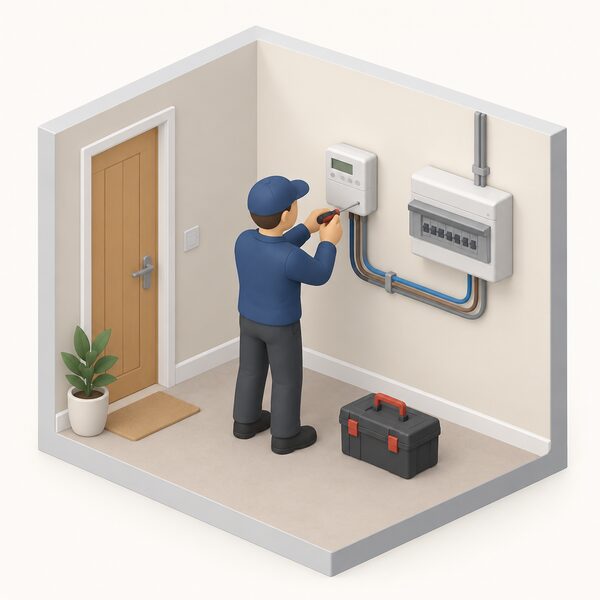
Energy suppliers deliver the rollout. Government and network companies do not. A Public Accounts Committee report records that suppliers have been rolling out smart meters since 2012. It also records the plan for what follows: once the Department considers the rollout complete, responsibility for smart metering passes to Ofgem and the Smart Energy Code governance.13
The rules that set suppliers' pace have changed over time. Under the Smart Meter Rollout Framework, each supplier had installation targets between 1 January 2022 and 31 December 2025, which Ofgem describes as a four-year obligation. In its January 2026 decision on guaranteed standards, Ofgem noted that the rollout had by then been underway for over 12 years. The DCC states the current aim as completing the rollout by the end of 2030.14
Age UK describes the 2030 date as a requirement on suppliers to offer smart meters to all households and small businesses by the end of that year. The duty sits with the supplier. The household has no duty to accept.16
| Milestone | Date | Source |
|---|---|---|
| Suppliers begin rolling out smart meters | 2012 | 13 |
| Rollout Framework installation targets | 1 January 2022 to 31 December 2025 | 14 |
| Suppliers to offer smart meters to all households and small businesses | End of 2030 | 16 |
| 2G and 3G networks switched off, with the smart meter network moving to 4G first | By 2033 | 17 |
The last row matters to homes that already have a smart meter. Uswitch reports that the smart meter network will transition to 4G before the 2G and 3G networks are switched off by 2033, which means some communications equipment installed earlier in the rollout will need attention before that date. The page on what happens when 3G closes has the detail.17
Differences between the nations
The DCC operates the secure national network that connects smart meters across Great Britain, meaning England, Scotland and Wales. Northern Ireland has separate metering arrangements and is not part of that network. The pages on smart meters in Scotland, smart meters in Wales and smart meters in Northern Ireland cover each nation. The pages on the rollout's progress and targets and on supplier obligations cover the supplier duties.18
What a smart meter costs: no charge for the visit, paid for through bills
Ofgem's consumer guidance says a smart meter is available from your supplier for free. The DCC says your supplier installs the meter at no extra cost, and Welsh Government guidance says there is no direct cost. All three mean that the household pays nothing for the installation visit or the equipment, the display included.2
The cost has not disappeared. Smart Energy GB explains that, as with traditional meters, the cost of smart meter installation and maintenance is covered by standing charges and is spread across everyone's energy bills. Which? makes the same point more bluntly: you do not pay directly to have a smart meter installed, but that does not make it free, because the installation cost is recovered from all energy bills. Welsh Government guidance likewise says any expenses are recouped through your energy bills over time.19
"Smart meters are installed with no extra cost to you, and with no extra smart meter charges applied to your bill."
Accepting or refusing a smart meter therefore does not change what a household pays towards the programme. Those costs are shared across all billpayers either way. A household that refuses the meter pays the same share and goes without the data and the tariff access.
What comes with it
The installation includes the meter or meters, the communications hub and an in-home display. Energy Saving Trust notes that suppliers are required to maintain smart meters for 12 months after installing them.10
Sources describe the length of the visit differently because some time a single meter and others time the whole appointment:
| Measure | Figure | Source |
|---|---|---|
| Typical installation | About 90 minutes | 5 |
| Each meter | Approximately one hour | 6 |
| Electricity and gas together | About 2 hours for the whole process | 6 |
| Supply switched off | Typically 30 minutes for each meter installed | 6 |
| Whole visit, as the DCC describes it | A couple of hours | 11 |
The pages on smart meter cost and what happens on installation day give the detail. The add-on devices covered later in this guide are not part of the supplier's offer and are bought separately. What home energy monitoring and management costs covers their prices.
The in-home display: usage in pounds and pence, in near real time
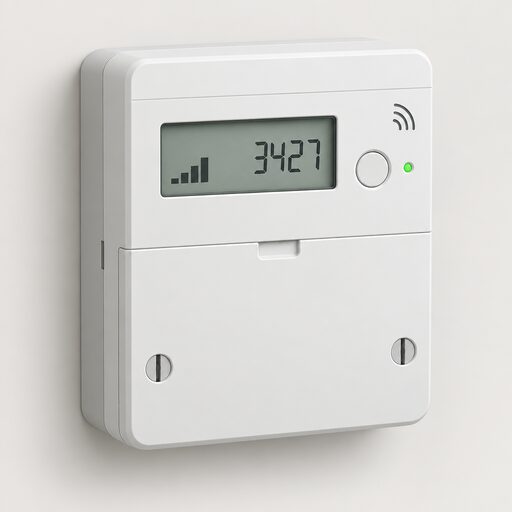
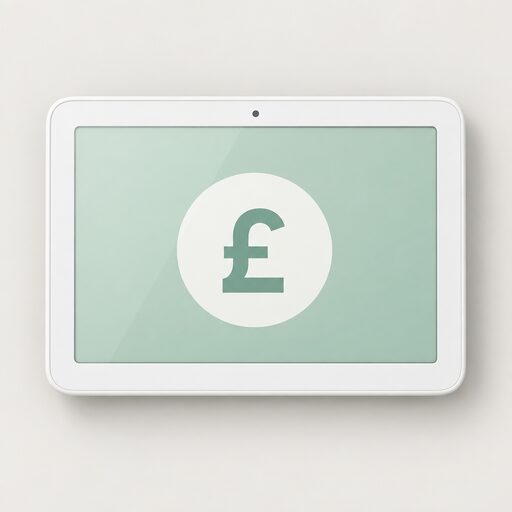
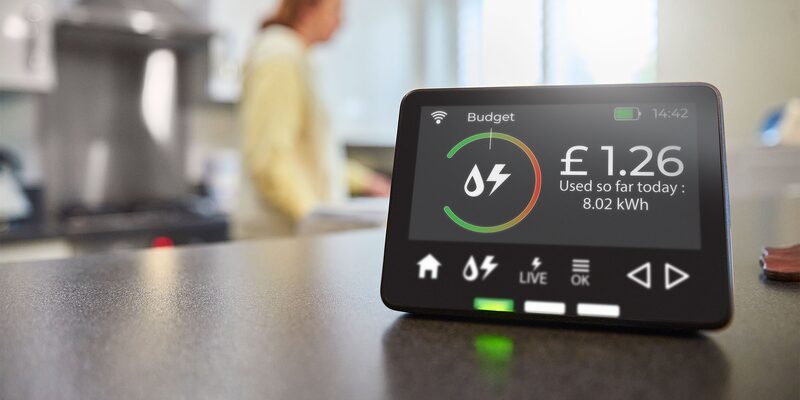
Most households interact with the in-home display (IHD) and not with the meter itself. The DCC describes it as a portable touchscreen device that shows near real-time energy usage data. Government guidance states that smart meters come with an IHD so that consumers can see and manage their energy use.18
Smart Energy GB sets out what the screen shows:
- how much gas and electricity is being used, in near real time
- what that usage costs, in pounds and pence
- how much credit is left, for meters in prepay mode
The display should also show the standing charge, though that depends on the tariff and the supplier.21
The display is not the only way to see the data. Government guidance lists the routes as an In-Home Display, an Accessible In-Home Display, a mobile app, other linked devices, or a combination of these. The "other linked devices" include consumer access devices, which pair with the meter's home area network and pass the data to your own app or system. The pages on in-home displays, consumer access devices and the IHD compared with a supplier app cover each route.12
Where displays go wrong
Which? reported in September 2024 that monitor problems can be caused by three things:
- the monitor losing its connection with the smart meter
- the monitor running out of battery
- the monitor not receiving updates from the supplier about the current tariff
The third cause means the display's cost figure can be wrong while the meter's readings are right, because the display works out cost from the tariff details it has been sent.23
If the display breaks or goes missing in the first 12 months, the supplier provides a free replacement. The page on replacing a broken in-home display covers what happens after that period.9
How readings reach your supplier: the DCC's secure network
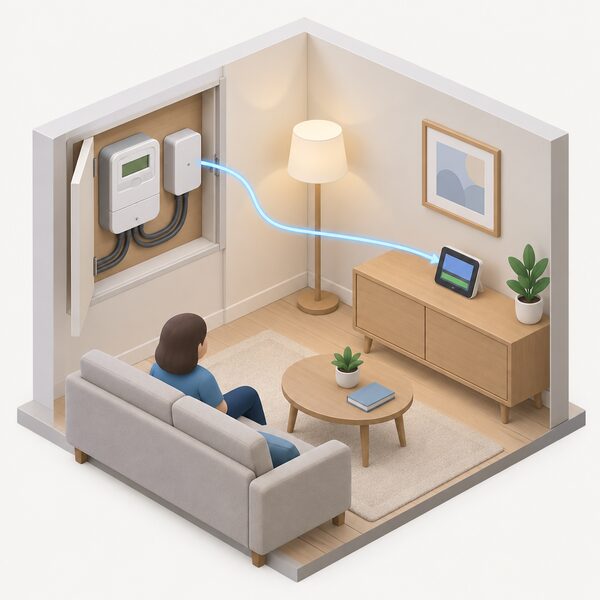
Readings do not travel over your broadband. The DCC states that a smart meter does not need, or connect to, the public internet or home Wi-Fi. No router, broadband contract or internet package is involved, and none is needed for the installation to go ahead.3
The DCC describes the route in these stages:
- The meter records usage and the data is securely wrapped using two layers of encryption.
- A communications hub creates a home area network, which links the meters and the in-home display.
- Readings are transmitted from the home to a wide area network made up of mobile phone or radio masts.
- The data is delivered to the energy supplier.
The most utilised message on the network is the meter read, which lets suppliers read energy usage remotely. The same network carries prepayment credit in the other direction as an over-the-air top-up.8
"The DCC network never sees or keeps the data, it transports it securely straight to the energy supplier"
The DCC adds that the dedicated communications system is backed by the National Cyber Security Centre and operates in line with Governance and Data Protection standards. The network also lets authorised users share smart meter data securely, which is how third-party energy services obtain readings when you have given consent.11
Second-generation SMETS2 meters were designed to connect directly to this national network, so they keep their smart functions when you switch supplier. First-generation meters were not, and the limitations section below covers the consequences. The pages on how smart meters communicate, whether smart meters need Wi-Fi and smart meter security go further, and the Data Communications Company has its own page.24
Accurate bills, not estimates
Billing changes more than anything else once a smart meter is installed. Ofgem puts it simply: with a smart meter you get bills based on accurate meter readings and not estimates. Government guidance gives the mechanism. The meter records use in half-hour periods automatically, so suppliers can bill on actual usage instead of estimated usage.2
With a traditional meter, a supplier that has no reading makes an estimate. The account then drifts into credit or debt until the next real reading corrects it. Removing the estimate removes that drift, along with the need to read the meter yourself and submit the figure.
An estimate can still appear on a smart-metered account in one situation. Smart Energy GB explains that when the automated reading arrives on a different day from the day the bill is created, the bill may be estimated, and any difference between the estimate and your actual energy use is corrected on the next bill. A smart meter that has stopped communicating also returns the account to estimates or manual readings until it is fixed.25
The pages on whether smart meters give more accurate bills, estimated bills on a smart meter and how often smart meters send readings cover these cases.
Smart tariffs and time-of-use pricing: why the half-hourly record matters
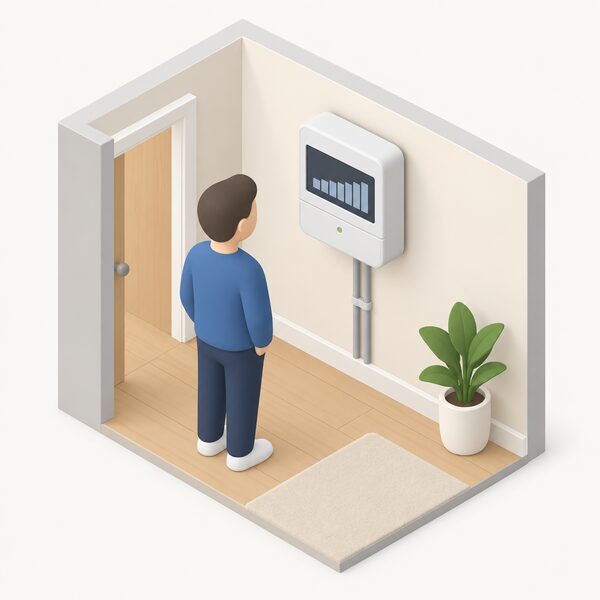
A traditional meter records a single running total, so the supplier cannot tell when you used the energy. A smart meter records half-hourly readings, so it can. Which? explains that smart time-of-use tariffs use those half-hourly readings to let companies charge lower rates when demand is lower and electricity is cheaper.26
Energy Saving Trust states that having a smart meter lets you take advantage of advanced time-of-use tariffs. Welsh Government guidance describes these as cheaper rates during off-peak hours, plus incentives for using energy on high-supply days. Smart Energy GB notes that some suppliers already offer smart-meter-only tariffs and smart time-of-use tariffs. These are offered by some suppliers, not all of them, and the range differs from one supplier to the next.10
For a home working towards energy independence, time-of-use tariffs connect the meter to the equipment. A battery, an electric vehicle, a hot water cylinder or a heat pump can each take electricity at one time and deliver its benefit at another. A time-of-use tariff puts a price on that shift, and the half-hourly record is the evidence the supplier uses to bill it. Without a smart meter operating in smart mode, that evidence does not exist.
The same pricing also works against you. A tariff that is cheaper off-peak may charge more at peak, so a household that cannot move its use may gain nothing from one. The pages on smart meters and time-of-use tariffs, peak pricing and half-hourly settlement set out how these tariffs work.
The Demand Flexibility Service: rewards for shifting use
The Demand Flexibility Service (DFS) is run by the National Energy System Operator. It launched in winter 2022/23. NESO says it was designed to help manage potential winter pressures by reducing demand during evening peak periods and reducing reliance on more expensive electricity generation. Its stated purpose now is to make it easier for homes and businesses to take part in the electricity market and be rewarded for shifting when they use electricity. From 9 April 2026 it has operated with a reduced eligibility threshold of 0.1MW. That threshold applies to the providers who aggregate households, not to individual homes.27
Smart Energy GB describes the scheme as voluntary and lists three requirements for a household:
- a smart meter capable of sending half-hourly readings
- a baseline measure of the last 60 days of electricity usage
- marketing consent
The baseline is how a reduction gets measured. Your usage during an event is compared with your own recent pattern, and without the half-hourly record there is no pattern to compare against. Consumers without a smart meter can request one from their supplier at no extra cost.28
Energy Saving Trust adds two practical points. The smart meter has to be working, so that usage can be measured accurately and quickly. And you can take part through registered third-party apps that connect to your smart meter, not only through your own supplier.29
The scheme is also offered to small businesses on the same basis. The pages on the Demand Flexibility Service, on joining without a smart meter and on other household flexibility and reward schemes cover the detail.28
Smart meters and home energy independence: monitoring, control and solar
A smart meter measures and reports energy. It generates nothing, stores nothing and controls nothing. Its value to a household working towards energy independence comes from the data it records.
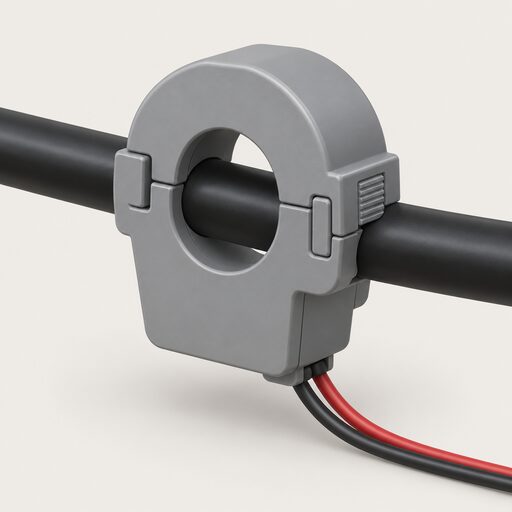
Smart Energy GB states that smart meters support whole-home energy monitoring, and that defines the limit. The meter sees the total crossing the boundary of the property. It cannot show what an individual circuit or appliance uses, or what happens behind a solar inverter or a battery. Households fill those gaps with their own equipment: clamp monitors, smart plugs, inverter apps and home energy management systems.1
| Layer | What it measures or does | Who provides it |
|---|---|---|
| Smart meter | Whole-home gas and electricity, recorded in half-hour periods12 | Energy supplier |
| In-home display | Near real-time use and cost21 | Energy supplier |
| Monitors, smart plugs and sensors | Circuits, appliances, generation | Bought by the household |
| Smart controls and HEMS | Automated control of heating and loads | Bought by the household |
Welsh Government guidance says that smart meters are independent of smart heating controls, but that combining the two can improve your ability to manage heating and energy use remotely. MCS states that smart meters can help consumers make their heat pumps more efficient and cost-effective, and that they enable participation in flexibility and demand response services.5
Solar panels
Smart Energy GB states that a home with solar panels, or one that generates renewable electricity, could still have a smart meter installed, but that some energy suppliers are not yet ready to supply smart meters to customers with solar panels. Whether one can be fitted therefore depends on the supplier. Ofgem confirms that a smart meter not operating in smart mode still records energy usage accurately.31
The pages on smart meters with solar panels, export metering and limitation and monitoring a solar and battery system take this further.
What dependence remains
A smart-metered home remains connected to the grid, to a supplier and, where fitted, to the gas network. The meter creates a further dependence on the DCC network and on the supplier's systems working correctly. The data is the household's own, but it leaves the home by default. The pages on smart meters and energy independence, what a HEMS does, local data access and using energy data to size a system cover how a household can use that data for itself.
Brands and product ranges sold in the UK
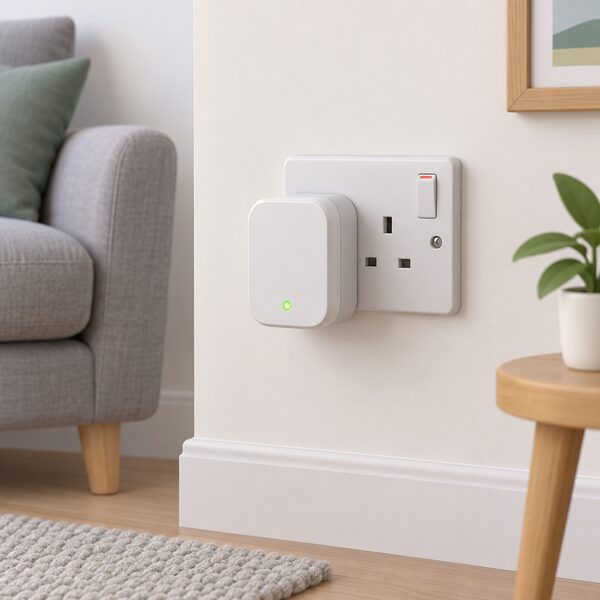
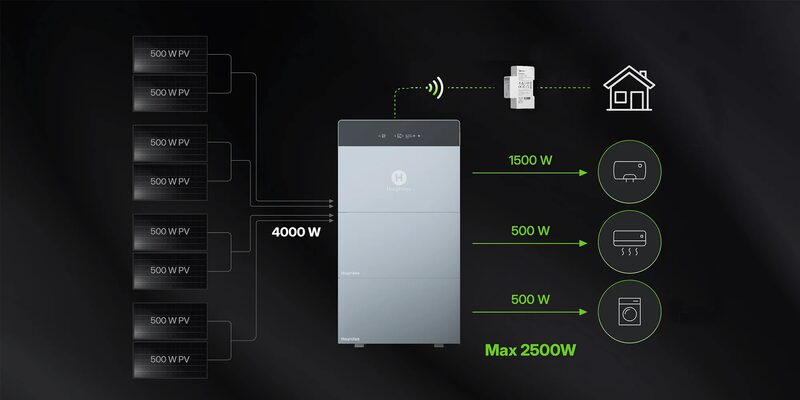
The monitoring and control layer above the meter is a retail market. The supplier does not provide these products and they are not part of the smart metering system. This guide describes them and does not rank them. The figures below are each maker's own statements about its own products.
| Maker and product | What the maker states | Source |
|---|---|---|
| Smappee platform | Brings together energy monitoring and metering, energy management and optimisation, and EV charging within one platform | 33 |
| Shelly EM | 2 years warranty, covering hardware and firmware issues but not consumable items such as batteries or accessories | 34 |
| Emporia Vue Home Energy Monitor | Warranty: 1 year | 35 |
| Bosch Individual Room Thermostat (mains-voltage model) | 2 years warranty | 36 |
None of the makers above publishes a price that can be confirmed here. Prices for this class of equipment depend on the retailer or installer, and no range is given.
These products raise independence questions that the supplier's meter does not. A smart meter is maintained by your supplier and runs on a regulated national network. A retail monitor or hub comes with a short maker's warranty, one or two years for the products above. It often also depends on the maker's app and cloud service continuing to operate. The pages on app subscriptions and cloud dependence and connected device security rules explain that exposure.
Each range has its own page in this lane: Smappee energy monitoring, Shelly, Emporia Energy, Bosch Smart Home, Aqara, SONOFF, Homematic IP and Enphase monitoring. For the categories, see home energy monitors, smart plugs and appliance monitoring, smart home hubs and controllers and device protocols. The page comparing a smart meter with a standalone energy monitor sets the two side by side.
Data, privacy and security: what is stored and who can see it
The meter stores very little. The DCC states that personal information such as your name, address and bank details is not stored on your smart meter. The meter holds readings and tariff information, and nothing on it identifies you.8
The data does become personal once it is linked to an account, and the law treats it that way. Open Energy's guidance states the position as follows:
"smart meter data is classified as personal data, owned by the consumer."
The same guidance states that the consumer is the source of consent for any onward data-sharing. Government guidance sets out what that means in practice. You control who can access the energy use data from your smart meter, how often and for what purpose. The exception is access required for regulated purposes such as billing.37
| Who | What they can see | Basis |
|---|---|---|
| Energy supplier | How much energy is used and when, not which appliances are plugged in21 | Regulated purposes such as billing, with your permission needed beyond that38 |
| Local network operator | Can decrypt the information the meter sends38 | Specific regulated purposes |
| DCC | Transports the data, and never sees or keeps it8 | Network operator |
| Third parties and apps | Only what you consent to share37 | Your consent |
Which? states that only your energy supplier and local network operator can decrypt the information sent by your smart meter, and that they can only use it for specific regulated purposes without your permission. Ofgem lists the uses of the data: billing you, offering new products and services such as tariffs where you have given permission, and making the energy system more efficient by recording demand more accurately.38
Half-hourly data is more revealing than a monthly total, and that is why the consent step exists. The pages on smart meter data, the consent you give for readings and the Consumer Consent Solution explain the choices.
Renters, prepay customers and special cases
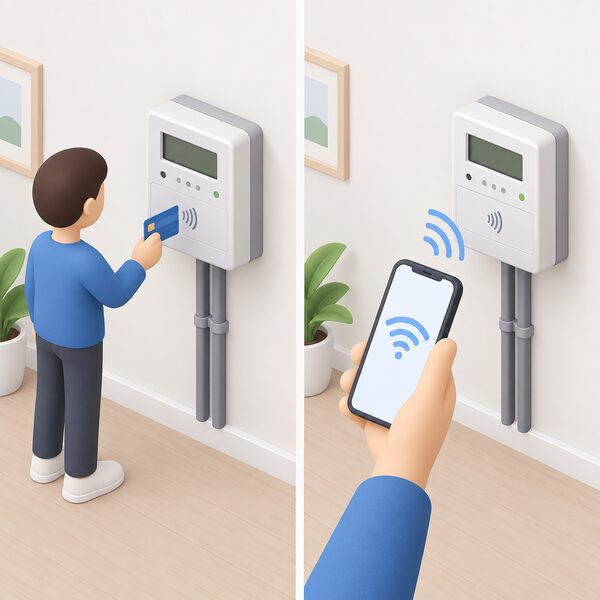
Who can get a smart meter depends on who pays the bill, not who owns the building. The Energy Ombudsman states that a private renter can choose to have a smart meter if the energy bills are in their name or they prepay for their energy. It suggests checking the tenancy agreement and letting the landlord know. Which? gives the other case: a renter who pays the gas and electricity bills directly to the supplier can have a smart meter installed, but where the landlord pays the bills, the decision is the landlord's.7
The DCC confirms that an application is possible in three situations:
- you are renting
- you are a prepay customer
- the meter is located outside the property, for example in a communal meter box in a block of flats
The page on monitoring in flats and rented homes covers these situations.11
Prepayment
Smart Energy GB states that all smart meters can be switched between prepay and credit mode, so anyone eligible for a smart meter is eligible for a prepay meter. The meter's mode is a setting that the supplier changes over the network, and the device on the wall stays the same.31
Government guidance says a smart prepay customer should be able to top up in the way that suits them best, in person or remotely. Citizens Advice guidance for England confirms the cash route remains: a Post Office, Payzone or any shop with a PayPoint logo, using a barcode, card or reference number from the supplier, with the credit added to the meter immediately. The pages on smart prepayment meters, checking credit and the rules on forced prepayment give more detail.12
Refusal
Smart meters are not compulsory. The Energy Ombudsman states that it is your right to refuse installation, with one caveat: if your traditional meter has to be replaced because it is faulty or unsafe, the replacement options may be limited. The pages on whether smart meters are compulsory and why a smart meter may not be available cover both sides.7
Limitations and known issues: smart mode loss, faults and switching supplier
Ofgem lists three reasons a smart meter may not operate in smart mode:
- it loses connection with your supplier
- it loses connection after you change supplier
- it was installed without being connected to the national communication system
Citizens Advice adds a fourth cause: your supplier has gone bust.32
First-generation meters and switching
The DCC explains that some SMETS1 meters could lose smart functionality when a consumer switched energy supplier, because those meters were not built to connect directly to the national network. It is running a programme to upgrade first-generation meters. Uswitch describes the loss as temporary in some cases, with the meter stopping sending data to the new supplier and manual readings being needed in the meantime.24
SMETS2 meters were designed to avoid this problem. The pages on SMETS1 meters and switching and dumb mode explain how to tell which meter you have and what to expect.
Faults and redress
Ofgem notes that a smart meter may stop recording the energy you use, or may stop sending readings to your supplier. Welsh Government guidance states that the supplier is responsible for maintenance and will fix or replace the meter as needed.2
Ofgem's January 2026 decision on guaranteed standards of performance added a form of redress. If a smart meter installation fails because of a fault within the energy supplier's control, the consumer receives compensation. The pages on guaranteed standards, faults and troubleshooting and meters not sending readings cover the process.15
A household's tariff, flexibility rewards and accurate billing all depend on a communications link that the household does not control and cannot repair. Anyone building a time-of-use tariff or a flexibility scheme into their home energy plan is relying on that link staying up.
Sources40 cited
- What are smart plugs and do energy saving plugs work, Smart Energy GB, 2026-08-19
- Get help with your smart meter, Ofgem, 2026-09-17
- Does a smart meter need Wi-Fi, Data Communications Company, 2026
- Supporting customers to address non-communicating smart meters, Data Communications Company, 2026
- Smart meters, Welsh Government, 2026
- The installation process, Smart Energy GB, 2026-04-01
- Smart meters, Energy Ombudsman, 2026-09-20
- How do smart meters send readings, Data Communications Company, 2026
- Understanding your home energy usage, ivie, 2026-09-20
- Guide to smart meters, Energy Saving Trust, 2026-07-15
- How to get a smart meter, Data Communications Company, 2026
- Smart meters: your rights and expectations, GOV.UK, 2025-08-08
- Public Accounts Committee report on the smart meter rollout, UK Parliament, 2023-10-20
- Supplier smart metering installation targets, Ofgem, 2026-09-17
- Final decision on smart meter guaranteed standards of performance, Ofgem, 2026-01-30
- A guide to smart meters, Age UK, 2026-08-24
- Smart meters explained, Uswitch, 2026-07-29
- How do smart meters help the environment, Data Communications Company, 2026
- Smart meter costs: are smart meters free, Smart Energy GB, 2026-03-16
- Smart meter installation rollout faces further setbacks, Which?, 2020-10-20
- Smart meters and carers, Smart Energy GB, 2026-08-19
- Are smart meters accurate, Smart Energy GB, 2026-03-16
- Why smart meter customer service is falling short, Which?, 2024-09-23
- Upgrading Britain's first-generation smart meters, Data Communications Company, 2026
- Troubleshooting smart meter issues, Smart Energy GB, 2026-04-01
- How to switch energy supplier, Which?, 2026-05-15
- Demand Flexibility Service, National Energy System Operator, 2026-09-17
- Understanding the Demand Flexibility Service scheme, Smart Energy GB, 2026-03-16
- Demand Flexibility Service, Energy Saving Trust, 2026-05-21
- Smart meters: installer help resources, MCS, 2026-07-24
- Myth busting smart meter problems, Smart Energy GB, 2026-09-17
- Smart meter performance, Ofgem, 2026
- Platform and software, Smappee, 2026-09-17
- Shelly EM with 50A clamp, Shelly, 2026-09-20
- Energy monitors, Emporia Energy, 2026-09-17
- Bosch Smart Individual Room Thermostat 230V, Worcester Bosch, 2026-09-17
- Data protection and smart meter data, Open Energy, 2026-09-20
- Smart meter problems and solutions, Which?, 2026-08-24
- What is a smart meter, Which?, 2026-04-07
- Fixing problems with your smart meter's in-home display, Citizens Advice, 2026-09-17