In this guide
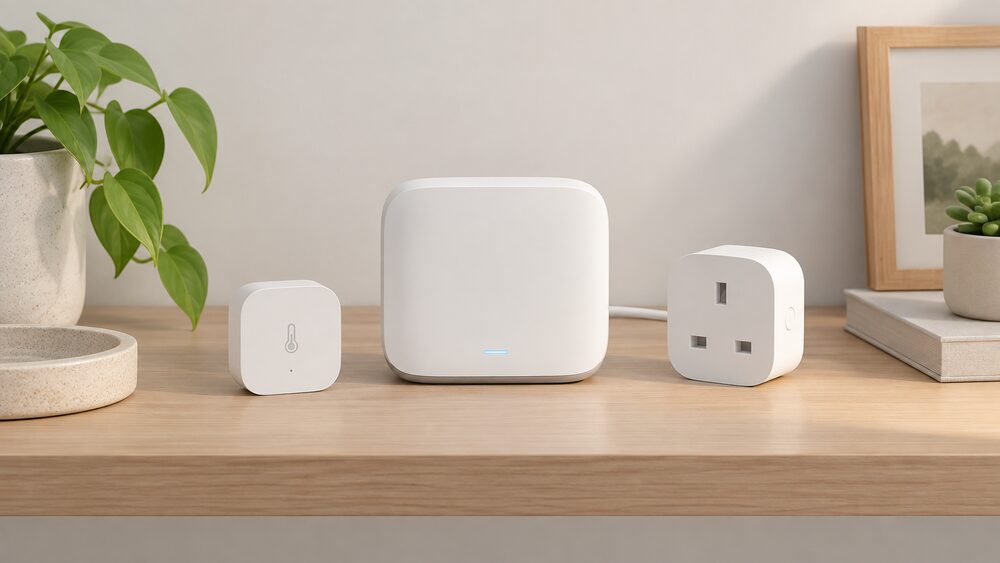
The Aqara Hub M3 is the flagship hub in Aqara's smart home range, released to global markets on 8 May 2024, with UK availability through Amazon brand stores and select retailers1. It is a Matter controller and bridge with edge computing and local automation, which means routines can run on the hub itself rather than in a cloud service2.
For a household watching its energy use, the Hub M3 is the piece that lets Aqara's sensors and controls talk to each other and to other ecosystems. Matter is the interoperability layer that makes this possible: it allows products from different brands, including Apple, Google, Amazon and Samsung, to communicate seamlessly, using Wi-Fi, Ethernet and Thread rather than a stack of separate control hubs3. Aqara's own bridging work extended that reach, with Advanced Matter Bridging rolled out across all its Matter controllers and bridges via firmware 4.3.4, announced on 9 April 20252.
What the hub does not do is measure your electricity. It is a controller, not a meter. The energy value it carries comes from the sensors and smart plugs around it, and from the automations it runs. That distinction shapes everything below.
What the Hub M3 is and what it does
The Hub M3 sits at the centre of an Aqara installation. It is a Matter controller, which means it can commission and manage Matter devices, and a Matter bridge, which means it can expose Aqara's own Zigbee accessories to other ecosystems as Matter devices. Aqara describes the release as bringing edge computing, local automation and Matter bridging together in one unit2.
Local automation is the part that matters most for a home that wants to keep working when the internet does not. Because routines run on the hub, a schedule that closes a curtain or adjusts a thermostat does not depend on a round trip to a server. That is a meaningful difference from hubs that are little more than a radio and a cloud account.
The hub is also the enrolment point for Aqara's Zigbee accessories. The Radiator Thermostat E1 states plainly that an Aqara Zigbee 3.0 hub is required7, and the Smart Curtain Controller is attached to its rail and then paired with an Aqara hub8. In practice the Hub M3 is the device that turns a collection of Aqara parts into a system.
It is worth being clear about what it is not. It is not a smart meter communications hub, which is the device that allows your smart electricity and gas meters and your in-home display to connect to each other and to the DCC's smart meter home area network3. The two are entirely separate pieces of equipment that happen to share a word. For the metering side, see how smart meters work.
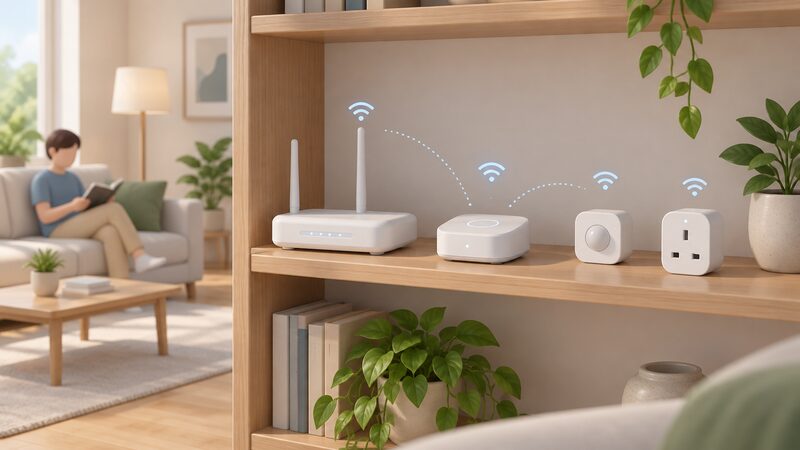
Protocols supported: Zigbee, Thread and Matter
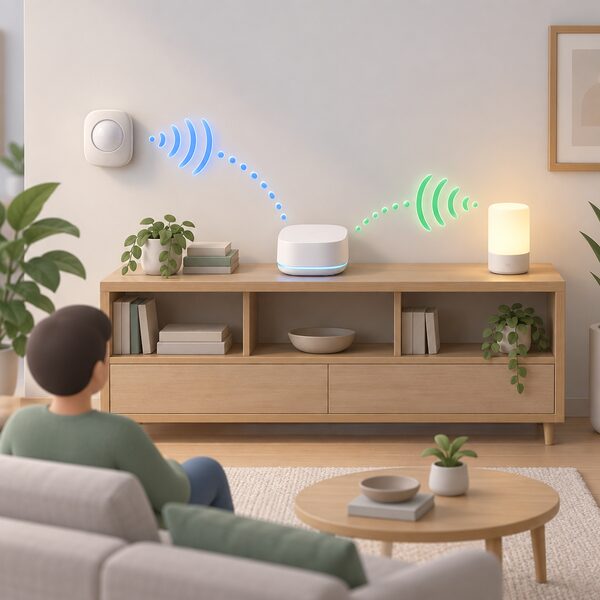
The Hub M3's value comes from the protocols it speaks. Matter is the interoperability standard, and it ensures interoperability using Wi-Fi, Ethernet and Thread rather than relying on lots of separate control hubs3. Zigbee is the older, well established mesh protocol that Aqara's own accessories use, and Thread is the low-power mesh that Matter devices favour.
Aqara's Presence Multi-Sensor FP300 shows how the two coexist in one product. It lists Thread, Zigbee and Bluetooth as its wireless protocols5. In Zigbee mode it needs an Aqara Hub and the Aqara Home app, with Matter compatibility coming through an Aqara Hub that has Matter Bridge functionality. In Thread mode it integrates with multiple platforms through a Thread-enabled Matter Controller, including Apple Home, Google Home, Alexa, Home Assistant, SmartThings and Homey5.
That dual-mode design is the practical answer to a common question. A household already invested in Aqara's Zigbee sensors can keep them and reach Matter ecosystems through the hub's bridging. A household starting fresh with Thread devices can use the hub as a Matter controller instead. The hub does not force a choice between the two.
There is a limit worth noting. Some settings are only reachable in one mode: the FP300's radar sensitivity setting is available in Aqara Home and Home Assistant only, and its illumination sensor is supported except on Alexa5. Protocol support is broad, but feature parity across every platform is not automatic. The wider protocol landscape is set out in Zigbee, Matter, Thread and KNX in home energy devices.
Advanced Matter Bridging: what it adds
Bridging is the feature that decides how useful the hub is to a household that does not want to live inside one brand's app. Aqara announced on 9 April 2025 that it was expanding Matter device integration and rolling out Advanced Matter Bridging to all its Matter controllers and bridges, via firmware 4.3.42. The same announcement recorded support for over 50 Matter device types on Aqara Home4.
The effect is that Aqara's Zigbee accessories can appear in other ecosystems as Matter devices, rather than being visible only in Aqara Home. Aqara's Thermostat Hub W200 page describes managing a wide range of Matter devices directly through the Aqara Home app, with support for over 50 device types all in one place4. The direction of travel is two-way: Aqara devices out to other platforms, and third-party Matter devices into Aqara Home.
Aqara's own framing of the Matter Controller add-on is that the system supports integration with third-party Matter-certified devices, such as those from Eve Systems3. That is the practical test of a bridge: whether a device bought from a different maker can be commissioned and controlled without a second hub.
Specifications and hardware at a glance
Aqara's published material for the Hub M3 covers its role and its bridging rather than a full hardware specification sheet. The figures that are documented are the ones that affect what the hub can do.
| Attribute | Detail | Source |
|---|---|---|
| Release | Global availability announced 8 May 2024 | 1 |
| UK availability | Amazon brand stores and select retailers | 1 |
| Function | Matter controller and bridge, edge computing, local automation | 2 |
| Bridging firmware | Advanced Matter Bridging via firmware 4.3.4 | 2 |
| Matter device types | Over 50 supported in Aqara Home | 4 |
| Ecosystem protocols | Thread, Zigbee and Bluetooth (FP300 sensor) | 5 |
| Matter transport | Wi-Fi, Ethernet and Thread | 3 |
The absence of a published device ceiling is worth stating plainly rather than filling with a number from elsewhere. The comparable figure in the record is for a different manufacturer's hub, which supports up to 50 Zigbee devices3. That is not an Aqara figure and should not be read as one.
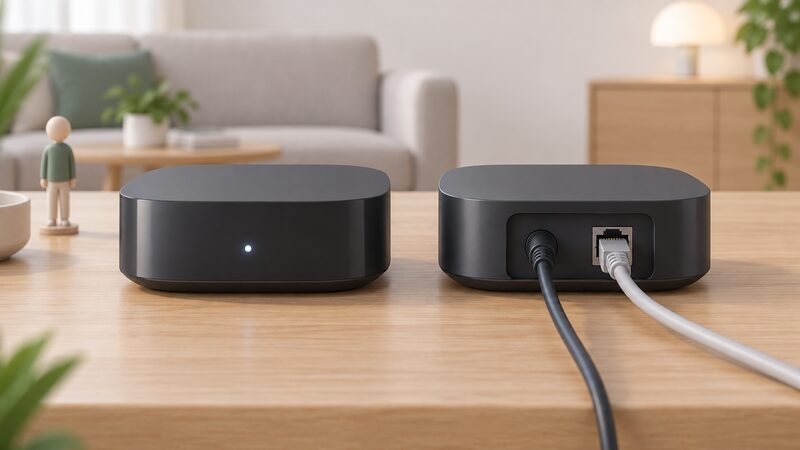
Setting it up in an Aqara home
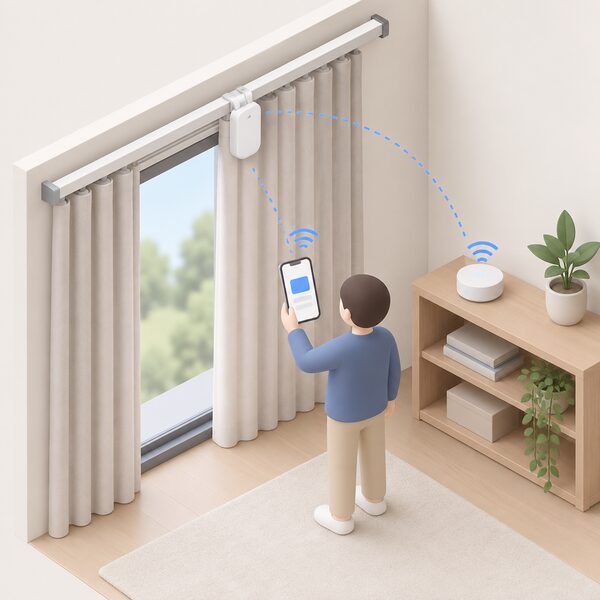
Setup follows the pattern Aqara uses across its range: the hub is added to the Aqara Home app, then accessories are paired to it. Aqara's accessory pages describe the same sequence in miniature. The Smart Curtain Controller is attached to the curtain rails and then paired with an Aqara hub8. The Radiator Thermostat E1 requires an Aqara Zigbee 3.0 hub7.
Some functions are mode-dependent. The Climate Sensor W100 needs Zigbee mode via the Aqara Home app for room-based control with the W200 thermostat hub4. The FP300's battery life can be extended by disabling certain sensors or decreasing the reporting interval, and that functionality also requires Zigbee mode through the Aqara Home app5. In other words, the app is not just a remote control; it is where the device configuration lives.
Automation is where the hub earns its place. Aqara's curtain controller can be programmed to close curtains when the home gets too hot and open them when it gets too cold, using Aqara's temperature sensor8. That is a small example of a general capability: sensors feed the hub, the hub runs the rule, and an actuator responds. For a household, the same pattern applied to heating, lighting or appliance loads is what turns a hub into an energy management tool.
What it means for household energy independence
A hub like this changes a household's position in a specific and limited way. It does not generate anything, and it does not reduce the amount of gas or electricity a home draws. What it does is put the control logic inside the home rather than in a supplier's or a manufacturer's cloud, and it lets devices from different makers work together without a separate controller for each.
The evidence on home energy management points the same way. Research on making home energy management work for consumers describes Matter as ensuring interoperability using Wi-Fi, Ethernet and Thread rather than relying on lots of separate control hubs3. Fewer hubs, and one set of rules, is the practical benefit.
The dependence that remains is real. The hub needs mains power and a home network. Remote access, app control and firmware updates run through Aqara's servers and the Aqara Home app. Local automation continues without the internet, but anything that reaches outside the home does not. That is the same cloud dependence that affects most consumer hubs, and it is covered in app subscriptions and cloud dependence in energy devices.
There is also a metering gap. The Hub M3 does not read your meter. A household wanting its own consumption data needs a separate route, whether that is a consumer access device, a clamp monitor or a smart plug with power monitoring. The options are compared in smart home hubs and controllers for energy use and smart plugs and appliance-level energy monitoring.
Aqara as a company: scale and UK availability
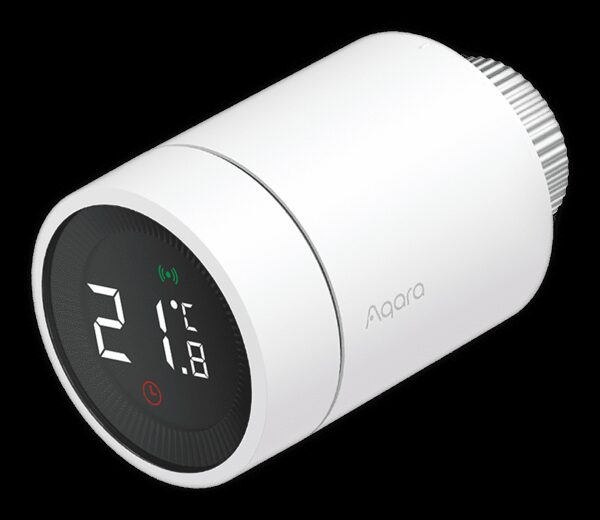
Aqara was founded in 2016 and describes itself as a leading smart home provider with offices in New York and Shenzhen6. It states that it serves more than 5 million customers worldwide and has opened more than 600 Aqara stores6. Its distribution partners cover the United States, EU, Southeast Asia, Korea and China6.
For UK buyers, the Hub M3 was announced with UK availability through Amazon brand stores and select retailers as part of its global release on 8 May 20241. Aqara also operates a UK shop at aqara-shop.co.uk, where it lists an Energy Saver Pack9. That pack contains a Radiator Thermostat E1, a Presence Sensor FP2, a Hub M2 and a Temperature and Humidity Sensor T19, which shows how Aqara bundles its hubs with the sensors that feed them.
The company has continued to release products into European and UK channels since. The Smart Lock U200 Lite, a Matter over Thread retrofit lock, was launched for European households including the UK on 17 June 202510. The Motion and Light Sensor P2, with Thread and Matter connectivity, was announced on 9 April 202411. Newer announcements, including the Smart Lock U400 at CES 2026 and the Camera Hub G350 and Doorbell Camera G400, were made for markets including the US, Canada, Australia, New Zealand and Singapore rather than the UK12.
Aqara's wider range is described in Aqara smart home: hubs, sensors and energy monitoring range, and a comparison with another budget ecosystem is at Aqara vs SONOFF for energy monitoring.
Sources13 cited
- Aqara releases Hub M3 to global markets, Aqara, 2024-05-08
- Aqara enhances user experience with expanded Matter device integration and advanced bridging capabilities, Aqara, 2025-04-09
- Making home energy management work for consumers, Energy Systems Catapult, 2026-02-12
- Thermostat Hub W200, Aqara, 2026-09-17
- Presence Multi-Sensor FP300, Aqara, 2026-02-26
- Aqara adds a smart radiator thermostat to its product portfolio, Aqara, 2023-06-08
- Radiator Thermostat E1, Aqara, 2025-06-04
- Curtain Controller, Aqara, 2024-06-03
- Energy Saver Pack, Aqara, 2023-12-05
- Aqara Smart Lock U200 Lite brings smart access control to more European households, Aqara, 2025-06-17
- Aqara expands Thread product portfolio with a new motion sensor, Aqara, 2024-04-09
- Aqara introduces UWB-powered Smart Lock U400 at CES 2026, Aqara, 2026-01-06
- Aqara enhances smart home security lineup with Camera Hub G350 and the Doorbell Camera G400 (Wired), Aqara, 2026-03-17
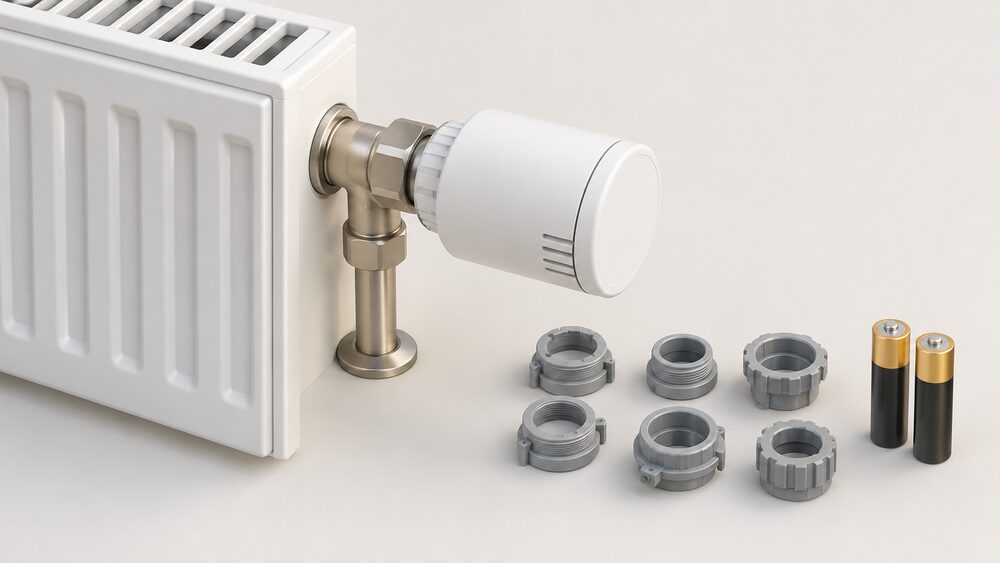 Aqara Smart Heating ControlsAqara radiator thermostats fit your existing valves and heat rooms one at a time, so your boiler stays as it is.
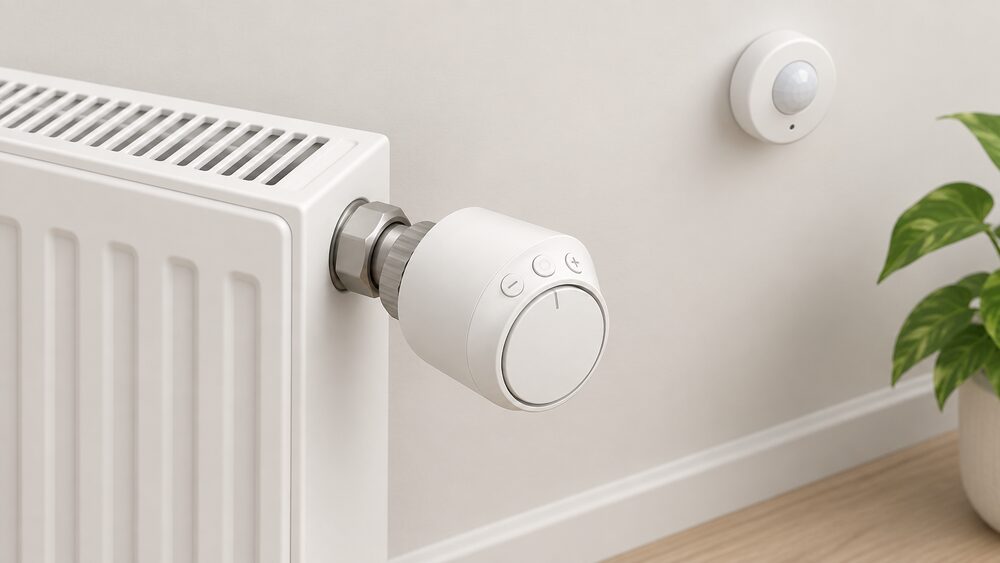 Aqara Smart HomeAqara sells smart home hubs, sensors and plugs that many UK households use to keep an eye on their energy.