In this guide
Aqara is a consumer smart-home manufacturer whose hubs, sensors, plugs and locks are sold internationally, including in the UK. Its UK-relevant hardware includes the Hub M3, released to global markets on 8 May 2024 as a Matter hub with edge computing, local automation and Matter bridging, available through Amazon brand stores1. In April 2025 the company added support for over 50 Matter device types on Aqara Home and rolled out Advanced Matter Bridging across its Matter controllers and bridges via firmware 4.3.42.
For a household building a home energy management setup, Aqara's role is the sensing and switching layer rather than the metering layer. The company's own product news covers locks, cameras, sensors and wall outlets, and its European Wall Outlet H2 EU was introduced across France, Germany, Italy, Poland and Spain3. The one Aqara device that appears in independent UK energy-adjacent testing is the Smart Home Radiator Thermostat E1, a smart radiator valve with GPS tracking, open window detection, frost protection and on-valve controls, most recently tested in November 20234.
That distinction matters for anyone expecting an Aqara purchase to deliver household energy independence. Aqara kit can automate heating and switch loads, and its Matter and Thread support means it can be controlled alongside other ecosystems, but it does not by itself measure whole-house consumption or reduce reliance on the grid or a supplier. What it changes is how much of a home's demand can be timed and trimmed automatically.
What Aqara offers in the UK
Aqara's UK presence is built on retail distribution rather than a national installer network. The Hub M3 was announced for global availability on 8 May 2024, including at Amazon brand stores in North America, Europe and Asia and through select retailers worldwide, with UK availability through Amazon brand stores1. The Smart Lock U200 Lite, a Matter over Thread retrofit lock, was unveiled for European households and made available in the UK and across Europe on 17 June 20255.
The wider European catalogue has expanded steadily. The Motion and Light Sensor P2, with Thread and Matter connectivity, was announced for Amazon brand stores across North America, Europe and Asia and through select retailers on 9 April 20246. The Wall Outlet H2 EU smart wall outlet was introduced across European markets including France, Germany, Italy, Poland and Spain on 21 May 20243. Newer announcements have been aimed at other regions: the UWB-powered Smart Lock U400 was announced at CES 2026 for the US, Canada, Australia, New Zealand and Singapore7, and the Camera Hub G350 and Doorbell Camera G400 (Wired) were announced on 17 March 20268.
For a UK householder, the practical position is that Aqara hardware is bought from general retailers and online marketplaces, configured through the Aqara Home app, and supported by the manufacturer rather than by a UK trade network. That is a different model from a heating or metering product installed and commissioned by a registered trade, and it shapes what happens when something fails.
Specifications: Matter, Thread and local automation
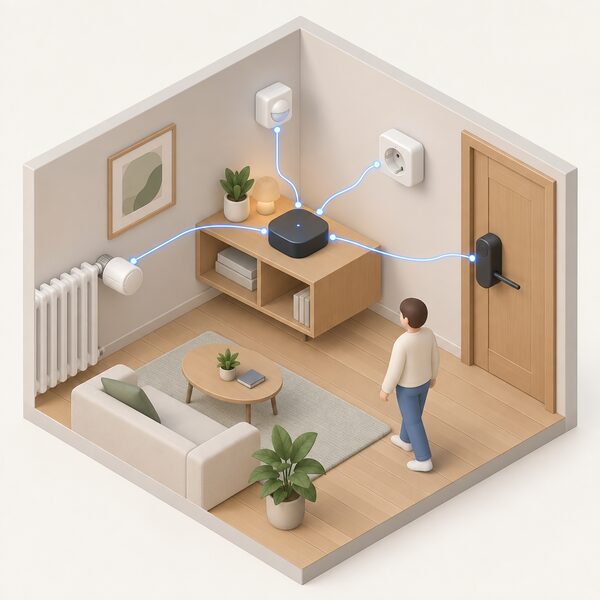
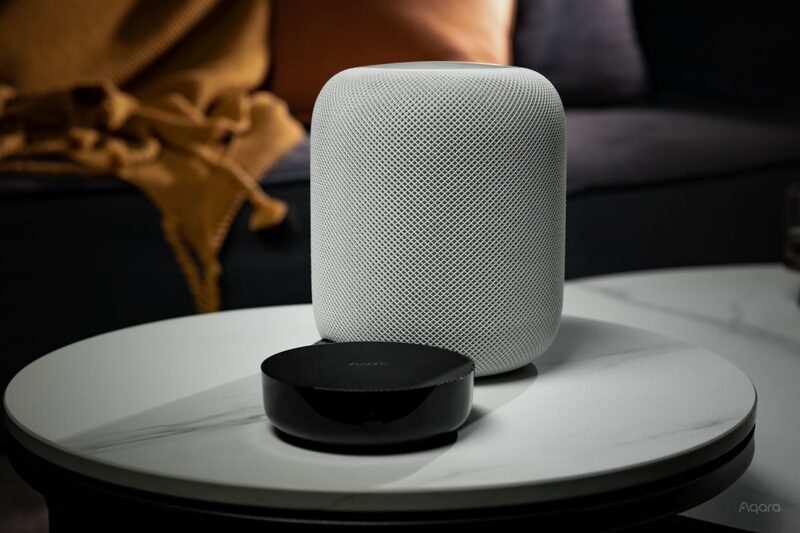
The Hub M3 is the centre of an Aqara installation. Aqara describes it as a next-generation Matter hub with edge computing, local automation and Matter bridging1. Edge computing and local automation mean some routines run on the hub itself rather than in a cloud service, which shortens the path between a sensor triggering and a device responding.
Matter support has widened since launch. In April 2025 Aqara announced support for over 50 Matter device types on Aqara Home and made Advanced Matter Bridging available across all its Matter controllers and bridges via firmware 4.3.4, with support for additional Matter device types expected to roll out later that month in Aqara Home 5.1.9 and firmware 4.3.52. Bridging is what allows devices that do not speak Matter natively to appear in a Matter controller, which is how a mixed Aqara and third-party setup can be managed from one app.
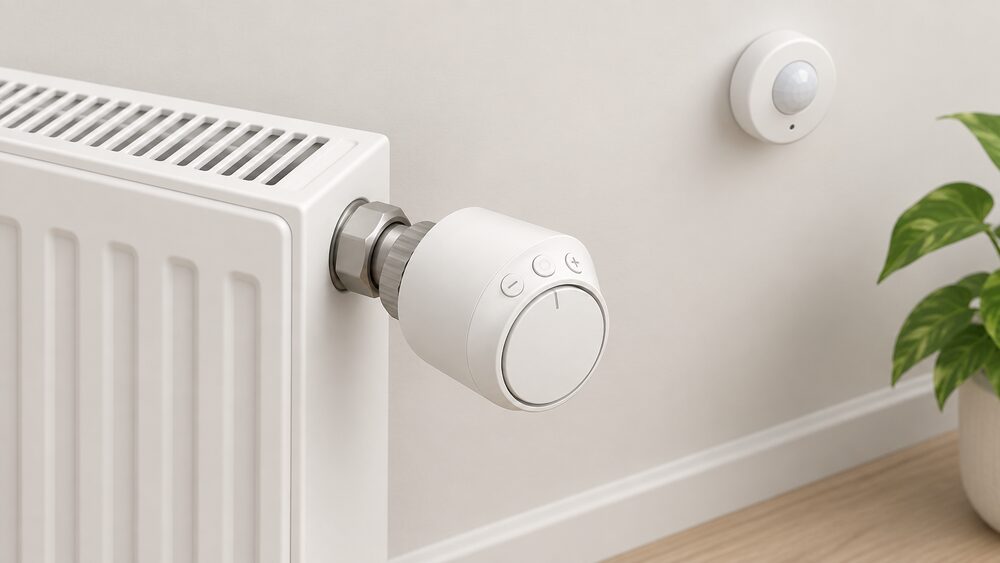
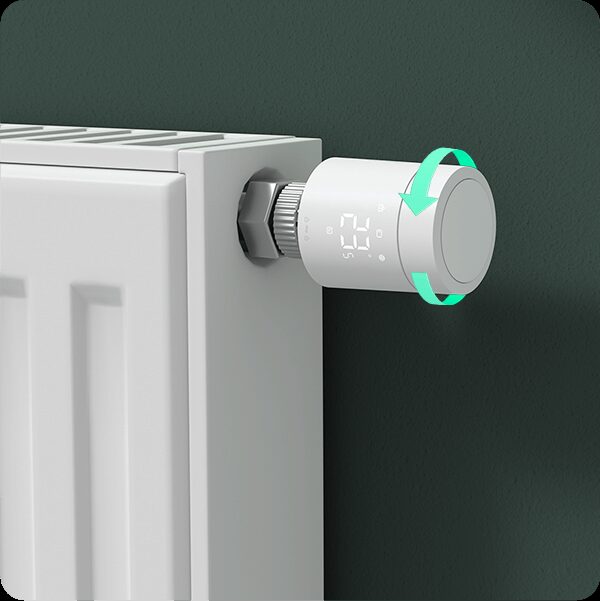
The radiator valve is the clearest energy-relevant specification. The Smart Home Radiator Thermostat E1 offers GPS tracking, open window detection, frost protection and on-valve controls, and was most recently tested in November 20234. GPS tracking allows heating to be reduced based on presence, open window detection cuts output when a window is open, and on-valve controls mean the schedule can be adjusted at the radiator without the app.
| Device | Type | Key specification | Date |
|---|---|---|---|
| Hub M3 | Matter hub | Edge computing, local automation, Matter bridging1 | 8 May 2024 |
| Motion and Light Sensor P2 | Sensor | Thread and Matter connectivity6 | 9 April 2024 |
| Wall Outlet H2 EU | Smart wall outlet | European market launch3 | 21 May 2024 |
| Smart Lock U200 Lite | Retrofit lock | Matter over Thread, UK and Europe5 | 17 June 2025 |
| Radiator Thermostat E1 | Smart radiator valve | GPS tracking, open window detection, frost protection, on-valve controls4 | Tested November 2023 |
Warranty and support: what the material covers
The available material does not set out Aqara's warranty terms, and no Aqara guarantee period, registration process or claim route is documented here. That is a gap a buyer should close before purchase, because warranty length and who administers it determine what happens if a hub or valve fails after a year or two.
The only extended guarantee documented in this material belongs to a different company and a different product class. Aira backs its heat pump system with a 15-Year Aira Guarantee and all-inclusive plan, with all components supplied by Aira, the whole system controlled through an integrated app, and the guarantee covering the installation9. That is a whole-system guarantee tied to a single supplier's components, which is a structurally different arrangement from buying individual smart-home devices from a retailer.
The support model also differs from a metering or heating product. Aqara devices are configured through the Aqara Home app, and firmware updates arrive through that route. Where a device depends on a hub for bridging or automation, the hub becomes a single point of failure for the routines built on it, and replacing it means rebuilding those routines.
What Aqara costs
No Aqara prices appear in the available material, so no Aqara price range can be given here. Aqara pricing is set by retailers and varies by product, by region and by whether a hub is needed to make a device useful, and it should be read at the point of sale.
The nearest comparable figure in the material is for a different brand in the same product category. The Habi Smart Thermostatic Radiator Head is listed at £31 at Screwfix4. That is a single retailer price for one competing valve, not an Aqara price and not a range, and it should not be treated as a proxy for what an Aqara radiator valve costs.
For context on what energy hardware generally costs, the figures that exist are old and relate to metering rather than smart-home devices. A 2001 Ofgem report, using cost estimates supplied by BEAMA, put a smart AMR/Net meter at £100 to £170 and assumed an average cost of around £150 per installation10. Those figures are a quarter of a century old and describe metering hardware, not consumer smart-home kit, so they are useful only as a historical marker of how metering costs were once assessed.
Where a household is budgeting for a full monitoring and control setup, the cost of the Aqara layer sits alongside the cost of whatever is doing the actual measurement. A wider treatment of what monitoring and management costs is set out in home energy management cost.
Company status and where the products come from
Aqara is an international manufacturer, not a UK company. Its product announcements are made for North America, Europe and Asia together, and its launches are staged by region: the Hub M3 and Motion and Light Sensor P2 for Europe and beyond in 20241, the U200 Lite for European households including the UK in June 20255, and the U400, Camera Hub G350 and Doorbell Camera G400 for other markets in 20267.
That structure has practical consequences. Firmware, app features and Matter support arrive on the manufacturer's schedule, and the April 2025 bridging rollout is an example of a capability reaching existing hardware through a firmware update rather than a new purchase2. It also means regional availability varies: a device announced for the US, Canada, Australia, New Zealand and Singapore is not necessarily sold in the UK7.
"An energy smart appliance (ESA) is an appliance, such as an electric vehicle charging point or a heat pump, that is capable of increasing or reducing its electricity demand in response to signals received remotely from a third party"
The company's status is not in question in the material: no administration, insolvency or failure is recorded for Aqara. That is worth stating plainly because the energy sector has a long tail of failed suppliers and administrators, and a household weighing a multi-device purchase is effectively weighing whether the manufacturer will still be issuing firmware and app updates in five years. Nothing in the material suggests Aqara will not, and nothing in it guarantees that it will.
What Aqara means for energy independence
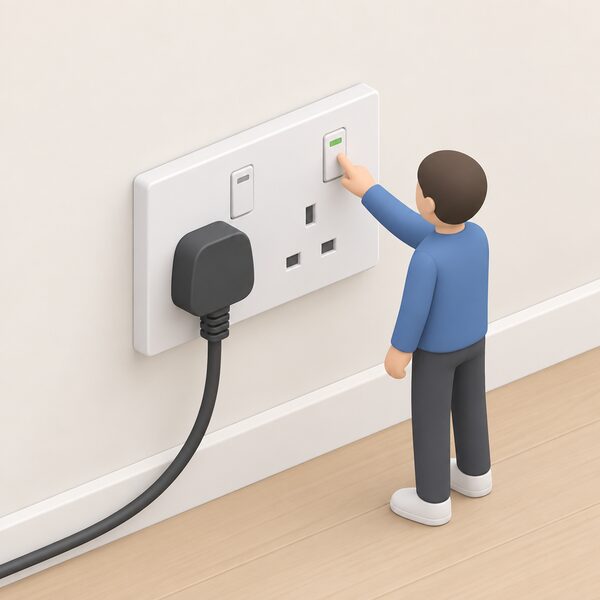
Aqara's contribution to a household's energy independence is automation, not generation or storage. The devices switch loads, sense occupancy and adjust heating, which changes when and how much energy a home uses. They do not produce electricity, store it, or reduce the number of suppliers a household depends on.
The dependence that remains is layered. Aqara devices depend on the manufacturer for firmware, on the Aqara Home app for configuration, and on a broadband connection for remote access and updates. The Hub M3's edge computing and local automation reduce the cloud dependency for routine operation1, but they do not remove it, and a hub that stops receiving updates eventually stops being a reliable bridge.
There is also a regulatory frame around devices that adjust demand automatically. Government material defines an energy smart appliance as an appliance, such as an electric vehicle charging point or a heat pump, that is capable of increasing or reducing its electricity demand in response to signals received remotely from a third party11. A separate definition describes an ESA as an internet-connected appliance that can adjust its electricity usage automatically based on signals received remotely13. Energy smart appliances can be switched on or off remotely but only if the consumer gives consent, and the legislation in question would not change that11.
The wider smart-meter context is that half of UK properties now have a smart meter installed14, and the data those meters provide puts households in control of their energy usage, allowing energy-saving steps that reduce CO2 emissions15. Aqara devices sit downstream of that: they act on the behaviour the data reveals. Official guidance for self-build homes recommends installing smart systems that control lighting, heating and cooling based on occupancy and time of day16, which is precisely the function an Aqara hub, sensor and valve combination performs.
For a household, the honest summary is that Aqara is a control layer. It can make a home's demand more responsive and its heating more closely matched to occupancy, and it can integrate with other ecosystems through Matter and Thread. It cannot make a home self-sustaining, and it adds a manufacturer, an app and a broadband connection to the list of things the household relies on. How that trade-off compares with other ecosystems is set out in Aqara vs SONOFF for energy monitoring, and the hub itself is covered in Aqara Hub M3.
Sources16 cited
- Aqara releases Hub M3 to global markets, Aqara, 8 May 2024
- Aqara enhances user experience with expanded Matter device integration and advanced bridging capabilities, Aqara, 9 April 2025
- Aqara introduces smart wall outlet to the European market, Aqara, 21 May 2024
- Best smart radiator valves, Which?, September 2026
- Aqara Smart Lock U200 Lite brings smart access control to more European households, Aqara, 17 June 2025
- Aqara expands Thread product portfolio with a new motion sensor, Aqara, 9 April 2024
- Aqara introduces UWB-powered Smart Lock U400 at CES 2026, Aqara, 6 January 2026
- Aqara enhances smart home security lineup with Camera Hub G350 and the Doorbell Camera G400 (Wired), Aqara, 17 March 2026
- Aira, Which? Trusted Traders, 17 September 2026
- Smart metering report, Ofgem, September 2001
- Energy smart appliances, House of Commons Library, 20 September 2026
- Energy smart appliances, House of Commons Library, 26 September 2023
- Energy smart appliances and load control, House of Commons Library, 20 September 2026
- Smart meters, Parliamentary Office of Science and Technology, 7 June 2026
- Smart meters and decarbonisation, Smart DCC, 2026
- Self-build homes: sustainability, Planning Portal, 2026
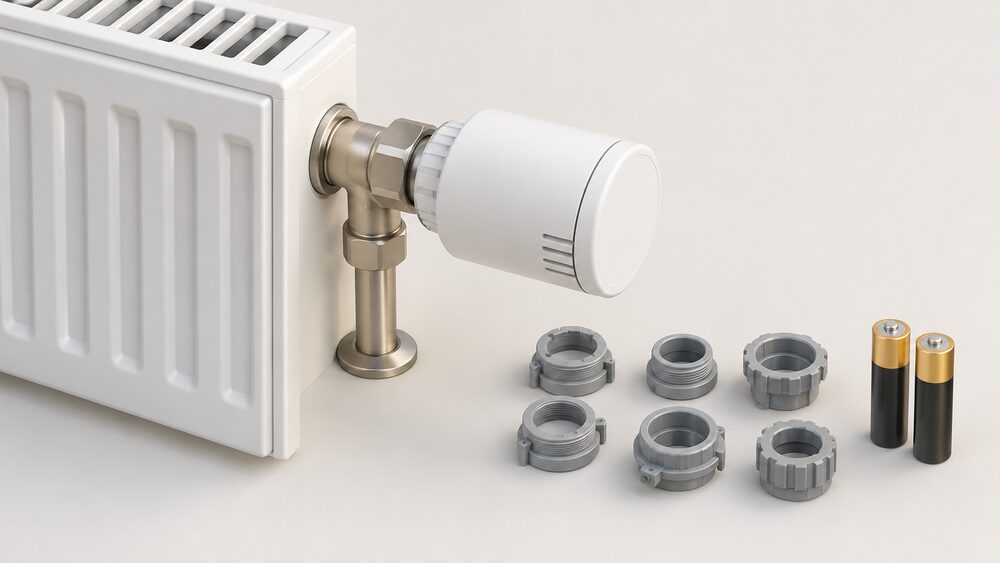 Aqara Smart Heating ControlsAqara radiator thermostats fit your existing valves and heat rooms one at a time, so your boiler stays as it is.
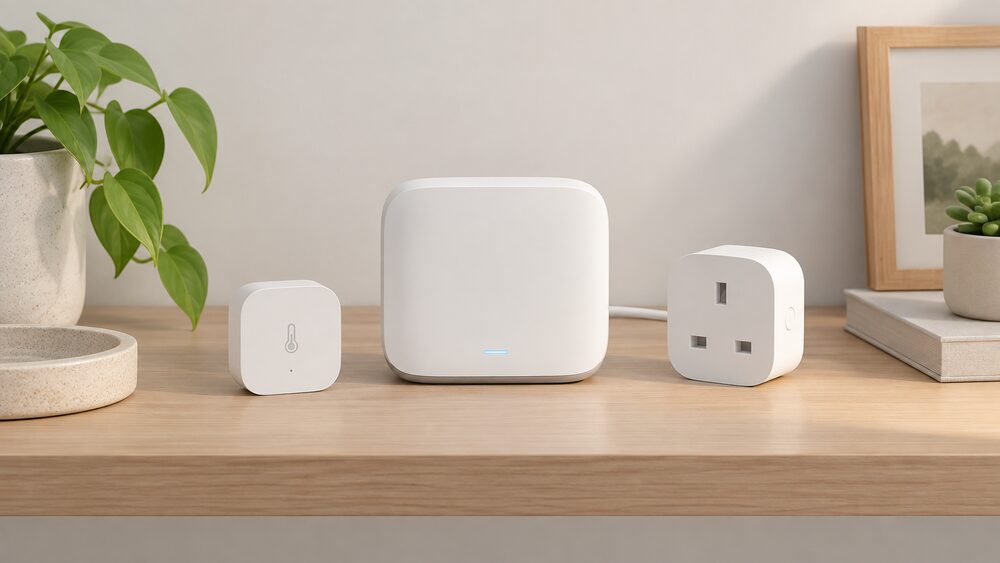 Aqara Hub M3 Smart Home ControllerFlagship Aqara hub householders search for by name as the centre of their monitoring setup.