In this guide
Heating Controls: The Full UK Guide to Thermostats, TRVs and Zoning
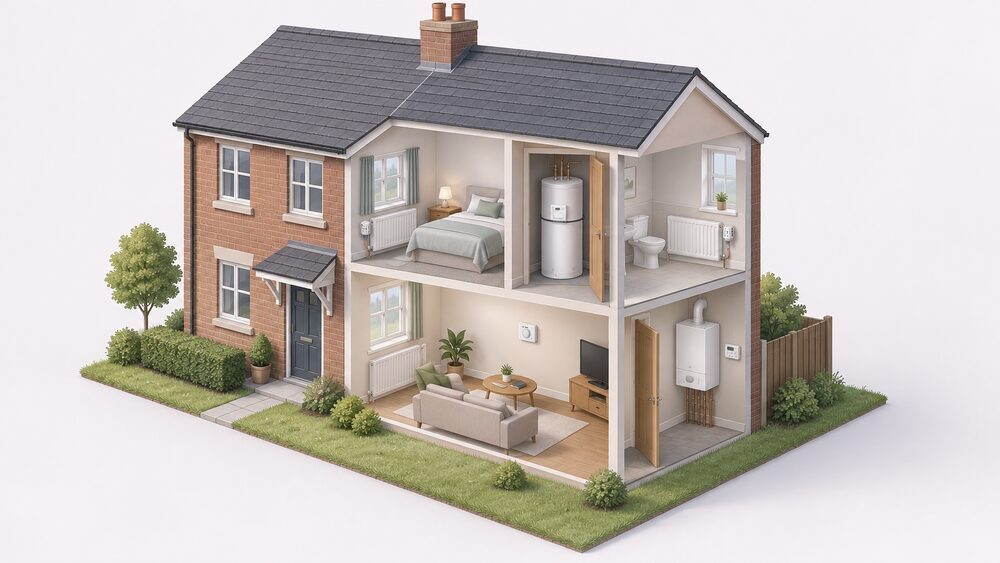
Heating controls decide when a heating system runs and how warm each room gets. For a home with a boiler and radiators, the accepted minimum set is a programmer (time control), at least one room thermostat, and thermostatic radiator valves (TRVs) on the radiators. A cylinder thermostat is added where there is a hot water cylinder1. Energy Saving Trust puts the cost of fitting that full set, where a home has no controls at all, at around £600, and the saving at £100 a year in Great Britain and £110 in Northern Ireland for an average semi-detached house3.
Controls do not generate or store any energy. They reduce the amount a household has to buy, which is the cheapest route to lower dependence on a gas or electricity supplier. The limits are equally plain. A control can only work with the heat source and radiators it is attached to, its placement matters, and smart versions add a dependence on Wi-Fi, an app and the maker's continued support.
This page covers each component in turn, the rules in the four nations, the costs and savings, and the places where controls fall short. Links lead to the detailed pages on each topic.
What heating controls do, and what a full set contains
Home Energy Scotland describes the purpose simply: heating controls help control when the heating system operates and the temperature in each room1. Cadent, the gas network, lists the same full set as Energy Saving Trust: a programmer, thermostatic radiator valves and a room thermostat5. Each part does a different job, and none of them substitutes for another.
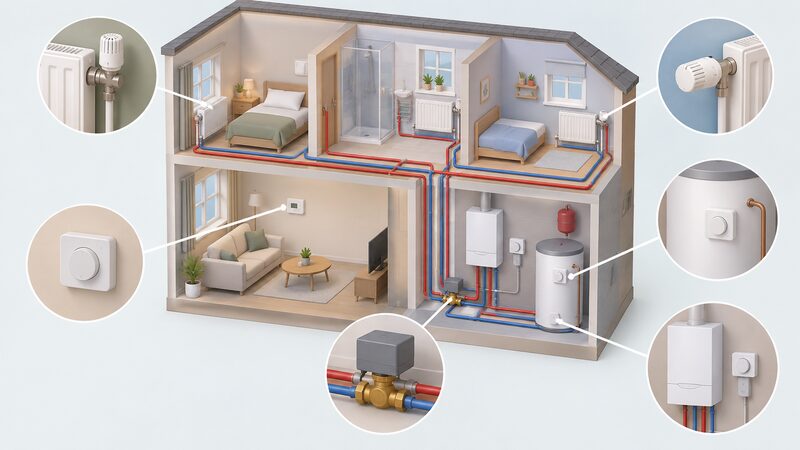
| Control | What it does | Where it sits |
|---|---|---|
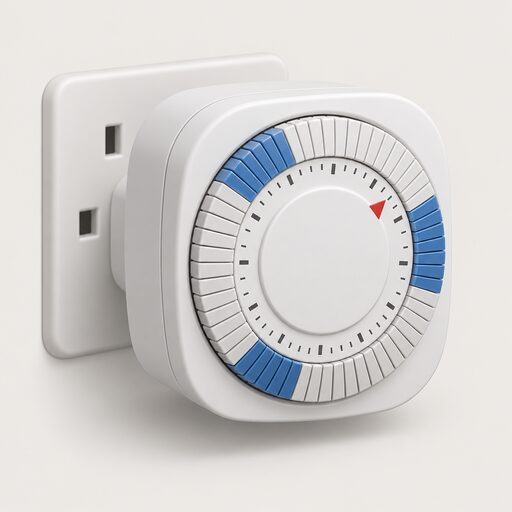
| Programmer or timer | Sets the times heating and hot water come on and off | Near the boiler, or within a smart thermostat |
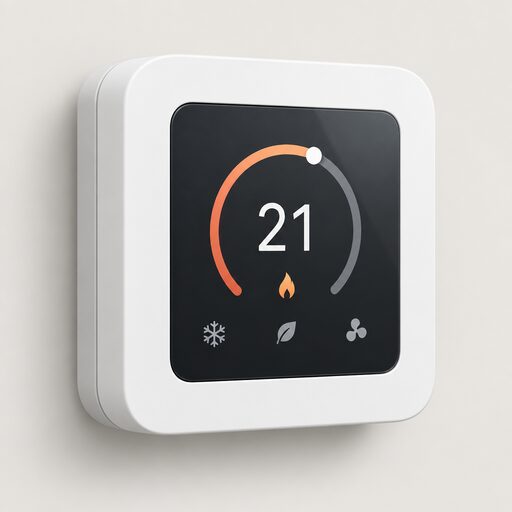
| Room thermostat | Stops heat being called for once a set air temperature is reached | A wall or stand in a living space |
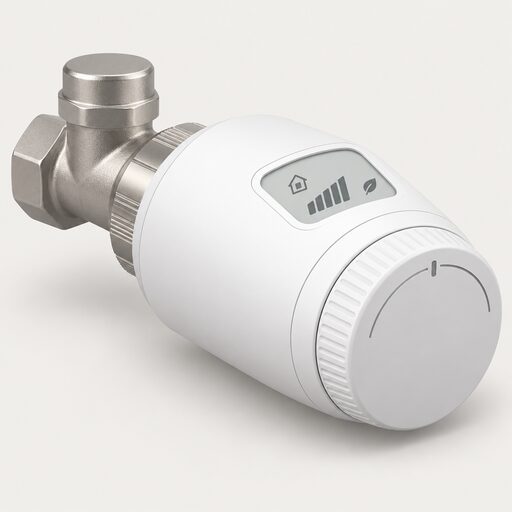
| TRV | Limits the flow of hot water through one radiator according to room temperature | On each radiator, except in the thermostat's room |
| Cylinder thermostat | Holds stored hot water at a set temperature | On the hot water cylinder |
| Zone controls | Give separate time and temperature control to parts of the house | Motorised valves or networked radiator controls |
The building regulations set the baseline. In England and Wales, Approved Document L says that in new dwellings, or when a heat generator such as a boiler is replaced in an existing dwelling, each room should be provided with thermostatic room controls able to separately adapt the heating output in each room served4. For heat pump systems, the requirement is that the system has adequate controls.
Electric heating has its own arrangement. For electric panel heaters, the approved document asks for time and temperature control giving separate control of each room or each appliance6. Energy Saving Trust notes that electric heating can be controlled heater by heater or centrally7. Storage heaters on tariffs such as Total Heat with Total Control or Comfort Plus have historically been switched by a radio teleswitch signal, which tells the heaters when to charge and the hot water when to switch on8. The pages on electric heating controls, storage heater controls and the radio teleswitch switch-off cover these in full.
Controls are one of the commonest retrofit measures. Ofgem's Energy Company Obligation data, as of 11 August 2026, records 514,780 heating control measures notified9.
Room thermostats: how they work and where they go

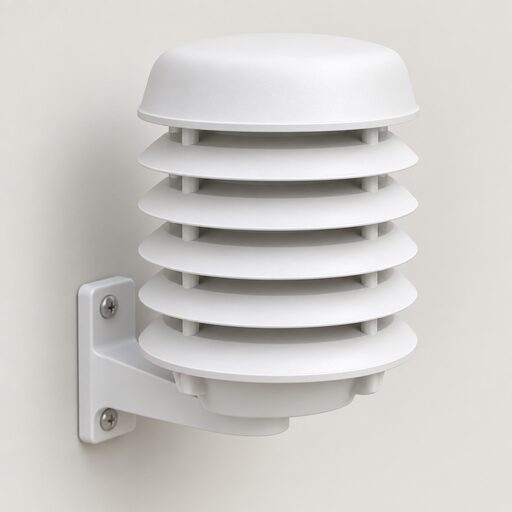
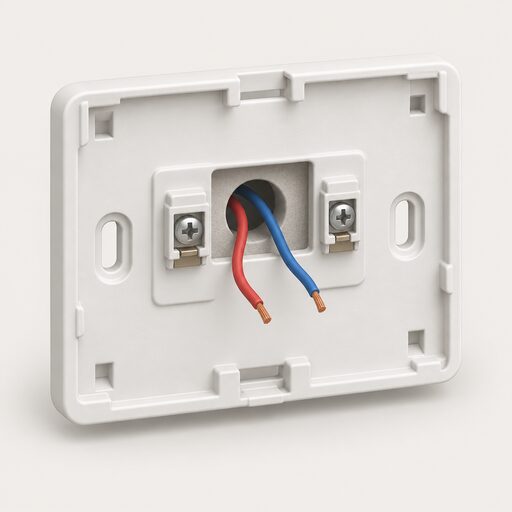
A room thermostat measures the air temperature around it and stops the system calling for heat once the set temperature is reached. Because one sensor usually speaks for the whole house, its position determines how the entire system behaves.
The placement guidance is consistent across sources:
- Drayton, a controls maker, says a single thermostat controlling a whole house should be central, in a room that reaches the required temperature last, in free space away from heat sources, and not covered by furniture or curtains10.
- The heating oil trade body UKIFDA describes the centre of the home on an interior wall11.
- Uswitch adds that where one room is given extra local heating, the thermostat should not be in that room, otherwise it will disrupt control of the rest of the house. A wireless thermostat can simply be moved out12.
The reasoning is the same in each case. A thermostat only reads accurately when room air can circulate freely around it. A lamp, an appliance, a draught from a door or direct heat from a radiator makes it report a temperature the rest of the house does not share.
Several makers go further and suggest a thermostat in every room, which is the normal arrangement for underfloor heating, where each room loop usually has its own. That topic has its own page on underfloor heating controls. For conventional radiator systems, room thermostats covers types, wiring and siting, and wired versus wireless thermostats covers that choice.
In independence terms, a basic room thermostat is a fully local device. It needs no internet connection, no account and no manufacturer's server to do its job.
Thermostatic radiator valves: room-by-room control from around £10
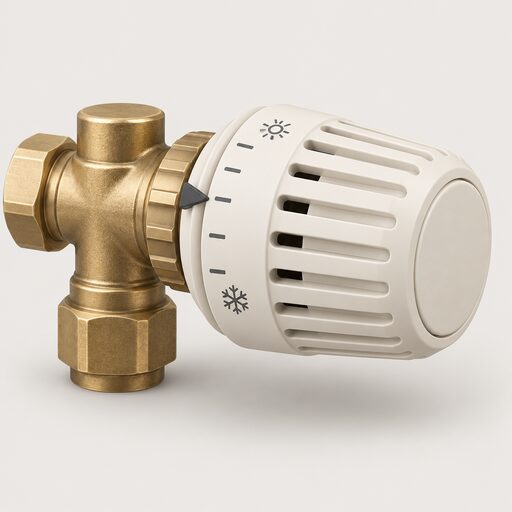
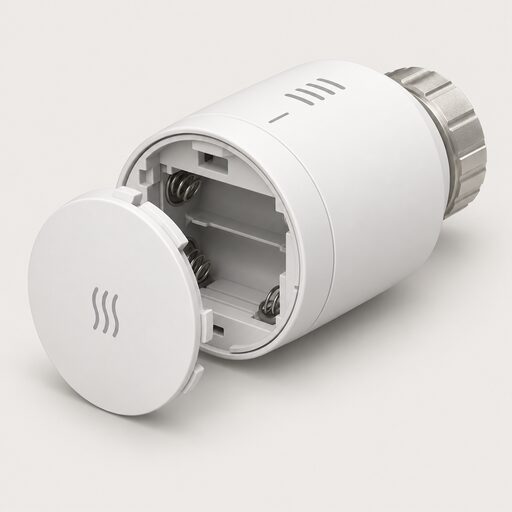
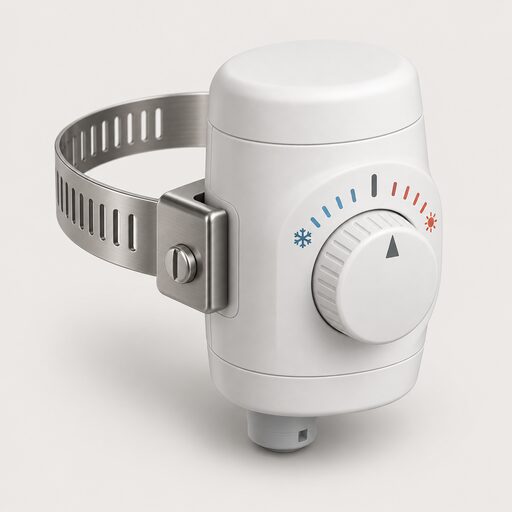
A TRV controls the temperature of a room by opening and closing automatically to regulate the flow of hot water through the radiator it is fitted to. Ofgem's ECO4 guidance notes two defining points: TRVs can be manually adjusted to different settings, and they have no communication with the boiler13. A TRV can therefore limit a room's temperature, but it cannot switch the boiler off. That is why a room thermostat is still needed, a requirement explained on the boiler interlock page.
What TRVs cost and save
| Item | Figure | Source |
|---|---|---|
| Manual TRV, entry price | starting at around £10 | Low Carbon Hub, August 202614 |
| A normal TRV | about £15 | Which?, September 202515 |
| TRVs on all radiators, programmer and thermostat already present | around £370 installed | Energy Saving Trust, February 20262 |
| Saving from adding TRVs to such a system | £30 a year in GB, £40 in NI | Energy Saving Trust, September 202616 |
| Turning down valves outside the living room by one setting | an additional £78 per household per year | Nesta, September 202317 |
The gap between the valve price and the installed price is labour, because fitting a TRV to an existing radiator normally means draining that part of the system. The savings figures differ because they measure different things. Energy Saving Trust's £30 is the effect of adding the valves. Nesta's £78 is the modelled effect of using valves already fitted to turn down unused rooms. Official guidance from the Welsh Government makes the same point about use, that lowering TRVs can reduce demand in rooms that are not in use.
The rule for new radiators
Planning Portal guidance for England, and the equivalent Welsh Government guidance, state that any new radiator installed will require a TRV, and that placing TRVs on existing radiators is encouraged18. The detail is on the page about TRVs and building regulations.
What the numbers on the head mean
The numbers are not degrees. One maker's datasheet, for EPH Controls valves, gives the calibration below, with a range of 7 to 28˚C19.
| Setting | * | 1 | 2 | 3 | 4 | 5 |
|---|---|---|---|---|---|---|
| Approximate room temperature | 7˚C | 12˚C | 16˚C | 20˚C | 24˚C | 28˚C |
The frost setting lets the valve open if the temperature falls below 7°C. The same datasheet recommends leaving valves fully open at position 5 when the heating is off for long periods, and states that differential pressure should not exceed 0.6 Bar to avoid flow noise, with a differential bypass valve fitted. Other makers' scales may differ. See thermostatic radiator valves, do TRVs save energy and smart TRVs for more.

Programmers and timers: heat only when the home is occupied
A timer or programmer controls when the heating comes on and off2. Age UK describes it as letting a household control when heating or hot water turns on and off each day20. On a conventional system the programmer sets the times and the thermostat then decides, within those times, whether heat is needed.
Cadent's winter advice gives the usual pattern: heating set to come on just before getting up and to switch off after going to bed. In very cold weather, it advises extending the time rather than turning the thermostat up21.
Timers are not confined to boilers:
- Storage heaters. Older models use input and output dials. Energy Saving Trust notes that digital storage heaters include a programmer or timer for setting specific on and off times.
- Heat pumps. Approved Document L paragraph 6.39 requires a timer or programmer for space heating (see the heat pump section below).
- Smart controls. Energy Saving Trust notes that some smart heating controls know when the household is away, and may adjust the heating or send a message so it can be switched off from an app22.
Home Energy Scotland's guidance for homes without frost protection shows the programmer's protective role: setting the heating thermostat to 10°C with the programmer on, or set to 24 hours, to keep pipes from freezing.
More detail is on heating programmers and timers, how to use a heating programmer, heating schedules and setback and leaving the heating on constantly. Hot water timing is on the hot water controls page.
Smart thermostats: app control, learning and geofencing

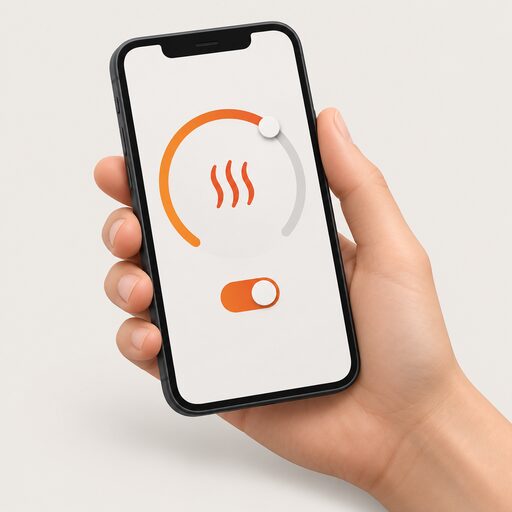
A smart thermostat combines the programmer and room thermostat in one connected device. Smart Energy GB lists what a model may offer, depending on the product: app control, voice control, hot water settings, location-based heating, reminders or alerts, open window detection, routine learning and heating-use tracking23. Energy Saving Trust adds that most link to a phone, tablet, laptop or smart speaker, and that some interpret inputs such as a preferred room temperature, learn from what the household does, and react to other data such as weather forecasts22.
Three limits are documented:
- No view of whole-home energy use. Smart Energy GB points out that smart thermostats track heating only, so they cannot show electricity and gas use the way a smart meter display does. It also notes that the device and the installation may both have to be paid for24.
- Compatibility. Smart Energy GB says compatibility with the boiler and heating system is to be checked before buying23. Hive states that most smart thermostats work with gas and electric boilers and heat pumps, but wet underfloor heating and very old wired setups may need relays, actuators or a compatible receiver25. Hive lists Honeywell SmartFit Controls and the Vaillant VR 65 Control Centre as systems its thermostat cannot work with26.
- Disputed savings. Percentage saving claims for smart thermostats vary widely and come largely from makers. The published figures disagree with each other, ranging from approximately 10 to 12% at the low end to up to 25% at the high end. No official figure settles the question, which is examined on do smart heating controls save money.
For energy independence the trade is clear. Remote control, geofencing and learning depend on Wi-Fi, a phone app and the maker's servers. Vaillant notes that smart thermostats can also be adjusted manually using the device's built-in controls, which is the fallback if the connection fails. The pages on local control and cloud dependence, security, data and product support, subscriptions and app charges and boiler compatibility cover these dependencies. The general explainer is smart thermostats.
Zoning: one zone or two, and where 150m2 comes in
Zoning means giving parts of a house separate time and temperature control. The 150m2 floor area threshold appears in the rules of all the nations that use it, but the rules are not identical.
| Nation | Rule | Source |
|---|---|---|
| England | New dwellings of 150m2 or greater with wet heating: a minimum of two independently controlled heating circuits | Approved Document L6 |
| Wales | The same provision, in the April 2026 Approved Document L Volume 1 | Welsh Government4 |
| Scotland | Dwellings over 150 m2: at least two space heating zones with independent time and temperature controls. For oil-fired wet systems at or below 150 m2, a single zone with independent time control is permitted, with TRVs outside reference rooms or electronic temperature control | Domestic Building Services Compliance Guide 202227 |
| Northern Ireland | Central heating systems should have a minimum of two independent heating zones, each controlled by a room thermostat, with TRVs on radiators in rooms without a thermostat, except bathrooms | Technical Booklet F1: 202228 |
Northern Ireland's booklet, as quoted, states its two-zone minimum without a floor area threshold. Drayton summarises the practical position for householders: one heating zone, meaning one thermostat, is adequate under 150 square metres, and two zones with two thermostats above it10.
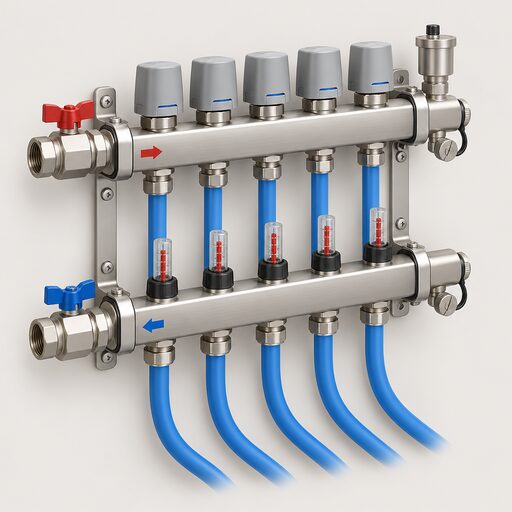
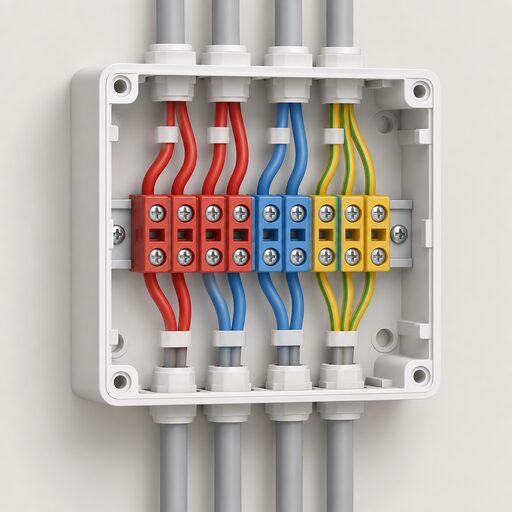
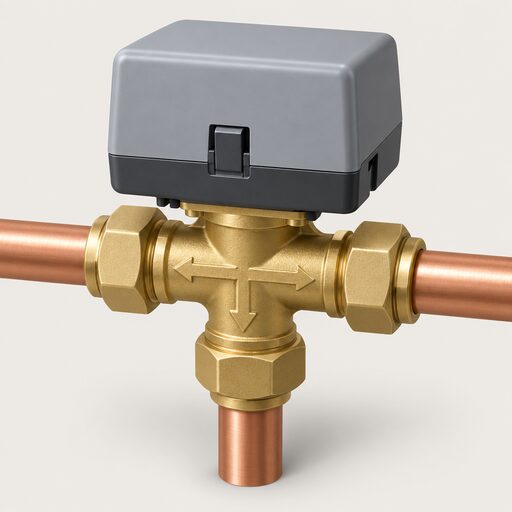
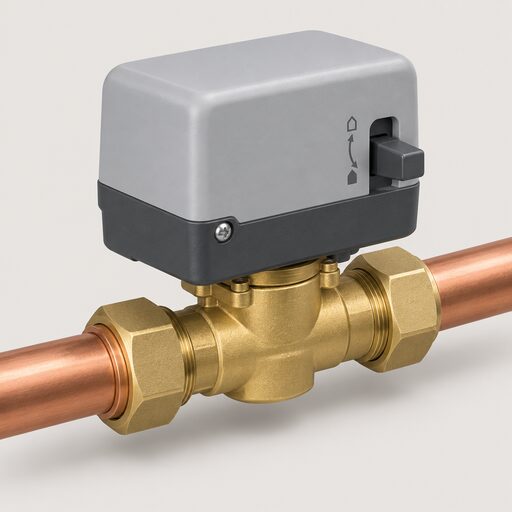
Zones do not have to be created with pipework and motorised valves. BEAMA, the controls trade association, notes in its Part L guidance that for dwellings over 150m2 with a gas or oil combination boiler, separate heat zones could also be achieved with individual networked thermostatic radiator controls and a central smart control that offers zoning29. That is the basis of the smart TRV systems sold for retrofit.
The plumbing and wiring side is covered on heating zones and heating control wiring. The rules are set out nation by nation on building regulations for heating controls, and the radiator-level route is compared on smart TRVs versus a smart thermostat.
What a full set costs and saves: around £600 installed, £100 a year

Energy Saving Trust gives two installed prices, dated February 2026: around £600 for a programmer, thermostat and TRVs on all radiators where no controls exist, and around £370 for TRVs alone where a programmer and thermostat are already in place2. Its retrofit cost summary uses the same £600 for heating controls in a semi-detached home. No VAT position is stated with these figures. They are national estimates, not quotations, and Energy Saving Trust recommends quotes from at least three installers.
| Scenario | Annual saving | Source |
|---|---|---|
| Full set, average semi-detached house | £100 in GB, £110 in NI | Energy Saving Trust, August 20263 |
| Full set where there were previously no controls | £110 | Cadent5 |
| Adding TRVs where programmer and thermostat exist | £30 in GB, £40 in NI | Energy Saving Trust, September 202616 |
Setting the £600 cost beside the £100 annual saving, both from Energy Saving Trust, shows that a full set takes several years to pay for itself at current estimates. The saving depends entirely on the controls being used. Home Energy Scotland reports research showing that many people do not fully understand their controls and many simply do not use them. An unused programmer saves nothing.
The one degree question
The saving from turning a thermostat down by one degree is the most quoted figure in this field and the least consistent:
- Energy Saving Trust: £120 in GB and £80 in NI, for a move from 22°C to 21°C2
- Which?: between £85 and £90 a year in a typical home30
- Smart Energy GB, citing Energy Saving Trust: around £60 a year
- nidirect: as much as 10 per cent on heating bills31
- Chartered Institute of Plumbing and Heating Engineering: around 7% on bills for a move from 20°C to 19°C
The figures differ because the starting temperature, the energy prices and the publication dates differ. They are estimates of the same effect and not competing facts. A full breakdown is on how much heating controls cost and how controls affect an EPC rating.
Temperatures and settings: 18 to 21°C by day, 16 to 17°C at night
Energy Saving Trust's guidance is to set the room thermostat to the lowest comfortable temperature, which for most people is between 18°C and 21°C2. Cadent gives the same 18 to 21°C range for keeping safe and well5.
Night-time figures come mainly from makers. Netatmo suggests 19 to 20°C during the day and 16 to 17°C at night32. No official source gives a night setback figure, and the closest independent evidence points the other way: the Warm Home Prescription pilot aimed for a main living area at 21°C by day and a bedroom at 18°C at night. The daytime guidance also differs slightly between documents, with one giving 18 to 21°C and another 19 to 21°C.
These ranges assume healthy adults. The Warm Home Prescription pilot, reported by National Energy Action, enabled vulnerable households to heat their main living area to 21°C by day and their bedroom to 18°C at night33. Higher minimums may apply for older people and those with health conditions.
Other settings in the guidance:
- Hot water cylinder thermostat: between 60°C and 65°C, according to Energy Saving Trust2
- Frost protection where there is none built in: heating thermostat at 10°C with the programmer on
- Storage heaters: National Energy Action advises setting the input according to the next day's expected temperature, and the output to its lowest or frost setting overnight
Detailed pages: thermostat temperature settings, what temperature each room should be and what the settings on heating controls mean.
Where controls fall short: compatibility, placement and the TRV-thermostat rule

The best documented limit is the clash between a TRV and a room thermostat in the same room.
The approved document adds that radiators in the thermostat's room should have manual controls. Which? explains the reason: the TRV and the thermostat will compete34. Hive spells out the consequence. If the TRV closes the radiator before the thermostat reaches its target, the thermostat may never be satisfied and the heating could stay on. Worcester Bosch gives the same instruction.
Other limits:
- Rooms where room controls are not feasible. Approved Document L accepts that thermostatic room controls may not be technically feasible in dwellings with low heat demand, for example less than 10W/m2, or with buffer zones of high thermal mass4.
- Sensor position on smart TRVs. SONOFF, a maker, states that the built-in sensor sits near the radiator pipe and tends to read higher than the actual room temperature while heating is running.
- Hybrid systems. The Heating and Hotwater Industry Council reports that there are currently no agreed control specifications for hybrid systems, and hybrid controls are not included in standards.
- Human factors. Controls that are not understood are not used35.
- Flow temperature comes second. Energy Saving Trust advises getting heating controls right before attempting to change a boiler's flow temperature.
A control also cannot correct a poorly balanced or air-locked system. Fault-finding is covered on heating control faults, and the question of whether a boiler's own dial is enough is answered on boiler built-in thermostats.
Installing and upgrading: who fits controls and what applies
Controls can be upgraded or installed independently of the boiler1. A boiler lasts around 15 years according to Planning Portal, so controls are often replaced on a different cycle from the heat source.
The regulatory position, from official guidance:
- Planning permission is not normally required to install or replace a boiler or heating system if all the work is internal.
- A building control application may not be required when a heating or hot water system is replaced. If one is required, it may not be necessary to apply before the work.
- Where an existing system has been altered or replaced, the person who last worked on it is responsible for its safe running and should issue a certificate showing that the necessary checks have been carried out36.
Servicing and repair of heating equipment is not covered by building regulations, according to OFTEC, which adds that it should always be done by a competent person. Energy Saving Trust suggests installers certified with a scheme like TrustMark2. On self-fitting, products differ. Which? lists the Google Nest Smart Thermostat E as self or professional installation, and Hive recommends a local tradesperson. Warranty consequences are discussed on DIY thermostat installation and warranty.
Routine upkeep matters as much as hardware. Radiator bleeding advice varies from preferably every few months (Uswitch) through about once a year before winter (Smart Energy GB) to every few years (Which?). Uswitch gives the warning sign as needing to bleed one or more times a month, or bleeding having no effect37. See installing and replacing heating controls, controls in rented homes and controls by home type.
Controls with heat pumps and low-temperature radiators
Heat pump controls follow different logic from boiler controls. BEAMA's heat pump controls guide quotes Approved Document L paragraph 6.39: the heat pump should have external controls that include weather compensation or internal temperature control, and a timer or programmer for space heating38. Nesta describes the division of labour this creates. The controller adjusts heating schedules, flow temperatures and hot water settings, while the thermostat signals when heating is needed39.
| Aspect | Boiler system | Heat pump system |
|---|---|---|
| Main control logic | Room thermostat switches the boiler on and off | Controller sets flow temperature, often by weather compensation |
| Radiator surface temperature | Hot | Warm, not as hot as with a gas boiler |
| Pattern of heat | High heat for short periods | Comfortable warmth over a longer period |
The heat pattern in the last two rows is as described by Intergas, a heating maker. It adds that existing radiators can work with air source heat pumps in many cases, and that often only a few smaller radiators need upgrading. Energy Saving Trust confirms that heat pumps can work with radiators or underfloor heating. Low Carbon Hub notes that a heat pump works best in a well-insulated home with radiators sized for low-temperature heating.
Two control points are specific to heat pumps. Tight thermostat or TRV bands can cause rapid on-off cycling, which Homey, a smart home platform maker, illustrates with an example of ±0.2°C. A hybrid system has a dedicated controller for all heat sources, according to MCS. The SAP product database notes that where a low-temperature heat generator also provides hot water, controls must prevent it supplying hot water and space heating simultaneously.
A heat pump moves a home off gas but increases its reliance on electricity and on a well-configured controller. Related pages: weather compensation, load compensation and modulation, OpenTherm, TRVs and heat pumps and controls with time-of-use tariffs.
Brands and ranges sold in the UK

The brands below are described from their makers' own statements and are listed in no order of merit. Warranty terms are the makers' claims as published, and conditions apply.
| Brand | What the maker states | Stated warranty |
|---|---|---|
| Wiser (Drayton) | Smart thermostats and radiator thermostats. Room thermostat control accuracy below 0.6°C at 4°C/hour, wall bracket or desk stand | 3 year warranty40 |
| Hive | Smart thermostat and radiator valve | 1-year standard warranty |
| tado° | Founded in Munich in 2011. Features include geofencing and adaptive heating | 24 months, on purchases from tado.com or an authorised retail partner |
| Netatmo | Smart thermostat in wired and wireless models, works with conventional on/off boilers | Not stated |
| Honeywell Home via Lightwave | Wireless thermostat and radiator valve | 2 years, extendable to lifetime with a paid membership |
| Ideal Heating | Thermostats and timers for its boilers and heat pumps. Halo wireless thermostat with app and smart speaker control | Halo Combi RF: 2 years (2020 brochure) |
| Myson | Control packs for standard system types. Unisenza Plus underfloor heating thermostat | Extended 5-year warranty on the Unisenza Plus |
| EPH Controls | TRVs with a 7 to 28˚C range | 1 year, invalidated if not installed to the maker's instructions |
| Sangamo | Time controls | Five-year guarantee shown on one time switch |
Other makers with their own pages include Bosch EasyControl (from Worcester Bosch), Vaillant, which states its smart thermostats are compatible with a range of its own boilers, Heatmiser, Warmup and Homematic IP, whose range exceeds 80 devices but whose dealer search refers to Germany. Open and standards-based routes are covered on smart home protocols for heating, KNX and open-source control. Efficiency labelling is on ErP control classes.
A warranty is only as good as the company behind it, and a connected product also depends on the maker keeping its app and servers running. Neither is guaranteed by the warranty term itself.
Sources40 cited
- Thermostats and heating controls, Home Energy Scotland, 2026-09-20
- Thermostats and heating controls advice, Energy Saving Trust, 2026-02-10
- Tips to improve the EPC rating of your home, Energy Saving Trust, 2026-08-03
- Approved Document L Volume 1: Dwellings (Wales), Welsh Government, 2026-04
- Energy efficiency help and advice, Cadent Gas, 2026-09-20
- Approved Document L Volume 1: Dwellings, 2021 edition with 2023 amendments, UK Government, 2026-09-17
- Renewable heat: what is right for your home, Energy Saving Trust, 2026-05-19
- Saving energy with electric storage heaters, Home Energy Scotland, 2025-01
- ECO public reports and data, Ofgem, 2026-08-11
- Homeowner FAQs, Drayton Controls, 2023-11-20
- A UKIFDA guide for heating oil users, UKIFDA, 2022-11-25
- Heat the whole house or one room, Uswitch, 2026-08-20
- ECO4 New Measures and Products Guidance v3.0, Ofgem, 2026-03-26
- No cost and low cost energy saving, Low Carbon Hub, 2026-08-05
- Boiler prices: how much does a new boiler cost, Which?, 2025-09-17
- Take control of your heating at home, Energy Saving Trust, 2026-09-11
- Wallet warmers press release, Nesta, 2023-09-26
- Building regulations energy efficiency: additional storeys, Planning Portal, 2026
- Thermostatic radiator valve datasheet, EPH Controls, 2026
- How to use your heating controls, Age UK, 2026-03-23
- Winter advice, Cadent Gas, 2026-09-20
- Smart homes and a lower carbon footprint, Energy Saving Trust, 2026-01-21
- What is a smart thermostat, Smart Energy GB, 2026-08-19
- Do I already have a smart meter, Smart Energy GB, 2026-03-16
- How to buy the best smart thermostat, Hive, 2026-05-14
- Hive Thermostat product page, Hive, 2026-09-17
- Domestic Building Services Compliance Guide 2022, Scottish Government, 2022-06
- Technical Booklet F1: 2022, Building Control Northern Ireland, 2022-06
- Part L 2022 Heating Controls Guidance, BEAMA, 2022
- Draught proofing, Which?, 2026-05-05
- Insulation, nidirect, 2026-09-02
- What difference does 1°C make, Netatmo, 2026-09-20
- Our health, our homes, National Energy Action, 2026-06-10
- Smart radiator valves, Which?, 2026-09
- Boilers, Home Energy Scotland, 2026-09-20
- Boilers and heating: building regulations, Planning Portal, 2026
- How to bleed a radiator, Uswitch, 2026-09-04
- Controls Guide for Air-Water Heat Pump Systems, BEAMA, 2024-10
- Does turning off the heat pump affect heating, Nesta, 2025-01-21
- Wiser radiator thermostat exchange, Drayton Wiser, 2026-09-20