
In this guide
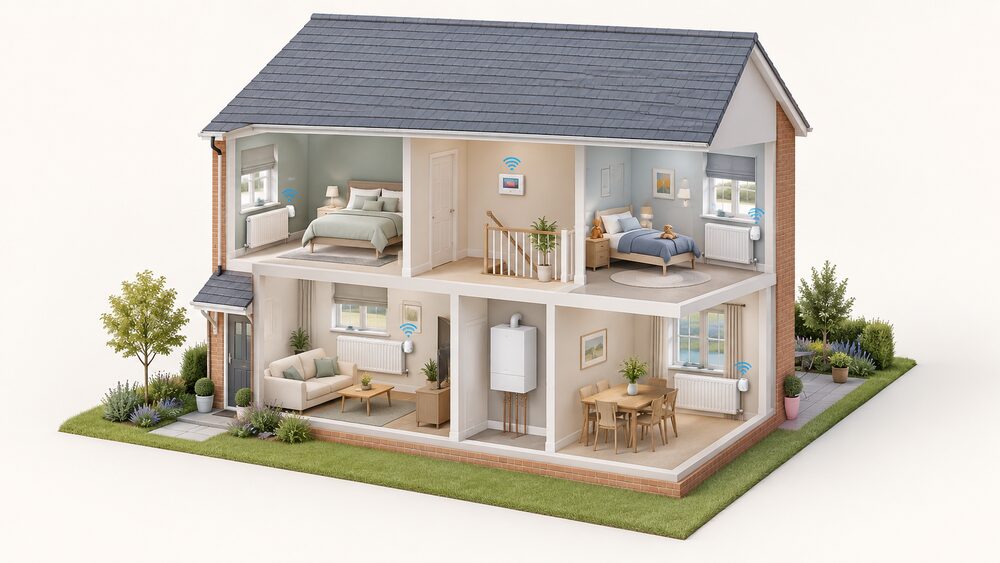
Honeywell Home evohome is a multi-zone heating control system: a controller, a set of wireless radiator valves or room sensors, and an optional hot water kit, splitting a home into up to 12 individually scheduled heating zones1. It is the best-known zoning product in the UK market and is searched by name rather than as part of a wider Honeywell brand page.
The headline capability is the zone count. Independent guidance published in February 2026 states that evohome "has the ability to split your home into up to 12 individual heating zones"1. The same guidance lists the base unit at prices starting at £279, with installation not included1. That is a controller price, not an installed system price: valves, sensors, wiring and labour sit on top, and no published installed package figure exists.
evohome is made by Resideo, which describes it as "a universal zoning solution that now includes heat pump compatibility" and as "designed and manufactured in Europe"2. The system's independence story is mixed. It reduces reliance on heating rooms nobody is using, and it keeps local control at the controller and at each valve. It does not remove the gas grid, the electricity supply or the boiler, and remote control depends on broadband and on the manufacturer's cloud service.
What evohome is: multi-zone control for the whole house
evohome is a zoning system rather than a single thermostat. Where a conventional smart thermostat holds one schedule for the whole house, evohome holds a separate schedule and setpoint for each zone, and switches the boiler or heat pump to serve whichever zones are calling for heat.
The maker's own description of the system centres on three inputs: outside temperature, room temperature, and a feature that learns the heat losses in each room. Resideo states that evohome delivers "improved zone comfort control and energy consumption, based on outside temperature, room temperature and a unique feature" that learns how each room loses heat2. That learning element is what separates a zoning system from a set of independent thermostats: the controller is modelling the building, not just reading a sensor.
The system is also positioned as fuel-agnostic. Resideo describes it as "a universal zoning solution that now includes heat pump compatibility"2, which matters because zoning is one of the recognised routes to running a heat pump at lower flow temperatures without overheating individual rooms. Independent guidance on dwellings over 150m2 notes that separate heat zones could also be achieved through individual networked thermostatic radiator controls and a central smart control that offers zoning3, which is the same principle in a different hardware form.
For a household, the practical meaning is that evohome is a control layer, not a heat source. It changes when and where heat is delivered. It does not change what the heat is made from, and it does not reduce the home's dependence on a boiler, a fuel supply or an electricity connection. What it does is make the existing system more selective, which is the same mechanism behind most heating control savings. The wider picture of how zoning sits alongside other control types is set out in heating zoning and in the pillar guide at heating controls.
How zoning works: controller, valves and the hot water zone
A zoning system works by dividing the heating circuit into separately controlled branches. Independent guidance describes zone controls as doing this "automatically" so that different rooms are heated at different times of the day through separate programmable heating circuits for different parts of the house4. The same guidance notes that zoning allows control of the temperature of individual rooms, and that smart, programmable thermostats can keep a home heated on a schedule to help minimise bills5.
In an evohome installation the hardware chain is:
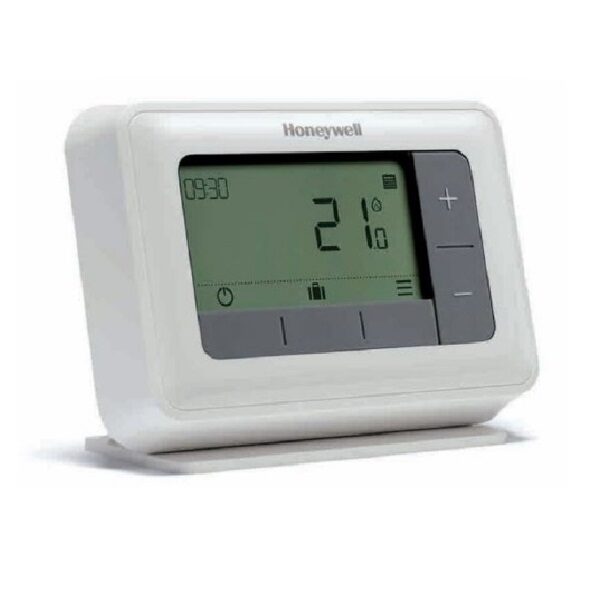
- A controller, wall-mounted or free-standing, holding the schedules and the zone setpoints.
- A wireless radiator valve or a room sensor in each zone, reporting temperature and calling for heat.
- A relay or wiring centre that switches the boiler, zone valves or pump.
- An optional hot water kit, where the home has a cylinder rather than a combi.
The hot water zone is a genuine difference from most single thermostats. Independent guidance from February 2026 notes that evohome incorporates "the usual array of smart thermostat features, including hot water control and remote control" via smartphones or tablets1. On a system or regular boiler with a cylinder, that means the cylinder can be scheduled and monitored as its own zone rather than left to a separate programmer.
Multizone systems generally offer a choice of control points: a centralised remote, individual room panels, or an app, with smart radiator valves controlling every radiator individually through the app6. evohome follows that pattern. The controller is the local interface; the app is the remote one. Where a home already has thermostatic radiator valves, the evohome valves replace the heads rather than the whole valve body in most cases, which keeps the changeover contained. The mechanics of that are covered in thermostatic radiator valves and in smart TRVs.
Savings: what the evidence shows, and what it does not
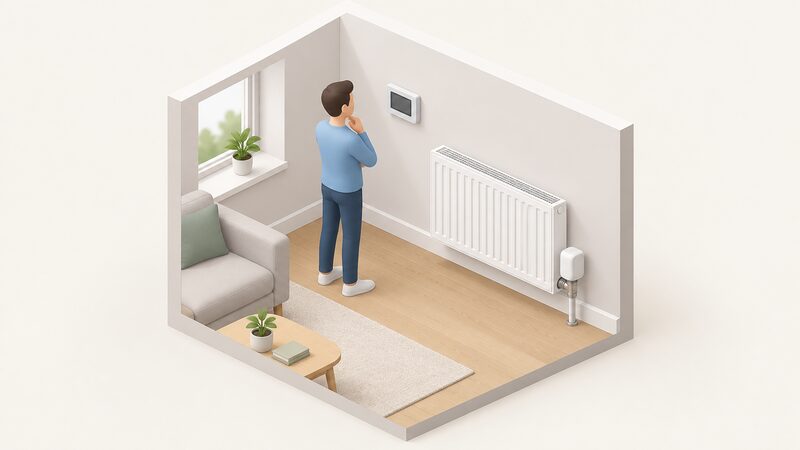
There is no published evohome-specific savings figure in the UK evidence base. What exists is general guidance on where smart control savings come from, and it is cautious. Independent guidance from August 2026 states that "any cost benefit comes from reducing wasted heating rather than from the thermostat itself, so results will vary from home to home"7. That is the honest framing for zoning too: the saving comes from not heating rooms that are empty, not from the controller.
The same guidance lists the conditions under which the benefit may be limited: where heating is already well controlled, where the home is poorly insulated, where the thermostat is not set up correctly, where features go unused, or where heating habits stay the same7. A zoning system is unusually exposed to the last two. If every zone is left at the same setpoint and the same schedule, evohome behaves like a single thermostat with more hardware.
Independent guidance also notes the limitations of smart thermostats generally: they "can be expensive and have an installation cost", and a single thermostat means tracking heating only, without visibility of electricity and gas usage8. Zoning does not change that second point. evohome controls heating; it does not meter energy, and it does not replace a smart meter or an in-home display for consumption data.
The wider evidence on home energy efficiency points in the same direction. Official statistics covering ECO measures include estimated carbon and energy savings from measures installed9, and independent analysis of upgrading inefficient homes to EPC C puts the consumer saving at £24 billion on energy bills by 203010. Those are fabric and insulation figures, not control figures, and they are the larger lever. Controls sit behind them. The question of whether controls pay for themselves at all is examined in do heating controls save money.
Compatibility: which boilers and heating systems evohome fits
evohome is a control system, so compatibility is mostly about the boiler's switching arrangement rather than the boiler brand. It works with combi, system and regular boilers, and with heat pumps, provided the boiler or heat pump accepts a switched live call for heat or can be driven through a wiring centre.
On combi boilers, the fit is straightforward. Independent guidance describes combi boilers as giving heat and hot water on demand, "making them a more efficient choice for smaller households"11. A combi has no cylinder, so the hot water zone function is unused, but the heating zones work as normal. On system and regular boilers, the hot water zone becomes relevant and the cylinder is scheduled alongside the heating zones.
Heat pump compatibility is stated by the maker rather than by an independent body. Resideo describes evohome as a universal zoning solution that now includes heat pump compatibility2. That claim matters because zoning and heat pumps interact: independent guidance notes that replacing radiators is not mandatory for low-temperature heating, but that bigger radiators could hugely improve how well a heat pump can heat a home12. Zoning does not substitute for emitter sizing; it manages which emitters run.
Where a home has underfloor heating, the picture is different again. Independent guidance notes that zoning allows control of individual room temperatures and that smart, programmable thermostats can keep a home heated on a schedule5. Underfloor circuits are usually controlled through manifold actuators rather than radiator valves, so an evohome installation in a mixed home needs the wiring to accommodate both. That is covered in underfloor heating controls and in heating control wiring.
| System type | evohome fit | Hot water zone used |
|---|---|---|
| Combi boiler | Heating zones only11 | No |
| System boiler with cylinder | Heating zones plus cylinder | Yes1 |
| Regular boiler with cylinder and tanks | Heating zones plus cylinder | Yes1 |
| Heat pump | Stated compatible by the maker2 | Depends on cylinder |
| Underfloor circuits | Via manifold actuators5 | Depends on cylinder |
Installation: who fits it and what a typical setup involves
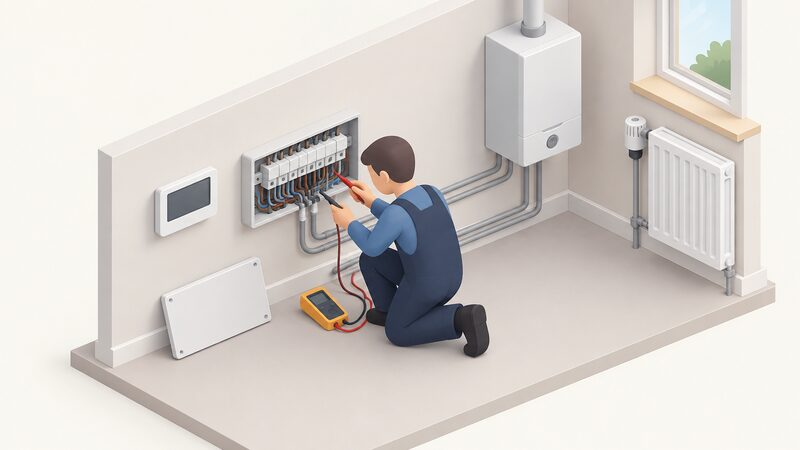
evohome is not a plug-in device. A typical installation involves replacing radiator valve heads across the zones, fitting the controller, wiring a relay or wiring centre to the boiler, and commissioning each zone. Where a hot water zone is added, the cylinder thermostat and the existing programmer are also reworked.
The installer question is the one households ask most. The evidence base does not carry an evohome-specific installer requirement, but the pattern across comparable domestic technology is consistent: installation work of this kind is carried out by qualified trades rather than by householders. Independent guidance on EV charger installation states that it "should always be done by a qualified and certified electrician"13, and separate guidance notes that chargers should be installed by a qualified electrician with relevant experience, with compatibility between the charger, solar system and any battery storage considered from the outset14. The same principle of planning compatibility before work starts applies to heating controls.
Planning matters as much as competence. Independent case-study guidance on a heat pump installation advises planning the installation with whoever is chosen, because "it will be a bit disruptive"15. A zoning retrofit is less disruptive than a heat pump, but it still involves draining or isolating parts of the system, working at every radiator, and a period without heating while the wiring is proved.
For households considering a wider change at the same time, the sequencing question is real. Independent guidance on domestic low-carbon technology applications lists installation details among the information an installer pre-application requires16, and independent guidance on home charge point installation recommends an accredited installer for those charging regularly at home or at the workplace17. The equivalent for heating controls is a competent heating engineer, and the practical advice is to have the zoning designed before the boiler or heat pump is specified, not after. Installation practice is covered in installing and replacing heating controls.
evohome vs a single smart thermostat: when zoning earns its cost
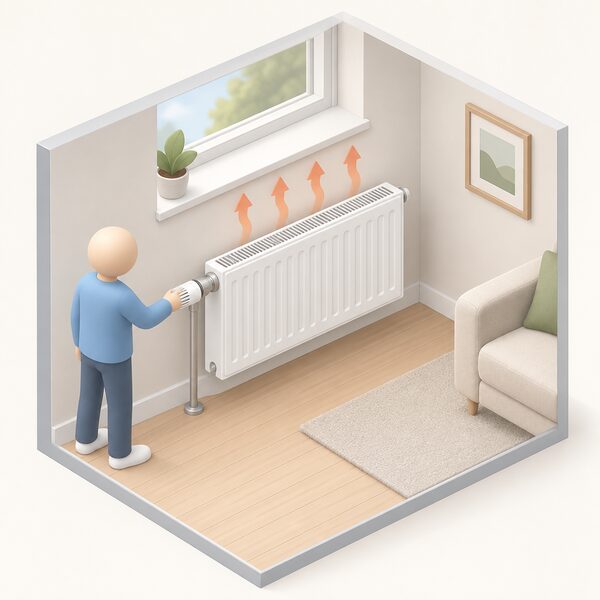
The comparison is not about features. It is about whether the home has rooms that should be at different temperatures at different times. Where it does, zoning does something a single thermostat cannot. Where it does not, zoning adds hardware and cost for little return.
Independent guidance on smart thermostats is explicit that the benefit is behavioural: any cost benefit comes from reducing wasted heating rather than from the thermostat itself, and results vary from home to home7. It also lists the cases where the benefit may be limited, including homes that are already well controlled, poorly insulated homes, thermostats that are not set up correctly, unused features, and unchanged heating habits7. A zoning system is more sensitive to the last two than a single thermostat, because it has more settings to leave alone.
The cost side is also asymmetric. Independent guidance notes that smart thermostats "can be expensive and have an installation cost", and that a single thermostat tracks heating only, without visibility of electricity and gas usage8. evohome's base unit starts at £279 with installation not included1, and a full multi-zone installation adds a valve or sensor per zone on top. That is a materially larger outlay than a single thermostat, and it buys zone control rather than a better thermostat.
The case for zoning is strongest in larger or mixed-occupancy homes: a home office used two days a week, a spare bedroom, an extension on its own circuit, or a household where one occupant wants 21 degrees and another wants 18. Independent guidance on dwellings over 150m2 notes that separate heat zones could also be achieved through individual networked thermostatic radiator controls and a central smart control that offers zoning3, which is a cheaper route to a similar outcome where the wiring allows it. The trade-offs between the two approaches are set out in smart TRVs vs a smart thermostat and in heating controls by home type.
Owning evohome: app control, maintenance and daily use
Day to day, evohome is operated through the controller and the app. Independent guidance confirms remote control via smartphones or tablets and hot water control among the system's features1. The app is where schedules are edited, zones are renamed and overrides are set.
The dependence this creates is worth stating plainly. Local control at the controller and at each radiator valve continues without an internet connection. Remote scheduling, remote override and any cloud-based reporting depend on the home's broadband, on the manufacturer's servers and on the app continuing to be supported. That is the same cloud dependence that applies across the smart heating category, and it is examined in heating controls and energy independence and in smart heating control security and data.
Maintenance is modest but not zero. Wireless radiator valves run on batteries, and a multi-zone home has one per zone, so battery replacement is a recurring task. The controller and the relay are mains-powered. Zone valves, where fitted, are mechanical parts that can fail. None of this is unusual, but a 12-zone installation has 12 battery devices to keep on top of, which is a real ownership cost that a single thermostat does not carry.
On energy data, evohome does not provide it. Independent guidance on in-home displays describes apps that show daily, weekly, monthly and even yearly energy use18, and that is a smart meter function rather than a heating control function. A household wanting consumption visibility alongside zone control needs both. The relationship between controls and tariffs is covered in using heating controls with time-of-use tariffs.
Honeywell Home and Resideo: the company behind the product
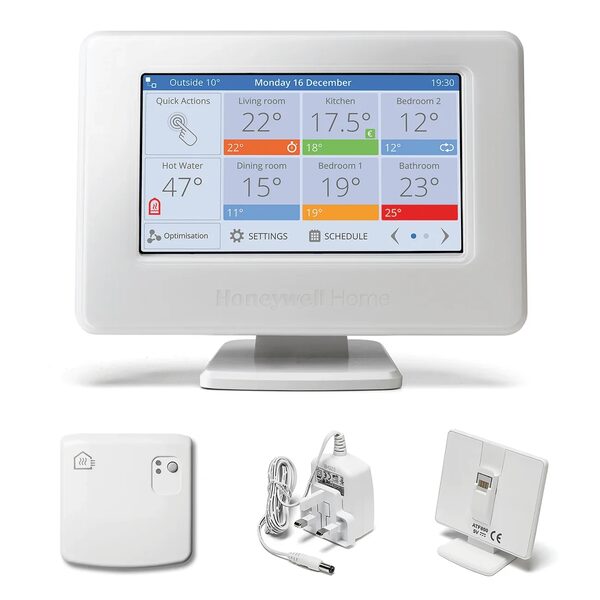
evohome is sold under the Honeywell Home brand, which is owned by Resideo. Resideo states that evohome is "designed and manufactured in Europe"2, which keeps the supply chain for parts and support within the region rather than overseas.
The brand structure is worth understanding because it affects support. Honeywell Home is a licensed brand used by Resideo for residential products, and the evohome system sits within that portfolio alongside the company's other heating controls. Resideo has continued to develop the platform, describing the system as a universal zoning solution with heat pump compatibility2, which indicates the product line is still being positioned for the low-carbon transition rather than wound down.
For a household, the relevant question is what happens if the company changes direction. A cloud-dependent control system carries a support risk that a purely local one does not: if the app or the servers are retired, remote functions stop, even though local control continues. That risk profile is common to the category and is discussed in smart thermostat subscriptions and in smart heating control security and data.
The wider Honeywell Home range, including single-room thermostats and the rest of the controls portfolio, is covered in Honeywell Home thermostats and controls. For households weighing evohome against a competing zoning-capable system, Honeywell evohome vs tado° sets the two side by side.
Sources18 cited
- Resideo's Honeywell Home evohome smart zoning system just got smarter, Resideo, 2021-01-07
- What are smart thermostats, Uswitch, 2026-02-05
- Part L 2022 Heating Controls Guidance, BEAMA, 2022
- Thermostats and heating controls, Energy Saving Trust, 2026-02-10
- Underfloor heating system, NICEIC, 2026-09-17
- What is multizone heating, Hive, 2025-12-15
- What is a smart thermostat, Smart Energy GB, 2026-08-19
- Ultimate energy saving tips guide, Smart Energy GB, 2026-04-24
- Household Energy Efficiency Statistics, headline release June 2026, GOV.UK, 2026-06-25
- Home advantage: Unlocking the benefits of energy efficiency, Citizens Advice, 2026-04-22
- Boilers, Energy Saving Trust, 2026-05-20
- Heat pump fact check, Energy Saving Trust, 2026-07-01
- EV charging, Uswitch, 2026-09-19
- Can solar panels charge electric cars, The CPA, 2026-04-15
- Matthew Bell OBE heat pump case study, Energy Saving Trust, 2026-04-28
- Connect Direct, Energy Networks, 2026-09-17
- EV buying guide, Zapmap, 2024-12-06
- ivie smart meter app benefits, ivie, 2024-09-30
 Honeywell Home Thermostats and ControlsMajor household controls brand with thermostats, TRVs and zoning.