
In this answer
Short answer
Heating controls decide when a boiler, heat pump or storage heater runs and how warm each room gets. Used well, they are the cheapest efficiency measure in a home: no new pipework, no new heat source, just the settings. Home Energy Scotland's guidance is that room thermostats and heating controls let a household set and maintain the temperature in the home, keep it warm for the times of day people are there, and switch it off to save electricity when they are not1.
The savings figures are wide because they measure different things. Turning a thermostat down by one degree Celsius could save as much as 10 per cent on heating bills, according to official Northern Ireland guidance2. Reducing room temperatures by 1°C is put at up to 10 per cent of the annual fuel bill by the UK and Ireland Fuel Distributors Association3. One local authority puts a 1°C reduction at up to 25 per cent of heating bills and associated carbon4. Ofgem's load control guidance models much smaller effects for electric heating in a large, high-usage house, at 2 to 6 per cent of the heating bill depending on how much control is applied5.
What heating controls do, and why they matter for bills
Heating controls help control when the heating system operates and the temperature in each room7. That is the whole mechanism: a boiler or heat pump left to run against no time limit and no room limit heats a house to whatever the radiators can reach, for as long as it is switched on. A programmer sets the hours, a room thermostat sets the target temperature, and thermostatic radiator valves set the ceiling for individual rooms.
The bill effect comes from the overlap between those three. Official guidance notes that using a high efficiency condensing boiler with heating controls could save a substantial amount of money over a year8. Low carbon heating could save money on heating bills depending on what system it replaces9. Underfloor heating adds its own layer: zoning allows the temperature of individual rooms to be controlled, and smart, programmable thermostats can keep a home heated on a schedule to help minimise bills10.
For a household's energy independence, controls are the one lever that works on every heat source. They do not remove dependence on the grid, a gas supplier or imported fuel, and they do not generate anything. What they do is cut the waste that comes from heating an empty house or an unused room, which is the part of the bill a household actually decides.
How much you can save: from 10% to 25%, and why the figures differ
The headline numbers come from different bodies measuring different things, and the gap between them is real rather than a contradiction.
| Source | Measure | Stated saving |
|---|---|---|
| nidirect (official) | Thermostat down 1°C | As much as 10 per cent on heating bills2 |
| UKIFDA (independent) | Room temperatures down 1°C | Up to 10 per cent on the annual fuel bill3 |
| East Herts Council (official) | Thermostat down 1°C | Up to 25 per cent of heating bills and carbon4 |
| Ofgem (official) | Electric heating, large house, high control | 6 per cent of the heating bill, £18 a month5 |
| BEAMA (independent) | TRV trimming, air source heat pump | 6 to 8 per cent space heating energy6 |
The Ofgem modelling is the most conservative and the most specific: for a large house on electric heating using around £300 a month, low control gives a 2 per cent heating bill saving, £6 a month; medium control 4 per cent, £12 a month; high control 6 per cent, £18 a month5. That is a modelled case, not a promise, and it shows how much the answer depends on the fuel, the size of the house and how much control is actually fitted.
The 25 per cent figure is the outlier and the most optimistic. The 10 per cent figures are the ones repeated across official and independent guidance. A household should treat the range as evidence that the direction is reliable and the size is not.
Thermostats, TRVs and programmers: what each control does
Independent guidance sets out the minimum core for a central heating system: a programmer for time control, at least one room thermostat, and thermostatic radiator valves11. A fuller set adds a cylinder thermostat where the system has a hot water cylinder7. Cadent describes a full set of heating controls as a programmer, thermostatic radiator valves and a room thermostat12.
- Programmer or timer: controls when the heating comes on and off11.
- Room thermostat: sets the target temperature for the home or a zone.
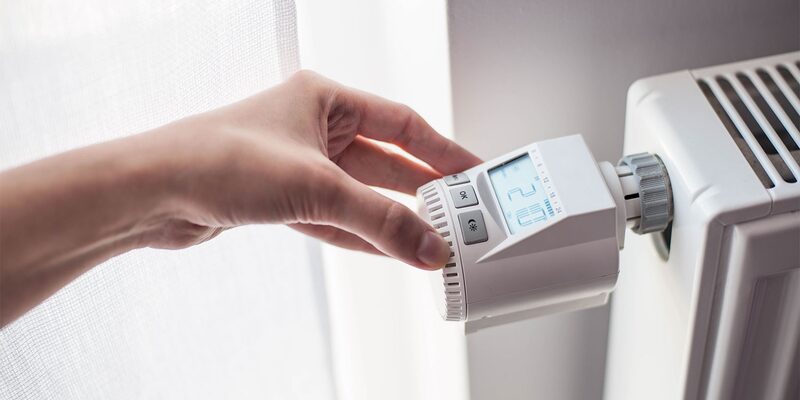
- TRVs: give better control over individual room temperatures13, and are recommended on individual radiators so the temperature can be adjusted by room usage, turning them down in unused rooms14.
- Cylinder thermostat: recommended where the system has a hot water cylinder15.
- Zone controls: heat different rooms at different times of day automatically through separate programmable heating circuits11.
"A TRV gives better control over the individual room temperatures."
On a heat pump the advice changes shape. Testing of an air source heat pump at Salford Energy House found that trimming scenarios produced space heating energy savings of between 6 and 8 per cent, but the same bulletin states that a whole house setback period should be programmed using the heat pump controller rather than smart TRVs on all radiators6. TRVs still balance rooms; they are not the tool for a whole house setback.
Smart controls: what automatic optimisation changes
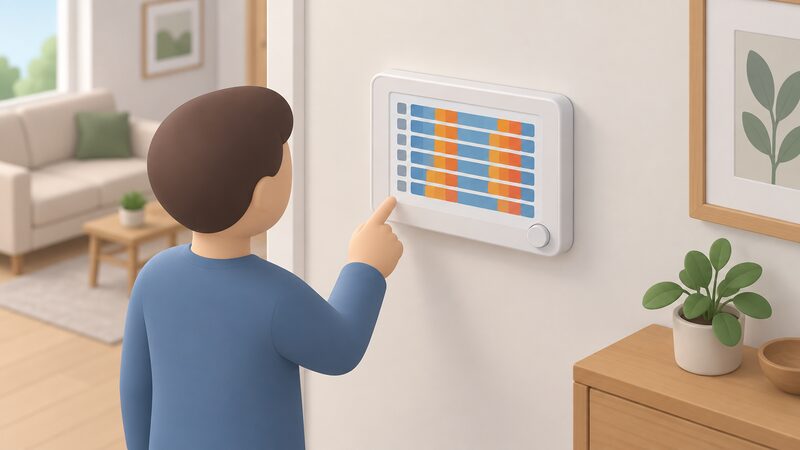
Smart heating controls are connected to the internet and offer more functionality than conventional controls11. In practice that means remote control: most link to a phone, and heating can be controlled by smartphone, tablet or laptop, or by telling a smart speaker what is wanted16. They can remotely turn heating on and off and adjust temperature14, and they automatically optimise heating settings to save money and energy14.
The more substantive change is compensation. Load and weather compensation adjust the boiler flow temperature to maximise boiler efficiency, and a smart thermostat is probably the easiest way to add compensation to an existing system16. That is a different mechanism from scheduling: it lowers the temperature the boiler runs at rather than the hours it runs.
Smart controls also pair with other kit. Fitting a smart tank monitor and smart heating controls optimises fuel use and reduces waste17. Modern storage heaters generally come with improved heating controls, including an automatic charge control, thermostat and programmer, compared with older units18, and digital electric storage heaters can be given a programmer or timer to set specific times for heating to come on and off19.
Setting temperatures and schedules to match when you are home
The pattern most guidance converges on is simple: heat the house for the hours it is occupied, and let it fall back when it is not. Set the heating to come on just before getting up and switch off after going to bed, and in very cold weather extend the time rather than turning the thermostat up22. Turning the heating down by one or two degrees when people are over saves money on energy bills23.
On the off-all-day question, leaving heating on 24/7 typically uses more fuel, and the most energy-efficient approach is to programme the heating system so it comes on when needed most24. For heat pumps, using a setback temperature, a slightly lower setting during off peak hours, can save energy without reducing comfort25.
Zone controls do the room-by-room version of the same thing, heating different rooms at different times of day automatically through separate programmable circuits11. That is where TRVs and zoning overlap: TRVs cap a room, zoning decides when that room's circuit runs at all.
Pairing controls with your heating system, including heat pumps
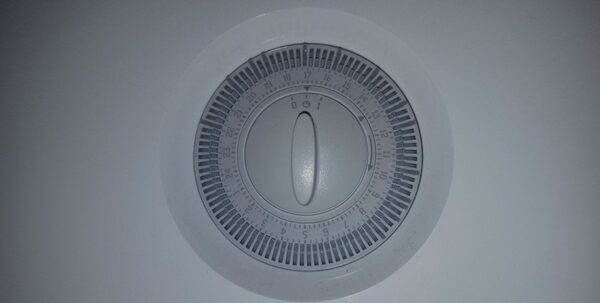
Controls have to match the heat source, and the requirements differ by system.
Heat pumps can work with radiators or underfloor heating, and some types can work without either9. They run on electricity, which is where bill savings can arise26. Official guidance for dwellings calls for weather compensation or internal temperature control, and a timer or programmer for space heating27. Ground source heat pumps can be synced up with smart heating controls to create a system that benefits the household most28, and their controls should allow pre-programming of switch-on and switch-off times, which matters for cheaper electricity on heat pump or time-of-use tariffs29. Heat pumps support automated controls that optimise performance21, and can provide both space and water heating, which significantly lowers fuel bills30.
Hybrid systems take a different approach: a hybrid uses intelligent controls to determine the most efficient way to heat a home31, and heat pump and hybrid controls can be fitted to different heat sources and boiler types such as regular or combination boilers32.
For storage heaters, the controls are built in: improved heating controls including an automatic charge control, thermostat and programmer18, with a programmer or timer setting the on and off times19.
Where controls fall short
Controls reduce waste; they do not change the physics of a poorly insulated home, and they do not make a household independent of the grid, a supplier or a fuel it has to buy. The savings figures above are percentages of a bill that controls can only trim, and the Ofgem modelling shows how modest the effect can be in a large electrically heated house at 2 to 6 per cent5.
There is also a limit to how far a thermostat can be turned down before comfort suffers, and the guidance is explicit that in cold weather the answer is more time, not a higher setting22. On heat pumps, the interaction between TRVs and setback matters: whole house setback belongs at the controller, not on every radiator6.
What remains is the part a household controls directly: the hours, the room temperatures and the flow temperature. Those are the settings that decide how much of the energy bought is actually used to heat occupied rooms.
Sources32 cited
- Make winter feel like summer, Home Energy Scotland, 2026-09-20
- Energy efficiency at home, nidirect, 2026-09-02
- Help and advice, UKIFDA, 2026-01-29
- Home and business grants, schemes and advice, East Herts Council, 2026-09-17
- Annex D: Load control consumer protection guidance, Ofgem, 2026-08-07
- Summary of BEAMA Air Source Heat Pump TRV Salford Energy House Test, BEAMA, 2026-04
- Thermostats and heating controls, Home Energy Scotland, 2026-09-20
- Heating and hot water, Planning Portal, 2026
- Heating your home, Energy Saving Trust, 2026-05-19
- Underfloor heating system, NICEIC, 2026-09-17
- Thermostats and heating controls, Energy Saving Trust, 2026-02-10
- Energy efficiency, Cadent Gas, 2026-09-20
- Building regulations: extensions, energy efficiency, Welsh Government, 2026-09-17
- Guide to smart meters, Energy Saving Trust, 2026-07-15
- Energy saving tips for the home, Confused.com, 2025-10-14
- Smart homes and lower carbon footprint, Energy Saving Trust, 2026-01-21
- Energy efficiency tips, UKIFDA, 2026-02-18
- Electric storage heaters, Energy Saving Trust, 2026-05-20
- A guide to using electric storage heater controls, Energy Saving Trust, 2026-05-21
- Smart meters, Welsh Government, 2026
- Smart meters, MCS Certified, 2026-07-24
- Stay safe, warm and connected this winter, Cadent Gas, 2026-09-20
- Tips to save energy this Christmas, Centre for Sustainable Energy, 2025-12-16
- Heat the whole house or one room?, Uswitch, 2026-08-20
- Does turning off the heat pump affect heating?, Nesta, 2025-01-21
- Heat pumps, Welsh Government, 2025-11-17
- Approved Document L, Volume 1: Dwellings, HM Government, 2026
- Ground water source heat pump, MCS Certified, 2026-06-09
- Installing a ground source heat pump, Which?, 2025-09-22
- Heat pumps, REA, 2026-09-17
- Hybrid heat pumps, SGN, 2026
- HHIC guidance, HHIC, 2026-09-17
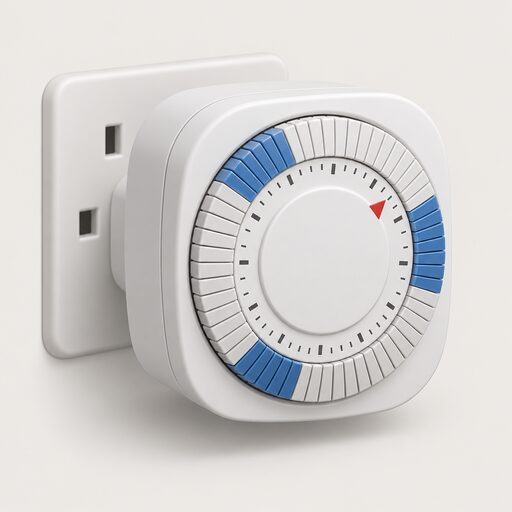 Controls and Time-of-Use TariffsCheaper electricity at night only saves money if your heating actually uses it then.
 Do Smart Controls Save Money?Do smart heating controls really cut your bills, and by how much?
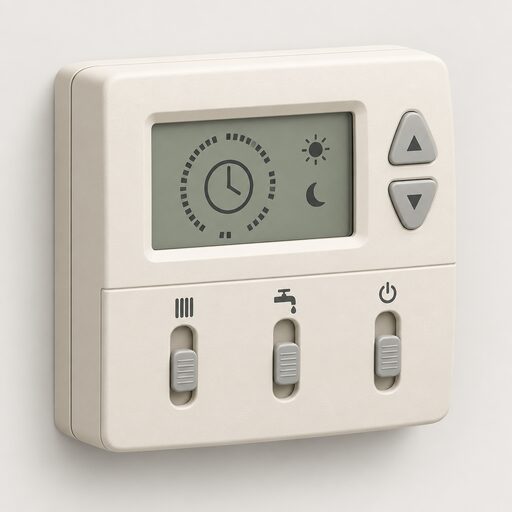 Controls, Thermostats and TRVsWhich heating controls actually cut your bills, and what does each one do?
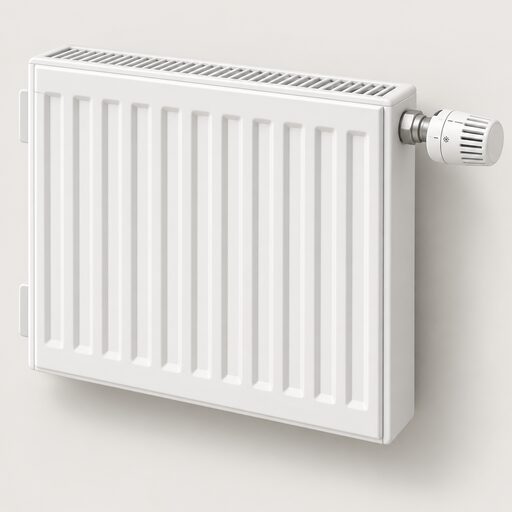 Changing Habits SavingsWhat the evidence says behavioural change saves: around £90 to £120 a year for one degree off the thermostat, £100 to £110 a year for using a full set of heating controls, and £304 to £351 a year for a bundle of small changes.
 The Full Heating Controls GuideA room thermostat, a programmer and valves on your radiators are the basics.
 Thermostat and Room TemperaturesWhat temperature should a thermostat be set to, and does it differ from room to room?